
Our readers keep the lights on and my morning glass full of iced black tea. As an Amazon Associate, I earn from qualifying purchases.
Specs are compiled from manufacturer listings and verified buyer reviews and can change over time — please confirm the key details on the product page before buying.
The gaming laptop market is crowded with competing claims, but real performance depends on the CPU and GPU pairing within your budget. This guide cuts through the model numbers to tell you which combination of dedicated graphics, refresh rate, and memory delivers real-world gaming performance today.
I’m Min — the founder and writer behind Gadgets Feed. This guide is built by comparing the manufacturers’ published specifications and the patterns across verified customer reviews, so you get each pick’s real strengths and trade-offs instead of marketing spin.
We have broken down eight leading contenders in the gaming laptop under $1000 category, covering everything from RTX 3050 workhorses to newer RTX 4050 and RTX 5050 configurations, so you know which one actually earns your money.
Our Picks at a Glance

How To Choose The Best Gaming Laptop Under $1000
At this price level, every dollar goes toward a balanced combination of a dedicated graphics card and a capable processor. The most common mistake is choosing a high-end CPU with a weak GPU, resulting in smooth desktop use but choppy game performance. Focus on the three specs below to avoid underperforming models.
GPU Generation and VRAM Matter Most
The graphics card is the most critical component for gaming performance. In this budget class, you will mostly see the NVIDIA GeForce RTX 3050, the newer RTX 4050, and a few early RTX 5050 units. The RTX 3050 typically comes with 4GB of VRAM (video memory for textures), which is enough for older titles but will force you to lower texture settings on modern AAA games. The RTX 4050 jumps to 6GB, offering noticeably more breathing room, while the RTX 5050 with 8GB of GDDR7 gives you the best future-proofing in this price bracket.
Refresh Rate vs. Raw Resolution
Almost every laptop here runs a 1080p (or FHD) screen. The key difference is the refresh rate, measured in how many times per second the screen updates. You want at least 144Hz for a smooth competitive feel. A 165Hz panel offers a slight edge in fast twitch shooters, but you will only notice it if the GPU can actually push that many frames. Do not pay extra for a high refresh rate if the GPU cannot consistently deliver that many frames at your preferred settings.
RAM Type and CPU Generation
Modern games are starting to benefit from DDR5 RAM (faster memory for loading assets), though DDR4 still works fine at this tier. For the CPU, look for at least a 12th Gen Intel Core i5 or an AMD Ryzen 5 from the 7000 series. Older 11th Gen chips like the i5-11400H can still game well but may bottleneck the newest graphics cards slightly. The CPU’s max boost clock speed, measured in GHz, gives you a rough idea of its peak single-core performance for games.
Quick Comparison
| Model | Best For | GPU | CPU | Refresh Rate | Amazon |
|---|---|---|---|---|---|
| ASUS TUF Gaming F16Also Great | Best Overall | RTX 5050 8GB | i5-13450HX | 165Hz | $1,059.00$1,299.99Amazon |
| acer Nitro V 15Best Value | Best Value | RTX 5050 8GB | i5-13420H | 165Hz | $909.99Amazon |
| HP Victus 15-FA100Top GPU Upgrade | Best GPU Upgrade | RTX 4050 6GB | i5-13420H | 144Hz | $879.99Amazon |
| msi Thin 15 (i7-12650H) | Premium CPU | RTX 4050 | i7-12650H | 144Hz | $970.00Amazon |
| HP Victus (i5-12450H) | Battery Life King | RTX 3050 6GB | i5-12450H | 144Hz | $929.99Amazon |
| ASUS TUF Gaming A16 | Premium Build | RTX 4050 | Ryzen 7 7445HS | 145Hz | $984.99Amazon |
| HP Victus (Ryzen 7) | AMD Power | RTX 4050 | Ryzen 7 7445HS | 144Hz | $998.00Amazon |
In‑Depth Reviews
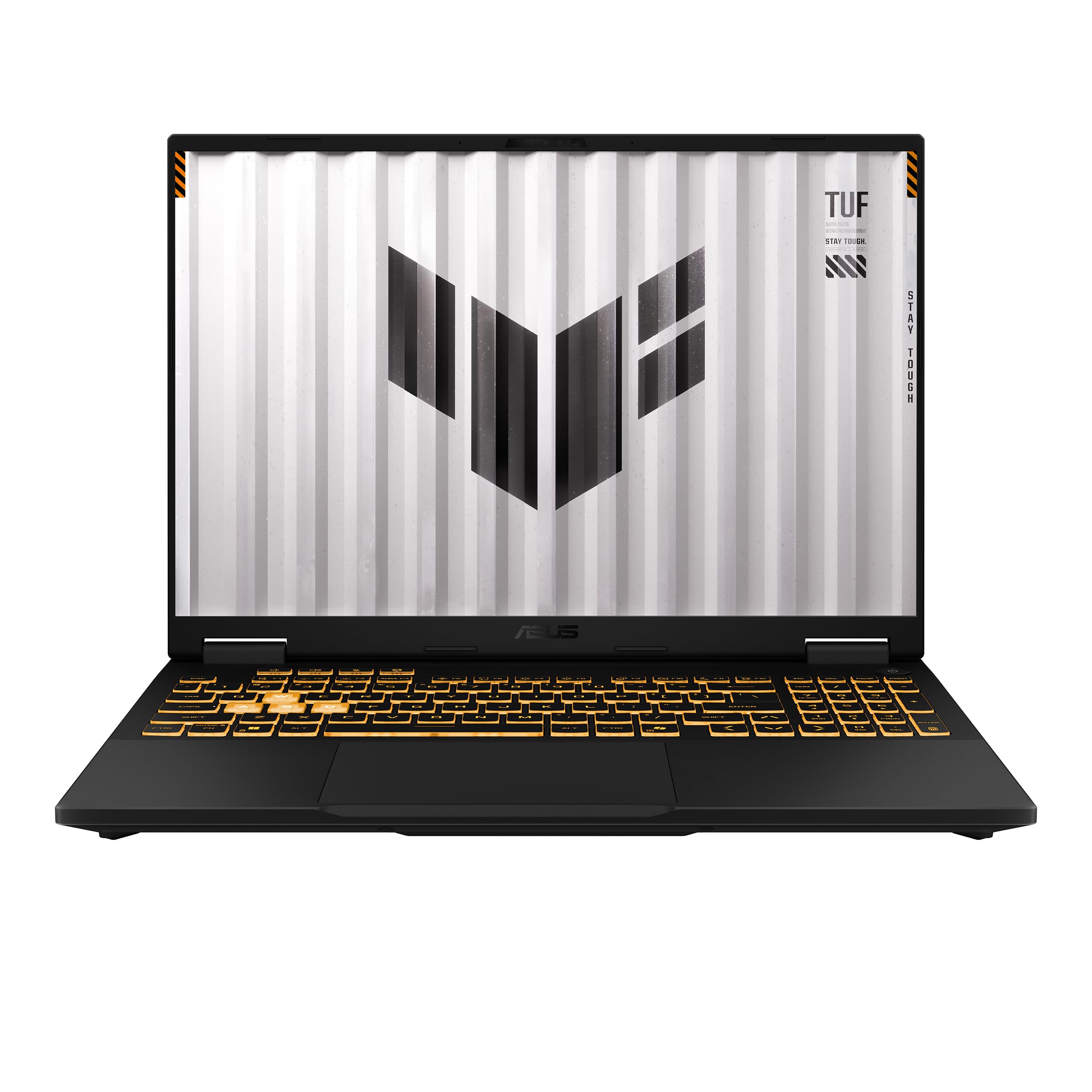
1. ASUS TUF Gaming F16 (2025)
The 2025 TUF F16 packs next-gen graphics that leap years ahead of the budget field.
This machine earns the top spot because it delivers the most powerful GPU upgrade you can realistically fit under. The NVIDIA GeForce RTX 5050 Laptop GPU with a Max TGP of 115W provides 8GB of dedicated graphics memory. That amount of VRAM means you can crank up texture quality in modern titles without the game stuttering to load assets. The Intel Core i5 Processor 13450HX peaks at 4.6 GHz, providing solid CPU grunt for fast-paced shooters and strategy games alike.
The rich visuals come from its 16-inch FHD+ 165Hz display with 100% sRGB color coverage. That high color gamut (a measure of how vibrant and accurate colors look) is a rarity at this price point, making your game worlds look richer side-by-side with the competition. The Adaptive-Sync technology also reduces lag, minimizing stuttering and eliminating visual tearing. Buyers report that the military-grade MIL-STD-810H durability tests give real confidence for tossing it in a backpack.
On the cooling side, the 2nd Gen Arc Flow Fans and a full-width heatsink keep the system running steady during long sessions without excessive fan noise. Paired with 16GB of DDR5 RAM (faster memory for loading game assets and multitasking) and a 512GB PCIe Gen4 SSD, this is the most balanced and forward-looking choice in the entire lineup. The single compromise is that you are paying near the ceiling of the budget, but you get RTX 5050 performance that the other mid-range picks cannot touch.
Where It Wins
- RTX 5050 with 8GB VRAM is the strongest GPU here
- 165Hz display with 100% sRGB for vivid colors
- MIL-STD-810H military-grade durability
- 2nd Gen Arc Flow Fans for efficient cooling
One Note
- Sits at the top of the budget bracket
- 512GB SSD may fill quickly with modern games
Ideal for: The gamer who wants the best GPU in the class and a premium, durable screen.
One trade-off: You will want to budget for an external drive or cloud storage for your larger game libraries.
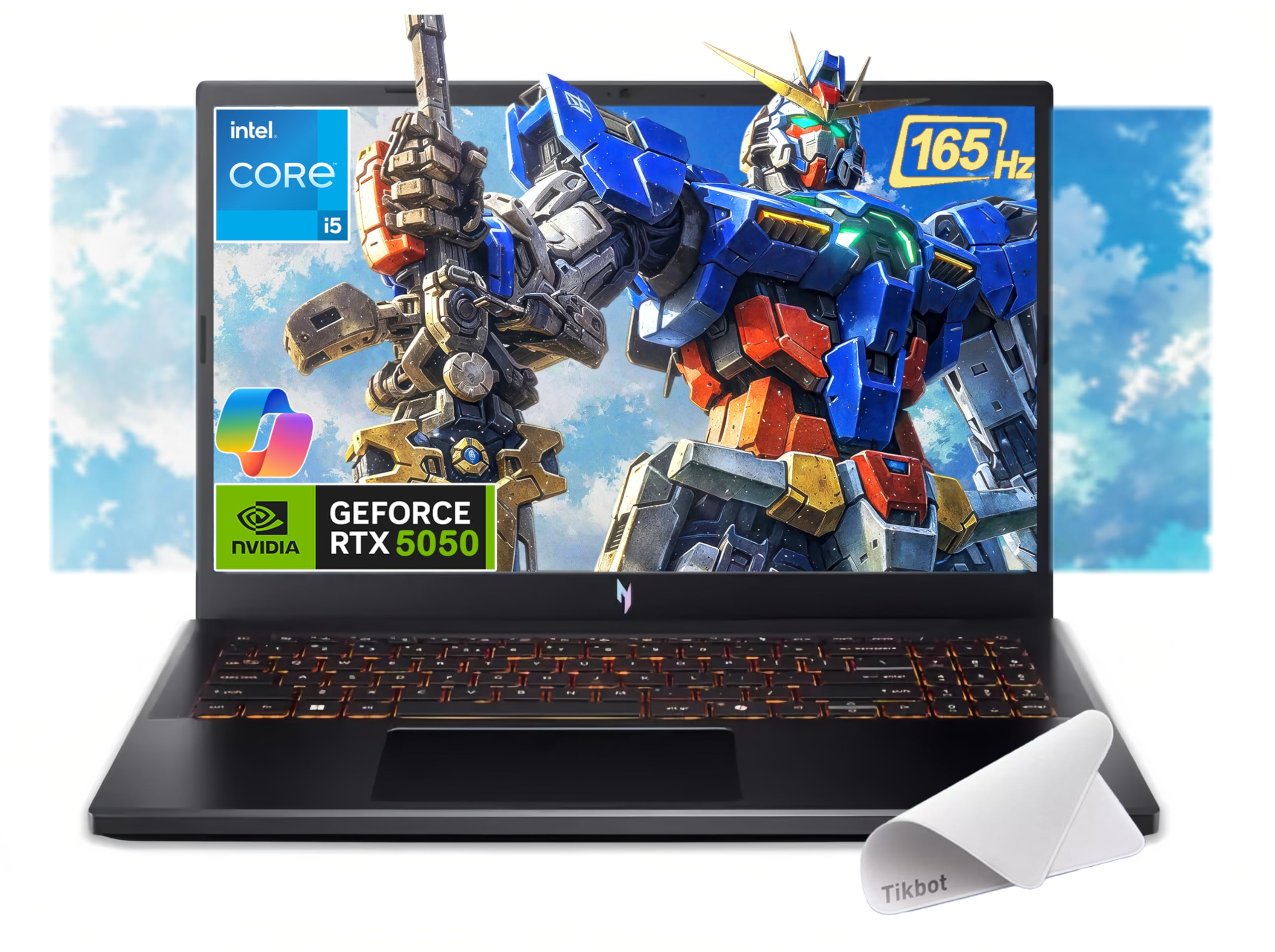
2. acer Nitro V 15 (RTX 5050)
Acer undercuts the competition with the same next-gen RTX 5050 at a lower entry cost.
If the ASUS TUF F16 stretches the budget too far, the acer Nitro V 15 delivers essentially the same GPU firepower for a noticeably smaller hit to your wallet. It matches the RTX 5050 with 8GB of dedicated GDDR7 VRAM, which is the exact same memory capacity as the top pick. That 8GB pool gives you serious room to run modern games at high textures without the performance tanking.
The display runs at a 165Hz refresh rate (just like the ASUS) on a 15.6-inch Full HD IPS panel. Combined with the Intel Core i5-13420H processor that clocks up to 4.6GHz, this machine handles competitive shooters with smooth motion. The Thunderbolt 4 port is a welcome addition, giving you high-speed data transfer and the ability to connect an external GPU enclosure later if you want. Buyers appreciate the 16GB DDR4 memory, though note that it is DDR4 rather than the faster DDR5 found on some pricier units.
One standout detail is the inclusion of a mouse pad in the box, a small touch that saves you a minor purchase. Reviewers report that the 512GB PCIe Gen 4 SSD boots Windows 11 Home quickly. The main trade-off is the DDR4 RAM (slower than DDR5 for loading large game files), but for the price, getting RTX 5050 graphics with 8GB of VRAM is exceptional value. It leads on price-to-performance compared to many RTX 4050 laptops that cost more.
Why It Stands Out
- RTX 5050 with 8GB GDDR7 VRAM for next-gen gaming
- 165Hz IPS display for smooth visuals
- Thunderbolt 4 port for expansion
- Excellent price-to-performance ratio
A Small Compromise
- DDR4 RAM instead of faster DDR5
- 512GB SSD fills fast with big game installs
Best pick if: You want RTX 5050 power without paying the absolute maximum of the budget.
skip it if: You specifically need DDR5 memory for future-proofing your system RAM.
3. HP Victus 15-FA100 2024
HP brings the RTX 4050 with 6GB VRAM to the mid-range, beating older 3050s by a clear margin.
Stepping up from the RTX 3050 class, the HP Victus 15-FA100 packs an NVIDIA GeForce RTX 4050 with 6GB of GDDR6 memory. That extra 2GB of VRAM over the standard 4GB models makes a real difference when you load into heavier titles like Cyberpunk 2077 or Call of Duty. The Intel Core i5-13420H processor hits a 4.6 GHz max boost, ensuring the GPU does not wait around for data.
The 15.6-inch FHD IPS display runs at 144Hz, which is plenty responsive for competitive play. A helpful detail is MediaTek Wi-Fi 6 with Bluetooth 5.3, keeping your wireless connection fast and stable. The 70Whr battery is rated for up to 6 hours of non-gaming battery life. The 200W AC adapter is a hefty brick, but it powers the machine fully during intense gaming.
The 16GB DDR4 RAM and 512GB NVMe SSD are standard for this tier. One feature that stands out is the HDMI v2.1 port, letting you connect to a 4K TV at high refresh rates. Owners mention that the anti-glare display at 250 nits is decent for a brightly lit room. The main catch here is the battery life takes a hit during gaming, which is typical, but the RTX 4050 over the RTX 3050 is a meaningful generational leap for a moderate price increase.
Strengths
- RTX 4050 6GB beats RTX 3050 in texture-heavy games
- 144Hz IPS display with anti-glare
- HDMI v2.1 for high-refresh external displays
- Wi-Fi 6 and Bluetooth 5.3
Weaknesses
- DDR4 RAM instead of DDR5
- 6-hour battery life is average
Grab it if: You want the RTX 4050 upgrade without jumping to the top of the price range.
pass on it if: You need DDR5 RAM and a higher wattage adapter for sustained performance.
4. msi Thin 15 (i7-12650H / RTX 4050)

MSI stuffs a Core i7 processor and an RTX 4050 into a slim chassis that travels well.
For buyers who value CPU power for multitasking or CPU-heavy simulation games, the msi Thin 15 brings an Intel Core i7-12650H that boosts to 4.7 GHz. That is the highest max clock speed in this roundup. The 12th Gen i7 outperforms the i5 chips on multi-core workloads, which helps when you are streaming, recording, or running Discord alongside a demanding game.
The NVIDIA GeForce RTX 4050 (Ada architecture) supports ray tracing (a lighting tech that simulates how light bounces in real life) and DLSS 3 upscaling. The 15.6-inch 144Hz display delivers a fast refresh rate, keeping motion fluid. MSI’s Cooler Boost 5 thermal design uses dual fans to manage heat, which is critical in a thinner chassis.
It comes with 16GB of DDR5 RAM (faster memory than the DDR4 in many rivals) and a 512GB NVMe SSD. Customers note that the face recognition login via the webcam works well for quick access. One limitation is that the 4-cell battery is standard, so expect typical gaming laptop battery life. At this price point, the premium is on the i7 CPU and DDR5 RAM instead of a larger SSD or a 165Hz display.
Key Upgrades
- Intel Core i7-12650H (4.7 GHz boost)
- 16GB DDR5 RAM for faster multitasking
- RTX 4050 with ray tracing and DLSS 3
- Biometric face recognition login
Limitations
- 512GB SSD may need upgrading for large game libraries
- Battery life is typical for a gaming laptop
Ideal for: Gamers who multitask heavily or play CPU-intensive simulation and RTS games.
Trade-off: The premium CPU and DDR5 RAM mean you get a standard 144Hz display rather than a faster 165Hz panel.
5. HP Victus 15.6″ (i5-12450H / RTX 3050)

This HP Victus lasts 10 hours on a charge compared to the MSI GF63 Thin’s 4 hours, making it the go-to for campus gamers.
The biggest pain point for gaming laptops is running out of juice mid-session. This HP Victus stands apart with a 10-hour battery life — a massive lead over the 4 hours the MSI GF63 Thin delivers. That means you can actually carry it to class or work without hunting for an outlet every 90 minutes. It achieves this with an Intel Core i5-12450H peaking at 4.4 GHz and an NVIDIA GeForce RTX 3050 6GB GDDR6 graphics card.
The 6GB version of the RTX 3050 is better than the 4GB version found in other RTX 3050 laptops, giving you a bit more texture memory. The 15.6-inch Full HD IPS display runs at 144Hz, keeping motion smooth. The 1TB PCIe SSD is a standout spec — double the 512GB storage of most rivals at this price, so you can keep a larger game library ready to play.
The 16GB of DDR4-3200 RAM handles multitasking well. Reviewers point out that the backlit keyboard is comfortable for extended typing. One reviewer specifically praised the value of getting a 1TB drive at this price. The trade-off is that the processor is a 12th Gen i5 (4.4 GHz) rather than the faster 13th Gen chips, but the battery life and 1TB storage make this a smart pick for a portable gamer who also needs a daily driver.
Standout Features
- 10-hour battery life (compared to 4 hours on the MSI GF63 Thin)
- 1TB PCIe SSD for ample game storage
- RTX 3050 with 6GB GDDR6
- 144Hz display with anti-glare
What You Give Up
- 12th Gen i5-12450H is slightly slower than 13th Gen chips
- DDR4 RAM instead of DDR5
Reach for this if: You need a gaming laptop that can last through a full day of classes or work.
Look elsewhere if: You prioritize raw CPU speed over battery longevity and storage capacity.
6. ASUS TUF Gaming A16 (Ryzen 7 / RTX 4050)
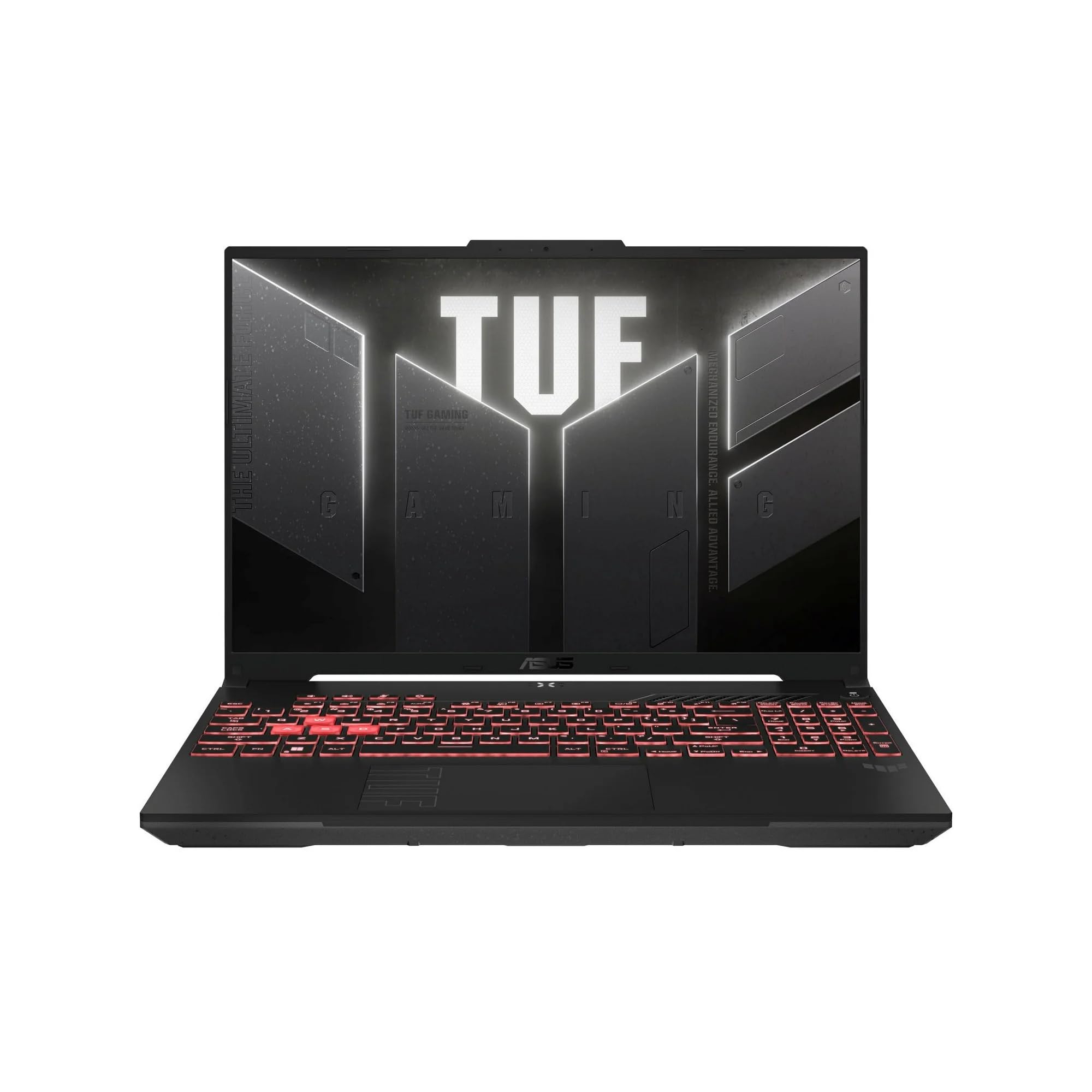
ASUS pairs an AMD Ryzen 7 processor with an RTX 4050 in a rugged, well-reviewed chassis.
With a 4.6 out of 5 rating from 152 reviews, the TUF Gaming A16 is one of the highest-rated laptops in this guide. It packs an AMD Ryzen 7 7445HS processor, which is a strong 8-core CPU for gaming, and an NVIDIA GeForce RTX 4050 for graphics. The 16-inch Full HD+ display runs at a 145Hz refresh rate, offering a slightly taller 16:10 aspect ratio that gives you more vertical screen space for documents and game HUDs.
The 16GB of DDR5 RAM is a solid pairing with the Ryzen 7, ensuring fast data transfer between the CPU and memory. The 512GB SSD is standard, but the laptop supports further upgrades. ASUS’s TUF series is known for durability, and this model carries that tradition of sturdy build quality. Reviewers consistently mention the solid feel of the keyboard and chassis.
The main difference from the top picks is the RTX 4050 rather than the newer RTX 5050. You are getting a very capable mid-range GPU, but not the latest generation. One buyer specifically praised the 144Hz screen’s clarity. For someone who wants a proven, durable laptop with strong AMD CPU performance, this is a trusted choice backed by a large number of positive reviews.
Why It’s Popular
- Ryzen 7 7445HS provides strong multi-core performance
- RTX 4050 for modern gaming
- 16:10 145Hz display for extra vertical space
- Outstanding 4.6/5 rating from 152 reviewers
The Compromise
- RTX 4050, not the newer RTX 5050
- 512GB SSD is the standard capacity
Suits: Gamers who value a proven, durable build and a high user rating over having the very newest GPU.
Drawback: You won’t get the RTX 5050’s additional VRAM capacity found on the top two picks.
7. HP Victus 15.6″ (Ryzen 7 / RTX 4050)
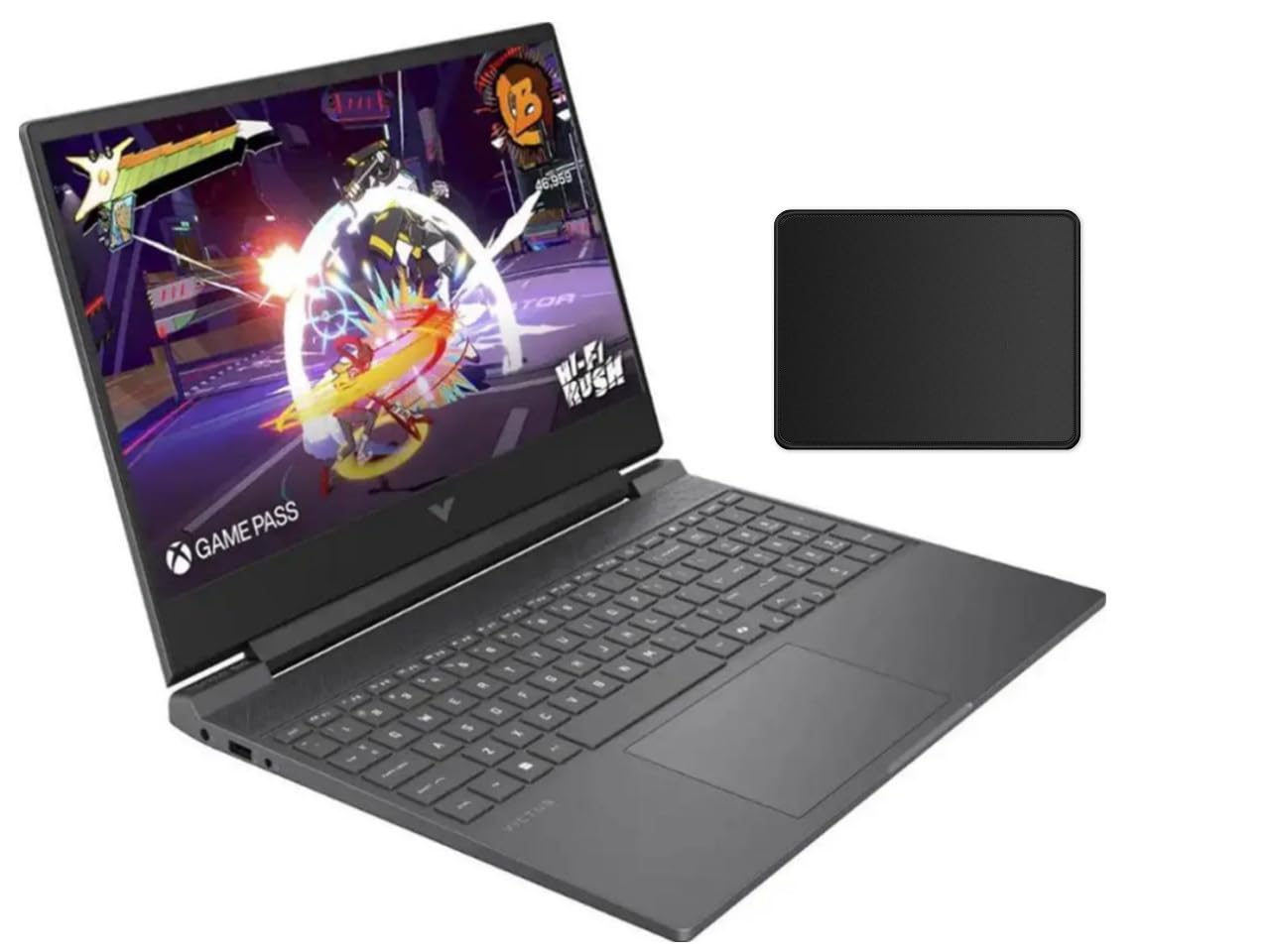
An AMD Ryzen 7 and RTX 4050 pairing makes this Victus a strong contender for CPU-bound games.
This HP Victus configuration offers a different flavor of performance with its AMD Ryzen 7 7445HS processor, boosting up to 4.5 GHz. It pairs this with an NVIDIA GeForce RTX 4050, the same capable mid-range GPU found on several picks above. The 15.6-inch FHD display runs at 144Hz and includes AMD FreeSync Premium technology, which synchronizes the screen’s refresh rate with the GPU’s output to eliminate stuttering and screen tearing during gameplay.
The system comes with 16GB of DDR5 RAM and a 512GB SSD. The inclusion of DTS: X Ultra technology enhances the audio, providing virtual surround sound for a more rich experience. The laptop also bundles a mouse pad, a small but handy addition. The Mica Silver finish gives it a clean, professional look that doesn’t scream “gamer” too loudly.
Shoppers say that the micro-edge, anti-glare display is effective in reducing reflections in bright rooms. The main trade-off compared to the ASUS TUF A16 is the build material — the Victus series uses more plastic in the chassis, so it feels less premium in hand. The performance is very similar, so the choice depends on brand preference or whether you find a deal on this configuration.
Highlights
- AMD Ryzen 7 7445HS (4.5 GHz boost)
- RTX 4050 for modern graphics
- FreeSync Premium for tear-free gaming
- DTS: X Ultra for better audio
Downsides
- Plastic chassis feels less rugged than ASUS TUF
- 512GB SSD is standard capacity
Choose this if: You want the AMD Ryzen 7 and RTX 4050 combination in a more affordable package.
Consider another if: Build quality and a metal chassis are high priorities for you.
8. MSI GF63 Thin (i5-11400H / RTX 3050)
The cheapest gateway to a 144Hz gaming laptop, but the 4-hour battery life demands a tether.
The MSI GF63 Thin is the most affordable entry point into this list. It features an 11th Gen Intel Core i5-11400H processor and an NVIDIA GeForce RTX 3050 4GB GPU. The 15.6-inch Full HD display runs at 144Hz, which is great for its price tier. It comes with 16GB of DDR4 memory and a 512GB NVMe SSD.
This laptop offers the essentials for competitive gaming on a tight budget. The 144Hz screen gives you a smooth visual experience that a standard 60Hz laptop cannot match. The RTX 3050 handles esports titles like League of Legends or Valorant without issue. The 4-hour battery life is a significant weakness, meaning you will rely heavily on the power adapter for any extended use.
Compared to the HP Victus that offers 10 hours, this GF63’s battery is a major limitation for anyone who needs mobility. The 11th Gen CPU is also a generation older than the 13th Gen chips found in many competing models. Buyers appreciate the price point for getting a dedicated GPU and 144Hz screen, but the short battery life and older CPU are clear trade-offs. It is a pure budget option for desk-bound gaming.
What It Offers
- 144Hz display for smooth gaming visuals
- RTX 3050 for dedicated graphics
- 16GB DDR4 RAM
Major Drawbacks
- 4-hour battery life severely limits portability
- 11th Gen i5-11400H is older than most competitors
- RTX 3050 4GB struggles with modern AAA titles
Only buy this if: Your budget is extremely tight and you primarily game plugged into a wall outlet.
look elsewhere if: You need a laptop for on-the-go use or want a CPU from the last two generations.
Understanding the Specs
GPU & VRAM Capacity
The graphics card and its video memory (VRAM) determine how well a laptop runs modern games. The RTX 3050 typically comes with 4GB of VRAM, which is enough for esports titles but forces you to lower texture quality in demanding games. The RTX 4050 jumps to 6GB, giving you more headroom for high-resolution textures. The new RTX 5050 with 8GB of GDDR7 VRAM offers the best future-proofing in this price bracket, letting you run newer titles at higher settings without performance loss.
CPU Generation and Clock Speed
The processor handles game logic, physics, and background tasks. A higher CPU model generation (11th Gen vs. 13th Gen Intel, or Ryzen 5 vs. Ryzen 7) and a higher maximum boost clock speed (measured in GHz) directly affect frame rates in CPU-bound games. A modern 13th Gen i5 or Ryzen 5 chip provides a solid foundation, while an i7 or Ryzen 7 offers extra multi-core performance for streaming or heavy multitasking.
FAQ
Can a gaming laptop under $1000 run modern games?
Is 144Hz or 165Hz worth it on a budget gaming laptop?
What is the difference between RTX 3050, RTX 4050, and RTX 5050?
How much battery life should I expect from a gaming laptop under $1000?
Is 16GB of RAM enough for gaming in 2024?
Should I buy a renewed or refurbished gaming laptop?
What does MIL-STD-810H certification mean for a gaming laptop?
How important is the storage drive in a gaming laptop under $1000?
What is the difference between DDR4 and DDR5 RAM in gaming laptops?
Will a 13th Gen Intel i5 outperform an 11th Gen i5 for gaming?
Final Thoughts: The Verdict
For most people, the gaming laptop under $1000 winner is the ASUS TUF Gaming F16 (2025) because it delivers the most powerful RTX 5050 GPU with 8GB VRAM, a vibrant 165Hz display, and military-grade durability in a single package. If you want the best balance of price and performance, grab the acer Nitro V 15. And for long battery life combined with a spacious 1TB drive, the HP Victus (i5-12450H) is the smart choice for students and commuters.
How We Picked
We do not accept paid placement. Every pick is matched to a real buyer and a real use-case; we do not hands-on test units.
Sources & Methodology
Specifications: manufacturer listings and product documentation. Review insights: verified customer reviews, as of July 2026. Pricing: not shown on this page (it changes often); check the current price via the retailer link.
As an Amazon Associate, Gadgets Feed earns from qualifying purchases. This does not affect which products we feature.
Related Guides
Product prices and availability are accurate as of the date/time indicated and are subject to change. Any price and availability information displayed on Amazon at the time of purchase will apply to the purchase of this product. As an Amazon Associate I earn from qualifying purchases.
CERTAIN CONTENT THAT APPEARS ON THIS SITE COMES FROM AMAZON. THIS CONTENT IS PROVIDED "AS IS" AND IS SUBJECT TO CHANGE OR REMOVAL AT ANY TIME.
Amazon and the Amazon logo are trademarks of Amazon.com, Inc. or its affiliates.