
That faint smell of gas near your water heater or stove isn’t something to wave off. A reliable gas alarm detector is the only way to know if you’re dealing with a harmless whiff or a dangerous leak of propane, natural gas, or methane that could lead to a fire or explosion. The difference between a minor repair and a major disaster comes down to a sensor that works the moment you need it.
I’m Rikta — the co-founder and writer behind Gadgets Feed. I spend my days analyzing market trends, digging into technical datasheets, and comparing sensor types and detection ranges so you don’t have to figure out which gas alarm detector actually works in a real home or RV setting. (And Homer 🐱 supervised the safety checklist from his perch on the stove, unimpressed by the silent sensors).
After combing through dozens of models and hundreds of verified reviews, I’ve narrowed down the field to the seven best performers that balance sensitivity, reliability, and practical features. Read on to find the best gas alarm detector for your specific situation and budget.
How To Choose The Best Gas Alarm Detector
Not all gas alarms are created equal. A model that works well for a basement water heater might fail you inside a travel trailer. Here’s what separates a reliable detector from a false-alarm machine.
Know Your Gas Type
Most portable detectors are designed for combustible gases like methane, propane, butane, and natural gas. If you need to detect carbon monoxide, you need a combination unit, as the sensor technology for CO is different. Always check the datasheet for which specific gases are covered before buying.
Detection Range and Sensitivity
Look for a unit that offers Lower Explosive Limit (LEL) percentage readings. A range of 1%LEL to 20%LEL (roughly 100 ppm to 10,000 ppm) gives you both early warning and a clear picture of how serious a leak is. The best detectors respond in under one second and let you adjust sensitivity levels to avoid nuisance alarms from residual gas.
Power Source and Placement
Fixed plug-in alarms with battery backup are ideal for constant home monitoring. Portable battery-powered sniffers are better for checking connections, joints, and hard-to-reach pipes. If you own an RV, a 12V hardwired alarm is the most permanent solution. Rechargeable lithium models offer freedom from disposable batteries but require you to remember to charge them.
Quick Comparison
On smaller screens, swipe sideways to see the full table.
| Model | Category | Best For | Key Spec | Amazon |
|---|---|---|---|---|
| TopTes PT-990 | Premium Portable | Industrial & Home Diagnostics | 0–10,000 ppm, 4000mAh battery | Amazon |
| Kidde KN-COEG-3 | Fixed Plug-In | Whole-Home Safety | CO + Explosive Gas, 85 dB | Amazon |
| TopTes PT760 | Rechargeable Portable | Tech Enthusiasts & RV Users | 12-inch probe, Type-C charge | Amazon |
| Safe-T-Alert 85-741-BL | 12V RV Alarm | RV & Camper Hardwiring | 12V, low-profile, slim design | Amazon |
| Intendvision IN520A | Gooseneck Sniffer | Reaching Tight Spaces | 50–10,000 ppm, 11-inch probe | Amazon |
| TopTes PT299 | Extendable Sniffer | Hard-to-Reach Pipes | 6.3-inch extendable rod | Amazon |
| TopTes PT205 | Entry-Level Sniffer | Budget Home Checks | %LEL reading, pen hook | Amazon |
In‑Depth Reviews
1. TopTes PT-990 Rechargeable Gas Leak Detector

The PT-990 is the most feature-rich portable sniffer in this lineup, built around a premium Figaro sensor that reads from 0 to 10,000 ppm (0 to 20%LEL). Its active internal fan pulls air into the sensor chamber, cutting response time to under a second—a major step up from passive diffusion-based detectors. You get a colorful TFT display showing both real-time PPM and a trend line graph, plus three independent alarms: a 90dB buzzer, flashing indicator lights, and a vibration alert that you can toggle on or off.
The 11-inch flexible gooseneck makes it simple to check tight spots like gas valve fittings or behind a water heater panel. A 4000mAh lithium battery delivers over nine hours of continuous runtime and charges via USB-C. The onboard data logging feature records alarm events with timestamps, which is useful for service professionals or meticulous homeowners tracking intermittent issues.
At the premium end of the price spectrum, the PT-990 is overkill for a quick sniff test under the sink. But if you want laboratory-grade accuracy, data logging, and enough battery to inspect an entire property in one session, this detector is worth the investment over cheaper alternatives that lack active sampling and adjustable alarm modes.
Why it’s great
- Active fan suction delivers fastest response in class
- Triple alarm system (audible, visual, vibration) with independent controls
- Data logging records PPM readings and alarm timestamps
Good to know
- Premium price tag is high for casual home use
- Requires occasional calibration for sustained accuracy
2. Kidde KN-COEG-3 Carbon Monoxide & Explosive Gas Alarm

The Kidde KN-COEG-3 is the only unit in this roundup that combines carbon monoxide detection with explosive gas (natural gas, propane) sensing in a single plug-in device. Its digital LED display alternates between showing CO levels in PPM and stating “GAS” when combustible gas is present, giving you clear, immediate information about what’s in the air. The 85dB alarm is loud enough to be heard throughout a typical three-bedroom home.
Installation is as simple as plugging into a standard 120V outlet. A 9-volt battery backup keeps it running during power outages, which is important because CO and gas leaks can happen anytime. Peak Level Memory stores the last CO reading or alarm event so you can reference it later, useful for tracking whether a detected leak was a one-time event or a recurring problem.
This isn’t a portable sniffer for pinpointing a tiny pinhole leak behind a pipe fitting. It’s a permanent wall alarm designed to watch over your living space 24/7. If you only own one gas safety device for your home, this combination detector should be it, covering the two most dangerous invisible threats with a single installation.
Why it’s great
- Dual CO and explosive gas detection in a single unit
- Digital display gives specific gas type and concentration
- Battery backup ensures protection during power failures
Good to know
- Not designed for pinpoint leak location—it’s a room monitor
- Battery compartment can be tricky to open initially
3. TopTes PT760 Rechargeable Natural Gas Detector

The PT760 hits the sweet spot between the entry-level sniffers and the premium PT-990. It uses a catalytic sensor and a 12-inch stainless steel telescopic probe to reach deep into crawlspaces, behind cabinetry, and around pipe joints. The device shows %LEL readings from 1% to 20% (100 to 10,000 ppm) and triggers a visual and audible alarm within half a second of detecting gas.
Instead of disposable batteries, the PT760 recharges via USB-C—a subtle but meaningful upgrade for anyone tired of hunting down AAA batteries. The built-in flashlight is another practical touch for inspecting under water heaters or inside dim basements. The ergonomic grip and protective carrying case round out a package that feels more expensive than its mid-range price suggests.
The PT760 is the best pick for someone who wants a rechargeable, accurate sniffer for regular home maintenance and RV inspections without jumping to the top-tier price bracket. One caveat: the telescopic probe is metal, so avoid contacting live electrical wires when probing near outlets or panels.
Why it’s great
- USB-C rechargeable—no battery waste
- Stainless steel telescopic probe reaches confined spaces
- Built-in flashlight for low-light inspections
Good to know
- Metal probe requires caution near electrical components
- No data logging or vibration alarm found on flagship models
4. Safe-T-Alert 85 Series CO Propane Gas Alarm

If you own a travel trailer or motorhome, the Safe-T-Alert 85-741-BL is the standard for propane and carbon monoxide detection in the RV world. It runs on 12V DC power—meaning it ties directly into your RV’s electrical system—and features a low-profile, slim housing that mounts flush against the wall without sticking out into your living space. The trim ring is included in the box.
Installation is straightforward if you’re replacing an older Safe-T-Alert model (like the 45-741): the same screw pattern is used, though you may need to enlarge the wall hole slightly if the wiring sits off-center. Most owners report a five-minute swap. The alarm is not permanently sealed—it will eventually reach end-of-life and display an “END” signal, at which point the sensor requires replacement just like any residential alarm.
This is not a portable sniffer and has no digital screen showing PPM levels. It’s a hardwired safety monitor that does its job silently until propane or CO hits dangerous levels. If you’re converting a van or restoring an older camper, this is the most reliable drop-in choice for 12V systems.
Why it’s great
- Direct 12V hardwire—perfect for RV electrical systems
- Slim profile saves space vs. older bulky alarms
- Direct replacement for many existing Safe-T-Alert units
Good to know
- No digital readout—alarm-only indication
- Sensor has a finite lifespan; must be replaced when expired
5. Intendvision IN520A Gas Leak Detector
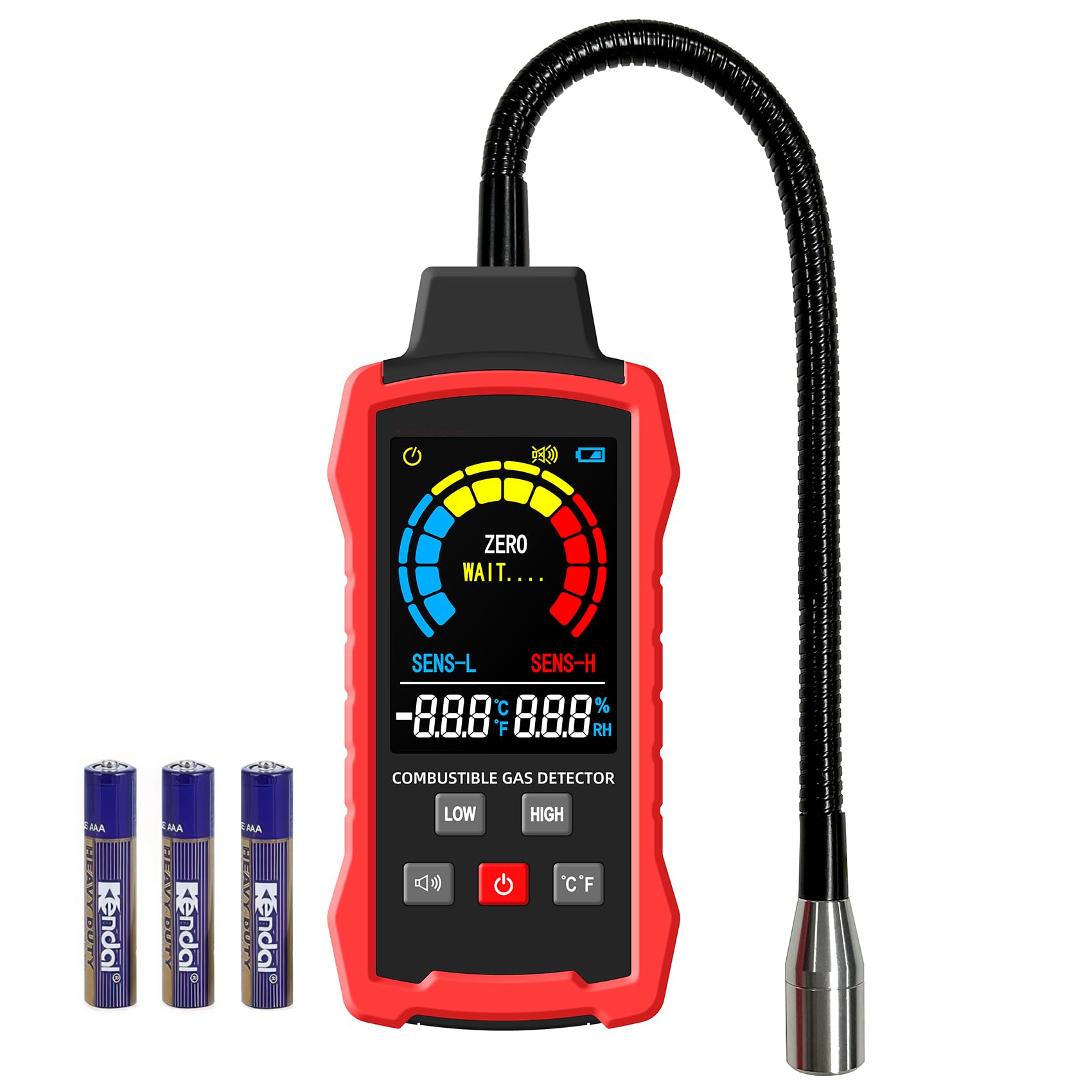
The Intendvision IN520A distinguishes itself with an 11-inch flexible gooseneck probe that locks into any angle, making it the best tool for snaking behind gas fireplaces, under stoves, or around pipe elbows where rigid detectors can’t fit. It supports dual sensitivity levels: high mode detects concentrations as low as 50 ppm for finding tiny pinhole leaks, while low mode requires 500 ppm to trigger, reducing false alarms when testing around residual gas.
The alarm uses 12 colored bars on the display and an audible beep that rises in frequency as gas concentrations climb. A mute button stops the buzzer during inspections, and the auto power-off can be toggled on or off. The detection range covers 50 to 10,000 ppm, which is adequate for residential and RV use. It runs on three AAA batteries that are included in the box.
Some users note that the sensor can pick up lingering gas scent after a burner or pilot light has been running, so you may need to verify suspected leaks with soapy water. The gooseneck is not as rigid as a telescopic metal probe, but for accessing awkward corners, this is the most flexible option available at a budget-friendly price point.
Why it’s great
- Flexible gooseneck reaches awkward and cramped spaces
- High/low sensitivity settings reduce false positives
- Mute button and adjustable auto shut-off for convenience
Good to know
- May false-alarm on residual gas after recent burner use
- No rechargeable battery—uses replaceable AAA cells
6. TopTes PT299 Gas Leak Detector with Extendable Rod

The PT299 is a compact, battery-powered sniffer with a telescopic rod that extends from 2.2 to 6.3 inches, giving you just enough reach to inspect a pipe joint without crouching too close to a suspected leak. The detection range covers 1% to 10% LEL (100 to 5,000 ppm based on methane), and the device responds within half a second. A 75dB buzzer accompanies a rising 9-bar analog display and a red screen at higher gas levels.
A 30-second warm-up timer counts down on the display before the sensor activates, and auto shut-off kicks in after five minutes of inactivity to preserve battery life. The non-slip rubberized texture makes it comfortable to hold during longer inspections. The package includes two AAA batteries and a padded storage bag.
The PT299 is the most affordable sniffer from TopTes in this roundup, and it works exactly as intended for basic leak detection. The shorter extension range and lower maximum LEL (10% vs. 20% on the PT760 and PT-990) limit its usefulness for very small leaks or deep crawlspaces. It’s a solid entry-level tool for homeowners who want quick peace of mind without spending much.
Why it’s great
- Telescopic rod helps you keep distance from potential leaks
- Quick 0.5-second response to combustible gas
- Non-slip grip and storage bag included
Good to know
- Shorter extension and lower ppm ceiling than mid-range models
- No rechargeable battery—uses replaceable AAAs
7. TopTes PT205 Natural Gas Detector

The PT205 is the most compact and travel-friendly sniffer in this lineup, about the size of a fat marker. It features a pen hook on the side so you can clip it into a shirt pocket or tool pouch. Despite the small form factor, it reads %LEL from 1% to 10% (100 to 5,000 ppm) and supports propane, methane, butane, LPG, and natural gas. The 0.5-second response and 30-second warm-up mirror the larger PT299.
Two AAA batteries are included, and the device has a low-battery indicator plus an automatic shut-off after five minutes of inactivity. The screen shows a bar graph that climbs as gas concentration increases, and at dangerous levels the display turns red. It also includes a storage bag to prevent the sensor from damage when not in use.
This is strictly a no-frills leak locator—no gooseneck, no telescopic probe, no flashlight, and no rechargeable battery. But its portability and simple operation make it ideal for quick checks around the house or throwing into a camping kit. If you need to detect sewer gas (hydrogen sulfide), this unit won’t help; it’s calibrated for combustible fuels only.
Why it’s great
- Ultra-compact with pen hook for easy carry
- Accurate %LEL readings for combustible gases
- Complete with batteries, bag, and simple controls
Good to know
- No extendable probe or flexible neck
- Does not detect hydrogen sulfide (sewer gas)
FAQ
Can a gas alarm detector go off from cooking fumes or alcohol?
Should I mount a plug-in gas alarm high or low on the wall?
How often should I test or replace my gas detector?
Final Thoughts: The Verdict
For most users, the best gas alarm detector winner is the Kidde KN-COEG-3 because it handles both carbon monoxide and explosive gas in a single, always-on plug-in unit with a clear digital display and battery backup. If you want a portable sniffer for pinpointing leaks, grab the TopTes PT760 for its USB-C charging and telescopic probe. And for industrial-grade diagnostics with data logging and active sampling, nothing beats the TopTes PT-990.