
There’s a moment every golfer knows: you’re staring down a 165-yard par 3, the pin tucked behind a bunker, and the only number in your head is a hopeful guess. A golf ball tracker removes that guesswork, replacing it with precise distances to the green, hazards, and layup zones — pulling data from over 38,000 course maps in seconds. Whether you ride a cart or walk the fairway, the best units clip to your bag, stick to the cart frame with a magnet, or wrap around your wrist, delivering front, center, and back yardages so you can swing with confidence instead of doubt.
I’m Min — the co-founder and writer behind Gadgets Feed. I spend my time digging into the technical specs of golf gear, comparing satellite acquisition speeds, battery runtimes, and hazard database accuracy, so you don’t have to sift through the marketing noise. (And Homer 🐱 supervised this entire guide from his perch on the warm GPS box — his tail approved every yardage readout.)
Below, I’ve broken down the best handheld, wearable, and sensor-based trackers across every budget tier, comparing real-world battery life, screen readability, course counts, and subscription costs. This is the definitive guide to the best golf ball tracker — built to help you choose the one that fits your game.
How To Choose The Best Golf Ball Tracker
Choosing a tracker isn’t just about the biggest number of preloaded courses. The real difference lies in how you play: are you a walker who needs a lightweight clip-on, a cart rider who wants a big screen with a strong magnet, or a stats obsessive who wants every shot logged automatically? Let’s break down the three core factors that separate a great on-course companion from one that stays in the bag.
GPS Accuracy and Screen Readability
Every tracker in this guide pulls satellite data, but how quickly it locks onto the course — and how clearly it shows yardage — varies widely. Look for a daylight-readable display (MIP or transflective LCD) rather than a glossy smartphone-style screen that washes out in direct sun. For handhelds, a 2.5-inch or larger display with bold numerals lets you read front, center, and back distances without squinting over your cart’s steering wheel.
Battery Life and Charging Convenience
A tracker that dies on the back nine is worse than no tracker at all. Mid-range handhelds typically last 14–18 hours (roughly four rounds), while premium clip-on units like the Garmin G12 stretch to 30 hours. Watch-style trackers are the weakest link here, averaging 10–15 hours in GPS mode. Also check the charging port: micro-USB is common on budget models, while USB-C is becoming the standard on newer devices — a small detail that saves frustration when your only cable is in the car.
Subscription Costs and Hidden Fees
The sticker price is only half the story. Some of the most advanced systems, like Arccos and Rapsodo, require ongoing memberships after the first year — often – annually — to keep shot tracking, advanced stats, and simulator access active. Others, like Shot Scope and Izzo, are completely subscription-free: buy once and use forever. If you’re a weekend golfer who doesn’t need strokes-gained analytics, a subscription-free unit saves you serious money over three seasons.
Quick Comparison
On smaller screens, swipe sideways to see the full table.
| Model | Category | Best For | Key Spec | Amazon |
|---|---|---|---|---|
| Garmin Approach G12 | Handheld Clip-on | Walkers who want ultralight portability | 30-hour battery life | Amazon |
| Bushnell Phantom 3 Slope | Handheld GPS | Cart riders needing slope‑adjusted yardage | Touchscreen & slope tech | Amazon |
| Shot Scope H4 | Shot-Tracking Handheld | Data‑driven golfers wanting 100+ stats | 16 club tags included | Amazon |
| Izzo Swami Max | Handheld GPS | Golfers who want a huge, easy‑to‑read display | 3.5-inch color display | Amazon |
| Swami KISS 2.0 | Handheld GPS | Budget buyers needing fast distance readouts | i-Caddie club suggestions | Amazon |
| Arccos Smart Sensors | Shot-Tracking Sensors | Tech‑focused golfers wanting A.I. club recommendations | 14 smart sensors + Caddie app | Amazon |
| Voice Caddie SC200Plus | Launch Monitor | Home practice & swing speed training | Doppler radar + voice output | Amazon |
| Garmin Approach S50 | GPS Smartwatch | Golfers wanting an all‑day wearable with health tracking | 1.2-inch AMOLED display | Amazon |
| Rapsodo MLM2PRO | Launch Monitor | Serious simulators wanting 15 key metrics | Dual‑camera + Doppler radar | Amazon |
In‑Depth Reviews
1. Garmin Approach G12

The Garmin Approach G12 is the ultimate companion for the walking golfer who refuses to be weighed down. At just 1.8 inches square and 0.5 inches thick, it clips to your belt, bag strap, or lanyard with barely a whisper. Yet inside that tiny frame sits 42,000 preloaded courses with wireless updates via Bluetooth, delivering front, middle, and back yardages plus hazard and dogleg carry distances in under two seconds. The 30-hour battery life (GPS mode) means you can play three consecutive 18-hole rounds on a single charge — no mid-round panic over a dying screen.
The Green View display is the standout feature: it shows the actual shape of the green with manual pin placement, so you know exactly where the flag sits relative to the green’s edges. Pair it with Approach CT10 club sensors (sold separately) and the G12 automatically logs every shot, uploads scores to the Garmin Golf app, and lets you compete in weekly leaderboards. The IPX7 water resistance means rain won’t end your round, and the button-based navigation — while slightly fiddly at first — becomes muscle memory after one nine-hole warmup.
Where the G12 truly shines is its no-subscription ethos. There are no annual fees, no premium tiers, no paywalls for basic stats. You buy it once and get every feature forever. The only real caveat is its size: the tiny screen, while sharp, can be tough to read from a cart if you’re not leaning forward. And the belt clip is notoriously easy to dislodge — use the included lanyard or it might become a very expensive lost-and-found story.
Why it’s great
- Unmatched 30-hour battery life in GPS mode
- 42,000 preloaded courses with no subscription fees
- Green View display shows actual green shape with movable pin
- IPX7 water-resistant for rainy rounds
Good to know
- Small screen can be tough to read from a golf cart
- Button-based navigation has a learning curve
- Belt clip is easy to lose; lanyard is essential
2. Bushnell Phantom 3 Slope
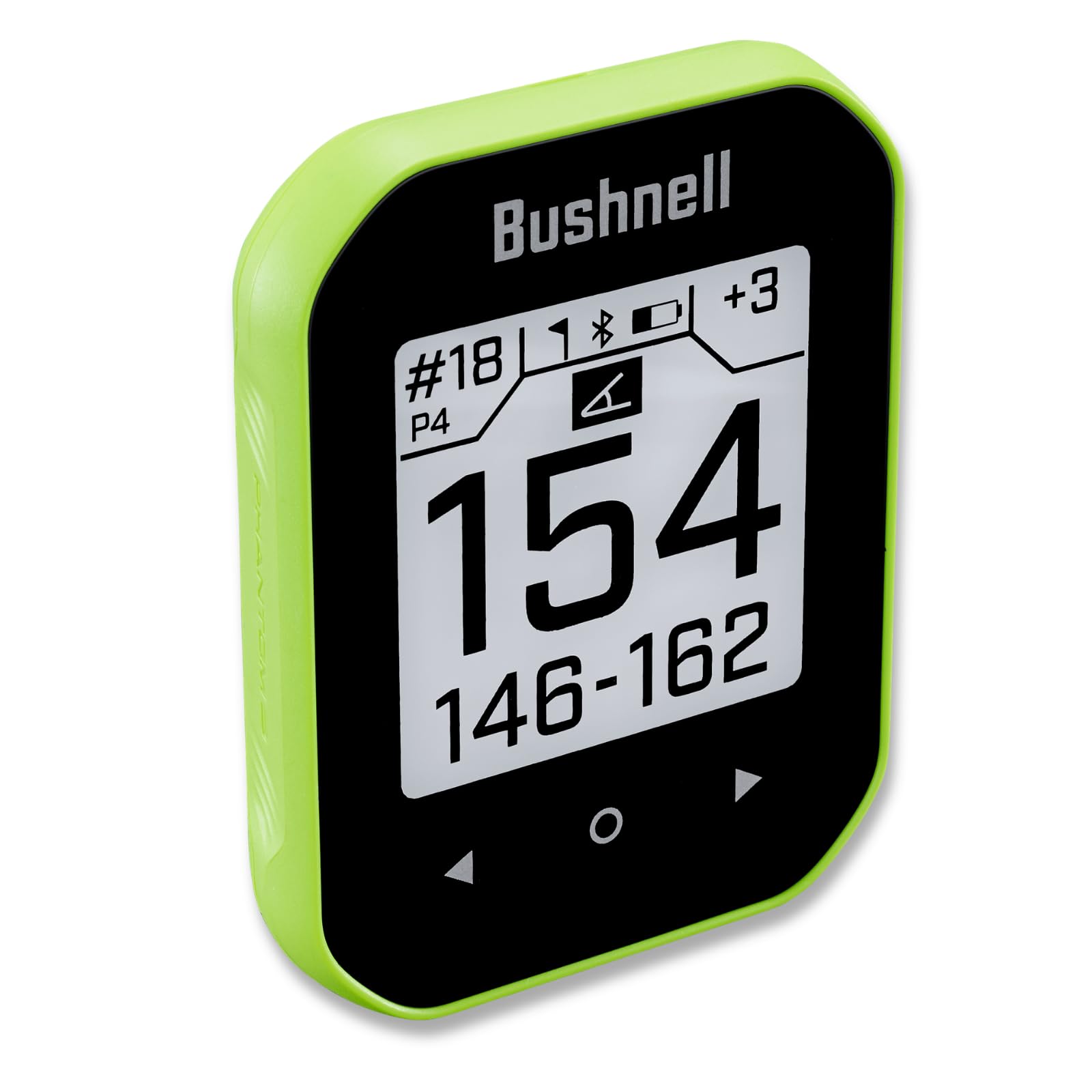
The Bushnell Phantom 3 Slope takes the already popular Phantom platform and adds a crucial layer: Bushnell’s patented Slope Technology that calculates incline and decline for every shot. If you play on hilly courses — or simply want to know whether that 150-yard Par 3 plays 145 or 160 after the elevation change — this is the GPS that does the math for you. The touchscreen interface is intuitive and responsive, with large front, center, and back distances that pop even under midday sun. Auto course recognition and auto hole advance keep you moving without button-mashing.
The built-in BITE magnet is among the strongest I’ve tested on any handheld: it locks onto the cart frame securely enough that you can hit a bumpy fairway without worrying about it bouncing off. Battery life clocks in at 14–18 hours (roughly four rounds), which covers a whole weekend trip without a recharge. The unit also syncs with the Bushnell app via Bluetooth, giving you hole-by-hole layouts, layup distances, and a digital scorecard — all subscription-free, unlike some competitors that gate these features behind a paywall.
The main trade-off is that the touchscreen, while responsive, is not as fast as a physical button press when you’re in a hurry. The hazard codes (using small text) can be confusing at first glance, and the clip-on holder is less reliable than the magnet. Setup also requires a thorough read of the manual to unlock all the features. But for the cart golfer who values slope accuracy and a readable screen above all else, the Phantom 3 Slope is a standout choice in the mid-range tier.
Why it’s great
- Patented Slope Technology factors in elevation changes
- Large, easy-to-read touchscreen with bold numbers
- Strong BITE magnet keeps it secure on cart frames
- 18-hour battery life covers four rounds
Good to know
- Touchscreen can be slower than button-based units
- Hazard codes displayed in small, confusing text
- Requires manual reading to unlock advanced features
3. Shot Scope H4 GPS Handheld

The Shot Scope H4 is the tracker for golfers who treat data like fuel. It packs automatic shot tracking with 16 included club tags, covering over 36,000 preloaded courses and delivering 100+ statistics — including strokes gained analysis — without a single subscription fee. The dynamic yardages adjust based on your specific angle of approach to the green, giving you a more precise number than a fixed center-point reading. After each round, sync via Bluetooth to the Shot Scope app and review exact yardages per club, missed greens, and scoring trends.
The H4’s hardware is designed for versatility: it includes a metal belt clip, a strong magnet, and a carabiner, so you can wear it, clip it to your bag, or stick it to the cart. The daylight-readable MIP display is crisp in direct sun, and the 15-hour battery life comfortably covers a long day with multiple rounds. The lack of a subscription is the H4’s killer feature — buy it once, and all the data, stats, and analytics are yours forever, potentially saving hundreds compared to premium sensor systems.
The biggest frustration is the proprietary charger, which feels dated in a USB-C world, and the fact that you have to remember to “tag” each shot — a faint vibration can be missed if you’re not used to the motion. Some users report that the tags don’t sit flush on domed grips, and the initial setup (pairing clubs to the device) is tedious. But once it’s dialed in, the depth of data — strokes gained vs. handicaps, approach accuracy, putting distance — rivals systems that cost twice as much annually.
Why it’s great
- No subscription fees for full stats including strokes gained
- 16 club tags included for automatic shot tracking
- Dynamic yardages adjust to your angle of approach
- Versatile mount: belt clip, magnet, or carabiner
Good to know
- Proprietary charger instead of USB-C
- Tagging every shot requires habit; vibration can be missed
- Club tags may not fit flush on domed grips
4. Izzo Golf Swami Max

The Izzo Swami Max takes the “bigger is better” approach to handheld GPS. Its 3.5-inch color display is the largest in this price bracket, and it auto-rotates between portrait and landscape orientation — so whether you’re standing or sitting in the cart, the yardage numbers are always right-side up. The font in center-only mode is enormous, making it a godsend for golfers who struggle with small screens. Preloaded with 38,000 global course maps, it delivers front, center, and back distances plus layup and carry numbers for hazards and doglegs.
The integrated magnet is strong enough to grip a cart frame securely, and the rechargeable lithium-ion battery runs up to 16 hours — enough for three rounds. Setup is simple: turn it on, and it auto-recognizes the course and advances holes automatically. The scorecard tracking and shot distance measurement are useful extras that don’t require any manual tagging. And like all Izzo Swami models, there are zero subscription fees for course updates or features.
The quality issues reported by some users — specifically the glass face popping off after a few cart-attached rounds — are a real concern. The auto-advance can occasionally skip a hole or lag, requiring a manual tap. And while the large screen is a blessing, the plastic body feels less durable than Garmin or Bushnell alternatives. But for the budget-conscious golfer who prioritizes readability above all else, the Swami Max offers a lot of screen for the money.
Why it’s great
- Massive 3.5-inch auto-rotating color display
- 38,000 preloaded courses with no subscription fees
- Strong magnet for cart mounting
- 16-hour battery life for multiple rounds
Good to know
- Reported durability issues with glass face popping off
- Auto-advance can occasionally skip or lag
- Plastic body feels less premium than competitors
5. Swami KISS 2.0 Handheld GPS

The Swami KISS 2.0 is proof that a budget-friendly handheld can still deliver smart features. It packs Izzo’s i-Caddie technology, which suggests your next club based on your distance to the target — a feature usually reserved for premium units. The 38,000-course database auto-recognizes your location and delivers front, center, and back yardages in two display modes: a full layout or a simplified center-only readout with larger numbers. The magnetic back is strong enough for cart frames, and the micro-USB charging port keeps it topped up between rounds.
Weighing just 4 ounces, the KISS 2.0 is one of the lightest handhelds available, making it easy to clip to a bag or pocket without feeling bulky. The water- and fog-resistant body means a light drizzle won’t end your session. The digital scorecard tracks GIR and PPR automatically, so you can review your stats after the round. Setup is as simple as powering it on — no pairing, no app, no subscription — which is exactly what casual golfers want.
The main limitation is that the unit only recognizes 9 holes at a time, requiring a manual reset for the back nine — an annoying quirk that interrupts your rhythm. The 4-ounce weight, while great for portability, makes it feel less substantial in hand. And the large number mode, while legible, lacks the hazard detail found in pricier units. But for under triple digits, the KISS 2.0 gives you accurate, fast yardage and a useful club suggestion engine that the competition at this price point simply doesn’t offer.
Why it’s great
- i-Caddie club suggestion based on distance to target
- Ultra-light at 4 ounces for easy portability
- Water- and fog-resistant for all-weather play
- No subscription, app, or pairing required
Good to know
- Only recognizes 9 holes at a time; needs manual reset
- Lightweight plastic feels less durable
- Simplified display lacks hazard detail
6. Arccos Smart Sensors (Gen 3+)

The Arccos Gen 3+ system is the official game tracker of the PGA TOUR for a reason: it turns every club in your bag into a smart data-collection device. The 14 screw-on sensors are weather-resistant (IP54 rated) and ultralight, adding negligible weight to your grips. Once paired with the Arccos Caddie app, the system automatically logs every shot, recording distance, club used, and location — no tapping, no tagging, no thinking. The A.I.-powered rangefinder adjusts yardage in real-time for wind (including gusts), elevation, temperature, humidity, and altitude, delivering what Arccos calls the “Caddie Number” — the single most precise yardage available from any consumer device.
The first year of membership is included, giving you full access to the Caddie analytics, strokes-gained data, and club distance recommendations. After that, it’s an annual fee (currently around ), which is the trade-off for this level of automated intelligence. The app’s dashboard is stunning: it breaks down your performance by club, lie type, and situation, and even suggests which clubs you should practice more. For the golfer who wants to know exactly how far they hit their 7-iron on a 90-degree humid day, this is the gold standard.
The biggest frustration is the subscription cost after year one. For casual players who only log a few rounds per month, the fee feels steep. Setup requires downloading the app, pairing each sensor, and calibrating your putter — about 15 minutes of upfront work. Some users report missed shots if the phone is deep in a pocket or if the sensors aren’t tightened properly. But for data obsessives who treat golf as a numbers game, Arccos provides insights no handheld GPS can match.
Why it’s great
- A.I. Caddie adjusts yardage for wind, elevation, temp, and humidity
- Fully automatic shot tracking — no tapping required
- Official game tracker of the PGA TOUR
- Deep analytics including strokes gained and club recommendations
Good to know
- Requires annual subscription after the first free year
- Setup involves pairing 14 sensors and calibrating putter
- Missed shots possible if phone is not accessible
7. Voice Caddie SC200Plus

The Voice Caddie SC200Plus is a different breed of golf tracker: it’s a launch monitor designed for practice, not play. Using Doppler radar, it measures swing speed, ball speed, carry distance, total distance, smash factor, and tempo — all displayed on an LCD screen and announced audibly via the built-in speaker. The standout feature is the Swing Speed Mode, which lets you practice your tempo without a ball at all, making it perfect for indoor training. The adjustable loft angles (from 20 to 64 degrees) correspond to different clubs, so you can get club-specific distance estimates.
Setup takes seconds: place the device 8–10 feet behind the ball, align it, and swing. The LCD shows carry and total distance simultaneously, while the voice announces each number — helpful when you’re looking at your finish position. The battery lasts up to 20 hours, enough for a month of range sessions. The data storage feature saves averages for each club, so you can see improvement over time. For under , it’s the most accessible entry point into swing analytics without needing a full simulator.
Accuracy is the main point of contention. While most users find it solid for irons and woods, wedge distances can be notably off, and some driver readings have been reported at less than half the actual distance — likely due to unit calibration or setup errors. It also requires line-of-sight to the ball, so you can’t use it in a tight indoor space with obstructions. And unlike a full simulator, it doesn’t provide spin rate or launch angle, so advanced players will quickly outgrow it. For the mid-handicapper looking to verify their carry distances, though, it’s a valuable training tool.
Why it’s great
- Doppler radar measures swing speed, carry, and smash factor
- Swing Speed Mode works without a ball for indoor practice
- Voice output announces results audibly
- 20-hour battery life for extended range sessions
Good to know
- Wedge accuracy and driver distance readings can be unreliable
- Requires clear line-of-sight and proper alignment
- No spin rate or launch angle data for advanced analysis
8. Garmin Approach S50

The Garmin Approach S50 is the smartwatch that respects your off-course life as much as your on-course game. Its 1.2-inch AMOLED display is stunningly sharp and bright, even under direct midday sun, bringing 43,000 preloaded courses to life with detailed hazard views, dogleg layouts, and PlaysLike Distance that adjusts yardage for elevation changes. The lightweight ComfortFit nylon strap makes it comfortable for all-day wear, and the smartwatch features — wrist-based heart rate, Body Battery energy monitoring, advanced sleep tracking, and Garmin Pay — mean you never have to take it off between rounds.
On the course, the S50 is a joy to use. It automatically detects your course, asks for your tee color, and begins tracking scores with simple tap interactions. The hazard view shows bunkers and water hazards exactly where they sit relative to your line, and the green view lets you move the pin to the actual flag position. Battery life hits 15 hours in GPS mode (enough for a round and then some) and up to 10 days in smartwatch mode. Pair with optional CT10 club trackers for full shot-tracking capabilities, and the Garmin Golf app integrates everything into a clean dashboard with handicap tracking.
The main pain point is the annual subscription for the advanced slope mapping and some premium course views — a cost that feels unnecessary given the watch’s premium price tag. Some users report that the “autoshot” feature can be unreliable, dropping shot data mid-round or failing to register putts. The band is also criticized as being too short and hard to fasten. But for the golfer who wants a single device that handles fitness, health, and golf — and who appreciates a gorgeous AMOLED display — the S50 is the best wearable option on the market.
Why it’s great
- Stunning 1.2-inch AMOLED display for vibrant course views
- PlaysLike Distance adjusts yardage for elevation changes
- All-day health tracking (HR, sleep, Body Battery)
- 43,000 preloaded courses with detailed hazard maps
Good to know
- Extra /year for premium slope mapping
- Autoshot feature can be unreliable; may miss shots
- Stock band is too short and difficult to fasten
9. Rapsodo MLM2PRO
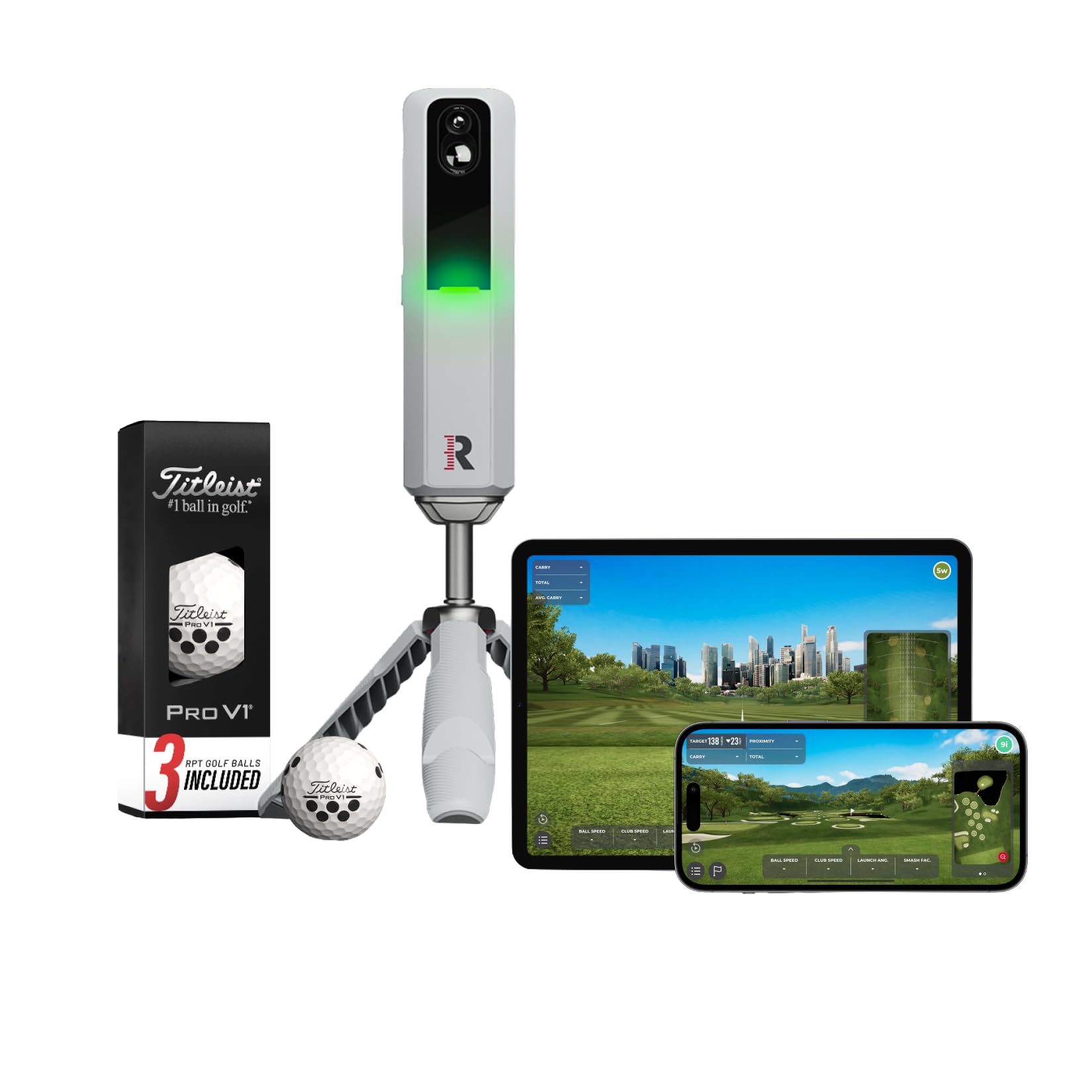
The Rapsodo MLM2PRO is the launch monitor that brings tour-level data into your home. Its combination of Doppler radar and dual high-speed cameras captures 15 key metrics per shot — spin rate, spin axis, carry distance, club speed, club path, launch angle, and more — with an accuracy margin reported within 2–3% of Trackman-level systems. The 45-day premium trial unlocks over 30,000 simulated courses (including iconic layouts from around the world), target range drills, the Rapsodo Combine, and integration with third-party sim apps like Awesome Golf and E6 Connect. The included tripod and carrying case make it easy to take to the driving range.
The build quality is solid: the unit feels dense and well-constructed, and the carrying case protects it during transport. Setup involves connecting to WiFi (direct mode works most reliably), aligning the unit with the ball, and using the Rapsodo-provided marked balls (3 ProV1 RPT balls included). The Impact Vision feature lets you see exactly where the club struck the ball, and you can capture your swing from any angle for video analysis. For the serious home simulator enthusiast, the MLM2PRO offers an unparalleled feature set at a fraction of the cost of ceiling-mounted units.
The subscription model is the biggest divide: after the 45-day trial, premium features (simulated courses, combine, speed training) require an ongoing membership, with a lifetime option at around — essentially doubling the upfront cost. Connection stability can be finicky, especially with shared WiFi networks; direct WiFi mode solves this but limits internet access. Short chips under 6–8 feet are not read reliably, and the requirement for Rapsodo-marked balls adds ongoing expense as the balls wear out after heavy use. But for the home golfer who wants the most accurate, feature-rich simulator under , the MLM2PRO is the clear winner.
Why it’s great
- Dual-camera + Doppler radar captures 15 key metrics
- 30,000+ simulated courses with free trial period
- Impact Vision for precise club/ball contact analysis
- Portable design with tripod and carrying case
Good to know
- Requires ongoing subscription after 45-day trial
- Connection issues with shared WiFi networks
- Short chips (<6ft) not read reliably
- Needs proprietary Rapsodo-marked balls
FAQ
Is a GPS golf tracker legal for tournament play under USGA rules?
Can I use a golf ball tracker with my existing smartphone instead of buying a dedicated device?
How often do preloaded course maps need to be updated on a GPS tracker?
Final Thoughts: The Verdict
For most golfers, the best golf ball tracker is the Garmin Approach G12 because it packs the longest battery life (30 hours), the largest course database (42,000 preloaded), and a completely subscription-free experience into a tiny, 1.8-inch clip-on that works equally well for walkers and cart riders. If you want slope-adjusted distances and a bigger touchscreen with a bulletproof magnet, grab the Bushnell Phantom 3 Slope. And for the stat-obsessed golfer who wants strokes-gained analytics without an annual bill, nothing beats the Shot Scope H4 with its 16 club tags and 100+ performance statistics.