
That single plastic tub rattling against your RV frame isn’t just annoying — it’s a short circuit waiting to happen, a corrosive mess, and a potential fire hazard if hydrogen gas builds up without a vent path. A proper Group 24 battery box locks down the cell, shields terminals from metal cargo, and channels fumes safely out of enclosed compartments, turning a loose power source into a reliable piece of your mobile setup.
I’m Min — the co-founder and writer behind Gadgets Feed. I’ve spent hundreds of hours cross-referencing pull-test results, IP ratings, terminal configurations, and real owner reports to separate the boxes that actually protect deep-cycle batteries from the flimsy containers that crack under vibration.
Whether you are wiring a trolling motor, outfitting a travel trailer, or building a portable solar generator, finding the right best group 24 battery box comes down to matching venting requirements, material durability, and integrated power features to your specific environment.
How To Choose The Best Group 24 Battery Box
Not every container labeled “Group 24” can handle the weight of a 50Ah lead-acid battery at highway speeds or the tight clearance of a modern LiFePO4 prismatic cell. You need to evaluate venting compliance, material construction, terminal access, and whether an integrated power center makes sense for your setup.
Venting Requirements
If your battery lives inside a sealed compartment — under an RV step, inside a boat console, or in a trailer tongue box — the box must include a vent port and hose fitting that channels explosive hydrogen gas outside the enclosure. Models meeting USCG CFR 183.420 or ABYC E-10.7 give you a clear safety standard. Open-air installations on truck beds or utility trailers can skip venting without risk.
Material and Mounting Security
Polypropylene (PP) boxes are light and corrosion-proof but can flex under heavy batteries during sharp turns. Stainless steel boxes add rigidity and fire resistance but weigh nearly 10 pounds empty and may have sharp edges on the raw cut metal. Look for models with pre-drilled bottom mounting holes and integrated strapping points that let you bolt the box directly to a frame or plywood base rather than relying on friction alone.
Quick Comparison
On smaller screens, swipe sideways to see the full table.
| Model | Category | Best For | Key Spec | Amazon |
|---|---|---|---|---|
| SUNAPEX Smart Battery Box | Smart Power Center | Portable power station builds | 16A Overload Switch, 2x USB | Amazon |
| VEVOR Stainless Steel Box | Metal Locking Box | High-theft environments | 201 Stainless Steel Shell | Amazon |
| Camco 55371 | USCG Vented Box | Enclosed RV compartments | USCG CFR 183.420 Compliant | Amazon |
| Peastorm Stainless Box | Waterproof Metal Case | Exposed marine/trailer use | 11.25 x 8 x 11.25 Inches | Amazon |
| VEVOR PP Smart Box | Budget Smart Box | Entry-level power center | Built-in Voltmeter + USB | Amazon |
| Universal Battery Tray | Open Mounting Tray | Engine bay relocation | 5.44 lb Alloy Steel | Amazon |
| DC HOUSE LiFePO4 Battery | Lithium Cell | Drop-in Group 24 upgrade | 100Ah, Bluetooth BMS | Amazon |
In‑Depth Reviews
1. SUNAPEX Smart Battery Box
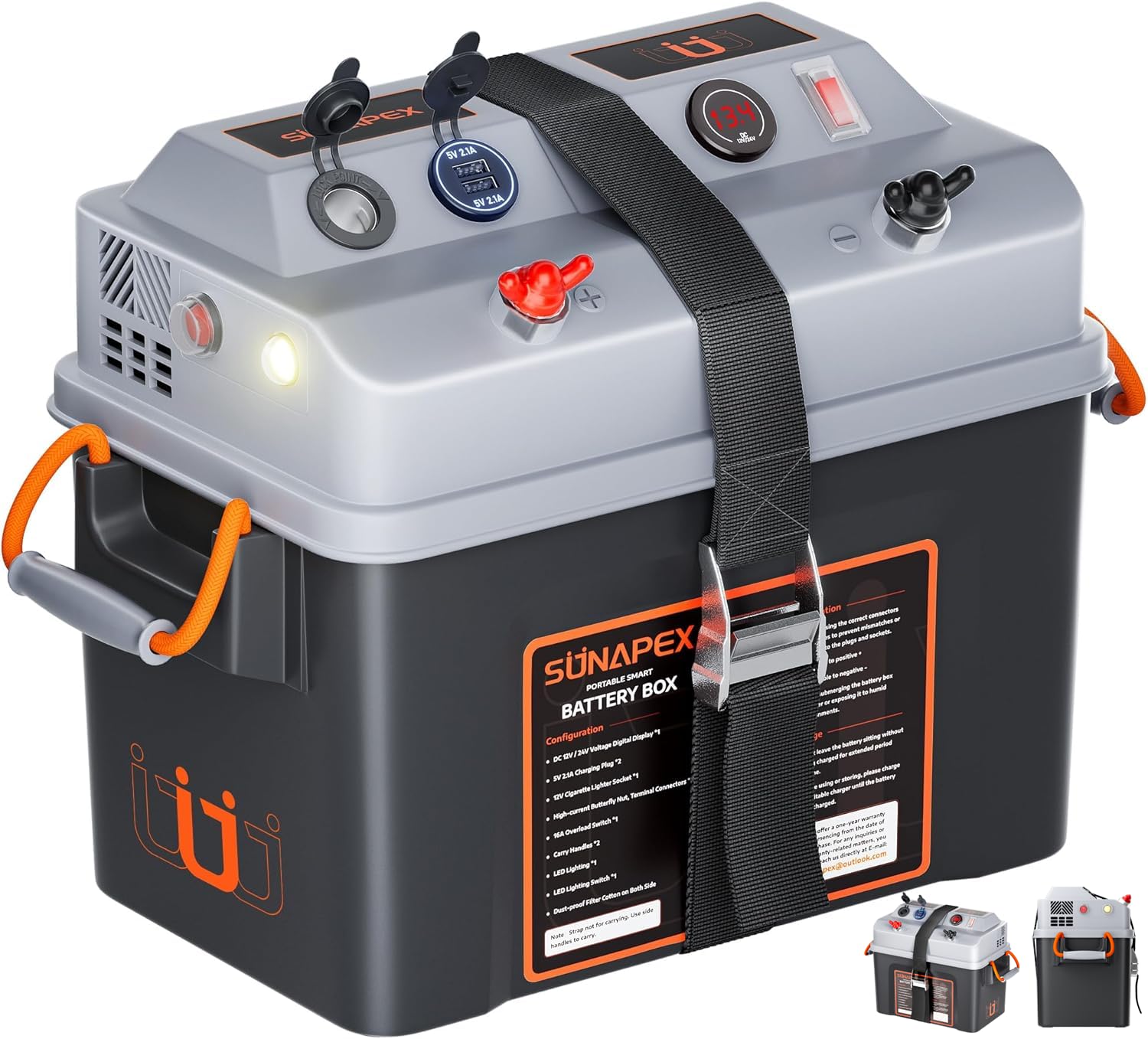
The SUNAPEX Smart Battery Box transforms a standard Group 24/27/31 battery into a portable power station with integrated circuit protection. It packs a 16A overload switch, a digital voltmeter, two USB-A ports, a 12V cigarette lighter socket, and a built-in LED light — all molded into a sturdy PP base that accepts AGM or lithium cells up to 13.1 x 8.2 x 7.8 inches internally.
External high-current terminals let you connect a trolling motor or inverter without opening the lid, and the ergonomic side handles make carrying a 50-pound battery manageable. The base plastic feels slightly flexible but hasn’t shown cracking in field use, and the included rubber feet prevent sliding inside a boat hull or truck bed. Owners report that the voltmeter matches multimeter readings within 0.1V.
The lid fit is snug, and the built-in light activates via a tactile switch for low-light compartment access. One caveat: the battery terminal wires inside the box could use a heavier gauge for sustained 30A+ draws, so consider upgrading them if you plan to run a high-thrust trolling motor continuously.
Why it’s great
- Integrated 16A circuit breaker protects all ports from overloads.
- Digital voltmeter provides real-time battery monitoring without extra gear.
- Built-in LED light improves visibility in dark compartments.
Good to know
- Internal wiring gauge may limit sustained high-amperage draws.
- Plastic is slightly flexible; avoid overtightening mounting bolts.
2. VEVOR Stainless Steel Battery Box
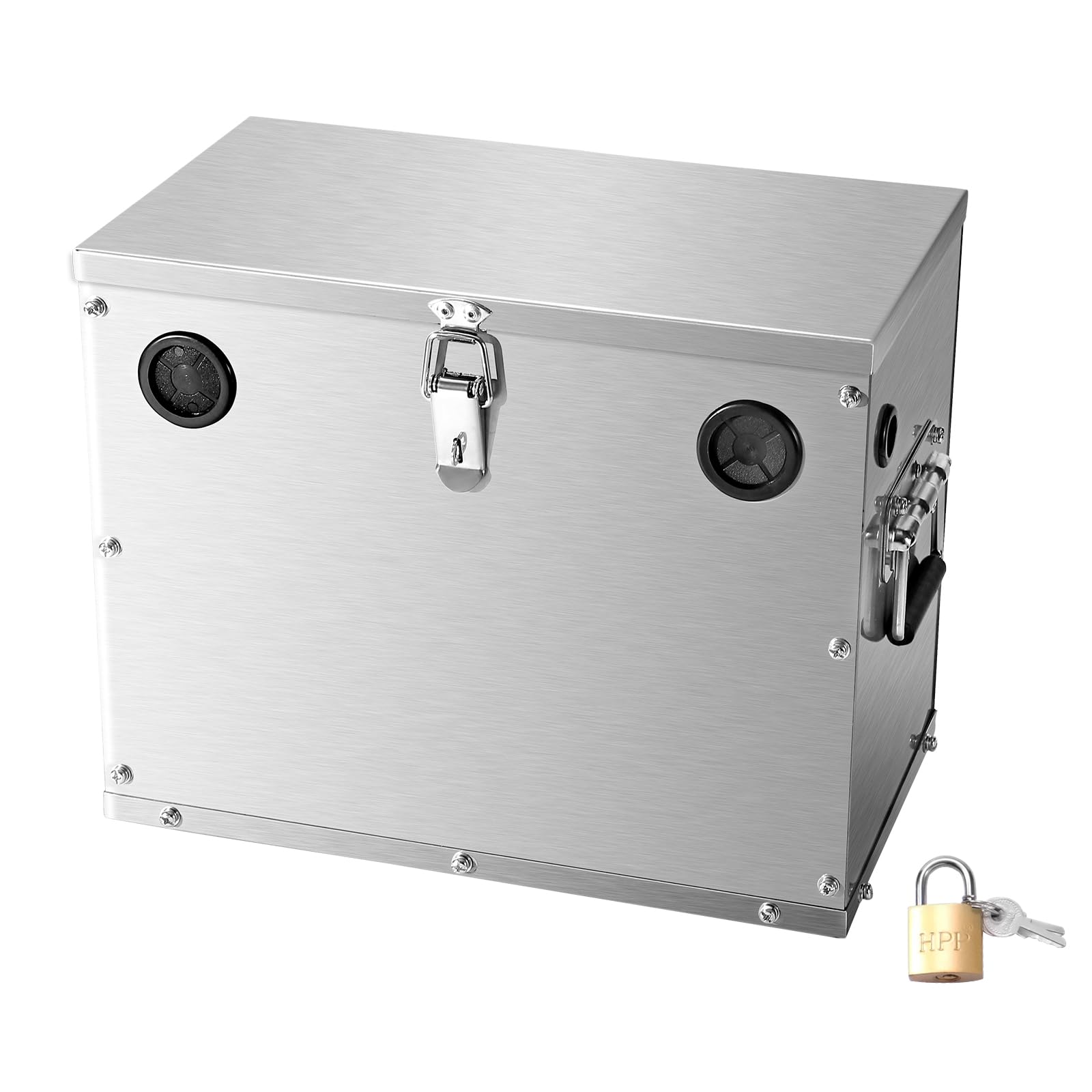
The VEVOR Stainless Steel Battery Box uses a 201 stainless steel shell that resists corrosion from saltwater spray and battery acid leaks far better than any polypropylene box. Rated for Group 24 through Group 31 batteries, this 9.4-pound enclosure includes dual side handles, a lockable lid with two keys, and cable holes on the front, sides, and bottom protected by rubber grommets.
Assembly requires about 30 minutes with the included stainless hardware and a Phillips screwdriver — the side panels slide inside the front and back faces, and the supplied wrench helps tighten the M8 terminal bolts. Multiple owners report fitting deep-cycle lead-acid and oversized LiFePO4 batteries with tight but acceptable clearance. The lock provides basic theft deterrence, though the latch mechanism is not pick-proof.
Watch for two details: the protective plastic film on the stainless panels can be stubborn to peel from cut edges, and the metal edges are sharp enough to cut skin during handling — wear gloves and consider filing the perimeter. Once mounted to a trailer tongue or boat deck, the box stays rigid and doesn’t flex under vibration.
Why it’s great
- Heavy gauge stainless steel shell resists impact and corrosion.
- Multi-directional cable routing provides flexible installation options.
- Lockable lid secures battery from theft in exposed locations.
Good to know
- Sharp edges require careful handling and optional edge filing.
- Protective plastic film is difficult to remove from cut edges.
3. Camco 55371 Vented Battery Box

The Camco 55371 is the reference standard for enclosed RV and marine installations where hydrogen venting is non-negotiable. It meets US Coast Guard CFR 183.420 and ABYC E-10.7, meaning the louvered vent grille, hose mount plate, and included 3/4-inch vent hose channel explosive gases safely outside the compartment. The box is molded from impact-resistant polypropylene and weighs only 1 pound empty.
Internal dimensions measure 14 7/8 x 9 5/8 x 10 1/4 inches (excluding vent ports), giving a standard Group 24 battery a comfortable fit with room for terminal cables. The foam tape included around the lid edge creates a seal that keeps road spray and dust out. Owners consistently report that the Camco box fits existing RV battery trays perfectly, with pre-drilled holes aligning to common floor patterns.
The polypropylene construction means zero corrosion risk, but the material can flex under heavy batteries if side screws are over-torqued. Replace the included hardware with stainless bolts if your installation lives near salt air — the stock fasteners may show surface rust within a season.
Why it’s great
- USCG/ABYC certified venting for safe enclosed installation.
- Complete kit with hose, grille, and foam seal included.
- Lightweight polypropylene eliminates corrosion concerns.
Good to know
- Polypropylene flexes under heavy batteries if bolts are over-torqued.
- Included fasteners may rust in saltwater environments.
4. Peastorm Stainless Steel Battery Box
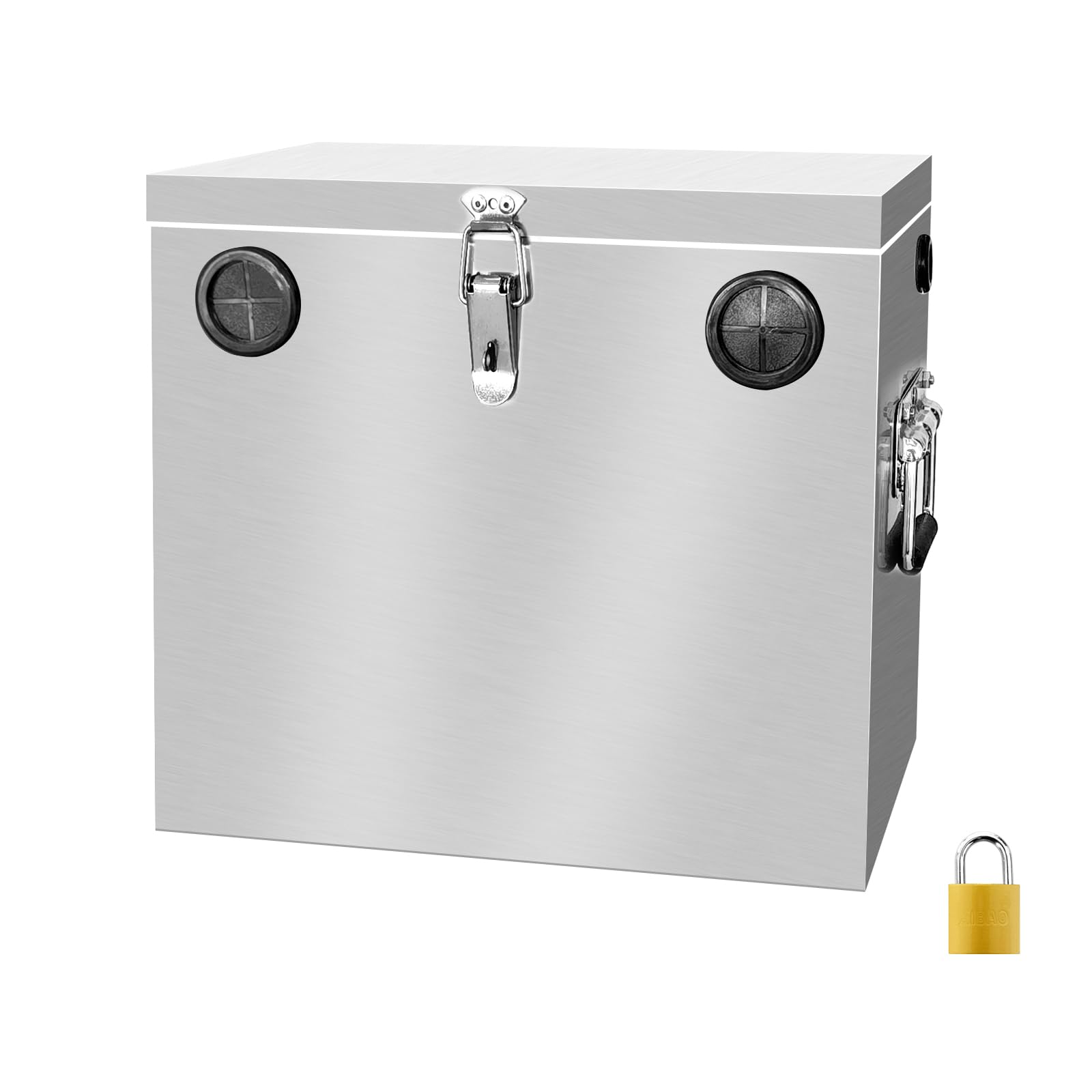
The Peastorm Stainless Steel Battery Box targets exposed marine and trailer tongue installations where water ingress is the primary failure risk. The 11.25 x 8 x 11.25-inch enclosure features nearly waterproof TIG welds along the seams, a full-opening hinged lid with a tight latch, spring-loaded side handles, and rubber grommets on all cable pass-throughs that keep spray out when the lid is closed.
Internal capacity is generous enough to fit two Group 24 LiFePO4 batteries side by side with 1-2 inches of clearance, making it a strong choice for solar storage banks or dual-battery RV setups. The included padlock is serviceable as a visual deterrent but the small latch hole limits aftermarket lock options to compact sizes only. Owners praise the smooth lid operation and the box’s ability to survive direct rain exposure without internal moisture.
The stainless steel is relatively thin (400-series), which keeps weight around 8 pounds but leaves sharp edges on the cut openings — a quick pass with a file resolves that. The rubber grommets are flexible but not fully waterproof at the wire entry point, so a bead of silicone sealant is recommended for permanent installations in wet climates.
Why it’s great
- Near-waterproof welded seams keep electronics dry in rain.
- Full-opening hinged lid provides easy battery access.
- Fits two Group 24 lithium batteries for expanded capacity.
Good to know
- Sharp edges on metal cutouts require filing before installation.
- Grommets are not fully waterproof; silicone sealant recommended.
5. VEVOR PP Smart Battery Box
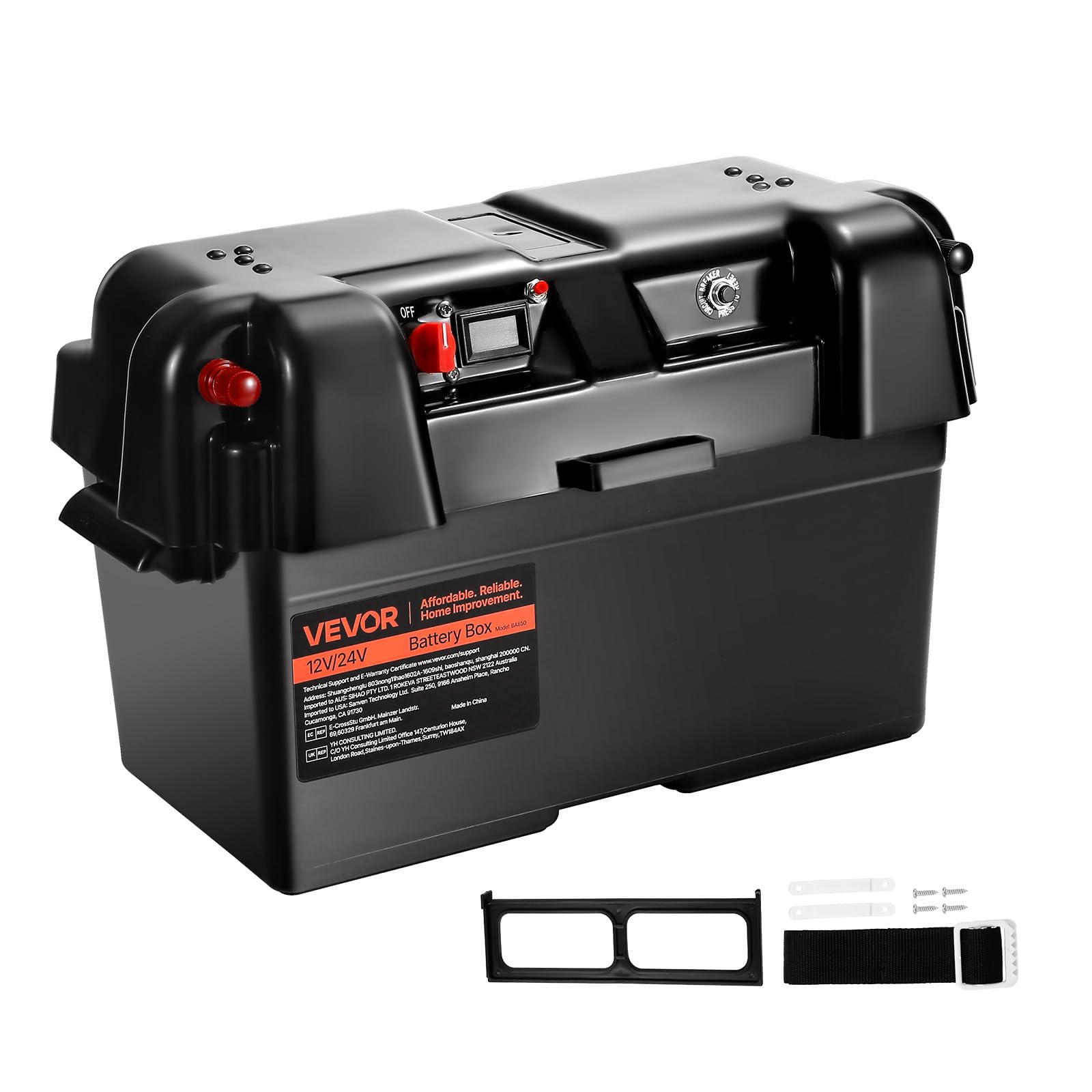
The VEVOR PP Smart Battery Box brings integrated power management to the budget-friendly tier, combining a corrosion-resistant PP shell with dual integrated circuit breakers, a cigarette lighter socket, a USB port, and a built-in voltmeter — all for a mid-range price. The dual strap design inside cushions the battery against vibration and holds it steady during transport.
This box is compatible with Group 24 and Group 27 lead-acid, AGM, and lithium batteries up to 12V/24V, and the included +/- terminal posts let you connect solar panels or a charge controller directly through the lid. The voltmeter helps you avoid over-discharge by showing remaining voltage at a glance, a feature usually reserved for premium power centers.
Fit accuracy varies: some owners report that the lid sits slightly crooked with tall Group 31 batteries, and the exterior terminal posts are quite large — check your cable lug size before assembly. The user manual explicitly states this box is not for marine use despite the product description, so keep it in dry compartments away from continuous salt spray.
Why it’s great
- Built-in voltmeter and USB port add convenience without extra cost.
- Dual circuit breakers provide overload protection for connected devices.
- Dual strap design reduces battery vibration during travel.
Good to know
- Lid fit may be loose with taller Group 31 batteries.
- Not certified for marine use despite retail listing language.
6. Universal Battery Mounting Tray

The Universal Battery Mounting Tray is not a closed box — it is an open-frame alloy steel bracket designed for engine bay relocations or secondary battery mounting where enclosed venting is unnecessary. The 5.44-pound tray uses a hollowed-out design with an electrostatic powder coating for corrosion resistance, and the adjustable L-shaped pull hooks accommodate Group 24, 34, 35, 51, 51R, and 78 batteries.
The bolt-in design includes all mounting hardware, and the retaining bar locks the battery from shifting in all directions. Owners have used this tray to relocate batteries in classic car engine compartments, mount spares on truck frames, and secure batteries on lawn tractors and UTVs. The adjustable bolts let you fine-tune the grip on different battery widths.
Surface rust can appear if the powder coating is scratched during installation, so touch up any exposed metal with spray paint. The tray does not include any vent routing or weather seal, so it is strictly for open-air or well-ventilated locations only.
Why it’s great
- Adjustable pull hooks fit multiple battery group sizes.
- Open design allows air circulation and heat dissipation.
- Heavy-duty alloy steel construction prevents flex under load.
Good to know
- Not suitable for enclosed compartments due to lack of venting.
- Powder coating may chip and require touch-up to prevent rust.
7. DC HOUSE 100Ah LiFePO4 Battery
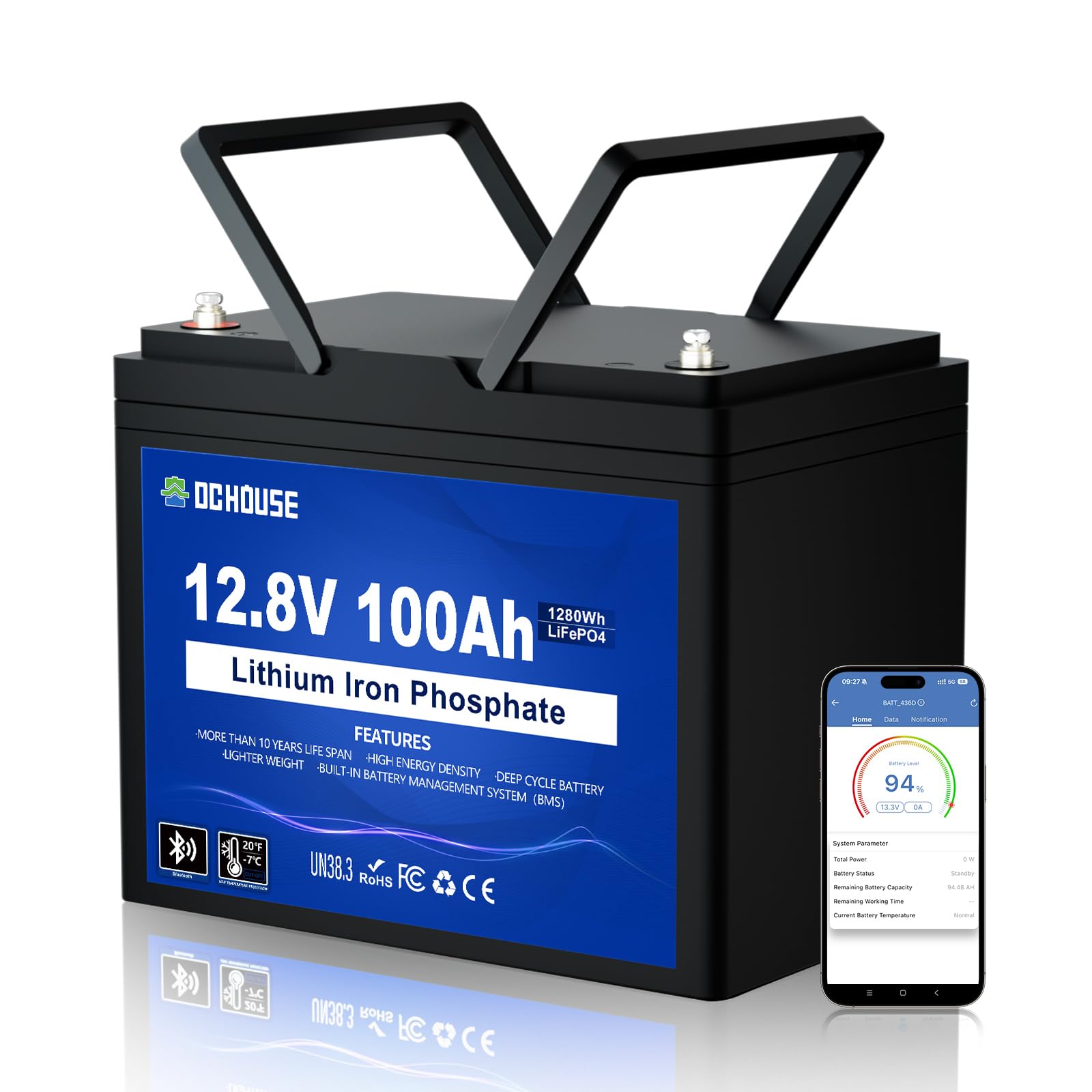
The DC HOUSE 100Ah LiFePO4 Battery is not a box — it is the lithium power cell that replaces the heavy lead-acid battery inside your Group 24 box. Weighing 23.8 pounds versus roughly 60 pounds for an equivalent lead-acid, this lithium battery frees up significant weight capacity for boats, RVs, and solar systems while delivering up to 15,000 cycles over a 10-year lifespan.
Built-in Bluetooth connects to the DC HOUSE app for real-time monitoring of SOC, voltage, current, and individual cell status. The 100A BMS includes low-temperature charging cutoff below 19.4°F and discharge cutoff below -4°F, protecting the cells from cold damage during winter storage. Dimensions are close to BCI Group 24 spec, though it stands about 0.32 inches taller — verify your box lid clearance before installation.
This battery pairs perfectly with any of the vented or smart boxes above, transforming them into lightweight, high-capacity power stations. The M8 terminals accept standard ring lugs, and the battery supports up to 4S or 4P configurations for expanded voltage or capacity.
Why it’s great
- Bluetooth app provides per-cell voltage and fault diagnostics.
- Low-temperature cut-off protects battery in freezing conditions.
- Lightweight lithium saves 36+ pounds versus lead-acid.
Good to know
- 0.32 inches taller than standard Group 24 — check box lid clearance.
- Not designed for engine starting/cranking applications.
FAQ
Will a Group 24 battery box fit a modern LiFePO4 battery?
Can I use a non-vented battery box inside my RV cabinet?
How do I secure a battery box to my trailer frame?
Final Thoughts: The Verdict
For most users, the best group 24 battery box winner is the SUNAPEX Smart Battery Box because it combines integrated circuit protection, USB/12V ports, and a built-in voltmeter in a single affordable package that handles both AGM and lithium cells. If you need certified venting for an enclosed RV compartment, grab the Camco 55371. And for exposed trailer tongue or marine use where theft and weather are concerns, nothing beats the Peastorm Stainless Steel Box.