
That slow crank on a freezing morning isn’t just annoying — it’s your current H5 battery telegraphing its impending death. Group 47 (H5) batteries are the unsung workhorses of countless sedans, SUVs, and crossovers, yet most drivers grab whatever fits without thinking about cold cranking amps, reserve capacity, or whether AGM chemistry actually matters for their daily commute. The wrong choice leaves you stranded; the right one delivers years of silent, instant starts.
I’m Min — the co-founder and writer behind Gadgets Feed. I’ve spent hundreds of hours analyzing cold cranking amp (CCA) curves, AGM plate designs, and warranty fine print across dozens of Group 47 batteries to separate the genuine long-haul performers from the boxed-up compromises.
This guide cuts through the terminal-size confusion and brand noise to deliver the definitive ranking of the best h5 car battery options for every vehicle, climate, and budget — from premium lithium upgrades to proven AGM workhorses that outlast the factory original.
How To Choose The Best H5 Car Battery
An H5 car battery isn’t just a box of lead — it’s a carefully calibrated energy system that must match your vehicle’s starting demands, electrical load, and physical tray. Getting it right means understanding three core specs: CCA for cold weather, RC for accessory power, and AGM vs. flooded construction for longevity. Here’s what matters most.
Crank Power: The CCA Number That Actually Matters
Cold Cranking Amps (CCA) measures how much current a battery can deliver at 0°F for 30 seconds while maintaining at least 7.2 volts. An H5 battery typically offers 600 to 680 CCA. If you live where winter temps regularly drop below freezing, aim for the higher end of that range. Every 100 CCA you add buys you faster cranking and less strain on the starter motor. Don’t overbuy — a 680 CCA battery won’t hurt a car rated for 600 CCA, but a 500 CCA unit in a vehicle that requires 650 will leave you stranded.
Reserve Capacity: Your Cushion Against Dead Accessories
Reserve Capacity (RC) tells you how many minutes the battery can run essential electronics (lights, wipers, HVAC fan) if the alternator fails. Most H5 batteries offer 90–100 minutes of RC. If you run high-drain accessories like aftermarket sound systems, dash cams in parking mode, or frequent short trips where the alternator never fully recharges the battery, prioritize models with 100 RC or higher. This spec is often overlooked but separates batteries that last three years from those that limp past two.
Chemistry Choice: AGM, Flooded, or LiFePO4
Absorbent Glass Mat (AGM) batteries are the gold standard for modern H5 applications — they’re spill-proof, vibration-resistant, and charge faster than traditional flooded lead-acid batteries. They also handle the repeated cycling of start-stop systems without degrading prematurely. Lithium iron phosphate (LiFePO4) options weigh roughly 75% less and offer faster cranking, but require a compatible charging system and carry a higher upfront cost. Flooded batteries are cheapest but die fastest, especially in hot climates. For 90% of drivers, AGM is the correct answer.
Fitment: The Millimeters That Make or Break Installation
BCI Group Size 47 (also labeled H5 or L2) has a standard footprint of roughly 9.5 x 6.9 x 7.5 inches, but even a few millimeters of discrepancy in height or terminal placement can turn a simple swap into a wrestling match. Always measure your existing battery’s length, width, and height — then check that the positive terminal is on the right and the negative is on the left when facing the battery. Many online fitment guides get this wrong, so a tape measure beats a dropdown menu every time.
Quick Comparison
On smaller screens, swipe sideways to see the full table.
| Model | Category | Best For | Key Spec | Amazon |
|---|---|---|---|---|
| Weize Platinum AGM | AGM | Best Overall Value | 680 CCA, 41.6 lbs | Amazon |
| Odyssey Performance AGM | Premium AGM | Max Deep-Cycle Durability | 63 Ah, 49 lbs | Amazon |
| Interstate MTX-47/H5 | Premium AGM | Trusted Brand Longevity | 650 CCA, 39.2 lbs | Amazon |
| Goodyear Platinum AGM | AGM | Balanced Mid-Range Pick | 680 CCA, 100 RC | Amazon |
| MARXON AGM 47 | AGM | Start-Stop Efficiency | 660 CCA, 41 lbs | Amazon |
| Daakmax Platinum AGM | AGM | Budget-Friendly AGM | 680 CCA, 38 lbs | Amazon |
| Autocessking AGM 47 | AGM | Entry-Level AGM Upgrade | 680 CCA, 39 lbs | Amazon |
| SDULIBITIY LiFePO4 47 | Lithium | Ultra-Lightweight Upgrade | 600 CCA, 11 lbs | Amazon |
| Wuldnmar G47 Lithium | Lithium | Performance Weight Savings | 600 CCA, 11 lbs | Amazon |
In‑Depth Reviews
1. Weize Platinum AGM Battery BCI Group 47

The Weize Platinum AGM delivers 680 CCA and 100 RC from a true AGM construction that holds its charge longer than conventional flooded batteries — less than 8% self-discharge after 90 days of storage. Owners consistently report it fires up engines instantly in both freezing winters and blistering summers, with several users noting reliable performance in 2017 Nissan Altimas and other common H5-fitment vehicles. The 36-month warranty and 41.6-pound weight signal a dense, well-built plate stack that shrugs off vibration.
What sets the Weize apart at this price point is the combination of 100 RC and proven AGM cycle life — up to double that of a standard lead-acid battery. It accepts charge currents up to 18A, meaning short commutes won’t leave you chronically undercharged. The tapered terminal layout (negative left, positive right) matches the vast majority of H5 applications, so installation is a straight swap for anyone replacing a dying Group 47 battery.
The lone concern from the review history is the occasional dead-on-arrival unit, though this is a risk with any shipped battery. Weize’s warranty process requires multimeter proof, which adds friction if you don’t own a voltmeter. Given the hundreds of positive reviews citing perfect packaging and immediate starts, the failure rate appears low — but it’s worth checking voltage before installation to avoid a headache.
Why it’s great
- Strong 680 CCA for reliable cold-weather starts even at -22°F
- 100 RC provides a solid buffer for accessory-heavy driving
- Priced well below premium AGM brands with a comparable 36-month warranty
Good to know
- Not a deep-cycle battery — avoid solar or marine applications
- Warranty claims require proof of voltage with a multimeter
2. Odyssey Performance Series AGM

The Odyssey Performance Series isn’t just an H5 battery — it’s a deep-cycle AGM that bridges the gap between starting power and sustained accessory runtime. With a 63 Ah capacity and 12-volt AGM construction weighing 49 pounds, it packs noticeably more lead mass than typical H5 options. Owners running high-end sound systems in vehicles like the 2023 Kia Seltos and older performance cars consistently report it handles the sustained draw without voltage sag, something a standard 60 Ah AGM struggles with.
Odyssey’s unique Thin Plate Pure Lead (TPPL) technology delivers faster recharge acceptance than conventional AGM designs, which matters if your driving pattern involves frequent short trips. The 6-cell configuration produces a higher resting voltage, typically 12.8V to 13.0V, giving you a stronger initial crank even before the alternator kicks in. Users in freezing climates confirm it starts reliably at temperatures that kill lesser batteries, reinforcing the brand’s reputation among off-road and performance enthusiasts.
The catch is fitment: the Odyssey H5 measures slightly wider than some factory trays at 10.91 inches deep, and its factory battery blanket may not fit properly in vehicles with tight compartments. The warranty process for online purchases has frustrated some buyers, with reports of lengthy resolution times compared to buying locally. If you value brute-force reserve capacity and genuine deep-cycle capability over perfect drop-in convenience, this is your battery.
Why it’s great
- 63 Ah capacity outperforms typical 60 Ah H5 batteries in sustained draw
- TPPL AGM technology recharges faster and holds higher resting voltage
- Proven reliability in extreme cold and high-vibration environments
Good to know
- Larger dimensions may require tray modifications in some vehicles
- Online warranty support can be slow — local purchase may be safer
3. Interstate Batteries Mega-Tron MTX-47/H5
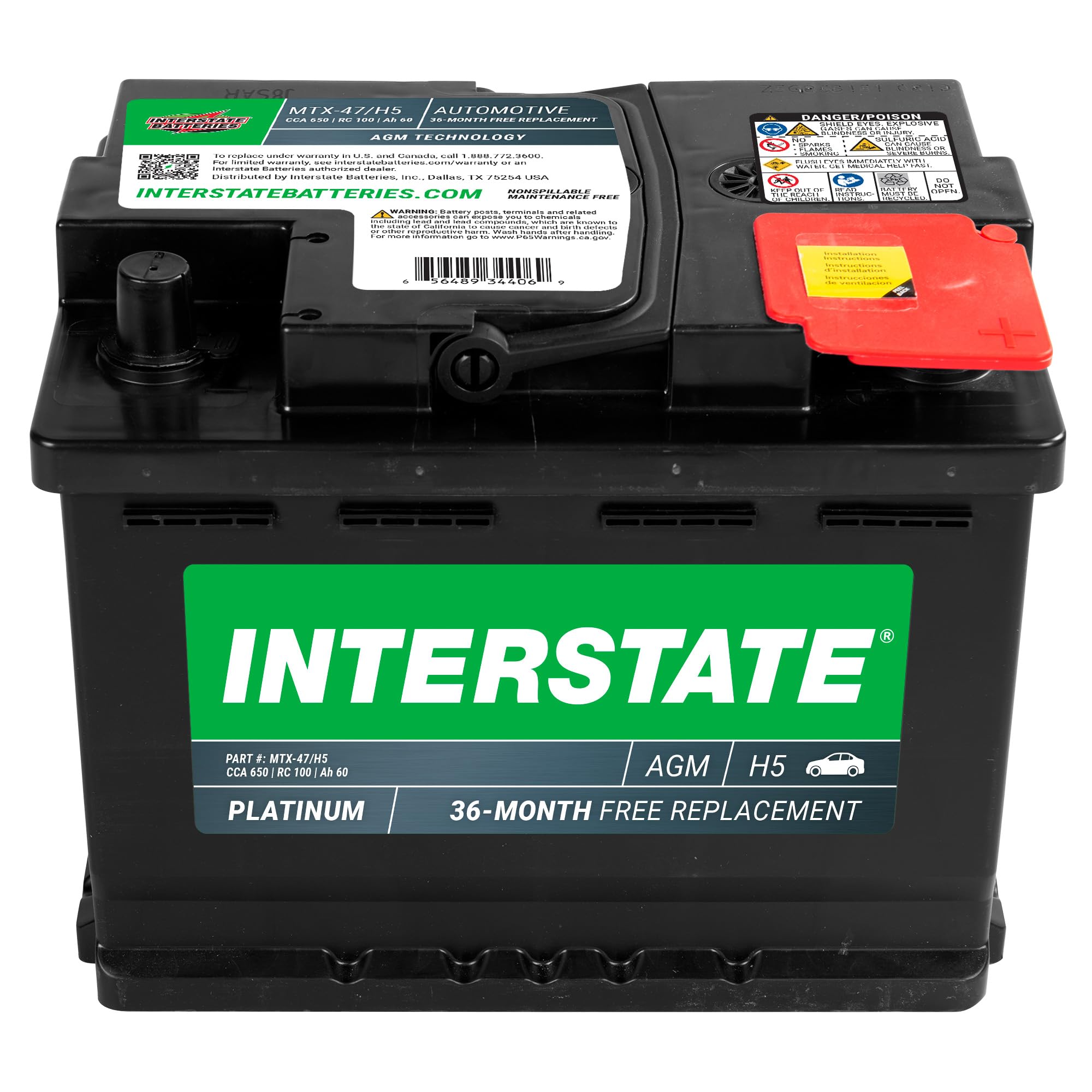
Interstate Batteries has been a trusted name in automotive power for over seven decades, and the MTX-47/H5 brings that pedigree to the H5 form factor with a pure lead AGM design that promises 2 to 3 times the service life of conventional flooded batteries. The 650 CCA rating is slightly below some competitors’ 680 CCA, but Interstate’s pure lead chemistry delivers more usable energy per amp-hour, meaning consistent cranking power throughout the battery’s life rather than a steep decline after year one. At 39.2 pounds, it’s one of the lighter AGM options, but the build quality feels dense.
Owners with high-performance vehicles like the Jaguar F-Type R and heavy SUVs like the 2017 Suburban report it as a direct drop-in replacement with no terminal adjustments needed. The VRLA spill-proof construction eliminates the risk of acid leaks during removal or installation, which is especially relevant for tight engine bays. Interstate’s nationwide network also means warranty support is easier to access than with online-only brands — you can walk into a distributor if you have an issue.
The trade-off is the price premium — you’re paying for the brand’s reliability and reputation, not groundbreaking specs. At 650 CCA, it doesn’t have the raw cold-weather headroom of the 680 CCA options, which could matter if you face subzero winters regularly. The MTX-47/H5 is a “buy it and forget it” choice for drivers who prioritize hassle-free longevity over maximum crank amps.
Why it’s great
- Pure lead AGM design delivers 2-3x the lifespan of conventional flooded batteries
- Established nationwide warranty support network
- Spill-proof and vibration-resistant for long-term reliability
Good to know
- 650 CCA is adequate but not class-leading for extreme cold
- Premium pricing reflects brand reputation more than raw specs
4. Goodyear Platinum Series AGM 47-H5
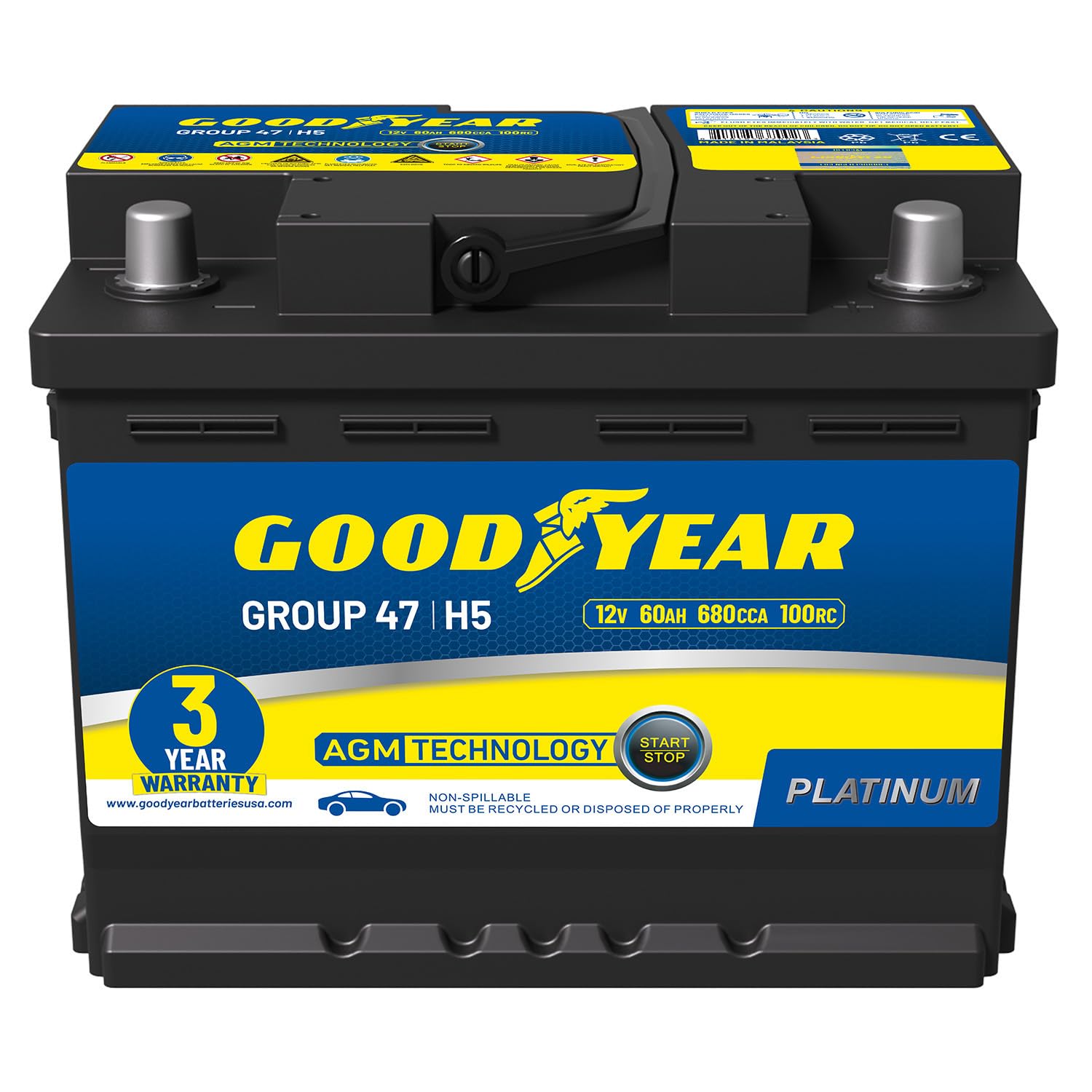
The Goodyear Platinum AGM enters the H5 segment with a familiar brand name and strong specs: 680 CCA and 100 RC in a compact 9.37 x 6.75 x 7.5-inch package that fits the standard H5 footprint. Owners upgrading from flooded batteries in vehicles like the Jeep Wrangler Rubicon and Mercedes E350 immediately notice brighter headlights and flicker-free accessory operation — a direct result of AGM’s higher and more stable voltage output. The CE certification and ISO factory backing provide quality assurance that mid-range brands sometimes lack.
Goodyear’s spill-proof AGM construction allows multiple mounting positions (except upside down), giving flexibility for vehicles with unusual battery trays. The 36-month warranty is competitive with the best in this tier, though some users have reported difficulty navigating the warranty process through Amazon’s ecosystem. The quick-start behavior — even after short trips — suggests the battery accepts charge efficiently, a key trait for start-stop system compatibility.
The warranty experience is the main shadow here: a small but vocal minority of buyers report the battery failing within the warranty period and encountering resistance from both Goodyear and Amazon when attempting a replacement. If you buy this battery, keep your receipt and registration details handy. For the majority, it’s a solid mid-premium option that delivers exactly what the spec sheet promises.
Why it’s great
- Class-leading 680 CCA and 100 RC in a slightly shorter footprint
- AGM voltage stability improves headlight and accessory performance
- CE certified and built in an ISO-certified facility
Good to know
- Warranty support can be inconsistent through online channels
- Some vehicles may require a terminal adapter for optimal fitment
5. MARXON Group 47 H5 AGM

MARXON targets the growing number of vehicles with start-stop technology, where the battery must handle frequent, shallow discharge cycles without degrading. This 660 CCA AGM battery uses a patented alloy that improves corrosion resistance and leak-proof performance, directly addressing the failure modes that kill standard lead-acid batteries in start-stop applications. The manufacturer claims 40% faster charging than an SLA battery, which is critical for recovering charge during deceleration events.
At 41 pounds, it’s mid-pack in weight but feels robust in hand. Owners have successfully installed it in vehicles ranging from a 2012 Tahoe (without start-stop) to a 2011 Jeep Liberty, with multiple users noting flawless starts even after the battery sat unused for weeks. The 3-year warranty backed by a US-based office provides reassurance for an online purchase. Several buyers note the battery is likely a rebranded Uplus unit, but the consistent quality control and responsive customer service mitigate that concern.
The main caveat is dimensional: at 9.53 inches long, it’s marginally longer than the standard H5 specification, which could make installation tight in vehicles with molded battery trays. The included terminal hardware is basic, and some users have noted the vent hose fitting is not compatible with all OEM vent tube designs. If your vehicle has open tray space and you need an affordable AGM for stop-start, this is a compelling value play.
Why it’s great
- Optimized for start-stop systems with fast charge acceptance
- Patented alloy improves corrosion resistance and leak-proof safety
- US-based office and 3-year warranty for peace of mind
Good to know
- Slightly longer than standard H5 may require careful tray fitment
- Vent hose fitting may not match all OEM designs
6. Daakmax Platinum AGM Group 47 H5
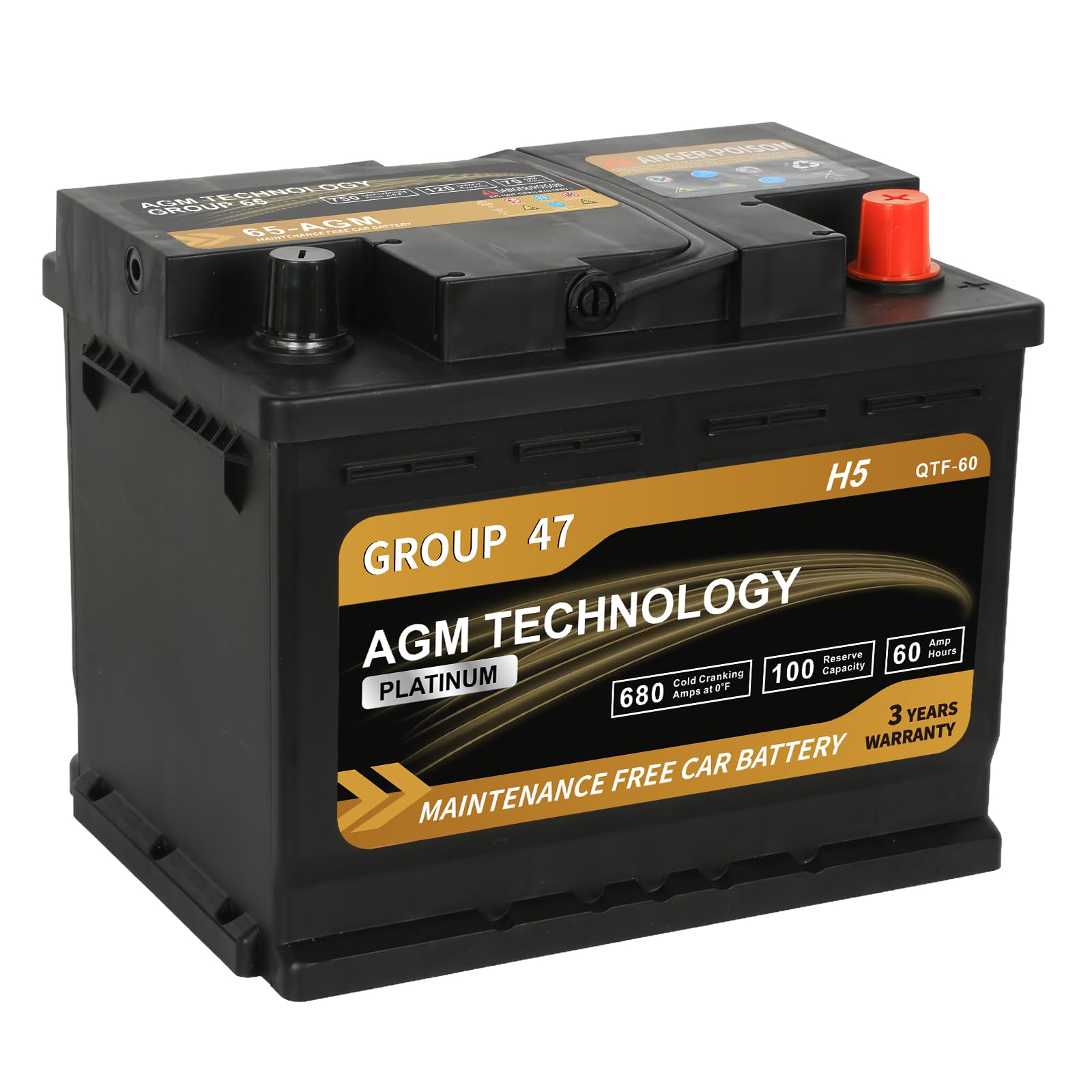
The Daakmax Platinum AGM is the entry-level AGM option that doesn’t compromise on the core specs: 680 CCA and 100 RC match the best in this category, and the 38-pound weight suggests efficient internal packaging. Owners of a 2021 Ford Explorer and 2021 Jeep Wrangler confirm it drops into the H5 tray without modifications, and the exceptional packaging — noted by several buyers — means the battery arrives fully charged and undamaged. The 36-month warranty is among the longest in the budget tier.
Daakmax claims 18x vibration resistance and leak-proof construction, which is standard AGM territory, but the real story is the price. For drivers who previously used flooded batteries and want the upgrade to AGM without the sticker shock of premium brands, this battery delivers the same 680 CCA starting power and 100 RC reserve capacity as batteries costing significantly more. The high-density negative paste improves conductivity and recharge speed, making it a solid choice for daily drivers.
The “budget-friendly” positioning comes with some trade-offs: the included documentation is minimal, and the brand’s customer service infrastructure isn’t as established as Interstate or Odyssey. The battery also carries a caveat against deep-cycle use, meaning it’s strictly a starting battery for vehicles with normal electrical loads. If your vehicle has a high-output stereo or winch, the 38-pound plate mass may not hold up under sustained deep discharge as well as heavier AGM options.
Why it’s great
- Full 680 CCA and 100 RC at a budget-friendly price point
- Excellent packaging ensures damage-free delivery
- 36-month warranty provides long-term coverage
Good to know
- Lighter plate mass may limit deep-cycle resilience
- Brand support infrastructure is less developed than premium competitors
7. Autocessking H5 Group Size 47 AGM
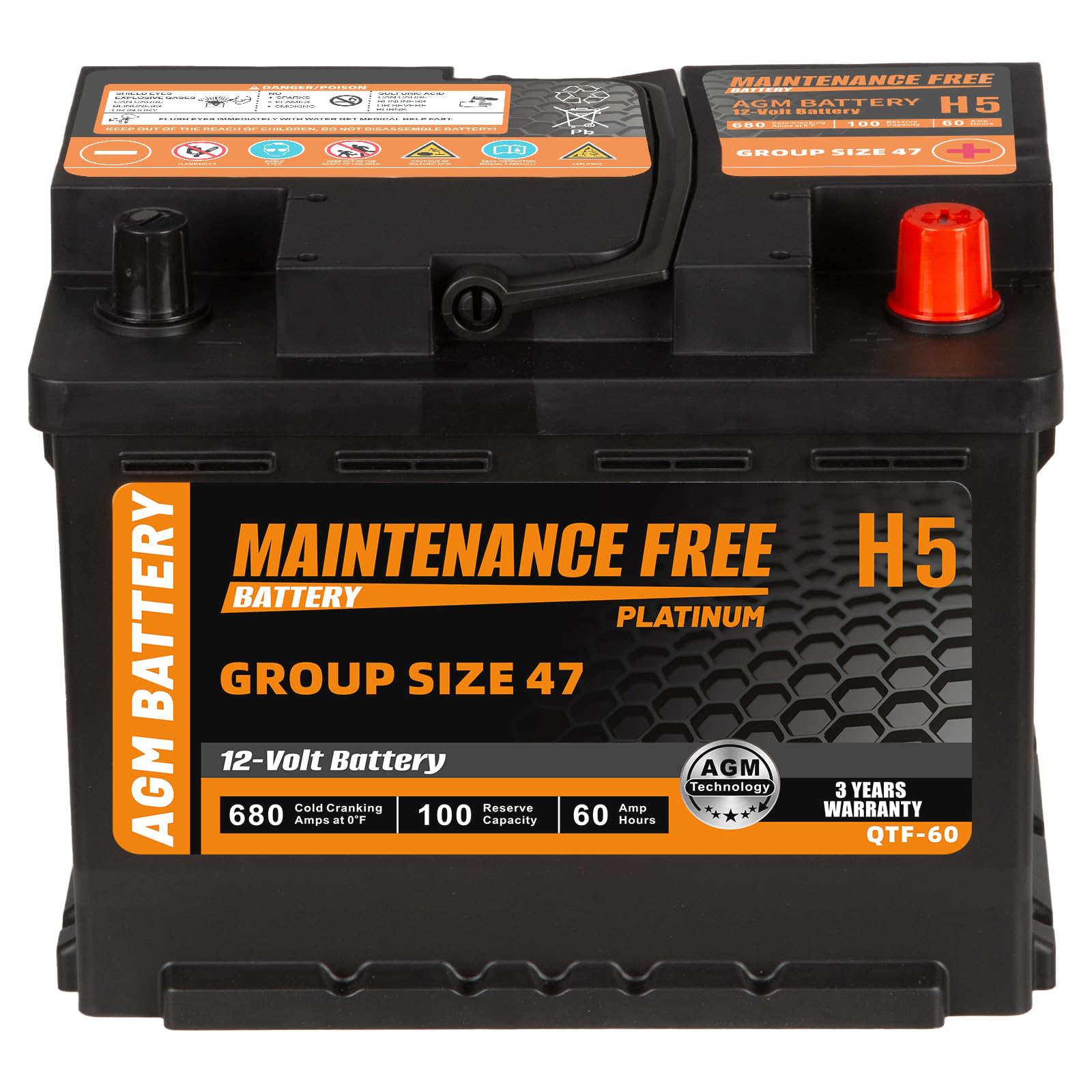
The Autocessking AGM is the no-frills entry point into H5 AGM ownership, offering the same 680 CCA and 100 RC as the category leaders but with a simpler build and a 39-pound weight. Early reviews from owners of passenger cars and trucks confirm it cranks strongly in cold weather and fits the standard H5 footprint without surprises. The warranty support appears responsive, with one buyer noting their query about the warranty was answered promptly and professionally.
This battery’s appeal lies in its simplicity: it’s an AGM starting battery that does exactly what it needs to do without marketing fluff. The 18x vibration resistance and leak-proof construction meet the baseline AGM standard, and the favorable price positions it as the ideal choice for budget-conscious drivers who want AGM’s maintenance-free operation and longer cycle life but who don’t need premium brand cachet. The packaging has been consistently praised for preventing shipping damage.
The trade-off is that this is a true “starting battery only” — it explicitly warns against deep-cycle applications. The 39-pound weight is lighter than the Weize and significantly lighter than the Odyssey, which translates to less internal lead mass. For a standard commuter car with factory electrical loads, this is perfectly adequate. For vehicles with heavy accessory draws or extreme cold requirements, the extra weight of a denser AGM provides a safety margin worth considering.
Why it’s great
- 680 CCA and 100 RC at the most accessible price point for AGM
- Responsive customer support for warranty inquiries
- Consistently well-packaged for damage-free shipping
Good to know
- Lighter internal mass may reduce longevity under heavy electrical loads
- Explicitly limited to starting applications only
8. SDULIBITIY BCI Group 47 LiFePO4
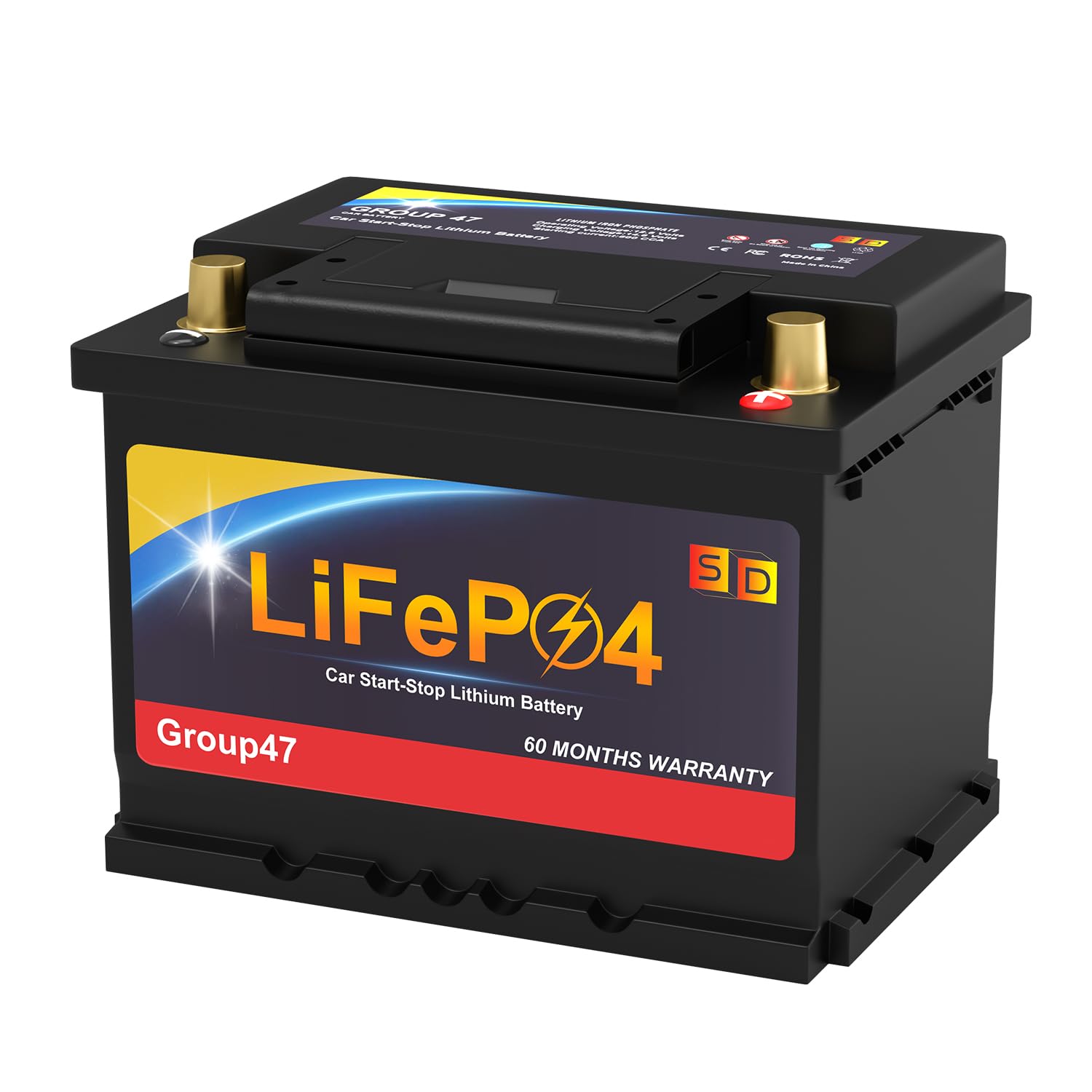
The built-in BMS (Battery Management System) protects against overcharge, over-discharge, overcurrent, and short circuits, making it safer than early-generation lithium car batteries. Owners of a 2004 Subaru STi and Lexus LS400 report faster cranking and a 1-2 hp equivalent weight savings from the nose of the car.
The weight reduction alone transforms the installation experience — you can lift it with one finger. The BMS also means you can run accessories (radio, lights, dash cam) for extended periods without dropping voltage below starting thresholds, something AGM batteries struggle with. The 5-year warranty is the longest in this roundup, reflecting the manufacturer’s confidence in the LiFePO4 chemistry’s longevity. Upgraded start button and battery display are thoughtful touches for monitoring charge state.
The lithium chemistry is not a universal upgrade. Some users have reported charging voltage issues where the vehicle’s alternator (designed for lead-acid voltage curves) pushes voltage past the BMS threshold, causing the battery to disconnect. This is most common in vehicles with smart alternators or regenerative braking systems. Cold-weather performance also requires a pre-warmup routine — turning on high beams for five minutes before cranking — which is an extra step AGM users never think about. If your vehicle is compatible and you want to shed weight, it’s transformative. If not, it’s a headache.
Why it’s great
- 11-pound weight saves significant mass from the vehicle’s nose
- BMS protects against all common electrical faults
- 5-year warranty is the longest available in this category
Good to know
- May conflict with smart alternators and regenerative charging systems
- Cold-weather starts require a warm-up routine with high beams
9. Wuldnmar G47 LiFePO4 Lithium Car Battery
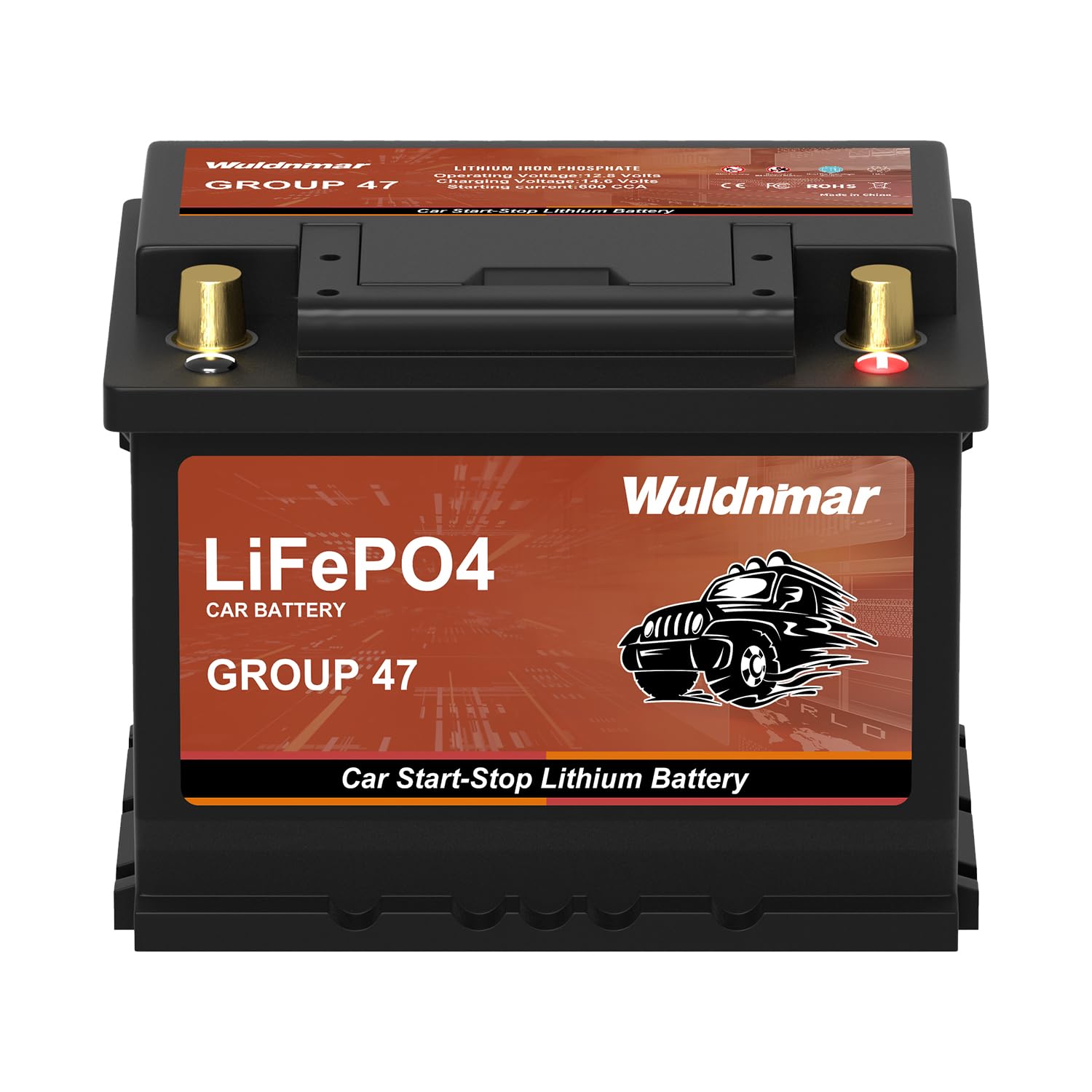
The Wuldnmar G47 lithium battery mirrors the SDULIBITIY in core specs (600 CCA, 12.8V, 11 pounds) but differentiates itself with tested burst capacity up to 850 CCA and a claimed 20% reduction in fuel consumption due to weight savings. Owners have swapped it into a 1990 VW Jetta GLI and a V8 Miata, both reporting crisper starts and stable voltage readings between 13.9V and 14.4V after warmup. The advanced BMS includes overcharge, over-discharge, and overcurrent protection, matching the safety features of its lithium competitor.
Where the Wuldnmar stands out is the attention to fitment: the 9.60 x 6.92 x 7.75-inch dimensions are a near-perfect match for the standard H5 footprint, and the polarity layout (negative left, positive right) conforms to the dominant Group 47 standard. The inclusion of a detailed compatibility guide references specific Chevrolet, Toyota, Ford, Honda, and BMW models, removing guesswork for first-time lithium adopters. The 1-year warranty is shorter than the SDULIBITIY’s 5-year coverage, which is a notable difference at similar price points.
The voltage management concern carries over from the lithium category as a whole — owners with small racing alternators or high-output charging systems need to monitor whether the alternator’s voltage spike triggers the BMS’ protection mode. The lack of a published amp-hour rating is a transparency issue; owners guessing at capacity is not ideal. If you’re willing to monitor voltages and accept the shorter warranty, the Wuldnmar delivers the same weight savings and fast cranking as the leading lithium option.
Why it’s great
- Burst CCA capability up to 850 for extreme cold starts
- Precise H5 footprint with detailed vehicle compatibility guide
- 11-pound weight dramatically eases installation and reduces vehicle mass
Good to know
- 1-year warranty is short compared to the 5-year coverage of lithium competitors
- Amp-hour rating not published, making capacity assessment difficult
FAQ
Can I replace a flooded H5 battery with an AGM H5 battery?
How do I know if my vehicle takes a Group 47 H5 battery?
Does a higher CCA battery hurt my car’s electrical system?
How long should an AGM H5 car battery last?
Can I use a lithium H5 battery in any car?
Final Thoughts: The Verdict
For most drivers, the best h5 car battery is the Weize Platinum AGM because it combines 680 CCA, 100 RC, and proven AGM construction at a price that undercuts premium competitors while matching their performance. If you need maximum deep-cycle reserve for a high-output sound system or off-grid accessory loads, the Odyssey Performance AGM delivers genuine deep-cycle capability in an H5 form factor. And if weight reduction and instant cranking are your priorities and you understand the charging system compatibility requirements, the SDULIBITIY LiFePO4 offers a ten-pound solution that transforms how your car starts.