
Our readers keep the lights on and my morning glass full of iced black tea. As an Amazon Associate, I earn from qualifying purchases.
Specs are compiled from manufacturer listings and verified buyer reviews and can change over time — please confirm the key details on the product page before buying.
Standing on a half balance ball turns a boring desk shift into a core workout that builds stability. You might be recovering from an injury, fixing your posture at a standing desk, or adding a wobble to squats and push-ups. The options range from flimsy blow-up toys to serious gym-grade platforms. This guide separates the duds from the durable ones so you buy the right platform for your weight, your workout, and your floor space.
I’m Min — the founder and writer behind Gadgets Feed. This guide is built by comparing the manufacturers’ published specifications and the patterns across verified customer reviews, so you get each pick’s real strengths and trade-offs instead of marketing spin.
Whether you are a senior looking for gentle balance training or an athlete wanting to deepen your squat stability, these are the best half balance ball models to buy right now.
Our Picks at a Glance


How To Choose The Best Half Balance Ball
Before you pick one, there are a few key factors that separate a wobble board you will use daily from one that ends up deflated in a closet. You need to match the ball to your body weight, your workout style, and your floor type.
Weight Capacity and Build Material
The single most important safety spec is the maximum weight recommendation. A ball rated for 660 lbs is built with thicker, anti-burst PVC, which gives you the confidence to jump, lunge, or land hard without it rupturing. The material also matters: a durable ABS plastic base is much more rigid and long-lasting than thinner PVC bases that can crack over time.
Surface Grip and Base Stability
A slippery dome is dangerous. Look for a dense, textured, or honeycomb-patterned surface that gives your shoes or bare feet solid traction. On the bottom, non-skid rubber feet or a TPR matting keep the whole platform locked to the floor, so it does not slide out when you are in a plank or standing on one leg.
Size and Portability
Most half balls sit between 23 and 25 inches in diameter. A wider surface gives you more room to shift your stance, which is helpful for squats and step-ups. Weight also varies: some models are under 10 pounds, making them easy to carry from the living room to the office, while heavier, more premium models (closer to 11.5 pounds) feel more planted during intense workouts.
Quick Comparison
| Model | Best For | Weight Capacity | Diameter | Weight | Amazon |
|---|---|---|---|---|---|
| Lifepro Horizon★ Best Overall | Overall Quality & Value | 440 lbs | 23.6″ | 15.0 lbs | Amazon |
| Yes4All 880LBSPro Grade | Extreme Durability | 880 lbs | 23.5″ | 15.2 lbs | Amazon |
| VEVOR 23″Best Value | Budget Multi-Pack Value | 660 lbs | 22.8″ | 9.7 lbs | Amazon |
| ATIVAFIT | Quick Inflation | 660 lbs | 23.4″ | 11.0 lbs | Amazon |
| kisnbld 19″ | Compact & Portable | — | 19″ | 8.0 lbs | Amazon |
| Sportneer | Therapy & Rehab | 660 lbs | — | 11.9 lbs | Amazon |
| ZELUS 25″ | Large Surface Area | 660 lbs | 25″ | — | Amazon |
| Soluxy 23″ | High-Intensity Workouts | 330 lbs | 23″ | 10.6 lbs | Amazon |
| JX FITNESS 58cm | Budget Training | 600 lbs | 23.6″ | 11.5 lbs | Amazon |
In‑Depth Reviews
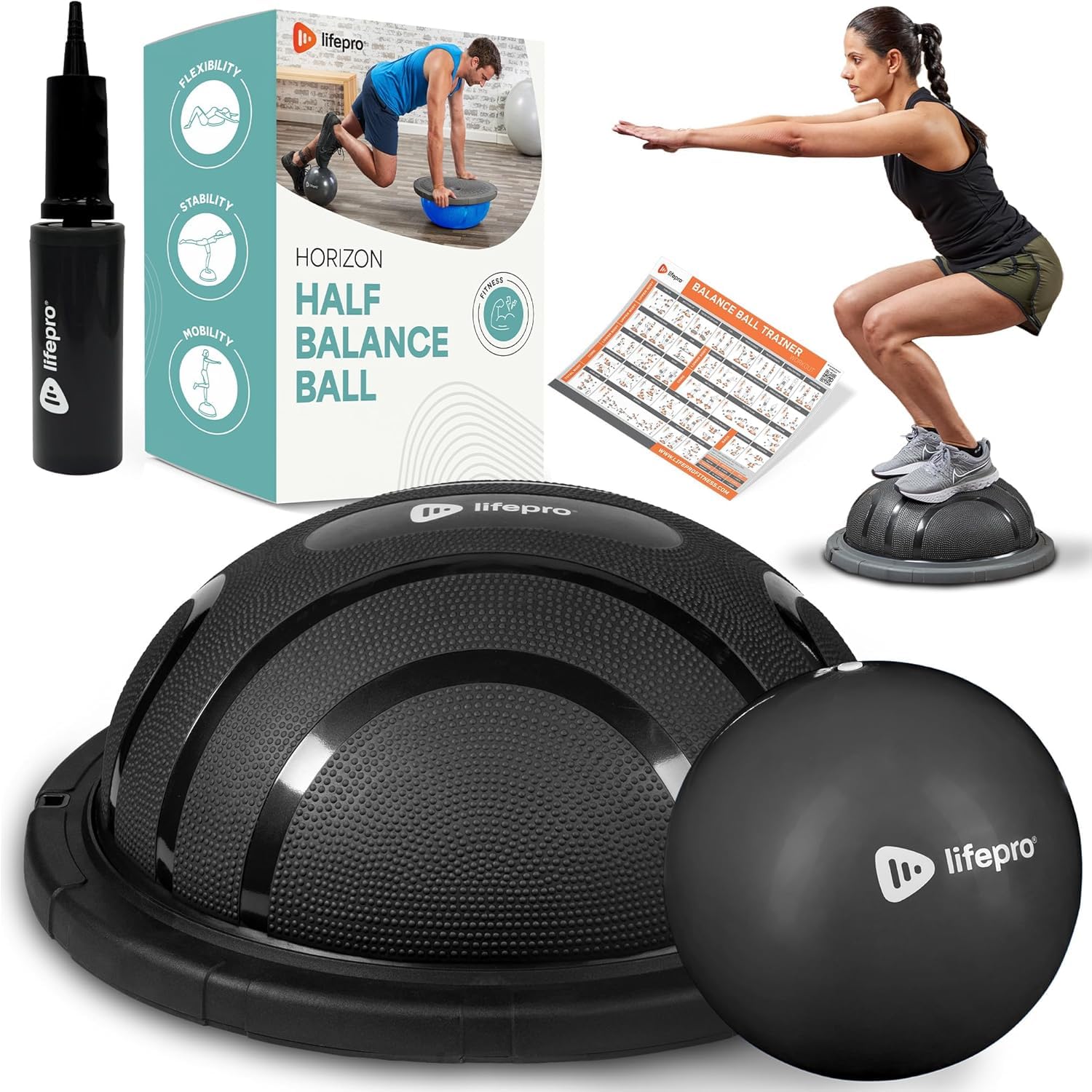
1. Lifepro Horizon Half Balance Ball Trainer
Our pick — over 4.5★ from 1,500+ verified ratings; the strongest balance of quality and price.
The rock-solid trainer that feels like it is glued to the floor.
The Lifepro Horizon is the crowd favorite for a reason — it nails the balance between a sturdy platform and a price that undercuts the big-name brands. The dome is 23.6 inches wide, giving you plenty of space to find a stable stance for squats or one-legged stands. It is built from a PP/TPE base that handles up to 440 lbs, and the textured non-slip surface is grippy enough that you will not think twice about jumping on it. The thing everyone raves about is the build quality — owners who have used it daily for a year report it still looks and feels like new.
Inside the box, you get an air pump, a tape measure, and even a 10-inch Pilates ball for extra core work. A smart detail is the stabilizer legs on the bottom, which keep it from sliding on hardwood or tile. The dual-mode design also lets you flip the base over for a harder stability challenge.
A few buyers report that the included pump works best when the ball is on its side, and it takes around 75 pumps to get it to the right height. The instructions clearly tell you to measure the height before sealing the plug, which prevents over-inflation. For the price, this is the closest you will get to a commercial-grade Bosu without paying the premium.
What Wins People Over
- Exceptional build quality with a textured, grippy surface that feels secure underfoot.
- Comes with an air pump, Pilates ball, and tape measure for immediate use.
- Can be flipped over for an advanced balance challenge.
The Fit Note
- Pumping requires the ball to be on its side, taking about 75 pumps to fully inflate.
- At 15 pounds, it is heavier than budget models, which makes it less portable.
Reach for this if: you want a premium-feeling half ball that is built to last and backed by a lifetime support promise.
Look elsewhere if: you need a lighter, more portable ball to carry between rooms or to the gym.
2. Yes4All 880LBS Half Ball Balance Trainer
The over-engineered platform that shrugs off the heaviest workouts.
If you weigh over 250 pounds or plan to use this ball for explosive plyometric work, the Yes4All 880LBS is the most durable option on this list. Its absolute max weight recommendation is 880 lbs, which is far beyond any other model here and uses thick PVC that resists punctures and deformation. The dome is 23.5 inches wide and 7.25 inches high, with a textured matte surface that keeps your shoes planted. The non-skid base also uses a secure grip, which owners mention makes it feel much more stable than the brand-name Bosu they tried at the physical therapist’s office.
The specific gravity of this ball is noticeable — it weighs 15.2 pounds, making it a tank in your living room. For some, that heft is a feature, not a bug, as it does not slide around even during burpees. The included pump is basic, but several owners say it inflates the ball in about four minutes if you connect the tube to the correct blue side of the pump. After over a year of use, reviewers on this platform consistently report zero air loss and no signs of wear.
Why It Stands Out
- Industry-leading weight capacity of 880 lbs ensures extreme durability and safety.
- Users report no air loss even after months of heavy, frequent use.
- Heavy weight and grippy base keep it planted during dynamic movements.
The Catch
- The included pump is considered low-quality and hard to use by some buyers.
- Its 15.2-pound weight makes it the least portable option here.
A sturdy pick if: you are a heavier athlete or need a commercial-grade platform for high-intensity interval training.
Think twice if: you need to regularly move the ball out of the way for other activities.
3. VEVOR Half Exercise Ball Trainer, 23″
The budget champion that still packs a 660-pound punch.
VEVOR undercuts almost every other brand on price while still delivering a ball that supports up to 660 lbs. At 22.8 inches wide and just 9.7 pounds, it is both lighter and slightly smaller than the Lifepro Horizon, making it easier to stash under a couch. The surface is made from a particle-textured PVC that provides good traction, and the base uses non-skid feet to prevent sliding. Customers note it functions like the higher-end brands they have used in physical therapy clinics.
The included resistance bands are a nice bonus for arm work, though taller users find the bands too short for full range-of-motion exercises. A buyer at a martial arts studio has been using it daily for ankle and balance training and confirms it holds air well. Compared to the Lifepro, it has a thinner build, so it is better suited for moderate daily use rather than extreme plyometric punishment.
What You Get
- Excellent value for a ball with a 660-pound weight capacity.
- Lightweight at 9.7 lbs, making it highly portable and easy to store.
- Comes with resistance bands and a foot pump for a complete starter kit.
The Trade-Offs
- The included pump is poor quality and the instructions are sparse.
- Resistance bands are too short for taller users to use effectively.
Choose this if: you are on a tight budget but still want a safe, high-capacity ball for basic core and balance work.
skip it if: you need a premium pump or want to use the resistance bands for full-arm extensions.
4. ATIVAFIT Balance Ball Trainer
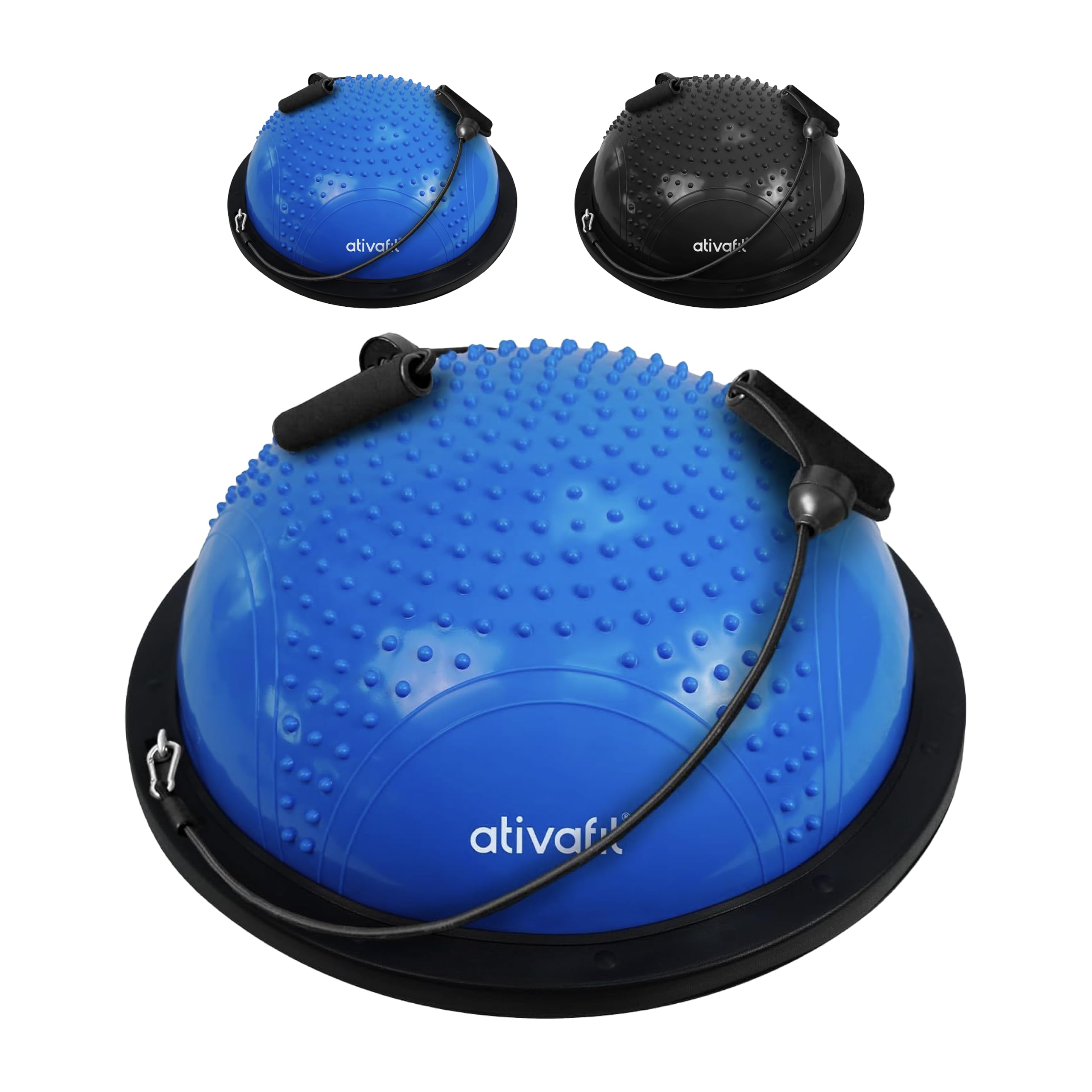
The quick-inflate valve means you are working out in three minutes, not fifteen.
The ATIVAFIT is built around an upgraded air hole design that promises inflation in about three minutes using the included premium pump, which is noticeably faster than the standard pumps that come with other balls. It supports up to 660 lbs and uses a thickened anti-burst PVC material, along with six non-slip rubber feet on the base that keep it stable during dynamic movements. The cloud-textured matte surface provides a solid grip even when you are sweaty.
Owners find it to be one of their favorite pieces of home equipment, especially for doing balance and small muscle workouts while watching TV. A common point is that the included resistance bands are awkwardly short, but the ball itself has durable anchor points that let you attach any standard band. At just under 11 pounds, it is light enough to move around, making it a strong mid-range contender.
Strengths
- Fast 3-minute inflation with the upgraded pump and valve system.
- Durable anti-burst PVC material with a high 660-pound capacity.
- Grippy cloud-textured matte surface and six non-skid feet for stability.
Weaknesses
- Included resistance bands are too short for effective arm work.
- Some mixed feedback on long-term air retention.
Best for: people who hate fumbling with slow pumps and want a fast, easy setup.
Not ideal for: those who need immediate, full-range resistance band training from the start.
5. kisnbld Half Balance Ball Trainer, 19″
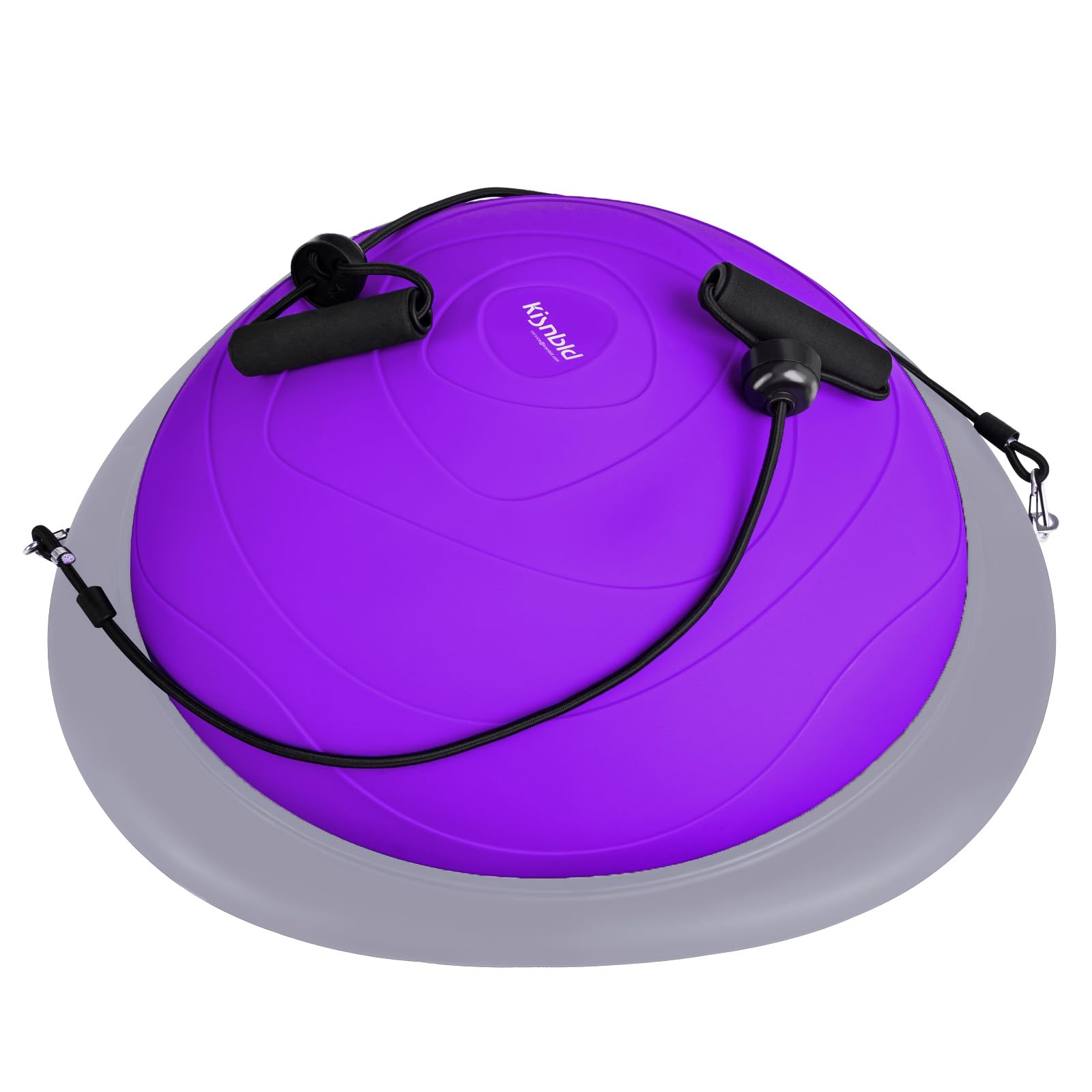
The pint-sized platform that fits in a carry-on bag.
At 19 inches, the kisnbld is the smallest half ball on this list, making it the most portable option for people who travel or have very limited floor space. It still uses a durable, eco-friendly PVC and flat ABS base, and the textured surface offers solid grip for basic exercises. This one also comes with the most extras: two detachable resistance bands, plus five sets of resistance loop bands, and a Pilates ball for stretching and core isolation.
Buyers love it for crunches, saying the ball supports their lower back and lets them do more reps without pain. The smaller diameter does mean less surface area to balance on, which can actually be a plus for advanced users who want a more challenging wobble. A few owners note the instructions for accessing the inflation port could be clearer.
Why It Works
- Smallest and most portable size at 19 inches, ideal for travel and tight spaces.
- Comes with a huge accessory kit including a Pilates ball and loop bands.
- Great for back-supported crunches, helping prevent injury during sit-ups.
Limitations
- Smaller surface area offers less stability for standing exercises.
- Instructions for inflation could be more detailed.
Ideal for: travelers, apartment dwellers, or anyone wanting a compact balance ball for targeted core work.
Not for: taller users or those who need a wide, stable platform for heavy squats.
6. Sportneer Half Balance Ball

Rehab-grade stability with a honeycomb grip that locks you in.
The Sportneer is built for recovery and rehabilitation, featuring a honeycomb-textured, non-slip surface and eight anti-skid pads on the base — more contact points than most competitors. This makes it exceptionally steady for people moving cautiously post-surgery or during physical therapy. It is made from 5mm thick non-toxic PVC, supports 660 lbs, and includes a foot pump that buyers find works perfectly from the start.
An owner who used it to rehab after meniscus surgery twice says it was crucial for strengthening quads and glutes. Another buyer who had it for six months reports no reinflation was needed and that the ball is every bit as sturdy as the one in their physical therapist’s office. The resistance bands are a welcome addition for adding upper body work, though a few owners mention the bands snap under heavy tension, so treat them as light-resistance tools.
What People Love
- Honeycomb texture and 8 anti-skid pads provide superior stability for rehab.
- No reinflation needed after months of use, indicating excellent air retention.
- Well-made and sturdy, often preferred over more expensive PT office brands.
Considerations
- Resistance bands have been reported to snap under heavy pressure.
- Durability feedback is mixed; some find it very durable, others less so.
Reach for this if: you are recovering from a knee, hip, or ankle injury and need a stable, trustworthy platform for at-home therapy.
Maybe not if: you plan to use heavy resistance bands for intense arm and shoulder workouts.
7. ZELUS 25in. Balance Ball

The widest dome on the shelf, giving you room to roam.
At 25 inches, the ZELUS is the widest half ball in this roundup, offering the largest surface area for your feet. This is a major advantage if you have larger feet or want extra space for positioning during step-ups and squats. It stands 8 inches high and is made from textured PVC with a flat ABS base that has anti-slip TPR matting to keep it grounded. It supports 660 lbs and comes with two exercise bands with cushioned grips.
Buyers use it for everything from pitching drills to ankle and foot rehabilitation. One consistent point is that the ball may lose a bit of air over time and need a top-up every few weeks, which is a common trait among large-format inflatables. The included foot pump makes that easy, but it is note if you are looking for a truly set-and-forget ball. It is also on the heavier side for transport, so it is best kept in a single workout spot.
The Big Advantages
- Largest 25-inch diameter provides class-leading space for foot positioning.
- High 660-pound weight capacity built with durable PVC and ABS.
- Versatile; praised for sports drills like pitching and general rehab.
The Downsides
- Reports of gradual air loss requiring periodic re-inflation.
- Heavier than average, making it less ideal for moving between rooms.
Ideal for: tall or large-footed users who need the extra surface area for stability drills and sports training.
Not the best for: users who want a completely maintenance-free ball that never needs a top-up.
8. Soluxy Half Balance Ball Trainer, 23″
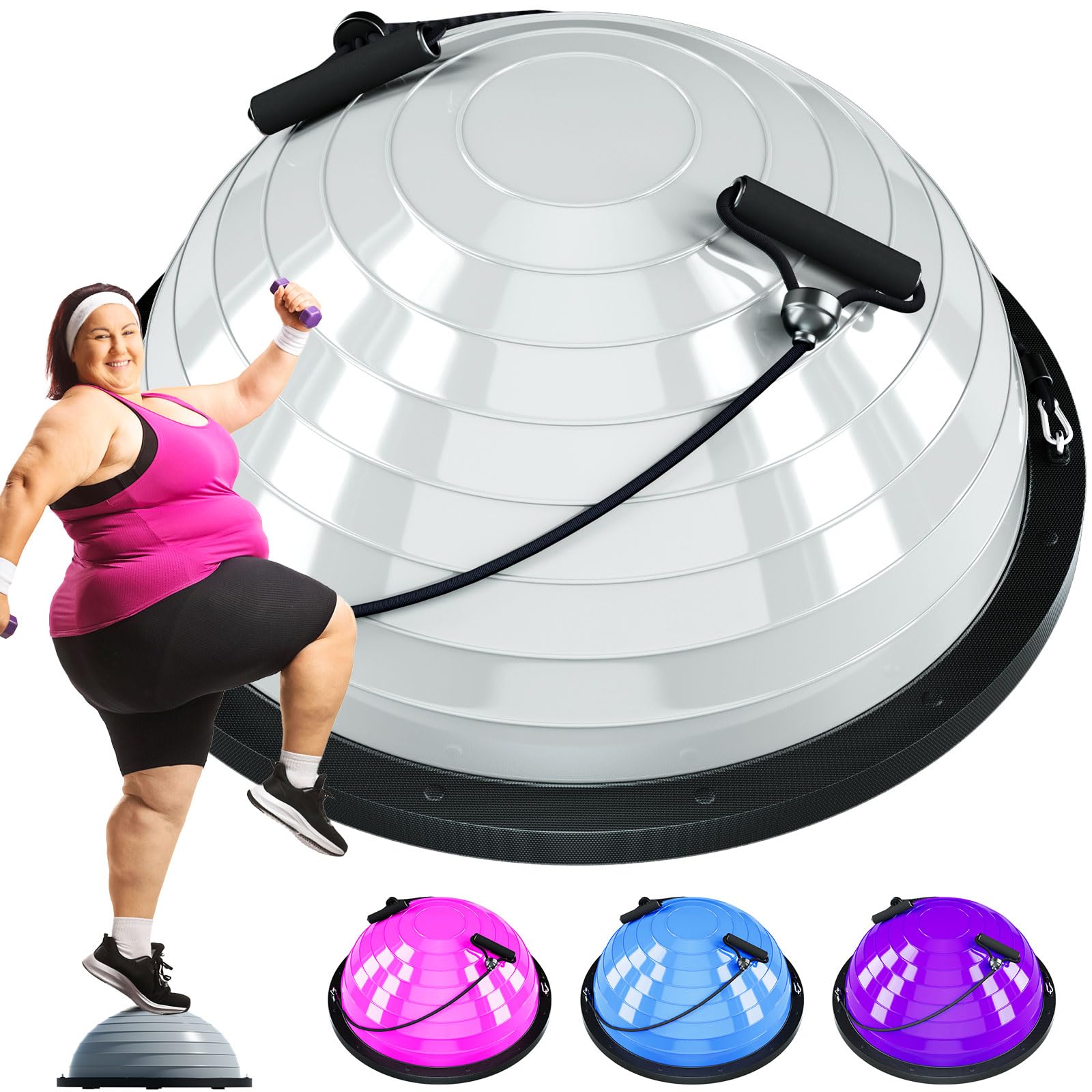
Built with 6mm thick PVC that stands up to daily punishment.
The Soluxy uses 6mm thick PVC (a tough plastic), making it among the most robustly built balls for its weight class. It supports up to 330 lbs and comes with a wear-resistant ABS base (a hard, impact-resistant plastic) that has six slip-resistant feet and an anti-burst design (built to not explode if punctured). At 23 inches wide and 9.8 inches tall when fully inflated, it provides a solid 10.6-pound footprint that feels heavier and more planted than its price suggests. The included foot pump inflates it to full height in under five minutes.
Buyers who use it for home workouts and post-surgery physical therapy (including hip replacement) are consistently impressed with the quality and stability. The balance trainer does not shift at all during squats, and the non-slip bottom grip keeps it locked to the floor. The included resistance bands are a nice addition, though like many on this list, they are not the star of the show.
Why It Shines
- Thick 6mm PVC construction provides excellent durability and stability.
- Non-slip base and ABS platform keep the ball rock-steady during use.
- Foot pump inflates the ball to 9.8 inches in under 5 minutes.
Things to Note
- Weight limit of 330 lbs is lower than the 660+ lb competition.
- Only a small number of customer reviews available for long-term assessment.
A great match for: home gym users who want a thick, reliable ball for moderate-intensity core and balance work.
Pass on it if: you weigh over 300 pounds or plan to do heavy, dynamic jumping exercises.
9. JX FITNESS 58cm Balance Half Ball Trainer

An upgraded design that packs a 600-pound punch for under fifty bucks.
The JX FITNESS is an upgraded version of a classic design, boasting a maximum weight capacity of 600 lbs — nearly double that of a standard version. It achieves this by using an anti-burst rubber and ABS plastic construction while still reducing the overall weight to 11.5 pounds. The surface has been thickened by 5mm for extra durability, and the base has six non-skid feet plus a wear-resistant ABS plate for total stability. At 23.6 inches in diameter and 8.7 inches high, it is spacious enough for most exercises.
Buyers who use it for physical therapy after knee surgery find it excellent for stabilizing their leg muscles and use it daily. The anti-skid texture gets high marks for keeping sweaty feet planted. However, there are mixed reports on build quality and air retention, with some units requiring re-inflation more often than expected. It includes resistance bands, though owners find them non-adjustable and of limited use. For the price, it offers a lot of capacity, but the long-term consistency is less certain than the Lifepro or Yes4All.
What It Offers
- High 600 lb weight capacity at a price that beats most rivals.
- Upgraded 5mm thick anti-burst surface and 6 non-skid feet.
- Spacious 23.6″ diameter surface area for comfortable positioning.
The Honest Caveats
- Mixed reports on air retention; some balls lose air over time.
- Resistance bands are non-adjustable and considered poor quality.
- No printed instructions included in the package.
Good for: budget-conscious shoppers who need a high capacity for basic balance and PT exercises.
Not for: anyone who relies on the included resistance bands for a full workout.
Understanding the Specs
Weight Capacity
This is the maximum weight the ball can handle safely. A higher number, like 660 lbs or 880 lbs, uses thicker, anti-burst material that also helps the ball hold its shape better over time. If you weigh 200 lbs and choose a 330 lb capacity ball, you have a good safety margin for bouncing. If you are heavier or do jumping exercises, look for 600 lbs or more.
Base Traction and Stability
A half ball is only as good as its grip. Look for non-slip rubber feet or a full TPR mat on the bottom. The more contact points (like six or eight pads), the harder it is for the ball to slide out from under you during a lunge or plank. The dome’s texture also matters — a honeycomb or cloud pattern provides much better traction than a smooth surface.
FAQ
What is the difference between a half balance ball and a full stability ball?
How do I know what size half balance ball to buy?
Can I use a half balance ball if I am a senior or recovering from surgery?
How long does a half balance ball take to inflate?
Will a half balance ball lose air over time?
What is the difference between ABS plastic and PVC bases?
Are the resistance bands that come with these balls any good?
Can I use a half balance ball on carpet?
How do I clean and maintain my half balance ball?
What is the maximum weight I can safely put on a 660 lb capacity ball?
Final Thoughts: The Verdict
For most buyers, the half balance ball winner is the Lifepro Horizon because it delivers the best combination of build quality, weight capacity, and included accessories at a fair price. If you need a bomb-proof platform for heavy or frequent use, the Yes4All 880LBS is the tank you want. And for those on a budget who still want a safe, high-capacity ball, the VEVOR 23″ is the one to reach for.
How We Picked
We do not accept paid placement. Every pick is matched to a real buyer and a real use-case; we do not hands-on test units.
Sources & Methodology
Specifications: manufacturer listings and product documentation. Review insights: verified customer reviews, as of July 2026. Pricing: not shown on this page (it changes often); check the current price via the retailer link.
As an Amazon Associate, Gadgets Feed earns from qualifying purchases. This does not affect which products we feature.