
Our readers keep the lights on and my morning glass full of iced black tea. As an Amazon Associate, I earn from qualifying purchases.
Specs are compiled from manufacturer listings and verified buyer reviews and can change over time — please confirm the key details on the product page before buying.
A heavy anvil is the heartbeat of any forge, but picking the wrong one means you are fighting your steel instead of shaping it. Cast-iron lookalikes dent, chip, and bounce hammer energy back into your wrists instead of into the metal. This guide sorts through the real contenders—all drop-forged steel, all over 100 pounds—to find the anvils that actually hold a flat face, give you great rebound, and survive years of work without cracking.
I’m Min — the founder and writer behind Gadgets Feed. This guide is built by comparing the manufacturers’ published specifications and the patterns across verified customer reviews, so you get each pick’s real strengths and trade-offs instead of marketing spin.
Whether you are a weekend blade maker or a full-time farrier, you need an anvil that absorbs force and gives it back. This roundup of the heavy duty anvil for blacksmithing choices focuses on drop-forged steel models with verified hardness ratings and real-world feedback from buyers who have put them through serious work.
Quick Picks
- VEVOR Cast Steel Anvil, 132 Lbs/60kg Single Horn Anvil, High Hardness 55 HRC — Top Performer
- Happybuy Single Horn Anvil 132Lbs Cast Steel Anvil – 125 Pounds — Best Value
- VEVOR Single Horn Anvil Cast Steel Anvil 105Lbs – 110.2 Pounds — Compact Heavyweight
- Happybuy Single Horn Anvil 110Lbs Cast Steel Anvil – 100 Pounds — Budget Choice
How To Choose The Best Heavy Duty Anvil For Blacksmithing
To get the most from your hammer strikes, you need an anvil that bounces energy back into the metal instead of soaking it up. That means focusing on steel type, weight, and face hardness. Cast iron anvils are cheaper, but they absorb your hits and tire you out fast. Instead, look for drop-forged cast steel—it is denser and tougher, so your hammer’s force rebounds into the workpiece.
Weight and Stability
A heavier anvil stays put under heavy blows. For serious blacksmithing, 100 pounds is the starting floor. An anvil that weighs 125 to 132 pounds offers a wider work surface and does not shift when you are swinging a 4-pound hammer or even a sledge.
Hardness (HRC)
The hardness rating, measured on the Rockwell C scale (HRC), tells you how well the face resists denting. A rating of 50 HRC is standard for budget-friendly steel anvils; 55 HRC or higher provides better edge retention and a sharper ring. Higher hardness usually means better rebound—the percentage of hammer energy that bounces back.
Holes and Prep Work
Almost every steel anvil ships with a hardy hole (a square hole for tooling like cut-off chisels) and a pritchel hole (a round hole for punching through metal). Many buyers report that these holes arrive undersized or coated with paint and require filing or drilling. Expect to spend some time dressing the edges of the face and clearing the holes before serious work begins.
Quick Comparison
On smaller screens, swipe sideways to see the full table.
| Model | Best For | Weight | Hardness (HRC) | Face Length | Amazon |
|---|---|---|---|---|---|
| VEVOR 132 Lbs Cast Steel Anvil | Best Overall – top hardness & rebound | 132 lbs (60 kg) | 55 HRC | — | $329.90Amazon |
| Happybuy Single Horn 132Lbs | Best Value – high weight, mid-range price | 125 Pounds | 50 HRC | — | $319.99Amazon |
| VEVOR Single Horn 110Lbs | Best Budget Option – affordable and versatile | 110.2 Pounds | 50 HRC | 23 x 6.5 x 7.4 inches | $269.90Amazon |
| Happybuy Single Horn 110Lbs | Lightest Pick – entry-level heavy duty | 100 Pounds | 50 HRC | — | $199.99Amazon |
In‑Depth Reviews
1. VEVOR Cast Steel Anvil, 132 Lbs/60kg Single Horn Anvil, High Hardness 55 HRC
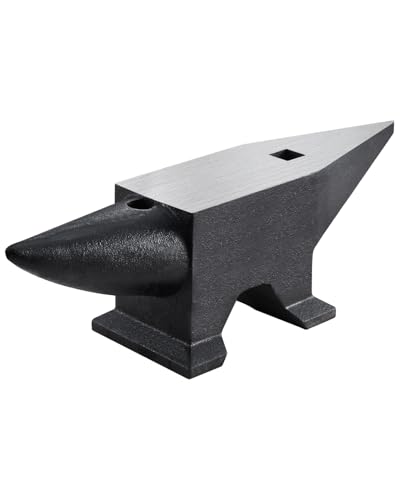
The 55 HRC face that bounces back harder than anything else at this price.
This is the anvil that stands out on hardness. While most anvils in the 100-to-132-pound range land at 50 HRC, this VEVOR is rated at 55 HRC versus 50 HRC on the standard options. In practice, that means the face resists dings better and the ring is sharper. At 132 pounds on paper, it provides a spacious work surface that stays planted even during heavy forging.
Owners mention that “the casting was good with good rebound,” and another noted it has a “good ping sound denoting its hardness.” The trade-off, as one reviewer pointed out, is that this is still a cast steel anvil, not a forged one, so you will want to keep an eye on edge durability over months of hard use. The hardy hole and pritchel hole are present but, like most anvils in this tier, may need light filing to fit standard tooling.
Unlike the 110-pound options below, this model gives you the weight of a premium anvil with a hardness spec that usually costs hundreds more. It is the pick for the smith who wants the highest rebound percentage without moving into four-figure territory.
Hardness That Earns Its Keep
- 55 HRC rating — noticeably harder and more wear-resistant than the 50 HRC competition.
- 132 lb weight keeps the face steady under a sledge.
- Good rebound confirmed by multiple buyers.
Reality Check
- Cast steel still needs some edge dressing from the start.
- Holes may require filing to fit standard hardy tools.
- Heavy to move; plan a permanent spot.
Reach for this if: you want the hardest face available at this weight and price point — the 55 HRC rating is the clear differentiator.
Look elsewhere if: you prefer a forged anvil or need zero prep work on the holes.
2. Happybuy Single Horn Anvil 132Lbs Cast Steel Anvil – 125 Pounds

Near-130 pound mass that holds up to daily work with minimal chipping.
At a listed 132 pounds with an actual weight of 125 pounds, this Happybuy anvil is a full 25% heavier than the 100-pound entry-level options, giving you more mass to absorb hammer force. The face hardness is rated at 50 HRC, and buyers confirm it is flat and hardened. One reviewer measured the face at around 56 HRC, which aligns with the data. Multiple owners say it holds up to daily use with no chipping or marring after grinding the edges down.
The main catch, as customers note, is the hardy hole. The listing says 1.1 inches, but some owners measured it at 1.37 x 1.4 inches and found an internal void. That means you might need to cut a custom adapter from 1.5-inch square tubing if your hardy tools are standard size. The pritchel hole is also oddly placed, so check the product photos before you buy if you rely heavily on that hole.
Compared to the top VEVOR pick, this anvil trades a slightly lower hardness (50 HRC vs 55 HRC) for a similar weight at a more accessible price point. It is the best option if your priority is raw mass and a flat face rather than the absolute highest rebound.
What Works
- 125 pounds gives serious stability under heavy blows.
- Buyers confirm the face is flat and hardened at ~56 HRC.
- Holds up to daily use with no face chipping once edges are dressed.
What to Watch
- Hardy hole size varies—some units measure larger than spec and need custom tooling.
- Pritchel hole placement may be inconvenient.
- Cast steel, not forged—be careful with the speed of heavy blows.
Grab it for: the massive work surface and flat, hardened face that reviewers point out outlasts its price tier.
skip it if: you need a standard-size hardy hole ready from the start.
3. VEVOR Single Horn Anvil Cast Steel Anvil 105Lbs – 110.2 Pounds
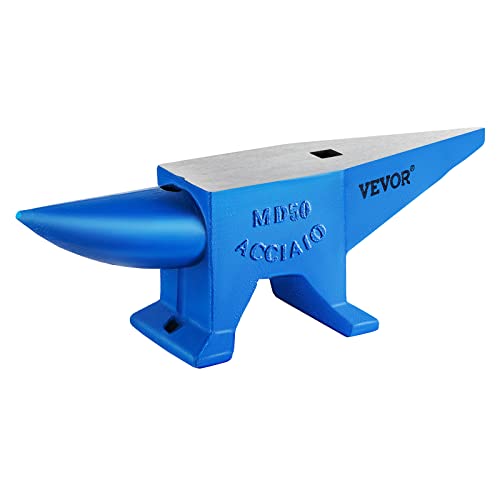
The 110-pound workhorse that surprises owners with its rebound and solid feel.
This VEVOR model comes in at 110.2 pounds and 23 inches long, giving you a full-size face in a slightly lighter package. The 50 HRC rating is standard, but buyers consistently praise the rebound—one reviewer noted it “performs better than I expected” and noted the good ping sound that indicates proper hardening. It is made from drop-forged cast steel, not cast iron, so the face stays flat under heavy rhythm work.
One thing to know before you buy: the paint coating on the horn and the hardy hole will need work. A few owners mentioned the horn is oblong and the pritchel hole may be unusable without drilling. If you are a leatherworker, one reviewer gave it a perfect 10/10 for rivets and eyelets, praising the solid cast steel surface. For blacksmithing, expect to spend about 30 minutes filing edges and cleaning the hardy hole.
Compared to the 125-pound Happybuy above, this anvil is about 15 pounds lighter but still qualifies as heavy duty. It is a better fit if your workspace is tight or you need to move the anvil occasionally. The 23-inch face gives you plenty of room for most projects without the full 30-inch footprint of a 130-pound anvil.
Solid Value for the Weight
- 110.2 pounds provides great stability for a mid-size anvil.
- Buyers confirm good rebound and a hardened face.
- 23-inch surface is generous for practical forging.
Prep Required
- Paint coating on the horn must be stripped.
- Hardy hole may need filing; pritchel hole can be unusable.
- No tapered tail—limits some forging techniques.
Choose this if: you want a dependable 110-pound anvil with proven rebound and a manageable footprint.
Consider another if: you rely on a functional pritchel hole straight from the box.
4. Happybuy Single Horn Anvil 110Lbs Cast Steel Anvil – 100 Pounds

The entry-level 100 pounder that shoppers say punches way above its sticker price.
Despite the listing saying 110 pounds, this Happybuy anvil actually weighs 100 pounds. It is the lightest on this list, but it still sits firmly in the heavy-duty category. The 50 HRC face gives you a usable rebound—one buyer measured it at 95% with a drop test, and another reported excellent results under a 16-pound sledge. That is serious durability for the price.
Preparation is the theme here. Multiple buyers report spending up to 5 hours filing the hardy hole from 7/8-inch to a true 1-inch, stripping the blue paint from the horn, and dressing the sharp edges. The pritchel hole is described by several owners as “unusable” without re-drilling. But once set up, owners say it “doubled work output” compared to their old railroad track anvil. One reviewer summed it up: “beast of an anvil that anyone can afford.”
At 100 pounds, it is 25% lighter than the 125-pound Happybuy above, so expect more bounce and a louder ring—you will want to bolt it down or use a chain to dampen vibration. A magnet on the base is a common fix for the ring. It is a legitimate starter anvil that beats cast iron hollows any day, but only if you have the tools and patience to do the prep work.
Why It Is Worth It
- 100 pounds of drop-forged steel at an entry-level price.
- Buyers confirm 95% rebound and withstanding a 16-pound sledge.
- Flat face after prep—doubles work output over railroad track.
Real Buyer Headaches
- Hardy hole needs 5 hours of filing to fit standard tools.
- Pritchel hole is unusable from the start.
- Blue paint must be stripped from the entire horn.
Best suited for: the smith on a tight budget who is not afraid of significant prep work to save money.
Not for you if: you want a ready-to-forge anvil immediately—the 5-hour hardy hole fix is a real hurdle.
Understanding the Specs
Rockwell Hardness (HRC)
This number measures how hard the anvil face is. A 50 HRC rating is the minimum for a hardened steel anvil that will not dent easily under normal hammering. 55 HRC gives you noticeably better edge retention and a higher rebound percentage—meaning your hammer bounces back, so you do not waste energy. The difference between 50 and 55 HRC is small on paper but feels obvious in practice.
Rebound
Rebound is the percentage of hammer energy the anvil returns to your hand. A good anvil gives you 70-95% rebound. You can test this by dropping a steel ball bearing from a set height and measuring how high it bounces. Higher rebound means less energy lost to the anvil and more power going into the metal. Cast iron anvils have near-zero rebound—they feel “dead.”
FAQ
What is the difference between cast steel and cast iron anvils for blacksmithing?
How much should I spend on a heavy duty anvil?
Why do owners mention they need to prep the hardy hole and pritchel hole?
Can I use a 100-pound anvil for heavy forging with a sledge hammer?
Does a black finish or blue paint matter on the anvil?
How do I fix the loud ring on a steel anvil?
Is 50 HRC hard enough for blacksmithing?
What size hardy hole should I look for?
Final Thoughts: The Verdict
For most people, the heavy duty anvil for blacksmithing winner is the VEVOR 132 Lbs Cast Steel Anvil because its 55 HRC face gives you the best rebound and edge durability in this price bracket. If you want maximum mass and can tolerate a custom hardy hole, grab the Happybuy 132Lbs. And for the tightest budget where you are ready to file and drill for a few hours to save money, the Happybuy 110Lbs still delivers a 100-pound forged steel face that punches way above its price.
How We Picked
We do not accept paid placement, and we did not hands-on test every unit. Instead, we match each pick to a real buyer and use-case by comparing the manufacturers’ published specifications against the patterns in verified customer reviews — so you get each pick’s real strengths and trade-offs instead of marketing copy.
Sources & Methodology
Specifications: manufacturer listings and product documentation. Review insights: verified customer reviews, as of July 2026. Pricing: not shown on this page (it changes often); check the current price via the retailer link.
As an Amazon Associate, Gadgets Feed earns from qualifying purchases. This does not affect which products we feature.
Product prices and availability are accurate as of the date/time indicated and are subject to change. Any price and availability information displayed on Amazon at the time of purchase will apply to the purchase of this product. As an Amazon Associate I earn from qualifying purchases.
CERTAIN CONTENT THAT APPEARS ON THIS SITE COMES FROM AMAZON. THIS CONTENT IS PROVIDED "AS IS" AND IS SUBJECT TO CHANGE OR REMOVAL AT ANY TIME.
Amazon and the Amazon logo are trademarks of Amazon.com, Inc. or its affiliates.