
Whether you’re crawling into a damp ground blind at dawn, glassing from a snowy ridge, or pushing through a marsh after late-season waterfowl, the wrong pair of hunting boots can end your day before it starts. Cold feet, blisters, waterlogged uppers, or an outsole that won’t grip on wet leaves aren’t just annoyances—they can compromise your stealth, focus, and even your safety in the backcountry.
I’m Min — the co-founder and writer behind Gadgets Feed. My buying guides are built on countless hours of cross-referencing real-world user feedback, manufacturer spec sheets, and industry benchmarks to identify exactly which products deliver on their performance promises for the serious outdoor enthusiast.
From insulated rubber pull-ons for standing sentinel in the marsh to lace-up leather boots built for miles of tracking across broken terrain, this deep-dive buying guide covers the nine best candidates to fill the role of your next best hunting boots.
How To Choose The Best Hunting Boots
Buying a hunting boot without a clear plan is like buying a compound bow without checking the draw weight—you might get lucky, but you’re more likely to end up uncomfortable and frustrated. The categories below break down the three non-negotiable spec clusters that separate a season-saving boot from a closet ornament.
Insulation Weight vs. Activity Level
Every insulated boot carries a Thinsulate or equivalent gram weight rating—common figures range from 400g up to 2000g. A 400g boot is ideal for early-season archery or active still-hunting where you’re generating body heat, while a 1200g or 2000g boot is only appropriate for late-season stand hunting or ice fishing where you’re sitting still in single-digit temperatures. The fatal mistake is buying maximum insulation for every-day use: your feet will sweat, and wet insulation will make you colder than the uninsulated boot would have.
Waterproofing and Boot Construction
Two distinct waterproofing methods dominate this category. The first is a full rubber shell, typical of neoprene-lined pull-on boots, which is inherently impervious to moisture until the seam at the ankle or the rubber itself fails after years of flexing. The second is a leather upper with a waterproof membrane (Danner Dry, Gore-Tex, or proprietary membranes), which requires periodic conditioning to maintain water tightness but offers far better ankle support and breathability. For a hunt that involves crossing knee-deep creeks, a rubber-neoprene boot is non-negotiable. For a mile-long hike on ridgelines, a leather membrane boot is the superior choice.
Traction and Outsole Design
The outsole is the only thing between you and the ground, making its lug pattern and rubber compound critical for the specific terrains you’ll hunt. Wide, aggressive chevron lugs shed mud effectively but can be slippery on wet rock. A denser, lower-profile pattern with siping improves grip on hard-packed surfaces and greasy logs. Heel and toe kick-off ledges are not just convenient—they reduce wear on the upper when you’re pulling the boot off after a long day. Pay attention to whether testers report “poor on wet rocks” or “good on wet leaf litter,” because no universal “good traction” label means much outside your specific ground.
Quick Comparison
On smaller screens, swipe sideways to see the full table.
| Model | Category | Best For | Key Spec | Amazon |
|---|---|---|---|---|
| SITKA Back40 Boot | Premium | Pre-season & Late-season | 800g Thinsulate | Amazon |
| LaCrosse Cold Snap 9” | Premium | Extreme cold, ice fishing | 2000g Thinsulate Ultra | Amazon |
| Irish Setter Elk Tracker 1000g | Premium | Big game backpack hunts | 1000g Thinsulate | Amazon |
| Irish Setter Elk Tracker 600g | Premium | Versatile mid-late season | 600g Thinsulate | Amazon |
| LaCrosse Alpha Agility 17” | Mid-Range | Wet marsh, deep creek crossings | 1200g Thinsulate | Amazon |
| ROCKY Blizzard Stalker | Mid-Range | Stationary cold weather | 1200g Insulation | Amazon |
| TIDEWE Rubber Hunting Boots | Mid-Range | Value cold/wet performance | 7mm Neoprene / 800g version | Amazon |
| Danner Men’s Vital 8″ | Mid-Range | Active hiking, bird hunting | 400g Thinsulate Ultra | Amazon |
| Trudave Rubber Boots | Budget | Year-round active use | 6mm Neoprene | Amazon |
In‑Depth Reviews
1. SITKA Back40 Boot – Insulated Waterproof Hunting Boot
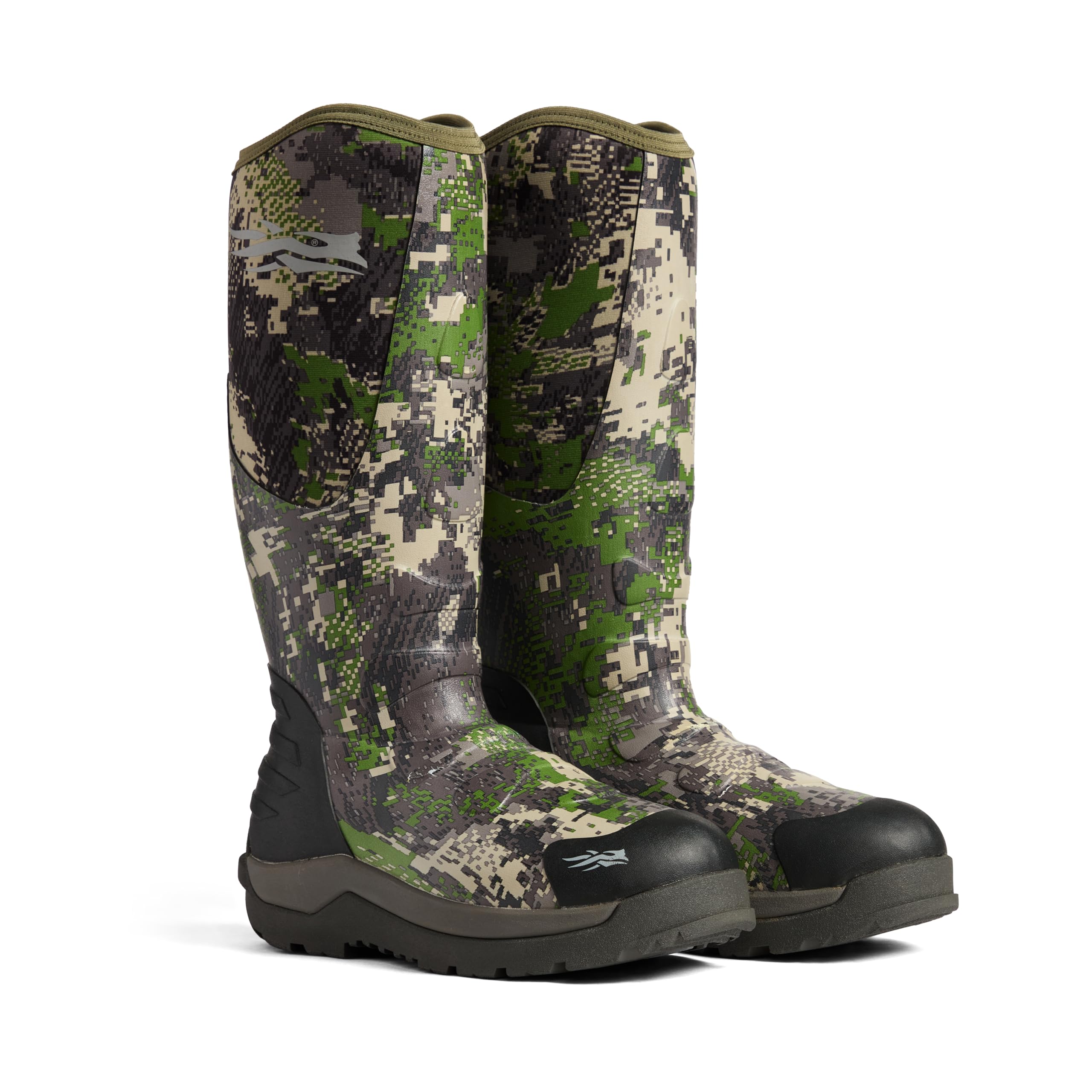
SITKA, known primarily for high-end technical apparel, applies that same design philosophy to the Back40 Boot. Its 800g Thinsulate insulation sits in the sweet spot for pre-season scout hikes and late-season stands alike, avoiding the overheating risk of 1200g boots while offering more warmth than a 400g option. The upper is built with a waterproof membrane sealed into a design that testers say fits “just like a sneaker,” with no floppy loose feel—a common issue with simpler rubber boots.
The multi-surface traction pattern is engineered to handle wet leaves, muddy inclines, and dry gravel, which matches the scenario of walking from a truck to a treestand across varied field edges. Users report that the boots are on the bulkier side, which is expected for a 10-inch insulated hunting boot, but the tradeoff is durability: the soles and neoprene sections hold up after miles of shed-hunting walks through midwestern terrain. One caveat: several testers note the fit runs slightly narrow across the top of the foot, so ordering a half-size up is a common recommendation if you have a wider forefoot.
The warmth level is described as “good without being too much,” meaning it breathes adequately for the active hunter who isn’t sitting still in subzero temperatures. At this price point, you’re paying for SITKA’s construction standards and a weight-to-warmth ratio that few other brands match in a boot with an 800g rating. For a dedicated late-season waterfowler or a deer hunter who needs one boot to cover most of the season, the Back40 justifies its premium tag with materials and design coherence.
Why it’s great
- Excellent weight-to-warmth ratio for multi-season use
- Sneaker-like fit provides stability without calf slop
- Long-term durability reported by heavy-use owners
Good to know
- Runs narrow across the top of the foot
- Bulkier profile than uninsulated lace-ups
- Premium pricing
2. LaCrosse Cold Snap 9” Hunting Boots – 2000G Thinsulate Ultra
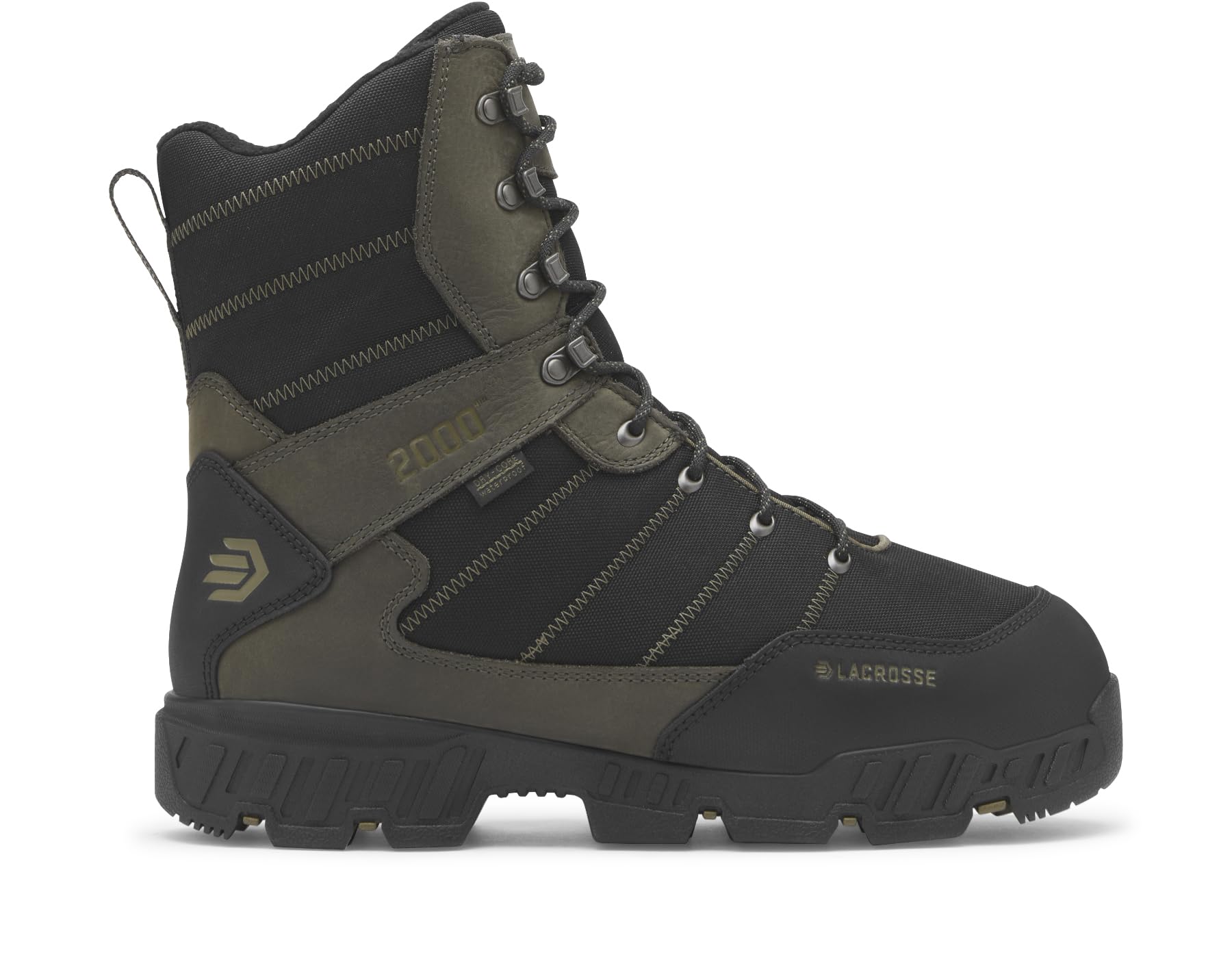
When the forecast calls for a high of 10°F and you plan to sit on a deer stand for four hours, the LaCrosse Cold Snap with 2000g Thinsulate Ultra is the gold standard. This is not a walking boot—it’s a maximum-warmth tool for the stationary hunter or ice fisherman who trades mobility for passive thermal retention. The supportive EVA footbed offers a level of underfoot comfort rare in boots with this much insulation, with users describing it as “moon boot warmth, hiking boot comfort.”
The Permafrost outsole uses a deep, wide-spaced lug pattern designed to bite into snow and maintain purchase on frozen mud, though testers caution that the same lugs are less confidence-inspiring on sheet ice. The 9-inch height is a practical compromise between the mobility of a true ankle boot and the coverage of a tall rubber boot, keeping the worst of the snow out while allowing reasonable range of motion for walking to and from the stand. Sizing is reported as true to size even in a wide (12W), which is a relief for hunters who need thicker socks without compressing their toes.
One consistent user report is that below 0°F, even the 2000g boot may benefit from a supplemental toe warmer or vapor barrier liner, but between 0°F and 30°F, the Cold Snap is the warmest option in this comparison. The boot is clunky—there’s no way around a 2000g insulation package—but for the deer hunter, trapper, or ice fisher who prioritizes foot warmth above all else, the Cold Snap’s compromises are entirely justified. It’s a specialized boot, but for its niche, no other model in this lineup comes close.
Why it’s great
- Extreme warmth suitable for hours in subzero temps
- Comfortable EVA footbed for a high-insulation boot
- True-to-size fit in wide widths
Good to know
- Clunky feel, not for active hiking
- Outsole lugs perform poorly on sheet ice
- Overkill for any temperature above freezing
3. Irish Setter Elk Tracker – 1000g Insulated, Waterproof

The Irish Setter Elk Tracker 1000g is a legendary design in the big game hunting community, and the latest iteration continues to prove its worth. Built with a twelve-inch upper that wraps the lower leg in thick leather and insulation, this boot feels “like Abrams tanks for the feet,” as one long-term user wrote. The 1000g Thinsulate insulation is calibrated for sit-and-glass and spot-and-stalk hunts in the Rocky Mountain zone, handling temperatures down to -10°F while still allowing the active hunter to climb without soaking through the liner.
What sets the Elk Tracker apart from the pack is its overbuilt construction: triple stitching at stress points, a robust rubber outsole with deep, agressive lugs, and a full-grain leather upper that, with proper Sno-Seal treatment, becomes essentially impervious to moisture. Users report zero break-in time—the boots fit snugly from the first wear, particularly accommodating of wide, flat feet with a 14W option that is truly roomy. The weight is substantial, typically around 5.5 pounds per pair, which heavy users note feels lighter on the foot than the number suggests due to a balanced midsole design.
There is a notable caveat from multiple users: the sole can develop cracks after heavy seasonal use, though the manufacturer’s customer service is frequently praised for immediately replacing defective pairs. After eleven years of ownership, one reviewer reported that the boots were still warm, dry, and intact after a single replacement, calling them the best boots he has ever owned. For the hunter who demands a bombproof boot for pack-in elk hunts or extended backcountry trips, the Elk Tracker 1000g is a proven, multi-season investment rather than a simple purchase.
Why it’s great
- Bombproof leather construction with triple stitching
- Zero break-in time, even for wide, flat feet
- Proven longevity with manufacturer support
Good to know
- Heavy weight, not for casual wear
- Sole cracking reported after heavy use
- Requires regular leather sealant treatment
4. Irish Setter Elk Tracker – 600g Insulated, Waterproof
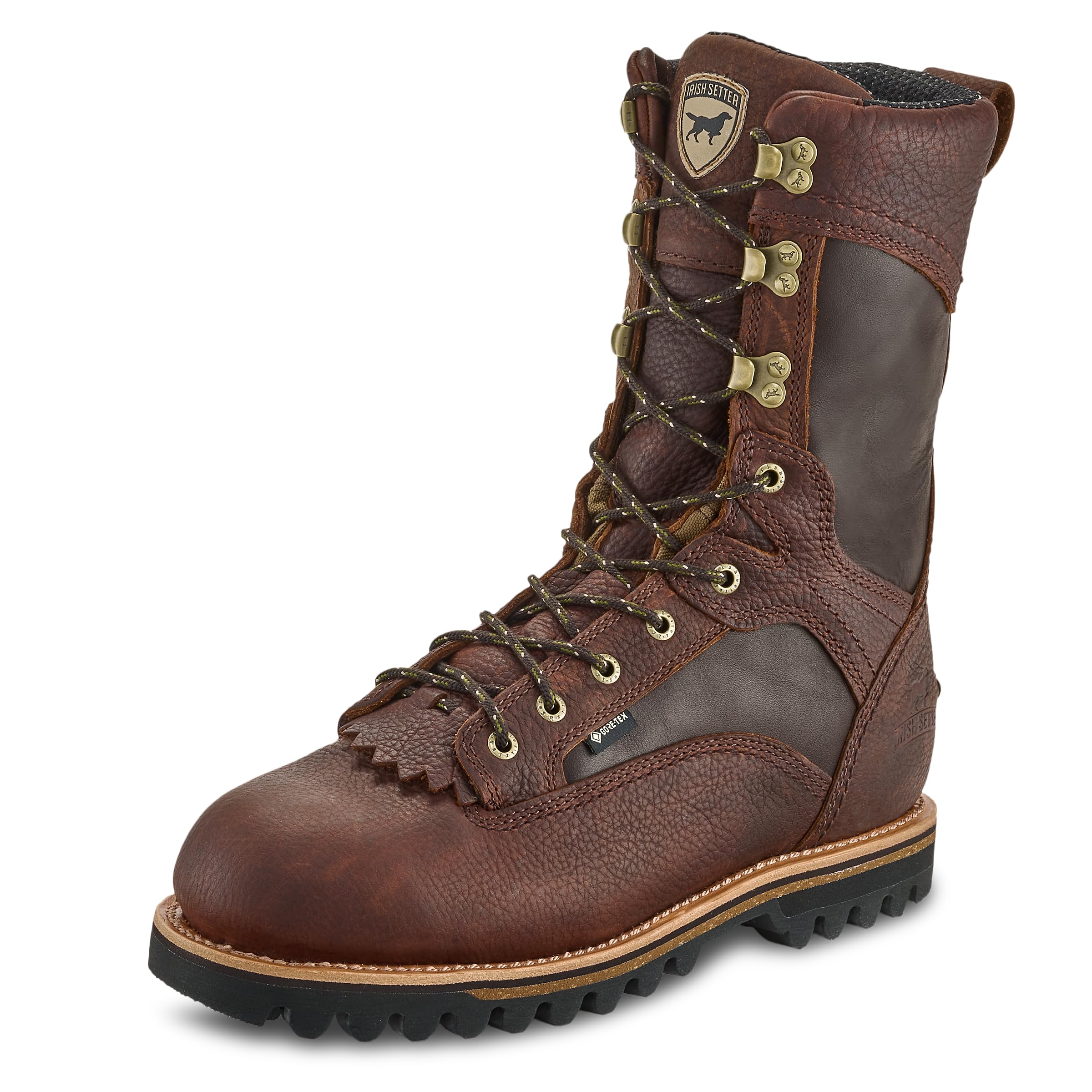
Sharing the same upper and outsole design as the 1000g version, the Irish Setter Elk Tracker 600g is a more versatile mid-season option that sacrifices extreme cold capability for a slightly lighter build and better breathability. The 600g Thinsulate insulation is ideal for mid-level mountain use where you can encounter snow on the north face and warm sun on the south slope in the same hike. Testers consistently confirm that this boot breathes better than the 1000g version, with one user reporting no sweat buildup even at room temperature after an extended wear-in session.
The fit feedback on the 600g version is more nuanced: the toe box is distinctively narrow in standard D width, and many users with low-volume feet report that their EE size fits perfectly. The standard D width may feel restrictive for the average male foot, so paying attention to the fit notes is crucial. Once in the correct size, the boot feels broken in immediately, with the cork midsole providing a springy rebound that partially offsets the 5.4-pound weight. The outsole and lug pattern are identical to the 1000g model, offering the same excellent traction in snow and loose scree, though the lugs are similarly mediocre on wet rock.
The 600g Elk Tracker also features the same triple stitching and high-quality leather finish, though some long-time brand loyalists note that the leather grain on recent production runs appears slightly less smooth than older versions. However, the stitch quality remains solid. For the hunter who needs one boot for both early October archery season and late November rifle season, the 600g Elk Tracker provides the right heat range without the sweatiness of a 1000g boot or the cold penetration of a 400g boot.
Why it’s great
- Versatile insulation for cross-season use
- Superior breathability compared to thicker models
- Same durable build as the 1000g version
Good to know
- Standard D width has a narrow toe box
- Heavy at over 5 lbs per pair
- Leather finish quality slightly inconsistent
5. LaCrosse Alpha Agility 17” – Insulated Hunting and Work Boots
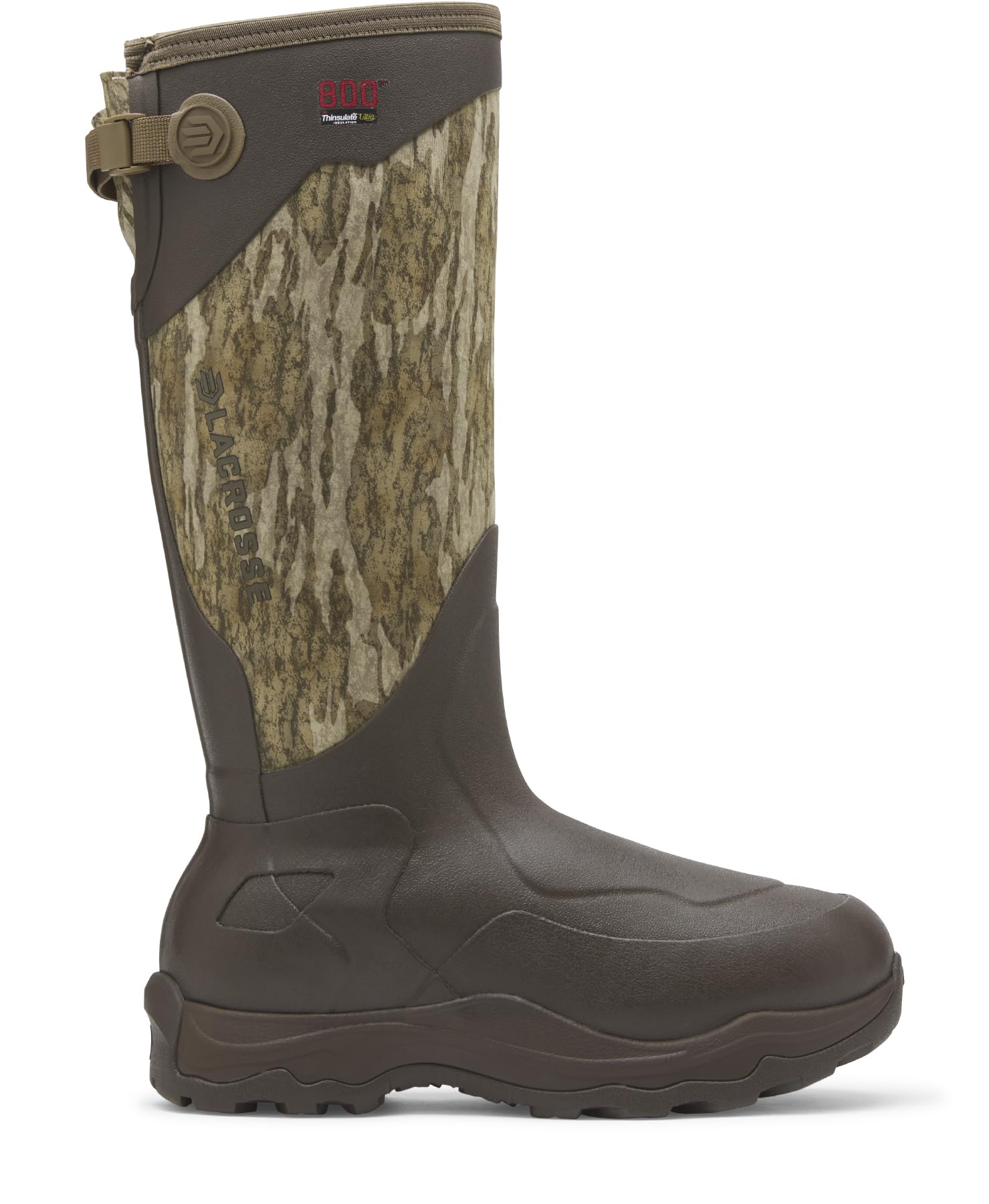
When your hunting plan involves pushing through knee-deep creeks, marsh grass, or mud flats, the LaCrosse Alpha Agility’s 17-inch upper is the defining feature. Made from hand-laid natural rubber over a neoprene liner, this boot provides absolute waterproof protection up to the bottom of your calf, which is an advantage no lace-up leather boot can match. The 1200g Thinsulate insulation is rated for temperatures between -60°F and 30°F, meaning it is designed for extreme cold where standing water stops most other boots cold.
The Traction Agility outsole is a LaCrosse-designed pattern that prioritizes both speed and bite. On soft-bottom creeks and muddy banks, the lugs self-clean well and provide confident grip, though the same lugs are not the final word on slick rocks. The EVA footbed and LXA midsole deliver a level of rebound that is surprising for a 17-inch tall rubber boot, making long hikes to a duck blind less punishing. Sizing runs slightly large, with testers suggesting you size down half a size if you are between sizes to achieve a snug, non-slip heel fit.
Long-term durability is a mixed picture. Users report that the neoprene section over the heel can wear through after three or more years of heavy foraging and hunting. However, in direct comparisons to other tall rubber boots (Irish Setter, Rocky, Muck, Bogs), the Alpha Agility consistently wins on durability and comfort. The kick-off heel plate is functional and saves wear on the rubber. For waterfowlers, marsh turkey hunters, or anyone who regularly crosses water deeper than a standard 8-inch boot can handle, the Alpha Agility is the correct tool.
Why it’s great
- Full waterproof protection up to 17 inches
- Excellent insulation for extreme cold
- Good rebound and comfort for a tall rubber boot
Good to know
- Runs slightly large; may need half size down
- Neoprene heel can wear through after heavy years
- Bulky for walking dry terrain
6. ROCKY Blizzard Stalker Waterproof 1200G Insulated Boot

The ROCKY Blizzard Stalker is a cold-weather specialist designed with one primary goal: keeping feet warm during extended stationary periods in snow and ice. The 1200g insulation is deposited in a uniform layer around the boot, providing consistent warmth from toe to calf. Testers report comfort in 6°F weather with standard wool socks, and one Colorado ice fisherman noted that the boots performed flawlessly after hours of standing on frozen concrete. The boot design runs a half-size to a full-size large, which is an intentional trait to accommodate thick winter socks without compressing the insulation layer against the foot.
The outsole traction pattern is built for snow, with deep lugs that bite well into packed powder. On ice, traction is described as “OK” by the majority of users, meaning these are not the best choice for crossing frozen streams or icy boat ramps. They are a snow-and-mud boot first. The weight is lighter than the 5.5-pound leather boots, which is welcome during a walk from the vehicle to the blind or the ice hole. The overall build quality is solid, with several users reporting two years of fall-to-spring daily use without any delamination or waterproofing failure.
A known weak point is the bootlace hooks: multiple users have reported that the lace hooks can break after six wears or so. This is a frustrating failure in an otherwise capable boot, and some users address it by replacing the hooks with aftermarket parts or switching to a different lacing method. For the price, the Blizzard Stalker delivers warmth that matches boots costing more, but the lace hook issue and the so-so ice traction prevent it from being a universal recommendation. It is best suited for the ice fisher, snow goose hunter, or any user who prioritizes warmth above all other specs.
Why it’s great
- Excellent warmth for stationary cold use
- Light for a 1200g boot
- Accommodates thick socks without tightness
Good to know
- Lace hooks are prone to breaking
- Only fair traction on ice
- Runs large, requires careful sizing
7. TIDEWE Rubber Hunting Boots – Waterproof Insulated Next Camo G2

TIDEWE has positioned itself as a strong value competitor in the rubber hunting boot category. Using a 7mm neoprene liner in the standard version and an optional 800g insulation package, these boots deliver waterproof performance and cold-weather capability at a competitive price point that undercuts the premium LaCrosse and Irish Setter models. The rubber construction is notably sturdy, with a reinforced heel and a thick outsole that has proven resilient in users’ tests across mud season, deep snow, and icy creeks.
The fit is sized accurately, with users reporting that a size 9 comfortably accommodates a size 9 foot with thick wool socks. The toe box is snug but not cramped, and the adjustable top closure helps seal out debris and water. One consistent note is a pronounced rubber smell when new, described as a “tire store” odor, but this fades after a few wears. The camo pattern is appreciated by hunters who want to avoid a shiny rubber reflection in the field, and the boots are quiet enough for still-hunting in dry leaves.
There is a minor quality control concern: a few users found overrun glue on the seam of one boot, and the heel lugs are slippery when wet on smooth surfaces like boat ramps. The 800g version is rated warm by users in single-digit conditions, but several noted that the upper can feel hot during prolonged walking even in cold weather. For the hunter who needs a reliable, waterproof rubber boot for mixed conditions without paying for the LaCrosse or Muck premium, the TIDEWE represents a genuine value with real-world performance that punches above its tier.
Why it’s great
- Excellent value for waterproof performance
- Accurate sizing, even for wide feet
- Durable rubber construction for varied terrain
Good to know
- Initial strong rubber odor
- Heel lugs can be slippery on wet smooth surfaces
- Minor glue residue on some units
8. Danner Men’s Vital 8″ – 400g Thinsulate Ultra

The Danner Men’s Vital 8″ is the antithesis of the heavy rubber boot. Built around a 400g Thinsulate Ultra insulation layer, this is the boot for the hunter who covers miles—bird hunting over rolling fields, tracking a wounded deer through mixed forest, or scouting new territory on foot. The 8-inch height offers solid ankle support without the weight and restriction of taller models, and the Lock & Load lacing system provides a fast, secure fit that stays locked even after eight hours of movement.
The Danner Dry waterproof barrier is a proprietary membrane that has been tested for thousands of hours across the brand’s history. In this boot, users report complete dryness after wading through rain, snow, and shallow creeks, even after two years of near-daily use. The outsole uses a multidirectional lug pattern that performs confidently on mossy rocks, wet logs, and hard-packed trails. The heel is a block heel rather than a continuous lug, which provides a stable landing zone for downhill walking and reduces the risk of catching a branch.
One persistent complaint is sizing: the Vital 8″ runs a half-size small, and multiple users strongly recommend ordering half a size up even when wearing normal-weight socks. The wide size option is described as closer to a standard D width than a true Wide, which can be frustrating for high-volume feet. The 400g insulation is perfect for early-season or active hunters who don’t want to overheat, but it is not sufficient for stationary cold-weather sits below 30°F without significant activity. For the walker, the runner, and the scout, the Danner Vital is one of the most comfortable hunting boots available in this spec range.
Why it’s great
- Lightweight and supportive for long hikes
- Proven Danner Dry waterproofing
- Quick-lace system stays secure
Good to know
- Runs a half-size small
- Wide width is not truly wide
- 400g insulation is too light for stationary cold
9. Trudave Rubber Boots – 6mm Neoprene, Steel Shank
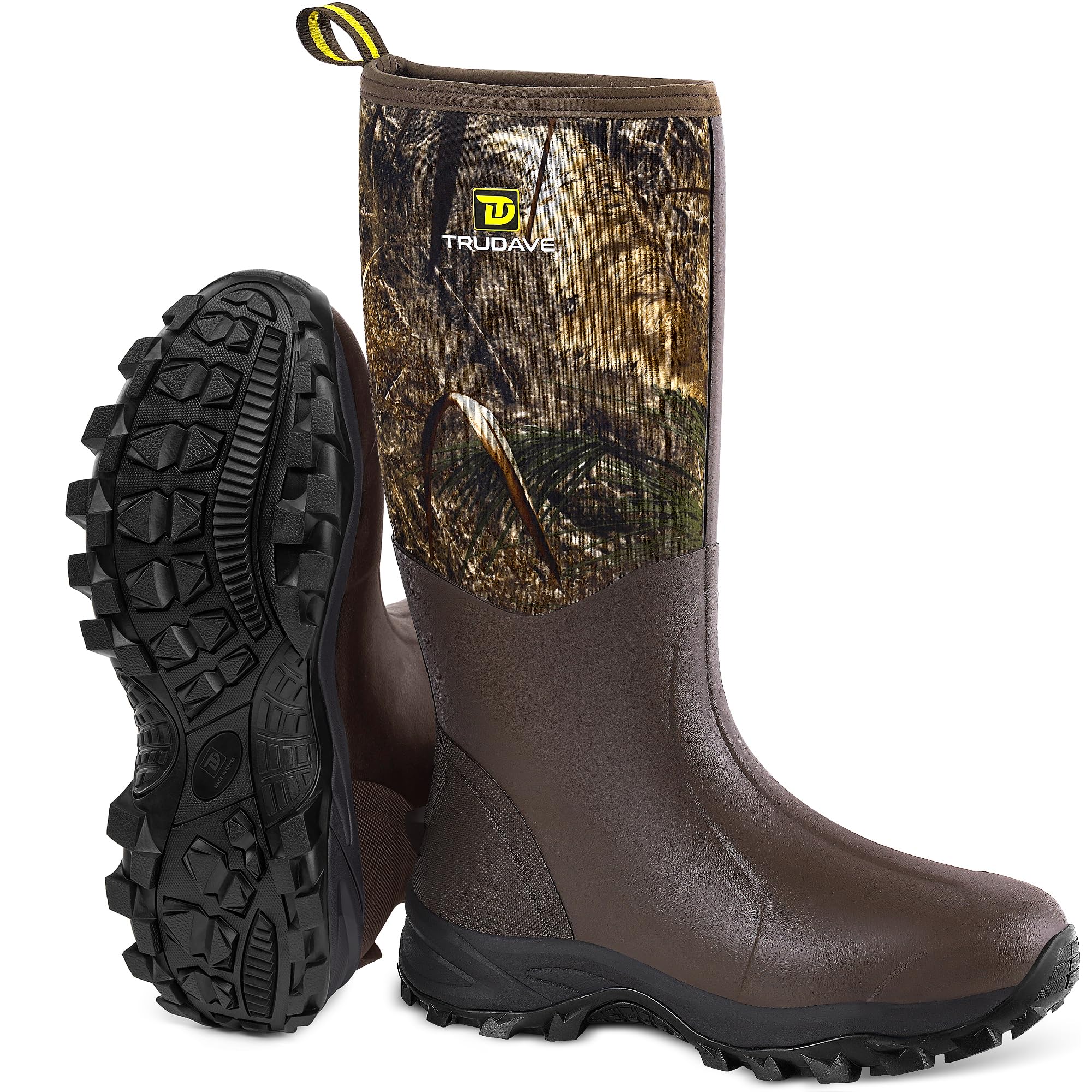
The Trudave Rubber Boot enters the hunting boot category at a price point that typically demands compromises, but its 6mm neoprene liner, steel shank, and true-to-size fit suggest fewer tradeoffs than expected. The steel shank provides meaningful protection against sharp rocks and roots, a spec usually reserved for more expensive work boots.
The outsole tread pattern is deep and wide, performing well in mud, snow, and loose topsoil. On ice, the tread provides a reasonable bite, though, like most rubber boots, it is not as secure as a studded sole. The boot is lightweight compared to the LaCrosse or Irish Setter rubber models, and users with 12-14 hour workdays in mud report no pain or wetness. The odor issue common to rubber boots is present but less intense than the TIDEWE models, and it fades relatively quickly with airing out.
The biggest weakness is the insulation ceiling. Users confirm that the Trudave is less warm than the Muck Boot or the TIDEWE 800g, and in deep freeze conditions below 20°F, the lack of dedicated Thinsulate is noticeable. For the active hunter who walks more than stands and doesn’t want the stink of a heavily insulated boot for early-season archery, this is a strong budget option. The break-in period involves a shorter window than most rubber boots—several days of wear rather than a full week—and the sizing is described as accurate enough to risk ordering online.
Why it’s great
- Great value for a steel-shank rubber boot
- Lightweight and comfortable for active use
- Deep tread performs well in mud and snow
Good to know
- Less warm than dedicated insulated models
- Not designed for extreme cold (<20°F)
- Mild rubber odor when new
FAQ
What is the best Thinsulate gram weight for stationary deer hunting in 20°F weather?
Can I use a rubber hunting boot for long-distance hiking?
How should I store my insulated hunting boots during the off-season?
What is the difference between Thinsulate and neoprene insulation in hunting boots?
Final Thoughts: The Verdict
For most hunters who need a single pair to cover pre-season scouting, mid-season walks, and the occasional cold sit, the best hunting boots choice is the Irish Setter Elk Tracker 1000g because its leather-membrane construction, bombproof outsole, and 1000g Thinsulate strike the ideal balance between warmth, durability, and walking comfort. If you hunt exclusively above the water line and prioritize a light step, grab the Danner Men’s Vital 8″ for its unmatched walking feel. And for the late-season waterfowler or ice fisherman who needs absolute warmth and waterproofing, nothing beats the LaCrosse Cold Snap 9″.