
Our readers keep the lights on and my morning glass full of iced black tea. As an Amazon Associate, I earn from qualifying purchases.
Specs are compiled from manufacturer listings and verified buyer reviews and can change over time — please confirm the key details on the product page before buying.
Hydrogen water bottles claim to pack the antioxidant power of hundreds of bananas into your daily sip — but sorting real performance from marketing fizz is what this guide is for. We break down the eight most promising models, from budget-friendly entry points to premium machines, focusing on the numbers that actually matter: how much hydrogen each produces per cycle, how long the battery lasts, and what real owners say after months of daily use.
I’m Min — the founder and writer behind Gadgets Feed. This guide is built by comparing the manufacturers’ published specifications and the patterns across verified customer reviews, so you get each pick’s real strengths and trade-offs instead of marketing spin.
Before you click “add to cart,” you need a clear picture of which hydrogen water bottle on amazon delivers the highest concentration without leaking, dying after a few cycles, or costing a fortune in return shipping.
Our Picks at a Glance

How To Choose The Best Hydrogen Water Bottle On Amazon
Not every bottle that glows blue is doing the same thing inside. Choosing smart means understanding three core specs: how much hydrogen the unit actually puts into your water (PPB), how long the battery can keep making that happen, and what the bottle is made of — because material directly affects taste, pressure safety, and how long hydrogen stays dissolved.
PPB — The Concentration You Actually Drink
PPB stands for parts per billion, and it is the industry yardstick for hydrogen concentration. A 6400 PPB bottle theoretically delivers nearly four times the hydrogen per sip as an 1800 PPB model., but it also requires more powerful electrolysis (SPE/PEM) and often a longer cycle time — three to twelve minutes versus one to three. If you are buying for measurable impact, look for certified third-party PPB figures, not just the manufacturer’s boldest claim.
Battery Life — How Many Cycles Between Charges
A generous battery — 1300mAh to 2000mAh range — means you can use the bottle for days without hunting for a USB port. Check whether the advertised “100 minutes of production” covers short cycles (five minutes each) or long cycles (ten minutes each). Units with smaller 1000mAh batteries typically deliver about ten cycles before needing a recharge, while the larger packs can push into twenty-plus cycles. A bottle that dies after a dozen uses is not portable; it is a desk ornament waiting for its next charge.
Material — Glass, Tritan, or Stainless Steel
The bottle’s innards determine taste and longevity. Borosilicate glass resists thermal shock and keeps water tasting neutral — no plastic aftertaste. Tritan plastic is shatterproof, which matters because SPE/PEM electrolysis builds internal pressure, and glass can crack under that stress (some brands explicitly warn against glass for this reason). Stainless steel offers durability but you cannot see the water level or the bubbles. Each trade-off is real: glass for purity, Tritan for safety and portability, steel for ruggedness. Match the material to where you plan to carry the bottle.
Quick Comparison
| Model | Best For | Hydrogen Output | Battery Capacity | Material | Amazon |
|---|---|---|---|---|---|
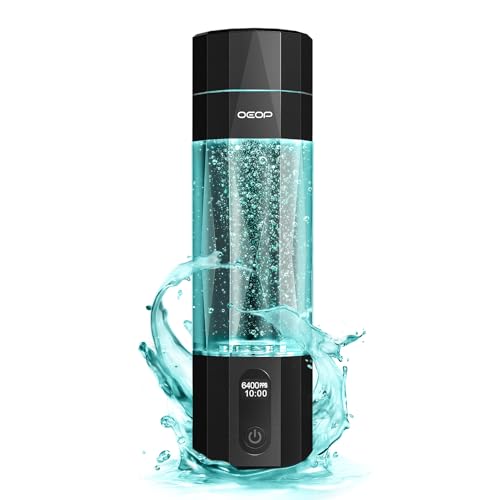
| OEOP 6400 PPB★ Best Overall | Highest concentration per dollar | 6400 PPB | 2000mAh | Plastic | Amazon |
| ENERGILZ 480 mlLarge Capacity Powerhouse | Large capacity with inhalation port | 3000 PPB | — | Borosilicate Glass | Amazon |
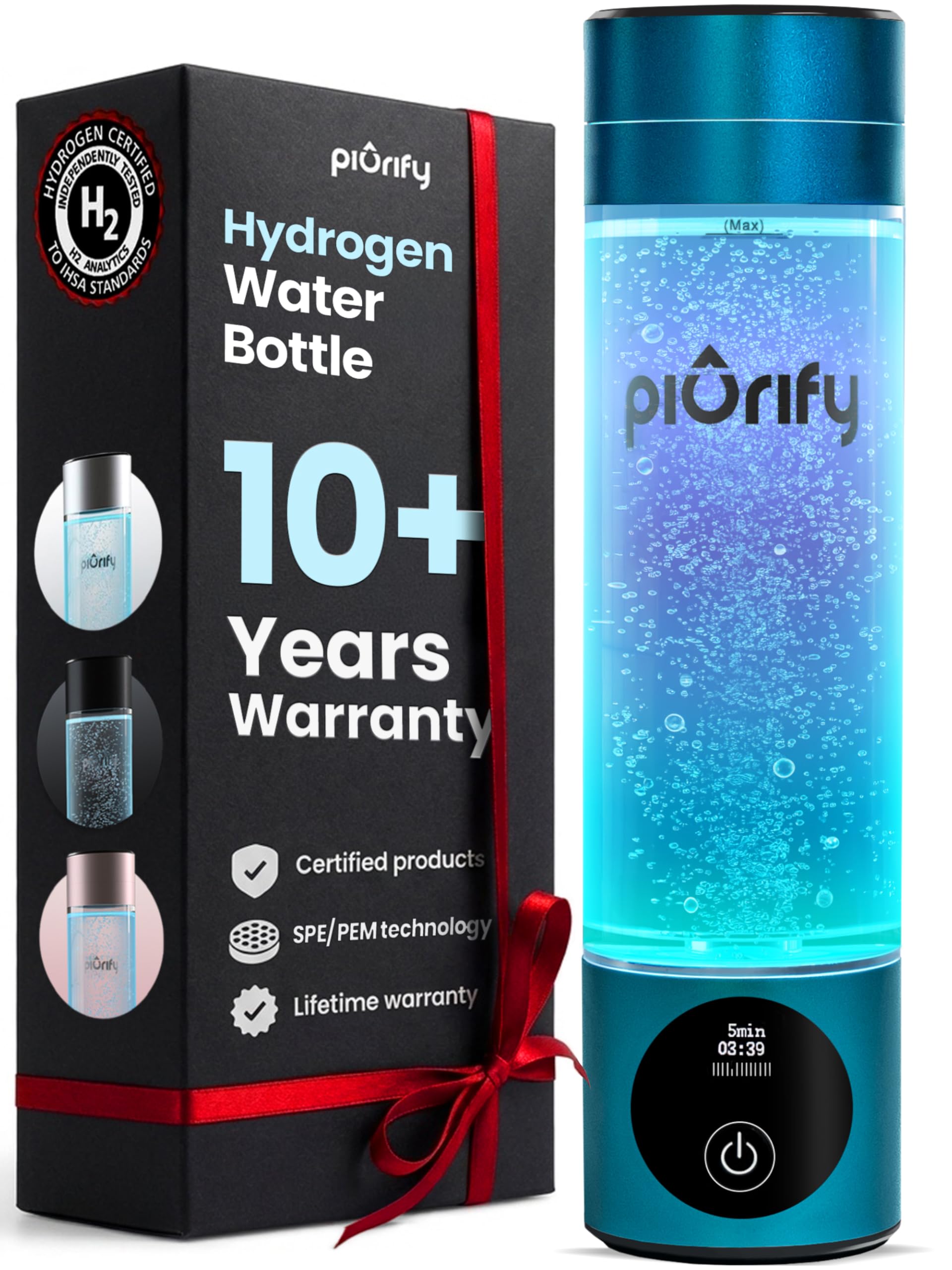
| PIURIFY TurquoiseLifetime Warranty | Lifetime warranty & high PPB | 6300+ PPB (3 cycles) | — | Food Grade PC | Amazon |
| PUREPEBRIX 10 oz | Certified 6400 PPB & shatterproof build | 6400 PPB | — | Tritan Plastic | Amazon |
| Clcepore 5000 PPB | Hydrogen lock & aluminum alloy shell | 5000 PPB | 1300mAh | Borosilicate Glass / Aluminum | Amazon |
| Asgool 5000 PPB | LED timer & aluminum shell | 5000 PPB | 1300mAh | Glass / Aluminum / Stainless Steel | Amazon |
| Aqua Vital 16 oz | USB-C convenience & slim design | — | 1000mAh | Borosilicate Glass | Amazon |
| WIYYH 420 ml | Budget pick with glass body | 1800 PPB | — | Borosilicate Glass | Amazon |
| hydroh 15 oz | Stainless steel durability | — | — | Stainless Steel | Amazon |
In‑Depth Reviews
1. OEOP 6400 PPB Hydrogen Water Bottle
Our pick — over 4★ from 100+ verified ratings; the strongest balance of quality and price.
The bottle that pumps out 6400 PPB without making you recharge every afternoon.
After you press the single button and wait five minutes, the SPE/PEM electrolysis inside this 7-ounce bottle delivers the highest hydrogen concentration in this roundup — 6400 PPB, lab-verified. That is a significant jump over the 1800 PPB units you see in the budget tier; the difference in concentration is roughly 3.6 times per sip. The 2000mAh battery is the largest here, supporting up to 100 minutes of production — you can run the full ten-minute cycle ten times before hunting for a USB port.
The trade-off is size. At 7 fluid ounces with a 9″ x 3″ x 3″ shape, this bottle is compact enough for a gym bag but too small for a workday desk pitcher. What wins people over is the build quality and the real-world results: the bottle is 100% leak-proof, made from food-grade plastic, and the smart LED timer shows exactly where you are in the cycle. Buyers report that a 10-minute run produces a measured 6 ppm in about 200 ml of water, with no off-taste. The recurring gripe is that at 7 ounces, you refill often — it is designed for concentrated hydrogen on the go, not gallons of hydration.
Concentration champion: No other bottle at this price hits 6400 PPB with a 2000mAh battery and a leak-proof seal. Reach for it if you want the highest hydrogen per ounce and portability matters more than raw capacity.
Grab this if: you prioritize hydrogen concentration above all else and carry a refill source.
Look elsewhere if: you need more than 7 ounces per fill or prefer a glass drinking surface.
2. ENERGILZ 16.2 oz Hydrogen Water Bottle (3000 PPB)
A full 16.2 ounces of hydrogenated water with the bonus of a nasal inhalation tube for direct H2.
This borosilicate glass bottle fills 480 ml per cycle — that is 14% more water per fill than the 420 ml models and double the 7-ounce units. The SPE/PEM generator hits 3000 PPB in a 12-minute cycle, which is a middle-ground concentration: higher than the low-cost 1800 PPB options but below the 5000+ PPB premium tier. The clever addition is the silicone cover for drop protection and the dual-sided openings, one for drinking and one for attaching the included inhalation tube.
Battery life is the talking point here, both positively and negatively. Some owners mention the battery lasts 30+ cycles — impressive endurance. Others say the unit stopped charging after weeks of use, a durability concern that shows up in the feedback. What everyone agrees on is the straightforward operation: fill, press the single button, and the water comes out tasting clean with no aftertaste. If you want a large-format glass bottle that doubles as a hydrogen inhaler, this is the one that fits that unique use case.
Dual-mode versatility: The inhalation tube separates it from every other pick here, and the 3000 PPB output in 12 minutes is a strong middle ground between potency and speed.
Best for: someone who wants a full glass of hydrogen water and enjoys the option of nasal H2 inhalation.
Skip if: consistent battery performance over months is your deal-breaker — check the warranty before buying.
3. PIURIFY Hydrogen Water Bottle (6300+ PPB)
The premium bottle that reaches 6300+ PPB through multiple cycles and backs it with a lifetime warranty.
PIURIFY uses three 10-minute cycles to push hydrogen concentration from 4100+ PPB (single cycle) up to 6300+ PPB. That is third-party certified by H2 Analytics and H2Hubb, so the numbers are not just marketing. The bottle is built from food-grade PC rather than glass, a deliberate choice: the high internal pressure from SPE/PEM electrolysis can crack glass, and the polycarbonate body is shatterproof. It also comes with a nasal cannula for inhalation — a rare inclusion at this level.
The feedback from a large customer base (more than 100,000 nationwide) highlights reliability: owners say the bottle improves focus and reduces stress, but the 10-ounce capacity and per-cycle waiting time are the main hiccups — you cannot chug and go instantly. The biggest selling point is the lifetime warranty and real human support, which cuts the risk of buying a premium device. If the bottle dies, they replace it.
Safety-first design: The food-grade PC body withstands internal pressure that glass cannot, and the lifetime warranty takes the sting out of the premium price.
Reach for this if: you want certified 6300+ PPB output and zero worry about shattering or replacement costs.
Think twice if: a 10-ounce capacity feels too small for your daily routine — the multi-cycle production means refilling often.
4. PUREPEBRIX 10 oz Hydrogen Water Bottle (IHSA Certified 6400 PPB)
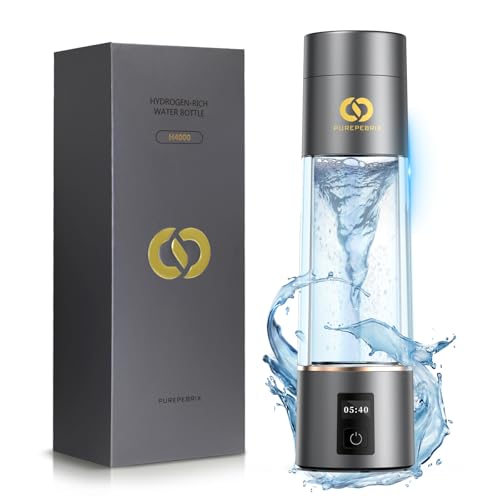
IHSA-certified 6400 PPB hydrogen in a shatterproof Tritan bottle that is gym-bag tough.
Unlike the glass bottles in this list, PUREPEBRIX uses BPA-free Tritan — a polycarbonate alternative that handles the high pressure of SPE/PEM electrolysis without cracking. The 6-minute and 12-minute dual modes let you choose: a fast cycle for a moderate dose or the full 12-minute cycle for the certified 6400 PPB maximum. The unit is SGS-tested for 99.9% purity, meaning it exhausts ozone and chlorine byproducts instead of letting them mix with your water.
The build is compact: 2.48 inches wide and 8.66 inches tall, with a 10-ounce capacity. Battery life is solid (owners say it lasts days between charges), and the Type-C charging is modern and fast. That said, the value-for-money feedback is mixed — some owners feel the concentration claims are inflated, with one report showing 1015 PPB in testing versus the 6400 PPB promise. The 1-year warranty and 10x refund guarantee (requiring professional lab verification) suggest the brand knows this is an issue.
What stands out
- IHSA certified 6400 PPB with 2 infusion modes
- Shatterproof Tritan plastic is safer for travel than glass
- Exhausts chlorine and ozone byproducts for cleaner taste
The honest trade-off
- Customers note lab tests show lower PPB than the 6400 claim
- 10-ounce capacity means frequent refills
Grab this if: you need a durable, travel-friendly bottle with a high PPB certification and do not mind the smaller capacity.
Look elsewhere if: you expect exact 6400 PPB readings from an at-home test pen — the guarantee requires professional lab verification.
5. Clcepore 5000 PPB Hydrogen Water Bottle (Nano-Grade Aluminum Alloy)

A nano-grade aluminum-magnesium alloy inner wall locks hydrogen freshness for hours after the cycle ends.
This bottle claims to maintain hydrogen concentration above 1.6 ppm for 8 hours — four times longer than ordinary bottles — thanks to its hermetic aluminum-magnesium alloy storage space. The second-generation SPE technology delivers 5000 PPB, and the German TÜV-certified triple leak-proof structure helps seal that hydrogen in. The 1300mAh battery supplies up to 12 cycles of 10-minute production or 24 cycles of 5-minute runs.
The borosilicate glass interior with the metal shell gives it a premium feel, though its rating (4.2 across over 200 ratings) is consistent but not the highest here. The biggest functional question mark is the mixed feedback on long-term durability, with one owner reporting the glass base began shedding fragments after six months. If hydrogen longevity is your priority — wanting to sip H2-rich water for hours rather than minutes after the cycle — this aluminum-alloy bottle addresses that problem directly.
Extended hydrogen freshness: The 8-hour retention capability is unique in this lineup; no other bottle here promises this degree of hydrogen-lock technology.
Best for: those who sip water slowly throughout the workday and want stable hydrogen content hours after production.
skip it if: glass durability concerns you — the aluminum alloy shell helps, but the interior is still borosilicate glass.
6. Asgool 5000 PPB Hydrogen Water Bottle (LED Timer)

Glass and aluminum meet an LED timer that tells you exactly how much hydrogen saturation you are building.
The Asgool bottle produces 5000 PPB in a 10-minute cycle and uses a built-in LED timer to show production progress — so you can dial in the hydrogen saturation level you want. The 1300mAh battery supports 12 ten-minute cycles or 24 five-minute cycles per charge. The construction layers glass (exterior) with an aluminum alloy shell for drop protection, plus stainless steel and silicone internal components to prevent leaks.
What owners consistently praise is the sleek design and the noticeably smoother taste of the hydrogenated water. The bottom vent releases oxygen and residual chlorine, which keeps the flavor clean. The recurring anecdotal complaint is an occasional unit arriving dead on arrival, though the consensus is that when it works, it works well — improved hydration and extra energy are the most common owner observations. At 340 ml capacity, it is on the smaller side, which means more frequent fills if you are a heavy drinker.
Control + quality: The LED timer gives you precise control over hydrogen saturation, and the glass-aluminum-stainless steel construction feels built to last.
Reach for this if: you want to track and control your hydrogen production time and appreciate the premium hybrid build.
Think twice if: the 340 ml capacity is too small for your daily hydration — expect multiple cycles per day.
7. Aqua Vital 16 oz Hydrogen Water Bottle (470 ml)
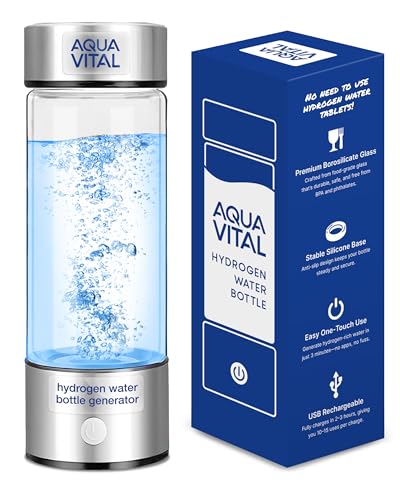
A slim, USB-C rechargeable bottle with a 16-ounce capacity and auto shut-off — designed for on-the-go sipping.
The Aqua Vital bottle produces hydrogenated water in a 3-minute cycle and fits into car cup holders and bike cages thanks to its 8.1 x 2.6-inch profile. The 470 ml chamber is one of the largest here, meaning fewer refills than the 7-ounce or 10-ounce units. The borosilicate glass body keeps the taste clean, and the brushed-steel base with a silicone pad stops it from sliding around on a treadmill or desk.
The 1000mAh battery is smaller than the high-end picks (roughly ten cycles per charge), but the USB-C charging compensates with convenience — you can plug into any modern laptop or power bank. Owners highlight easy one-button operation, no plastic aftertaste, and a sturdy build that feels more expensive than mid-range price suggests. The reliability feedback is mixed, however: most units work flawlessly, but enough reports of units failing after weeks create a real caution flag. If you want a modern, portable hydrogen bottle with generous capacity and no ongoing filter costs, this is the most lifestyle-friendly pick.
Portability-focused design: The slim shape, USB-C charging, and 3-minute cycle make this the easiest bottle to integrate into a work-travel-gym routine.
Grab this if: you want a large-capacity, sleek glass bottle with modern USB-C convenience and fast 3-minute cycles.
Look elsewhere if: long-term reliability is non-negotiable — check the return policy as backup.
8. WIYYH 420 ml (14 oz) Hydrogen Water Bottle

An entry-level glass bottle that hits 1800 PPB — a solid starting point for anyone new to hydrogen water.
The WIYYH bottle is the lowest-cost option with a borosilicate glass body, making it a good introduction to hydrogen-rich water without a big upfront commitment. The SPE/PEM technology generates up to 1800 PPB per cycle, which is a baseline concentration — comparable to the output of many first-generation hydrogen bottles. The 420 ml (14 oz) capacity is reasonable for a personal bottle, and the USB rechargeable battery supports 15-20 uses per charge.
Quality and taste are the most-praised aspects, with owners noting the water tastes better and encourages them to drink more. The major recurring issue is leakage: a significant number of reviewers point out water leaking due to gasket problems after disassembly for cleaning. The design also does not include a charging cable in the box, according to some feedback, and the unit is incompatible with other cords. For the price, the glass body and the taste improvement are genuine wins, but you need to be comfortable with a higher chance of seal-related issues over time.
The case for it
- Borosilicate glass at the lowest price in the lineup — no plastic taste
- 1800 PPB output and 15-20 cycles per charge for casual use
The honest catch
- Leakage reports from the gasket are the most-discussed problem
- No charging cord included and compatibility issues with other cables
Best for: a first-time hydrogen water buyer who wants a glass bottle at a low entry price and is okay with some tinkering around the gasket.
Skip if: leak-proof reliability is your top criterion — consider spending a bit more for a sealed Tritan or aluminum-shell option.
9. hydroh Original 15 oz Hydrogen Water Bottle
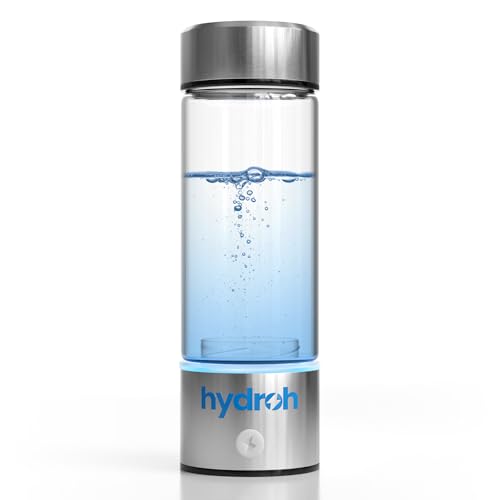
A rugged stainless steel bottle with 15 ounces of capacity — built for drops, not breakage.
The hydroh Original stands out for its 15.2-ounce stainless steel construction, which makes it the most durable option for tossing into a gym bag or hiking pack. The SPE/PEM technology generates hydrogen-rich water, and the leak-proof lid and ergonomic shape make it comfortable to carry. It is also the most-reviewed product here, with a large owner base that signals strong real-world use.
The feedback is split. Some owners say the bottle effectively reduces inflammation and helps with gut health. Others report mixed results on functionality and water taste. Durability is a negative theme: the bottle has the highest proportion of negative comments on leakage and value for money among this group — a notable chunk of owners say the bottle stopped working or leaked. If you need a stainless steel hydrogen bottle that can survive a drop and you are willing to roll the dice on consistency, this has the capacity and rugged build. If reliability is your bedrock requirement, the mixed durability feedback makes it a harder sell.
Rugged and roomy: The 15.2-ounce stainless steel body is the toughest build here, and the large capacity means fewer refills than most competitors.
Grab this if: you want maximum durability and a large capacity for active outdoor or gym use, and you accept a mixed owner satisfaction record.
Look elsewhere if: consistent performance from the start matters more than physical toughness — the reliability feedback is the weakest in this lineup.
Understanding the Specs
PPB (Parts Per Billion) — The Hydrogen Concentration Yardstick
PPB measures how many parts of dissolved hydrogen exist per billion parts of water.. A 6400 PPB bottle produces about 6.4 mg/L of hydrogen, while a 1800 PPB unit produces around 1.8 mg/L. The SPE/PEM electrolysis technology used in these splits water into H2 and O2, then channels the hydrogen into the water while venting oxygen and chlorine byproducts. A third-party certification (like IHSA or H2 Analytics) adds confidence that the number holds up in real use — marketing claims without certification need caution.
Battery Capacity — Measured in mAh
A battery rated in milliamp-hours (mAh) tells you how much energy it stores. A 2000mAh battery can power about 20 ten-minute cycles before needing a recharge, while a 1000mAh battery handles roughly 10 cycles. Larger batteries add weight but reduce the dependency on charging. USB-C charging is faster and more universal than older micro-USB, and a red/blue LED indicator shows when the unit is charging versus fully topped off. Some bottles have an auto shut-off feature that protects the electronics once a cycle completes.
FAQ
What is the difference between 1800 PPB and 6400 PPB hydrogen water?
Can I use any water in a hydrogen water bottle?
How long does the hydrogen stay in the water after the cycle finishes?
Is borosilicate glass better than Tritan or stainless steel for hydrogen bottles?
How often should I clean my hydrogen water bottle?
Does hydrogen water from these bottles really help with inflammation or energy?
Can a hydrogen water bottle be used with hot water?
What does SPE/PEM stand for and why does it matter?
How many cycles can I get before the bottle needs replacing?
Final Thoughts: The Verdict
For the majority of shoppers, the hydrogen water bottle on amazon worth buying is the OEOP 6400 PPB because it delivers the highest certified concentration per dollar with a 2000mAh battery and a 100% leak-proof seal