
Our readers keep the lights on and my morning glass full of iced black tea. As an Amazon Associate, I earn from qualifying purchases.
Specs are compiled from manufacturer listings and verified buyer reviews and can change over time — please confirm the key details on the product page before buying.
An internal frame pack shifts weight to a padded hip belt and keeps the load stable against your back, so you walk upright and balanced.
I’m Min — the founder and writer behind Gadgets Feed. This guide is built by comparing the manufacturers’ published specifications and the patterns across verified customer reviews, so you get each pick’s real strengths and trade-offs instead of marketing spin.
Whether you are planning a weekend in the woods or a multi-day thru-hike, the right internal frame backpack makes the difference between a trip you remember and one you want to forget.
Our Picks at a Glance
How To Choose The Best Internal Frame Backpack
Choosing the right internal frame pack means matching your torso length, the weight you’ll carry, and the features you need. Here is what to look for in each area.
Torso Fit and Adjustability
The most important fit measurement is your torso length — from the base of your neck (the C7 vertebra) down to the top of your hip bones. A pack with a multi-position torso adjustment lets you dial that length in. The Teton 65L uses a multi-position adjustment for medium and tall adventurers, while the Ubon 60L offers a 7-stage height adjuster. If the pack doesn’t fit your torso, padding alone won’t make it comfortable under load.
Hip Belt and Weight Transfer
The internal frame’s job is to channel weight to the hip belt. Look for a padded hip belt with enough structure to keep the load from sagging. Buyers of the Teton report the adjustable torso keeps weight off their shoulders. The Osprey Rook uses a LightWire frame to transfer loads to the hipbelt, which takes pressure off your shoulders. A hip belt that cuts into your hips or slides down under load is a dealbreaker.
Backpanel Ventilation
On warm-weather hikes, a sweaty back is a common complaint. Packs like the Ubon 60L use a 3D mesh panel and steel frame to create an air gap. The Osprey Renn uses an adjustable AirSpeed suspension — a tensioned mesh backpanel that keeps airflow moving. If you hike in hot conditions, ventilation matters as much as padding.
Capacity vs. Real-World Use
For a weekend trip, a 60-liter pack gives you enough room for gear without being oversized. The Mardingtop 60L and Ubon 60L fit that size. The Teton 65L adds a bit more space without reaching expedition size. The MOUNTAINTOP 70L suits longer trips. But buyers report that the Ubon’s 60L feels smaller than advertised when compared side-by-side with a 35L Osprey. Check packed dimensions and real user photos rather than trusting the liter number alone.
Material and Build Quality
Look for main fabrics like 600D polyester or nylon and zippers from reliable makers. The Mardingtop uses YKK zippers, which reviewers call the best you can get. The Teton uses a 600D polyurethane lining. The Naturehike uses a polymer fabric with high molecular weight polyethylene fibers. A rain cover is included with most of these packs — but check whether it is integrated (like the Osprey Renn) or stored in a separate pocket (like the Teton).
Quick Comparison
| Model | Best For | Capacity | Weight | Frame Type | Amazon |
|---|---|---|---|---|---|
| Teton 65L Explorer★ Best Overall | Best Overall / Versatile Multi-Day | 65L | — | Internal Frame | Amazon |
| Ubon 60LSmart Value | Budget-Friendly / Adjustable Fit | 60L (3600 cu in) | 3.97 lbs | Steel Frame | Amazon |
| Mardingtop 60L Military | Tactical / Modular Customization | 60L | 4.49 lbs | Internal Frame | Amazon |
| MOUNTAINTOP 70L | Extended Trips / High Capacity | 70L | 4.4 lbs | Aluminum Alloy Frame | Amazon |
| Naturehike 65L Rock | Ultralight / Weight-Conscious Hikers | 60L+5L | 2.89 lbs | Internal Frame | Amazon |
| Osprey Renn 50L | Women’s-Specific Fit / Day Hikes | 50L | 3.5 lbs | LightWire Frame | Amazon |
| Osprey Rook 65L | Extended Fit / Larger Body Types | 65L | 3.9 lbs | LightWire Frame | Amazon |
In‑Depth Reviews
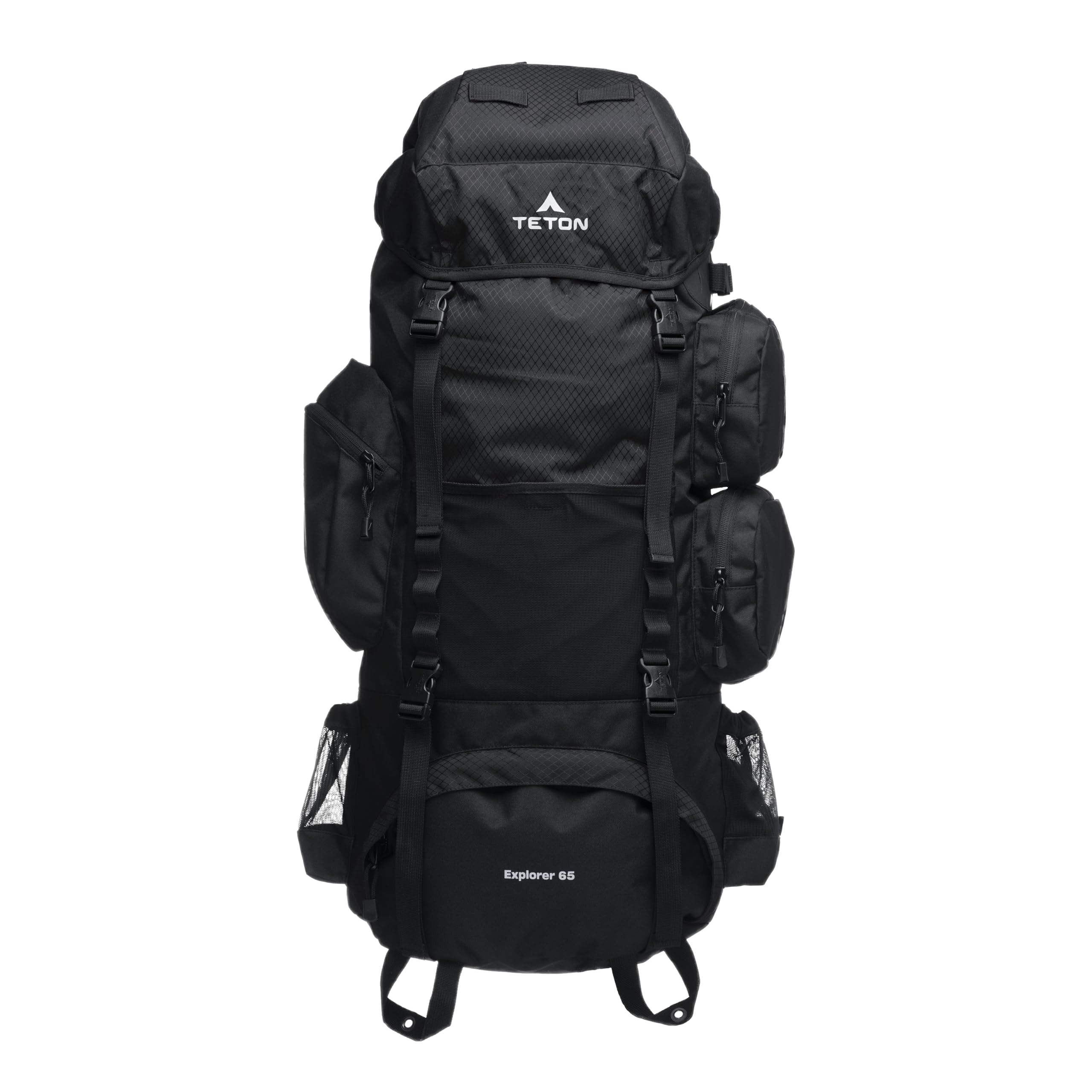
1. Teton 65L Explorer Internal Frame Backpack
Our pick — over 4.5★ from 8,000+ verified ratings; the strongest balance of quality and price.
A balanced, feature-rich workhorse that proves you do not need to spend premium prices for a comfortable multi-day pack.
The Teton 65L balances price, comfort, and durability. Its multi-position torso adjustment (you can move the shoulder straps up or down to fit your back length) fits medium and tall adventurers. The open-cell foam lumbar pad (a cushioned lower-back support) with molded channels provides both cushioned support and airflow. Owners mention that the adjustable torso keeps weight off their shoulders, which is exactly what an internal frame pack should do.
At 65L capacity, you have room for a tent, sleeping bag, chair, clothes, and food for 3 to 5 days. Customers note it handles loads up to 50 lbs well. The large sleeping bag compartment and multi-directional compression straps keep everything organized and cinched tight. One limitation buyers mention: side mesh pockets are too small for larger water bottles.
A rain cover hides in a bottom pocket, though it is hard to access when the pack is full. The 600D polyurethane lining and durable build have earned it comparisons to much more expensive packs. One reviewer who brought it on a 45-lb training hike called it comfortable and well-built. The Teton brand’s customer support also gets frequent praise for resolving issues quickly.
what separates it
- Adjustable torso fits a wide range of body sizes
- Lumbar pad and molded channels for airflow and weight distribution
- Large sleeping bag compartment for multi-day gear
The Trade-Offs
- Side mesh pockets too small for large water bottles
- Rain cover pocket hard to reach when pack is full
- Non-adjustable ice axe loops, though they work for trekking poles
Best for: Hikers who want a comfortable, durable 65L pack for multi-day trips without spending +.
Look elsewhere if: You need large side pockets for oversized water bottles or an easily accessible integrated rain cover.
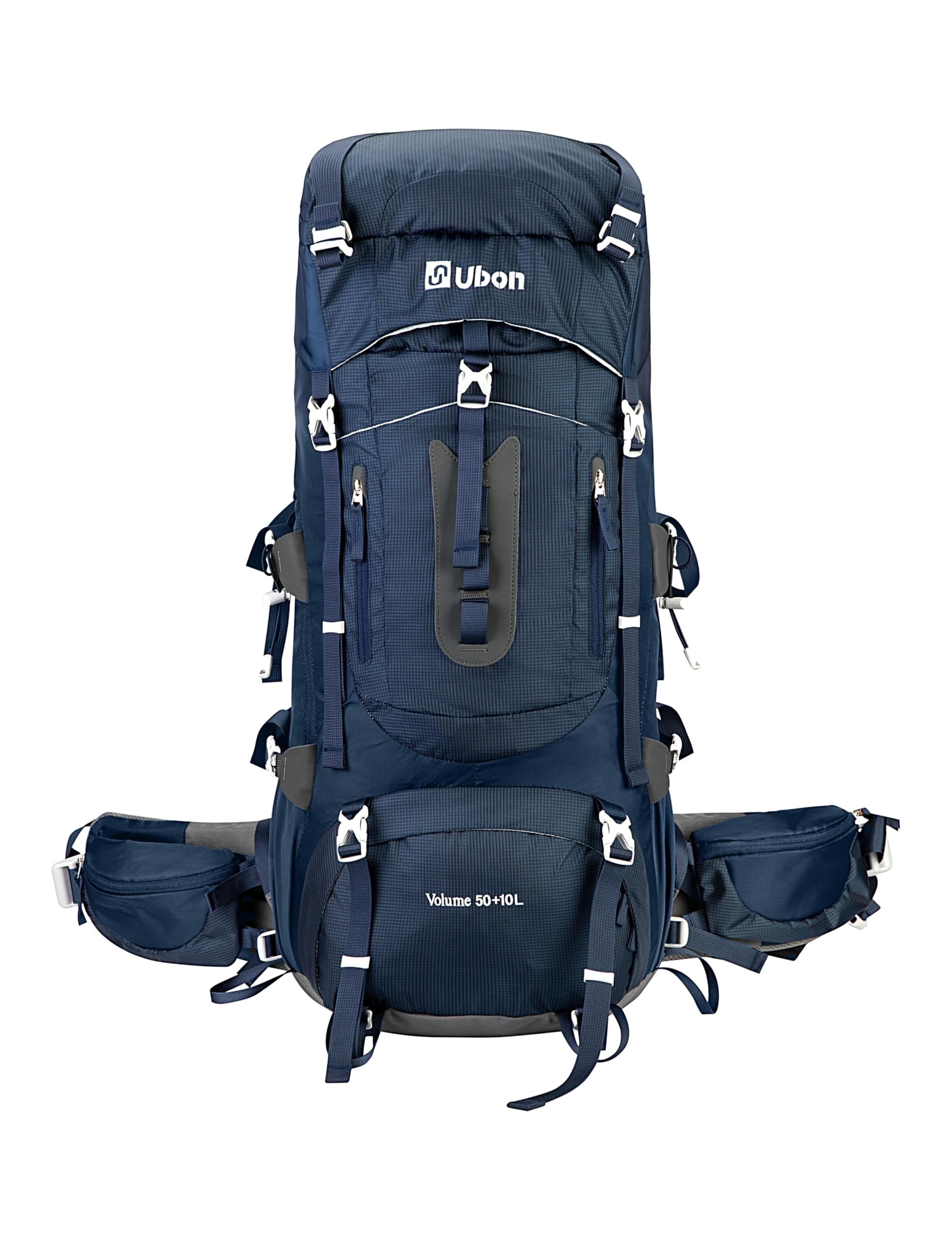
2. Ubon 60L Internal Frame Hiking Backpack
A steel-frame pack that borrows premium design ideas and delivers surprising comfort for the price.
The Ubon 60L uses an internal steel frame to maintain the pack’s shape and height when loaded, which is a feature you rarely see at this price point. Its 7-stage height adjuster, held in place with a thick hardened area and magic tape, lets you fine-tune the fit. The 3D mesh panel and steel frame create an air gap for back ventilation.
One reviewer used this pack at 28 lbs on a 4-night Appalachian Trail section hike and found the comfort level extremely high. The same reviewer noted that the padding and width of the shoulder straps feel like you spent a lot more money than you did. Compare that to the Teton 65L, at 65L versus the Ubon 60L — a helpful extra margin for bulkier gear. The Ubon includes a separate bottom compartment for a sleeping bag or extra shoes, and a hydration bladder pocket fits a 3-liter bladder.
A few reviewers point out the pack runs smaller than advertised. One owner compared it to a friend’s 35L Osprey and felt they were about the same size. If you pack light, that is not an issue. The included rain cover is bright orange for visibility in low light. Reflective webbings add safety at night. A whistle built into one shoulder strap is a nice emergency touch.
Why It Punches Above Its Weight
- Steel frame keeps shape and height under load
- 7-stage torso adjustment for a custom fit
- 3D mesh backpanel for airflow
Watch Out For
- Runs smaller than the 60L advertisement suggests
- Plastic pieces can be fragile if mishandled
- Shoulder and waist straps could use a little more foam padding
This pick suits: Budget-conscious hikers who want a steel-frame suspension system and don’t mind a slightly smaller-than-stated capacity.
Choose something else if: You need the full 60L of space or want thick, heavily padded straps from the factory.
3. Mardingtop 60L Military Internal Frame Backpack
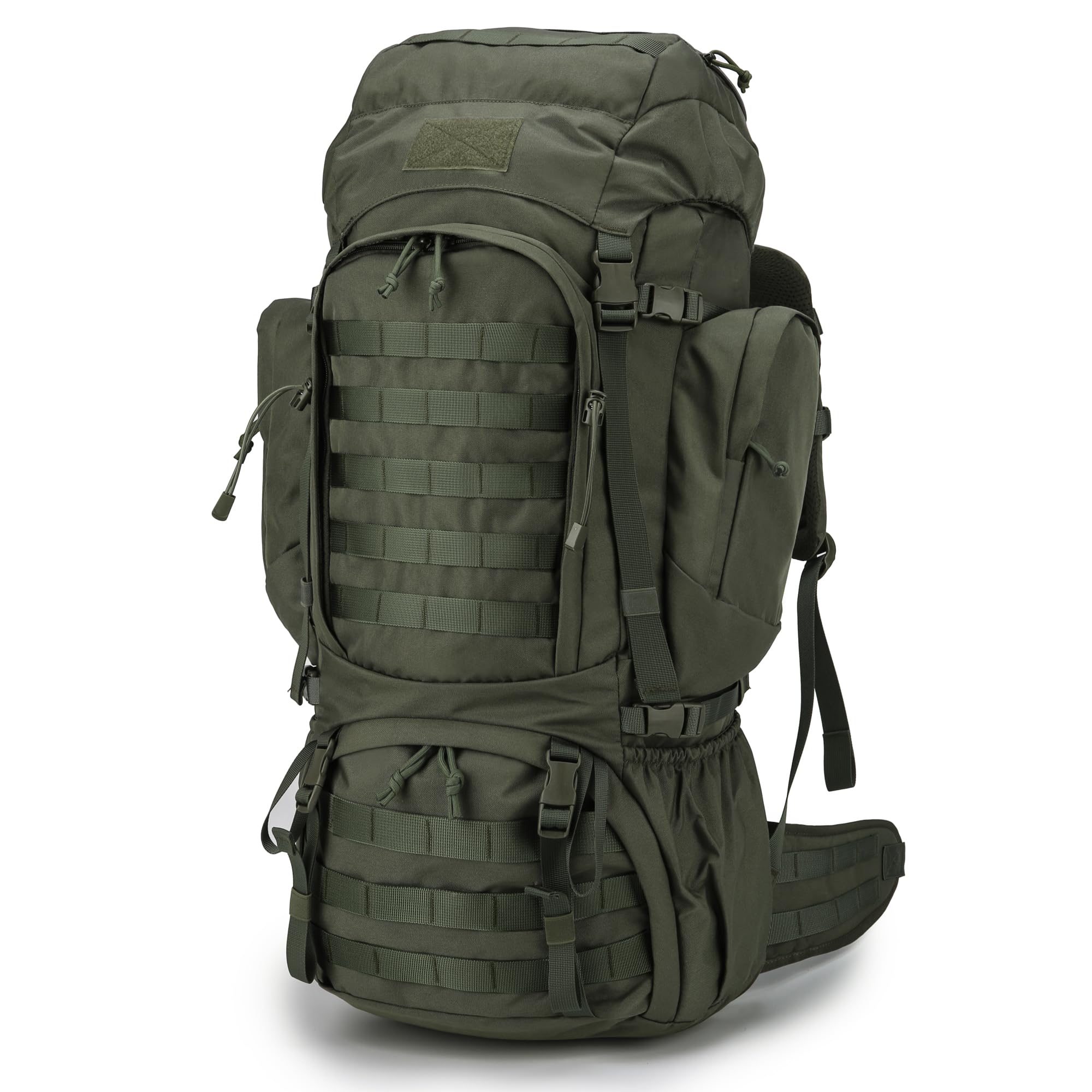
A tactical build with YKK zippers and a MOLLE platform for hikers who want to attach gear to the outside.
The Mardingtop 60L is built around a modular lightweight load-carrying (MOLLE) system, which means you can attach pouches, sleeping bags, and other gear directly to the pack’s exterior. It uses YKK zippers, which an experienced reviewer (an old paratrooper) called the best you can get. The main fabric is 600D polyester, and it comes with a rain cover stored in a zipped top pocket.
Reviewers praise the build quality for the price. One owner loaded it with about 90 lbs for short ruck runs and reported no tearing or signs of stress after nearly a year of use. Another hiked in solid steady rain for 2 hours with no water intrusion once the cover was on. The elastic compartment is big enough for a 15.6-inch laptop or a 2.5-liter hydration bladder.
Unlike the Teton 65L and Ubon 60L, the Mardingtop uses a simpler internal frame. It is a smaller pack for its stated capacity — one reviewer notes it probably is not large enough for hundreds of miles of travel, but you can expand it with MOLLE pouches. The waist belt could be better, per the same paratrooper reviewer, but overall the materials are a cut above what you find at similar price points.
Built Tough
- YKK zippers — highest reliability in the industry
- MOLLE system lets you customize with pouches and gear
- Holds up under heavy loads (reviewers used 90 lbs)
Room for Improvement
- Waist belt could use better padding and structure
- On the smaller side for a 60L pack
- Simpler internal frame than the Teton or Osprey designs
Reach for this if: You want a rugged, customizable pack and prefer YKK zippers and modular attachments over a cushy suspension.
skip it if: You want a plush waist belt or need the full internal capacity of a true 60L bag.
4. MOUNTAINTOP 70L Internal Frame Backpack

A 70-liter cavern with an aluminum alloy frame that carries heavy loads for longer trips while staying affordable.
The MOUNTAINTOP 70L is built around a lightweight aluminum alloy frame plate designed for long-term travel and mountain hiking. At 4.4 lbs, it is heavier than the Naturehike 65L (2.89 lbs) and the Osprey Renn (3.5 lbs), but the extra weight buys you a large capacity for extended expeditions. The frame distributes weight effectively — one reviewer called it incredibly comfortable even when fully loaded.
The pack uses YKK zippers and has a side zippered entry for quick access to the main compartment without unrolling the top. A bottom compartment holds shoes or a sleeping bag. The suspension includes a multi-position torso adjustment and adjustable shoulder straps, so you can dial the fit to your body. One owner used it for a week-long trip to Peru and praised the weight distribution and padded straps.
Shoppers say it holds up well at around 30 lbs and handles loads over 45 lbs easily. A few note that the pack feels a bit top-heavy when not fully loaded, especially for smaller frame sizes. The included rain cover kept gear acceptably dry on a rainy Memorial Day trip. The MOUNTAINTOP does not have the sophisticated AirSpeed backpanel of the Osprey Rook, but its nylon fabric and mesh back pads offer decent breathability for the price.
Why It Works
- 70-liter capacity for extended, gear-heavy trips
- Aluminum alloy frame distributes weight well
- Side zipper entry for easy access to main compartment
The Limitations
- Can feel top-heavy when not fully loaded
- Fewer compartments than some competitors
- Heavier than ultralight alternatives
Ideal for: Hikers who need a full 70L of space and want an aluminum frame for load-bearing comfort on multi-day treks.
Not for: Ultralight enthusiasts or anyone who prefers a pack with many internal organization pockets.
5. Naturehike 65L Rock Upgraded Internal Frame Backpack

At 2.89 lbs, this is the lightest pack on the list and still carries up to 30.9 lbs of gear for weight-conscious hikers.
The Naturehike 65L Rock is built from a polymer fabric containing high molecular weight polyethylene fibers, which the brand claims are strong for their weight. It has a maximum weight recommendation of 30.9 lbs, so this is not a pack for hauling 50 lbs of gear like the Teton. But for ultralight or lightweight setups, it is an excellent match. Reviewers found it large enough to fit a foam pad, tent, stove, sleeping bag, and trekking poles inside.
One owner completed a 108-mile section of the Appalachian Trail with a base weight of 22 lbs and a total of 30 lbs. They called the pack comfortable at that weight, though the hip belt dug into their stomach. Another reviewer, 6’4″ tall, loaded it with 50 lbs and found no material ripping or stitches breaking. The roll-top closure is secure but lacks a brain pocket for easy-access items.
Compared to the Ubon 60L (3.97 lbs) and MOUNTAINTOP 70L (4.4 lbs), the Naturehike is significantly lighter. That makes it a strong pick for hikers trying to shave ounces on long trips. The frame does squeak occasionally, and the pull loop on the cinch strap failed for one owner. But the overall value — lightweight design at this price — earns it a spot.
Best Build For
- Weighs only 2.89 lbs — the lightest pack here
- Roll-top design keeps weight down
- Good value for ultralight setups
Know Before You Buy
- Hip belt may dig into the stomach for some body types
- No easy-access brain pocket on the roll top
- Frame can squeak under load
Grab this for: Lightweight backpackers who want a 65L pack under 3 lbs and are comfortable with a 30.9 lb weight limit.
Pass if: You frequently carry 40+ lbs or want a traditional top-lid brain pocket for quick access.
6. Osprey Renn 50L Women’s Backpacking Backpack

A ventilated, lightweight 50L pack with Osprey’s reliable AirSpeed suspension designed specifically for women’s anatomy.
The Osprey Renn 50L is built around an adjustable AirSpeed suspension — a tensioned mesh backpanel that keeps airflow moving between your back and the pack, which reduces sweating on warm hikes. A LightWire frame transfers the load to the hipbelt, taking pressure off your shoulders. It weighs 3.5 lbs and has dimensions of 27.6H x 14.6W x 14.6D inches.
Reviewers consistently praise the comfort. One owner used it for a first hike at 25 lbs and reported no pain, noting the adjustable sizing and sturdy construction. Another buyer, at 5’2″ and around 200 lbs, said the pack fit her size and purpose well and that the cushions around the waist helped distribute weight evenly. The integrated rain cover stows in its own pocket when not in use.
The Renn is smaller than the MOUNTAINTOP 70L and the Teton 65L, but it is designed for 2-to-3-day trips rather than extended expeditions. One petite reviewer at 5’1″ and 125 lbs found the shoulder straps would not tighten enough for a good fit, suggesting smaller hikers might need an XS/S pack. The floating divider in the sleeping bag compartment and Daylite compatibility are useful additions for modular packing.
Why It Works
- AirSpeed mesh backpanel keeps your back cool
- LightWire frame transfers weight to hipbelt
- Integrated rain cover stows neatly
Potential Issues
- 50L capacity may be too small for longer trips
- Petite users (around 5’1″) may not get a snug fit
- Premium price compared to similar-size competitors
Best for: Women who want a comfortable, ventilated pack for weekend trips and value Osprey’s proven suspension design.
Consider a different fit if: You are under 5’2″ and very petite, or you need more than 50L of capacity.
7. Osprey Rook 65L Men’s Backpacking Backpack

Osprey’s Extended Fit design accommodates larger frames with a 65L capacity and the same reliable LightWire suspension.
The Osprey Rook 65L in Extended Fit adds additional sizing to the core pack — made to fit up to 70-inch hips with extended hipbelt and shoulder straps, repositioned pockets, and a longer sternum strap. If you have struggled to find a premium pack that fits your body type, this is built for you. The adjustable AirSpeed backpanel uses tensioned mesh for ventilation, and the LightWire frame transfers weight to the hipbelt.
One reviewer put several hundred miles on this bag with multiple overnights. Their longest day was 26 miles under 30 lbs, and they called the pack plenty comfortable. Another buyer who used it for a 2-week trek at around 25 lbs found the waist strap cut into narrow hips, so fit is still individual. The pack has a built-in rain cover, thoughtful pockets, and helpful compression straps.
At 3.9 lbs, it is heavier than the Naturehike 65L (2.89 lbs) and the Osprey Renn 50L (3.5 lbs), but it offers the top-tier suspension for heavy loads. The pack lacks a large outer mesh pocket and does not offer back access (you cannot unzip the back panel to reach gear from the top), but reviewers still call it fantastic value for an Osprey. The Rook is Daylite compatible, so you can attach a smaller daypack for summit hikes.
The Big Advantage
- Extended Fit for larger torsos and up to 70-inch hips
- AirSpeed backpanel keeps you cool
- LightWire frame transfers weight effectively
Drawbacks
- No large outer mesh pocket
- Waist strap may cut into narrow hips
- Slightly heavier than other 65L options
Pick this for: Hikers with larger body frames who need a 65L pack with proven suspension and Osprey’s reliable build quality.
pass on it if: You have narrow hips, prioritize ultralight weight, or want a back-access panel for packing.
Understanding the Specs
Capacity — Liters vs. Cubic Inches
The capacity of an internal frame backpack is listed in liters. A 50L pack is good for overnight trips, 60-65L works for 3-5 days, and 70L+ handles extended expeditions that require bulky gear like a bear canister or winter clothing. Some brands also list capacity in cubic inches. To compare, 60L is roughly 3600 cubic inches.
Frame Material — LightWire, Aluminum, and Steel
The frame transfers the load from your shoulders to your hips. Osprey uses LightWire — a lightweight aluminum alloy frame. The MOUNTAINTOP uses an aluminum alloy frame plate. The Ubon uses a steel frame. Steel is durable and holds shape well but adds weight. Aluminum weighs less while still supporting heavy loads. LightWire is the lightest of the three and is used in premium packs.
Backpanel Ventilation — AirSpeed vs. Mesh
Osprey’s AirSpeed system uses tensioned mesh stretched over a frame, creating a gap between your back and the pack. That air gap reduces sweating. The Ubon uses a 3D mesh panel and steel frame to create a similar gap. The Teton uses molded channels in the foam lumbar pad. If you hike in hot weather, a ventilated backpanel is a significant comfort upgrade.
Suspension and Torso Adjustment
A multi-position torso adjustment lets you slide the shoulder yoke up or down to match your torso length. The Teton offers multi-position adjustment for medium and tall adventurers. The Ubon has a 7-stage adjuster. The Osprey Rook’s AirSpeed backpanel is adjustable for various torso lengths. Without proper torso fit, the pack will not transfer weight to your hips effectively.
Rain Cover — Integrated vs. Stored
Most internal frame backpacks include a rain cover. The Osprey Renn and Osprey Rook use an integrated rain cover that stows in its own pocket. The Teton stores its rain cover in a bottom pocket that is hard to access when the pack is full. The Ubon uses a bright orange rain cover secured with an all-around elastic band. The Mardingtop stores its cover in a zipped top pocket.
Hydration Bladder Compatibility
All the packs on this list are compatible with a hydration bladder. The Ubon includes a pocket for a 3-liter bladder in the main compartment. The Naturehike has a hydration system function. The Mardingtop fits a 2.5-liter bladder. A hydration tube port and internal sleeve keep the bladder stable and the tube easily accessible while you hike.
FAQ
What is the difference between an internal frame and an external frame backpack?
How do I measure my torso length for an internal frame backpack?
How much weight can an internal frame backpack carry comfortably?
Is a 60-liter backpack big enough for a week-long trip?
Can I use an internal frame backpack for travel instead of hiking?
What is the MOLLE system on a backpack?
How do I clean and maintain an internal frame backpack?
What does “Extended Fit” mean on an Osprey backpack?
How does an AirSpeed backpanel keep me cool?
What is a hydration bladder pocket and why do I need one?
Final Thoughts: The Verdict
Across the board, the internal frame backpack winner is the Teton 65L Explorer because it delivers a comfortable, adjustable suspension and 65L capacity at a price that rivals much more expensive packs. If you want a lightweight pack under 3 lbs, grab the Naturehike 65L Rock. And for a premium, ventilated women’s-specific fit on weekend trips, the Osprey Renn 50L is the top choice.
How We Picked
We do not accept paid placement. Every pick is matched to a real buyer and a real use-case; we do not hands-on test units.
Sources & Methodology
Specifications: manufacturer listings and product documentation. Review insights: verified customer reviews, as of July 2026. Pricing: not shown on this page (it changes often); check the current price via the retailer link.
As an Amazon Associate, Gadgets Feed earns from qualifying purchases. This does not affect which products we feature.