
The difference between a toy and a tool often comes down to build volume. When your ambition outgrows the 220mm cubes of entry-level machines, you need a frame that can swallow helmets, architectural models, functional brackets, and full-scale prototypes in one continuous pass — without splitting, gluing, or compromising structural integrity.
I’m Min — the co-founder and writer behind Gadgets Feed. After hours of cross-referencing technical datasheets, parsing user long-term reliability reports, and comparing CoreXY kinematics, active chamber heating systems, and volumetric flow rates across eleven distinct large-format platforms, this guide distills what actually matters for a serious purchase decision.
Whether you’re scaling up a print farm, engineering functional prototypes, or tackling oversized artistic projects, finding the right best large 3d printer means matching your material needs and speed expectations to a chassis that won’t wobble, a bed that stays level, and a hotend that delivers consistent extrusion across every millimeter of the plate.
How To Choose The Best Large 3D Printer
Large-format printing changes the calculus. You’re no longer optimizing for desk-friendly footprint — you’re managing thermal uniformity across a huge aluminum bed, structural rigidity at high accelerations, and material compatibility when the chamber must hold 55°C for hours. Focus on these three parameters first.
Build Volume vs. Usable Build Volume
A 400mm x 400mm x 400mm spec sheet number means nothing if the bed has a 0.5mm dip in the center or the Z-axis gantry wobbles at the top of the stroke. Look for machines with linear rails or dual Z-axis motors with anti-backlash nuts. The Prusa XL and Creality Ender 5 Max use reinforced frames explicitly designed to maintain tolerances across the full envelope — a critical distinction when your part’s success depends on first-layer adhesion at every corner.
CoreXY vs. Bedslinger Kinematics
On a large-format printer, a moving bed (bedslinger) creates momentum that limits speed and can shift tall prints. CoreXY architecture fixes the bed in place and moves only the toolhead — heavier upfront, but dramatically more stable at speed. Every machine in the mid-to-premium tier here uses CoreXY, enabling 500–800mm/s travel speeds without sacrificing surface quality on a 350mm+ print.
Active Chamber Heating and Hotend Temperature Ceiling
Printing ABS, ASA, PC, or Nylon on a large plate requires the chamber to stay at 50–65°C to prevent warping. A passive enclosure traps waste heat from the bed; an active system (like QIDI’s 400W heater or Prusa’s temperature-controlled design) preheats the air before printing. Match the hotend’s maximum temperature — standard 260°C can’t handle PPS-CF or PPA-CF — to your material roadmap. The QIDI PLUS4 and Max4 hit 370°C, unlocking engineering-grade composites.
Quick Comparison
On smaller screens, swipe sideways to see the full table.
| Model | Category | Best For | Key Spec | Amazon |
|---|---|---|---|---|
| Prusa XL 5-Tool | Premium | Multi-material industrial prototyping | 5 independent toolheads | Amazon |
| QIDI Max4 Combo | Premium | Engineering composites, 16-color | 65°C active chamber | Amazon |
| Creality K2 Plus Combo | Premium | High-speed multi-color production | 350mm³, 30,000mm/s² accel | Amazon |
| Original Prusa CORE One | Premium | Reliable enclosed CoreXY, PLA to Nylon | 250x220x270mm build | Amazon |
| Creality Ender 5 Max | Mid-range | Print farm, huge single prints | 400mm³, 700mm/s | Amazon |
| QIDI PLUS4 | Mid-range | High-temp engineering materials | 370°C hotend, 65°C chamber | Amazon |
| ELEGOO Saturn 4 Ultra 16K | Mid-range | Large-format resin, ultra-detail | 16K LCD, 150mm/h | Amazon |
| Anycubic Kobra 3 Max | Mid-range | Jumbo one-piece prints, multi-color | 420x420x500mm | Amazon |
| Bambu Lab P1S | Mid-range | Out-of-box speed and workflow | 500mm/s, 16-color compatible | Amazon |
| FLASHFORGE Adventurer 5M Pro | Budget | Beginner-friendly enclosed printer | 600mm/s, CoreXY, HEPA | Amazon |
| ELEGOO Neptune 4 Plus | Budget | Low-cost large-format FDM | 320x320x385mm | Amazon |
In‑Depth Reviews
1. Original Prusa XL 5 Independent Toolhead
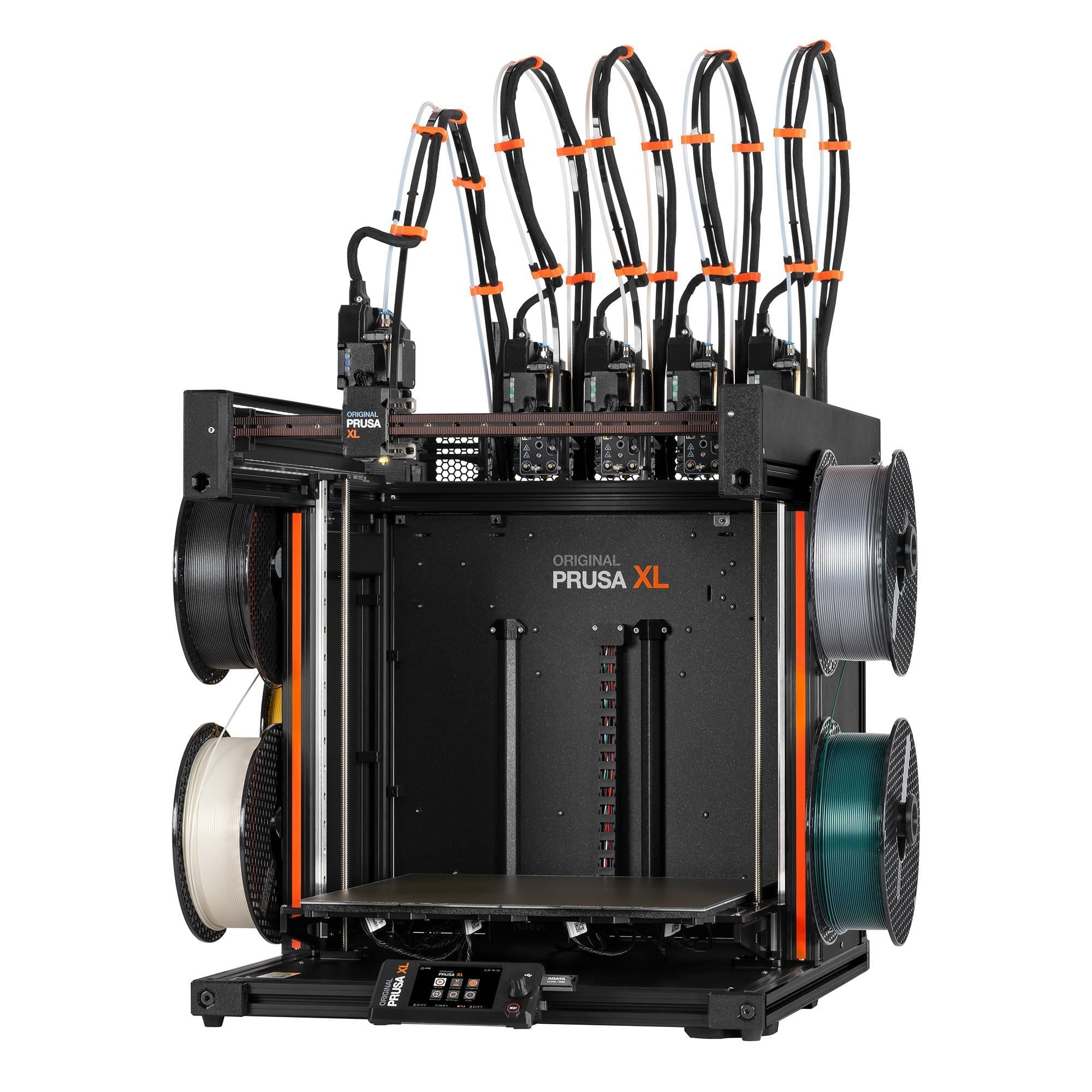
The Prusa XL redefines what a large-format printer can do with its five independent toolhead system — each toolhead carries its own extruder, hotend, and cutter, enabling true multi-material prints without the purge waste of a single-nozzle MMU. The 360 x 360 x 360 mm build volume is paired with a segmented heated bed that activates only the zones under the print, reducing energy use and warping on smaller jobs.
CoreXY kinematics keep the bed stationary, so tall 350mm prints don’t wobble. Prusa’s open-source ecosystem means no forced cloud logins, full local control via Prusa Connect, and lifetime technical support. The satin print sheet included in the box delivers excellent first-layer adhesion across PLA, PETG, and ABS without glue stick rituals.
Assembly requires more time than the competition — expect half a day to install the LCD, extruder assemblies, and Wi-Fi antenna. The price positions it firmly as a professional tool, but for studios and engineering labs that need to switch between support materials, flexible filaments, and rigid composites mid-print, there is simply no faster or more reliable workflow.
Why it’s great
- Five independent toolheads for true multi-material printing with zero purge waste between tool changes
- Segmented heated bed saves power and reduces warping on partial-plate prints
- Open-source firmware with local network control — no vendor lock-in
Good to know
- Assembly is involved — plan several hours for setup
- Premium price reflects industrial-grade reliability, not casual use
- Fragile components shipped separately; careful unpacking required
2. QIDI Max4 Combo
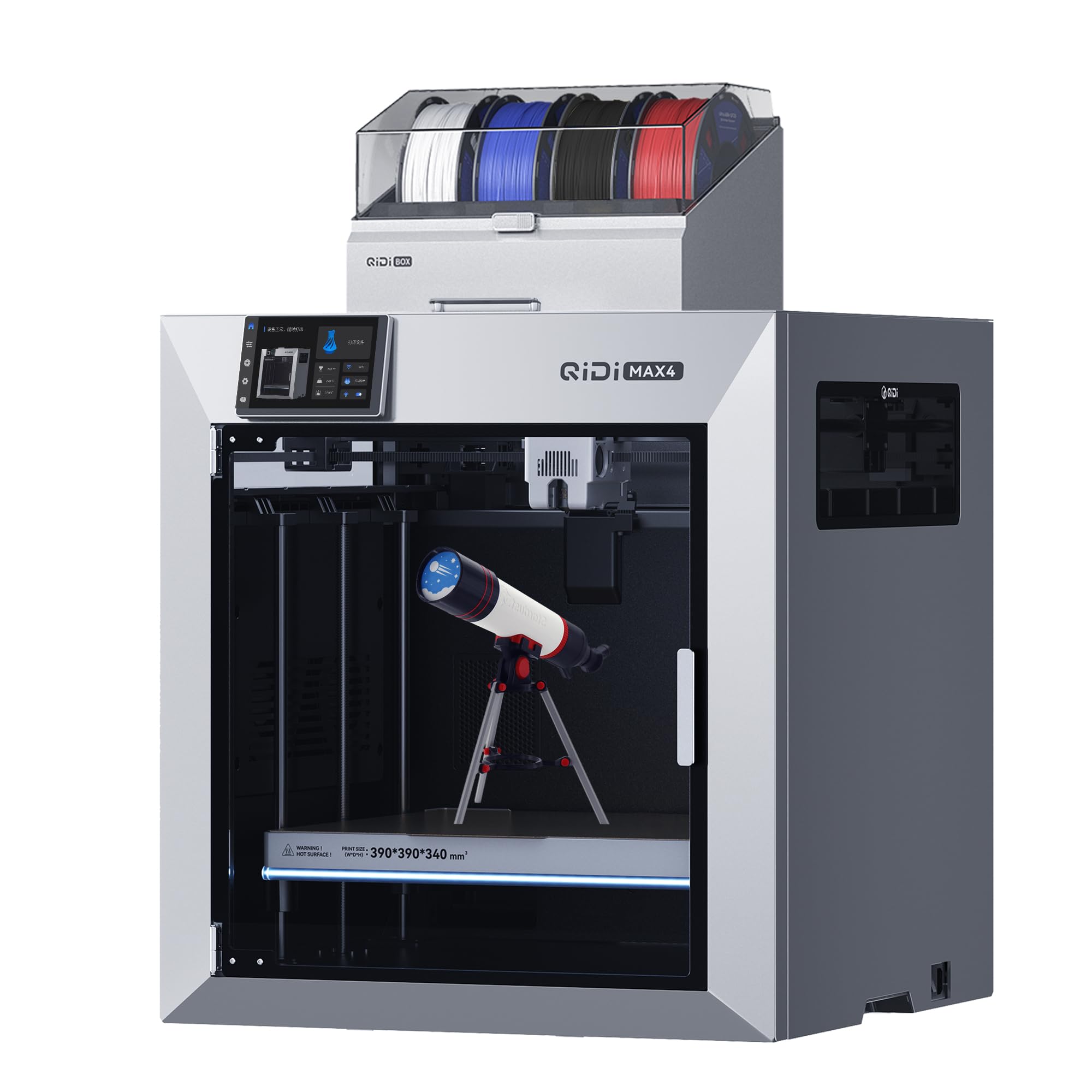
The QIDI Max4 Combo attacks the large-format space with a 390x390x340mm build volume and a 65°C actively heated chamber that makes ABS, PC, and PPS-CF printing reliable without adhesives or enclosures jury-rigged from cardboard. The 40mm³/s high-flow hotend with hardened steel nozzle chews through carbon-fiber reinforced nylons at 800mm/s travel speeds while closed-loop motors on X and Y axes maintain positional accuracy.
The 2mm lead screw with anti-backlash nut on the Z-axis reduces vertical banding — a common artifact on tall prints from budget machines. Users report excellent layer consistency across the full 340mm Z height with PPA-CF and ABS-CF filaments. The Polar Cooler system (purchased separately) adds active cooling for PLA overhangs, but out of the box the chamber heater and dual insulation panels handle high-temperature materials better than any printer in this price tier.
QIDI BOX support enables up to 16-color printing, though purge waste is higher than toolhead-switching systems. The 120-pound weight means this machine does not move once placed. A small percentage of users reported a warped bed on early units, but QIDI’s warranty replacement process resolved those cases quickly. This is the printer to buy if engineering-grade composites are your daily driver.
Why it’s great
- 65°C active chamber makes ABS and Nylon printing effortless without extra enclosures
- Closed-loop X/Y motors prevent skipped steps at high acceleration
- 40mm³/s flow rate and 800mm/s speed rival machines costing twice as much
Good to know
- Polar Cooler add-on needed for optimal PLA cooling
- 120-pound weight requires a dedicated workbench
- Early units had occasional bed flatness variance; warranty support is proactive
3. Creality K2 Plus Combo

The Creality K2 Plus Combo packs a 350mm³ fully enclosed build volume with step-servo motors capable of 30,000mm/s² acceleration — figures that translate to real-world speed for large, single-piece prints. The Creality Automatic Material System (CFS) supports up to 16 colors by chaining four units, and the hardened steel hotend handles PLA, ABS, PETG, PA-CF, and PLA-CF without swap.
Dual AI cameras monitor both chamber and extruder area, detecting spaghetti failures and foreign objects. The strain gauge-based auto-leveling system with dual independent Z-axes eliminates manual bed adjustment entirely. Users report that after the initial 1.5-hour setup, the machine produces consistent first layers across the full 350mm plate without intervention.
The “Matrix” frame uses die-cast aluminum for rigidity, and dual Z-axis rods prevent sag on heavy prints. Some early units shipped with glue-sealed connectors that caused communication errors, but firmware updates and Creality support have addressed the pattern. For the combination of speed, multi-color capability, and automated workflow at this build volume, the K2 Plus is hard to beat.
Why it’s great
- Step-servo motors deliver 30,000mm/s² acceleration without audible high-pitch noise
- Four CFS units support 16-color printing with automatic filament drying
- Dual AI cameras catch failures before they waste hours of print time
Good to know
- Assembly instructions lack detail; expect some head-scratching
- Early units had intermittent communication errors fixed by reseating connectors
- Customer support response time can be slow for replacement parts
4. Original Prusa CORE One
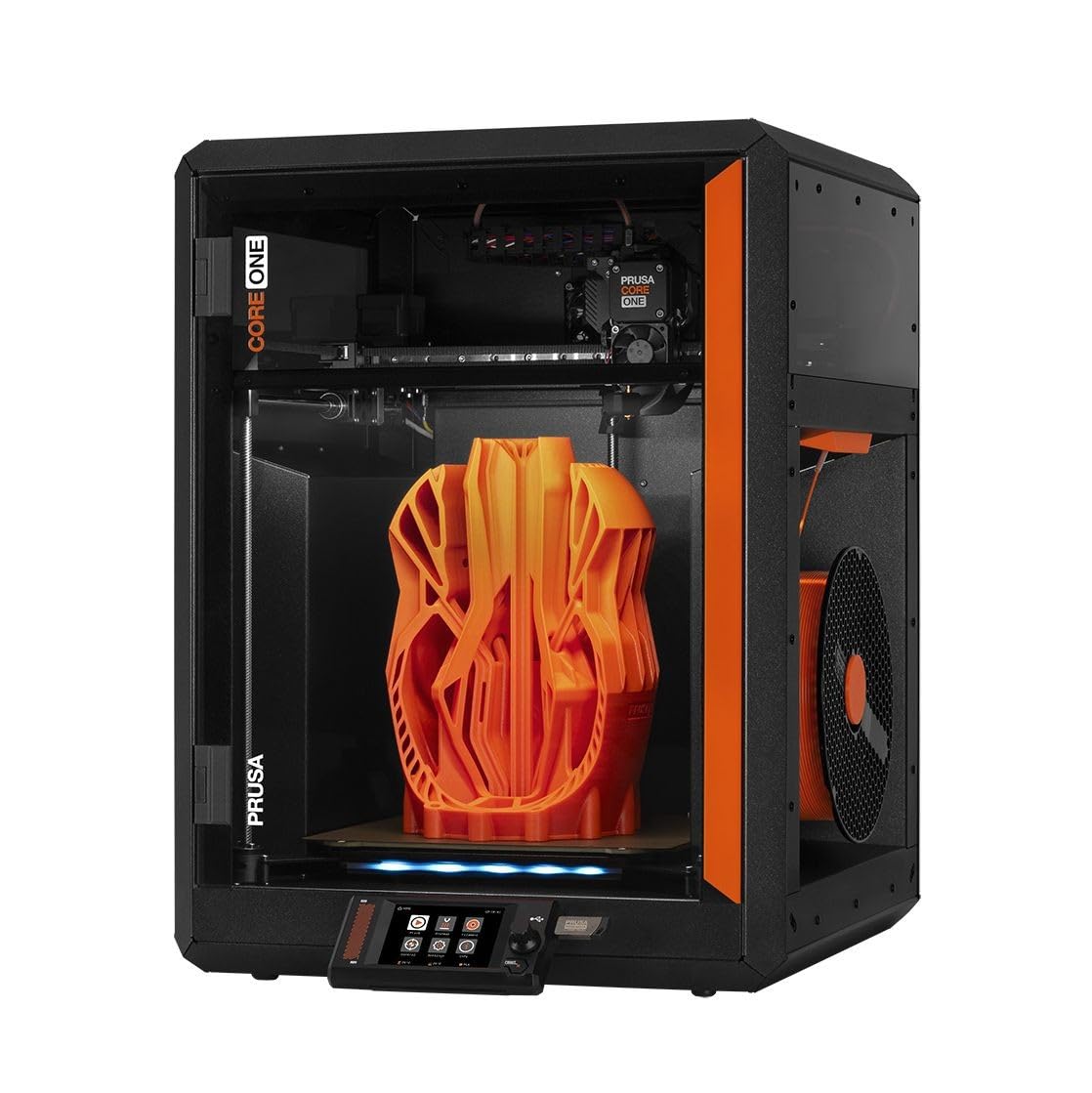
The Prusa CORE One represents the company’s first CoreXY machine, designed to combine the reliability of the MK4S platform with the speed and stability of a fixed-bed architecture. The 250x220x270mm build volume is modest compared to the giants in this guide, but the active chamber heating reaching 55°C with the door closed makes it a legitimate contender for printing ASA, PC, and Nylon without warping.
The all-steel exoskeleton frame provides exceptional rigidity. Users report that the printer works out of the box with Prusa’s pre-tuned slicer profiles, delivering consistent quality across PLA, PETG, and TPU. The open-source firmware and local network operation mean no cloud dependency — a significant advantage for security-conscious workshops.
Build time for the kit version runs about 25 hours, which is long but rewarding. The assembled version costs a premium. Some users experienced layer shifts or Z-binding on early units, but Prusa’s customer service resolved those cases. For those who value long-term repairability and a company that provides lifetime technical support, the CORE One is a long-term investment.
Why it’s great
- 55°C active chamber enables reliable ABS and PC printing without adhesive
- Open-source ecosystem with local network control and no forced cloud login
- Proven Prusa print quality with pre-tuned profiles for a wide range of filaments
Good to know
- Build volume is smaller than other large-format competitors at 250x220x270mm
- Kit assembly takes approximately 25 hours
- Some early units had Z-axis binding that required customer support intervention
5. Creality Ender 5 Max
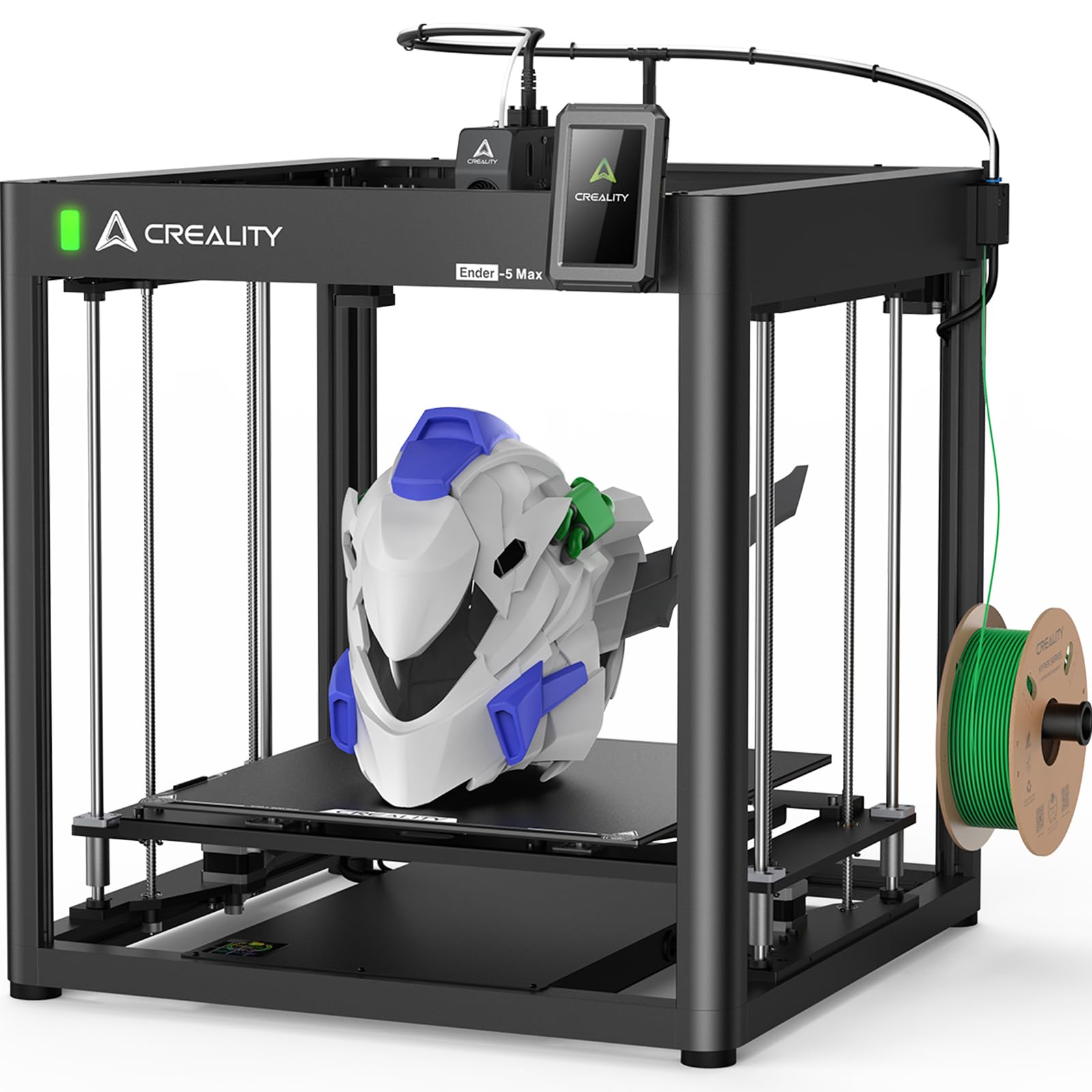
The Ender 5 Max targets print-farm operators with its 400x400x400mm build volume and WLAN multi-printer control system. The reinforced die-cast aluminum frame and X-axis linear rail reduce vibration at 700mm/s travel speeds, while the 1000W rapid-heating bed reaches ABS temperatures in minutes. The 64-point auto-leveling with automatic Z-offset removes the manual calibration bottleneck that kills productivity across multiple machines.
The dual-gear direct drive extruder with hardened gears is designed for 24/7 operation. Users report reliable printing with PLA and PETG out of the box. The tri-color status indicator is visible from across the room, letting operators quickly identify idle, printing, or error states without walking to each machine.
Quality control has been inconsistent — some units arrive with bed adhesion issues, vibrating extruder casings, or loose fasteners. Replacement parts availability from Creality can be slow. The Ender 5 Max is best suited for experienced operators who can perform minor tweaks and have spare parts on hand. For its sheer volume per dollar, it remains a strong farm option.
Why it’s great
- 400mm³ build volume is one of the largest at this price point
- WLAN multi-printer control streamlines farm management
- 1000W heated bed reaches ABS temperatures very quickly
Good to know
- Enclosure needs a taller riser to prevent top panel scuffing
- Quality control varies — some units require part replacement out of the box
- Creality support for replacement parts can be slow
6. QIDI PLUS4

The QIDI PLUS4 brings industrial-grade hotend temperatures — 370°C with an 80W heater and multi-metal integrated nozzle — to the mid-range tier. The 305x305x280mm build volume is paired with a 65°C actively heated chamber using 400W of heating power and dual-layer insulation, creating consistent thermal conditions for PPS-CF, PPA-CF, and other high-temperature composites that standard printers cannot melt.
The second-generation chamber heating system adds air circulation for even temperature distribution. The independent dual motor-driven Z-axis uses 10mm-diameter lead screws and a 6mm-thick aluminum bed to maintain flatness across the full 305mm plate. Users with over 4,000 hours on the machine report zero maintenance beyond hotend swaps and excellent print quality with PET, Nylon, and PPS filaments.
Early units had hotend jamming issues from factory assembly and OTA firmware update failures. QIDI support resolved those cases, but the printer requires some technical comfort for initial setup. The open-source Klipper firmware and compatibility with OrcaSlicer or Fluidd make it a flexible platform for advanced users who want to tune every parameter.
Why it’s great
- 370°C hotend with 80W heater handles PPS-CF and PPA-CF composites
- 65°C active chamber with air circulation prevents warping on engineering materials
- Open-source Klipper firmware with OrcaSlicer/Fluidd compatibility
Good to know
- Factory hotend jams and OTA firmware issues reported on some early units
- Requires technical comfort for initial calibration and setup
- Mainboard fan can be noisy; some users swap for a Noctua
7. ELEGOO Saturn 4 Ultra 16K
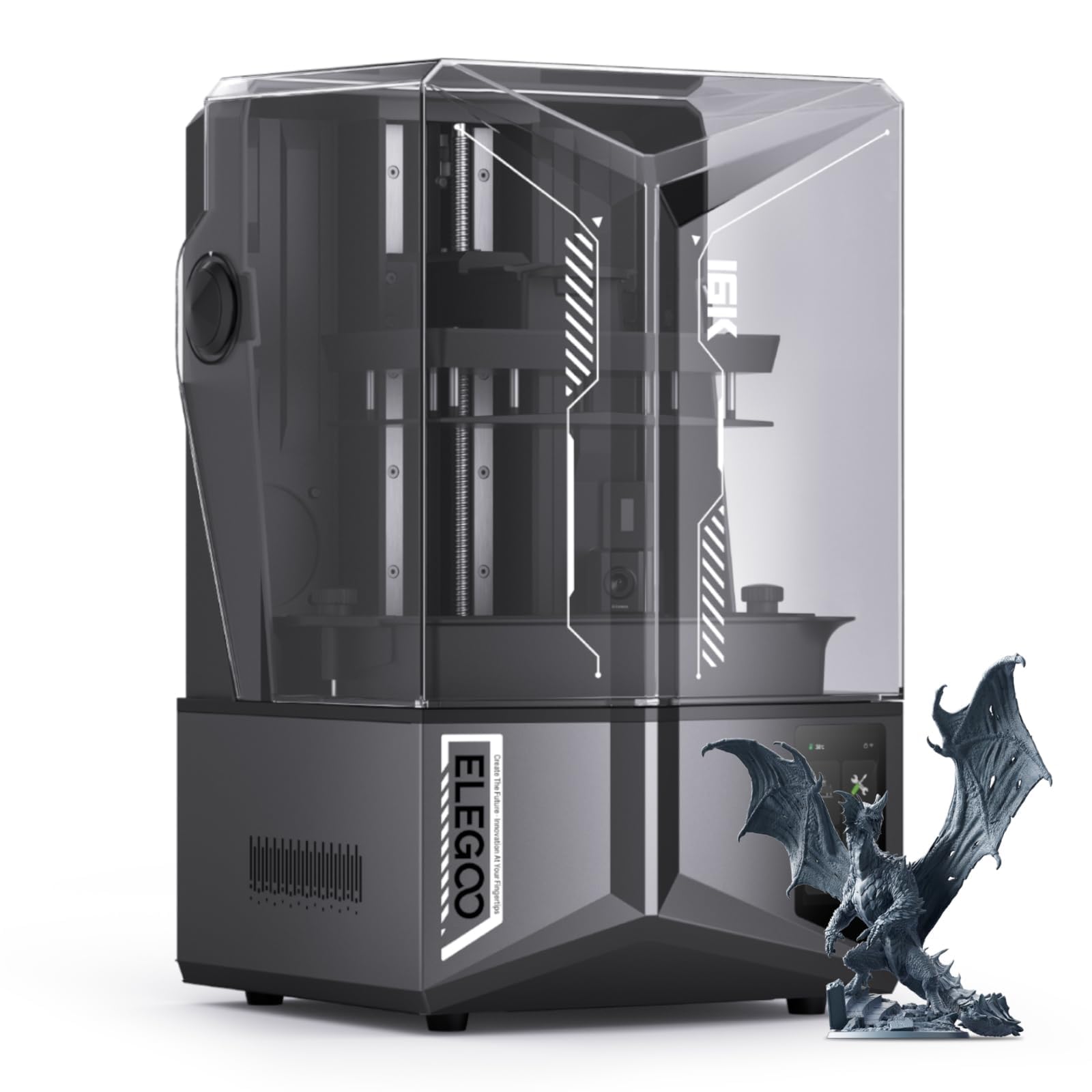
While most large-format printers use FDM technology, the Saturn 4 Ultra 16K brings resin printing to oversized projects with a 10-inch mono LCD at 16K resolution — that’s 8.33 x 4.66 x 8.66 inches of build volume with pixel-level precision. The tilt release mechanism peels models from the FEP film faster than traditional z-axis lifting, enabling print speeds up to 150mm/h while maintaining the surface smoothness resin printers are known for.
The intelligent tank heating system maintains resin at a perfect 30°C, reducing viscosity-related defects like bubbles and layer separation. The AI camera monitors for spaghetti failures and empty build plates, with time-lapse recording built in. Auto-leveling is truly plug-and-play — no manual adjustment knobs at all.
Resin pooling on the build plate after printing requires a drip bracket (not included). Some users needed to sand the build plate and increase base exposure to 40-45 seconds for first-layer adhesion. This is a specialty tool for high-detail models, miniatures, and jewelry — not a replacement for FDM in functional prototyping.
Why it’s great
- 16K resolution on a 10-inch LCD delivers unmatched detail for large resin prints
- Active 30°C resin heating reduces viscosity defects
- Tilt release technology accelerates print speed to 150mm/h
Good to know
- Resin pooling on build plate requires a separate drip bracket
- First-layer adhesion may need base exposure adjustment
- Post-processing (washing, curing) adds time and equipment cost
8. Anycubic Kobra 3 Max

The Kobra 3 Max claims the largest build volume in this roundup at 420x420x500mm — enough to print a full-scale pet playground or a DIY sand table in one piece. The CoreXY design with SG15 precision bearings and dual-axis core enables 600mm/s travel speeds and 10,000mm/s² acceleration, making its jumbo size usable for production work.
ACE Pro compatibility adds multi-color printing capability with up to 8 colors using two units. The AI recognition system monitors for spaghetti failures and pauses automatically. The removable magnetic PEI bed provides excellent adhesion without glue. Users report that the learning curve is manageable, but the printer assumes prior 3D printing experience — beginners may struggle with initial tuning.
Some users experienced component failures within weeks, and replacement parts were hard to source through Anycubic. The ACE Pro multi-color system lacks a manual feed override, creating frustration during filament changes. For experienced users who want the absolute largest build envelope possible in a consumer-priced machine, the Kobra 3 Max delivers raw volume at the expense of polish.
Why it’s great
- 420x420x500mm build volume is the largest in this guide
- ACE Pro compatibility enables up to 8-color multi-material printing
- Removable magnetic PEI bed provides excellent adhesion
Good to know
- Inconsistent quality control — some units fail within weeks
- Replacement parts from Anycubic can be slow to arrive
- ACE Pro lacks manual feed override for filament changes
9. Bambu Lab P1S

The Bambu Lab P1S is the enclosed version of the popular P1P, adding a fully sealed chamber that enables reliable ABS and ASA printing. The 256x256x256mm build volume is not the largest in this guide, but the CoreXY kinematics and 500mm/s travel speed with 20,000mm/s² acceleration make it one of the fastest small-format enclosed printers available. The AMS system supports up to 16 colors with multi-material printing.
Auto bed leveling happens before every print, and the enclosed design traps heat from the bed for passive chamber warming. The Bambu Studio slicer integrates seamlessly with the printer, and the MakerWorld community provides a vast library of pre-configured models. Users consistently report that the P1S delivers print quality that rivals or exceeds machines costing significantly more.
The P1S struggles with flexible filaments like TPU due to the AMS path length. The closed ecosystem — proprietary slicer, cloud-based monitoring, and limited third-party part support — concerns some users. For those who value out-of-box reliability, speed, and an excellent software experience over maximum build volume, the P1S remains a benchmark.
Why it’s great
- 500mm/s speed with 20,000mm/s² acceleration in a sealed enclosure
- AMS supports up to 16 colors with automatic filament switching
- Out-of-box reliability with auto-leveling before every print
Good to know
- Build volume is 256mm³ — smaller than other large-format options
- TPU printing is difficult due to AMS filament path
- Closed ecosystem limits third-party part compatibility
10. FLASHFORGE Adventurer 5M Pro

The Adventurer 5M Pro is a fully enclosed CoreXY printer with a 220x220x220mm build volume that punches above its price class. The 600mm/s maximum travel speed and 20,000mm/s² acceleration come from the all-metal CoreXY structure. The nozzle heats to 200°C in 35 seconds, and the dual-sided PEI platform allows tool-less model removal. The HEPA filtration system makes it suitable for indoor use with ABS and ASA.
Pressure sensing auto-leveling detects platform height with multi-point precision, eliminating manual Z calibration. The Flash Maker mobile app provides remote video monitoring, real-time progress tracking, and parameter adjustments. Users report that initial setup takes about 10 minutes, and the printer produces consistent quality for PLA, PETG, and ABS.
Software compatibility issues exist — FlashPrint 5 and Orca-Flashforge on the included USB failed to install on macOS Sequoia. Some units arrived with hardware defects requiring replacement. The 220mm build volume limits its usefulness for truly large prints. For beginners who want an enclosed, fast, easy-to-use printer with good air filtration, the 5M Pro is a solid starting point.
Why it’s great
- 600mm/s travel speed with fully enclosed CoreXY design
- HEPA filtration enables safe ABS printing indoors
- 10-minute setup with tool-less model removal from PEI bed
Good to know
- Build volume is only 220mm³ — not truly large-format
- Software compatibility issues on macOS Sequoia
- Quality control inconsistency — some units arrive defective
11. ELEGOO Neptune 4 Plus

The Neptune 4 Plus uses Klipper firmware to deliver 500mm/s print speeds (250mm/s default) and 12,000mm/s² acceleration on a 320x320x385mm build volume. The self-developed dual-gear direct drive extruder with a 5.2:1 reduction ratio provides consistent extrusion force. The 300°C nozzle with 60W ceramic heating element handles PLA, PETG, ABS, TPU, and Nylon filaments.
Input shaping and pressure advance calibration, combined with X/Y acceleration sensors, reduce vibration artifacts at high speeds. The 64-point auto-leveling system with manual screw tilt adjustment ensures bed flatness. Users report that with proper tuning, the printer produces excellent quality out of the box. The open-source Klipper firmware allows deep customization.
The printer is not recommended for absolute beginners — bed leveling variance must be kept under 0.2mm, and the Z-offset requires careful adjustment. A small percentage of units arrive with defects that require customer support from China, leading to long wait times. For experienced users who want large volume at the lowest possible cost, the Neptune 4 Plus is a compelling value.
Why it’s great
- Klipper firmware enables 500mm/s speed with input shaping
- 320x320x385mm build volume at a budget-friendly price point
- 300°C nozzle handles Nylon and TPU in addition to standard filaments
Good to know
- Not beginner-friendly — bed leveling requires manual fine-tuning
- Customer support response times can be slow for warranty issues
- Some units arrive with defects requiring replacement parts from China
FAQ
Do I need active chamber heating for printing ABS on a Large 3D Printer?
How do I choose between FDM and resin for large prints?
Final Thoughts: The Verdict
For most users, the best large 3d printer winner is the Original Prusa XL 5-Tool because five independent toolheads eliminate purge waste and enable true multi-material workflows at 360mm³ — unmatched for professional prototyping. If you want the largest consumer build volume and print exclusively with high-temp composites, grab the QIDI Max4 Combo. And for the best value in a well-rounded large-format enclosed printer with multi-color support, nothing beats the Creality K2 Plus Combo.