
Our readers keep the lights on and my morning glass full of iced black tea. As an Amazon Associate, I earn from qualifying purchases.
Specs are compiled from manufacturer listings and verified buyer reviews and can change over time — please confirm the key details on the product page before buying.
Your lawn is gasping for air, and a spike just poking a hole isn’t enough. You need a tool that pulls plugs of soil out so water, air, and nutrients can reach the roots. This guide separates the few that work from the many that just roll over the top and waste your weekend.
I’m Min — the founder and writer behind Gadgets Feed. This guide is built by comparing the manufacturers’ published specifications and the patterns across verified customer reviews, so you get each pick’s real strengths and trade-offs instead of marketing spin.
Here are the manual and tow-behind options that earn their place in your shed, with honest notes on who each one suits best. Spot the lawn aerator tools that consistently remove cores, hold up on clay, and spare your back.
Our Picks at a Glance
How To Choose The Best Lawn Aerator Tools
Before you spend money, understand that aeration tools split into two camps: core aerators that hollow out and lift soil plugs, and spike aerators that simply push holes into the ground. The core approach actually relieves compaction, while spiking can squeeze the soil further together at the edges of each hole.
Match the Tool to the Job
A manual step-on tool is the right call for a small yard, spot repairs, or overseeding a few dead patches. A rolling spike drum covers a medium lawn faster but needs real downward pressure to sink its spikes. A tow-behind unit turns a riding mower into the fastest option for a large property, though it won’t pull plugs — it only spikes.
Read the Soil and Your Body
Every manual aerator in this list works best when the soil is moist — damp enough that the tines slice in cleanly, dry enough that plugs release without turning to mud. Figure out how much weight you want to push through the grass; some heavy-duty steel models are built for the long haul, while lightweight ones demand a lot more of your body weight to penetrate.
Quick Comparison
| Model | Best For | Type | Tines | Weight | Amazon |
|---|---|---|---|---|---|
| Xuperace Core Aerator★ Best Overall | Best Overall | Core | 3 | 5.69 lb | Amazon |
| hugeneroy Hollow TineClay Soil Combat | Clay Soil Combat | Core | 3 | 3.52 lb | Amazon |
| Dolibest 4-Plate Manual4-Plug Speed | Medium Yards | Core | 4 | 5.04 lb | Amazon |
| Dolibest Coring Aerator | Small Areas | Core | 4 | 5.46 lb | Amazon |
| Colwelt Spike Aerator | Budget Rolling | Spike | — | 8.2 lb | Amazon |
| Yard Butler IM-7C | Light Spot Work | Spike | 4 | 2.25 lb | Amazon |
| Seeutek 23-Inch Roller | Weighted Rolling | Spike | — | 24 lb | Amazon |
| Landzie Hollow Tine | Premium Core | Core | 3 | 5.6 lb | Amazon |
| Brinly SAT2-40BH-P | Large Lawns | Spike (Tow) | 11 stars | — | Amazon |
In‑Depth Reviews
1. Xuperace Core Aerator Lawn Tool
Our pick — over 4.5★ from 100+ verified ratings; the strongest balance of quality and price.
The core aerator that ejects soil plugs sideways so you never stop to unclog.
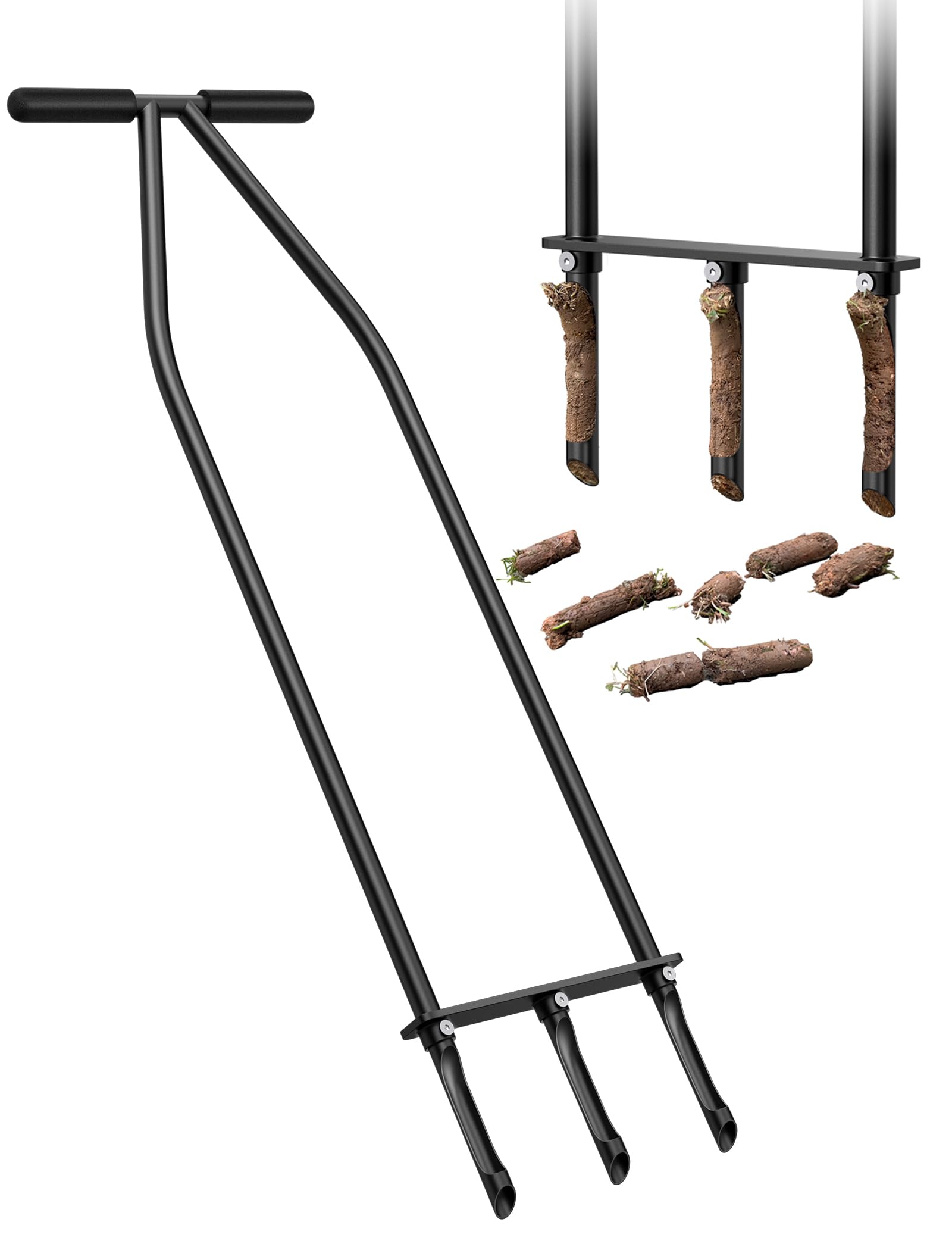
This is the tool for homeowners who want real core aeration without the clog-clearing chore. Its patented side-ejection design means the 3 hollow tines pull plugs of soil out and slide them away through a ramp, so you keep moving instead of poking at blocked tubes. Owners cover roughly 1,000 square feet of St. Augustine grass with little effort., which points to a tool that earns its keep on a real lawn.
Build quality is where it stands apart — the frame is integrally formed from high-strength alloy material and weighs in at 5.69 pounds, which gives it enough heft to sink in without feeling like a workout. The step-on footplate keeps your knee free to move, and the tines are replaceable via screws if they ever wear down. The main thing to respect is moisture: this tool works best on moist grass, and dry soil turns it into a serious leg press.
Sturdiness is the second-most-praised trait after how well it functions, and assembly takes minutes. It is noticeably heavier than the hollow-tine hugeneroy model below — 5.69 pounds versus 3.52 — but that extra weight is exactly what helps the tines bite into compacted ground on the first press.
What wins people over
- Side-eject design stops the clogging that plagues most core aerators
- Sturdy alloy build holds up on demanding jobs
- Replaceable tines extend the tool’s life
- Knee-friendly footplate reduces the force you push with
Know before you buy
- Moist soil is non-negotiable — dry ground is a lot more work
- Pressing down for long stretches can strain hips, so pace yourself
- You must keep the tine screws tightened firmly
Reach for this if: you want a genuinely clog-free core aerator that pulls real plugs on a mid-size yard with minimal fuss.
Respect the catch: it demands damp soil to shine, and marathon sessions can tire your hips out.
2. hugeneroy Heavy Duty Hollow Tine Core Aerator
A lightweight steel core aerator built to chew through compacted clay without flexing.
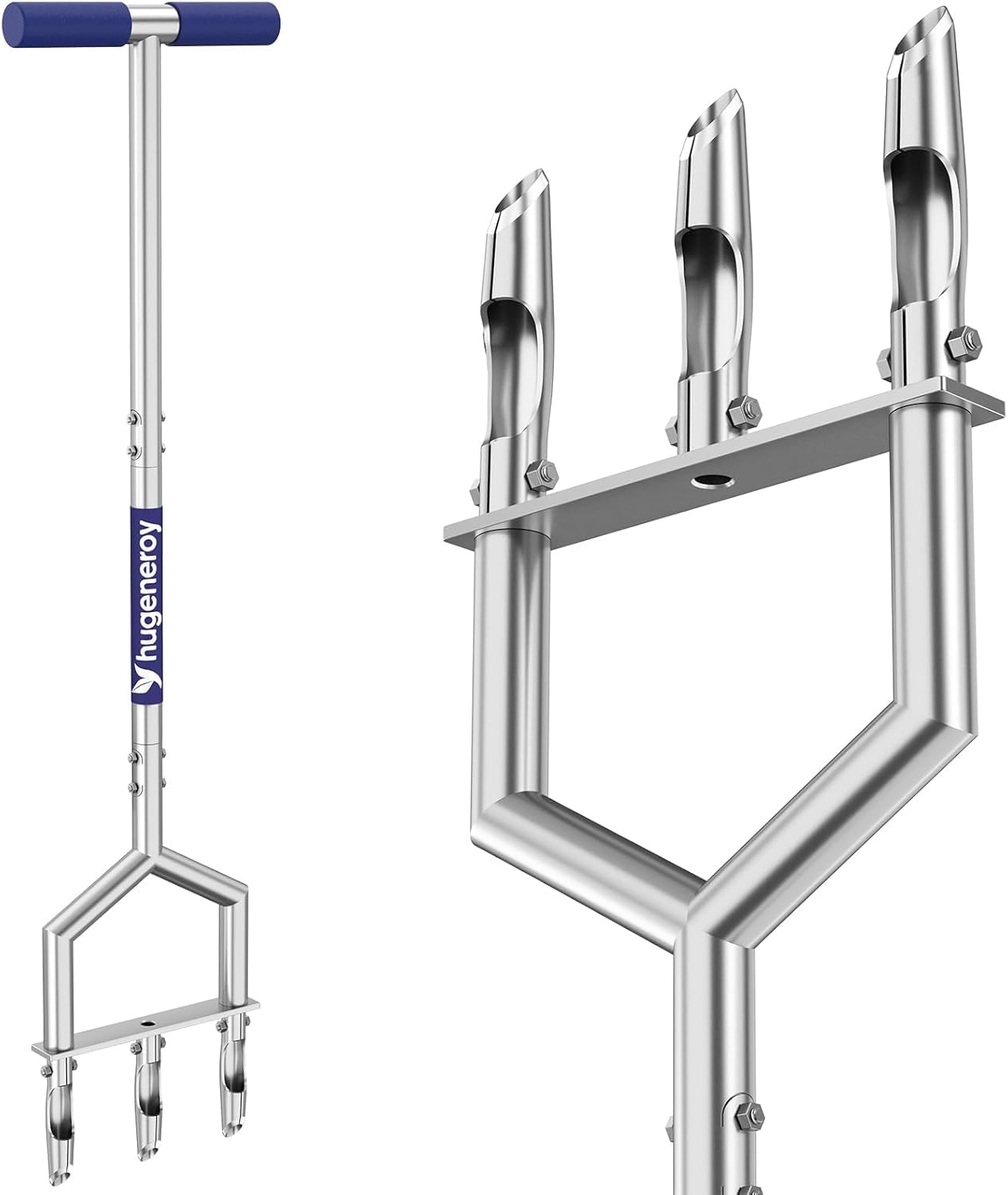
If your yard is heavy clay, this hollow-tine aerator is engineered for exactly that fight. The tempered steel spikes slice through compacted earth with minimal effort — buyers consistently report the steel tines penetrating hard soil effectively and the tool staying stable with no flexing during use. It removes soil cores to open pathways for water, air, and nutrients, which is the whole point of core aeration in the first place.
At just 3.52 pounds, it’s dramatically lighter than the 5.69-pound Xuperace model — but it’s the anti-clogging beveled tine design and the wide foot plate that do the heavy lifting here. The long handle helps prevent back strain, and an easy-grip handle reduces hand fatigue during longer sessions. Assembly takes minutes with the included tools, and it ships semi-assembled so you’re not wrestling with a pile of parts.
The honest trade-off is durability under extreme conditions. One account describes a unit breaking after covering 90% of a yard on clay and rock, with the clear lesson to wet the soil first to reduce wear on the tines. The absolute best results come on moist ground — push and pull vertically without sideways twisting, and avoid prying once the tines are underground.
Why it earns its place
- Tempered hollow tines penetrate compacted clay effectively
- Non-clog beveled design ejects plugs cleanly
- Wide foot plate and long handle reduce strain
- Quick, tool-included assembly
Where to be careful
- Rocky, dry soil can wear it down — moisten the ground first
- The bolt near the knee can bother taller users depending on leg length
Pick it for: clay-heavy, compacted lawns where you need real penetration without dragging extra weight around.
Look elsewhere if: your soil is full of rocks — this one works best when the ground is moist first.
3. Dolibest Manual Aerator Lawn Tool
Four semi-open stainless tines that pull more cores per step, straight from the start.
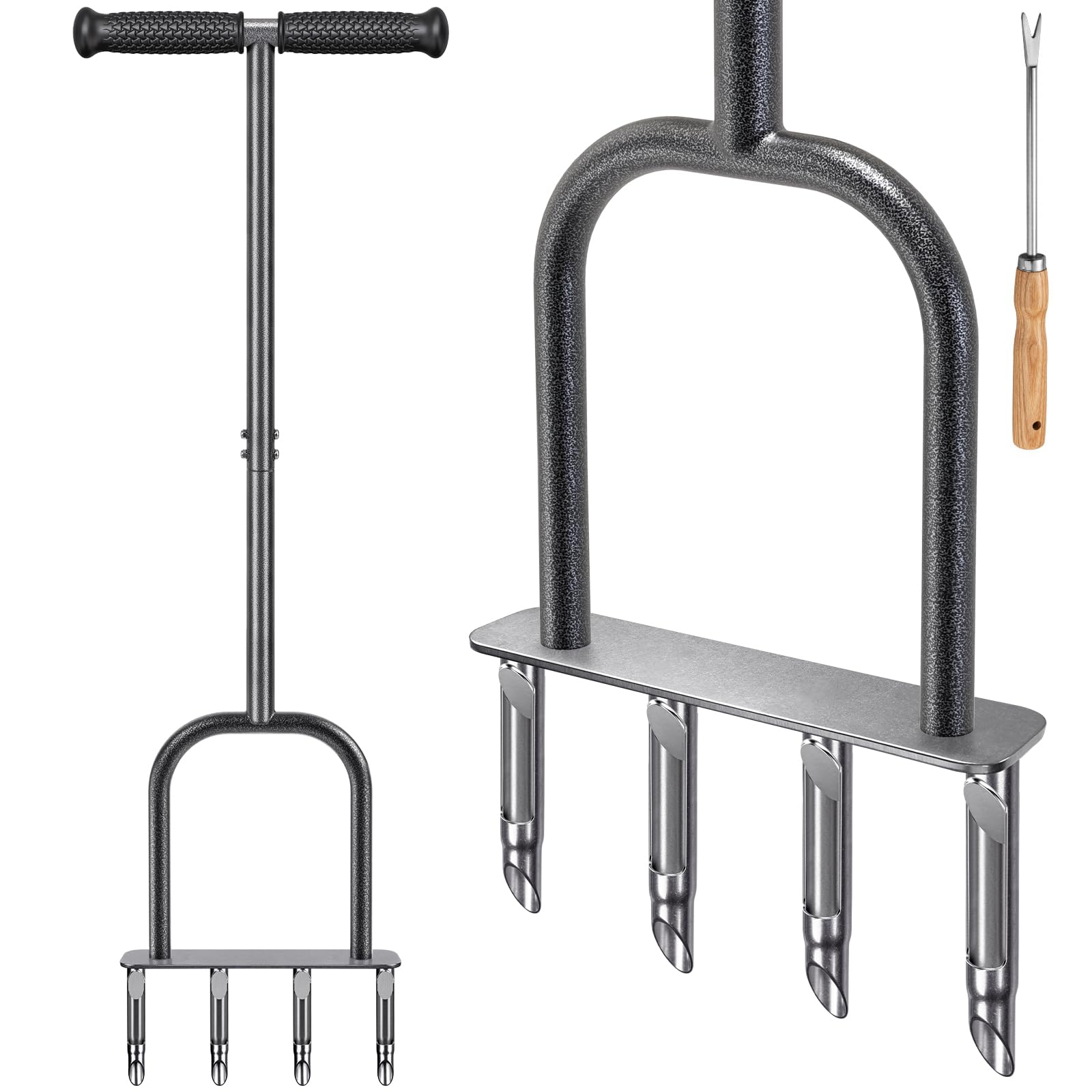
This is the pick for medium yards where you want more coverage per press without graduating to a rolling drum. It arrives fully pre-assembled with 4 stainless steel semi-open plugs — each hole is semi-open to prevent soil clogging, which is the classic failure point on cheaper 4-tine tools. The cutting edge here is that the bottom plugs are remarkably easy to clear, with owners calling them the gold standard for self-clearing design.
The 37.2-inch handle keeps you upright, and the non-slip grip fights hand fatigue. A 12-inch multifunctional cleaner tool comes along for the ride, handy for loosening soil, transplanting seedlings, or cleaning the aerator. The build is solid — high-quality steel with a rust-resistant coating on the pole, and a stainless base that won’t rust or break even in wet, humid conditions.
There’s one recurring maintenance note: the tool assembles from three pieces, and the screws can loosen mid-job when you’re covering a large area. It’s an easy fix with the included tool, but it’s worth checking tightness if you’re doing a big stretch. Lighter users also note the base could be wider to allow a comfortable two-foot step.
Its strongest points
- 4 semi-open tines pull more cores per step than 3-tine models
- Plugs clear out exceptionally easily
- Long handle cuts back strain during standing use
- Comes fully assembled with a bonus cleaning tool
Keep an eye on
- Screws can loosen during long jobs — an easy but recurring fix
- Lighter users may want a wider step base for two feet
Best for: anyone with a small-to-medium lawn who wants 4-tine coverage and the easiest plug clearing in this lineup.
Think twice if: you plan to aerate huge areas in one go — the three-piece build needs periodic re-tightening.
4. Dolibest Lawn Coring Aerator
A single-welded steel corer that keeps your shoes out of the way during ejection.
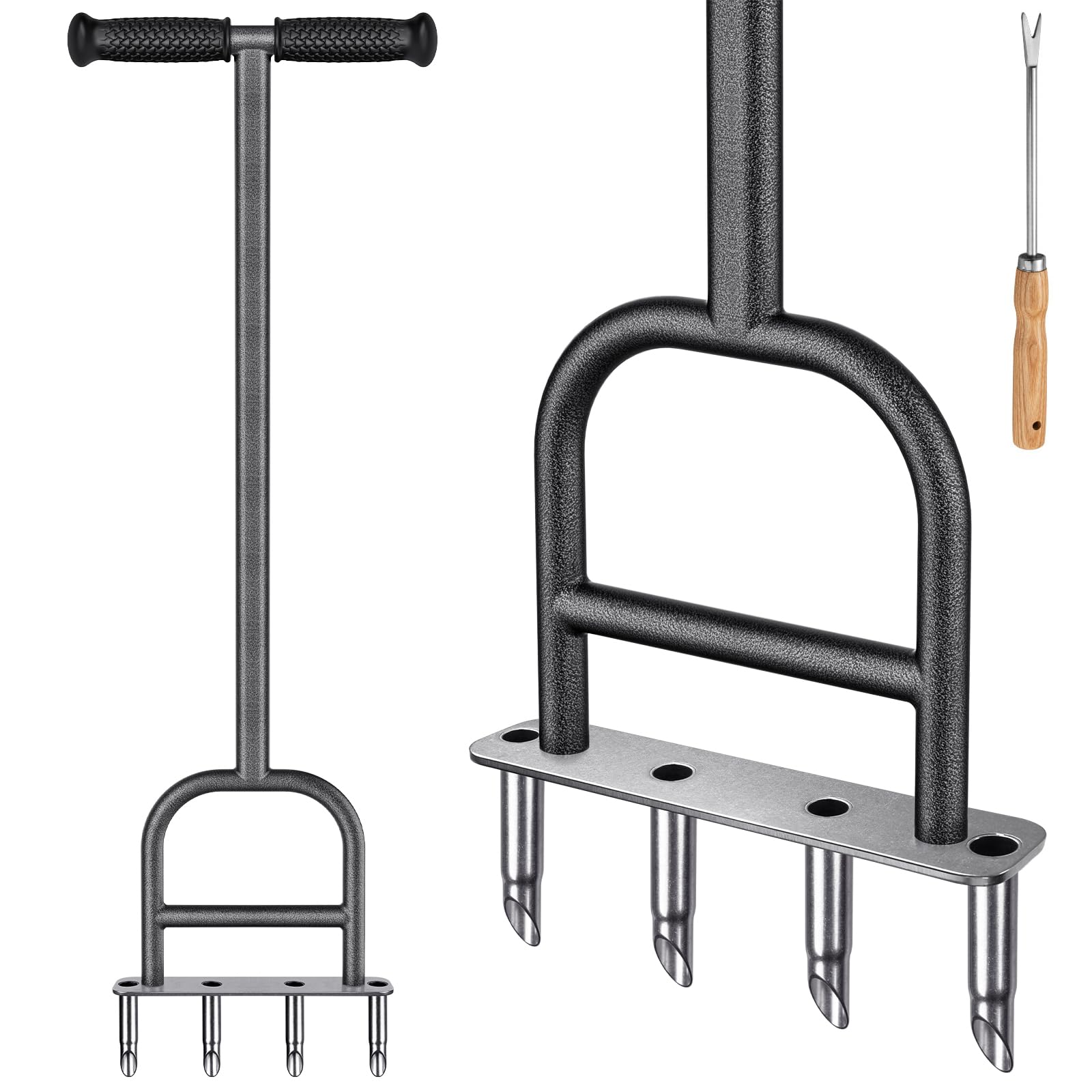
For small lawns and targeted dead-spot repair, this all-steel coring aerator is built around one clever detail: a foot bar that prevents your shoes from interfering with the ejection of the cores. The 4 corer plugs are 3.5 inches long and 0.5 inches in diameter, creating deep, narrow soil plugs that feed out the top of the tubes. A soft rubber grip keeps your hands from tiring or blistering through the job.
The construction earns real praise — a single welded build that owners describe as very sturdy, with a black powder-coated finish over stainless steel bottom and corer plugs that resist rust and bending. It handles heavy clay when the soil conditions cooperate, and owners specifically flag it as well-suited for small areas. The 12-inch weeder handle tool that ships with it doubles for transplanting seedlings and weeding.
Here’s the honest split in owner experience: moisture matters more with this one than most. Some find it works best on moist soil, while others report clogging when the clay is dry — the recurring gripe is a barrel that clogs and needs careful cleaning out. Pushing all 4 tines at once takes real body weight; adding a weighted vest or using a rocking motion helps penetration on tougher ground.
What stands out
- Single welded steel construction feels rock-solid
- Foot bar keeps your shoes clear of plug ejection
- Soft rubber grip prevents hand fatigue and blisters
- Deep 3.5-inch plugs loosen soil effectively
The moisture caveat
- Dry clay soil can clog the barrels and is a pain to clean
- Pushing all 4 tines demands real body weight on hard ground
Choose it for: small yards and spot aeration where a sturdy, welded steel tool with a comfortable grip earns its keep.
skip it if: your soil runs dry and hard — keep the ground moist or expect clogged barrels.
5. Colwelt Spike Lawn Aerator

The budget-priced roller that covers ground fast, if your soil isn’t rock hard.
If you want to cover a medium lawn without bending over and your soil isn’t badly compacted, this rolling spike aerator is the budget entry into the category. Its 57-inch galvanized steel handle keeps you standing tall, and the 18-inch rolling width turns more soil per pass so you finish faster than a step-on tool ever would. The 1.4-inch spikes are the right length for lawns that just need a light touch, not a full core extraction.
It’s a simple, inexpensive way to open up soil for air, water, and nutrients., and several owners note it made a real difference in their lawn’s health. Assembly is needed but easy, with instructions and all fixings included. At 8.2 pounds, it’s light enough to push without strain, which is both its strength and its weakness.
That lightness is the catch. The most consistent feedback is that it takes real downward pressure to sink the spikes — otherwise the drum just rolls over the top of the grass. Owners describe having to press hard into the device to get any penetration, and some report durability issues with the construction over time. This one suits soft, healthy lawns that need maintenance aeration, not compacted clay that needs serious force.
The appeal
- Rolling design covers a medium lawn much faster than step tools
- 57-inch handle means no bending or back strain
- Light 8.2-pound build is easy to maneuver
- Budget-friendly entry into spike aeration
Expect this
- Needs hard downward pressure to sink the short 1.4-inch spikes
- Build quality gets mixed feedback on durability
- Some units report missing assembly parts
Grab it for: lightly compacted lawns where you want fast coverage on a tight budget.
Pass if: your ground is hard clay — the light weight won’t sink the spikes without serious effort.
6. Yard Butler IM-7C Spike Grass Aerator
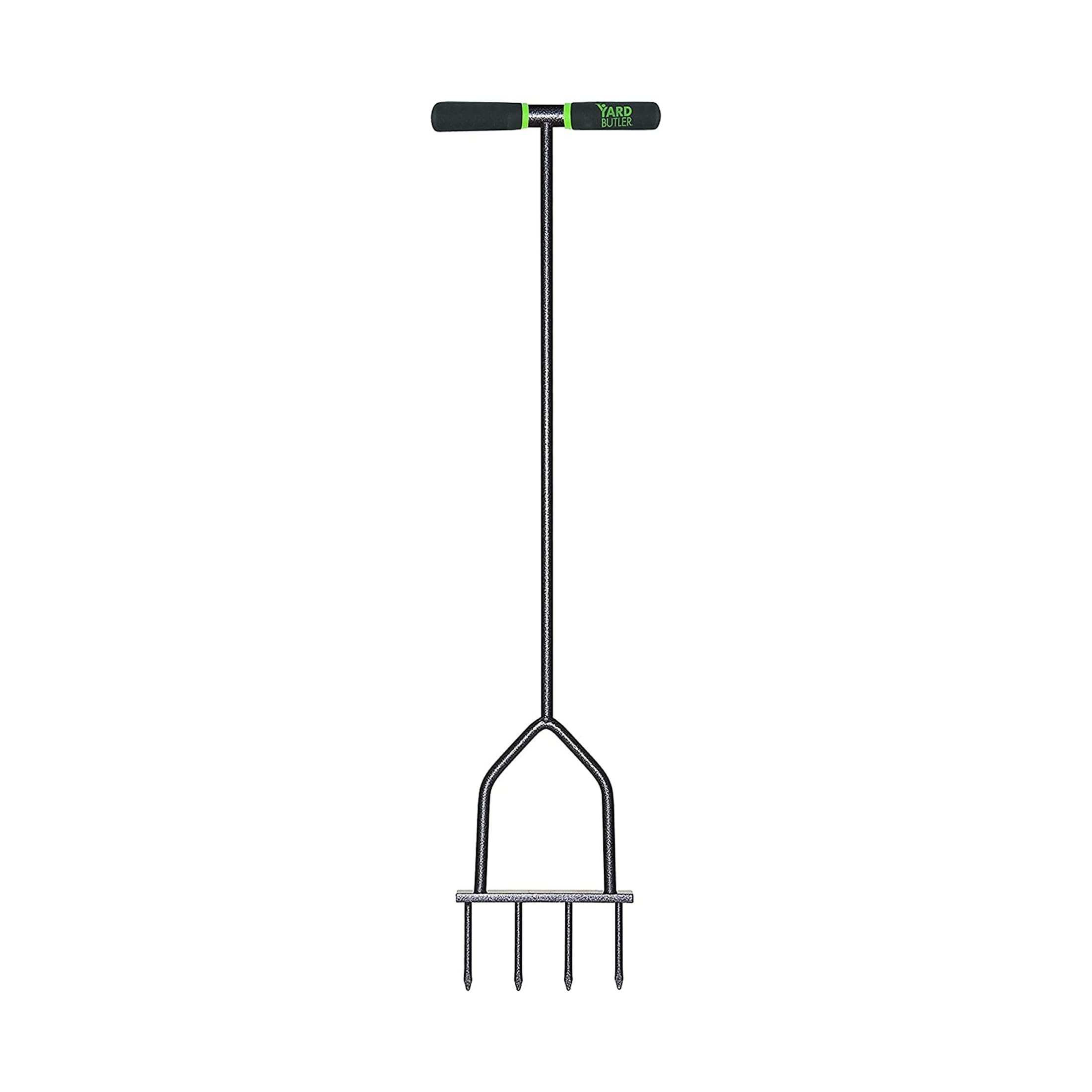
A featherweight 2.25-pound spike tool for patch work when a heavy aerator is overkill.
This is the grab-and-go spike aerator for small gardens, tight patches, and light-duty yard work where you need four quick holes without hauling out machinery. Its four 3-inch spikes open the soil for deeper root access, and the powder-coated steel construction is built to last through year-round use. The cushioned handles and long handle give you leverage so you’re not bending over.
Where it shines is spot treatment — owners find it works well on small areas and patches, with the tool easily aerating lawns and effectively loosening topsoil. One account describes grass growing back evenly a week after use, and the lighter weight makes it genuinely easy to maneuver. For a compact tool, it covers respectable ground: It covers about 325 square feet per hour on moist clay soil..
The trade-off is that it’s a spike, not a core aerator, and the lightweight design means compacted soil requires a step-by-step approach to get the spikes in. Taller users note the handle length can cause some back strain over long sessions. And like every tool here, damp soil is the secret — one account of the newer model describes soft steel tines bending on hard ground, so treat dry, tough soil with caution.
Why it’s handy
- Ultr-light 2.25-pound build is easy to maneuver
- Four 3-inch spikes suit small gardens and patches
- Cushioned handles and long shaft reduce strain
- Solid construction for the price
Its limits
- Compacted soil needs a patient step-by-step approach
- Spike design compresses soil rather than pulling cores
- Handle length may strain taller users
Ideal for: quick spot aeration in flower beds and small patches where a full-size tool is just too much.
Not for: large compacted lawns — this one earns its place on light, ongoing maintenance.
7. Seeutek 23-Inch Rolling Lawn Aerator

A 24-pound rolling drum you can add water or sand to for serious spike depth.
Here’s a rolling aerator that answers the classic complaint — “it’s too light to sink in” — by letting you add weight. The Seeutek drum has a small 2.5 cm side hole you can fill with water or sand to increase the weight and deepen the spikes’ penetration into the soil. Its 2-inch star-shaped spikes are laser-welded, which means no time-consuming assembly of individual tines, and the 23-inch width covers substantial ground per pass.
Your back gets a break too: three adjustable height positions on the padded T-bar handle let you dial in a comfortable push, and the tripod handle structure stays firm and doesn’t loosen. The high-density alloy material with a painted, rust-resistant surface is built for years in the shed. Owners find it works well when you get the weight right, penetrating soil effectively and doubling as a genuine workout on bigger yards.
The honest reality is that this is a workout tool. Without added weight, it skims the surface — owners describe needing a concrete paving stone or significant added mass to get real depth in grass, and pushing it fully loaded takes real strength. Weight feedback runs both ways: some find it too heavy to push comfortably, others find the lightness in the base unit insufficient. This is best on soft, prepared soil or scalped lawns, not as a first pass on rock-hard compacted ground.
The strengths
- Fill the side hole with water or sand to boost penetration depth
- Laser-welded 2-inch star spikes skip tedious assembly
- Three adjustable handle heights fit different body sizes
- 23-inch width turns a lot of soil per pass
The effort required
- Needs added weight to sink spikes into grass — bare unit is too light
- Fully loaded it becomes a genuine strength workout
- Spike design doesn’t pull plugs, only opens holes
Best for: larger soft lawns and new-lawn prep where a weighted roller can do serious work in less time.
Avoid if: you’re not up for figuring out the right load — this one asks for effort to earn its keep.
8. Landzie Hollow Tine Lawn Aerator
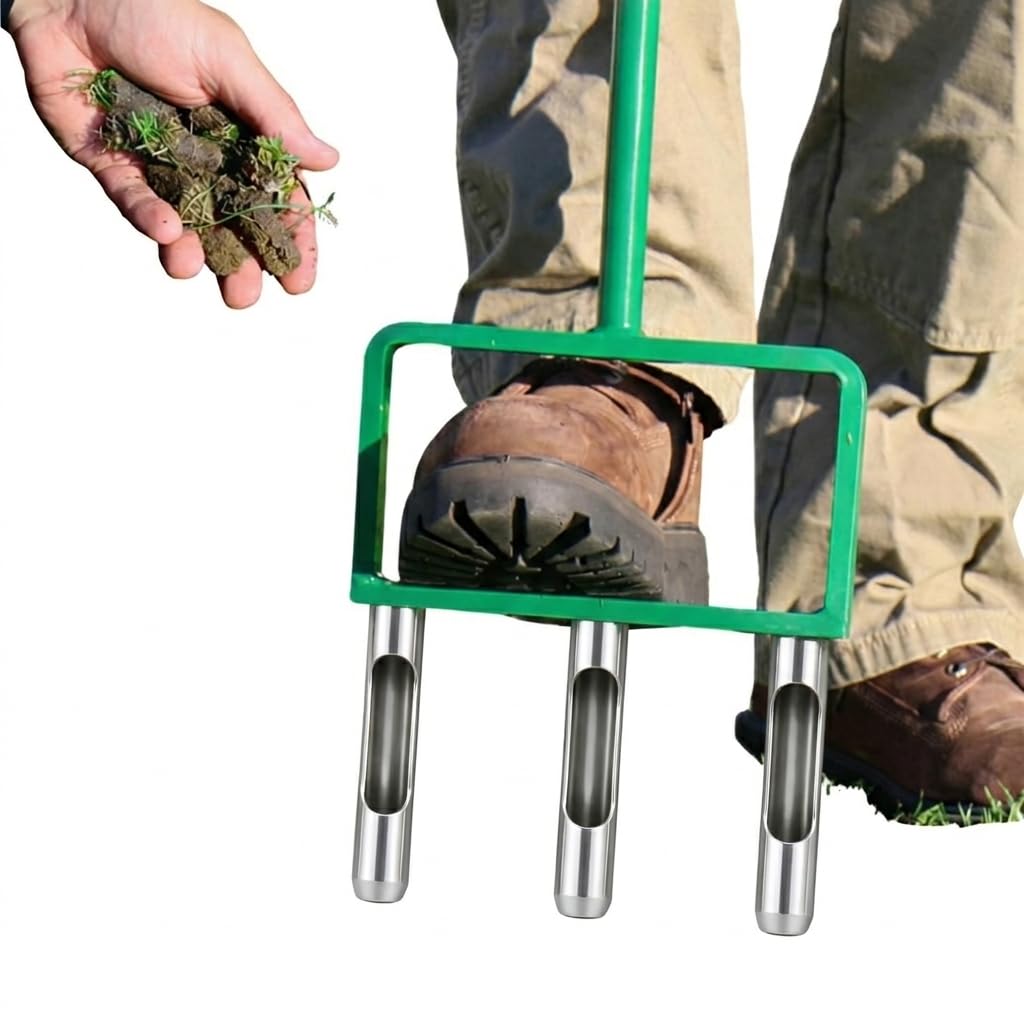
The ready-to-use core aerator whose self-cleaning tines stay sharp through years of work.
This is the premium pick for a simple reason: it arrives fully assembled with the tines already fitted, so the very first thing you do is work, not build. The three solid stainless steel tines use a beveled, clog-free design that pushes old material up and out with each press — no unclogging mid-job. Owners describe it as a lifetime tool, one they’d choose over budget brands for the quality of the steel and the durable powder-coated frame.
Moisture is the key that open up this tool’s potential. On damp soil, the self-cleaning plugs eject perfectly and the tines stay sharp, with A 25×25-foot section finishes in under an hour.. The star design works well in tight areas, and the tines pull out easily for cleaning or replacement when they eventually wear. At 5.6 pounds it carries real heft, which translates to bite on the press down.
The honest cost is effort. Owners describe first aeration as genuinely hard work — A 1,200-square-foot yard is brutal but effective; 2,200 square feet takes four hours.. On heavily compacted or dry soil, it becomes exhausting, and some suggest renting a machine for a first deep pass before keeping this for maintenance. The tines can clog on certain soils, and the foot bar gets slippery when wet. This is a professional-grade tool for someone who wants quality and is prepared to work for it.
Why it’s worth the premium
- Zero assembly — ready to use from the box
- Beveled stainless tines self-clean with no manual unclogging
- Replaceable tines and durable build suggest a lifetime tool
- 3-tine design excels in tight areas
The price of admission
- Manual aeration here is genuinely strenuous — pace yourself
- Dry, compacted soil turns it into a slog; wet soil first
- Foot bar can get slippery when wet
Worth it for: the buyer who wants a buy-once core aerator with the best self-cleaning design and is ready to put in real physical effort.
Reconsider if: you have a large, heavily compacted yard — a rented machine may be the smarter first move.
9. Brinly SAT2-40BH-P Tow Behind Spike Aerator

The 40-inch tow-behind machine that turns your mower into a lawn-aeration workhorse.
For the largest lawns, this tow-behind unit is a completely different beast — you hitch it to a riding mower and let the machine do the walking. Its 11 tine stars, each 8 inches in diameter with 12 spike tips, penetrate soil up to 2 inches deep, letting water, seed, and nutrients reach the roots across a full 40-inch swath. Owners with cracked, clay-like hard soil transformed their ground with this unit, aerating easily where manual tools would have taken days.
Two features make it genuinely smart. The rigid weight tray holds up to 150 pounds of extra weight for maximum penetration on tough ground, and the single-lever transport mode engages turf-tread wheels so you can cross driveways and sidewalks without gouging them. The galvanized steel 3-D tines resist rust and bending, backed by a 5/8-inch solid steel axle and nylon spacers between each star. Full lawn coverage takes about 1.5 hours. — a number no manual tool in this list can touch.
The real-world cost shows up in assembly and safety. The blades are extremely sharp — owners insist on heavy-duty gloves, and the assembly process gets decidedly mixed reviews, with some finding it fairly easy and others wrestling with loose bolts and incomplete instructions. Regular nuts can loosen during use, with one wheel falling off entirely until replaced with 5/8-inch nylon lock nuts. Plan for a careful first setup and a pre-flight check on the hardware.
What you’re buying
- 40-inch coverage turns an hour-long chore into a quick mower lap
- Weight tray holds up to 150 pounds for deep penetration
- Transport wheels let you cross pavement without damage
- Galvanized 3-D tines resist rust and bending
Plan around this
- Assembly gets mixed reviews — set aside time and check for loose bolts
- Blades are dangerously sharp; heavy-duty gloves are a must
- Stock nuts can loosen; swap to lock nuts for confidence
Choose it for: large properties and riding-mower owners who want the fastest, least physically demanding aeration possible.
pass on it if: you don’t want to assemble a serious piece of equipment and manage its sharp tines — this is a real machine, not a quick tool.
Understanding the Specs
Core Tines vs. Spikes
A core aerator uses hollow tines that cut and lift a plug of soil out, easing compaction at the surface. A spike aerator pushes solid points into the ground, which helps in looser soil but can pack the dirt tighter at the edges of each hole. For relieving compaction properly on a healthy lawn, core tines are the more effective choice, which is why the top picks in this list are hollow-tine tools.
Weight and Penetration
How much a manual aerator weighs dictates how easily the tines sink into your soil. A heavier tool, around 5.5 to 5.7 pounds, uses its mass to push tines in on the first press, while lighter units demand more of your body weight. Rolling and tow-behind units solve this with added ballast — a weight tray holding up to 150 pounds, for example, lets you decide how deep you want to go.
Soil Moisture
The single biggest variable in how hard a manual aerator is to use is the moisture content of your soil. Damp — but not soaking — ground lets tines slice in cleanly and plugs release easily. Dry, hard soil turns any manual tool into a struggle and can clog hollow tines or bend lighter steel spikes. Most owners find a light rain or a watering session the day before is the difference between a chore and a workout.
Handle and Foot Plate
Ergonomics decide whether an aerator is a pleasure or a back injury waiting to happen. A longer handle lets you work standing upright, reducing the strain on your lower back, while a wide foot plate on a step-on tool gives you a stable surface to press down. Some designs add a foot bar to keep your shoes clear of the soil plugs as they eject — a small detail that keeps your clothes and boots clean during use.
FAQ
Is a core aerator better than a spike aerator for my lawn?
How long does it take to manually aerate a lawn?
Why does my aerator need the soil to be moist?
How many tines should an aerator have, 3 or 4?
Will a tow-behind aerator work with my riding mower?
How do I keep a core aerator from clogging?
How much weight do I need for a rolling or tow-behind aerator to work?
Are the tines replaceable when they wear out?
How sharp are the tines on these aerators, and are they a safety risk?
When is the best time of year to aerate my lawn?
Final Thoughts: The Verdict
Across the board, the lawn aerator tools winner is the Xuperace Core Aerator because its side-ejection design solves the clogging problem that frustrates owners of almost every other manual core aerator — and it does it with a sturdy alloy build at a sensible weight. If your battle is heavy clay soil, the hugeneroy Hollow Tine sinks tempered steel into compacted ground at a featherlight 3.52 pounds. And for the large-property owner with a riding mower, the Brinly Tow Behind is the crowd favorite that turns a day of manual labor into a 1.5-hour lap, covering a 40-inch swath with up to 150 pounds of added weight for deep penetration.
How We Picked
We do not accept paid placement. Every pick is matched to a real buyer and a real use-case; we do not hands-on test units.
Sources & Methodology
Specifications: manufacturer listings and product documentation. Review insights: verified customer reviews, as of August 2026. Pricing: not shown on this page (it changes often); check the current price via the retailer link.
As an Amazon Associate, Gadgets Feed earns from qualifying purchases. This does not affect which products we feature.