
Our readers keep the lights on and my morning glass full of iced black tea. As an Amazon Associate, I earn from qualifying purchases.
Alkaline batteries drain fast, leak corrosive fluid, and fill landfills one remote at a time. The real solution isn’t just rechargeable — it’s lithium rechargeable. These cells deliver a steady 1.5V from first click to last flash, handle extreme cold and heat, and recharge hundreds of times without the voltage sag that ruins NiMH performance in picky devices.
I’m Min — the co-founder and writer behind Gadgets Feed. I’ve spent countless hours analyzing lithium-ion chemistries, comparing mWh ratings, and studying customer endurance reports across hundreds of battery models to find the ones that actually deliver on their cycle-life promises.
Whether you’re powering Blink cameras, gaming controllers, or smart locks, this guide to the best lithium rechargeable batteries breaks down which packs hold the most power, charge fastest, and survive the toughest conditions.
How To Choose The Best Lithium Rechargeable Batteries
Not all rechargeable lithium batteries are created equal. The chemistry, capacity, and charging system all determine whether a battery lasts two months in a trail camera or two weeks in a TV remote. Here are the key factors to weigh before buying.
Constant 1.5V Output vs. Voltage Sag
Standard NiMH rechargeable batteries start at 1.2V and drop further under load. Many devices like Blink cameras, smart locks, and some gaming controllers require a steady 1.5V to avoid false low-battery warnings or outright failure. Lithium rechargeable cells maintain 1.5V from full charge until the last drop, making them the better choice for voltage-sensitive electronics.
Capacity: mWh vs. mAh
Lithium batteries are often rated in milliwatt-hours (mWh), not milliamp-hours (mAh). Multiply mAh by 1.5V to get mWh. A 3000mWh AA is roughly 2000mAh — comparable to high-capacity NiMH. Higher mWh numbers mean longer runtime between charges. For high-drain devices like digital cameras or GPS units, look for 3500mWh or more.
Cycle Life and Charging Speed
Most lithium rechargeables promise 1000 to 2000 recharges before capacity degrades to 80%. The charger matters as much as the cell: a smart charger with independent slots, overcharge protection, and USB-C input cuts charging time from 5+ hours down to 1.5–2.5 hours. Faster charging is convenient, but ensure the battery management system prevents overheating.
Quick Comparison
On smaller screens, swipe sideways to see the full table.
| Model | Category | Best For | Key Spec | Amazon |
|---|---|---|---|---|
| POWXS 8-Pack + Charger | Premium | Universal compatibility & travel | 3500mWh / 100-min charge | Amazon |
| INSZIII 4100mWh 4-Pack | Premium | Highest capacity per cell | 4100mWh / USB-C direct charge | Amazon |
| MACORUN 8-Pack + Charger | Mid-Range | High-drain burst power | 3980mWh / 6A burst / 2.5hr | Amazon |
| CHICNOD 8-Pack + Charger | Mid-Range | Outdoor & cold-weather use | 3800mWh / -86°F to 131°F | Amazon |
| EBL 8-Pack + Charger | Mid-Range | Outdoor cameras & extreme temps | 3000mWh / -40°F to 140°F | Amazon |
| Tanatare 8-Pack + Charger | Value | IPX67 waterproof protection | 3000mWh / 2.5hr charge | Amazon |
| Paleblue AAA 4-Pack | Budget | 1-hour ultra-fast AAA charging | 600mAh AAA / USB-C cable | Amazon |
In‑Depth Reviews
1. POWXS Rechargeable Lithium AA Batteries with Charger 8-Pack
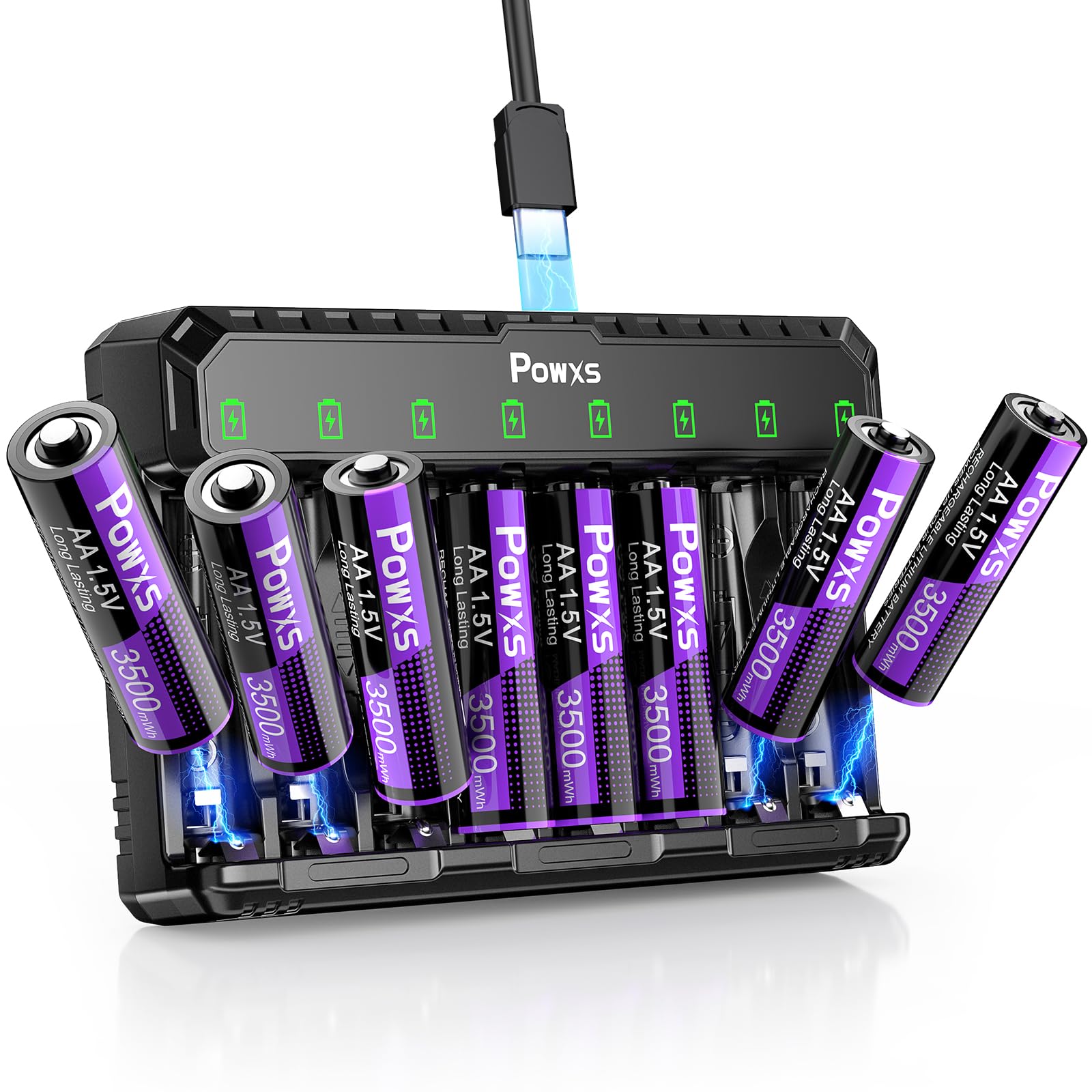
The POWXS kit hits the sweet spot of capacity, charging speed, and versatility. Each of the eight 3500mWh AA cells provides reliable runtime for 4K cameras, Blink security systems, and gaming controllers. The charger auto-detects chemistry — handling 1.2V NiMH and 1.5V Li-ion — and with USB-C input at 5V/2A, it fully charges all eight cells in about 100 minutes.
The charger’s compact, travel-friendly design weighs roughly 300g and complies with air travel regulations. Smart IC identification prevents overcharging by adjusting voltage and current per slot. Users report impressive endurance in smart locks, with one finding batteries still at 98% charge after three months of daily use — far outperforming disposable alkaline alternatives.
While the charger works with most rechargeable cells, it does not properly recognize non-rechargeable lithium primary batteries like Energizer Ultimate Lithium; it treats them as NiMH, which may pose a safety risk. Additionally, a minority of units have experienced the charger running for 5–6 hours without stopping, indicating potential BMS inconsistency.
Why it’s great
- Universal charger works with Li-ion and NiMH AA/AAA
- 100-minute full charge for 8 batteries is class-leading
- Steel housing adds impact resistance for daily carry
Good to know
- Does not recognize non-rechargeable lithium primaries
- Some units report inconsistent charge cycle termination
2. insziii 4100mWh Rechargeable Lithium AA Batteries 4-Pack
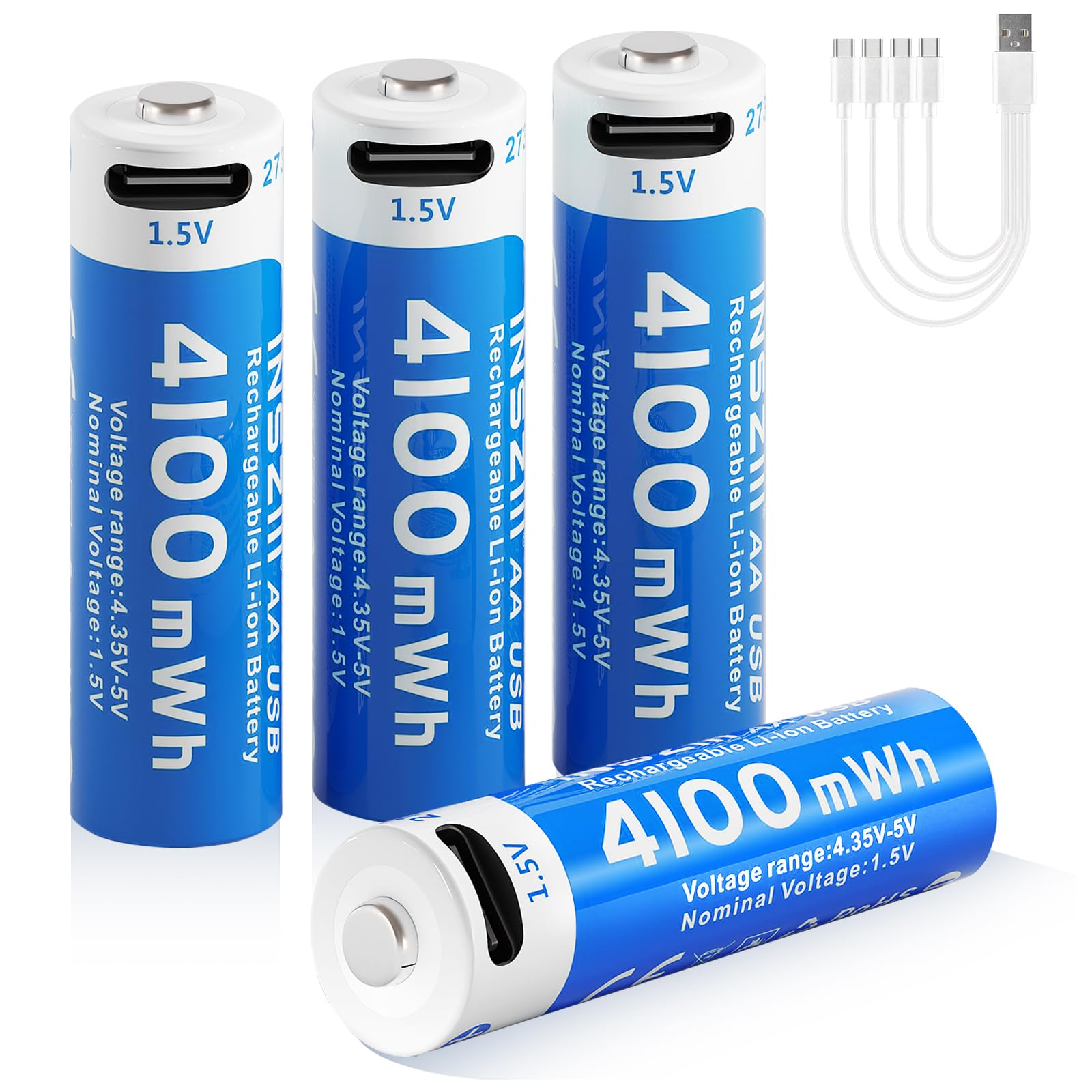
The insziii batteries boast the highest per-cell capacity in this lineup at 4100mWh, translating to significant runtime gains in high-drain devices. Instead of a traditional charger dock, each battery features a built-in USB-C port, allowing you to plug a 4-in-1 split cable directly into the cells without a separate charging cradle.
Charging time sits around 2.5 hours for a full set, and a built-in LED indicator displays charging status: flashing green means charging, solid green means full. The integrated safety circuit protects against overcurrent, overvoltage, and short circuits. Users have reported impressive endurance in smart door locks, with three batteries lasting multiple weeks in a high-traffic digital deadbolt.
The pack includes only four cells, which may require buying multiple sets for households with many devices. A small percentage of units have arrived with one non-functional battery — quality control at the cell level can be inconsistent. The 1200-cycle rating is lower than some competitors that claim 2000+ cycles.
Why it’s great
- Highest capacity (4100mWh) in this roundup
- No charger dock needed — USB-C direct charging
- Consistent 1.5V output for sensitive electronics
Good to know
- Only 4 cells per pack — higher cost per battery
- Occasional dead-on-arrival cells reported
3. MACORUN Rechargeable AA Batteries with Charger 8-Pack
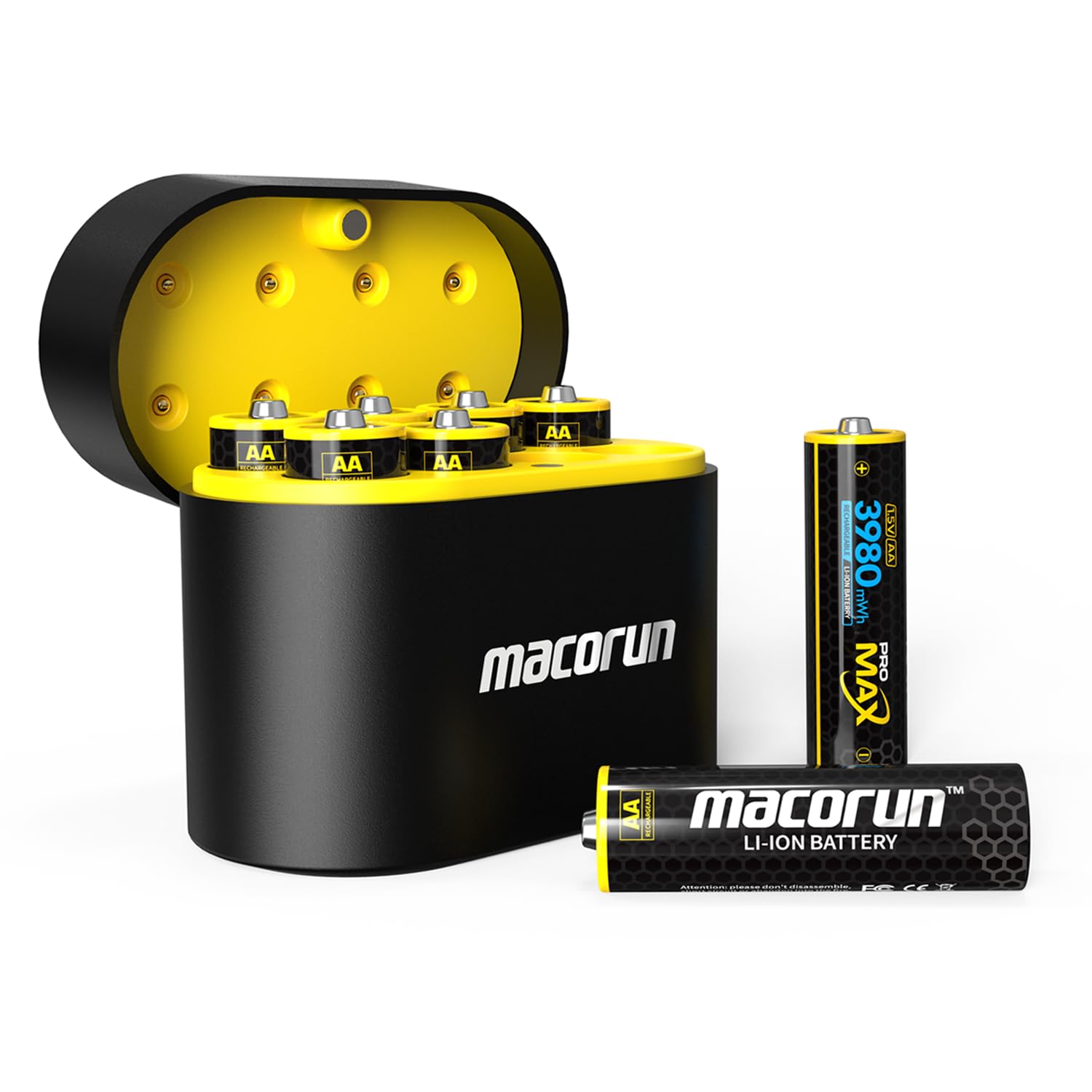
The MACORUN kit stands out for its 6A burst current capability, making it the top choice for high-drain applications like powerful flashlights, motorized toys, and smart deadbolts that require rapid motor engagement. Each cell delivers 3980mWh of energy using high-density ternary lithium-ion cells, and the 1.5V constant output remains rock-solid until depletion.
The included USB-C charging case handles 1 to 8 batteries independently and fully recharges the set in about 2.5 hours. The case itself is compact and travel-friendly. Real-world reports confirm the battery dramatically outperforms Eneloop Pro in modded Gameboy Advance units — delivering over 5 hours of gameplay versus 3 hours from NiMH. Security door handles that previously required battery changes every 2.5 weeks now run over 3 weeks without hitting half charge.
The wide operating range of -40°C to 65°C ensures reliable performance in car trunks, trail cameras, and outdoor gear. However, the charger does not support NiMH chemistry, so households mixing battery types will need a separate charger for older cells.
Why it’s great
- 6A burst power handles high-drain devices effortlessly
- 3980mWh capacity rivals premium competitors
- Extreme temperature range (-40°C to 65°C)
Good to know
- Charger is Li-ion only — no NiMH support
- Charging case charges slower than some dedicated docks
4. CHICNOD Rechargeable AA Lithium Batteries with Charger 8-Pack
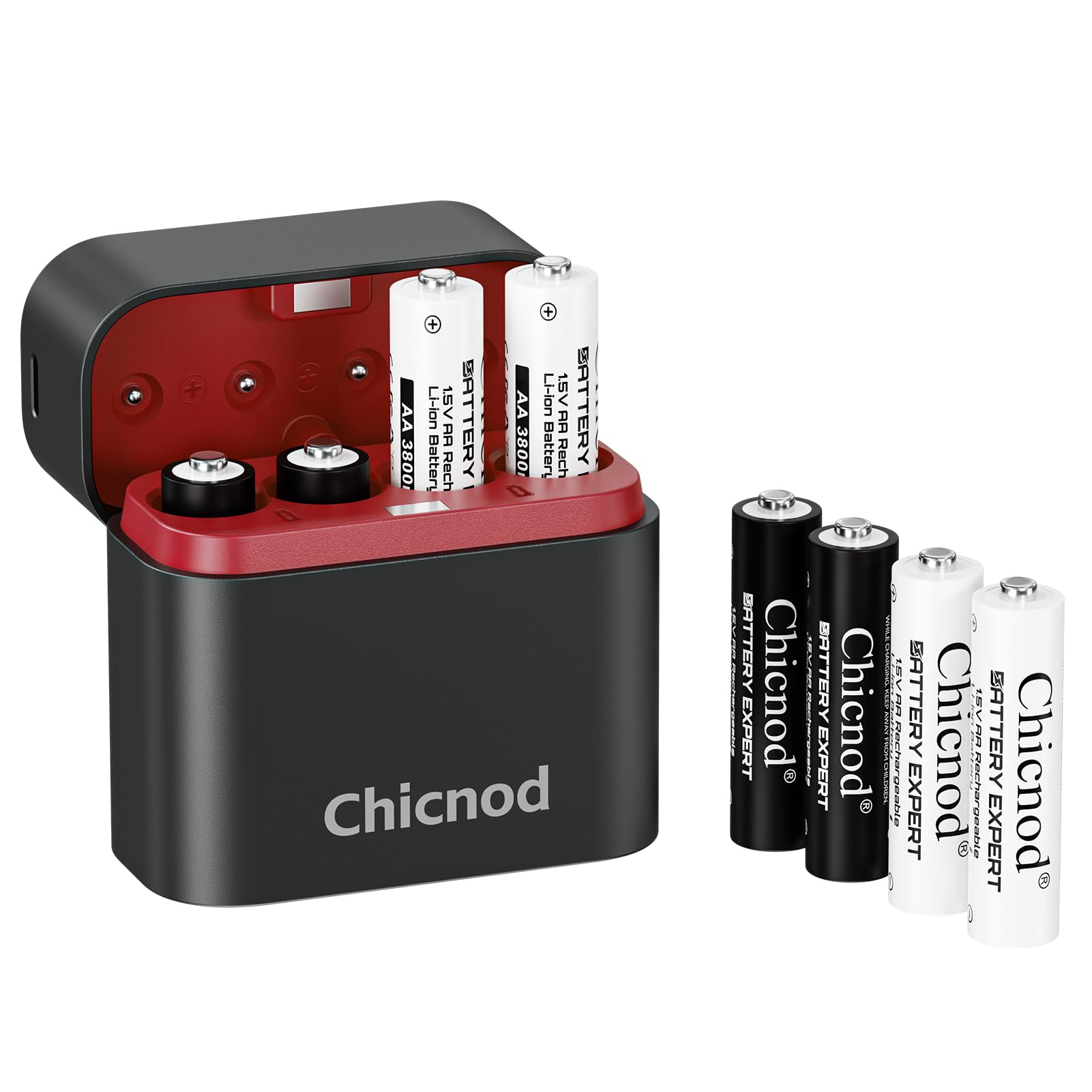
The CHICNOD kit is engineered specifically for harsh outdoor environments, with an operating range spanning -86°F to 131°F. Each cell delivers 3800mWh capacity with 1.5V constant output, ensuring Blink cameras and trail cameras function reliably even in freezing winters. The cells are 30% lighter than typical NiMH batteries, reducing weight in portable devices.
The charger case doubles as a storage unit, with independent slots that support 1 to 4 batteries. A USB-C port provides convenient charging, and green/red LEDs indicate battery status. Users report that a set of four batteries lasts 3–4 weeks in a busy Blink camera with frequent motion triggers, and swapping on the 1st and 15th of each month creates a simple replacement habit.
The charger holds only four batteries, so recharging the full eight-cell set requires two sequential cycles. First-time charges can take around 5 hours per cycle, which is slower than competing kits. The mWh vs. mAh labeling also confuses some buyers, though performance remains strong once understood.
Why it’s great
- Extreme cold tolerance down to -86°F
- Lightweight construction (30% lighter than NiMH)
- USB-C charging with independent slot management
Good to know
- Charger handles only 4 batteries at a time
- First charge cycle can be slow (~5 hours)
5. EBL Rechargeable AA Batteries Lithium with Charger 8-Pack

EBL’s 3-in-1 charger is the most versatile in this comparison, supporting 1.5V lithium-ion AA, 1.2V NiMH AA/AAA, and Ni-CD chemistries. The charger handles 1 to 8 batteries simultaneously with independent slots, eliminating the need for paired charging. Each 3000mWh cell delivers reliable power for high-drain devices like Blink cameras, video doorbells, and smart locks.
The batteries operate from -40°F to 140°F, making them suitable for outdoor gear year-round. Users report that a set of eight batteries lasts over a month with daily use in deer cameras, RC cars, and TV remotes. The 1600-cycle rating ensures long-term value, and the charger’s compatibility with multiple chemistries makes it a future-proof investment for mixed-battery households.
When compared to disposable Energizer Ultimate Lithium, the EBL cells have a shorter per-charge lifespan but pay for themselves after just two recharge cycles. Some users have noted that batteries can become stuck in a non-charging state, but a quick reset — connecting a charged cell to the dead cell’s terminals for 60 seconds — restores the BMS functionality.
Why it’s great
- 3-in-1 charger works with Li-ion, NiMH, and Ni-CD
- Wide temperature tolerance (-40°F to 140°F)
- Independent slot charging for 1–8 batteries
Good to know
- Shorter per-charge life than premium lithium primaries
- Occasional BMS lockup requiring manual reset
6. Tanatare 8 Pack Rechargeable Lithium Ion AA Batteries with Charger
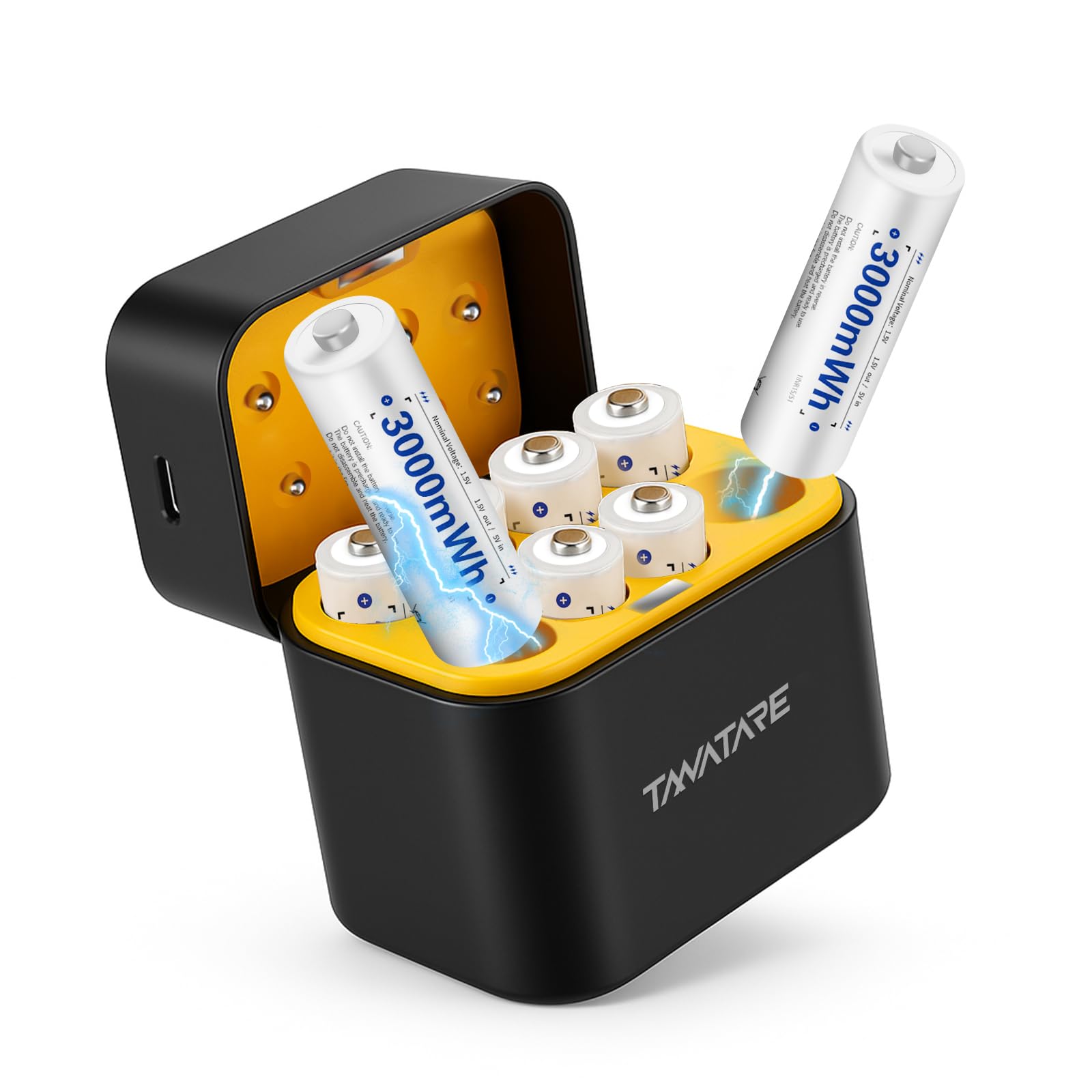
Tanatare’s kit offers solid value with eight 3000mWh cells and a magnetic integrated charger that stores and powers the batteries in one compact unit. The standout feature is the IPX67 waterproof rating on the batteries, making them uniquely suited for outdoor surveillance systems, camping gear, and any environment where moisture exposure is a concern.
The smart charger delivers 375mAh per slot and fully recharges the set in 2.5 hours. Each cell supports over 2000 charge cycles with low self-discharge when stored properly. Users report excellent performance in Meta Quest 3 controllers, with long charge retention between gaming sessions. The charger’s magnetic storage design also makes it ideal for travel — no loose batteries rolling around in a bag.
The charger is designed specifically for Tanatare lithium batteries and does not support NiMH cells or other brands. Recommended storage conditions require 20°C and 50% state of charge for maximum calendar life, and cells should undergo a refresh cycle every six months.
Why it’s great
- IPX67 waterproof rating for wet environments
- Magnetic charger case doubles as storage
- 2000+ cycle life for long-term value
Good to know
- Charger only works with Tanatare batteries
- Requires 6-month refresh cycle for optimal longevity
7. Paleblue USB Rechargeable AAA Lithium Batteries 4-Pack

The Paleblue AAA pack redefines convenience for small-form-factor devices. Each lithium-ion AAA cell delivers 600mAh capacity at a steady 1.5V, and the included 4-in-1 USB-A to USB-C cable charges all four batteries simultaneously in just one hour — up to 12 times faster than conventional NiMH AAA chargers.
The lithium chemistry eliminates the risk of alkaline leakage, a common problem in remotes, wireless mice, and small flashlights. Over 1000 recharge cycles dramatically reduce battery waste. Users consistently praise the quick charge cycle and long runtime between charges, especially in Xbox controllers, wireless keyboards, and TV remotes.
A notable quirk of this chemistry is the sudden power cutoff when voltage drops below the operating threshold — there is no gradual dimming or low-battery warning. For critical applications like smoke detectors or GPS devices, this abrupt failure could be problematic. The AA version from Paleblue would complement this AAA pack for a complete household solution.
Why it’s great
- Fastest charging time at 1 hour for 4 AAA cells
- Compact USB cable replaces bulky charging docks
- No alkaline leakage risk
Good to know
- Abrupt power cutoff with no low-battery warning
- Only 4 cells per pack
FAQ
Can I use lithium rechargeable batteries in my Blink camera?
Why do my lithium rechargeable batteries die suddenly without warning?
Can I mix lithium rechargeable batteries with NiMH in the same device?
Final Thoughts: The Verdict
For most users, the best lithium rechargeable batteries winner is the POWXS 8-Pack with Charger because it combines 3500mWh capacity, a universal charger that handles both Li-ion and NiMH chemistry, and a 100-minute rapid charge in a travel-friendly package. If you need the highest possible capacity per cell, grab the insziii 4100mWh 4-Pack with its direct USB-C charging. And for high-drain devices like motorized locks and powerful flashlights, nothing beats the MACORUN 8-Pack with its 6A burst capability.