
Our readers keep the lights on and my morning glass full of iced black tea. As an Amazon Associate, I earn from qualifying purchases.
Specs are compiled from manufacturer listings and verified buyer reviews and can change over time — please confirm the key details on the product page before buying.
To pick the right bat for your young player, focus on one number: the drop weight, which is the bat’s length in inches minus its weight in ounces. A larger negative drop (like -12) means a lighter bat that’s easier to swing, while a smaller drop (like -5) means more mass behind the ball for power. Here are nine Little League Baseball Bats that suit every stage, from first-time swingers to travel-ball sluggers.
I’m Min — the founder and writer behind Gadgets Feed. This guide is built by comparing the manufacturers’ published specifications and the patterns across verified customer reviews, so you get each pick’s real strengths and trade-offs instead of marketing spin.
If you are shopping for a league-approved stick for your kid, you need to know which little league baseball bats actually hold up to a full season of games and practices.
Our Picks at a Glance


How To Choose The Best Little League Baseball Bats
The first check is always the stamp. Every bat on this list is certified for USA Baseball leagues, which means it meets the performance standard those leagues enforce. Beyond that, it’s about matching the bat to the child’s size and swing, not to the flashiest color on the shelf.
Drop Weight Is Your Starting Point
Drop weight is the bat’s length in inches minus its weight in ounces, so a 30-inch bat that weighs 20 ounces is a -10 drop. A higher number like -12 or -11 gives a lighter swing that helps younger kids make contact and build confidence. A lower number like -5 or -8 adds barrel mass for power, which suits older, stronger players who already have solid swing mechanics.
Barrel Diameter Controls the balance
Barrel diameter is the width of the hitting surface, usually 2 5/8 inches or 2 1/4 inches. A wider barrel creates a bigger balance, giving you more room for error on contact, which helps beginners make consistent contact. A slimmer barrel offers more control but punishes off-center hits more severely.
Material Shapes Feel and Durability
One-piece alloy bats are stiff, durable, and ready to perform from the first swing, which is why they dominate the entry and mid levels. Two-piece hybrids put an alloy barrel on a composite handle, adding flex that reduces vibration on mishits while keeping pop; they cost more and suit players moving into more competitive ball.
Quick Comparison
| Model | Best For | Drop Weight | Barrel | Construction | Amazon |
|---|---|---|---|---|---|
| Rawlings 5150★ Best Overall | Best Overall | -11 / -10 / -5 | 2 5/8″ | 1-Piece Alloy | Amazon |
| Easton SpeedBest Value | Starting Pitchers | -10 | 2 5/8″ | 1-Piece Alloy | Amazon |
| Easton MoxieLightest Swing | Youngest Swingers | -12 | 2 1/4″ | 1-Piece Aluminum | Amazon |
| Rawlings Raptor | Compact Players | -10 | 2 1/4″ | 1-Piece Aluminum | Amazon |
| Mizuno PWR ALLOY | Upgrading Beginners | -10 | 2 5/8″ | 1-Piece Aluminum | Amazon |
| Victus Vibe Pencil | Style + Pop | -10 | 2 5/8″ | 1-Piece Aluminum | Amazon |
| Louisville Slugger Select PWR | Hybrid Feel | -10 / -8 / -5 | 2 5/8″ | 2-Piece Hybrid | Amazon |
| Marucci CATX2 Connect | Travel Ball | -11 / -8 / -5 | 2 5/8″ | 2-Piece Hybrid | Amazon |
| DeMarini Voodoo ONE | Majors Power | -5 | 2 5/8″ | 1-Piece Alloy | Amazon |
In‑Depth Reviews
1. Rawlings 5150 Youth Baseball Bat
Our pick — over 4.5★ from 700+ verified ratings; the strongest balance of quality and price.
The league-wide crowd favorite that pairs a big barrel with a forgiving swing for ages 8 to 12.
Rawlings built this one around a 2 5/8-inch big barrel made from aerospace-grade alloy, which gives young hitters a wide contact surface. That larger barrel is what owners credit for kids finding the ball more often and sending it farther once they do connect. It comes in a 30-inch length at a -11 drop, so it swings lightly enough for a growing player to get the barrel through the zone quickly.
The build quality is what wins people over here, and the value is the second thing buyers rave about — the price keeps it realistic for a rec-league season. A dad of an 11-year-old sums up the experience: “He’s been hitting alot better. His friends on his team also enjoy using this. Good bat for the price.” For a 10-year-old, the weight is often described as perfect right from the start.
The honest catch is consistency: some owners find it feather-light while others say it runs heavier than the sticker claims, and durability gets the same split verdict. That means it’s worth checking the actual feel in hand for your specific child before game day; if you land a good one, the performance justifies the pick.
balanced alloy starter
- Large 2 5/8″ barrel forgives off-center hits
- Ultra-light swing helps young players build bat speed
- Owners consistently praise the quality and the price
stiff feel early
- Weight reports vary, so try it in hand first
- Some units lose their pop faster than others
reach for this if: you want a proven, league-approved bat that balances a big balance, light swing, and a sensible price for a rec or introductory season.
look elsewhere if: your player needs a specific, guaranteed swing weight for competitive ball, since the feel here can vary unit to unit.
2. Easton Speed Baseball Bat
A budget-friendly one-piece alloy bat built for younger hitters still learning the craft.
The Easton Speed takes a no-frills approach: a single-piece alloy build in a 30-inch length with a -10 drop and a 2 5/8-inch barrel. At 1.3 pounds, it sits in the middle of the weight range, heavy enough to feel solid but light enough for a 10-year-old to swing without dragging the barrel. The one-piece construction means no flex, so all the energy you put in goes straight into the ball.
Buyers consistently call out the quality and the value, with the price being the second most-praised feature. After six weeks of regular use, buyers report zero complaints and note it holds up as a durable choice for a newer player. The review pages describe it plainly: “Good bat for a younger or newer player. It’s durable and not too heavy.” It’s a red bat that also delivers genuine pop, as several 11-year-olds discovered.
The trade-off is that this is a pure entry-level performer; it won’t offer the advanced vibration control or composite feel you get on pricier hybrids. If your kid is just starting out and you want a dependable stick that won’t break the bank, this is exactly that.
best for: first-time players in the 8 to 11 range who need a durable, reasonably priced alloy bat to develop their swing on.
not for: older or stronger hitters chasing maximum pop, who will want a hybrid or a lower drop weight for more mass.
3. Easton Moxie Baseball Bat
The lightest bat of the group, built to get the youngest hitters making contact right away.
At just 1.1 pounds in a 30-inch length, the Moxie carries a -12 drop, which is the most forgiving swing weight on this list. It also uses a slimmer 2 1/4-inch barrel, while the Rawlings and Mizuno options above use 2 5/8-inch big barrels. That combination makes it ideal for kids still building the strength and timing to swing consistently.
The MILITARY Grade ALX100 alloy construction keeps the bat durable, while the concave end cap balances the weight, and a 2.2mm cushioned grip adds comfort for small hands. Parents report the light weight translates into real results, with one noting “Light weight and hit some homers.” A single bat has survived two full fall and spring seasons and is still going strong, which is strong testimony for the build.
The slim barrel means a smaller balance, so this is not the pick for a power hitter. But for a young player whose priority is simply making contact and having fun, the Moxie swings easier than anything else here.
lightweight champion: a great pick if your child struggles to get a heavier bat through the zone.
the trade-off: the 2 1/4-inch barrel gives less room for error on off-center hits.
4. Rawlings Raptor Youth Baseball Bat

A shorter, lighter bat that fits younger kids without giving up noticeable pop.
The Raptor comes in at 28 inches and 1.1 pounds, making it the smallest bat in this lineup and a natural fit for 7 and 8 year olds. That length is 28 inches versus the standard 30-inch Easton Moxie, which is a meaningful difference for a small player whose swing plane is still developing. The -10 drop keeps the weight manageable for that age group.
Rawlings pairs a 2 1/4-inch barrel with an ultra-light speed cap, a design goal of boosting swing speed through the hitting zone. Owners confirm the sizing works, with parents reporting “Perfect size and weight for my 8yr old” and grandkids declaring it “Major league.” The high-tack grip helps young hands hold on through the swing, and the aerospace-grade alloy is built to survive intense games.
The recurring gripe is cosmetic: the finish scratches and shows those scratches easily. It doesn’t affect performance, but if a pristine bat matters to your kid, expect some wear. For a young player who needs a correctly sized stick, the Raptor is the right fit.
match it to: a compact player aged 7 to 9 who needs a correctly sized bat they can control, not swing a too-long 30-incher.
keep in mind: the powder finish scratches readily, so it will show a season of use.
5. Mizuno PWR ALLOY -10 USA Youth Baseball Bat

A step-up bat with a multiband barrel that widens the balance for growing players.
The Mizuno PWR ALLOY brings a 29-inch length and 2 5/8-inch big barrel to players ready to move past a starter bat. Its defining feature is the multiband barrel design, which stacks multiple thickness levels along the barrel to create a wider balance for more forgiveness and power. At 1.5 pounds versus the 1.1-pound Moxie, it suits a kid who has started hitting with real intent.
Buyers describe it as well-made and performing very well, with quality the most-praised aspect. The step up is noticeable: one parent of 7-year-old twins found it “a noticeable improvement from the beginner” bat they previously owned, delivering added power without the premium price tag. An 11-year-old first-timer and multiple grandsons all took to it immediately.
The single-piece aluminum build keeps things simple and durable, and the cushioned synthetic grip adds a soft feel. This is the right buy if your child has outgrown a -12 drop but isn’t ready for a two-piece hybrid price tag.
sensible step up: a mid-range bat that adds pop and a wider balance without jumping to premium pricing.
who it fits: 7 to 11 year olds making their first leap past a true beginner bat.
6. Victus Vibe Pencil Baseball Bat
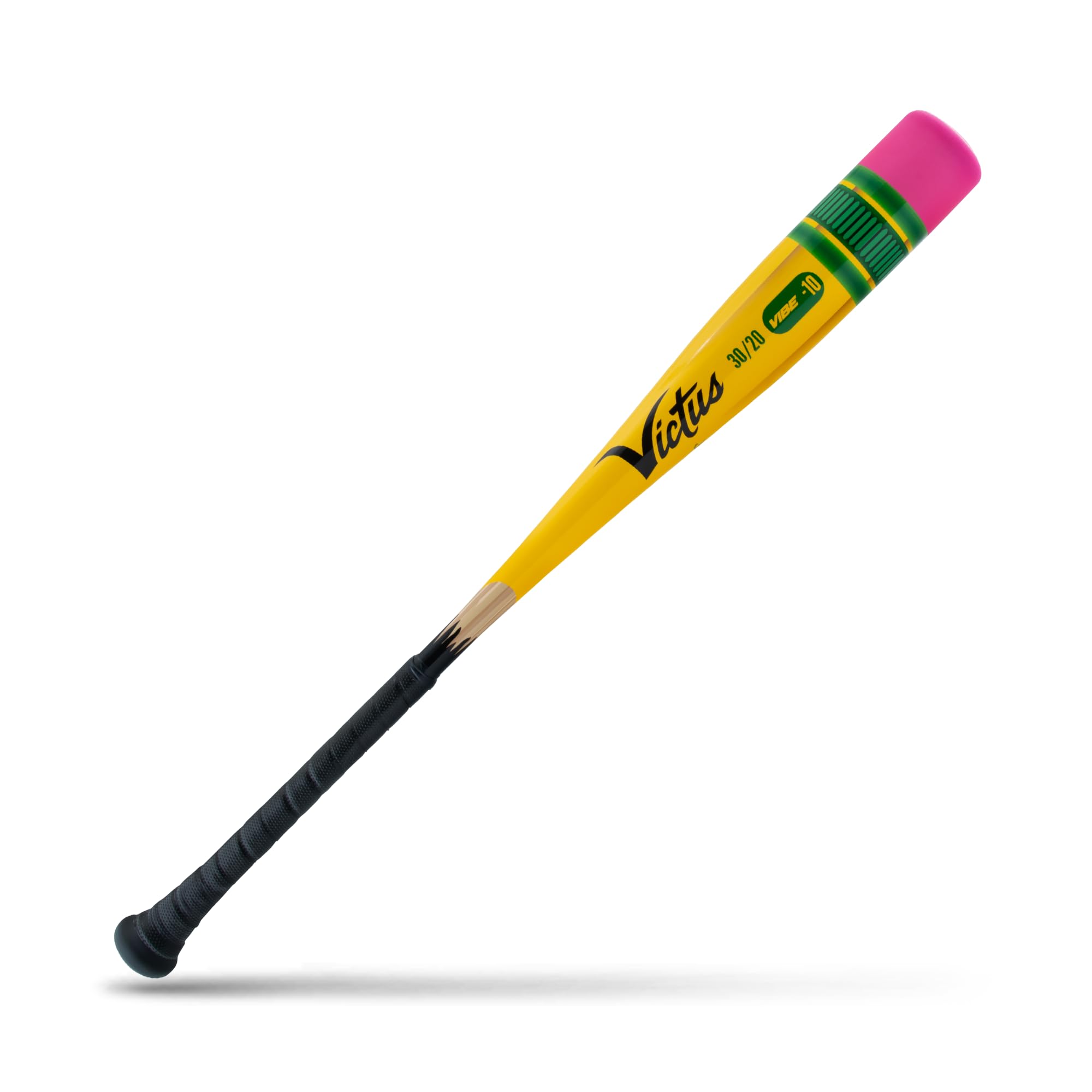
The pencil-design bat kids fight over, pairing a balanced swing with serious pop.
The Vibe Pencil is a one-piece aluminum bat with a 2 5/8-inch barrel and a -10 drop in a 28-inch length. Its defining trait is the micro-perforated grip and vibration-reducing knob, which noticeably cuts the sting on mishits. The mid-balanced swing weight keeps the barrel light enough for control while still letting hitters generate power, and the VXP alloy build keeps it durable.
The appearance is the second most-praised aspect here, and it drives real fandom: “It was a hit at the baseball teams games. Everyone wanted to use as it seemed to be the lucky bat.” The quality is the top praise, with owners comparing the swing to their old bats using words like “unreal pop” for a 7 year old. The pencil graphic gets compliments constantly.
Some units show tape peeling near the top and an occasional complaint about paint chipping, so it benefits from a little care. If your kid wants a bat that stands out in the dugout and performs, this delivers on both.
pick when: your player wants a cool-looking bat that also hits with authority and kills vibration on off-center contact.
note that: minor cosmetic wear over time, so manage the expectations on paint.
7. Louisville Slugger Select PWR USA Baseball Bat

A two-piece hybrid that merges an alloy barrel’s pop with a composite handle’s comfort.
The Select PWR is the switch-up bat for players coming from one-piece alloy. Its two-piece hybrid construction combines an EXD Premium Alloy Barrel with a composite handle, and the patented VCX2 connection lets the two move independently. That independent movement is the secret to its feel: it controls vibration while keeping the barrel’s responsive pop.
The balanced swing weight is designed for a mix of speed and power, and the LS Pro Comfort grip adds tack and cushion. At 1.2 pounds in a 29-inch length, owners who moved from a heavier bat saw the difference immediately. As one parent put it, “Definitely saw a difference in hard and solid contact hits once my son started using this bat.”
The clear caveat is the weight distribution leans toward the barrel, so it isn’t ideal for players who struggle with swing speed. For a 7 to 11 year old with solid mechanics, the pop is real; for a smaller or newer player, the feel might be too much.
reach for this if: you’re moving from a one-piece alloy to a hybrid and want the vibration control without losing pop.
skip it if: your player still needs maximum swing speed, since the barrel-heavy feel demands some strength.
8. Marucci CATX2 Connect Baseball Bat

A premium bat for competitive players, praised for sting resistance and immediate gains.
The CATX2 Connect is built for kids moving into travel ball, with a 30-inch length and a 2 5/8-inch barrel. Its defining tech is the patented Liquid-Gel Endcap, which absorbs and reduces vibration so contact feels smooth, and owners specifically call out the sting resistance as a standout. The multi-variable wall design expands the balance for consistent contact across the barrel.
Quality is the most-praised aspect here, with value second, and the results show up fast: parents report “immediate improvement on the length of his hits” for 9 year olds and a season filled with doubles and triples. This is a bat that rewards players who attack the ball, and the clean red styling keeps it looking sharp.
It is a premium investment, so it suits families committed to a competitive season rather than a casual rec league. For a player with refining mechanics, the CATX2 is the kind of tool that turns hard contact into extra bases.
competitive edge: gives young travel-ball players the sting resistance and consistent pop they need for longer seasons.
consider first: whether the premium spend fits your league level, since it’s overkill for casual rec play.
9. DeMarini Voodoo ONE (-5) USA Bat

The heaviest-hitting bat on this list, built for elite power hitters in Little League Majors.
The Voodoo ONE drops the drop weight to -5 in a 31-inch length, whereas the bats above use -10. At 1.6 pounds, it is the heaviest bat here, and that mass is the whole point: the X14 alloy barrel is engineered for elite power hitters who want to drive the ball. The one-piece construction gives maximum stiffness for an ultra-responsive feel.
The trade-off is that this is a specialist tool. Owners note it’s a “Heavy bat, little league approved” and describe it as a triple threat, with the graphics a hit with kids. A 6th grader whose previous composite bat cracked mid-season found the Voodoo’s alloy build “much more durable,” finishing the year by hitting everything hard, including an over-the-fence home run in the year-end tournament.
This is the bat for a 10-to-13-year-old in Majors with established swing speed, not for a beginner. If your player can handle the weight, the power ceiling is the highest of any bat in this guide.
perfect for: a Majors-level power hitter aged 10 to 13 who needs maximum barrel mass and has the swing speed to manage it.
avoid if: your player is still building strength, because the -5 drop will slow their swing down.
Understanding the Specs
Drop Weight
Drop weight is the bat’s length in inches minus its weight in ounces, written as a negative number. A -12 bat is much lighter for its length than a -5 bat, which matters because a lighter bat swings faster while a heavier bat carries more power. Younger players typically start at -12 or -11 and move to -10, then eventually to -8 or -5 as they grow stronger.
Barrel Diameter
Barrel diameter is the width of the hitting surface, usually 2 5/8 inches or 2 1/4 inches. A wider barrel creates a bigger balance, giving you more room for error on contact, which helps beginners make consistent contact. A slimmer barrel offers more control but punishes off-center hits more severely.
One-Piece vs Two-Piece
One-piece bats are a single piece of alloy or aluminum, making them stiff, durable, and ready to hit from the first swing. Two-piece hybrids connect an alloy barrel to a composite handle with a flexible joint, which absorbs vibration for a smoother feel but adds cost and complexity. One-piece suits beginners on a budget; two-piece suits players chasing comfort and advanced performance.
USA Baseball Certification
USA Baseball certification is the stamp leagues require for bat legality. It means the bat meets the performance standard set by USA Baseball, keeping the game fair for young players. Every bat on this list carries that certification, so you can buy any of them knowing your player is legal to use it in league play.
FAQ
What drop weight should my child start with?
What is the difference between a 2 5/8 and 2 1/4 inch barrel?
Are all these bats approved for Little League play?
How long should a youth baseball bat last?
What size bat does my 8 year old need?
What is the difference between alloy and composite bats?
When should my child move to a lower drop weight?
Do these bats need to be broken in?
Final Thoughts: The Verdict
For most families, the little league baseball bats winner is the Rawlings 5150 because it pairs a large 2 5/8-inch barrel with a light swing and a price that makes sense for a rec season. If you want a premium hybrid with vibration control, grab the Marucci CATX2 Connect. And for a Majors-level power hitter, the DeMarini Voodoo ONE is the one to reach for.
How We Picked
We do not accept paid placement. Every pick is matched to a real buyer and a real use-case; we do not hands-on test units.
Sources & Methodology
Specifications: manufacturer listings and product documentation. Review insights: verified customer reviews, as of August 2026. Pricing: not shown on this page (it changes often); check the current price via the retailer link.
As an Amazon Associate, Gadgets Feed earns from qualifying purchases. This does not affect which products we feature.