
Our readers keep the lights on and my morning glass full of iced black tea. As an Amazon Associate, I earn from qualifying purchases.
Specs are compiled from manufacturer listings and verified buyer reviews and can change over time — please confirm the key details on the product page before buying.
A miter saw that holds its angle and doesn’t flex under load is the difference between caulking over mistakes and hearing “that looks perfect.” A miter saw that holds its angle and doesn’t flex under load is the difference between caulking over mistakes and hearing “that looks perfect.”
I’m Min — the founder and writer behind Gadgets Feed. This guide is built by comparing the manufacturers’ published specifications and the patterns across verified customer reviews, so you get each pick’s real strengths and trade-offs instead of marketing spin.
You want a blade that stops exactly where you set it, every time. That’s why we focused on detent plates, bevel ranges, and slide mechanisms to separate the keepers from the frustrating ones. miter saw picks here range from cordless portability to 15-amp corded muscle.
Our Picks at a Glance

How To Choose The Best Miter Saw
You need a miter saw that matches the width of the material you cut and the accuracy you demand. A framing carpenter needs a different tool than someone doing baseboards and crown molding.
Sliding vs. Non-Sliding: How Wide Can You Cut?
A sliding saw has rails that let the blade pull forward, which dramatically increases the width of board you can slice in one pass. Non-sliding models (like the Metabo or Makita LS1040) are lighter and more precise for trim, but their crosscut capacity is limited by the blade’s diameter alone.
Miter, Bevel, and Compound Cuts
A miter is the angle you swing the blade left or right across the board. A bevel is the angle you tilt the blade head sideways. A compound saw does both at once, which is what you need for crown molding. A double-bevel lets you tilt left or right without flipping the work piece, saving time on complex joints.
Quick Comparison
| Model | Best For | Blade Size | Cutting Angle | Slide Type | Amazon |
|---|---|---|---|---|---|
| DEWALT DCS361M1★ Best Overall | Cordless Portability | 7.25 in | 48° | Non-Sliding | Amazon |
| Metabo HPT C10FCG2Best Value | Lightweight Value | 10 in | 52° | Non-Sliding | Amazon |
| Evolution R185SMS+Multi-Material Pick | Multi-Material Cuts | 7.25 in | 45° | Sliding | Amazon |
| Evolution R255SMS+ | Steel & Metal Work | 10 in | 45° | Sliding | Amazon |
| Delta S26-263L | Budget-Friendly Slider | 10 in | 45° | Sliding | Amazon |
| DEWALT DWS716 | Double-Bevel Precision | 12 in | 50° | Non-Sliding | Amazon |
| Makita LS1040 | Trim Work Accuracy | 10 in | 90° | Non-Sliding | Amazon |
| BOSCH CM10GD | Compact Glide Precision | 10 in | 90° | Glide | Amazon |
| Makita LS1019L | Large Crown Molding | 10 in | 90° | Sliding | Amazon |
In-Depth Reviews
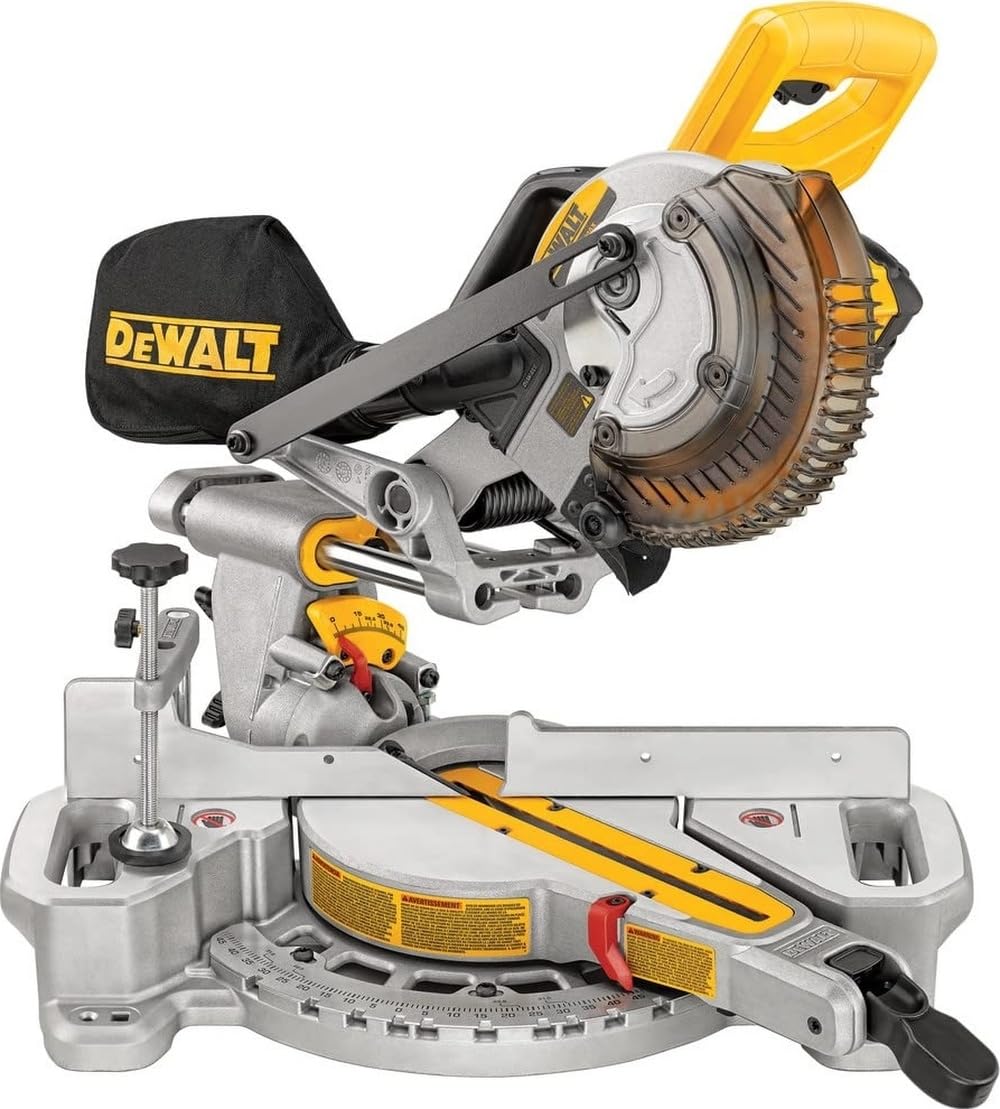
1. DEWALT 20V MAX* 7-1/4-Inch Miter Saw, Cordless (DCS361M1)
Our pick — over 4.5★ from 800+ verified ratings; the strongest balance of quality and price.
A cordless 7.25-inch saw that delivers 183 cuts per charge for on-the-go jobs.
Forget dragging an extension cord across the yard. This 7.25-inch cordless saw runs on a 20V Max battery pack (DCB204) that delivers roughly 183 cuts through 2×4 Pine or 275 cuts through 3-1/4 inch pine baseboard per charge — enough that owners say it can lay a whole floor on a single battery. The compact footprint (31.6 lbs) and integrated carry design make it the obvious grab for multi-level work and tight spaces.
Accuracy is where this little saw punches well above its cordless status. The integrated cut line cross-cut positioning system gives you a shadow-free indication of where the blade lands, and the adjustable stainless steel miter detent plate offers 11 positive stops. Owners consistently praise its cutting capability, noting it handles 2×4 lumber and even 2×8 materials without complaint — “much stronger than I expected for a battery operated model,” as buyers report.
There is one quirk to know: it only works with the 4Ah batteries, so older 2Ah packs won’t spin it up. The metal clamp has been called “flimsy” by some, though most agree it works fine for the job. The stock blade is serviceable, but swapping in a higher-tooth Diablo is a common first upgrade for cleaner trim cuts.
Why It Wins
- Real cordless freedom — no outlet within reach of your cut
- Compact size and light weight for easy transport
- Precise cut line system for accurate placement
Watch Out For
- Only works with 4Ah batteries, not smaller packs
- The material clamp feels a bit flimsy
- Stock blade is rough; upgrade recommended
Reach for this if: you work in multiple rooms, up ladders, or anywhere without a nearby outlet.
Think twice if: you need the wide crosscut capacity of a sliding saw — this is a non-sliding machine.
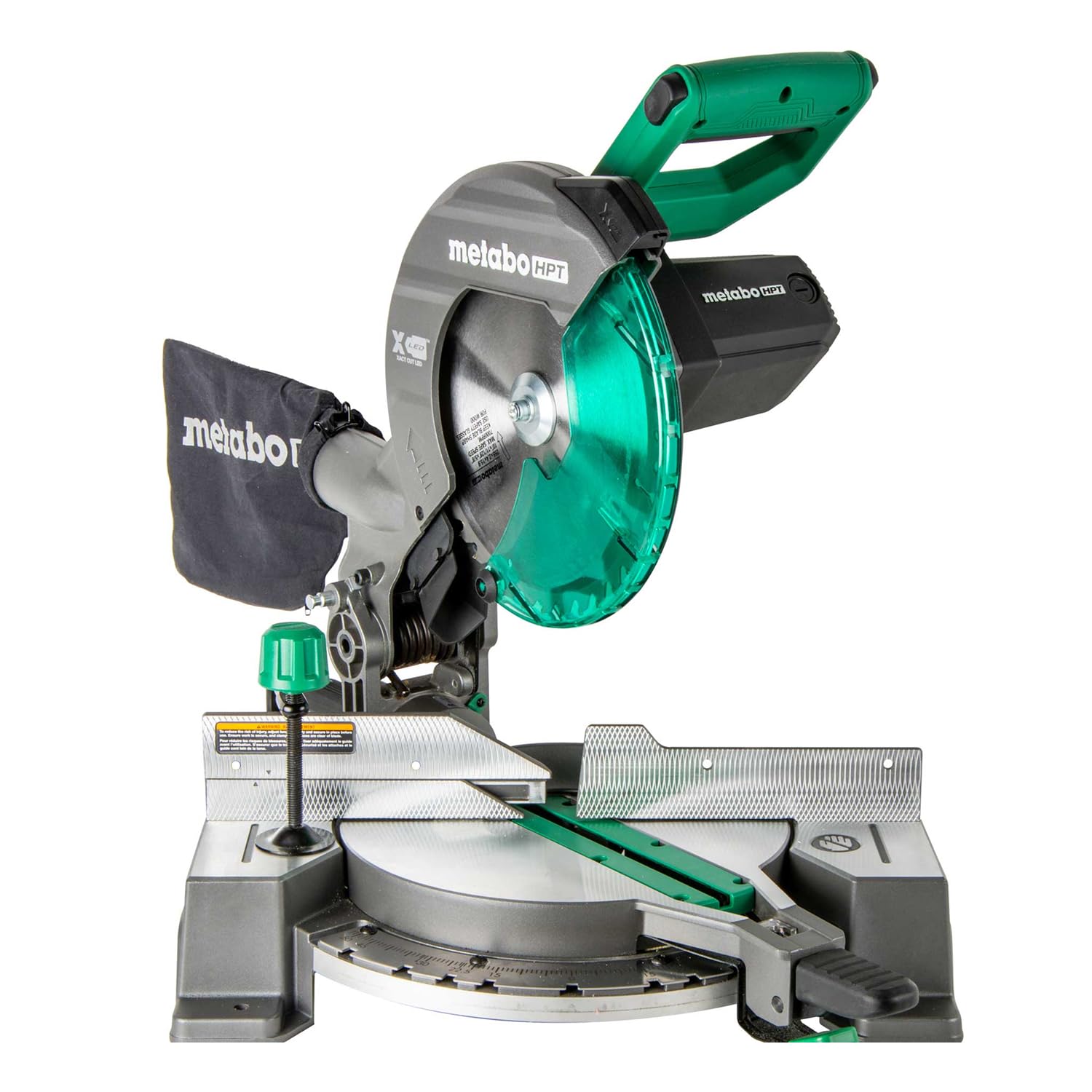
2. Metabo HPT 10-Inch Single Bevel Compound Miter Saw (C10FCG2)
A 24.2-pound 10-inch saw with a 15-amp motor that spins at 5,000 RPM.
The Metabo HPT delivers serious 15-amp power in a body that weighs just 24.2 lbs. The motor spins up to 5,000 RPM, which is why owners describe cutting through oak “with no problem” and getting smooth, clean, dead-on cuts. The “lightweight (24-25 lbs), powerful 15-amp/5,000 RPM motor” is the recurring theme in owner feedback.
You get a 0-52° miter angle range left and right, plus an adjustable bevel range of 0-45° left. The Xact Cut Shadow Line projects a precise shadow of the blade onto the work piece, which owners find works well — one even noted it compares favorably to a heavier Makita laser. Setup is minimal, and the saw cuts 2×6, 2×4, and hardwood at accurate positive stops.
This is a non-sliding saw, so its crosscut capacity is limited to the 10-inch blade’s reach — you won’t be slicing through wide shelving boards in one pass. Dust collection is average, and the stock blade is basic, though it performs admirably for most jobs. The recurring durability caveat centers on the blade guard, which some report breaking, so treat it gently.
The Strengths
- Extremely lightweight at 24.2 lbs for easy transport
- Powerful 15-amp motor with 5,000 RPM no-load speed
- Shadow line guide is accurate and visible
The Trade-offs
- Non-sliding limits crosscut width on wide boards
- Average dust collection performance
- Some durability concerns with the blade guard
Best for: DIYers and trim carpenters who want 10-inch reach without the 40-pound backache.
Not for: anyone who needs to crosscut 12-inch shelving — you’ll want a slider.
3. Evolution Power Tools R185SMS+ Sliding Miter Saw
A sliding saw with a multi-material blade that cuts wood, plastic, and metal.
This Evolution is a sliding saw with a 210 mm slide, giving you the crosscut reach that non-sliding 7.25-inch models can’t match. The defining feature is the multi-material blade it ships with, cutting wood, plastic, and metal cleanly — owners specifically note it “cuts thick metal smoothly” without needing a blade swap. It offers a 45-degree bevel and 50-degree miter range.
The sliding mechanism uses smooth ball-bearing rails, and the laser keeps its aim on target for accurate miter placement. Assembly is reportedly the easiest of any saw in this class, with one owner calling it “easy.” It’s a finish-work saw, not a framing tool — the ~760W draw and lighter build are aimed at trim, baseboard, and hobbyist metal projects.
A few things to note: this model ships without a ground plug and with a small cord gauge, so extension cord selection matters. A missing dust bag has been reported in some deliveries, and the company’s policy on replacing missing parts is strict. Also, for cleaner metal cuts, owners recommend a blade with more teeth than the stock 20-tooth unit.
The draw: genuine multi-material capability in a lightweight sliding package that’s easy to move and assemble.
The catch: check the box for the dust bag when it arrives, and budget for a finer-tooth blade if you cut metal often.
4. Evolution Power Tools R255SMS+ 10-Inch Sliding Miter Saw

A 15-amp sliding saw that cuts steel, aluminum, and wood with one blade.
Meet the saw that owners call a “Steel Cutting Monster.” The R255SMS+ ships with a multi-material blade that chews through mild steel, aluminum, wood with embedded nails, and composite decking. One owner reported making 50 cuts through 3/16-inch angle iron and switching from a Bosch 12-inch because this one’s versatility won out. It runs a 15-amp motor with a 0°-45° bevel and 50°-50° miter angles.
The “+PLUS” package means dual quick release clamps, a dust bag, taller fences, a slide rail protector, a 3m long cable, and integrated carry handles. Cutting metal is virtually spark-free and the blade stays cool to the touch, which is a genuine safety upgrade over abrasive chop saws. When cutting, it produces surprisingly little noise, and the blade slices through 1/8-inch metal “like butter.”
Understand the handling quirks. Owners stress you should always clamp your material — this saw is “powerful enough to throw pieces.” The laser drifts off at maximum cutting width, and the fence requires squaring for dead-on accuracy. It’s a heavy tool at 41.8 pounds, and while it’s built well, the plastic components mark it as a homeowner-grade machine rather than a pro-shop fixture. A recurring note: always cut metal slowly to avoid tooth grab and chipping.
What Impresses
- Cuts steel, wood, and plastic with one blade
- Virtually spark-free and cool-to-the-touch metal cutting
- Includes dual clamps, longer cable, and carry handles
What To Manage
- Heavy at 41.8 pounds
- Plastic parts, not a pro-grade build
- Laser drifts off at maximum width
Choose it for: mixed material jobs — one saw for your fence repairs and steel brackets.
Pass on it if: you only cut wood and want a lighter, simpler machine.
5. Delta 10 in. Compound Sliding Miter Saw

The sliding-saw gateway that proves budget doesn’t mean junk.
Delta’s 10-inch slider is the classic “solid, good value miter saw” that owners say is accurate from the start. The 15-amp motor spins at 5,500 RPM, and the spindle lock makes blade changes a breeze. It bevels left from 0°-45°, handling nominal 2×12 lumber at full bevel, and the slider gives you that wide crosscut capacity without the price tag of a pro-grade machine.
The 24-tooth stock blade delivers smooth cuts, and owners mention the slider runs smoothly with a good clamp. For weekend projects, it cuts 2-inch pine easily with a deep throat that accommodates larger pieces. The build feels solid and powerful for the money, and at 29.5 lbs it’s genuinely portable — easy to move room to room or job to job.
The honest downsides: the laser is weak and only useful indoors, the dust bag does little to contain the mess (a shop vac is the real fix), and the cord is short. Some customers note the fence arriving bent or the slide drifting off mark, so a quick square-up on arrival is wise. And it earns its “louder than most” label, so ear protection isn’t optional.
Why it sells: you get a genuine sliding compound saw with a trusted brand name at an entry-level price.
The compromise: weak laser, noisy operation, and poor dust collection mean you’ll add accessories and patience.
6. DEWALT Miter Saw, Double-Bevel, Compound, 12-Inch (DWS716)

A 12-inch heavyweight that cuts crown molding with room to spare.
If your work revolves around crown and base molding, the DWS716 is your machine. The tall sliding fences support crown molding up to 6-5/8-inch nested and base molding up to 6-1/2-inch vertically — numbers that put bigger, pricier saws to shame. The double-bevel design tilts 0°-48° left and right with positive stops at 0°, 22.5°, 33.9°, and 45°, so you don’t flip your workpiece for compound cuts.
The stainless steel miter detent plate delivers 14 positive stops, and the cam lock miter handle with detent override makes angle changes quick and accurate. Owners call it “a very accurate saw” right from the start, with one noting it “performs as good as one twice its price.” The included 12-inch carbide-tipped blade is genuinely sharp and ready to work.
The trade-off is weight and setup. At 48.3 pounds, this is not a carry-around saw — it’s a bench resident or stand companion. Owners recommend budgeting about an hour for alignment on arrival, and dust collection, while improved, still leaks enough that a shop vac reducer is a smart add. The metal construction is a clear step up from cheaper 12-inch models, justifying the premium for precision work.
The Payoff
- Double-bevel saves time on compound crown cuts
- Tall fences handle large crown and base molding
- Metal build with 14 positive stops for accuracy
The Cost
- Heavy at 48.3 pounds
- Needs about an hour of setup alignment
- Dust collection still benefits from a shop vac
Best for: finish carpenters who live in crown molding and need repeatable compound angles.
skip it if: you need portability — this one stays put.
7. Makita LS1040 10″ Compound Miter Saw

The trim carpenter’s secret weapon that makes corners “like a dream.”
For pure trim work, this Makita is the specialist that pros reach for. Its single pivot arm design means no side play — the blade goes exactly where you aim it, with no sliding mechanism to introduce flex. The 15-amp direct drive motor spins at 4,600 RPM, and the dual post compound pivoting arm keeps everything rigid. The result, as one owner framing artwork puts it, is it “makes corners like a dream.”
You get positive miter stops at nine settings — 15°, 22.5°, 30°, 45° right or left, and 0° — plus bevel cuts up to 45° to the left. The all-metal construction and precision-machined base give it that reassuring Makita solidity, and it includes a vertical vise, blade, wrench, and triangular rule. At 27 pounds, it’s light enough to carry to the job site without a second thought.
The flip side: this is a non-sliding 10-inch saw, so its crosscut capacity is limited to roughly the blade’s diameter. It’s not the tool for wide shelving. It’s also notably noisy, with owners describing it as starting “with a bang” — ear protection is a must. And the blade change bolt is famously tight; a rubber mallet on the wrench is the trick owners pass along. The 1-year warranty is shorter than Metabo’s 5-year coverage, but that’s the price of Makita’s reputation.
The appeal: precision and rigidity in a light, simple package built for one job — and doing it flawlessly.
The limitation: no sliding action, so wide crosscuts are out, and it’s loud while it works.
8. BOSCH CM10GD Compact Miter Saw

The Axial-Glide saw that shrinks its footprint without shrinking its cut.
Bosch’s Axial-Glide System replaces traditional sliding rails with a pivoting arm mechanism. This compact design takes up to 10 inches less workspace than a conventional slide miter saw — a lifesaver in tight garages and small shops — while still delivering wide crosscuts. Owners call the operation “smooth as butter,” with one pro flooring installer praising its clean cuts through oak and hickory.
The CM10GD is a dual-bevel machine with large, upfront metal bevel controls and Square lock precision fences. The crown chop lock secures the head for maximum capacity on upright base molding and nested crown. It ships with the 60-Tooth carbide saw blade, which owners confirm is high quality from the start. Setup is minimal — one owner notes it works “without needing factory setup adjustments.”
Here’s the honest trade-off: this machine weighs 64 pounds, and there are no carry handles, so you’ll want a gravity stand (like the GTA3800) for transport. The dust bag is mediocre — owners recommend a custom nozzle hooked to a shop vac for serious cleanup. There’s no laser included, though a compact aftermarket one mounts easily if you need the guide. Despite the weight, finish professionals consistently call it the smoothest, most accurate saw they’ve used, even compared to pricier Festool and DEWALT models.
Why Pros Love It
- Compact glide saves up to 10 inches of workspace
- Butter-smooth operation with clean cuts
- Ships with a quality 60-tooth carbide blade
The Real Cost
- Heavy at 64 pounds with no carry handles
- Dust bag is weak; bring a shop vac
- No laser included
Perfect for: the small-shop woodworker who demands smooth, accurate cuts without sacrificing floor space.
Not for: mobile jobsites — this one needs a stand and a sturdy grip.
9. Makita LS1019L 10″ Dual-Bevel Sliding Compound Miter Saw

A 10-inch slider that out-cuts 12-inch saws on crown molding.
This is the saw that makes 10 inches feel like 12. The Makita LS1019L handles crown molding up to 6-5/8-inch nested — the same capacity as a 12-inch saw — thanks to its innovative direct drive gearbox and guard system. The dual-bevel sliding design tilts both directions, and the unique 2-steel rail system offers single slide-glide operation that reduces the footprint and works flush against a wall.
The linear ball bearing system delivers “dead-on” accurate cuts, and owners describe the performance as cutting “like a hot knife through butter.” Dust collection is genuinely impressive — one owner measured over 80% capture with a vac and about 65% with the bag. The soft-start motor runs quietly with smooth, accurate cuts and zero miter detent play.
This is a premium tool at 72.8 pounds, so it’s a bench fixture, not a carry-around. The bevel tilt knob requires unscrewing and screwing to adjust, which some find tedious. The laser is dim — owners note it’s hard to see under bright work lights. And construction quality is a genuine mixed bag: some units arrive with misaligned rails that aren’t field-adjustable, though Makita’s customer service replaces defective units promptly. Check the blade-carriage alignment with test cuts before you commit to a project.
The High Points
- Crown capacity of a 12-inch saw in a 10-inch package
- Excellent dust collection with a vac
- Quiet soft-start operation with smooth cuts
The Tolerance
- Heavy at 72.8 pounds
- Dim laser hard to see in bright light
- Some units arrive with misaligned rails
Made for: finishing carpenters who cut lots of crown and want 12-inch capacity without the 12-inch price.
Be warned: check alignment with test cuts on arrival — most units are perfect, but a few need a replacement.
Understanding the Specs
Blade Size and Crosscut Capacity
The blade diameter directly limits how wide a board you can cut vertically, but the slide mechanism is what extends your crosscut reach. A 10-inch non-slider handles trim and 2x lumber; a 10-inch slider can span 2×12 shelving. A 12-inch blade adds heft and price but gives the tallest vertical cuts for crown molding.
Miter Angle vs. Bevel Angle
Miter is the blade swinging left or right across the board; bevel is the head tilting sideways. A compound saw combines both for crown molding and angled frames. Dual-bevel models tilt in either direction without flipping your workpiece, which saves time on complex joints. Positive stops — the click points at common angles — make repeatable cuts much faster.
FAQ
What is the difference between a sliding and non-sliding miter saw?
Is a cordless miter saw powerful enough for 2×4 lumber?
What does double-bevel mean and do I need it?
Can a miter saw cut metal or just wood?
How big a blade do I need for crown molding?
How heavy a miter saw is too heavy to move around?
What is the Xact Cut Shadow Line on the Metabo saw?
Do I need to align a new miter saw before using it?
Which is better, a 10-inch saw or a 12-inch saw?
How important is dust collection on a miter saw?
Final Thoughts: The Verdict
For most people, the miter saw winner is the DEWALT 20V MAX DCS361M1 because it pairs genuinely useful cordless freedom with accurate cuts in a compact package — the crowd favorite holds a 4.8-star rating across 800+ owners, which tells you the consistency is real. If you want the best raw-value corded workhorse, grab the Metabo HPT C10FCG2 at just 24.2 pounds with a 15-amp motor. And for cutting steel and wood with one blade, the Evolution R255SMS+ is the one to reach for.
How We Picked
We do not accept paid placement. Every pick is matched to a real buyer and a real use-case; we do not hands-on test units.
Sources & Methodology
Specifications: manufacturer listings and product documentation. Review insights: verified customer reviews, as of August 2026. Pricing: not shown on this page (it changes often); check the current price via the retailer link.
As an Amazon Associate, Gadgets Feed earns from qualifying purchases. This does not affect which products we feature.