
An oxygen sensor socket is the single tool that separates a ten-minute sensor swap from an afternoon of rounded nuts, swearing, and a trip to the exhaust shop. The narrow 22mm hex on an O2 sensor sits inches from a hot exhaust pipe, often seized by road salt and thermal cycling, and the wrong socket — a standard 12-point or a deep-well without a wire slot — will either fail to grip or crush the sensor harness. A purpose-built O2 sensor socket uses a side cutout, a 6-point broached bite, and often an offset or crowfoot design to reach sensors buried in the transmission tunnel or tucked against the floor pan. Without that specific geometry, the tool rounds the nut, the sensor stays stuck, and the job stops.
I’m Min — the co-founder and writer behind Gadgets Feed. For this guide I dug through dozens of O2 socket designs on the market, comparing drive sizes, slot dimensions, thread chaser compatibility, and the alloy quality that determines whether a socket spreads or stays square under breaker-bar torque.
After sorting through seven different socket configurations, three crowfoot lengths, and six customer-verified fitment reports on exhaust manifolds from a 2006 Accord to a ’93 BMW 740iL, here is a clear breakdown of the best o2 sensor socket options that actually remove seized sensors without rounding them.
How To Choose The Best O2 Sensor Socket
An O2 sensor socket is a simple tool — a 22mm 6-point socket with a slot cut into one side — but the material grade, drive size, slot width, and the inclusion of thread chasers or offset wrenches determine whether it survives contact with a corrosion-fused sensor. The following factors separate a budget tool that deforms after one use from a set that handles a dozen vehicle platforms.
Drive size and socket length
Most O2 sensor sockets come in 3/8-inch or 1/2-inch drive. The 1/2-inch drive handles higher torque without twisting, making it better for breaking loose salt-crusted sensors. The socket length matters: a standard 2.5-inch body clears most manifolds, but sensors buried deep in heat shields or catalytic converters require a 3.1-inch ultra-deep broach to reach the hex without the ratchet head bottoming out on surrounding metal.
Side wire slot dimensions
The slot — typically 0.3 inches wide and 2.2 inches long — lets you slide the socket over the sensor without unplugging the harness. If the slot is too narrow, the connector won’t pass and you lose the benefit of a one-handed removal. Some premium designs extend the slot to 8mm x 64mm to accommodate wider weatherpack connectors found on late-model sensors.
Material and finish
Chrome vanadium steel (Cr-V) is the standard for mid-range sockets, offering good strength with a corrosion-resistant phosphate or chrome finish. Chrome molybdenum steel (Cr-Mo) is tougher and resists spreading under high torque, but costs more and is usually found on professional-grade sets. Avoid plain carbon steel without any surface treatment — it will flash-rust after one exposure to road salt moisture.
Thread chaser inclusion
After removing a seized O2 sensor, the manifold threads are often packed with carbon and corrosion. Thread chasers — M12 x 1.25mm and M18 x 1.5mm — clean the threads without cutting new metal. A set that includes these two chasers saves you from buying a separate tap-and-die kit and prevents cross-threading the new sensor.
Crowfoot versus standard socket design
A crowfoot or offset wrench gives you a low-profile access point for sensors positioned horizontally or upward-facing where a vertical socket can’t fit. The offset also lets you use a ratchet on the side rather than above the sensor, which matters when the sensor sits under the floorboard or behind a subframe crossmember. Standard sockets are cheaper, but a flex-head or offset design is often the only way to reach downstream sensors on transverse-engine vehicles.
Quick Comparison
On smaller screens, swipe sideways to see the full table.
| Model | Category | Best For | Key Spec | Amazon |
|---|---|---|---|---|
| Zlirfy 7PCS Oxygen Sensor Socket | Premium Set | Multi-vehicle versatility | Cr-Mo steel, 22/27/29mm sockets | Amazon |
| ABN 7/8in 22mm Flex Head Wrench | Premium Pick | Tight confined spaces | Cold-forged steel flex head | Amazon |
| DASBET 5pcs O2 Sensor Set | Mid-Range | Best value with thread chasers | Forged steel, 6-point 22mm | Amazon |
| Dobur 5PCS O2 Oxygen Sensor Set | Mid-Range | Professional kit with case | Cr-Mo carbon steel, 1/2&3/8 dr. | Amazon |
| Zlirfy 5PCS Oxygen Sensor Removers | Mid-Range | DIY weekend mechanics | Cr-V steel, 3.1 in deep socket | Amazon |
| Vector Tools 5Pc Set | Budget | Entry-level with thread chasers | Alloy steel, 5-piece set | Amazon |
| Powerbuilt 1/2-Inch O2 Socket | Budget | Single socket for simple swaps | Cr-V steel, 2.5 in depth | Amazon |
In‑Depth Reviews
1. Zlirfy 7PCS Oxygen Sensor Socket
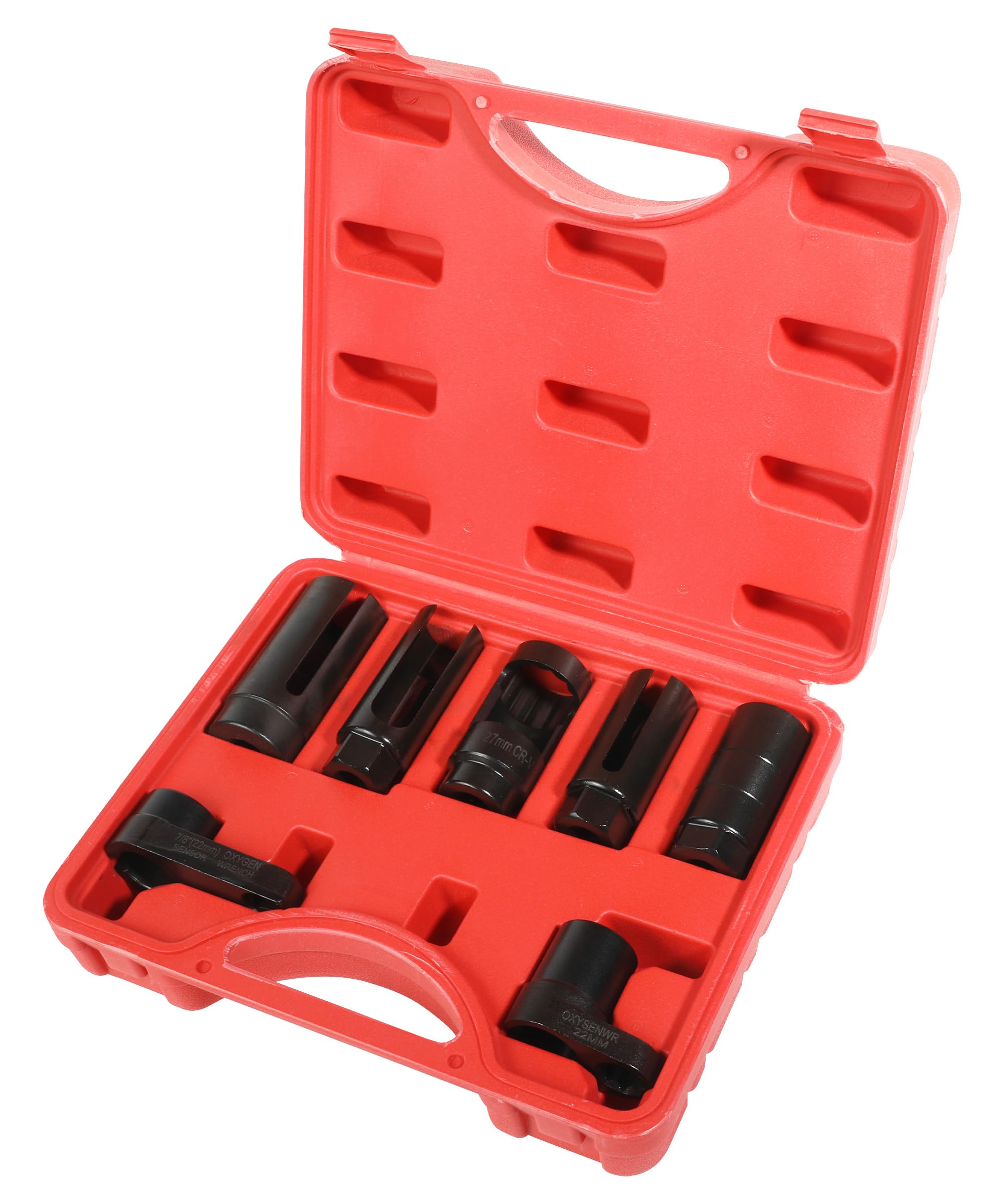
The Zlirfy 7PCS set stands out by including three socket sizes — 22mm for standard O2 sensors, plus 27mm and 29mm for oil pressure sending units and larger sensor nuts — making it the only set here that covers multiple sending-unit applications in a single purchase. The sockets are heat-treated chrome vanadium steel, while the two offset wrenches use chrome molybdenum steel with a black oxide finish for additional corrosion resistance in the tool box. The 8mm x 64mm side cut is wide enough to clear most weatherpack connectors without unplugging, and the 6-point broach on the 22mm socket grabs the full hex face to resist spreading under high torque.
The 22mm socket measures 80mm (3.1 inches) deep, giving enough reach to clear heat shields on most mid-2000s Japanese and American platforms. The two offset sensor wrenches — one 3/8-inch and one 1/2-inch drive — provide leverage in positions where a straight socket can’t engage, such as upstream sensors on V6 exhaust manifolds. Customer reports confirm successful use on four different passenger vehicles without any socket deformation, though one review noted that the 27mm socket spread slightly on a heavy-duty diesel nox sensor, suggesting the set is better suited to cars and light trucks than commercial diesel platforms.
The inclusion of the 27mm and 29mm sockets, combined with the dual-material construction, makes this set a legitimate one-tool solution for a home mechanic working across multiple vehicle brands. If you only need the standard 22mm, the extra sockets become redundancy, but for anyone with multiple vehicles or planning to service oil pressure senders, the 7PCS justifies the step up in cost over the 5-piece alternatives.
Why it’s great
- Three socket sizes cover O2 sensors, oil pressure senders, and larger nuts.
- Cr-Mo steel offset wrenches resist twisting better than Cr-V alternatives.
- 8mm side slot clears wide connectors without disconnecting the harness.
Good to know
- Not recommended for heavy-duty diesel sensors — the 27mm socket may spread under extreme torque.
- Storage case is not included; sockets come loose in a poly bag.
2. ABN 7/8in 22mm Flexible Head Oxygen Sensor Wrench

The ABN 22mm flex-head wrench takes a completely different approach from the socket-based designs in this list — instead of a vertical socket, it uses a 7/8-inch hex socket on a pivoting head attached to a curved steel handle. This geometry is purpose-built for downstream O2 sensors that sit upward and inward of the floorboard, where no socket and ratchet combination can fit. The flex head articulates to clear exhaust pipes and subframe members, while the curved handle provides leverage without requiring a breaker bar extension. Cold-forged steel construction gives it strength comparable to mid-range Cr-V sockets, but the narrow profile is the real advantage in tight engine bays.
Customer reports on a 1993 BMW 740iL confirm that the swivel head and wire gap allowed quick loosening of a sensor that was inaccessible to standard socket-end removers. Another user on a 1999 Buick Century found it worked perfectly after heat was applied to a 25-year-old sensor. The tool is compact enough to store in a glovebox or roadside kit, and it requires no additional ratchet or drive tool — it functions as its own handle. However, the same user who tested it on an 18-year-old truck noted that the steel began to deform under high torque, particularly when the sensor was severely seized, making a short cheater bar and penetrating oil a recommended pairing for rusted applications.
The ABN is not a set — it is a single dedicated wrench for one job — which makes it less versatile than the 5- or 7-piece socket kits. But for specific vehicles where sensor access is the bottleneck, this design solves a problem that multi-piece sets cannot. If your car’s downstream sensor is tucked behind the transmission crossmember, this is the most practical tool for the task.
Why it’s great
- Flex head and curved handle access sensors that vertical sockets cannot reach.
- Cold-forged steel construction handles moderate corrosion without deforming.
- No separate ratchet needed — the wrench is a standalone tool.
Good to know
- Not suitable for severely rusted sensors that require breaker-bar torque without deformation.
- Single-purpose design only works on 22mm sensors; no coverage for other sizes.
3. DASBET 5pcs O2 Oxygen Sensor & Oil Pressure Sending Unit Set
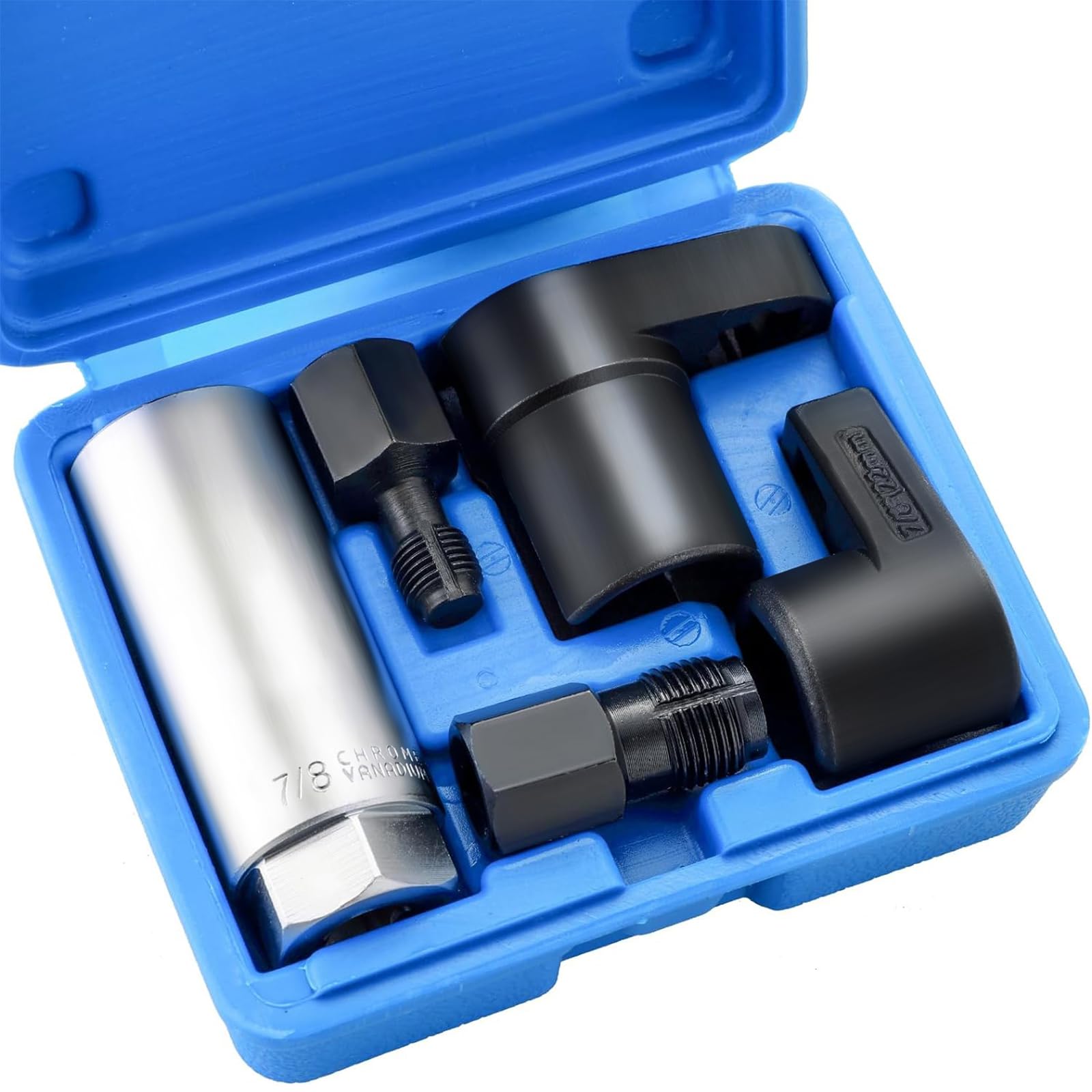
The DASBET 5-piece set hits the sweet spot between cost and capability by including a standard 22mm deep socket, a low-profile crowfoot socket, an offset crowfoot wrench, and two thread chasers (M12 x 1.25mm and M18 x 1.5mm) — all in a single package that covers the three most common O2 sensor removal scenarios. The 22mm deep socket measures 50mm long with a 3/8-inch drive, which is sufficient for upstream sensors on most transverse engines where the catalytic converter is close to the manifold.
The offset 1/2-inch drive crowfoot socket, at 80mm long, provides the leverage needed for stubborn sensors without requiring a cheater bar on the ratchet. Forged steel construction with a corrosion-resistant finish keeps the set functional after exposure to road salt and moisture, and multiple customer reports confirm that the 6-point broach on each socket does not round the hex under normal DIY torque levels. The thread chasers — both with a 3/8-inch drive — clear carbon and corrosion from the manifold port without cutting new threading, which is especially useful after removing a sensor that has been in place for 100,000 miles.
The main trade-off is that the 22mm socket is only 50mm long rather than 80mm, so it may not reach sensors that sit deeper within heat shield tubes on certain European platforms. The fitment is described by some users as slightly loose on the sensor hex — not enough to strip, but enough to notice a millimeter of play before engagement. For the price point, the set delivers strong value for a weekend mechanic who wants thread chasers included without buying them separately.
Why it’s great
- Includes both thread chasers (M12 and M18) to clean manifold threads after removal.
- Three separate socket profiles cover deep, low-profile, and offset access needs.
- Forged steel resists deformation under moderate torque.
Good to know
- 50mm deep socket may be too short for sensors inside deep heat shields.
- Socket fit can feel slightly loose on some sensor hexes — test fit before applying full torque.
4. Dobur 5PCS O2 Oxygen Sensor Socket Set
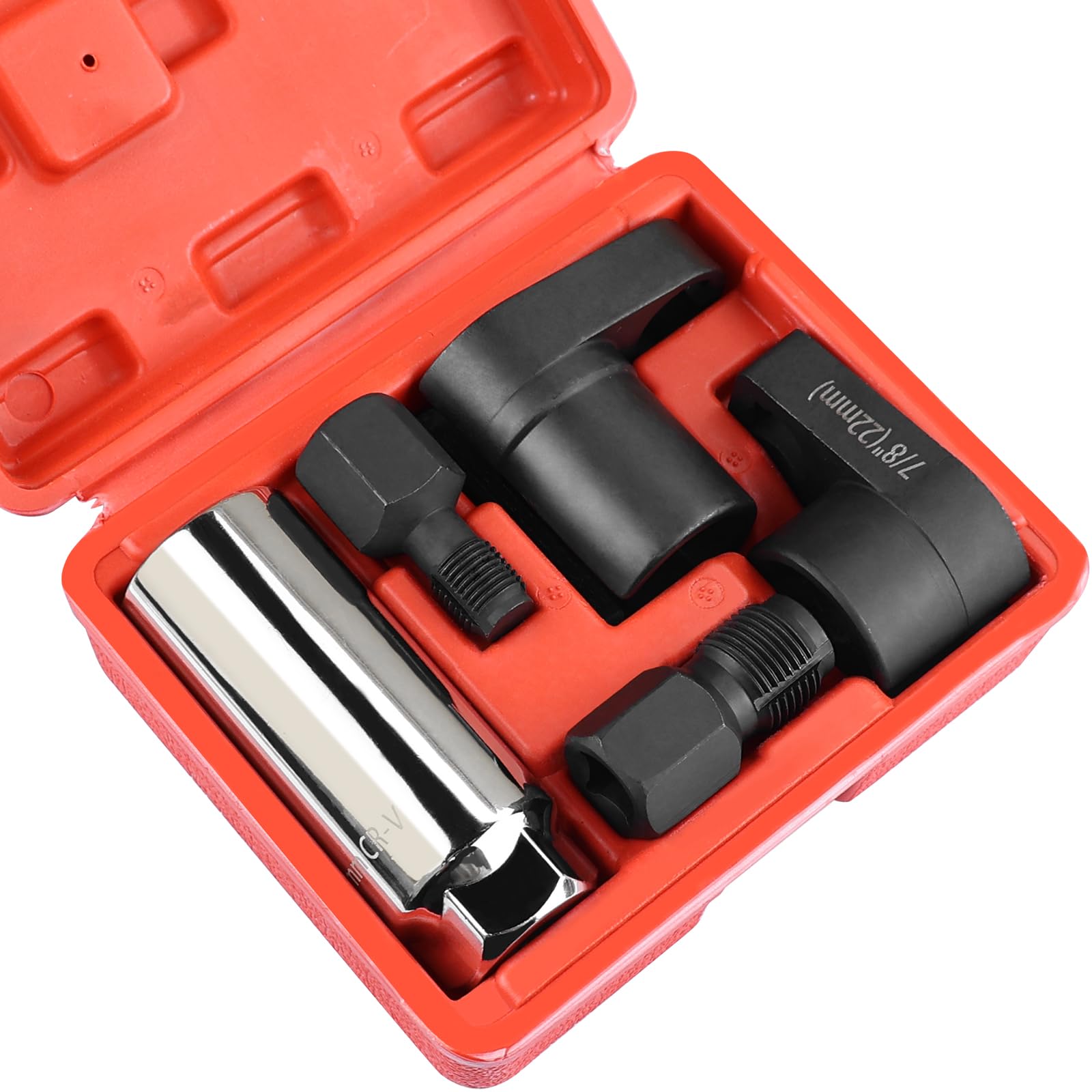
The Dobur 5-piece set differentiates itself from other mid-range kits by using chrome molybdenum carbon steel for the main socket body — a material grade that offers higher torsional resistance than standard chrome vanadium steel, meaning the broach is less likely to spread when you reef on a seized sensor. The set includes a 7/8-inch (22mm) 6-point socket with a 1/2-inch drive, plus both 3/8-inch and 1/2-inch drive offset wrenches, and the M12/M18 thread chasers. The 1/2-inch drive socket is the heavy lifter here, capable of handling breaker-bar torque directly without needing a step-up adapter that could twist under load.
The included storage case with a custom-cut foam insert keeps the six pieces organized and protected from garage dirt, which is a meaningful upgrade over the poly-bag packaging that budget sets ship in. The rust-preventative oil coating on all metal parts adds an extra layer of protection for mechanics who work in humid environments, though you should wipe the surfaces before first use to avoid transferring oil to the sensor threads. Customer reports consistently rate the set as well-made and accurate, with one user noting that it saved significant time on sensor removal and that the included sizes offered enough versatility for multiple vehicles.
The trade-off is that the Dobur set sits at a higher entry point than the DASBET or Zlirfy 5-piece options, and for a homeowner who only plans to change one sensor every five years, the extra cost of Cr-Mo steel may not deliver a tangible advantage over Cr-V. But for a professional or an experienced DIYer who wants a case-ready kit that will survive repeated use across multiple vehicle platforms, the Dobur brings the highest construction quality in the 5-piece format.
Why it’s great
- Chrome molybdenum steel socket resists spreading under high torque better than Cr-V alternatives.
- Storage case with foam insert keeps tools organized and protected.
- Includes both 1/2-inch and 3/8-inch offset wrenches for varied access angles.
Good to know
- Rust-preventative oil coating leaves a residue that should be wiped before first use.
- Higher price than entry-level 5-piece sets with similar component counts.
5. Zlirfy 5PCS Oxygen Sensor Removers Set

The Zlirfy 5-piece set mirrors the Vector Tools configuration closely — a 3/8-inch drive ultra-deep broach socket (80mm long), a low-profile crowfoot socket (30mm), a 1/2-inch offset crowfoot wrench (50mm), and the M12/M18 thread chasers — but upgrades the material to high-strength chromium vanadium steel with a phosphating and electroplating finish. The extra surface treatment gives the sockets better rust resistance than bare alloy steel, which matters for a tool that will inevitably contact moisture from exhaust condensation. The 80mm ultra-deep socket is the defining feature here, providing enough reach to clear double-layer heat shields that shorter 50mm sockets cannot pass.
Customer reviews consistently rate the set as high quality for the price tier, with one user noting that it was better than loaner tools from auto parts stores and that the fitment on standard sensors was precise. The side cut design — 8mm wide — allows the wiring connector to pass through without unhooking, which is the primary functional requirement for any O2 socket. The storage case is a foam-lined box that keeps each piece separated, which reduces the chance of the offset wrenches rattling against the socket broach surfaces during storage.
Like the Vector Tools set, some users mention a very slight looseness between the 22mm socket and certain sensor hexes — a tolerance issue that is common in this price segment and rarely leads to stripping if the tool is properly squared before turning. If you are working on a single sensor replacement and want the deepest socket in the budget category, the Zlirfy 5-piece delivers the reach you need without the cost of the premium tier.
Why it’s great
- 80mm ultra-deep socket reaches sensors buried under heat shields.
- Phosphating and electroplating finish improves corrosion resistance over bare alloy steel.
- Foam-lined storage case prevents tool-on-tool damage.
Good to know
- Slight socket-to-hex looseness reported on some sensor fittings — ensure square engagement.
- Thread chasers may struggle with heavily deformed threads; better for light cleaning.
6. Vector Tools 5Pc Set Oxygen Sensor Socket and Thread Chaser Set
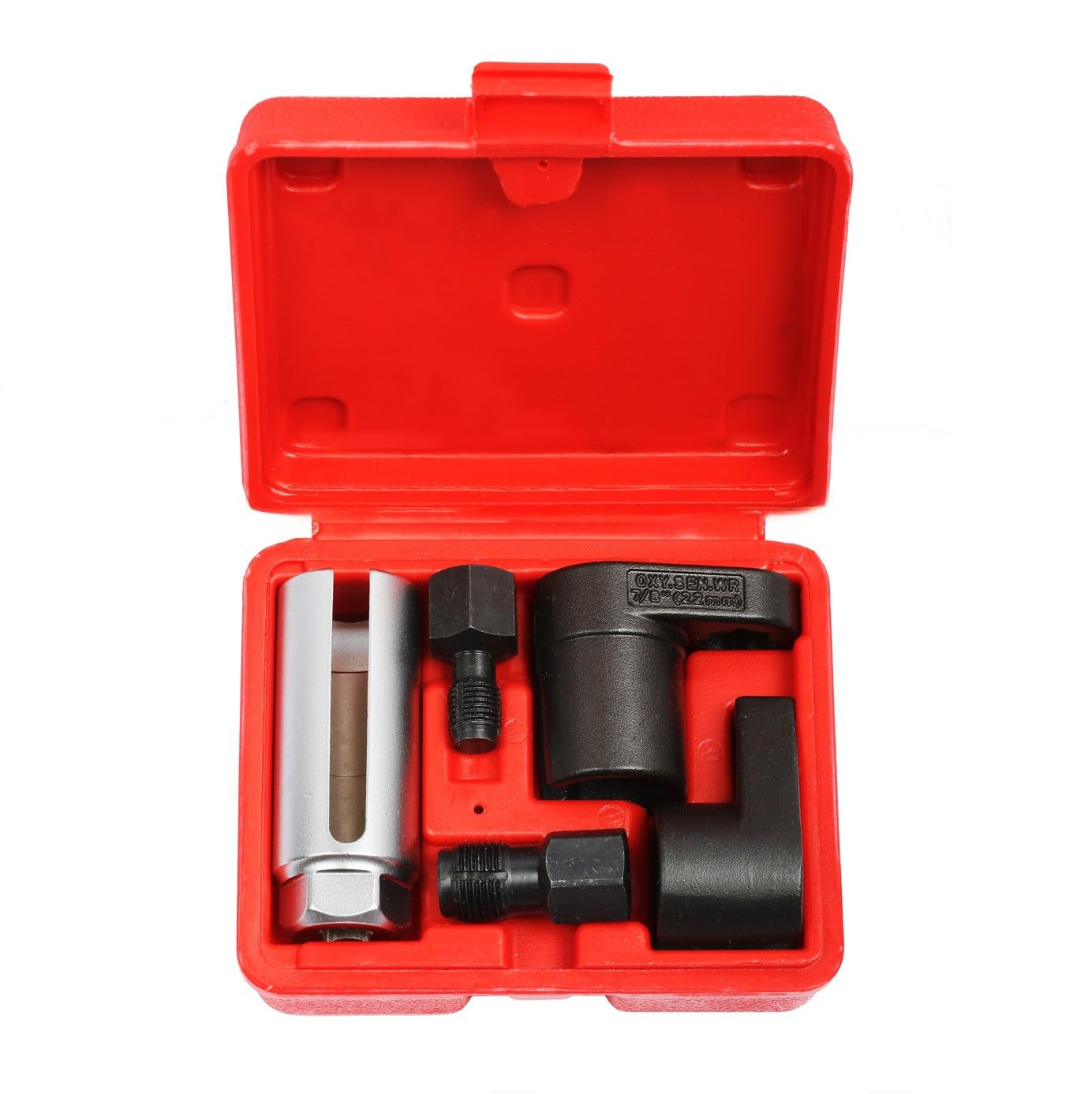
The Vector Tools 5-piece set is the entry point for anyone who needs a full sensor socket kit without paying extra for premium steel or a storage case. It includes the same core configuration as higher-priced sets — a 3/8-inch drive extra deep broach socket (80mm long), a 3/8-inch low-profile crowfoot socket (30mm), a 1/2-inch offset crowfoot wrench (50mm), and both M12 and M18 thread chasers — making it a complete solution for a first-time O2 sensor replacement. The alloy steel construction is serviceable for occasional use, and the 6-point broach on every socket ensures full hex contact to minimize the risk of rounding the sensor nut.
Customer feedback across multiple reviews confirms that the 80mm deep socket works effectively for removing and installing O2 sensors, and the thread chaser is correctly sized for cleaning manifold threads after old gasket material and carbon have been cleared. One user specifically noted that the offset socket allowed proper torquing of both sensors during reinstallation, which is a meaningful validation of the offset geometry. The set has been on the market since mid-2017 with a consistent stream of positive ratings, suggesting that the manufacturing tolerance has remained stable over several production runs.
The primary limitation is that the alloy steel is not as hard as Cr-V or Cr-Mo, so the socket broach is more likely to wear or spread if you repeatedly hit it with an impact gun or breaker bar on severely corroded sensors. The set also ships without a storage case, so you will need to store the five pieces separately or risk losing the small thread chasers. For a homeowner changing a single sensor on a 10-year-old sedan, the Vector Tools set delivers everything needed at the lowest cost of any 5-piece kit in this guide.
Why it’s great
- Lowest cost 5-piece set with both deep socket and thread chasers included.
- 80mm deep socket reaches sensors inside heat shields.
- Consistent positive ratings over several years of production.
Good to know
- Alloy steel is softer than Cr-V or Cr-Mo — may wear under repeated high-torque use.
- No storage case included; tools ship in a poly bag.
7. Powerbuilt 1/2-Inch Drive x 7/8-Inch Oxygen Sensor Socket
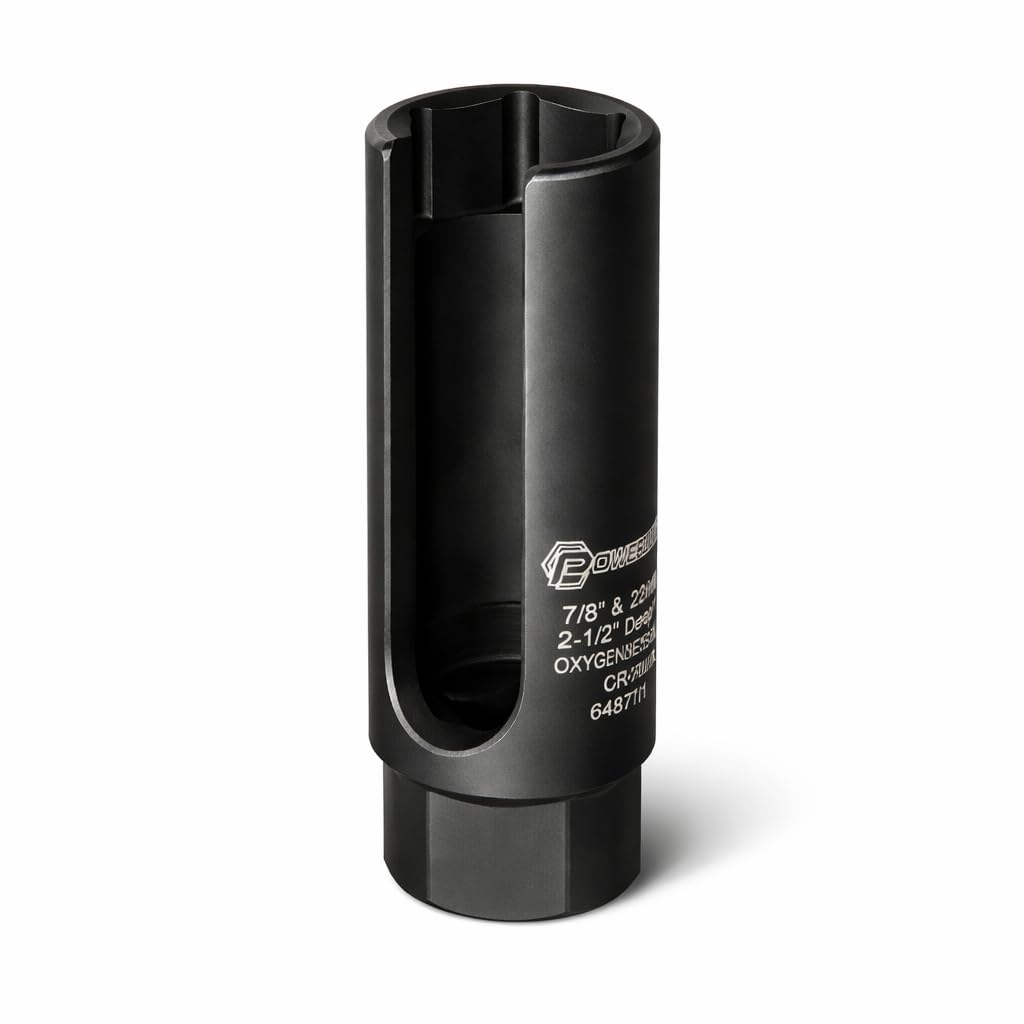
The Powerbuilt 648442 is a standalone 1/2-inch drive socket — no set, no thread chasers, no offset wrenches — just a single 22mm 6-point broach with a side wire gate and a 2.5-inch body depth. The simple design keeps the price low and the weight at 0.5 pounds, making it the most portable option if you only need to remove one specific sensor and already own a ratchet. The chrome vanadium steel construction with heat treatment and phosphating resists corrosion better than the alloy steel used in the Vector Tools set, and the slotted square drive design on the ratchet end improves grip during high-torque application.
The main functional advantage is the 1/2-inch drive, which mates directly to a standard breaker bar without needing a step-down adapter that could introduce slop. The 2.5-inch depth fits average-depth sensor mounting locations. Customer reports are mixed: one user successfully changed a downstream sensor on a 2006 Honda Accord, noting that the socket worked well after the sensor was broken loose with a wrench. However, another user reported that the 7/8-inch socket was loose on their specific sensor and slipped, causing the hex to begin rounding before they switched to a box wrench. The discrepancy likely comes from manufacturing tolerance variation across different production batches — some sockets measure slightly above 22mm, which on a sensor that is already at the low end of the 22mm tolerance range results in a loose fit.
If you buy this socket, test fit it on the sensor before applying full torque. If it feels loose, exchange it for another unit or use a 7/8-inch box wrench as a backup. For the price, it is a serviceable tool for a single-use job, but the lack of thread chasers, offset wrenches, and depth options limits its versatility compared to the 5-piece sets at a similar cost.
Why it’s great
- Single socket design is lightweight and portable at 0.5 pounds.
- 1/2-inch drive connects directly to a breaker bar without adapters.
- Chrome vanadium steel with phosphating resists corrosion effectively.
Good to know
- Reported fitment variance — some sockets are loose on the sensor hex and may slip.
- No thread chasers, offset wrenches, or storage case included.
FAQ
Can I use a standard 22mm deep socket instead of an O2 sensor socket?
Why does my O2 sensor socket feel loose on the sensor hex?
Should I use penetrating oil before removing a stuck O2 sensor?
Can I use an impact gun with an O2 sensor socket?
Final Thoughts: The Verdict
For most users, the best o2 sensor socket winner is the Zlirfy 7PCS Oxygen Sensor Socket because it covers the standard 22mm sensor along with 27mm and 29mm sending units, uses Cr-Mo steel for the offset wrenches, and fits four different vehicles without any socket spreading. If you want a flex-head design for impossible-to-reach downstream sensors, grab the ABN 22mm Flex Head Wrench, the best single-tool solution for tight exhaust spaces. And for a budget-friendly set that still includes thread chasers and three socket profiles, the DASBET 5pcs O2 Sensor Set delivers everything necessary for a quick sensor swap without spending extra on features you will not use.