
That persistent check engine light killing your fuel economy and causing rough idle is almost certainly a failing oxygen sensor. Every second with a degraded O2 sensor means your engine burns more fuel than it needs, and every failed test cycle pushes you closer to an emissions test failure you can’t ignore.
I’m Min — the co-founder and writer behind Gadgets Feed. I specialize in analyzing the technical specifications and real-world performance data of automotive sensors, comparing ceramic element types, heater response times, and output voltage accuracy to separate OEM-grade replacements from parts that throw false codes.
After comparing signal accuracy, wiring harness quality, and direct-fit compatibility across the top contenders, I’ve identified the seven sensors that actually resolve air-fuel ratio issues without triggering secondary faults. This guide covers every detail you need when selecting the best o2 sensors for your specific vehicle.
How To Choose The Best O2 Sensors
An oxygen sensor is the only component that tells your ECU how to trim the air-fuel mixture in real time. A slow or inaccurate sensor wastes fuel and risks catalytic converter damage. Focus on three factors: sensor type matching your ECU’s reference voltage, heater activation speed, and material resistance to thermal shock.
Zirconia Element and Response Time
Nearly all consumer O2 sensors use a zirconia element that generates voltage based on the difference between exhaust oxygen and atmospheric oxygen. A refined zirconia element switches between rich and lean states faster — typically under 100 milliseconds for a quality planar sensor. Sensors with slower response times keep the ECU in closed-loop but with delayed correction, causing fuel trim oscillation and reduced MPG over time.
Heater Circuit and Operating Temperature
An O2 sensor must reach roughly 600°F before it starts generating a reliable signal. A fast-acting heater — measured in wattage and ceramic heating element design — brings the sensor to operating temperature within 10 to 20 seconds after cold start. Sensors with weak heaters delay closed-loop engagement, which means your engine runs in open-loop enriched mode longer, burning extra fuel every time you start the car.
Housing Material and Thread Coating
The sensor body sits directly in the exhaust stream where temperatures fluctuate between ambient and over 1,000°F. Double laser-welded stainless steel housings resist corrosion from condensation and sulfur compounds. Pre-applied anti-seize compound on threads prevents galling during installation and makes future replacement possible without snapping the sensor in the manifold.
Quick Comparison
On smaller screens, swipe sideways to see the full table.
| Model | Category | Best For | Key Spec | Amazon |
|---|---|---|---|---|
| Bosch 17321 | Premium | Late-model Ford & Lincoln | Planar ceramic, 5.0V range | Amazon |
| GM Genuine 213-4537 | Premium | GM vehicle specific fit | ±1.5% accuracy, digital output | Amazon |
| TRQ OSA61776 | Premium | Hyundai & Kia 4-cyl | Wideband planar, 2.4L/2.0L | Amazon |
| Bosch 15284 | Mid-Range | GM 5.3L LS trucks | Fast heater, 4.5-5.5V range | Amazon |
| Denso 234-4012 | Mid-Range | Chevy S10/Blazer 4.3L | Refined zirconia, thread-in | Amazon |
| Walker 350-34039 | Value | Cross-platform direct fit | Pt electrode, 4-wire | Amazon |
| ACAUTO 15717 | Value | Ford Fusion & Explorer | 310S stainless, ±1% accuracy | Amazon |
In‑Depth Reviews
1. Bosch 17321 Premium Original Equipment Oxygen Sensor
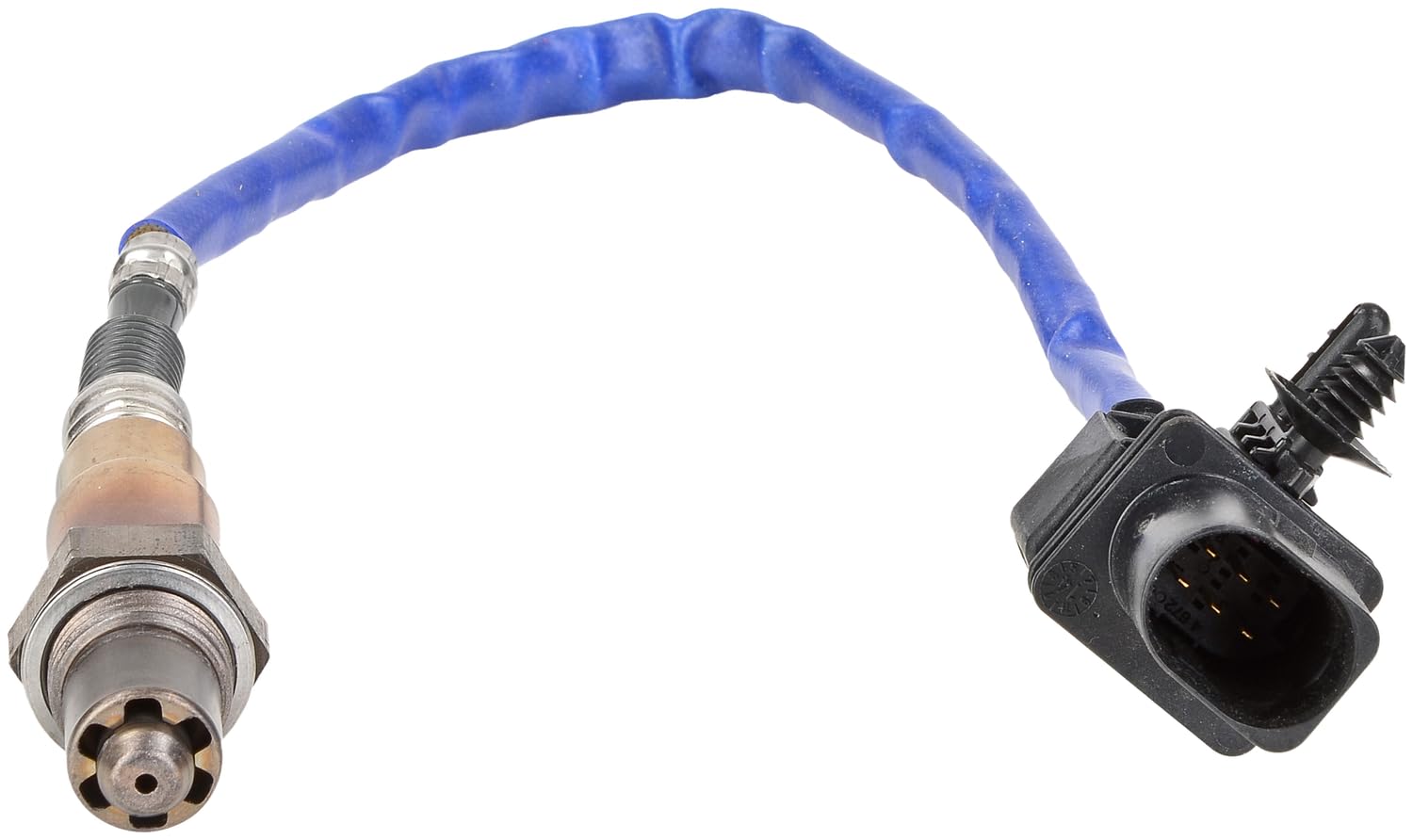
The Bosch 17321 uses a planar ceramic element that reaches operating temperature significantly faster than traditional thimble-style sensors, which means your Ford F-150 or Explorer enters closed-loop fuel control within seconds of a cold start. The double laser-welded stainless steel body is fully submersible and resists corrosion from exhaust condensation, a common failure point on sensors exposed to short-trip driving cycles.
This sensor covers a massive vehicle range spanning 2011-2019 Ford and Lincoln models, including the Expedition, Transit, and Navigator. The 5.0V analog output integrates seamlessly with the factory ECU, and the pre-coated anti-seize threads eliminate the risk of galling in aluminum cylinder heads during installation. Owners report zero check engine light recurrence after replacement when paired with the correct upstream or downstream position.
For buyers prioritizing long-term reliability over upfront savings, the Bosch 17321 delivers a direct-fit OE equivalent that matches the original sensor’s switching frequency. It is not the cheapest option, but its rigid quality testing and 100 percent functional check at the factory make it the most dependable sensor for late-model Ford platforms.
Why it’s great
- Planar element heats in seconds for faster closed-loop engagement
- Laser-welded body resists exhaust gas penetration
- OE-grade connector matches factory harness length
Good to know
- Premium price tier compared to aftermarket alternatives
- Not compatible with wideband-only ECUs
2. GM Genuine Parts 213-4537 Heated Oxygen Sensor
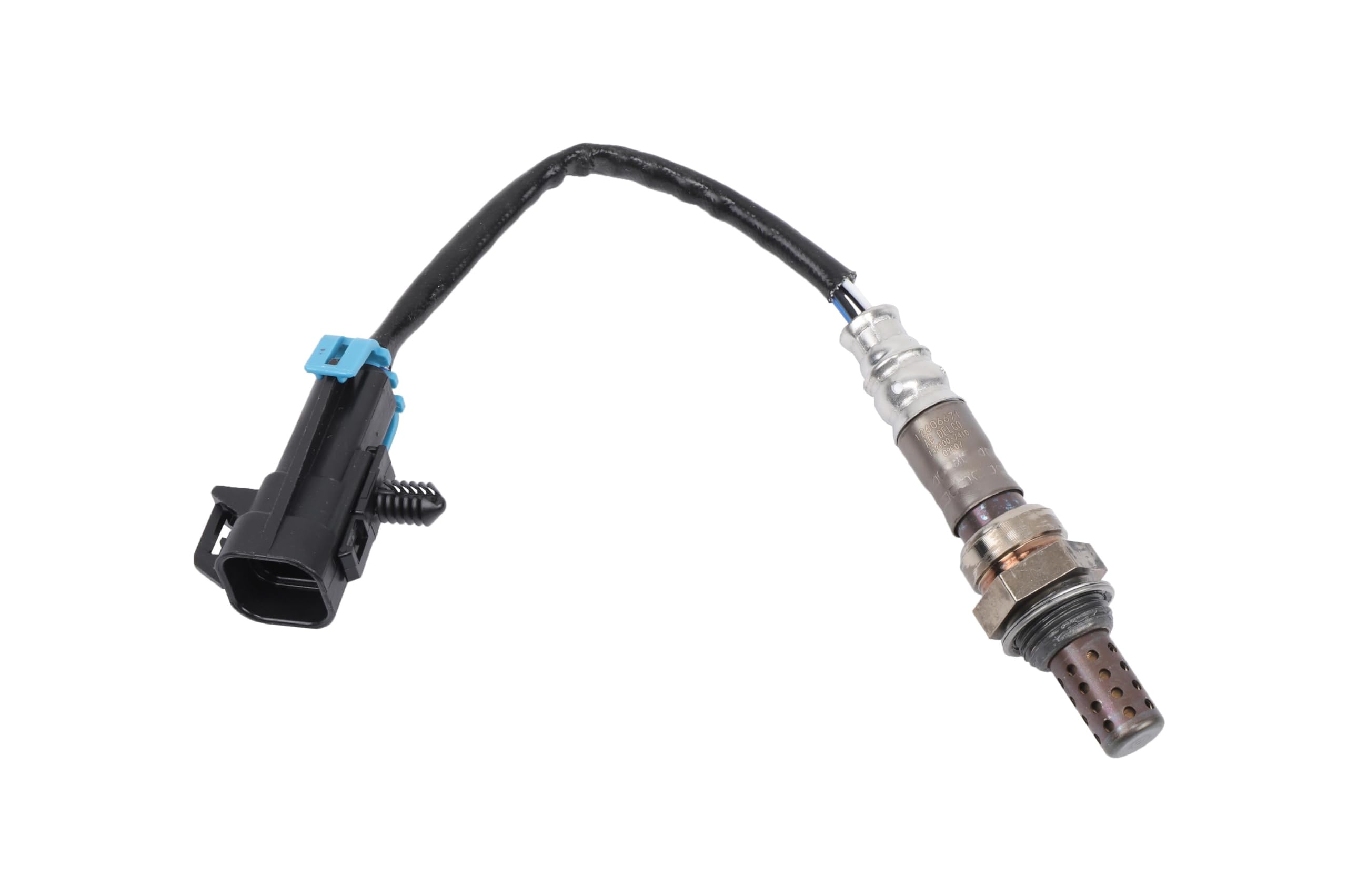
The GM Genuine 213-4537 is manufactured to the exact GM OE specification, which matters most for owners of Chevrolet, GMC, and Cadillac vehicles where aftermarket sensors sometimes trigger false lean or rich codes. The digital output provides a clean signal transition at the stoichiometric point, reducing the oscillation that older analog sensors exhibit as they degrade.
At just 0.22 pounds with a flange mount design, this sensor fits the tight exhaust tunnel clearances of GMT900 trucks and SUVs. The oxygen content detection range spans 0 to 20.9 percent, and the ±1.5 percent measurement accuracy ensures the ECU receives reliable data even under varying load conditions. Installers consistently report exact connector match and harness length identical to the factory unit.
Multiple owner accounts note that replacing a never-changed original sensor with the GM Genuine part immediately cleared stored codes and restored fuel trim values to factory spec. The only trade-off is the narrower vehicle application — this sensor is GM-specific and will not work on Ford or import platforms without adapter modifications.
Why it’s great
- Factory-matched digital output prevents false codes
- Identical connector, flange, and wire routing
- Reliable performance on 5.3L and 6.2L GM engines
Good to know
- Only compatible with GM vehicles
- No pre-applied anti-seize on threads
3. TRQ Upstream Oxygen Sensor OSA61776

The TRQ OSA61776 is a wideband planar oxygen sensor purpose-built for Hyundai Sonata, Kia Optima, and Kia Sportage 4-cylinder engines from 2011 to 2020. Unlike narrow-band sensors that only indicate rich or lean, this wideband unit provides a precise linear air-fuel ratio signal across the full operating range, which is essential for the direct-injection ECUs used in Theta and Gamma engine families.
Weighing 0.32 kilograms with a stainless steel body and flange mount, the sensor includes pre-assembled OE-style connectors that clip directly into the factory harness without splicing. The reference number cross-reference includes 39210-2G720 and 234-5029, making it easy to verify fitment before purchase. TRQ also backs the unit with a large catalog of DIY installation videos, a helpful resource for first-time O2 sensor replacers.
Some users have reported early failure within two months of installation, though the majority experience immediate code clearing and normal fuel trim operation. One owner noted a connector shape mismatch on a 2009 Sonata requiring a harness swap. For the specific 2013-2019 Sonata 2.4L and 2014-2020 Optima 2.4L applications, this sensor provides a cost-effective wideband replacement without stepping up to dealer pricing.
Why it’s great
- Wideband output for direct-injection ECUs
- Pre-assembled connector saves installation time
- Extensive vehicle cross-reference coverage
Good to know
- Some units reported early durability concerns
- Connector type varies by model year
4. Bosch 15284 Premium OE Fitment Oxygen Sensor

The Bosch 15284 is the direct-fit oxygen sensor for GM 4.8L, 5.3L, and 6.0L V8 engines found in the Chevrolet Silverado, Tahoe, Suburban, and GMC Yukon from the early 2000s. Bosch invented the automotive oxygen sensor in the late 1960s, and this sensor benefits from that manufacturing legacy with a 100 percent factory functional test that verifies signal output across the full 4.5 to 5.5 volt range.
The fast-acting heater brings the planar element to operating temperature in seconds, which is critical for the LS-based trucks that often suffer from extended open-loop fueling when a sensor ages. The stainless steel body uses double laser-welded seams to prevent exhaust gas intrusion, a common failure on sensors exposed to road salt and moisture. Threads come pre-coated with anti-seize compound, eliminating the need for copper-based thread lubricant during installation.
Customer reports on 2003-2005 Silverado and Tahoe 5.3L applications confirm this sensor immediately improved fuel economy and cleared check engine codes for bank-specific sensor faults. One owner noted that the PCM may show a slight switching rate preference difference compared to the factory Denso unit, but the Bosch 15284 remains the most widely recommended replacement for LS-based GM trucks in this era.
Why it’s great
- 100 percent factory tested for signal accuracy
- Double laser-welded body for long life
- Anti-seize pre-applied on threads
Good to know
- Some LS PCMs prefer Denso switching rate
- Not compatible with downstream-only applications in all vehicles
5. Denso 234-4012 Oxygen Sensor

The Denso 234-4012 is the original equipment oxygen sensor for a broad range of GM, Acura, Isuzu, and Oldsmobile vehicles, including the Chevrolet Blazer S10 with the 4.3L Vortec engine and the 1997-2002 Corvette. Denso uses a refined zirconia element that improves sensor response time compared to earlier generations, reducing the delay between exhaust oxygen change and voltage output shift. The PTFE filter blocks oil-based contaminants that can coat the element and cause sluggish readings over time.
This is a 4-wire thimble-type sensor with a 15.35-inch wiring harness and thread-in mounting. The corrosion-resistant stainless steel construction withstands the thermal cycling of V8 and V6 exhaust manifolds. Owners of 1998-2005 Chevy Blazers and S10 trucks report that replacing all three sensors with the Denso unit resolved rough idle, high fuel consumption, and daily engine light issues. One mechanic specifically noted that Denso is the manufacturer-suggested brand for these applications, and that Bosch alternatives had previously caused catalytic converter failure on the same vehicle.
The sensor body is compact at 5.75 by 2.19 by 1.88 inches, fitting easily into the cramped exhaust tunnel of smaller trucks. Graphite anti-seize is pre-applied, though copper-based compound is preferred for extreme heat environments. This is the go-to sensor when you want the exact factory spec without dealership markup.
Why it’s great
- Refined zirconia for faster switching response
- PTFE filter blocks oil contamination
- OEM specification for GM Vortec engines
Good to know
- Graphite anti-seize may not be ideal for extreme heat
- Thimble design heats slower than planar types
6. Walker Products 350-34039 Oxygen Sensor

The Walker Products 350-34039 uses a platinum electrode layer coated onto a ceramic substrate, providing accurate voltage output across the stoichiometric window. A protective coating on the electrode surface prevents erosion from combustion residue and exhaust particulates, which extends the sensor’s effective life in engines that burn oil or run rich mixtures. This is a 4-wire direct-fit sensor that plugs into the factory harness without modification.
At just 0.24 pounds with flange mount design, this sensor fits a wide variety of domestic and import applications. Walker includes a single unit per package, and the Amazon confirmed-fit system should be used to verify exact compatibility. Customer reports on 2013 Jeep Wrangler and cross-platform GM applications confirm the sensor cleared codes and restored normal fuel trims with installation times averaging 30 minutes for all four sensors.
The trade-off is that Walker is a third-tier OEM supplier rather than the original equipment manufacturer for most vehicles. While the platinum electrode and protective coating add durability, the sensor body lacks the double laser-welded seam found on Bosch units. For budget-conscious buyers who need a reliable replacement for a single failed sensor, this Walker unit delivers functional performance at a significantly lower investment.
Why it’s great
- Platinum electrode for accurate lean-rich detection
- Protective coating resists residue buildup
- Low cost compared to OE branded sensors
Good to know
- Not OE-grade construction quality
- Verify fitment via Amazon tool before purchase
7. ACAUTO 15717 Oxygen Sensor 2-Pack

The ACAUTO 15717 2-pack offers two downstream oxygen sensors for vehicles in the Ford, Lincoln, Mazda, and Mercury families, including the Fusion, Explorer, Mustang, and Escape. Each sensor is built with 310S stainless steel, which provides superior high-temperature strength compared to standard 304 stainless in exhaust environments. The ±1 percent measurement accuracy supports precise air-fuel monitoring across the sensor’s full operating range.
The direct-fit design includes pre-coated anti-seize threads and OE-style connectors that match the factory harness without splicing. The 2-pack format covers both downstream positions for V6 and inline-4 platforms, reducing the per-sensor cost compared to buying singles from auto parts stores. One owner confirmed these fit a 2010 Ford Fusion 3.0L and required only ramps and a socket to install, with the check engine light clearing immediately.
The main risk with ACAUTO sensors is inconsistent long-term durability across different vehicle platforms. While the 310S stainless body and platinum materials suggest longevity, a small number of users reported failure within two months. For buyers who need an immediate fix for a downstream sensor code on a compatible Ford or Mazda vehicle, this 2-pack provides the fastest path to clearing that code at the lowest total cost.
Why it’s great
- 2-pack format covers both downstream positions
- 310S stainless for high-temperature resistance
- Low cost per sensor compared to OE singles
Good to know
- Long-term durability varies across applications
- Confirm upstream vs downstream position before ordering
FAQ
Can I drive with a faulty oxygen sensor without damaging the engine?
How do I know if I need an upstream or downstream oxygen sensor?
Why does my new O2 sensor still show a check engine light?
Final Thoughts: The Verdict
For most users, the best o2 sensors winner is the Bosch 15284 because it offers factory-tested accuracy and direct-fit convenience for the massive GM LS truck platform at a reasonable investment. If you want OEM-grade exactness for a GM vehicle, grab the GM Genuine 213-4537. And for wideband replacement on modern Hyundai and Kia 4-cylinder engines, nothing beats the TRQ OSA61776.