
Our readers keep the lights on and my morning glass full of iced black tea. As an Amazon Associate, I earn from qualifying purchases.
Specs are compiled from manufacturer listings and verified buyer reviews and can change over time — please confirm the key details on the product page before buying.
A PoE injector solves a very specific headache: you have a great non-PoE switch or router, but you need to power a security camera or Wi-Fi access point that sits far from any outlet. Instead of buying a whole new PoE switch, a tiny injector adds power to your existing Ethernet cable so data and electricity travel together to the device. The catch is picking one that actually delivers enough wattage and full gigabit speed — plenty of older units cap out at 100Mbps, silently strangling your connection.
I’m Min — the founder and writer behind Gadgets Feed. This guide is built by comparing the manufacturers’ published specifications and the patterns across verified customer reviews, so you get each pick’s real strengths and trade-offs instead of marketing spin.
Whether you are powering a single access point or a fleet of cameras, this breakdown of the best poe injector adapter options focuses on wattage, speed, and reliability that actually hold up over years of service.
Our Picks at a Glance


How To Choose The Best POE Injector Adapter
Every injector does the same basic job, but the differences that matter are wattage, speed, and build quality. Match these three to your device and you will never think about the injector again; get one wrong and you will be troubleshooting dropped connections or slow transfers for months.
Check the Wattage First
Your access point or camera has a power requirement printed on it. Basic devices need 15.4W (the 802.3af standard), while hungrier Wi-Fi 6 access points and motorized cameras need 30W (the 802.3at standard, also called PoE+). A 30W injector will happily power a 15.4W device, but a 15.4W injector cannot power a 30W device. When in doubt, buy the 30W version so you are covered either way.
Gigabit Ports Are Non-Negotiable
If your internet plan is faster than 100Mbps, a 10/100 injector becomes the weakest link in your whole network. A gigabit injector (10/100/1000Mbps) lets your full connection speed pass straight through to the camera or access point. This matters most if you pay for 500Mbps or gigabit internet and expect those speeds at the far end of the cable.
Look for Auto-Sensing and Certifications
Auto-sensing technology means the injector reads the device’s request and delivers the correct wattage automatically — no dip switches or guesswork. Certifications like UL and CE tell you the power supply has been tested for electrical safety. A wall-mountable case is a quiet convenience that keeps your install tidy, but it is not essential to function.
Quick Comparison
| Model | Best For | Max Power | Port Speed | Compliance | Amazon |
|---|---|---|---|---|---|
| Ubiquiti POE-48-24W-G★ Best Overall | Ubiquiti UniFi access points | 24W | Gigabit | 802.3af/at | Amazon |
| ThePoEstore Gigabit PoE+Full Speed Pick | Full speed on fast internet plans | 30W | Gigabit | 802.3af/at | Amazon |
| TP-Link Omada PoE160S | Cameras and APs on long cable runs | 30W | Gigabit | 802.3af/at | Amazon |
| Cudy POE200 | Budget 30W power with surge protection | 30W | Gigabit | 802.3af/at | Amazon |
| Ubiquiti U-PoE+ | U6 and U7 series UniFi APs | 30W | Gigabit | 802.3at | Amazon |
| TP-Link TL-PI30G | TP-Link APs needing 30W | 30W | Gigabit | 802.3af/at | Amazon |
| TRENDnet TPE-113GI | VOIP phones and basic IP cameras | 15.4W | Gigabit | 802.3af | Amazon |
In‑Depth Reviews
1. Ubiquiti Networks PoE 48V 0.5A GigEthernet (POE-48-24W-G)
Our pick — over 4.5★ from 500+ verified ratings; the strongest balance of quality and price.
The Ubiquiti injector that the pros quietly rely on for years of trouble-free access point power.
If you run UniFi gear, this 48V injector is the piece of mind that lets a single access point get power without a PoE switch sitting nearby. It delivers 24W over a gigabit connection, which covers the older 802.3af devices as well as the 802.3at standard that newer hardware expects. The whole unit weighs just 5.6 ounces, so it disappears behind a desk or mounts flat on a wall with the included plate.
What wins people over is sheer dependability. It is not just for Ubiquiti gear either — the injector happily powers other vendors’ access points, phones, and switches that ask for standard PoE wattage. That versatility makes it the safest single purchase for anyone mixing brands.
Before you buy, check the wattage your device needs. This adapter delivers 24W, so it won’t fully power a Wi-Fi 6 access point that demands the full 30W of PoE+ (Power over Ethernet Plus, which sends more power over the same cable). For classic UniFi access points, it’s exactly right—it uses the 48V standard that replaced Ubiquiti’s old proprietary 24V system, so if you’re upgrading an older AP, this adapter matches your newer gear.
What Owners Lean On
- Rock-solid reliability across multiple access points and vendors
- Tiny 5.6-ounce body with a wall-mount plate included
- Wide compatibility beyond just Ubiquiti hardware
Who Should Keep Looking
- 24W output falls short of the full 30W some Wi-Fi 6 APs request
- Not the unit to grab if you need PoE+ max power
the balance: You get clean 48V power for Ubiquiti access points and any device that follows the 802.3af standard (the original PoE spec that supplies up to 15.4W per port), with a track record of reliability that installers have trusted for years.
The Fine Print: Hungrier access points needing the full 30W should look at the PoE+ units further down this list.
2. Gigabit PoE+ Injector Powerline Network Adapter IEEE 802.3af/at
The cure for an old injector that quietly capped your fast internet at 100Mbps.
This ThePoEstore injector exists for one reason: to stop a slow injector from sabotaging a fast connection. Buyers on a 500Mbps plan found their speed locked at 100Mbps by an aging PoE unit, and this adapter removed the limit instantly. It delivers up to 30W of PoE+ power (or 15.4W for older 802.3af devices) through a gigabit port that passes your full connection speed along the cable.
Auto-sensing technology reads what the connected device needs and supplies exactly that, so a low-power IP camera and a hungry access point both work without any configuration. The reach extends to 100 meters (328 feet) over a single Ethernet cable, and the unit meets UL certified standards for electrical safety. It even powered a Cisco 2802E access point that demanded true 802.3at PoE+ — proof it does not cut corners on the spec.
The honest trade-off shows up in the details. At 10.4 ounces, this is the heaviest injector here — noticeably more substantial than the 5.6-ounce Ubiquiti above. The power cord is stiff and heavy-duty, which makes a tidy compact installation a bit of a challenge.
Speed Fixer: If your internet plan outruns your current injector, this restores full gigabit throughput in seconds.
Watch The Bulk: The 10.4-ounce body and stiff cord demand a little more room behind your desk than slimmer rivals.
Reach for this if: You pay for fast internet and refuse to let an old 100Mbps injector throttle it.
Look elsewhere if: You need the smallest possible footprint or plan to leave it out in harsh weather for years.
3. TP-Link Omada PoE+ Injector, Up to 30W, Gigabit, UL Certified (POE160S)

A 30W Omada injector that powers cameras and access points across long attic runs without breaking a sweat.
When your camera or access point sits far from the switch, TP-Link’s Omada POE160S is the injector that solves the distance problem. It sends both power and data over a single cable up to 100 meters (328 feet), and buyers confirm it works in practice—one reviewer ran it over 100 feet from the first floor to an attic, powering both cameras and an access point. Its 30W output easily drives high-power Wi-Fi access points, so you won’t hit a ceiling with demanding gear.
Setup is genuinely plug-and-play. First-time users report having it running in under 30 seconds: router Ethernet into the data port, camera cable into the power port, done. The auto-detect feature reads each device and delivers up to 30W to PoE+ gear while staying backward compatible with 15.4W 802.3af devices. It also converts a non-PoE switch port to PoE, so you avoid replacing perfectly good networking equipment.
You get strong value here. Buyers report that other brands sell the exact same specifications at more than double the price, and this unit looks, feels, and works just as well. It comes with a wall-mounting kit including anchors, and the whole package weighs just 5.6 ounces, so it’s easy to mount anywhere. It works flawlessly with Fortinet, UniFi, and assorted camera gear, making it among the most vendor-neutral picks in this lineup—you won’t be locked into one brand’s ecosystem.
The Omada Value: Full 30W gigabit power with wall anchors included, at a price that undercuts premium rivals with identical specs.
Device Match: It shines with PoE access points and IP cameras; less ideal for exotic gear demanding non-standard power.
Best for the DIY Installer: Mount it on the wall, run one cable 100 meters, and power a camera or AP at the far end.
The Hesitation: If you only run Ubiquiti APs, the 24W Ubiquiti injector above pairs more naturally with that ecosystem.
4. Cudy 30W Gigabit PoE+ Injector, 802.3at/af, 100m Range, POE200
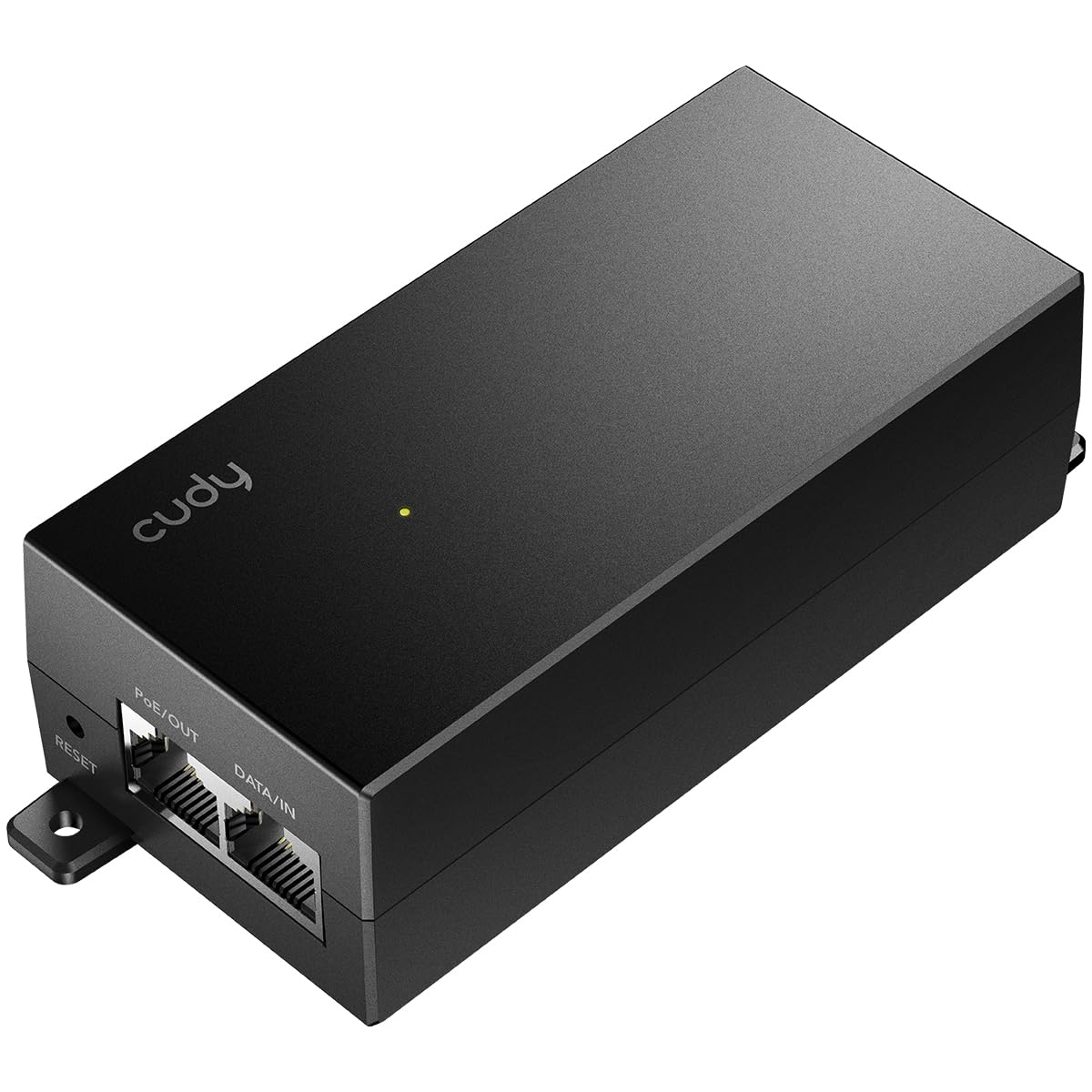
A budget 30W injector with real surge protection that keeps an outdoor camera fed for years.
Cudy’s POE200 packs a surprising amount of protection into a compact plastic case. It delivers up to 54V at 0.56A for a full 30W of PoE+ power, with 4kV surge and 6kV ESD protection guarding your connected camera or access point. The manufacturer rates the internal capacitors for a lifespan 1.6x longer than typical, supporting years of reliable operation.
Real-world use shows broad compatibility. Buyers have powered Cisco and Yealink IP phones, an Amcrest PTZ camera, and outdoor Wi-Fi extenders — all through a single gigabit port. One owner ran a PTZ camera over a 70-foot cable (60 feet of Cat-6 plus 10 feet of older Cat-5e) with flawless results. The AC input accepts 100-240V with a three-prong grounding plug, and a status light glows green for power and red when actively delivering power.
The compact case weighs 152.5 grams and measures 123x51x35mm, small enough for desktop or wall-mount installs. It is plug-and-play with zero configuration, and the included mounting kit handles the wall scenario. Some owners mention the lack of link or activity LEDs — you only get the power and delivery indicators — but for the price, that is a minor omission on an otherwise complete package.
Guarded Budget Pick: Surge and ESD protection plus long-life capacitors make this feel tougher than its price suggests.
Light on Bling: The sparse LED status is the only corner cut; power delivery itself is rock solid.
Reach for this if: You want 30W of PoE+ with genuine electrical protection without paying a premium.
skip it if: You rely on activity LEDs to troubleshoot your network — this unit keeps its indicators minimal.
5. UBIQUITI POE Injector, 802.3AT, 30W of PoE+ Power (U-PoE+)

The 30W Ubiquiti injector that fixed U6 and U7 access point power spikes for good.
This is the newer Ubiquiti injector built for the U6 and U7 generation of access points — U6-LR, U6-LITE, U6-PRO — that need the full 30W of 802.3at power. It solved a very specific problem for owners whose U6-LR access points kept dropping Wi-Fi because their switch was underpowered. With this injector in line, the wattage spikes that caused disconnects disappeared and connections went stable.
The performance payoff is real. Customers note their U6 Pro delivering download speeds in excess of 480 Mbps after adding this injector on a gigabit connection. It is plug-and-play with clean, stable PoE+ delivery, no dropouts, and no overheating — exactly what you want from a single-AP solution when a full PoE switch is overkill. The build feels solid, and status lights are clear enough to read at a glance.
Durability deserves an honest note. While many units perform flawlessly, some reviewers point out their injector did not last beyond six months, and compatibility feedback is mixed — exactly right for some setups while others hit issues. The 1-year warranty offers some cover. If you run a modern UniFi AP that demands 30W, this is the sanctioned fix; if you want maximum longevity assurance, the field-proven 24W Ubiquiti unit at the top of this list has a longer reliability track record.
U6/U7 Fix: Delivers the clean, stable 30W that modern UniFi APs need to run at full speed without drops.
The Reliability Question: Performance is excellent when it works, but durability feedback is mixed, so keep the warranty handy.
Best for the U6 Owner: If your access point suffers from switch underpowering, this injector is the direct, sanctioned cure.
Consider the Alternative: For a longer field-proven track record on classic UniFi APs, the POE-48-24W-G remains the safer bet.
6. TP-Link TL-PI30G, Gigabit PoE+ Injector, Non-PoE to PoE Adapter

A newer TP-Link 30W injector that just works, quietly, for half a year and counting.
TP-Link’s TL-PI30G is the straightforward pick for anyone running TP-Link access points that need real power. It feeds up to 30W to a PoE+ device while staying backward compatible with 15.4W 802.3af gear, all through a single gigabit Ethernet cable. Owners running TP-Link APs call 30 watts exactly right for the job, and the unit has been running perfectly for six straight months without a hiccup.
The auto-detect power delivery means you do not think about it — plug the router into the input port, the AP or camera into the output port, and it negotiates the wattage itself. It reaches up to 100 meters (328 feet), which suits IP cameras and access points spread across a large property. The UL certification adds a layer of confidence in the power supply’s electrical safety, and the white case works on a desktop or mounts to a wall.
The honest gripe here is physical size. Shoppers say this injector is actually bigger than a TP-Link 5-port PoE switch, which feels backwards for a single-port adapter. It weighs 0.47 kg, so it is not the compact unit the photos suggest. If footprint matters and you need every inch of space behind your desk, the slimmer options above will serve you better — but for pure function, this one delivers without drama.
Set-and-Forget TP-Link: Stable 30W delivery that has run flawlessly for months powering TP-Link APs.
Size Surprise: It is physically larger than a 5-port switch, so measure your space before committing.
Reach for this if: You run TP-Link APs and want an injector matched to their 30W appetite.
Hesitate if: Desktop space is tight — this unit is chunkier than its competition.
7. TRENDnet Gigabit Power Over Ethernet Injector, TPE-113GI
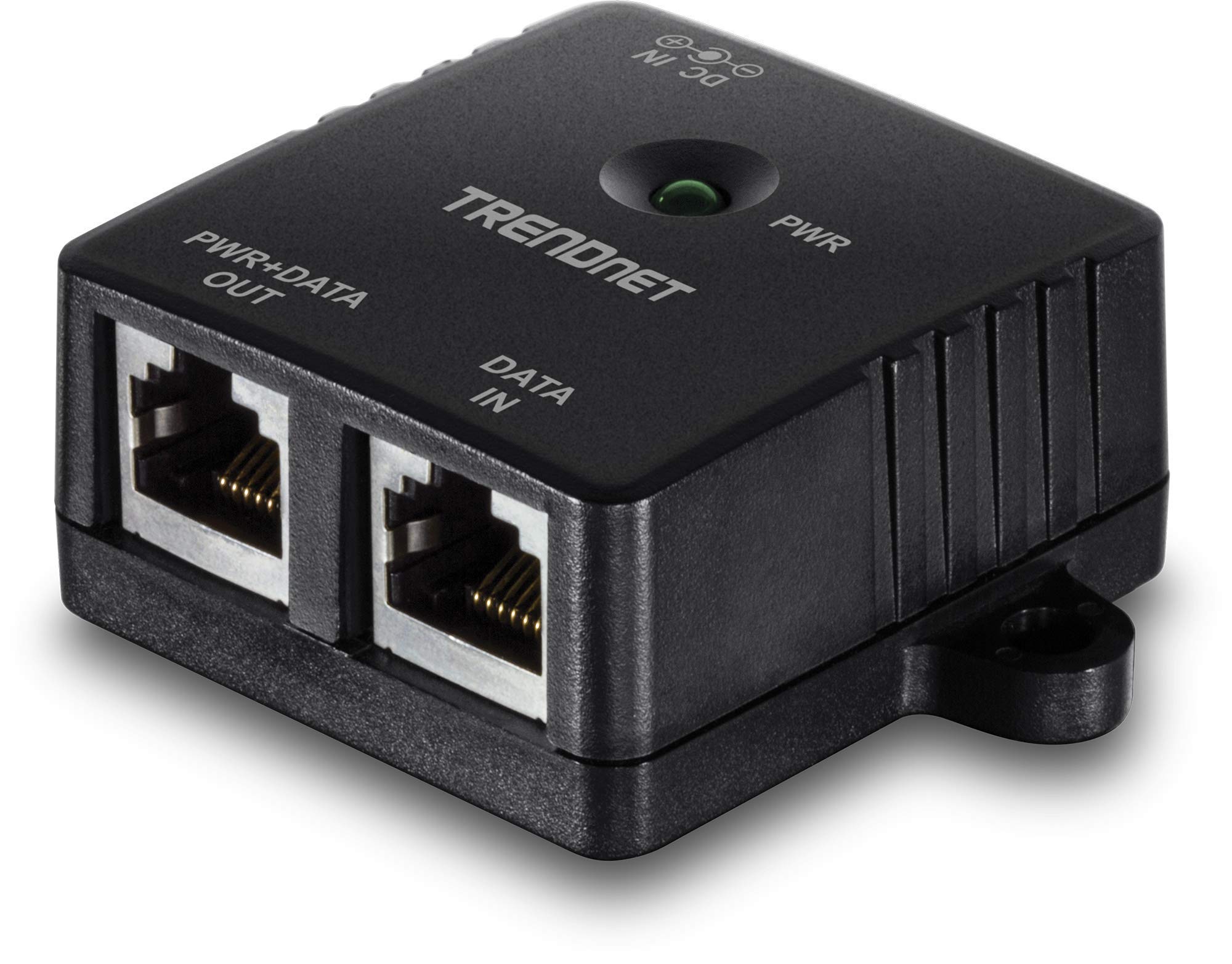
The lightweight 15.4W workhorse that has powered VOIP phones and cameras for over three years straight.
TRENDnet’s TPE-113GI is the budget-friendly injector for lighter-duty devices that do not need 30W. It supplies the standard 15.4W of 802.3af power, which is exactly what VOIP phones and most basic IP security cameras ask for. Buyers have run these single-port injectors for about three years with no issues at all, and one unit has powered access points for four years straight — a durability record that punches above its price.
Gigabit speeds set it apart from older 10/100 injectors. Even though it only feeds 15.4W, the data path runs at full gigabit, so you are not sacrificing speed to gain power. Auto-sensing delivers the correct wattage to each connected device, and the wall-mountable design with screw-down points keeps installs tidy. A green LED power indicator is a small touch owners actually appreciate — they find green easier on the eyes than blue.
Durability feedback is mixed across the full owner base, though the long-service stories are common. At just 45 grams, this is by far the lightest unit in this lineup — it disappears behind a desk or phone. The one limitation is clear: at 15.4W, it cannot power a modern Wi-Fi 6 access point that demands 30W. For VOIP handsets, basic cameras, and older APs, it is a proven, inexpensive choice.
The Lightweight Lifesaver: At 45 grams with three-plus years of service reported, this is the quiet overachiever for low-wattage gear.
Power Ceiling: 15.4W only — hungry Wi-Fi 6 APs will need one of the 30W units above.
Best for VOIP and Basic Cameras: If your device asks for standard 15.4W, this is a proven, wallet-friendly match.
Step Up If: You plan to power a modern 30W access point — grab the PoE+ units instead.
Understanding the Specs
802.3af vs 802.3at (PoE vs PoE+)
These are the two industry standards that define how much power an injector can send down an Ethernet cable. The 802.3af standard delivers up to 15.4W, which covers VOIP phones, basic IP cameras, and older access points. The 802.3at standard (often called PoE+) delivers up to 30W for hungrier gear like Wi-Fi 6 access points and motorized PTZ cameras. An 802.3at injector is backward compatible, so it safely powers 802.3af devices too — that is why 30W units are the safer default.
Gigabit Ports and Auto-Sensing
A gigabit (10/100/1000Mbps) port matters because it lets your full internet speed pass through the injector to the far device. Older 10/100 injectors cap throughput at 100Mbps even if you pay for 500Mbps or gigabit service. Auto-sensing technology means the injector reads the connected device’s power request and delivers the exact wattage needed — no switches, no guesswork, and no risk of over-powering a delicate camera.
Wattage and Distance Limits
Wattage determines what the injector can physically power. A 15.4W unit cannot run a 30W access point, but a 30W unit runs everything below it. Distance is a separate limit: PoE standards support runs up to 100 meters (328 feet) over a single Ethernet cable. Beyond that, you need a PoE extender or a different topology. Check your device’s power requirement in its spec sheet and buy an injector that meets or exceeds it.
Certifications and Build Quality
Look for certifications like UL (Underwriters Laboratories, a safety testing organization), CE (Conformité Européenne, marking compliance with EU safety standards), and FCC (Federal Communications Commission, covering electromagnetic interference)—these tell you the power supply has been independently tested for electrical safety and emissions. UL certification is the mark buyers trust most for AC-powered networking gear. To gauge build quality, check the power cord stiffness, case weight, and internal capacitors—higher-rated capacitors typically last longer, so your injector keeps working reliably. A heavier unit often means a beefier transformer inside, which can signal more sturdy power delivery for consistent performance.
FAQ
What is the difference between a PoE injector and a PoE switch?
Will a 30W PoE+ injector damage a device that only needs 15.4W?
Why is my internet speed capped at 100Mbps with my current injector?
How far can a PoE injector send power and data?
Can I use a Ubiquiti injector to power a non-Ubiquiti device?
Is a heavier PoE injector automatically better quality?
What does auto-sensing technology actually do?
How long do PoE injectors typically last?
Can I wall-mount my PoE injector?
Final Thoughts: The Verdict
If you want one dependable pick, the poe injector adapter winner is the Ubiquiti POE-48-24W-G because it pairs years of field-proven reliability with easy compatibility across both Ubiquiti and third-party gear. If you want full 30W power and your bottleneck is an old 100Mbps injector, grab the ThePoEstore Gigabit PoE+ to restore your full connection speed instantly. And for a budget-friendly 30W option with genuine surge protection, the Cudy POE200 is the one to reach for. The ThePoEstore model, with 920 ratings at 4.6 stars, shows buyers overwhelmingly get what they need from these value-priced adapters.
How We Picked
We do not accept paid placement. Every pick is matched to a real buyer and a real use-case; we do not hands-on test units.
Sources & Methodology
Specifications: manufacturer listings and product documentation. Review insights: verified customer reviews, as of September 2026. Pricing: not shown on this page (it changes often); check the current price via the retailer link.
As an Amazon Associate, Gadgets Feed earns from qualifying purchases. This does not affect which products we feature.