
That sinking feeling when you realize a child or pet could slip into the water undetected is every pool owner’s nightmare. A reliable pool alarm is not a luxury—it’s a critical layer of defense that can mean the difference between a sunny afternoon and a tragedy. The market is flooded with cheap knockoffs that false-alarm constantly or go silent when you need them most, so choosing one with real detection logic and loud hardware is non-negotiable.
I’m Min — the co-founder and writer behind Gadgets Feed. I’ve spent countless hours cross-referencing technical specifications, analyzing customer feedback, and comparing detection algorithms across dozens of pool safety alarms to separate the trustworthy hardware from the dangerous duds.
After reviewing the top models on the market, this guide breaks down every meaningful spec and real-world performance detail you need to confidently choose the best pool alarm for your home and family.
How To Choose The Best Pool Alarm
Pool alarms generally fall into two categories: floating wave-sensor alarms that detect water surface disturbance and poolside motion detectors that use radar-like technology. The right choice depends on your pool size, your tolerance for false alerts, and whether you need an indoor receiver to hear the alarm from inside the house.
Detection Technology and Sensitivity
Floating alarms use accelerometers or electronic sensors to detect ripples caused by a body entering the water. The best units let you adjust sensitivity via a rotating base or an app to filter out noise from pool pumps, wind, or automatic cleaners. If you live in a windy area, look for models with advanced signal processing (like RISC-V processors) that distinguish between a falling child and a gust of wind.
Audible Loudness and Indoor Receivers
An alarm that you can’t hear from the kitchen is useless. Look for a minimum of 85 dB measured at 10 feet—anything quieter may not penetrate walls or open windows. Premium models offer a separate indoor receiver unit that blasts a 110 dB siren, ensuring the alert reaches you even if you’re on the opposite side of the house.
Swim Mode and Auto-Reactivation
You should never have to choose between swimming and having protection. The best pool alarms feature a swim mode that silences the alarm while the pool is in use and automatically re-arms after 10 to 15 minutes of calm water. This eliminates the dangerous scenario of forgetting to re-activate the alarm after a swim.
Certifications and Durability
Safety equipment should be built to last an entire swimming season and beyond. Look for ASTM F2208 certification, which means the device meets independent safety standards for pool alarms. UV-resistant polymer housings and IP68 waterproof ratings ensure the electronics survive direct sun exposure and accidental submersion.
Quick Comparison
On smaller screens, swipe sideways to see the full table.
| Model | Category | Best For | Key Spec | Amazon |
|---|---|---|---|---|
| BCONE Pool Alarm by Lifebuoy | Premium | Smart home integration | 90 dB, App + Alexa | Amazon |
| Poolguard PGRM-2 | Premium | ASTM F2208 certified reliability | 85 dB, 200 ft range | Amazon |
| Blue Wave NA4212 Poolwatch | Premium | Code compliance | NSF certified, 100 ft range | Amazon |
| Smart Pool Alarm by KLORVA (Blue) | Mid-Range | App control without subscription | 85 dB, RISC-V processor | Amazon |
| ZapWay Pool Alarm | Mid-Range | Loudest dual siren | 110 dB, indoor receiver | Amazon |
| Lifebuoy Pool Alarm System | Mid-Range | Bluetooth app monitoring | 85 dB, motion sensor | Amazon |
| KLORVA Floating Pool Alarm (White) | Budget | Simple no-app setup | 85+ dB, adjustable sensitivity | Amazon |
In‑Depth Reviews
1. BCONE Pool Alarm by Lifebuoy
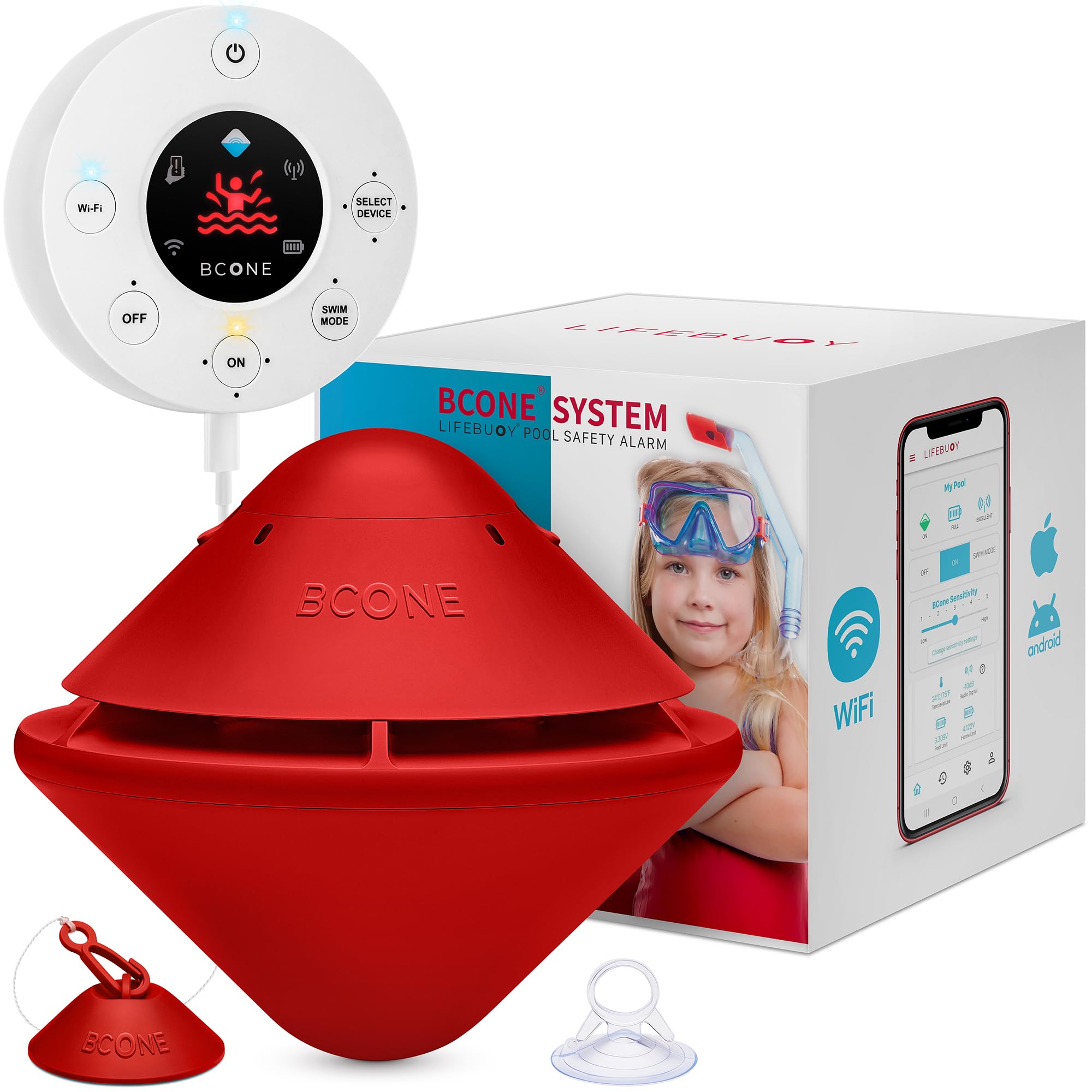
The BCONE is the most feature-complete pool alarm on the market, combining a 90 dB dual siren with Wi-Fi connectivity for Alexa and Google Assistant control. Its advanced algorithm processes water disturbances through a 2.4 GHz connection, filtering out false alerts from automatic pool cleaners or afternoon breezes while still detecting a fall within two seconds. The app provides full control over sensitivity, swim mode timing, and push notifications, and the whole system is IP68 waterproof certified for year-round outdoor exposure.
Up to four pool units can be paired with a single indoor receiver, making it ideal for large or irregularly shaped pools over 20×40 feet. The floating sensor attaches securely with 3M mounting tape and runs on two included AA batteries that last through an entire swim season. Customer reviews highlight the instant detection speed and the peace of mind from receiving phone alerts even when not at home.
The trade-off is the learning curve for guests—the swim mode activation requires holding the buoy vertically, and the indoor unit’s buttons can feel unresponsive if not pressed firmly. Some users also report a recurring “lost contact” bug in the app that requires a quick re-sync, though this does not affect the safety-critical alarm function.
Why it’s great
- Wi-Fi app with Alexa/Google integration for remote monitoring
- IP68 waterproof housing built for continuous outdoor use
- Detects water entry in under 2 seconds with advanced algorithm
Good to know
- Guests may struggle with swim mode activation procedure
- Indoor receiver must stay within 50 ft for reliable connection
2. Poolguard PGRM-2 In-Ground Pool Alarm

The Poolguard PGRM-2 is the industry standard for ASTM F2208 certification, meaning it has been independently tested to detect intrusions as small as a one-year-old child. Its electronic sensor floats on the pool surface and triggers an 85 dB alarm at both the pool unit and the remote indoor receiver, which has a wireless range of 200 feet—enough to cover most homes. The unit is tamper-proof: removing it from the water instantly sets off the alarm, and it cannot be deactivated, so it remains armed even after a swim.
Made in the USA with a three-year warranty, the PGRM-2 is built for owners who want set-and-forget reliability. It uses a rechargeable lithium-ion battery that automatically wakes and runs a system test when placed in the water. The wall-mount receiver plugs into a standard outlet and includes an AC adapter backup, so you never lose protection during a power outage.
The main drawbacks are the complex setup process and the learning curve for arming and disarming it correctly. The magnetic key and small deck hole required for removal are minor inconveniences, and some units have been reported to false-alarm from heavy pool pump startup cycles. It also requires the pool water level to be maintained within a specific range to work accurately.
Why it’s great
- Meets ASTM F2208 safety standard for child detection
- 200 ft indoor receiver range covers large homes
- Tamper-proof design stays armed even when removed
Good to know
- Setup and daily arming/disarming is not intuitive
- Sensitivity may trigger from pool pump or wind
3. Blue Wave NA4212 Poolwatch Pool Alarm

The Blue Wave Poolwatch is a straightforward, code-compliant option that many homeowners choose to satisfy local pool safety regulations. It is NSF certified to ASTM F2208 requirements, and its electronic sensor is specifically calibrated to detect an object weighing 18 pounds or more entering the water—matching the threshold for a small child. The system includes a separate remote receiver with a 100-foot wireless range that blasts an ear-splitting siren both at the pool and indoors.
The pool unit runs on D-cell batteries, and the indoor receiver can be powered by either 110V AC or a 9V backup battery, ensuring protection even during electrical failures. Installation is straightforward: simply mount the sensor body on the pool edge and plug in the receiver. The unit is designed to detect a water level rise of just 1/19 of an inch, making it incredibly sensitive to actual entry while ignoring normal surface ripples.
Build quality is a concern—the enclosure is not fully water-tight, and humidity can corrode the battery contacts over time if the unit is not stored indoors during the off-season. The battery compartment also has a tendency to jam batteries, causing intermittent connectivity. Several users report the unit failing after one to two seasons due to UV damage and moisture ingress.
Why it’s great
- NSF certified for ASTM F2208 code compliance
- Detects entry as small as an 18 lb child
- AC powered indoor receiver with battery backup
Good to know
- Enclosure is not water-tight; store indoors off-season
- Battery jams and corrosion affect long-term reliability
4. Smart Pool Alarm by KLORVA (Blue)
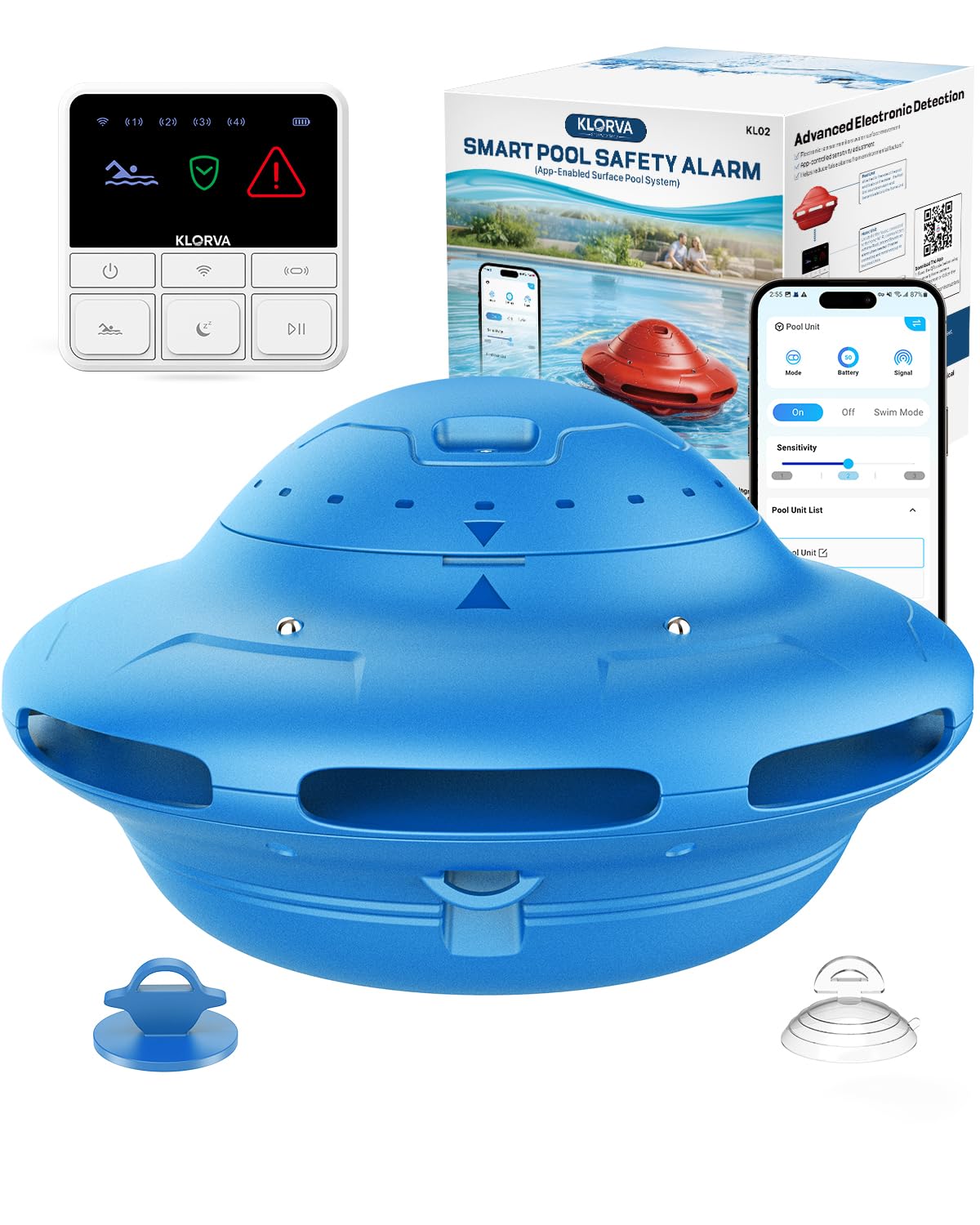
KLORVA’s smart pool alarm brings app-based control to the mid-range price point without requiring a subscription or Bluetooth pairing. It features a RISC-V architecture processor that analyzes water disturbances electronically, reducing false alarms from wind and pool equipment while maintaining fast detection of actual falls. The 85 dB siren is clearly audible from 10 feet away, and the floating unit’s UV-resistant housing is built to withstand direct sun exposure all season.
The app allows you to adjust sensitivity, set a Do Not Disturb schedule for nighttime quiet hours, and enable Swim Mode which automatically re-arms after the water remains calm for ten minutes. The system works right out of the box without the app, so you get immediate protection. The indoor receiver is wall-mounted and uses USB-C power, though the included cable is fragile and the internal lithium battery only lasts a few hours as backup.
The biggest frustration is the reliance on Wi-Fi with no RF backup—if your home Wi-Fi is spotty or you turn off the router at night, the app features become unavailable and only the basic alarm function works. Some users also find the disarming and rearming process tedious for daily use, as the alarm is extremely sensitive and triggers easily during routine pool maintenance.
Why it’s great
- RISC-V processor reduces false alerts from wind
- App works without subscription for full control
- Works out of box without any app setup
Good to know
- Wi-Fi only; no RF backup when network is down
- Very sensitive sensor makes daily arm/disarm tedious
5. ZapWay Pool Alarm
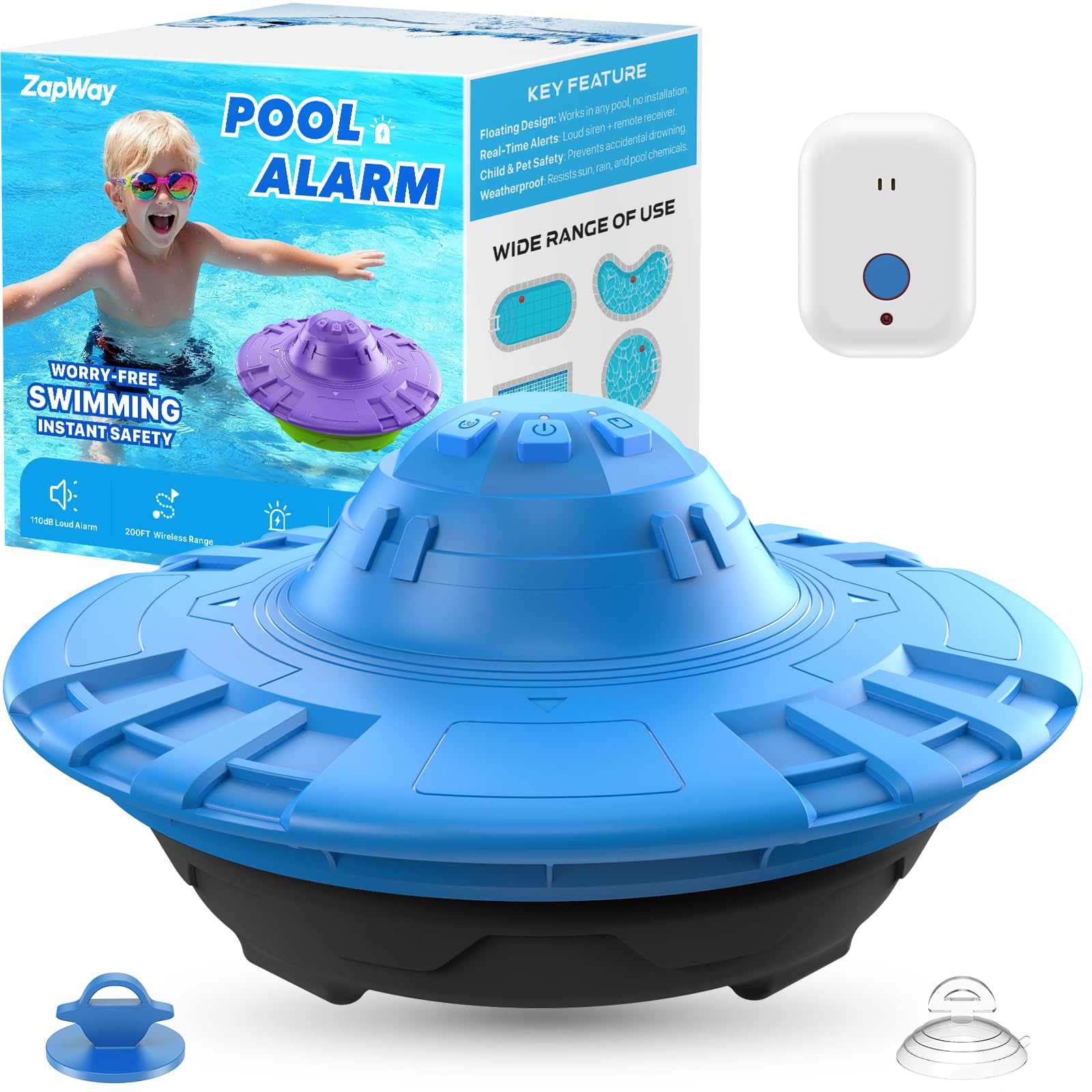
The ZapWay pool alarm delivers the loudest alert in this lineup with a 110 dB siren that blasts from both the floating pool unit and the included indoor receiver. That decibel level is equivalent to a rock concert, ensuring you hear it from anywhere inside the house. Sensitivity is adjustable by rotating the base floater, letting you dial in the perfect threshold for your specific pool conditions and filter out false alerts from pool cleaners.
Swim Mode is a standout feature—activate it before swimming and the alarm automatically re-arms after detecting ten minutes of calm water. No button presses, no remembering to re-arm. The housing is made from UV-resistant polymer that resists sun damage and cracking, and the included 12V battery is rated to last the entire swim season on a single charge.
The unit is designed for inground, above-ground, and soft-sided pools up to 20×40 feet, though larger pools will require a second unit. Some users note that the indoor receiver range could be better for very large homes, and the sensitivity adjustment method (rotating the entire base) can be imprecise compared to app-based systems. The included instructions could be more detailed for first-time users.
Why it’s great
- 110 dB dual siren is the loudest in the guide
- Auto-rearming swim mode requires zero user action
- UV-resistant housing for full-season outdoor use
Good to know
- Indoor receiver range may not cover very large homes
- Rotating base sensitivity adjustment lacks precision
6. Lifebuoy Pool Alarm System

The Lifebuoy system takes a different approach from floating alarms, using a poolside motion detector sensor that triggers an 85 dB siren when movement is detected in the water. This makes it less susceptible to false alarms from wind or rain that can plague floating sensors. The system connects via Bluetooth to a smartphone app where you can adjust sensitivity, set siren duration, and monitor signal strength between the pool unit and the indoor receiver.
Setup is straightforward with all batteries included—two 9V lithium cells that can last up to three years depending on usage frequency. Swim Mode silences the alarm during swimming and automatically re-activates after ten minutes of no detected motion. The pool unit attaches to the poolside using a provided mounting kit, and the indoor receiver has a 50-foot Bluetooth range, which is sufficient for most homes but requires line of sight for best performance.
Long-term reliability is a mixed bag. The system works perfectly for the first several months, but many users report it developing false alarms after 6-8 months, followed by complete failure where the unit goes silent. Customer service is excellent and will often send replacements under warranty, but the pattern of failure is common enough to be a genuine concern. The Bluetooth-only nature means the app only works when you are within range of the pool.
Why it’s great
- Poolside motion sensor is less prone to wind false alarms
- Battery life up to 3 years with included lithium 9V cells
- Excellent warranty support with free replacements
Good to know
- Frequent reliability failures after 6-8 months reported
- Bluetooth range limited to 50 ft with line of sight
7. KLORVA Floating Pool Alarm (White & Grey)

The KLORVA floating pool alarm is the simplest, most straightforward entry point for pool safety. It requires no app, no Wi-Fi, and no Bluetooth pairing—just drop the floating unit in the water and plug the indoor receiver into a wall outlet. The 85+ dB siren sounds from both units when water entry is detected, and the adjustable sensitivity dial lets you find the sweet spot for your pool’s conditions, reducing nuisance alarms from wind or pool equipment.
Coverage extends to pools up to 20×40 feet, and the weatherproof UV-resistant housing is designed to stay outdoors all season without degrading. The included 9V battery powers the floating unit, while the indoor receiver plugs into AC power. Setup takes less than two minutes, and operation is intuitive enough that anyone in the household can use it without instructions.
The main limitation is the lack of any smart features—no app monitoring, no swim mode, and no auto-rearming. You must manually remove the floating unit before swimming and remember to place it back afterward, which creates a gap in protection if you forget. The 85 dB siren is adequate for a small to medium home but may not be heard from a distant bedroom or basement. Some users note the sensitivity adjustment is not as granular as on premium models.
Why it’s great
- No app or Wi-Fi required for immediate protection
- Two-minute setup with included 9V battery
- Adjustable sensitivity reduces common false alarms
Good to know
- No swim mode; must manually remove before swimming
- 85 dB may not be loud enough for large or multi-level homes
FAQ
Can a pool alarm replace a fence or safety cover?
How do I stop false alarms from wind and rain?
Why does my indoor receiver not pick up the pool unit signal?
Final Thoughts: The Verdict
For most users, the best pool alarm is the BCONE by Lifebuoy because it combines Wi-Fi app control, 90 dB dual sirens, and Alexa integration with IP68 waterproofing and a 2-second detection time. If you want an established, code-compliant model with a 200-foot range and zero reliance on apps or Wi-Fi, grab the Poolguard PGRM-2. And for the loudest possible alert at 110 dB with an auto-rearming swim mode, nothing beats the ZapWay Pool Alarm.