
Our readers keep the lights on and my morning glass full of iced black tea. As an Amazon Associate, I earn from qualifying purchases.
Specs are compiled from manufacturer listings and verified buyer reviews and can change over time — please confirm the key details on the product page before buying.
When the lights go out or you head off-grid, the real question isn’t which power station has the most buttons — it’s which one will actually keep your fridge running, your CPAP machine humming, and your phone charged without dying halfway through the night. A portable power station is a battery you can carry, with AC outlets built in, so you can plug in things you normally plug into a wall. The tricky part is matching the capacity (how much energy it holds) and the output (how many watts it can push at once) to the gear you actually own — and that’s where most buyers get tripped up.
I’m Min — the founder and writer behind Gadgets Feed. This guide is built by comparing the manufacturers’ published specifications and the patterns across verified customer reviews, so you get each pick’s real strengths and trade-offs instead of marketing spin.
We sorted through the critical numbers — watt-hours, AC wattage, battery chemistry, and recharge speed — to find the nine models that actually deliver what they promise. You’ll see exactly which portable power station fits your budget, your gear, and your real-world scenario, whether that is camping every weekend or bracing for hurricane season.
Quick Picks
- EF ECOFLOW DELTA 3 Classic — Best Overall
- BLUETTI Elite 200 V2 — Longest Lifespan
- AFERIY P210 Portable Power Station — Best Value 2kWh
- Anker SOLIX C2000 Gen 2 — Fastest Recharge
- Jackery Explorer 2000 v2 — Lightest 2kWh
- BLUETTI Elite 30 V2 — Mini Powerhouse
- GRECELL Portable Power Station 330W — Smart Value
- GRECELL Portable Power Station 500W — Mid-Capacity Power
- DARAN Portable Power Station NEO300L — Budget Champion
How To Choose The Best Portable Power Station
Choosing a portable power station is less about finding the most expensive box and more about matching three numbers — capacity in watt-hours (Wh), rated output in watts (W), and charging speed — to what you actually plug into it. A mismatch leaves you either carrying dead weight or running out of juice mid-trip.
Match capacity to your gear, not your ambition
Capacity is the size of its fuel tank, measured in watt-hours (Wh). A 288Wh unit will run a 55W fan for about 6 hours, as buyers report with the DARAN model, while a 2048Wh station can keep a dual-door fridge running for up to 32 hours. You multiply a device’s wattage by the hours you want it to run — if you need 100W for 8 hours, aim for at least 800Wh of usable capacity. Remember that you never get 100% out of any battery due to inverter and conversion losses.
Rated AC output dictates what you can plug in
Rated power (in watts) is the maximum continuous load the AC outlets can handle. A 350W unit can run a laptop, a fan, and lights, but it will trip if you try to start a 1000W microwave. Some models include a surge or “Power Lifting” mode for brief high-draw appliances. If you plan to run a mini fridge, a small kettle, or a toaster, look for at least 500W continuous; for a full household fridge or power tools, you need 1800W or more.
Battery chemistry: LiFePO4 is the gold standard now
Lithium iron phosphate (LiFePO4) batteries last thousands of charge cycles, hold their capacity for years, and are far less prone to thermal runaway than older lithium-ion chemistries. Nearly every premium model in this list uses LiFePO4 cells. The trade-off is slightly higher upfront cost and lower energy density (heavier for the same capacity), but the longevity payoff is significant — some makers claim over 6,000 cycles before the battery degrades to 80% capacity.
Recharge speed and solar input keep you running
Fast AC charging (60 minutes to 80% full) means you can top up during a lunch break. If you plan to recharge via solar panels, check the maximum solar input wattage: a 100W panel on a station that accepts 200W will charge slowly. Also look for the <10ms UPS feature if you want the station to act as a smooth backup for sensitive electronics like a router or desktop PC. A quieter charging mode (often called Silent Mode) is a hidden gem if you sleep next to the unit.
Quick Comparison
| Model | Best For | Capacity (Wh) | Rated AC Output (W) | Weight (lbs) | Amazon |
|---|---|---|---|---|---|
| EF ECOFLOW DELTA 3 Classic | Full home backup & heavy appliances | 1024 | 1800 | — | $439.00$599.00Limited time dealAmazon |
| BLUETTI Elite 200 V2 | Premium long-run with 17-year lifespan | 2073.6 | 2600 | 53.35 | $798.99$1,070.00Limited time dealAmazon |
| AFERIY P210 | Massive 2kWh capacity on a budget | 2048 | 2400 | 54 | Amazon |
| Anker SOLIX C2000 Gen 2 | Extreme fast charging & compact 2kWh | 2048 | 2400 | 41.7 | $899.99$1,499.00Amazon |
| Jackery Explorer 2000 v2 | Lightest 2kWh for easy carrying | 2042 | 2200 | 39.5 | $899.00$1,499.00Amazon |
| BLUETTI Elite 30 V2 | Ultra-compact with 1500W surge mode | 288 | 600 | 9.4 | $219.00$299.00Amazon |
| GRECELL 330W | Value pick with wireless charging | 288.6 | 330 | — | $123.49$129.99PrimeAmazon |
| GRECELL 500W | Mid-capacity with 2 AC outlets | 519.48 | 500 | 14.1 | Amazon |
| DARAN NEO300L | Budget-friendly 288Wh LiFePO4 starter | 288 | 350 | 8.2 | Amazon |
In‑Depth Reviews
1. EF ECOFLOW DELTA 3 Classic
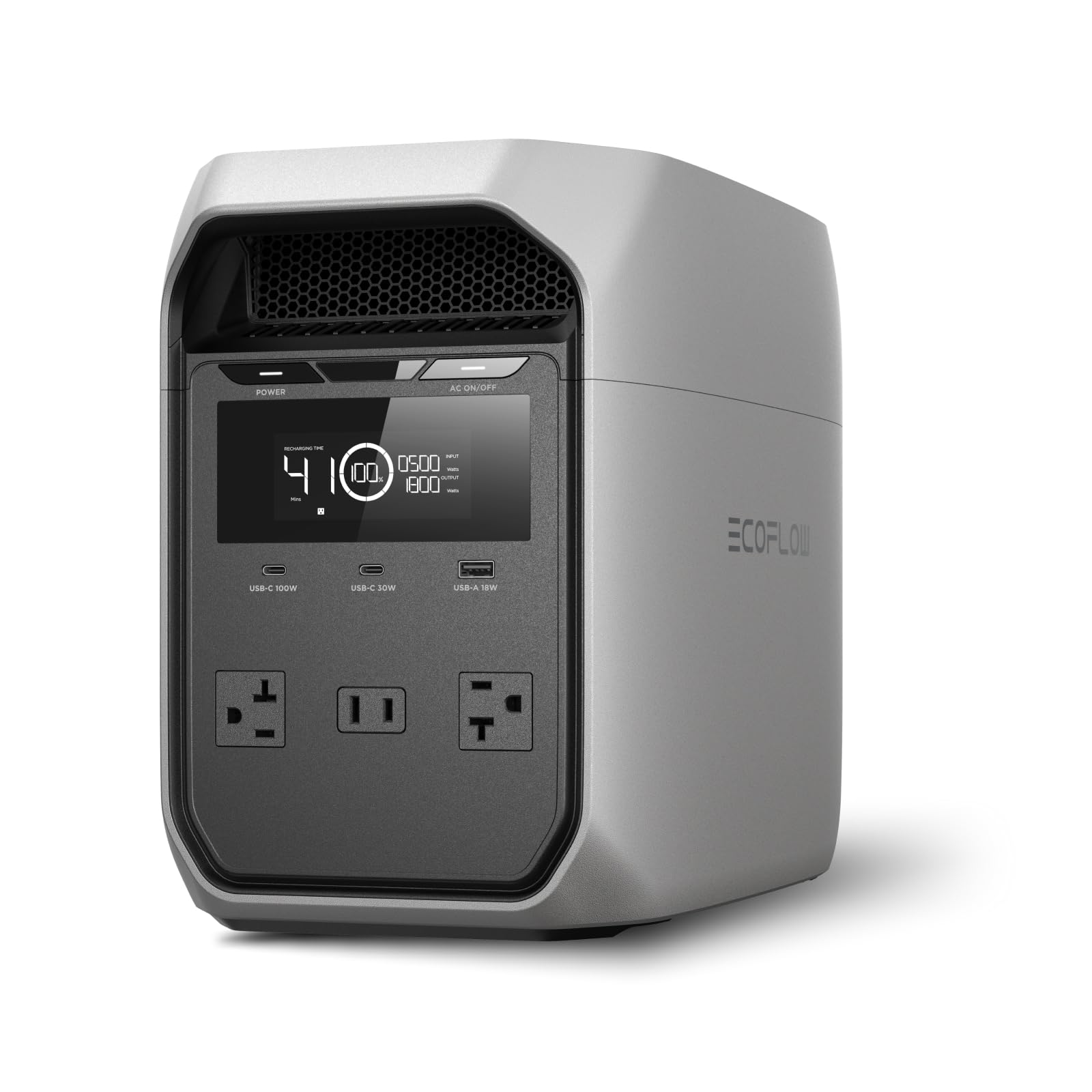
The one that runs a fridge, microwave, and power tools without breaking a sweat.
This is the power station for people who don’t want to think about limits. With an 1800W AC output (3600W surge) and a 1024Wh LiFePO4 battery, the DELTA 3 Classic can run a full-size refrigerator, a microwave, or a set of power tools simultaneously. The X-Stream AC charging gets you from 0–80% in just 45 minutes, so you are not stuck waiting for a recharge after a blackout or before hitting the campsite.
Owners mention using it as a UPS for a fridge in a van, noting that the <10ms UPS switchover prevents any hiccups in server or networking gear. The build quality stands out: dual handles, non-skid pads, a tuck-away input cover, and a soft-touch manual bag — small details that customers note make a difference. It also includes smart app control with schedulable on/off, Storm Alert, and Self-Powered Mode. One reviewer calls it “lot of power” and points out it has 400% more reserve than a dedicated UPS, making it far more versatile.
Unlike the GRECELL 500W model, which holds 519.48Wh but only delivers 500W, the DELTA 3 Classic has double the AC output and a much faster recharge. The catch is price — this is a mid-premium investment — but the 10-year daily-use rated LiFePO4 cells and expandable output through X-Boost (up to 2600W) mean you won’t outgrow it quickly.
Why it owns the top spot
- 1800W continuous AC output handles heavy appliances and tools
- 0-80% in 45 minutes with X-Stream fast AC charging
- <10ms UPS switch protects sensitive electronics
- Smart app control with load scheduling and storm alerts
Where it asks a trade-off
- Premium price tier compared to the DARAN or GRECELL entry models
- Not compatible with DELTA 2 Smart Extra Battery
- Heavier than the Jackery 2000 v2 for similar capacity
Best for the buyer who wants one station to power a household fridge, microwave, and electronics backup: the DELTA 3 Classic gives you the output headroom and fast recharge that smaller units can’t match.
skip it if you only need to charge phones and a laptop on a weekend trip: the BLUETTI Elite 30 V2 at 288Wh will do that at a much lower cost and weight.
2. BLUETTI Elite 200 V2

A 2kWh powerhouse built to run for 17 years without flinching.
The Elite 200 V2 packs 2073.6Wh of capacity and a 2600W continuous AC inverter (3900W in Power Lifting mode) into a footprint that buyers call “the smallest 2kWh station” they have seen. The real headline is the CNAS-certified automotive-grade LiFePO4 battery rated for over 6,000 cycles, which the manufacturer says gives it a 17-year lifespan. Reviewers point out it runs a microwave, coffee maker, and air fryer without complaint.
Three smart charging modes let you choose speed over noise: Turbo Mode reaches 0–80% in 1 hour at 1800W AC, Standard Mode fills in 1.6 hours, and Silent Mode runs at 16–30dB while charging in 3 hours — reviewers mention this is 45% quieter than typical 30-50dB units. The advanced energy management system reduces standby power to just 10W, which means less energy wasted when nothing is plugged in. One owner confirmed it powers a diesel heater for 3.3 days (running 10 hours/day) — 13% longer than similar products, per the maker’s data.
Compared to the AFERIY P210 which also offers 2048Wh, the Elite 200 V2 is slightly lighter at 53.35 lbs versus 54 lbs, and its 2600W inverter is 200W higher. The Elite 200 V2 also adds ≤15ms UPS backup and dual AC+DC fast charging that reaches 0–80% in 50 minutes. The weight is significant — over 53 lbs — but dual handles make it manageable for car camping and home use.
Real-world take: One reviewer, who runs an iron, hair dryer, shop vac, fridge, and AC off it, called it “a power house in a tiny footprint” and prefers it over their EcoFlow Delta OG 1300. The 2kWh capacity “provides confidence vs. 1kWh,” they noted.
Who needs this: Anyone wanting a 2kWh station that will still be running strong on the same battery pack 17 years from now, with enough output to power a whole kitchen or workshop.
Who should look elsewhere: Campers who hike to a site — at 53.35 lbs, this is van or home-only. The Jackery 2000 v2 saves 14 lbs.
3. AFERIY P210 Portable Power Station

A 2kWh station with a 7-year warranty at a price that undercuts rivals.
The AFERIY P210 brings a 2048Wh LiFePO4 battery and 2400W continuous AC output (4800W peak) to the table, plus a <10ms server-level UPS that reviewers praise for RV living. One reviewer noted the UPS limit is 1200W, while the station delivers the full 2400W when unplugged. It charges from 0–100% in about 2 hours via AC, and shoppers say the unit is “very quiet” and has an informative display.
An industry-leading 7-year extended warranty backs this unit — that is 2 years longer than the standard coverage many competitors offer. Buyers report that customer service sent a free car charging adapter within 2 days when they needed one. The 54-pound weight makes it a “heavy but portable” choice, suited to a food truck, RV, or garage backup rather than backpacking. One reviewer, running a food truck, called it reliable for powering all equipment and a great investment for business use.
The 12V/25A XT60 DC output port stands out — it gives you a high-current DC option for running larger 12V appliances or faster vehicle charging. Another buyer noted that the display screen blacks out after solar charging and requires many button presses to restart, which is the main reliability concern in reviews.
Bottom line on value: The P210 delivers 2048Wh of capacity and 2400W of output for a price that sits below the Anker SOLIX C2000 Gen 2 and the Jackery 2000 v2, making it the strongest value in the 2kWh class if you can handle the weight and occasional display quirks.
Perfect for the budget-conscious buyer who still wants a full 2kWh: good for food trucks, RV living, and backup power with a warranty that outlasts most competitors.
Not ideal if you need a flawless user interface: the display reliability issue mentioned by one reviewer suggests you should test the unit thoroughly early on.
4. Anker SOLIX C2000 Gen 2

Fully recharge in 58 minutes and carry 2kWh at just 41.7 pounds.
The Anker SOLIX C2000 Gen 2 hits a balance that few stations reach: a 2048Wh LiFePO4 battery and 2400W rated AC output (4000W peak) in a package that is 25% lighter and 29% smaller than similar products, according to the maker. At 41.7 pounds and 18.1 x 9.8 x 10.1 inches, it stands out as the most portable full-size 2kWh option. The 58-minute full charge via AC is the fastest in this tier — one buyer mentioned it “charges extremely fast” and praised the display that shows time to full and internal temperature.
Owners mention that it powers a BougeRV 30-quart fridge for 5–7 days on one charge during a 7-week minivan camping trip, calling it “reliable, top-notch support, reasonably priced.” Another confirmed it powers a TV, fridge, and WiFi for over 10 hours during an outage. The standby draw is only 9W, so it wastes very little energy when nothing is plugged in. It also supports 800W alternator charging, which fills the battery in 3 hours from a vehicle — 8 times faster than a standard car socket, per the maker.
Compared to the Jackery Explorer 2000 v2, which is 39.5 lbs but offers only 2200W of output, the C2000 Gen 2 gives you 200 more watts of continuous power for only 2.2 more pounds. Both are in the same price tier, but the Anker recharges nearly twice as fast (58 min vs 102 min in emergency mode). The C2000 Gen 2 is also expandable to 4kWh with an add-on battery, running a dual-door fridge for up to 64 hours.
The real-world advantage: One reviewer put it simply: “Just BUY it! It powered my 30qt fridge 5–7 days on one charge during a 7-week trip.” The combination of fast recharge, light weight, and high output makes it the most versatile 2kWh station for mobile use.
Grab this if you want the fastest recharge in the 2kWh class and a portable weight that actually fits a minivan camping setup: the 58-minute full charge is a standout for quick turnaround between outages or campsite moves.
pass on it if you need the absolute lightest 2kWh station: the Jackery 2000 v2 shaves off 2.2 lbs at the cost of 200W of output and slower charging.
5. Jackery Explorer 2000 v2

The 39.5-pound 2kWh station that doesn’t destroy your back on the way to the campsite.
At 39.5 pounds and 13.2 x 10.4 x 11.5 inches, the Jackery Explorer 2000 v2 is the lightest full 2kWh-class power station in this roundup. It uses the same CTB (Cell-to-Body) technology found in EVs, which integrates the battery cells directly into the frame to save space and weight while keeping the structure rigid. The 2042Wh LiFePO4 battery and 2200W AC output handle a full kitchen, a TV, and Wi-Fi for hours — one owner reported a fridge ran for 21.3 hours on a single charge in pass-through mode.
Three AC ports and a USB-C PD 100W port let you power devices without additional adapters. AC fast charging gets you 0-80% in 66 minutes, or a full charge in 102 minutes using Emergency Super Charging mode through the app. Silent Charging mode is ideal for overnight use, running at less than 30dB for a full charge in about 5 hours. The 20ms UPS switching is UL1778 certified for uninterruptible power systems, so it works as a smooth home backup during storms.
Compared to the Anker SOLIX C2000 Gen 2, the Explorer 2000 v2 is 2.2 lbs lighter but has 200W less continuous output and takes longer to recharge. One customer observed that the solar barrel ports sit on a frame that flexes when cables are plugged in, which is the main build quality note from reviews. Bluetooth connectivity was reported as unreliable by some users, though the app itself is functional.
Why it gets serious consideration: A reviewer living off-grid in Belize said it is a “lifesaver” that keeps Wi-Fi running for remote work, lasts days, and charges fully in 60 minutes. The 39.5-lb weight is a real advantage for anyone moving the station between home, car, and campsite frequently.
Reach for this if portability is your top priority in the 2kWh class: you lose a bit on output and recharge speed versus the Anker, but gain 2.2 lbs of weight savings and a trusted brand with easy solar integration.
Look elsewhere if you need the fastest recharge or a stronger plastic frame at the port area: the SOLIX C2000 Gen 2 is a better fit for rapid turnaround use.
6. BLUETTI Elite 30 V2
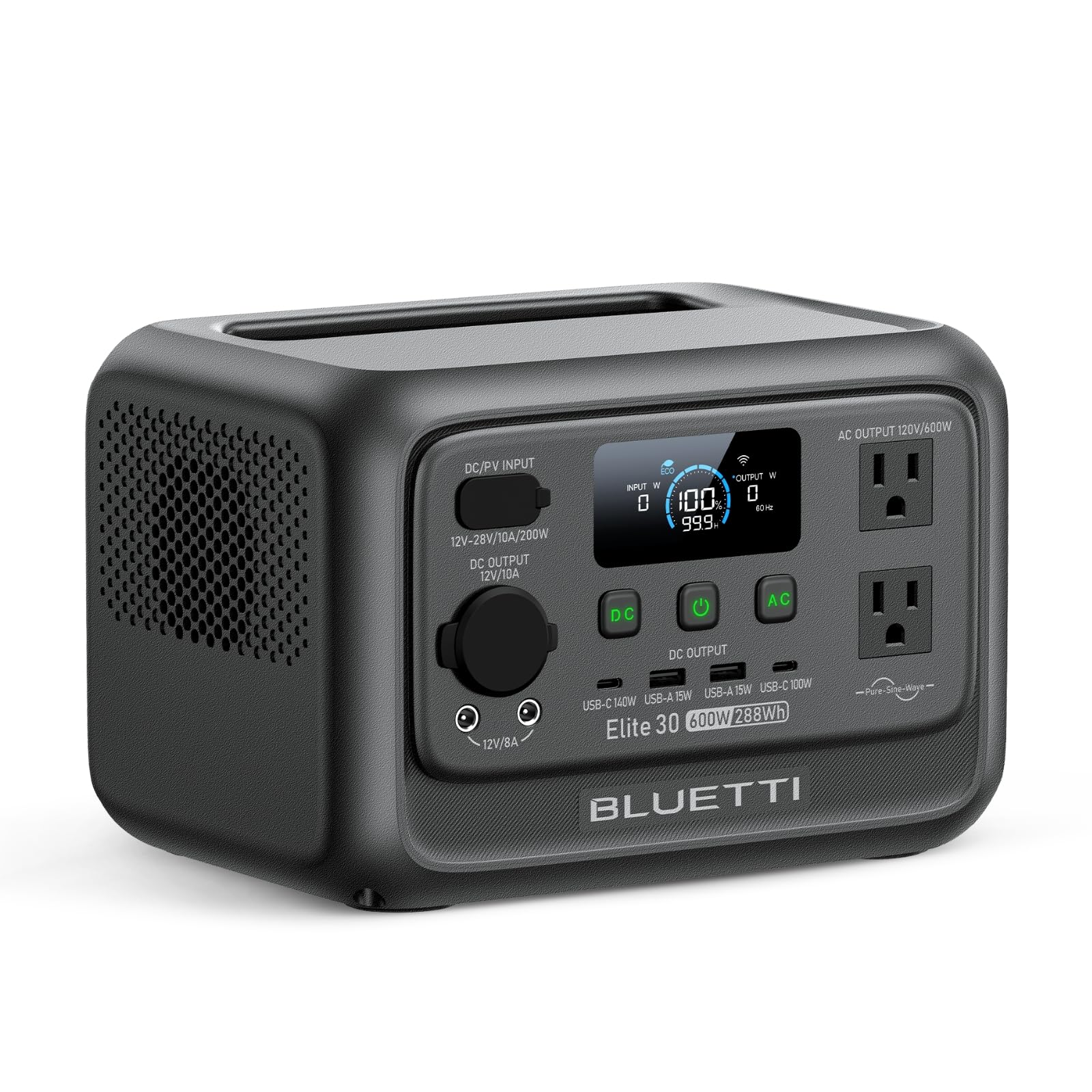
A 9.4-pound pocket rocket that delivers 600W and activates 1500W surge mode.
Don’t let the tiny 9.4-pound frame fool you — the Elite 30 V2 delivers a full 600W continuous AC output and, with Power Lifting Mode, can surge to 1500W for brief high-draw appliances like a small kettle or toaster. The 288Wh LiFePO4 battery is compact enough to stash in a camping bag or home emergency kit, yet it can run a CPAP machine, laptops, and a car fridge on a road trip. One user highlighted it runs a 150W load for 2.4 hours in UPS mode, replacing a degraded CyberPower unit.
It charges from 0–80% in just 45 minutes via AC at 380W, or to full in 70 minutes — numbers that rival much larger stations. The maker claims the upgraded UltraCell tech and smart cooling system cut power consumption by 50% compared to earlier designs, with standby power at only 4.5W. The <10ms UPS switch ensures smooth backup for sensitive electronics like a router or desktop PC during outages. One shopper added using it to run a diesel heater on DC or AC while camping, and said it holds a charge for months.
Compared to the GRECELL 330W unit, which also packs 288.6Wh, the Elite 30 V2 offers nearly double the rated AC output (600W vs 330W) and has the vaulted Power Lifting surge mode. The trade-off is a higher price point for the BLUETTI brand and the need to remember that the 1500W surge is strictly for short bursts, not sustained loads.
What makes it stand out
- 600W continuous output in a 9.4-pound package is class-leading
- Power Lifting Mode delivers 1500W surge for brief high-power gadgets
- 0-80% in 45 minutes via 380W AC input
- 10ms UPS switch protects sensitive electronics
The honest trade-offs
- 288Wh capacity is enough for a night, not a weekend
- Heavier than the DARAN 8.2-lb unit at similar capacity
- Initial off-gassing reported by one reviewer — air out before use
Ideal for the minimalist who needs serious output in a travel-friendly size: perfect for CPAP users, tailgating, or as a compact UPS.
Not for anyone who needs a full day of power for heavy appliances: the 288Wh capacity will run dry quickly with anything above a laptop and a fan.
7. GRECELL Portable Power Station 330W
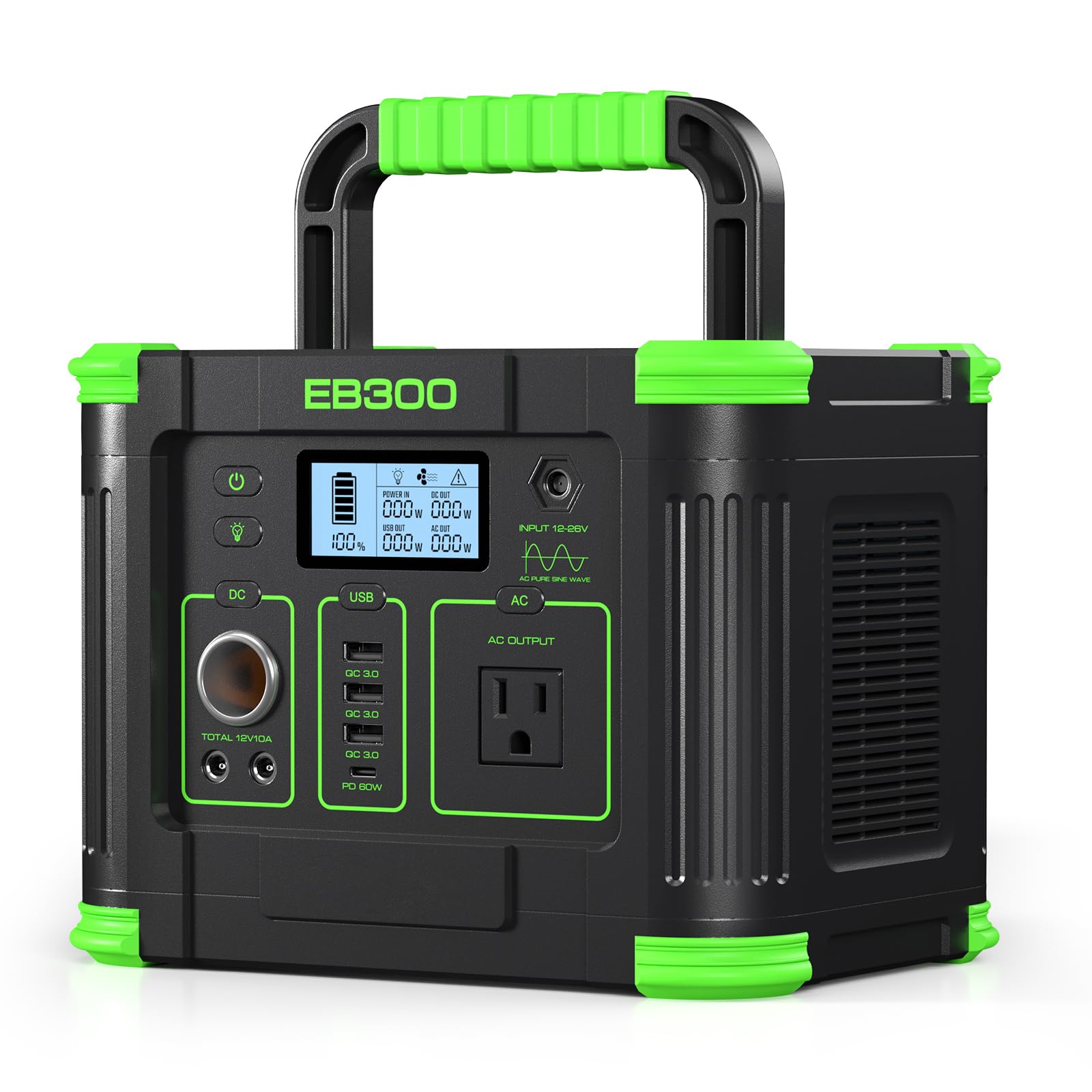
A budget-friendly 330W station that adds wireless charging and a handy flashlight.
The GRECELL 330W packs a 288.6Wh lithium battery and 330W AC output (600W peak) into a unit that buyers call “great for the money.” It has a hidden ace: a 5W wireless charging pad on top, so you can drop a compatible phone or earbuds case on it without plugging in a cable. It also includes a 3-level brightness LED flashlight with steady light and SOS mode, making it a practical companion for camping or power outages.
Customers note that a 200W mini rice cooker uses 44-50% of the battery per cup of rice, so you can cook about two cups before draining it. A mini PC runs 4-5 hours of gaming or 6.5 hours of browsing on this unit. The dual silent cooling fans keep temperatures safe, though one reviewer noted the fan kicks in after 3 minutes on high load and is moderately loud. It offers three recharge methods: AC wall charging (6-7 hours), 12V car socket, or solar panel (100W, about 5-9 hours depending on sun).
Compared to the DARAN NEO300L, which has a similar 288Wh capacity but a 350W output and LiFePO4 chemistry, the GRECELL uses standard lithium-ion (not LiFePO4) and delivers slightly less AC power. The GRECELL is also larger at 12.8 x 7.68 x 8.46 inches versus the DARAN’s 10 x 6.6 x 8.2 inches. However, the GRECELL includes the wireless charging pad and the flashlight, which the DARAN lacks, making it a better value for casual campers who want those extras.
What buyers really say: One reviewer called it “awesome for the money” and said it “charges phones, lamps, and other devices easily” with a simple interface. Another bought a second unit after pairing it with a 100W solar panel, calling it a great starting power station.
Great entry-level unit for road trips, car camping, or as a light home backup: the wireless charging pad and flashlight make it more versatile than other stations at this price.
Upgrade if you need LiFePO4 longevity or more than 330W of output: for similar capacity but a 350W output and a safer battery chemistry, the DARAN NEO300L is a stronger choice.
8. GRECELL Portable Power Station 500W
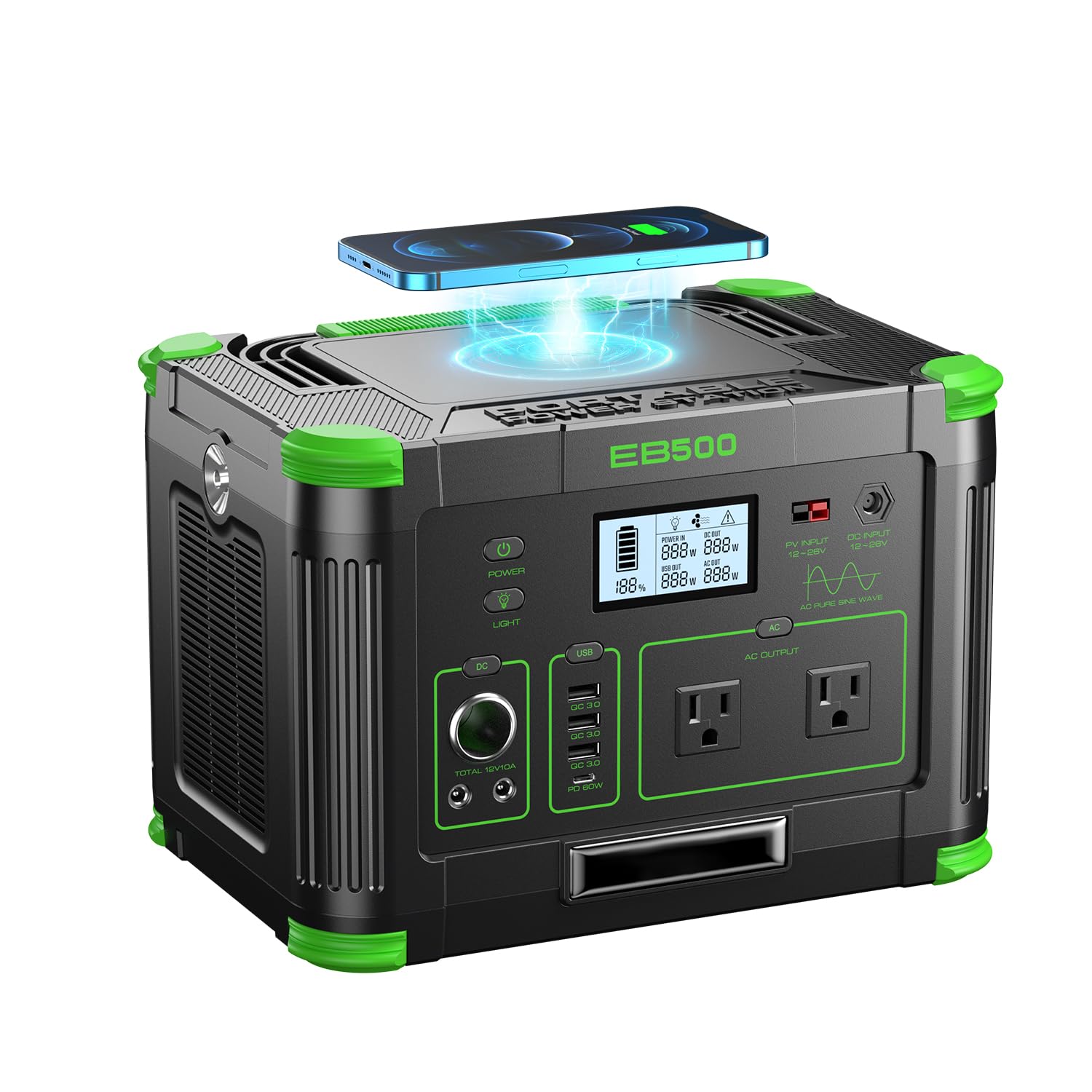
A 519.48Wh station with two AC outlets and a fast USB-C port that actually works.
This model sits right in the middle of the GRECELL lineup: a 519.48Wh lithium battery paired with a 500W pure sine wave AC inverter across two AC outlets. That gives you 80% more capacity than the DARAN NEO300L’s 288Wh, according to the comparison data — enough to run a 25W load for 12 hours, as one buyer mentioned. The 14.1-pound weight is a notable increase from the 8.2-pound DARAN, but the extra capacity is substantial.
It can charge up to 10 devices simultaneously across 2 AC outlets, 3 USB-A QC3.0 ports, 1 USB-C PD 60W port, 2 DC ports, and a 12V car port, plus a 10W wireless charger. The PD 60W USB-C port charges an Android phone or laptop at twice the speed of standard USB-C, per the maker. A built-in Battery Management System provides temperature control, overvoltage, overcurrent, and short circuit protection. Reviewers point out the unit is “not too heavy and powerful” — one street vendor ran a cashier station all day and still had 50% power remaining.
Compared to the BLUETTI Elite 30 V2 (288Wh, 600W), this GRECELL offers nearly double the capacity at 519.48Wh but lower continuous output at 500W. The 14.1-pound weight is 4.9 pounds heavier than the BLUETTI’s 9.4 pounds. If you need more runtime than raw output, the GRECELL 500W makes sense. One owner reported that solar input is limited to 50W in practice, not the full 100W-200W mentioned in the description, which is worth factoring in if you plan to charge primarily off-grid.
Real-world verdict from buyers: “Compact, reliable backup for camping/travel/emergencies. Has 110V outlet and fast USB-C. Sturdy build with pure sine wave.” Another reviewer said it’s “not a fast charge like it states” for solar input, calling it acceptable for light use but not reliable for critical applications.
Best for buyers who want more runtime than a 288Wh station offers without jumping to the 1kWh+ tier: the dual AC outlets and 60W PD USB-C make it practical for small appliance and laptop charging.
it’s not for you if you need fast solar charging or plan to run devices over 500W: the solar input limitations and lower inverter capacity versus the BLUETTI Elite 30 V2 make it a less flexible option for heavy users.
9. DARAN Portable Power Station NEO300L
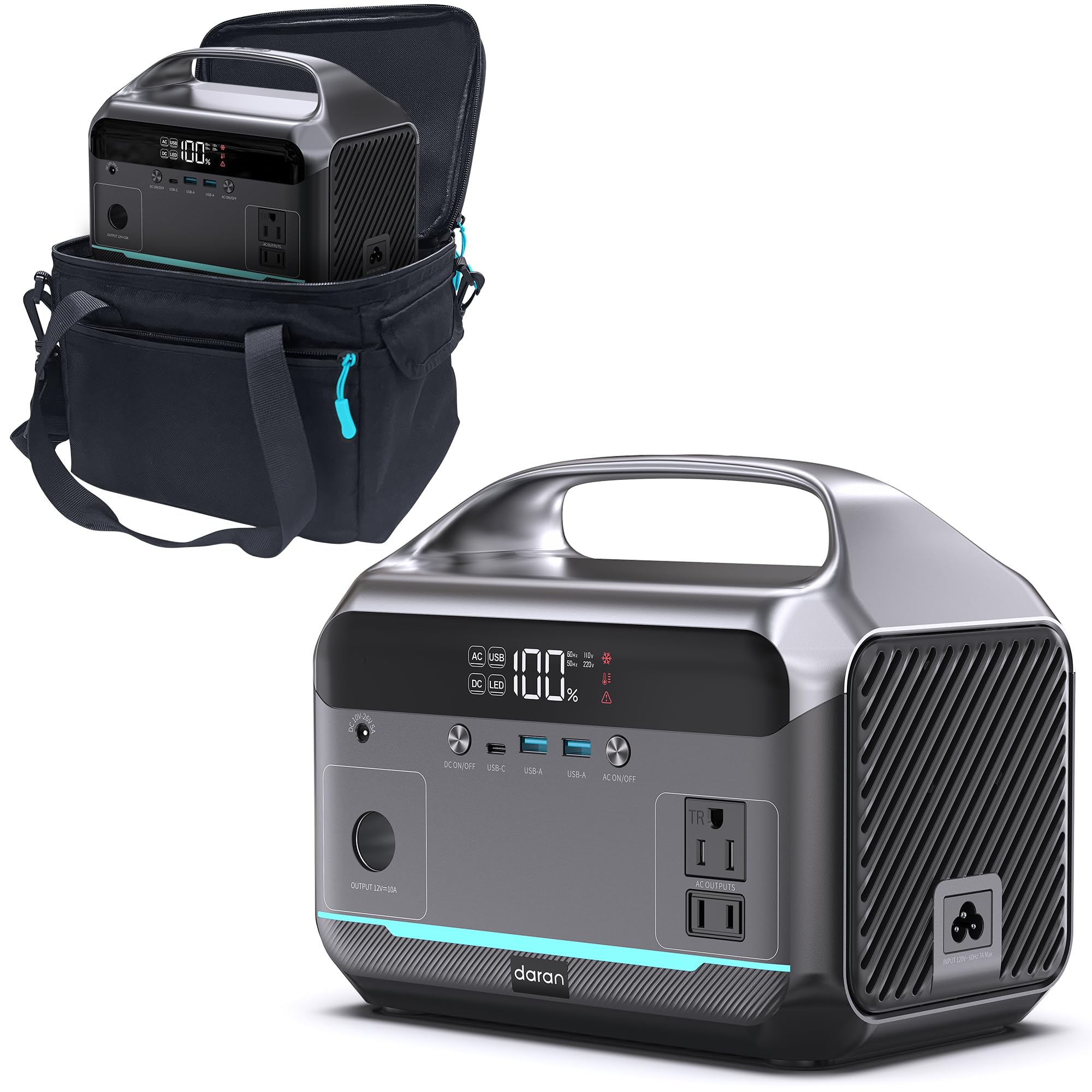
The lightest LiFePO4 station here at 8.2 pounds, with a 350W output that goes easy on your wallet.
At 8.2 pounds and 10 x 6.6 x 8.2 inches, the DARAN NEO300L is the lightest portable power station in our lineup — 1.2 pounds lighter than the BLUETTI Elite 30 V2 at the same capacity class. The 288Wh LiFePO4 battery delivers 350W of rated AC output (600W surge) across 2 AC outlets, plus 1x 60W PD USB-C, 2x 18W USB-A, and 1x DC input/output. One customer observed charging 6 half-depleted phones on a single charge, and another noted it runs a 55W 18-inch fan for about 6 hours, matching the 288Wh capacity closely.
The LiFePO4 chemistry is the strength here at this price tier — it offers a longer cycle life and better thermal stability than the standard lithium-ion battery in the similarly priced GRECELL 330W. The LCD provides real-time power readout, and the rear LED includes steady, strobe, and SOS modes. A buyer with an aquarium confirmed it ran their pump for about 24 hours, a solid real-world test. The slow charging time (0-100% in about 3 hours 40 minutes) was noted as a trade-off, but the same buyer said it stays cool during charging, which is good for battery health.
Compared to the GRECELL 330W, which holds 288.6Wh but uses standard lithium-ion and lacks LiFePO4 cells, the DARAN offers a 20W higher AC output and safer battery chemistry for a similar price. The DARAN is also more compact. One reviewer warned that the unit drains the battery if left on when not in use, so remember to power it down after charging.
Why it wins the budget slot
- 8.2 lbs is the lightest in this review, easier to pack than any competitor
- LiFePO4 battery at a standard lithium-ion price point
- 2 AC outlets with 350W rated output (600W surge)
- Includes a storage bag for organized carrying
Where you feel the price
- Slow AC charging: 0-100% in about 3 hours 40 minutes
- Fan is loud when charging on AC, according to one reviewer
- Drains battery if left powered on with nothing plugged in
Reach for this if you want the lightest, most portable entry-level power station with the safest battery chemistry and a very strong price-to-feature ratio: it is perfect for short camping trips, powering a fan overnight, and charging multiple phones.
Pass it by if you need fast recharging or quiet operation during AC charging: the loud fan and 3h40min charge time are real limitations for indoor or emergency use where every minute counts.
Understanding the Specs
Watt-Hours (Wh) — The Fuel Tank
Watt-hours tell you how much total energy the station can hold. Think of it like a gas tank: a 288Wh station stores enough energy to run a 55W fan for about 6 hours, while a 2048Wh station can power a 100W fridge for over 20 hours. More Wh means longer runtime, but it also means a heavier and more expensive unit. To estimate your needs, add up the wattage of everything you want to run and multiply by the hours you need them on.
Rated Power (Watts) — The Spigot
Rated power in watts determines how much you can run at once. A 350W station can handle a laptop (60W), a fan (50W), and a phone charger (20W) simultaneously, but it will trip if you plug in a 1000W microwave. Pure sine wave inverters (used by all stations here) provide clean power that sensitive electronics like CPAP machines and laptops require. Some stations include a “surge” or “Power Lifting” mode that briefly handles higher startup loads for motors and compressors.
Battery Chemistry: LiFePO4 vs Standard Lithium-Ion
Lithium iron phosphate (LiFePO4) batteries are the current standard for premium portable power stations. They last 3,500 to 6,000 charge cycles before degrading to 80% capacity, compared to about 500 cycles for standard lithium-ion. LiFePO4 is also inherently safer — it resists thermal runaway better and performs more reliably in extreme temperatures. The trade-off is slightly heavier and more expensive up front, but the longevity makes it cheaper per cycle over the life of the product.
Recharge Speed and Solar Input
Fast AC charging (under 2 hours to full) means you can top up between power outages or campsite moves. Look at three numbers: AC wall charge time, solar input wattage (how many watts the station can accept from solar panels), and car charging time. A station that accepts 500W solar input will charge twice as fast with the same panels as one limited to 200W. The UPS switch time (in milliseconds) determines whether the station can act as a smooth backup for sensitive electronics — 10ms or less is ideal.
FAQ
How many watts do I need in a portable power station?
What is the difference between watt-hours and watts?
Why should I choose LiFePO4 over standard lithium-ion?
Can I run a CPAP machine all night on a portable power station?
How long does a portable power station last before I need to replace it?
Can I charge a portable power station with solar panels?
What does UPS mode mean on a power station?
How heavy is too heavy for a portable power station?
Can I take a portable power station on a plane?
What is pure sine wave and why does it matter?
Final Thoughts: The Verdict
If you want one dependable pick, the portable power station winner is the EF ECOFLOW DELTA 3 Classic because it delivers 1800W of clean output and a 1024Wh LiFePO4 battery with a 45-minute fast charge — enough to run a full fridge, microwave, and home office backup without compromise. If you want a compact weekend travel companion, grab the BLUETTI Elite 30 V2 for its 600W output in a 9.4-pound frame. And for the best value in the 2kWh class, the AFERIY P210 gives you 2048Wh of capacity and 2400W of output backed by a 7-year warranty at a price that beats the premium competition.
How We Picked
We do not accept paid placement. Every pick is matched to a real buyer and a real use-case; we do not hands-on test units.
Sources & Methodology
Specifications: manufacturer listings and product documentation. Review insights: verified customer reviews, as of July 2026. Pricing: not shown on this page (it changes often); check the current price via the retailer link.
As an Amazon Associate, Gadgets Feed earns from qualifying purchases. This does not affect which products we feature.
Product prices and availability are accurate as of the date/time indicated and are subject to change. Any price and availability information displayed on Amazon at the time of purchase will apply to the purchase of this product. As an Amazon Associate I earn from qualifying purchases.
CERTAIN CONTENT THAT APPEARS ON THIS SITE COMES FROM AMAZON. THIS CONTENT IS PROVIDED "AS IS" AND IS SUBJECT TO CHANGE OR REMOVAL AT ANY TIME.
Amazon and the Amazon logo are trademarks of Amazon.com, Inc. or its affiliates.