
When the grid goes down or the campsite has no hookup, a portable battery pack becomes the most critical piece of gear you own. The difference between a comfortable extended stay and a frustrating one comes down to how many watt-hours you can carry and how fast you can replenish them. A pure sine wave inverter, a robust Battery Management System, and the right balance of USB-C and AC outlets separate a genuine power solution from a glorified phone charger.
I’m Min — the co-founder and writer behind Gadgets Feed. I drill into the technical specifications, battery chemistries, and real-world performance data of every power station I cover to give you the straight facts without the marketing noise.
After analyzing capacity, inverter quality, recharge speed, and port selection across a wide price range, these are the top contenders for any buyer serious about selecting the best power station for home backup, camping, or off-grid living.
How To Choose The Best Power Station
Selecting the right portable power station is about understanding the relationship between battery capacity (Wh), inverter output (W), and the devices you actually need to run. The right choice hinges on your primary scenario — whether that’s weekend camping, keeping a refrigerator running during an outage, or powering tools on a job site.
Battery Chemistry and Cycle Life
Lithium Iron Phosphate (LiFePO4) batteries are now the standard in any modern power station worth considering. They offer over 3,000 charge cycles before degrading to 80% capacity, which translates to roughly 10 years of daily use. This chemistry is inherently more stable and safer than older NMC (Nickel Manganese Cobalt) cells, and the extended lifecycle makes a higher upfront investment far more economical over time.
Inverter Type and Power Lifting
A pure sine wave inverter is non-negotiable for sensitive electronics like laptops, CPAP machines, and medical devices. Look beyond the rated continuous wattage to the “power lifting” or surge capability. High-quality inverters can handle double their rated continuous output for a few seconds, which is essential for starting motors in refrigerators or pumps.
Recharge Speed and Input Options
AC recharge speed is measured by wattage input. A unit that can accept 900W or more from a wall outlet can go from 0 to 80% in under an hour. Solar input is equally important: a good Maximum Power Point Tracking (MPPT) charge controller extracts maximum energy from your panels, and higher voltage inputs (over 50V) allow for longer cable runs without significant loss.
Port Selection and Management
Count the ports you actually need. Dual high-wattage USB-C ports (100W or higher) are critical for modern laptops, while dedicated AC outlets with independent switching let you manage parasitic standby drain. A wireless charging pad on the top of the unit is a convenient bonus, not a primary feature, but it does reduce cable clutter.
Quick Comparison
On smaller screens, swipe sideways to see the full table.
| Model | Category | Best For | Key Spec | Amazon |
|---|---|---|---|---|
| EF ECOFLOW Delta 3 Classic | Premium | Fast recharge & UPS | 1024Wh / <10ms UPS | Amazon |
| DJI Power 1000 V2 | Premium | Ultra-compact & fast | 1024Wh / 27 min to 80% | Amazon |
| Jackery Explorer 2000 v2 | Premium | Home backup & RV | 2042Wh / CTB tech | Amazon |
| BLUETTI Elite 200 V2 | Premium | High power output | 2074Wh / 3900W lift | Amazon |
| Anker SOLIX C2000 Gen 2 | Premium | Low standby & expandable | 2048Wh / 9W standby | Amazon |
| AFERIY 3840Wh | Premium | Massive capacity home backup | 3840Wh / 7200W peak | Amazon |
| BLUETTI AC70 | Mid-Range | Versatile mid-size | 768Wh / 2000W lift | Amazon |
| GRECELL 1000W | Mid-Range | Value & portability | 999Wh / 60W USB-C | Amazon |
| GRECELL 500W Solar Gen | Mid-Range | Solar kit starter | 519Wh / 100W panel incl. | Amazon |
In‑Depth Reviews
1. EF ECOFLOW Delta 3 Classic
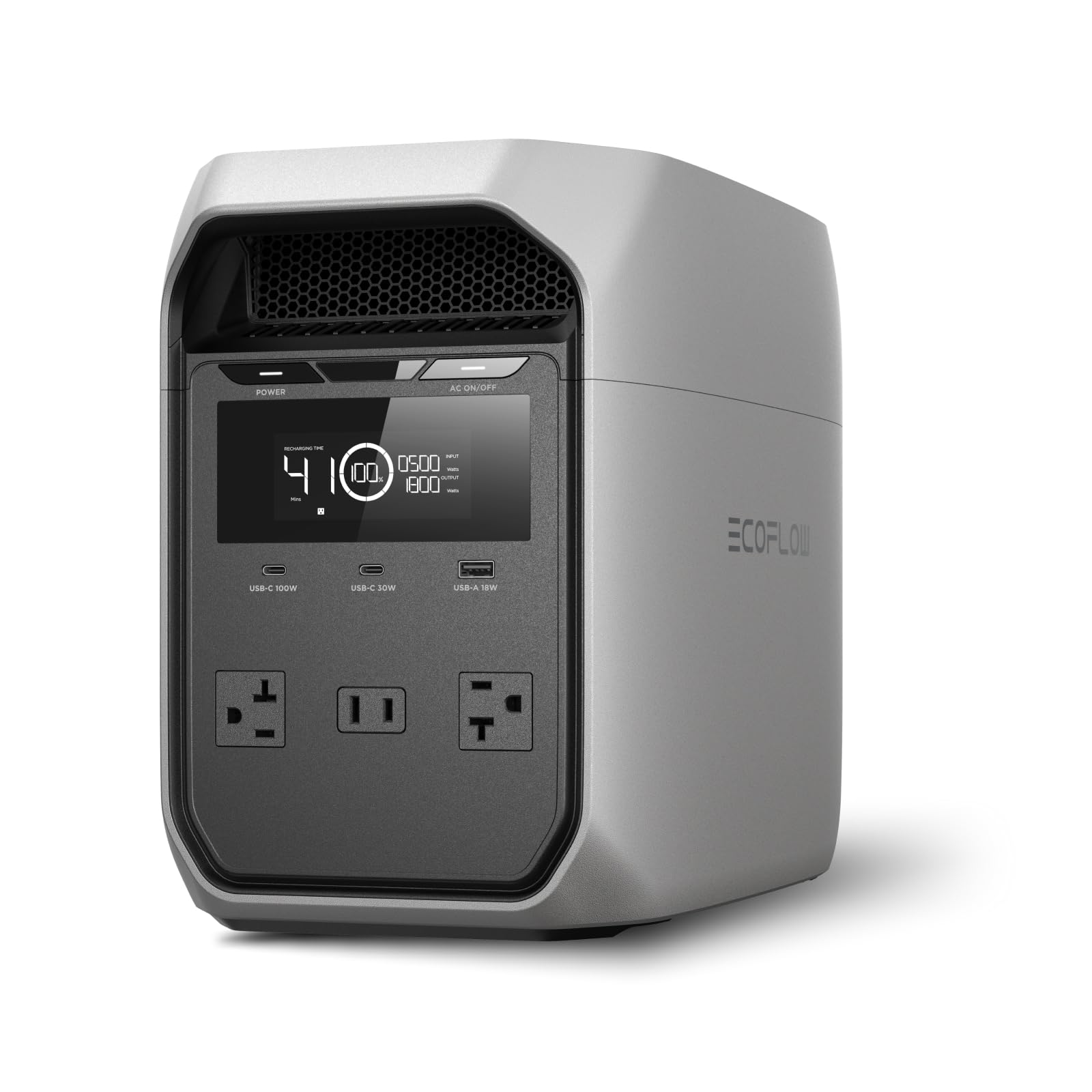
The EcoFlow Delta 3 Classic takes the crown for its combination of a 1024Wh LiFePO4 battery and an 1800W pure sine wave inverter with X-Boost that handles loads up to 2600W. This unit recharges from 0 to 80% in just 45 minutes via AC, making it one of the fastest refueling stations in its class. The <10ms UPS transfer time is remarkable, ensuring your sensitive electronics never flicker during a power outage.
Build quality is exceptional here — from the ergonomic handles to the non-skid pads and the tuck-away input cover, every detail feels intentional. The app control lets you set charging schedules and activate Storm Alert, giving you proactive control over your energy. At just 15 pounds for this power density, it is surprisingly portable for a 1kWh unit.
Real-world testing shows it runs a 65-inch TV for 4-5 hours, powers two CPAP machines for two nights, or handles a mini fridge for 5 hours at full strength with half the battery remaining. The 3600W surge capability means it can even kick-start a tankless water heater or a compact refrigerator compressor without tripping. For a mid-range premium price, this is the complete package.
Why it’s great
- 45-min fast recharge to 80%
- Sub-10ms UPS for sensitive electronics
- Lightweight at 15 lbs for 1024Wh
Good to know
- Not compatible with Delta 2 or Delta 3 series extra batteries
- X-Boost reduces voltage for high loads, not ideal for all tools
2. DJI Power 1000 V2
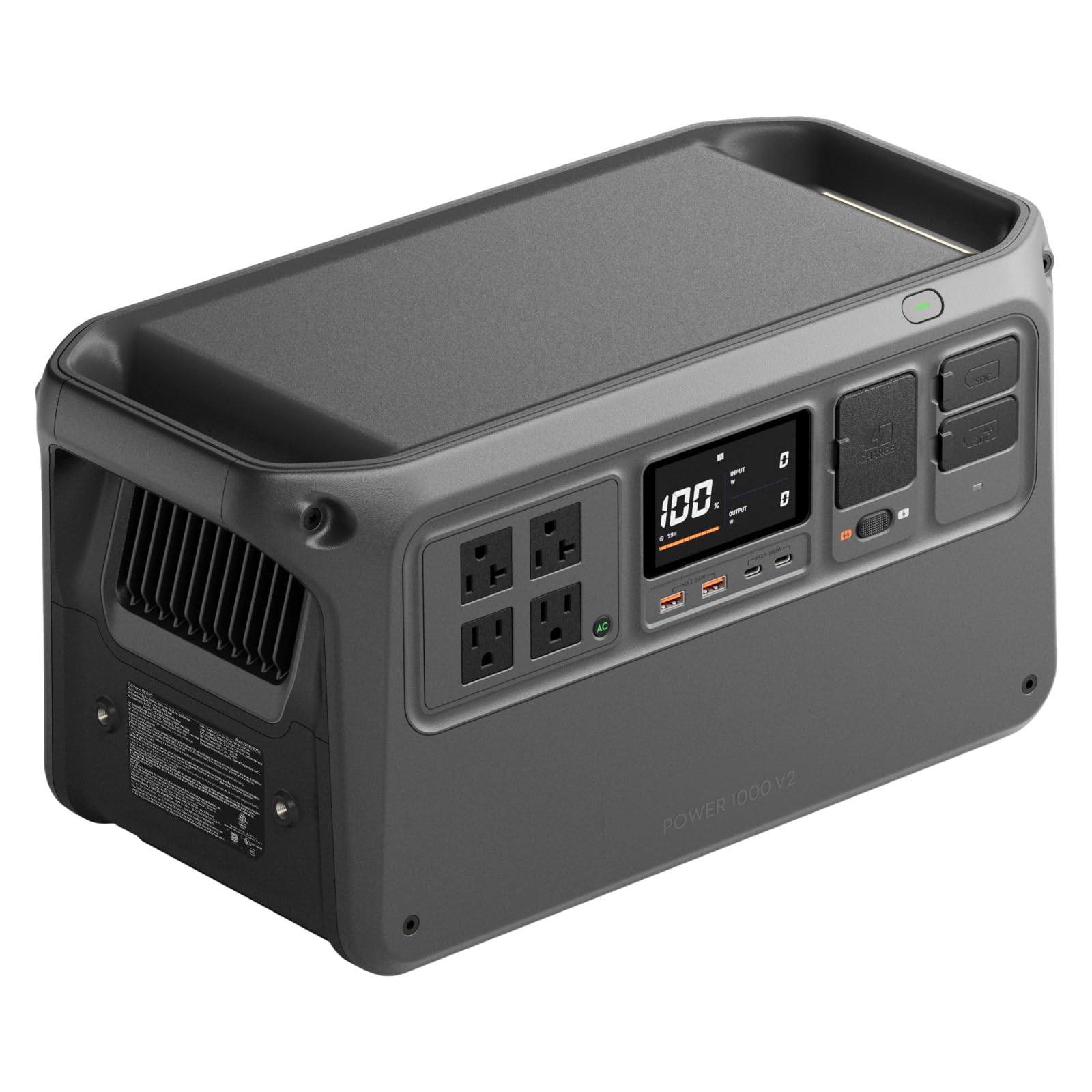
The DJI Power 1000 V2 is a marvel of engineering, packing a 1024Wh LFP battery with a 2600W continuous output into a chassis that weighs only about 22 pounds. Its headline feature is the recharge speed: 0 to 80% in a blistering 37 minutes — the fastest AC recharge of any comparable unit on this list. The dual 140W USB-C ports deliver 280W total, which is 40% more power than standard dual 100W setups.
Noise output is rated as low as 26 dB, which is genuinely library-quiet. The intelligent BMS with sub-nano coating and flame-retardant housing adds a layer of safety in extreme environments. The 10ms UPS switch time ensures seamless backup during outages, and the 10-year lifespan provides long-term confidence. The included AC power cable is all you need for fast grid charging.
One review noted it powers a full camper with an estimated 40-hour runtime on a full load. The 4,000-cycle lifespan means this unit will outlast most gear in your garage. The trade-off is that solar and car charging require separate adapters, as MPPT and car charging modules are not built-in. For those who want the fastest possible wall recharge in the most compact form factor, this is the unit.
Why it’s great
- 37-minute 0-80% AC recharge
- Dual 140W USB-C ports (280W total)
- Whisper-quiet at 26 dB
Good to know
- Solar and car charging require separate adapter purchases
- Proprietary connectors limit third-party accessories
3. Jackery Explorer 2000 v2

The Jackery Explorer 2000 v2 is a massive 2042Wh capacity station with a 2200W pure sine wave inverter, yet it weighs just 39.5 pounds — a full 41% lighter than many comparable 2kWh units. This weight reduction comes from Jackery’s CTB (Cell-to-Body) technology borrowed from EVs, which integrates the cells directly into the structural frame, saving space and increasing rigidity. AC Fast Charging takes it from 0 to 80% in 66 minutes.
In real-world usage, it powered a full-size refrigerator for over 21 hours during a power outage, and its 20ms UPS switching is UL1778 certified, meaning it automatically takes over without interrupting connected devices. The LCD display provides clear readouts of input, output, and remaining runtime. The app allows for remote monitoring, charge scheduling, and activating the Silent Charging Mode which operates at under 30 dB.
Multiple reviews confirm its reliability during hurricane season, with one user in Belize depending on it for off-grid Wi-Fi and internet. The carry handle is well-positioned for its 40-pound weight, and the inclusion of three AC ports alongside USB-C PD 100W makes it versatile for home and outdoor use. The only noted weakness is that the solar barrel ports can flex inward when the cable is inserted, so careful handling is advised.
Why it’s great
- 41% lighter than typical 2kWh units
- UL1778 certified UPS
- Fast 66-min 0-80% AC charging
Good to know
- Solar input barrel connectors can flex under cable weight
- Bluetooth pairing not always persistent
4. BLUETTI Elite 200 V2

The BLUETTI Elite 200 V2 is a beast in a compact package, offering a 2074Wh LiFePO4 battery with a 2600W continuous inverter that can surge to 3900W via BLUETTI’s HyperWatt technology. This power lifting capability is the highest in its class, meaning it can start a hair dryer, a coffee maker, or even a small window AC unit without breaking a sweat. The standby power consumption is a mere 10W — three times lower than comparable units.
The battery is CNAS-certified genuine automotive-grade LiFePO4, boasting over 6,000 cycles to 80% capacity, which translates to a 17-year lifespan under daily use. The three smart charging modes via the BLUETTI app let you control speed and noise: Turbo Mode hits 0-80% in 50 minutes, Standard Mode is gentler on the battery, and Silent Mode operates at 16-30 dB. The 15ms UPS backup provides seamless transfer during outages.
Users report running a microwave, air fryer, and shop vac simultaneously with headroom. At 53 pounds, it is heavier than the Jackery 2000, but the dual handles make lifting manageable. The built-in MPPT charge controller accepts up to 60V and 20A from solar panels. For those who need serious wattage output and the longest possible lifespan, this unit is the standout performer.
Why it’s great
- 3900W power lifting for high-demand appliances
- 6000+ cycle life (17-year lifespan)
- Ultra-low 10W standby consumption
Good to know
- Heavy at 53 pounds
- No built-in 30A RV port
5. Anker SOLIX C2000 Gen 2
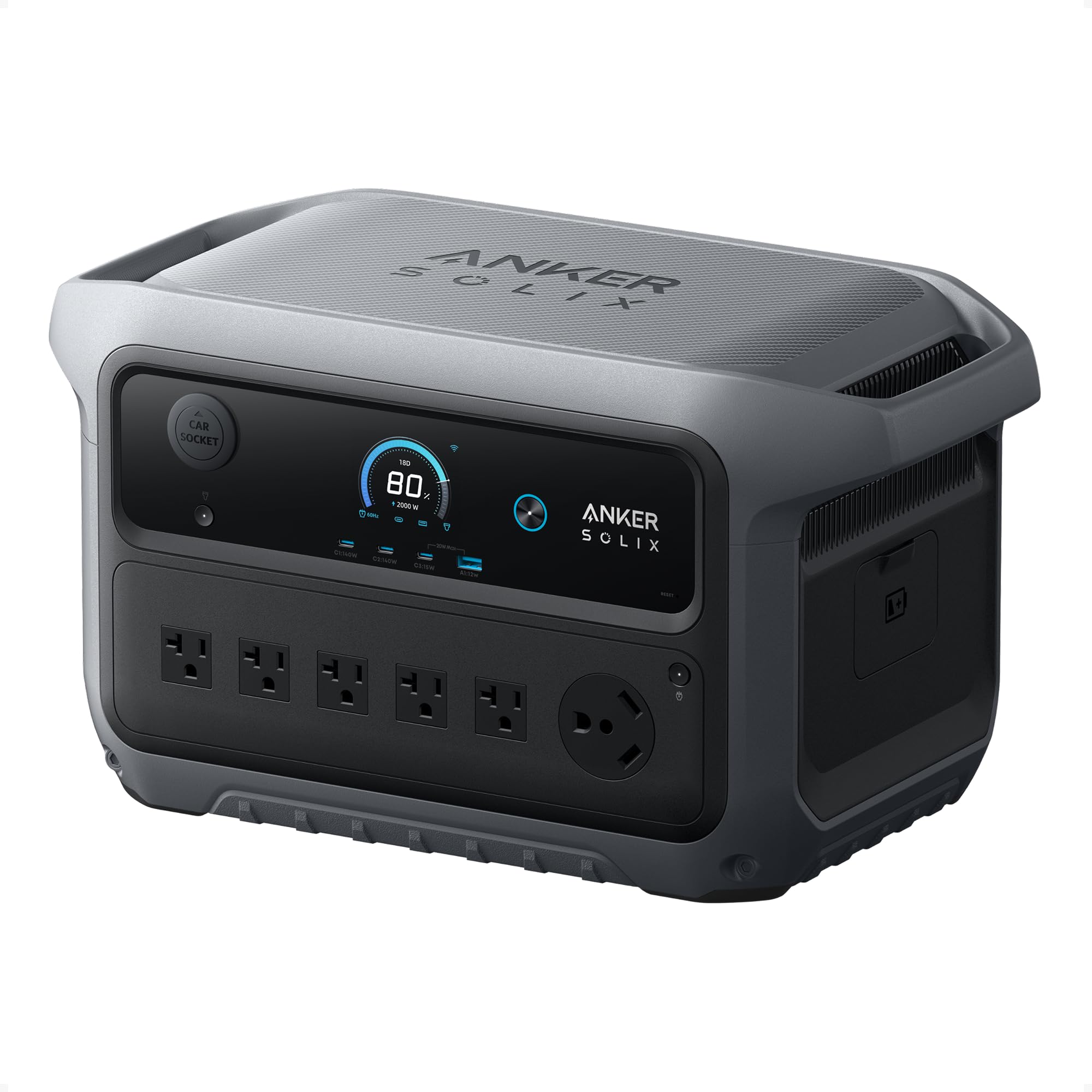
The Anker SOLIX C2000 Gen 2 sets a new standard for efficiency with a 2048Wh LiFePO4 battery that uses only 9W on standby. This low draw is critical for long-term home backup, as it means the battery is not draining itself when not in use. The rated output is 2400W with a peak of 4000W, which is enough to handle most window and RV air conditioners. Full recharge from AC takes just 58 minutes — one of the fastest in the 2kWh class.
The expandable design allows you to add an expansion battery to reach 4kWh for extended runtime, such as powering a dual-door fridge for up to 64 hours. The 800W UltraFast Alternator charging is a standout feature, allowing a full charge from your vehicle in just 3 hours — 8 times faster than a standard 12V socket. At 41.7 pounds and a footprint 25% smaller than similar products, it is remarkably compact for its capacity.
Customer feedback highlights its ability to run a 30-quart car fridge for 5-7 days on a single charge, making it perfect for van camping. The companion app provides accurate prediction of usage and runtime. The lack of a hard-copy manual in the box is a minor annoyance, but the quick start guide gets you up and running. For efficiency-focused buyers who want expandability, this is the pick.
Why it’s great
- Ultra-low 9W standby power
- 58-minute full AC recharge
- Expandable to 4kWh capacity
Good to know
- No printed manual included
- Heavy at 41.7 lbs — okay for stationary use
6. AFERIY 3840Wh

The AFERIY 3840Wh is the heavyweight champion of this list, offering a 3840Wh LiFePO4 battery that is expandable up to 11.5kWh — enough to run a full household of essentials for days. The 3600W continuous output and 7200W peak surge provide massive margin for starting heavy inductive loads. Full recharge from AC takes just 1.5 hours, and the unit includes a pull handle and wheels for easier transport despite its 80-pound weight.
With 15 output ports including 5 AC outlets, multiple USB-A and USB-C ports, and a 12V car socket, this is essentially a small home backup system in a box. The <10ms UPS transfer time ensures your computer or medical devices remain online during an outage. The smart app provides full monitoring, charge scheduling, and remote power-off capability. The unit is also eligible for the U.S. Residential Clean Energy Tax Credit of up to 30%.
Owners report it can run an entire RV except for the air conditioner, and with expansion packs, it can handle nighttime loads without issue. Customer support is praised for being responsive, and the 7-year support period adds long-term peace of mind. The sheer size and price point mean it is overkill for casual camping, but for serious home backup or off-grid living, the capacity-per-dollar ratio is unmatched.
Why it’s great
- 3.8kWh base, expandable to 11.5kWh
- 7200W peak surge for heavy loads
- Wheels and handle for transport
Good to know
- Very heavy at 80+ pounds
- App lacks separate solar/AC input display
7. BLUETTI AC70

Its 768Wh LiFePO4 battery and 1000W inverter (2000W Power Lifting) are enough to run a mini fridge, a 100W guitar amp for 8 hours, or a CPAP machine for multiple nights. The AC recharge from 0-80% in just 45 minutes and a full charge in 1.5 hours is incredibly fast for its class.
The robust XT-60 DC input connector is a welcome upgrade over older 7909 connectors, providing a more secure solar connection. The bright display shows battery percentage clearly, and the USB-C PD 60W port is enough to charge a MacBook Pro 16″ at full speed. The app remote control allows you to monitor status and set charge modes from your phone. The unit is quiet enough for use in a tent or van without disturbing sleep.
A review noted it performed like new after regular use, and the 3000+ cycle life ensures years of reliable service. It is slightly larger than the EB70S but offers more usable capacity. For those who want a dependable, fast-recharging mid-size station for car camping, busking, or emergency backup, the AC70 delivers excellent value without the bulk of larger units.
Why it’s great
- 45-minute 0-80% AC recharge
- 2000W power lifting for peak loads
- Reliable XT-60 solar input connector
Good to know
- Heavier than some 500W competitors at 22.5 lbs
- Battery drains quickly under continuous high load
8. GRECELL 1000W
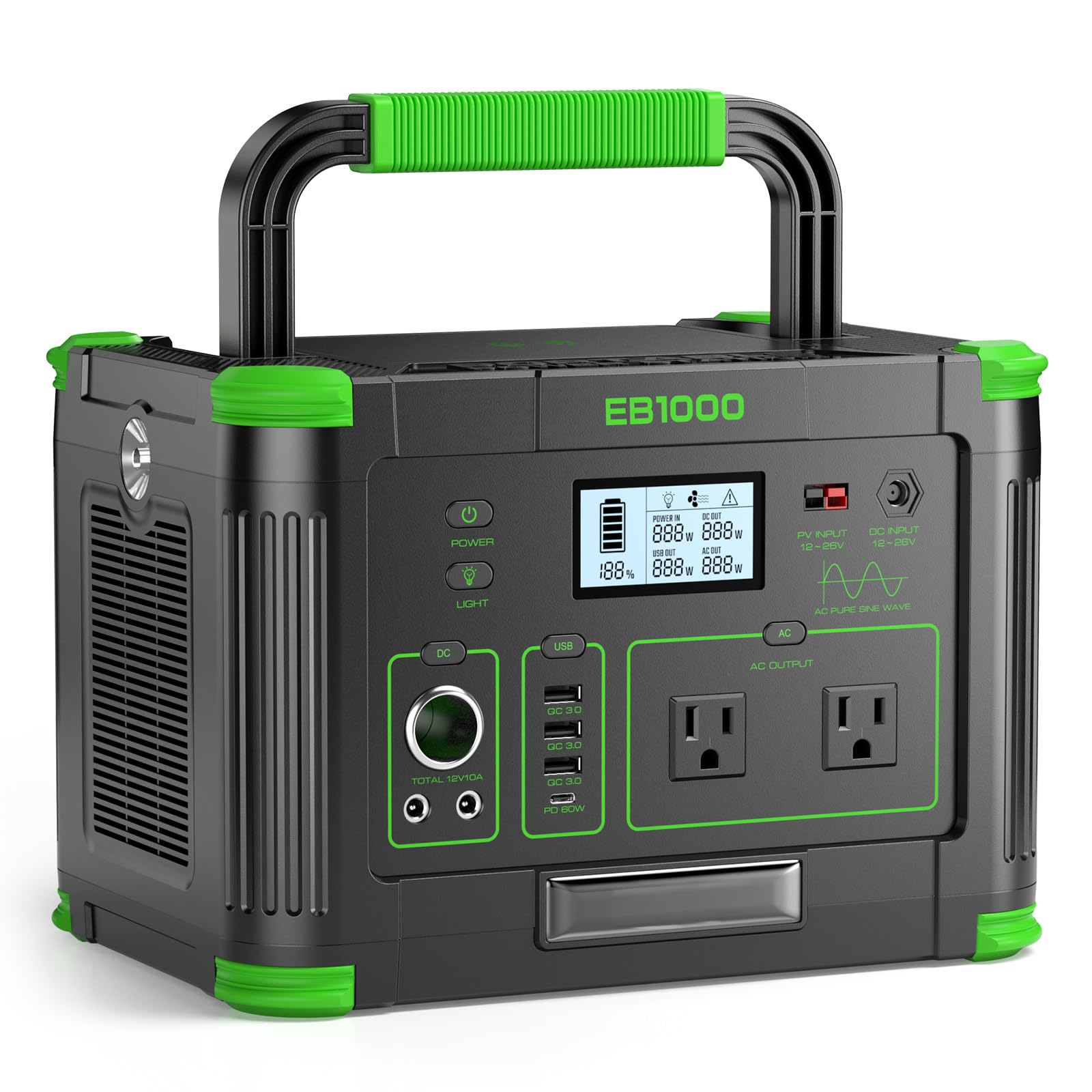
The GRECELL 1000W punches far above its price point with a 999Wh capacity and a 1000W pure sine wave inverter that can surge to 2000W. At just 17.8 pounds, it is one of the lightest units in the 1kWh class, making it genuinely portable for hiking-in campsites or carrying between floors. The 60W USB-C PD port charges a MacBook Pro at full speed, and the quick charge 3.0 USB-A ports ensure no port is a slow port.
The upgraded BMS includes auto shut-off when devices reach full charge, plus short-circuit and power-surge safeguards. The silent dual cooling fans only kick in under high load, keeping noise to a minimum during normal use. The MPPT technology ensures maximum extraction from solar panels — a review noted that a 200W rice cooker used only 50-56% battery per use, indicating efficient inverter performance.
Owners praise its value, noting it holds charge well and works reliably for phone charging, lights, and small appliances. One user runs a mini PC for 4-5 hours of gaming plus browsing for 6.5 hours on a single charge. The integrated wireless charger is a nice touch for keeping phones topped up without cables. For budget-conscious buyers who do not want to sacrifice capacity, this is the clear winner.
Why it’s great
- Excellent capacity-per-dollar ratio
- Lightweight at 17.8 lbs for 999Wh
- 60W USB-C PD fast charging
Good to know
- No LiFePO4 battery — standard lithium-ion
- AC output must be turned off manually to prevent standby drain
9. GRECELL 500W Solar Generator
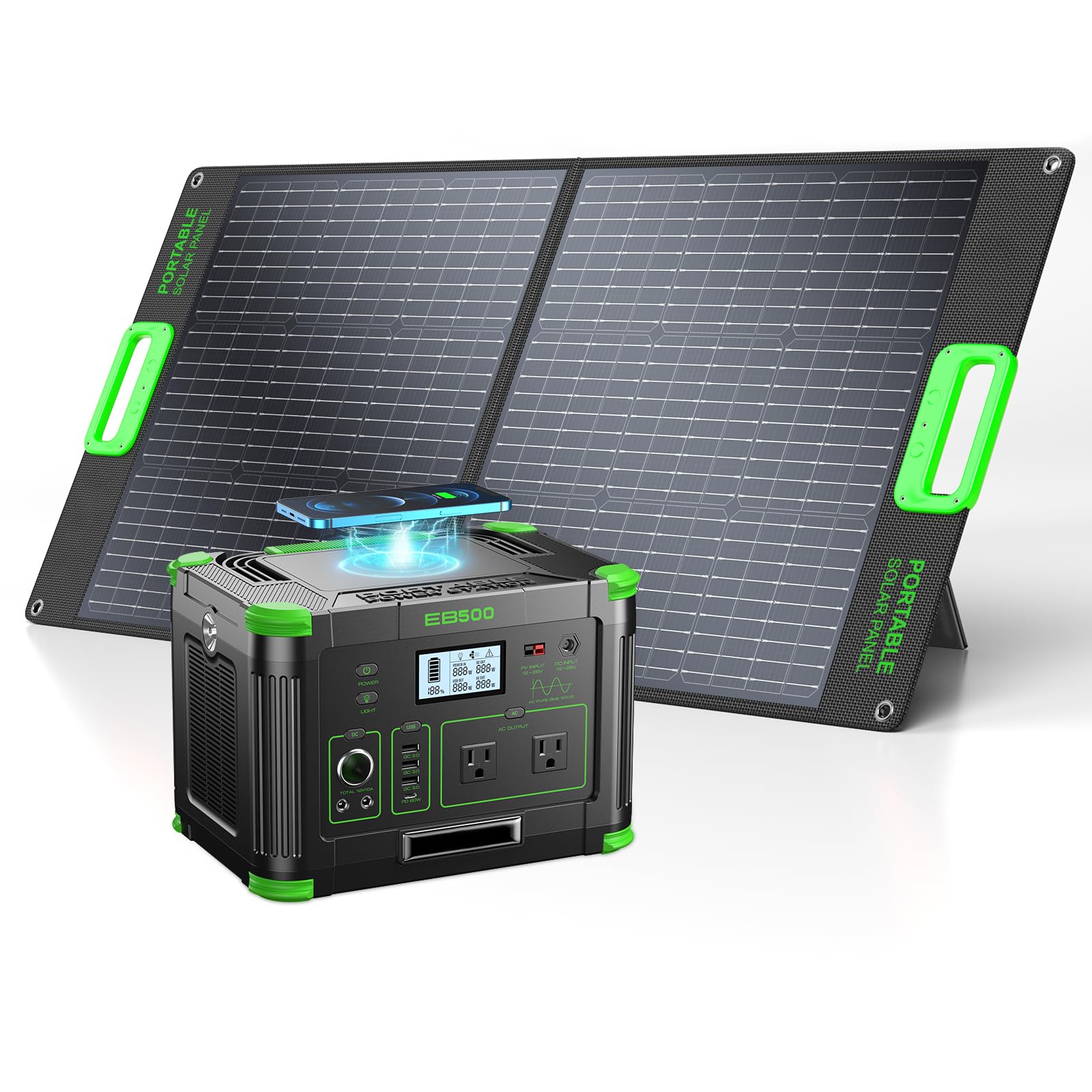
The GRECELL 500W Solar Generator is the ideal entry point for someone new to solar power. This kit includes a 519.48Wh power station and a 100W foldable monocrystalline solar panel, allowing you to replenish the battery in 6-9 hours from sunlight alone. The panel features 23.5% conversion efficiency and folds into a briefcase-like form factor with built-in kickstands for easy positioning.
The power station itself has a 500W pure sine wave inverter and can charge up to 10 devices simultaneously via 2 AC outlets, 3 USB-A QC 3.0 ports, a 60W USB-C PD port, 2 DC ports, a car port, and a wireless charger. The included connectors (8mm, 5.5×2.5mm, 3.5×1.35mm, 5.5mmx2.1mm, and Anderson cable) make it compatible with most third-party solar panels. The built-in smart chip identifies connected devices and maximizes charging speed while protecting against overcharging.
One user reported using this unit for over 9 months in temperatures ranging from 40-90°F, handling a simultaneous fridge, diesel heater, phone charging, and a coffee percolator. The lightweight design at 14.1 pounds and the built-in LED flashlight with SOS mode make it excellent for emergency kits. The caveat is that the maximum solar input is capped at 155W, so charging from solar is slower than modern units. For a complete ready-to-go solar package at an entry-level price, this is a solid choice.
Why it’s great
- Complete kit with 100W solar panel included
- Lightweight at 14.1 lbs
- Multiple connector types for wide panel compatibility
Good to know
- Max 155W solar input — slower than competitors
- 500W inverter limits use to small appliances only
FAQ
Can I run an air conditioner with a portable power station?
How long does a LiFePO4 battery last in a power station?
What is the difference between power lifting and surge wattage?
Can I leave a power station plugged in all the time?
Final Thoughts: The Verdict
For most users, the best power station winner is the EF ECOFLOW Delta 3 Classic because it offers the best balance of fast recharge, lightweight portability, and intelligent UPS protection at a premium but not extreme price. If you want the absolute fastest AC recharge and most compact form factor for its capacity, grab the DJI Power 1000 V2. And for maximum capacity and home backup capability with the potential for massive expansion, nothing beats the AFERIY 3840Wh.