
Running is simple: put one foot in front of the other. Carrying your phone, keys, water, and fuel does not have to be complicated, but the wrong gear turns a flow state into a chafing, bouncing, hand-cramping distraction. Whether you are training for a marathon, crushing a trail run, or just trying to stay visible on a dark winter pavement, the accessories you choose directly dictate how comfortable and focused your run feels.
I’m Min — the co-founder and writer behind Gadgets Feed. I analyze consumer tech and active gear for hours, cross-referencing spec sheets and real-run feedback to separate legitimate upgrades from shelf clutter..
Every item in this guide was selected because it solves a real runner’s pain point: bounce, sweat-soaked pockets, low-light danger, or inadequate hydration. Read on for a breakdown of the best running accessories built to keep you moving comfortably and safely.
How To Choose The Best Running Accessories
Before you add anything to your run kit, stop and ask: does this solve a problem or add distraction? Bounce is your biggest enemy — anything that shifts, slaps, or rubs mid-stride will break your rhythm instantly. Prioritise accessories with elastic retention, tight adjustability, and a low profile.
Lighting Strategy: Chest vs. Head
A headlamp forces you to turn your whole head to see corners; a chest-mounted light moves with your torso and keeps the beam exactly where you look. For road runners, 300 to 500 lumens with a wide flood beam is sufficient. Trail runners benefit from a focused spot mode to pick out rocks 50–70 meters ahead. Also check the battery capacity — 1800 mAh roughly translates to 10–20 hours of mixed use.
Storage Systems: Belt vs. Vest
Waist belts suit runners carrying only a phone, a key, and a gel or two — look for widths of 4–6 inches to prevent rolling, and elastic bands that hug without squeezing. Hydration vests add back pockets for a 1.5–2 liter bladder and front pockets for bottles, fuel, and phone access. The deciding factor is torso length: if a belt rides up, switch to a vest with dual sternum straps that lock it in place.
Hydration Capacity and Bottle Access
For runs under 90 minutes, two 8-ounce soft bottles or a single 2-liter bladder is plenty. What counts is how fast you can drink: flip-top bite valves are easier on the move than screw caps. Make sure the holster or holder has a firm grip — bottles that rattle or slip in their cradle are a nuisance you will stop to fix.
Quick Comparison
On smaller screens, swipe sideways to see the full table.
| Model | Category | Best For | Key Spec | Amazon |
|---|---|---|---|---|
| Viccux 500LM Running Lights | Lighting Vest | Night visibility | 500 lumens, 1800 mAh battery | Amazon |
| Zelvot Hydration Vest | Hydration Vest | Long runs & trails | 2L bladder, 900D Oxford fabric | Amazon |
| Fitletic Hydra 16 Belt | Hydration Belt | Hands-free hydration | 2x 8oz bottles, bounce-free | Amazon |
| Salomon Running Belt | Storage Belt | Race-day gear carry | Fits phone + soft flask + gels | Amazon |
| Fitletic Ultimate II Pouch | Waist Pouch | Phone + essentials carry | Fits large phones, gel loops | Amazon |
| Nitecore NU20 Classic | Headlamp | Ultralight trail lighting | 360 lumens, 1.34 oz, USB-C | Amazon |
| BLACK DIAMOND Astro 300 | Headlamp | Budget-friendly lighting | 300 lumens, 2.56 oz, AAA | Amazon |
In‑Depth Reviews
1. Viccux 500LM High-Visibility Running Lights
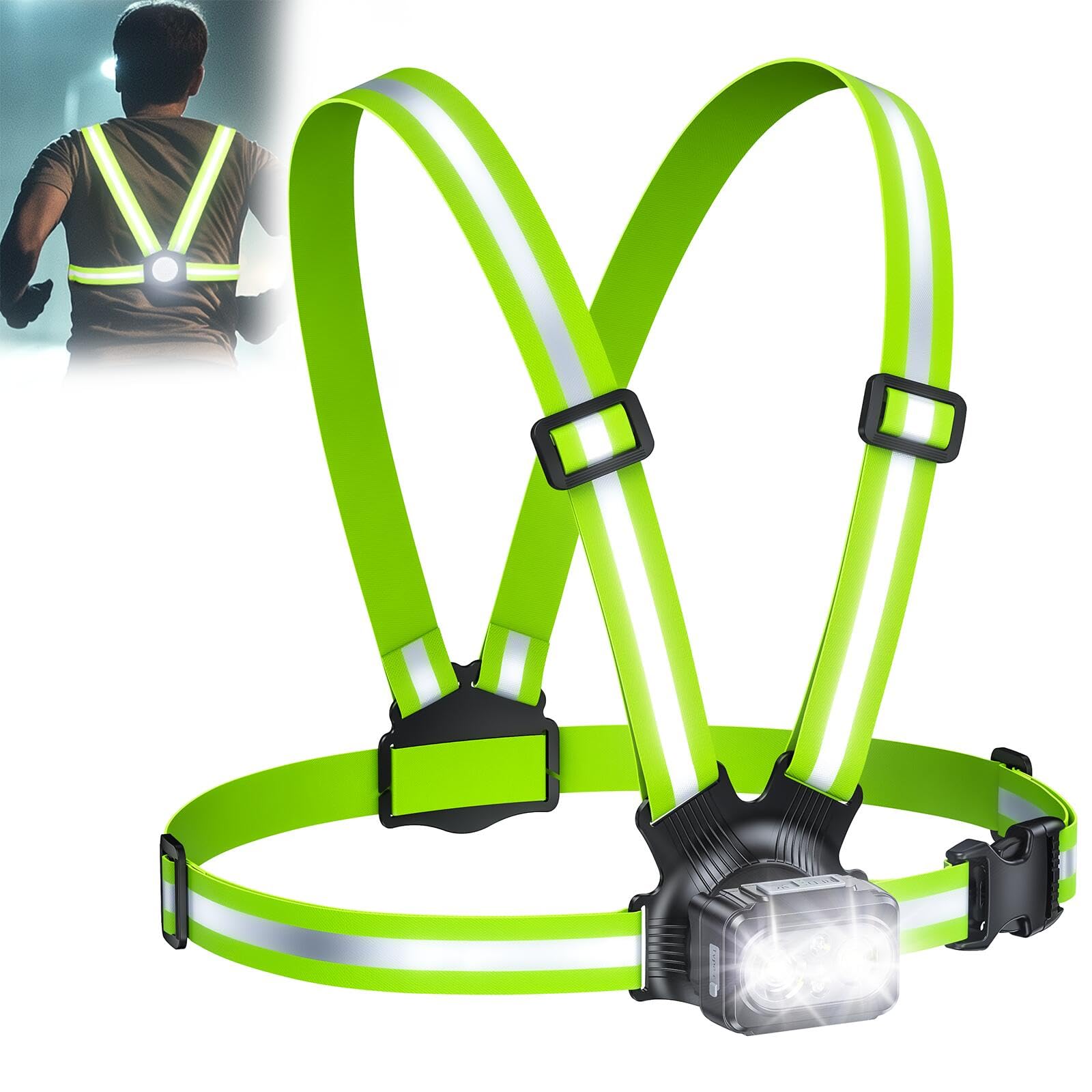
This vest-mounted lighting system is the single most practical night-running upgrade I have tested. Instead of strapping a lamp to your head and suffering the forward pull on longer runs, the Viccux distributes a 500-lumen LED across your chest with a 45-degree adjustable beam angle. The floodlight mode lights up the five feet directly ahead of you on potholed pavement, while the spotlight reaches 70 meters for open-road awareness. The 1800 mAh battery delivers 3.5 hours at maximum brightness or up to 20 hours on lower settings — more than enough for a full week of pre-dawn miles.
The reflective vest itself is the real safety magnet. A 200-meter visible reflective board covers the front, and 360-degree reflective straps wrap around your torso so drivers approaching from any angle see you without a separate rear light. The dual-shoulder straps distribute weight evenly, eliminating the neck fatigue that headlamps inevitably cause around mile 6. It also includes seven lighting modes including a red blinking rear signal.
Build quality is solid for the price point: IPX4 waterproofing handles rain and sweat, and the elastic waist adjusts from 31 to 51 inches. A few runners note that the strap loosens slightly mid-run and needs a quick tug to re-tighten, but no one reported it dropping or shifting significantly. The dual Type-C charging ports are a nice modern touch — no proprietary cables to lose.
Why it’s great
- 500 lumens with flood/spot modes cover both close and distance vision
- 360-degree reflective board eliminates need for a separate tail light
- 1800 mAh battery stretches to 20 hours on low mode
Good to know
- Straps may loosen slightly during longer runs and need a quick retighten
- Small-framed runners may have extra strap leftover even at the tightest setting
2. Zelvot Running Vest with 2L Water Bladder
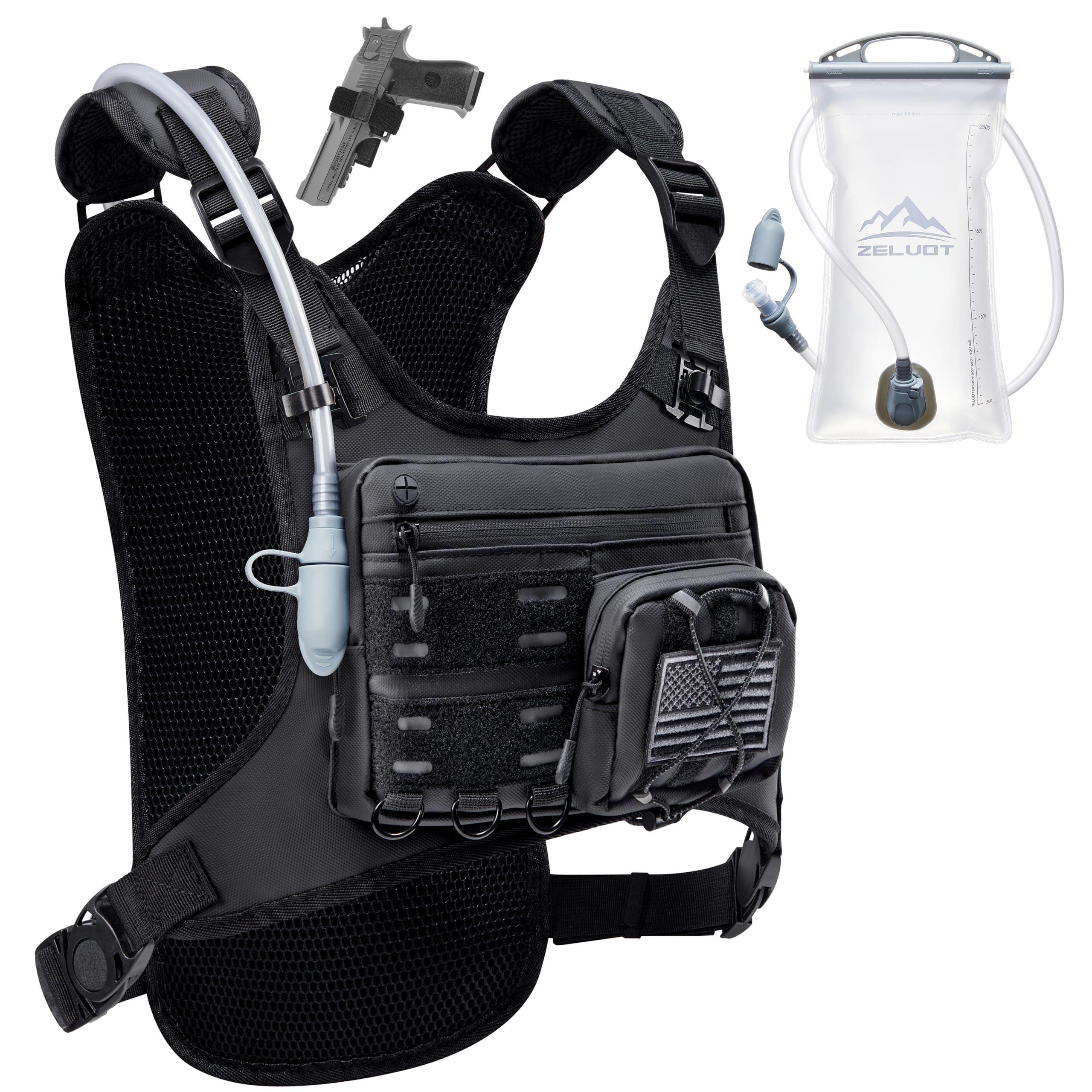
The front panel houses three waterproof zippered pockets — one large enough for a phone, two smaller ones for keys, fuel, or a wallet card. The 2-liter water bladder tucks into a dedicated rear sleeve, and the included bite valve delivers a high-flow stream without you having to break stride. The bladder itself is BPA- and PVC-free, and the hose detaches for thorough cleaning.
The 900D Oxford fabric outer shrugs off rain and trail debris, while the breathable mesh back panel keeps air moving so you do not end up with a soaked shirt on humid runs. Adjustable sternum and waist straps let you dial the fit tight enough to eliminate bouncing — a common complaint with cheaper vests. The reflective logo and front strip improve low-light visibility without making you look like a construction zone. For those who carry a defensive tool, the detachable holster pocket is a thoughtful addition.
A few users with chest measurements over 41 inches found the M/L strap length borderline, and some reported that cinching the shoulder straps fully tight caused the vest to ride up during high-cadence running. Sizing down one step solved it for most. The 2-year warranty provides peace of mind for a piece of gear that takes a beating on trails.
Why it’s great
- 2L hydration bladder with high-flow bite valve keeps you drinking hands-free
- Triple waterproof front pockets protect phone and fuel from rain/sweat
- Breathable mesh back and reflective detailing for comfort and safety
Good to know
- Shoulder straps may not tighten enough for smaller chest frames — consider sizing down
- Some users report slight vest creep during long runs with heavy load
3. Fitletic Hydra 16 Hydration Running Belt

Fitletic has a well-earned reputation among road runners, and the Hydra 16 proves why. The belt carries two 8-ounce quick-flow squeeze bottles in side holsters that hold tight without wobbling — no bottle jostle means no rhythm break. The main pocket measures 8 by 4 inches and fits even a large phone (Samsung S23 Ultra with Otterbox fits snugly), plus an inner organizer pocket for your ID and a credit card. The neoprene exterior resists sweat and light rain without needing a ziplock.
The patented bounce-free design comes from a contoured, hip-hugging waistband that distributes the 16 ounces of water plus phone weight evenly. It does not roll or flip, even during fast intervals. Two external gel loops sit on each side, and integrated race-bib toggles let you pin your number without safety pins poking your shirt. Reflective accents help with visibility on dim roads.
Some users found the dedicated gel loops too narrow for larger gel packets like Maurten or SiS — standard GU gels fit, but bigger ones need to be shoved into the main pocket. A few bottles arrived with a strong chemical smell that disappeared after a hand wash. The belt sits best at the front of the hips; if you wear it shifted to the side the bottles might brush your arms. Overall, a very stable, well-thought-out belt for distance runners who want water within arm’s reach.
Why it’s great
- Bounce-free design holds two 8oz bottles securely without shifting
- Fits large phones easily in the main compartment
- Integrated race bib toggles and reflective accents for race day
Good to know
- Gel loops are too tight for larger fuel packets; fine for standard Gu
- Bottles may have a factory chemical smell that requires washing before first use
4. Salomon Running Belt

Salomon is a dominant name in trail running, and this slim belt translates that expertise into a package that disappears under a shirt. The front compartment is a single stretch-panel opening that swallows a soft flask (up to 17 ounces) and five to six gels simultaneously without creating a lump. A rear zippered pocket fits the largest phones comfortably, including the iPhone 16 Pro Max. The belt sits low on the hips and stays locked in place through tempo runs and surges.
Elastic construction ensures there is no bounce — the belt hugs rather than grips, so you barely feel it after the first minute. Multiple runners reported wearing it for full marathons with no chafing and no need to adjust mid-race. The unisex sizing accommodates a wide range of waist measurements, and the slim profile means it layers well under a race belt or shirt.
The only pattern across feedback is that the belt can ride up slightly on runners with a very narrow waist or minimal body fat, especially when the front pocket is packed heavy. The narrow opening also requires you to Tetris your items in rather than drop them in a bucket-style pouch. But for its intended use — race-day carry that holds everything you need and nothing you do not — this Salomon belt is hard to beat.
Why it’s great
- Fits a 17oz soft flask plus 5-6 gels in the front pocket
- Rear zippered pocket holds oversized phones securely
- Zero bounce — stays locked even during fast intervals
Good to know
- May ride up on very narrow waistlines when fully loaded
- Single narrow opening requires deliberate packing; not a dump-all pocket
5. Fitletic Ultimate II Running Pouch

The Ultimate II is Fitletic’s no-hydration take on the waist belt — purely storage, purely minimal. The main compartment fits an iPhone 16 Pro Max, and an inner pocket organizes your ID or a credit card separate from the phone. A key strap with a small hook keeps your keys from jangling, and an external loop holds a single gel. The neoprene material wicks sweat and keeps the phone dry through most conditions, though heavy rain may still reach it without a baggie.
Integrated race-bib toggles mean you can skip safety pins entirely, and reflective tabs on the front and rear add a modest visibility bump for pre-dawn runs. The elastic belt is wide enough to distribute the phone’s weight without digging in, and multiple reviewers confirm it stays flat against the body with no bouncing or rolling regardless of pace. Users managing type 1 diabetes found it revolutionary for carrying an insulin pen, glucose reader, and glucose tabs without bulging.
The main trade-off is pocket space: if you want to also carry a water bottle or more than one gel, you will need supplementary storage. The belt is best for short to moderate runs where the only essentials are phone, key, ID, and one fuel packet. A few users also noted that the key hook works better with a car key fob than a traditional key ring — large rings may not seat securely.
Why it’s great
- Fits the largest phones with no bounce or shifting
- Integrated bib toggles and reflective tabs for race-day use
- Neoprene material resists sweat and light moisture
Good to know
- Limited pocket space — no room for a water bottle or multiple gels
- Key hook may not hold large traditional key rings securely
6. Nitecore NU20 Classic Ultralight Headlamp

At 1.34 ounces (38 grams), the NU20 Classic is almost forgettable on your head — until you fire up the 360-lumen main LED and see trails 119 yards ahead. This is a purposefully minimalist headlamp: no bells, no bulky battery pack, just a single USB-C rechargeable lithium-polymer cell that gives you up to 97 hours on the 1-lumen low mode. The 1-lumen setting is perfect for reading maps or moving around a tent without blinding your partner, while the high beam handles technical trail descents.
The controls are refreshingly simple — separate buttons for the white and red LEDs, so you never cycle accidentally through strobe modes to get to red. The red auxiliary light preserves night vision during stops or when running in groups. A battery indicator with three LED dots tells you remaining charge at a glance. The IP66 waterproof rating means it shrugs off rain and full submersion in puddles, and the 1-meter impact resistance handles drops onto rock.
The headband is glow-in-the-dark elastic with an adjustable tilt mechanism. Some users found the rear cord adjustment less intuitive than a traditional buckle, though modifying it with a cord lock solved the issue. The 0.96-inch depth also means the housing is very low profile — it fits under a hat brim without awkward pressure. The only real concession is the 360-lumen ceiling: if you need 500+ lumens for fast night trail running, you will want a more powerful unit. For backpackers, campers, and most runners, this is near-perfect.
Why it’s great
- Only 1.34 oz — disappears on your head even over distance
- USB-C rechargeable with up to 97 hours runtime on low mode
- Separate buttons for white and red light, no mode cycling
Good to know
- Rear cord adjustment is less intuitive than a buckle; some users modify it
- 360-lumen max is adequate for most runs but not brightest in class
7. BLACK DIAMOND Astro 300 Headlamp
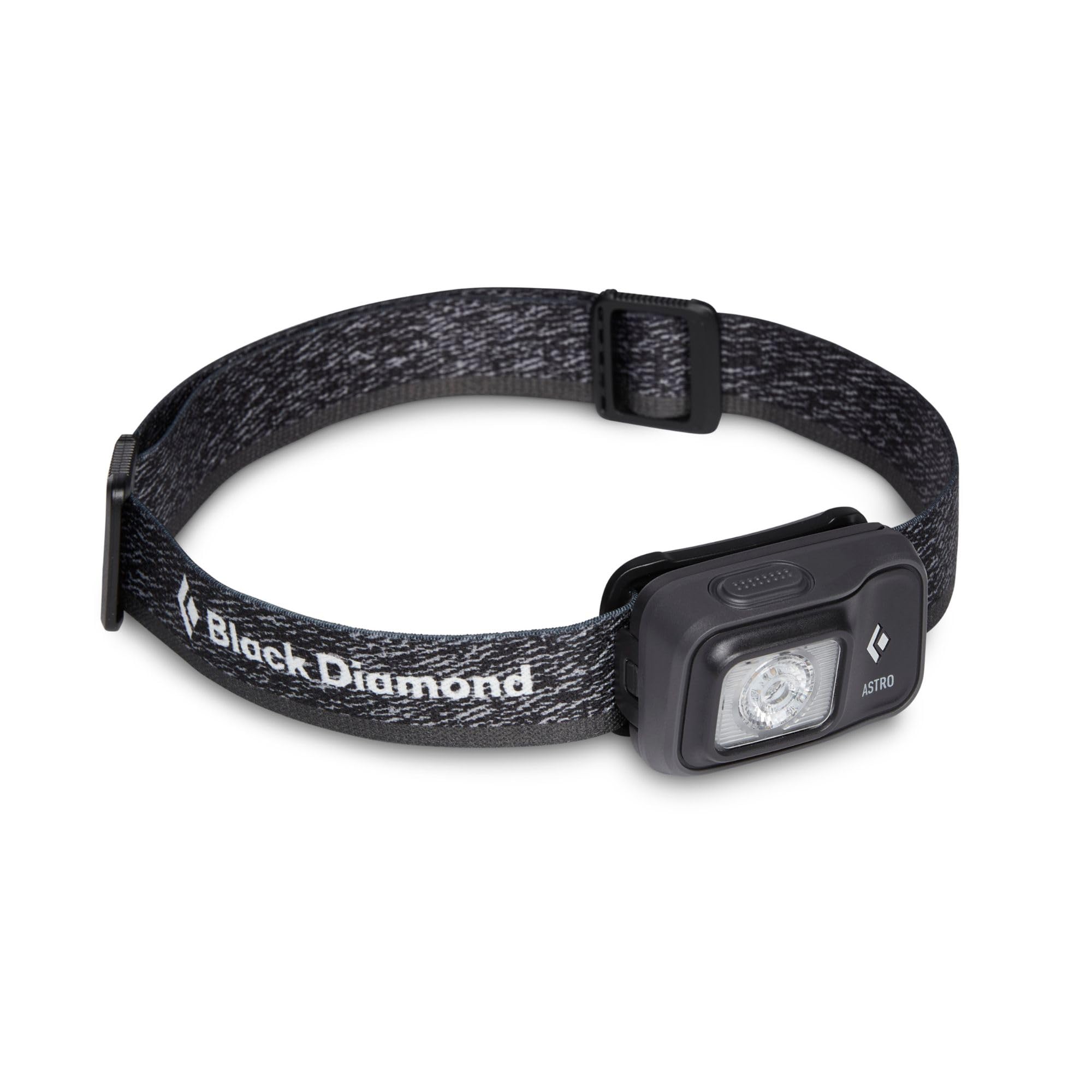
Black Diamond’s Astro 300 is the entry-level headlamp that gets the basics right without overcomplicating. It pumps out 300 lumens of clean white light from three AAA batteries (included), with three settings — full strength, dimming, and strobe — accessed through a single button on the top of the housing. The beam pattern is even and floody, ideal for pavement, campgrounds, and casual trail use. The dimming function lets you stretch battery life when you do not need full brightness.
Weighing only 2.56 ounces, the Astro 300 is light enough to wear for hours without noticing it. The adjustable headband fits most head sizes and the tilt mechanism angles the beam where you need it. The big differentiator here is dual-power compatibility: you can run three AAA alkalines or swap to Black Diamond’s rechargeable lithium-ion pack (sold separately), which gives you the flexibility of disposables in a pinch and rechargeables for long-term cost savings.
The main downsides are the headband itself — several users reported it coming loose and needing frequent retightening during runs — and the fact that the Astro 300 is white-only; there is no red mode for night vision preservation. The single-button interface is simple but requires a longer press to turn off, which can be annoying when you are fumbling in the dark. For the price, it is a solid starter headlamp that will serve most runners and campers well, but the headband stretch may push serious runners toward a pricier model.
Why it’s great
- 300 lumens of even, floody white light in a compact 2.56-oz package
- Dual-power option: AAA or rechargeable Li-ion battery (sold separately)
- Simple single-button operation with dimming and strobe modes
Good to know
- Headband tends to loosen during activity; needs occasional retightening
- No red-light mode; white light only
FAQ
Should I choose a running belt or hydration vest?
What is the ideal lumen count for night running?
Why does my running belt bounce and how do I stop it?
Can I wear a chest light and headlamp together?
Final Thoughts: The Verdict
For most runners, the best running accessories pick is the Viccux 500LM Running Lights because it solves two problems at once — powerful 500-lumen chest lighting plus 360-degree passive reflectivity in one vest that eliminates headlamp fatigue. If you need a hydration vest for long trail miles, grab the Zelvot Hydration Vest for its 2-liter bladder and secure pocket layout. And for race-day carry that disappears under your shirt, the Salomon Running Belt is the no-bounce companion that lets you focus on the finish line.