
Our readers keep the lights on and my morning glass full of iced black tea. As an Amazon Associate, I earn from qualifying purchases.
Specs are compiled from manufacturer listings and verified buyer reviews and can change over time — please confirm the key details on the product page before buying.
The first question every camper asks is whether a self-inflating mattress will keep them warm and off the cold ground. The answer lives in two numbers: the thickness in inches and the R-value (a measure of how well the pad blocks heat loss to the earth). Thicker foam and a higher R-value mean a warmer, more comfortable night, but they also mean more weight and bulk to carry.
I’m Min — the founder and writer behind Gadgets Feed. This guide is built by comparing the manufacturers’ published specifications and the patterns across verified customer reviews, so you get each pick’s real strengths and trade-offs instead of marketing spin.
Whether you are car camping with the family or heading out on a multi-day trek, this breakdown of the best self inflating air mattress options focuses on the specs that actually determine how well you sleep outdoors.
Our Picks at a Glance
How To Choose The Best Self Inflating Air Mattress
Choosing the right self-inflating mattress means matching its specs to where you’ll actually sleep. A pad that is perfect for a tent next to the car is often far too heavy to carry miles into the backcountry. The core trade-off is comfort and warmth versus packed weight and size.
Match Thickness to Your Sleep Style
Your comfort hinges on thickness. A 1.5-inch pad (like the Sea to Summit Camp Plus) lifts you off the ground but feels firm, while a 3-inch or 4-inch pad (like the OGERY or Elegear) gives side sleepers far more cushioning to ease pressure on hips and shoulders. If you sleep on your stomach and want a stable, low platform, a thinner pad might fit you better.
Understand R-Value for Cold Nights
The R-value tells you how well the pad insulates you from the cold ground, and higher is warmer. An R-value of 4.2 (as seen on the Camp Plus) suits three-season use, while an R-value of 9.5 (found on the QGB and Elegear pads) is designed for true winter conditions. Do not confuse this with thickness alone — a 2-inch pad with an R-value of 6 is often warmer than a 3-inch pad with a lower R-value.
Decide How You Want to Inflate It
Every self-inflating pad uses internal foam that expands to pull in air, but you top off firmness differently. Some use a multi-function valve (a valve that lets you add breaths by mouth), some include a separate pump sack (the Acacia), and several premium models feature a built-in electric pump (the Elegear and Hikenture) that inflates the pad in about a minute at the push of a button.
Quick Comparison
| Model | Best For | Thickness | Weight | R-Value | Amazon |
|---|---|---|---|---|---|
| Sea to Summit Camp Plus SI (Regular)★ Best Overall | Backpacking & 3-season trips | 1.5 inches | 2.4 lbs | 4.2 | Amazon |
| QGB Memory Foam PadBest Value | Winter camping & car travel | — | 3.9 lbs | 9.5 | Amazon |
| OGERY 3″ Sleeping PadBest For Side Sleepers | Side sleepers in tents | 3.15 inches | 6 lbs | — | Amazon |
| Elegear 4″ Electric Pump Pad | Car camping & guests | 4 inches | — | 9.5 | Amazon |
| Sea to Summit Camp Plus SI (Large) | Taller campers & extra warmth | 2.6 inches | 3 lbs | 4.3 | Amazon |
| Hikenture 4″ Electric Pump Pad | Rooftop tent & car sleepers | 4 inches | 5.4 lbs | 9.5 | Amazon |
| Therm-a-Rest Basecamp | Frontcountry tent luxury | 2 inches | 3 lbs 6 oz | 6 | Amazon |
| Acacia 4″ Y-Structure Pad | Couples & restless sleepers | 4.3 inches | — | 6 | Amazon |
| Exped MegaMat Medium Wide | Premium SUV & guests | 4 inches | — | 8.1 | Amazon |
In‑Depth Reviews
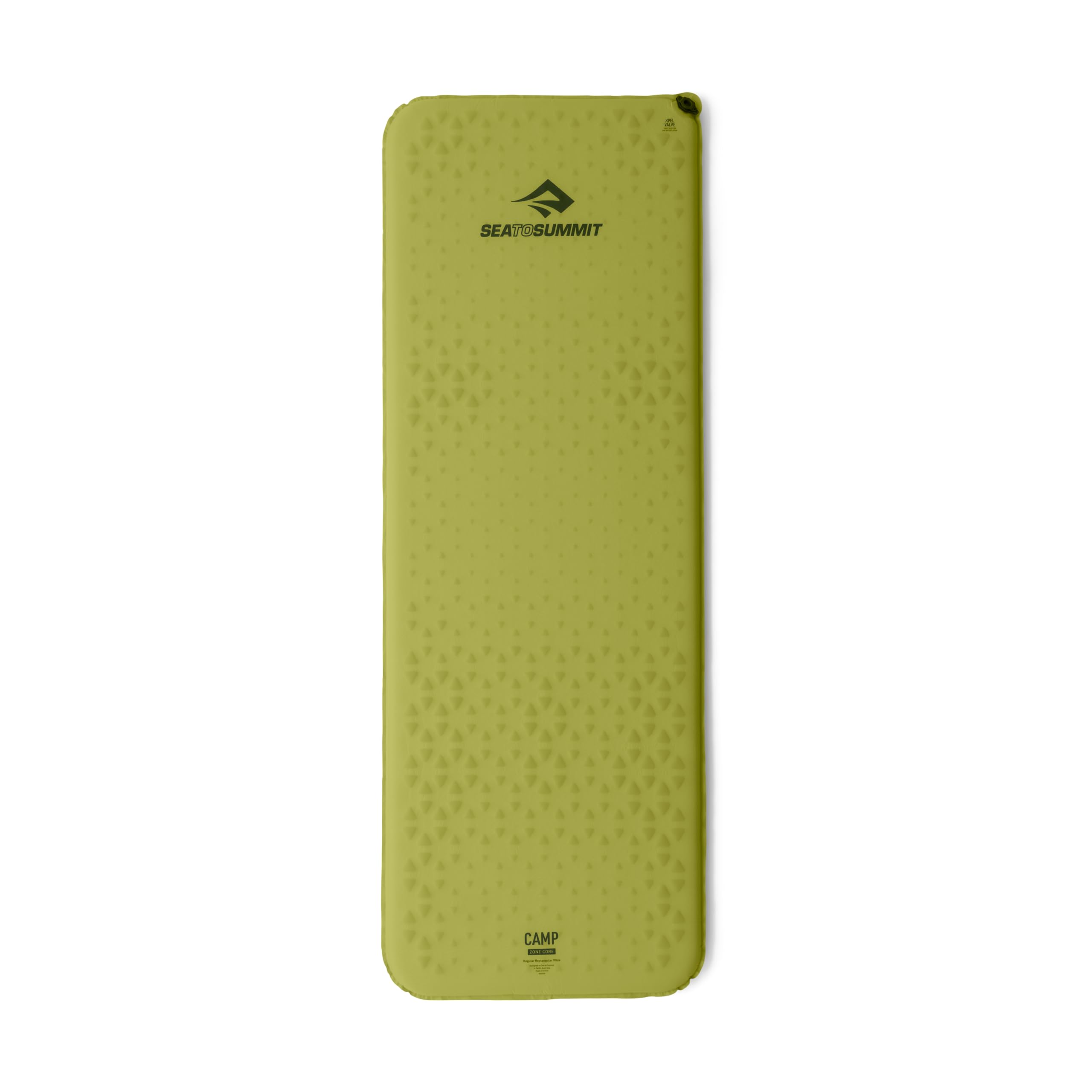
1. Sea to Summit Camp Plus SI Sleeping Mat, Rectangular/Regular
Our pick — 4.5★ from 650+ verified ratings; the strongest balance of quality and price.
The featherweight champion that insulates you without weighing down your pack.
At just 2.4 pounds and 1.5 inches thick, this mat is the clear choice for backpackers who still want foam comfort. The rectangular shape gives you extra sleep surface compared to mummy-style pads, which side sleepers and toss-and-turners will appreciate. It packs down to a compact 13.4 x 5.9 inches, so it disappears into a backpack rather than strapping to the outside.
The 4.2 R-value means it handles all but the most extreme cold, and buyers report that even below-freezing nights are no match for the ground insulation. The multi-function valve lets you fine-tune air pressure easily. As owners put it: “It was below freezing outside and this worked as advertised to insulate me from the ground.”
The one thing to know is that self-inflation takes patience — owners mention leaving it open for a while before your trip or adding a few breaths gets you to full firmness. The 75D recycled polyester face fabric is built to last season after season, and the included PillowLock patches keep a pillow attached.
Why It Earns The Top Spot
- Incredibly light for a self-inflating pad at 2.4 lbs, ideal for carrying miles
- Rectangular shape provides generous room for stomach and side sleepers
- Insulates well with a 4.2 R-value, keeping you warm down to freezing
What To Expect
- At 1.5 inches thick it is firm, not plush — heavier side sleepers may want more cushion
- Self-inflation is slow; plan to leave it open to expand before bed
Reach for this if: you prioritize pack weight and reliable 3-season warmth over plush cushioning.
Look elsewhere if: you are a larger side sleeper who needs thick pressure relief for hips and shoulders.
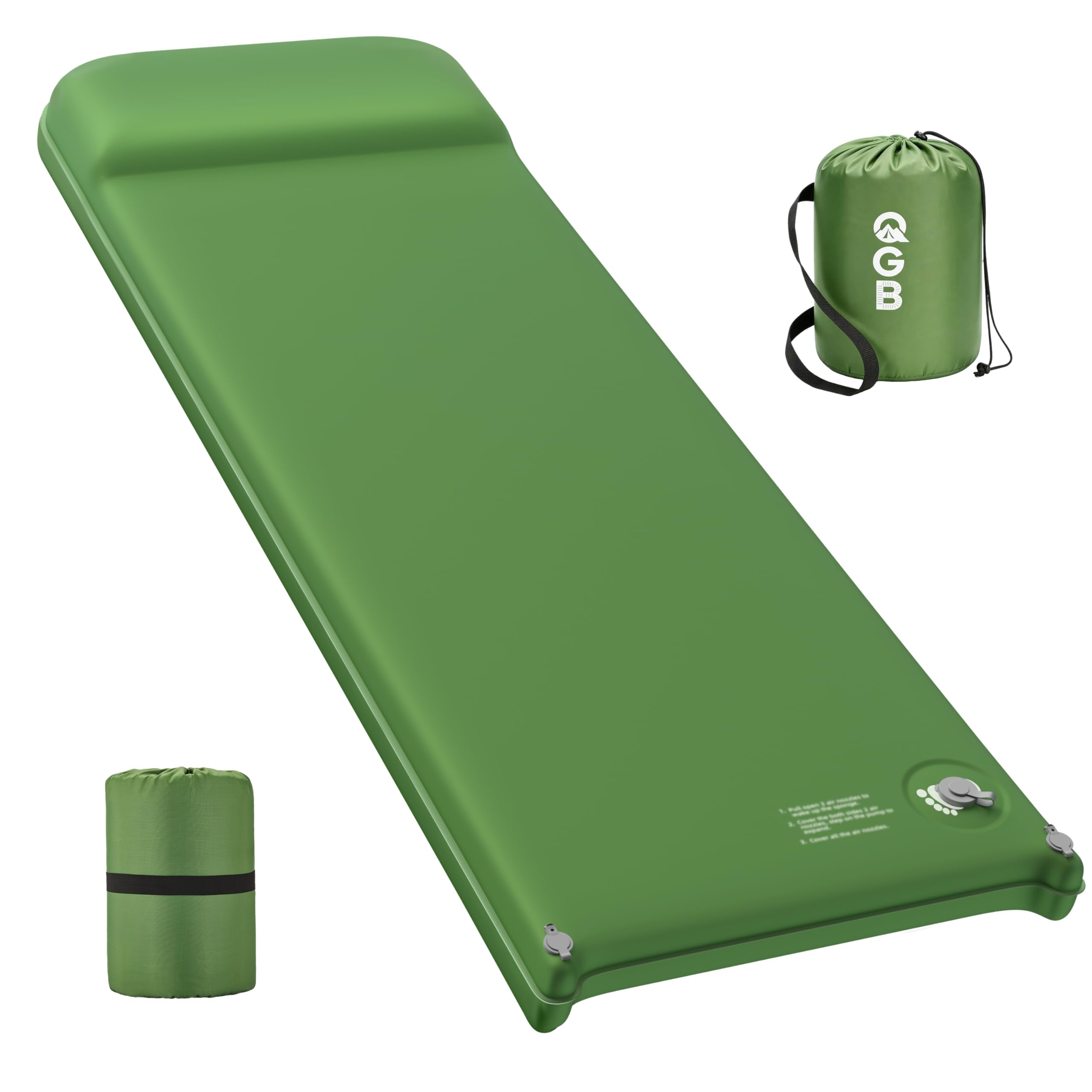
2. Memory Foam Camping Sleeping Pad, Foldable and Portable (QGB)
Serious winter insulation and a hotel-like feel without the hotel price tag.
This QGB pad delivers the highest warmth-to-value ratio on this list. With an R-value of 9.5, it is built for genuine cold-weather camping, keeping you warm in winter conditions that would defeat thinner pads. The high-density memory foam offers body-contouring softness that customers note feels nicer than a standard blow-up mattress, and it supports up to 800 lbs.
Setup is genuinely fast. The foam expands on its own in about 10 seconds, then the built-in foot pump tops it off in about 20 more seconds, so you are not huffing and puffing after a long drive. When packed it collapses to 12.5″ x 8.5″ and weighs 3.9 pounds — noticeably more compact than bulky traditional foam mattresses.
Reviewers point out the memory foam feels thick and air-insulated, and families have used it as a cot topper to save on hotel costs. The 50D stretch-knit fabric is quiet, so shifting positions at night does not wake your tent mates. Deflation can be slower than inflation, which is the main patience test.
The Real Strengths
- R-value of 9.5 makes it suitable for true winter camping insulation
- Comfort is the thing everyone raves about — plush memory foam, not bouncy air
- Compact foldable design collapses to just 12.5″ x 8.5″ at 3.9 lbs
The Fair Trade-Off
- Shoppers say deflation takes time and effort when packing up
- A few owners found it thinner than expected despite high comfort ratings
Grab it for: cold-weather car camping or as a guest bed topper where warmth and comfort matter most.
skip it if: you need the lightest possible pad for multi-day backpacking — 3.9 lbs adds up on the trail.
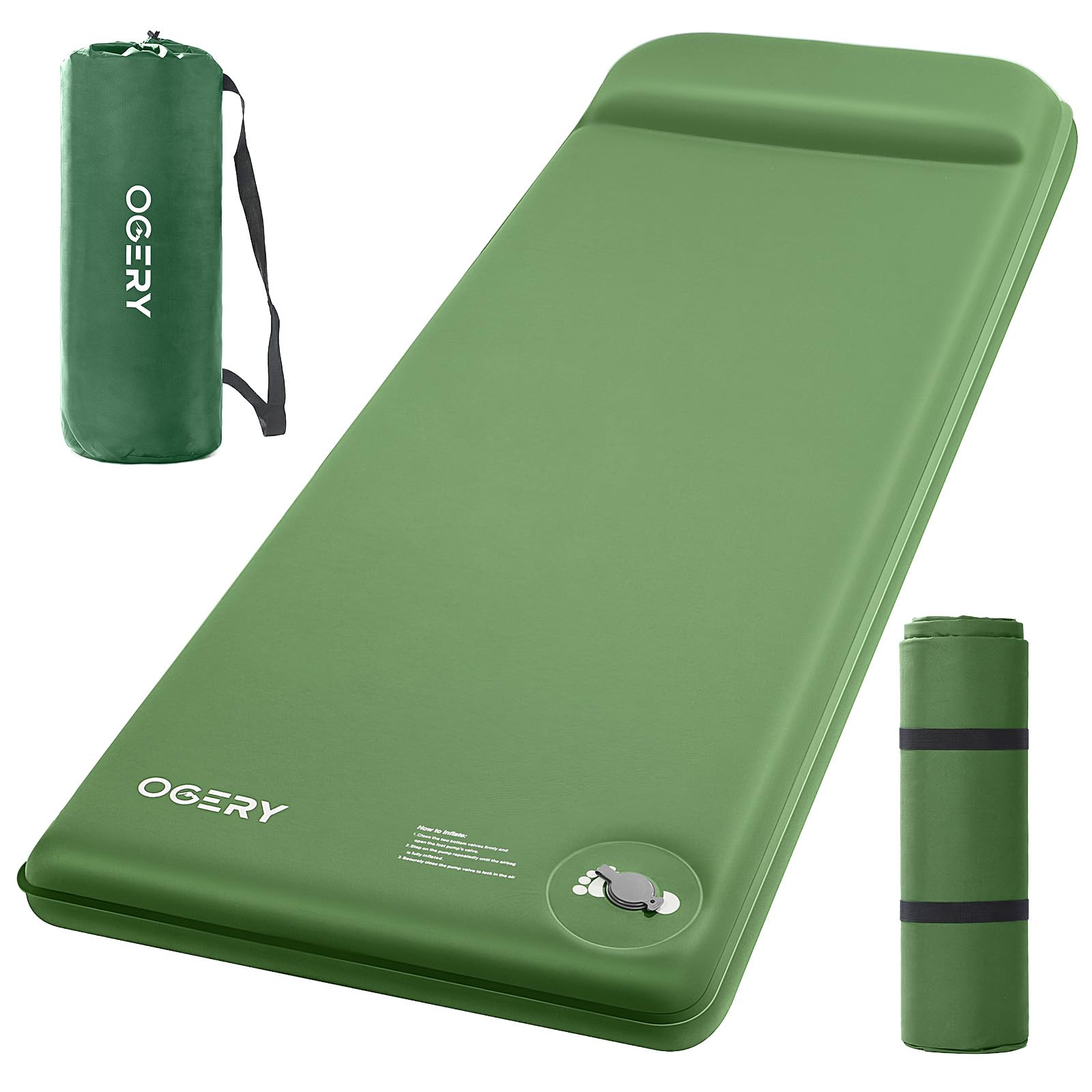
3. OGERY Self-Inflating Sleeping Pad, 3″ Memory Foam
Triple the foam of the Sea to Summit Regular, made for campers who need pressure relief.
This OGERY pad measures a generous 3.15 inches thick, making it more than twice as thick as the Sea to Summit Camp Plus Regular (which is 1.5 inches). For side sleepers who wake with sore hips on thinner pads, that extra foam is the difference between a rough night and a restful one. The hybrid foam-and-air structure reduces the bouncy feel common in air-only pads.
It is a heavier pad at 6 pounds, which steers it firmly toward car camping, RV trips, and guest use rather than ultralight backpacking. The built-in foot pump lets you fine-tune firmness without a separate pump or mouth blowing. Buyers report keeping it inflated for three straight nights without losing air and staying warm on bare ground in 40-degree weather.
The textured bottom surface helps stop it from sliding on tent floors or car trunks during the night. A large 6’1″, 275 lb reviewer found it “soft and just thick enough,” confirming it holds up well for larger sleepers. The main gripe is that the built-in foot pump takes some effort to reach full inflation.
Who It Serves Best
- Plush 3.15-inch memory foam relieves pressure on hips and shoulders for side sleepers
- Non-slip textured base keeps the pad stable on tent floors overnight
- Holds air well — owners mention full support for three consecutive nights
The Honest Catch
- At 6 lbs it is too heavy for backpacking; this is a car-camp companion
- Pumping to max firmness with the foot pump takes noticeable effort
Best suited to: car campers and side sleepers who refuse to wake up with aching joints on the ground.
Think twice if: you plan to carry this more than a short distance from your vehicle.
4. Elegear Air & Foam Self Inflating Sleeping Pad, 4″ Built-in Electric Pump
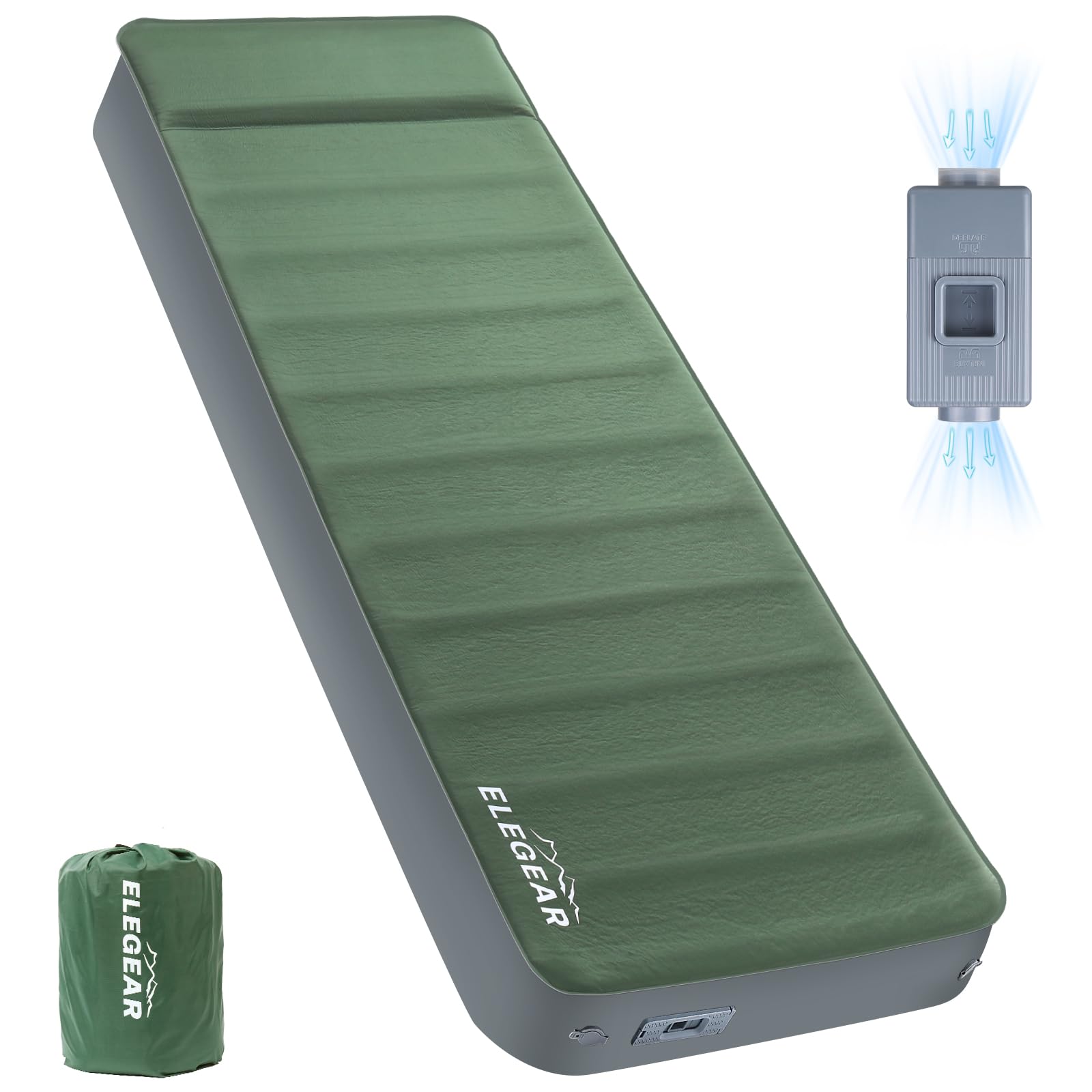
One touch and it inflates itself — the closest thing to a real bed at camp.
This Elegear pad removes the last bit of effort from camping sleep. The built-in electric pump inflates it in 1 minute and deflates in 2 minutes at the push of a button. It also has a vacuum compression mode for storage, so it packs down much smaller than its 4-inch thickness suggests. The pump battery lasts for multiple cycles, which owners confirm handles a week or more of use.
Comfort comes from 4 inches of 26D hollowed memory foam that adapts to your curves and distributes pressure evenly. A built-in pillow supports your head and neck, and the R-value of 9.5 makes it a genuine 4-season pad. Buyers have used it as a daily bed and report it rivals their home mattress for back pain relief.
The 50D knitted fabric with TPU layer is built for rugged outdoor use. One important note: the pump has an endurance limit of 20 minutes, so you should keep an eye on power level during use. While air retention is praised by most, a small number of owners received defective units that did not hold air overnight — the trade-off for any powered pad.
Why It Stands Out
- One-touch electric pump inflates in 1 minute and deflates in 2 — zero effort setup
- 4-inch memory foam with built-in pillow rivals a home mattress for comfort
- R-value of 9.5 provides serious insulation for all four seasons
Points To Watch
- Pump endurance is capped at 20 minutes total, so monitor battery during long trips
- Air retention is generally good, but a few owners reported leaky units
Pick this for: anyone who hates manual inflation and wants a true bed-like sleep for car camping or guests.
Consider the alternative if: you need a pad that never depends on battery power to set up.
5. Sea to Summit Camp Plus SI Sleeping Mat, Tapered/Large
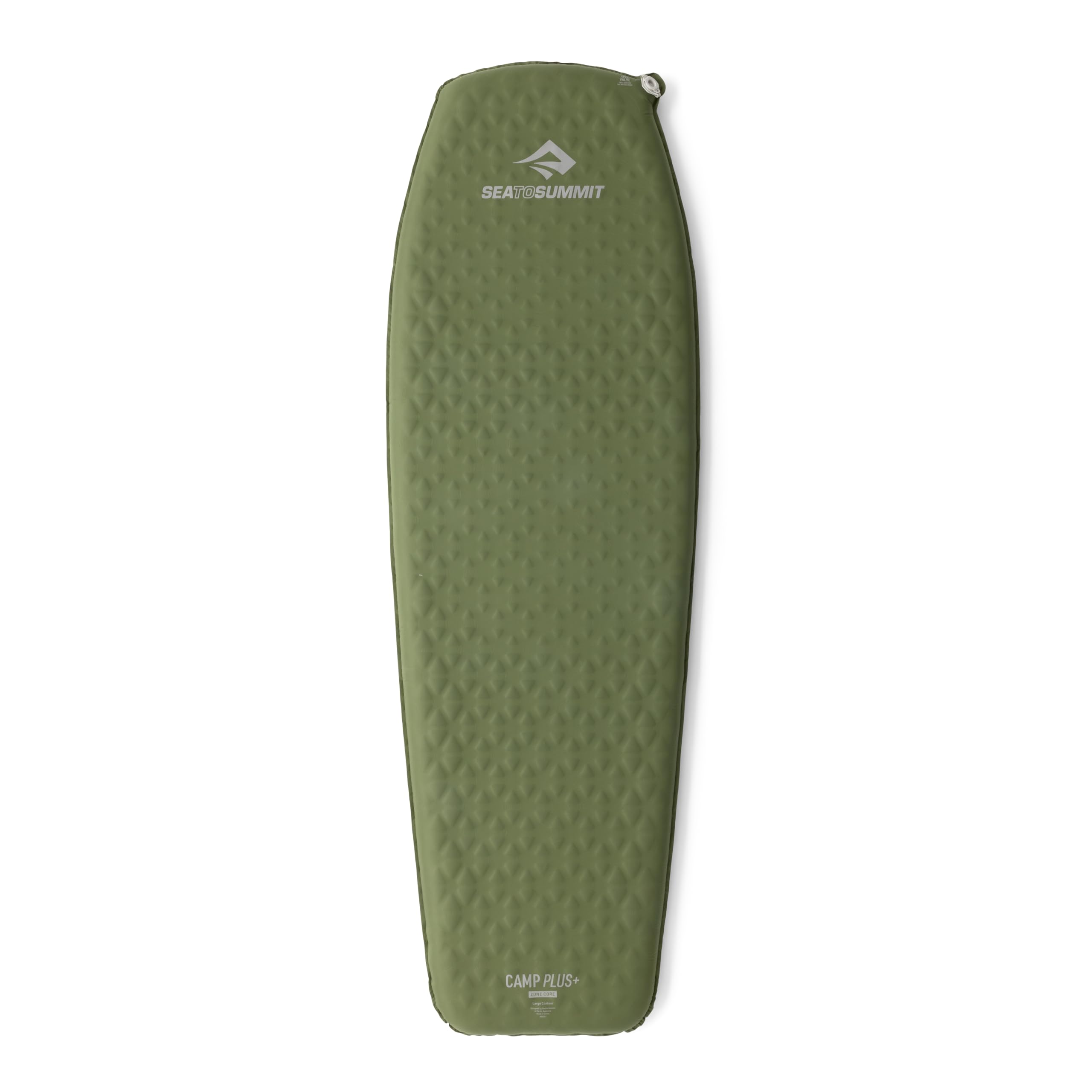
The big brother of the Camp Plus — nearly an inch thicker and warmer for taller campers.
This Large version measures 2.6 inches thick, about 73% thicker than the Regular Camp Plus at 1.5 inches, giving you more cushioning and a higher 4.3 R-value for colder ground. It stretches out to 78 inches long for taller sleepers, and the contour shape adds 12 percent more sleep surface area so you have room to shift positions. At 3 pounds with a 12.6 x 7.5-inch pack size, it is still reasonably portable for the warmth it offers.
The body-mapped air zone construction insulates where you need it and trims weight where you do not. The updated Xpel valve rolls tighter and stores smaller, and the reversible multi-function valve handles inflation, fast deflation, and fine-tuning of pressure. Owners say it’s nearly as comfortable as a thicker Exped pad but at a fraction of the cost.
One honest caveat: the foam arrived compressed from shipping and took time to fully expand, and self-inflation is slow at first. Buyers recommend giving it a day or two to fluff up and adding a few breaths to reach maximum firmness. The 75D polyester face fabric is durable and built to last.
The Strong Points
- 2.6-inch thickness and 4.3 R-value bring real warmth to cold-weather camping
- Contour shape adds 12 percent more sleep area for restless sleepers
- Compact 12.6 x 7.5-inch pack size keeps it feasible for carrying
The Reality Check
- Foam needs time after shipping to fully expand before first use
- Self-inflation alone won’t reach max firmness — expect to add breaths
Choose this if: you want a warmer, roomier Sea to Summit pad without jumping to a 4-inch heavyweight.
Pass on it if: you want electric-powered inflation or the plush feel of thick memory foam.
6. Hikenture 4″ Thick Self Inflating Sleeping Pad
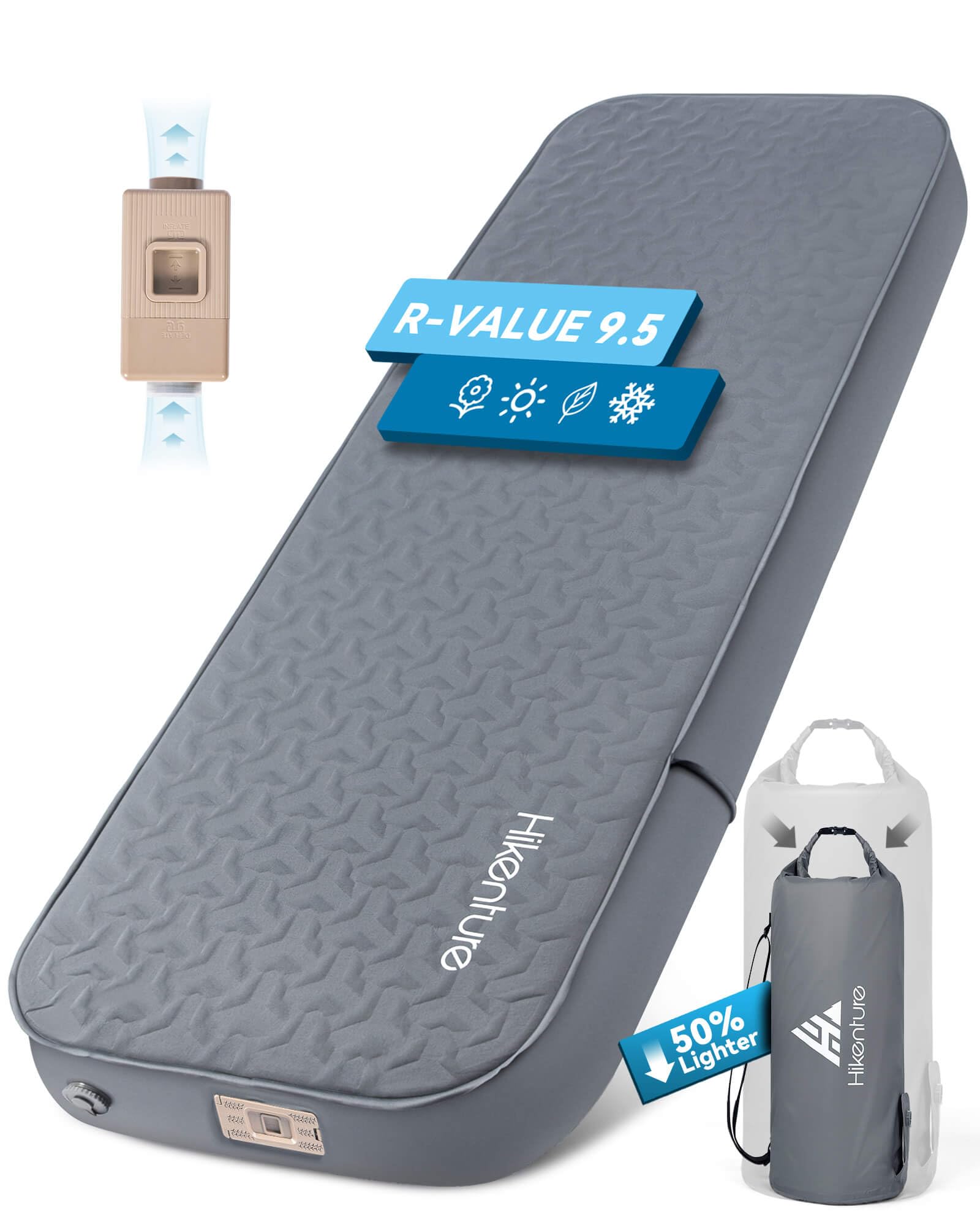
Hotel-grade comfort that inflates faster than your morning coffee brews.
This Hikenture pad targets the camper who wants true luxury sleep without manual labor. Its built-in electric pump inflates the 4-inch thick pad to firmness in just 90 seconds, and a reverse button makes it suck itself flat for storage. The 80 x 28-inch surface gives generous room, and the stretch-knit fabric is whisper-quiet when you roll over, so tent mates sleep undisturbed.
It boasts an R-value of 9.5 for year-round insulation against cold, damp ground, plus a Y-structure of airflow channels that locks in body heat. Owners have used it in rooftop tents with zero overnight deflation and noted the battery lasts multiple cycles. Its 5.4-pound weight makes it a car-camping or RV companion rather than a backpacking pad.
Buyers who made the switch from all-air mattresses say it is noticeably better — softer, warmer, and without the crinkly plastic noise. The honest caveats are that some owners found it slightly thinner than the advertised 4 inches and that an occasional unit arrives with a faulty pump. Test the pump before you head into the backcountry.
What Wins People Over
- Electric pump inflates to full firmness in 90 seconds flat, hands-free
- 4-inch foam plus R-value 9.5 delivers home-mattress comfort in any season
- Quiet stretch-knit fabric means no crinkling when you shift at night
What To Know Before Buying
- At 5.4 lbs it is strictly for car camping, not hiking in
- A few owners received pads with pump defects — test it before your trip
Reach for it when: you want electric convenience and cloud-like 4-inch comfort for car or rooftop-tent camping.
Look elsewhere if: you need a pad light enough to strap to a backpack.
7. Therm-a-Rest Basecamp Self-Inflating Camping Sleeping Pad

The iconic American pad that keeps your hips off the dirt and your guests happy.
Therm-a-Rest built its name on self-inflating pads, and the Basecamp shows why. The WingLock valve inflates 3 times faster than a classic valve and deflates almost instantly, solving the biggest frustration with foam pads. At 2 inches thick with an R-value of 6, it offers year-round insulation for frontcountry campers who want ground warmth without extreme bulk. It measures 77 x 25 x 2 inches and rolls to a manageable 26 x 7.5 inches.
Owners say it feels like a real bed on a cot, with enough thickness that “your butt doesn’t hit the ground.” It supports up to 1,440 pounds, so it handles heavier sleepers and even two people lounging. One dedicated owner reports their pad is “still fantastic after 5 years,” pointing to the durability that makes Therm-a-Rest a trusted name.
This is explicitly a car-camping pad. Buyers are clear it is too heavy and bulky for backpacking, making it ideal for tent camping or a soft spot for guests to crash. The stuff sack uses a PFAS-free DWR coating that sheds moisture while being better for the environment. For best results, leave the pad fully inflated for 2-4 hours before your first night.
Why It’s A Legend
- WingLock valve inflates 3 times faster than classic valves for quick setup
- R-value of 6 delivers true year-round insulation from cold ground
- Supports 1,440 lbs and earns years of loyalty from repeat buyers
The Fine Print
- Too heavy and bulky for backpacking — this pad is made for car camping
- Self-inflation needs a few added breaths to reach maximum comfort
Best for: campers who want a proven, durable pad for tent sites next to the car or for guest overflow at home.
Not for: anyone counting ounces on a long trail — look at the 2.4 lb Sea to Summit instead.
8. Acacia 4″ Thick Self Inflating Sleeping Pad with Y-Structure

Ultra-plush Y-structure foam that snaps together with a second pad for couples.
This Acacia pad stands out for its clever Y-shaped telescopic foam that compresses the pad’s volume by up to 60% once deflated. That means a genuinely thick 4.3-inch sleeping surface that rolls down to a surprisingly manageable size. The two-way valve handles most inflation automatically, and you can use the included carry bag as a pump sack to dial in your preferred softness. It holds up to 440 lbs without bottoming out.
Side buckles let you connect two pads together to create a wide double sleeping surface, making it a favorite for couples and families. The 80-inch length gives tall sleepers room to stretch. Owners coming from standard inflatable mattresses describe the difference as “night and day,” praising the flat design that prevents hip and back pain for side sleepers.
The rugged 30D elastic fabric with TPU coating resists abrasions and punctures, and heat-molded seams keep air locked in. There are honest reports of occasional valve leaks, but buyers consistently praise the company’s fast replacement service when issues arise. It is bulky when packed for storage, so plan for trunk space rather than a backpack.
The Highlights
- 4.3-inch foam with Y-structure compresses volume by up to 60% when packed
- Side buckles connect two pads for a roomy couple’s sleeping surface
- Holds up to 440 lbs with no bottoming out, ideal for heavier side sleepers
The Considerations
- Packed size is bulky and demands decent trunk or storage space
- Occasional valve leaks are reported, though replacement service is quick
Grab this for: couples or restless side sleepers who want plush 4-inch comfort that packs smaller than expected.
pass on it if: you need the absolute lightest pad or prefer the simplicity of a built-in electric pump.
9. Exped MegaMat Sleeping Pad, Medium Wide
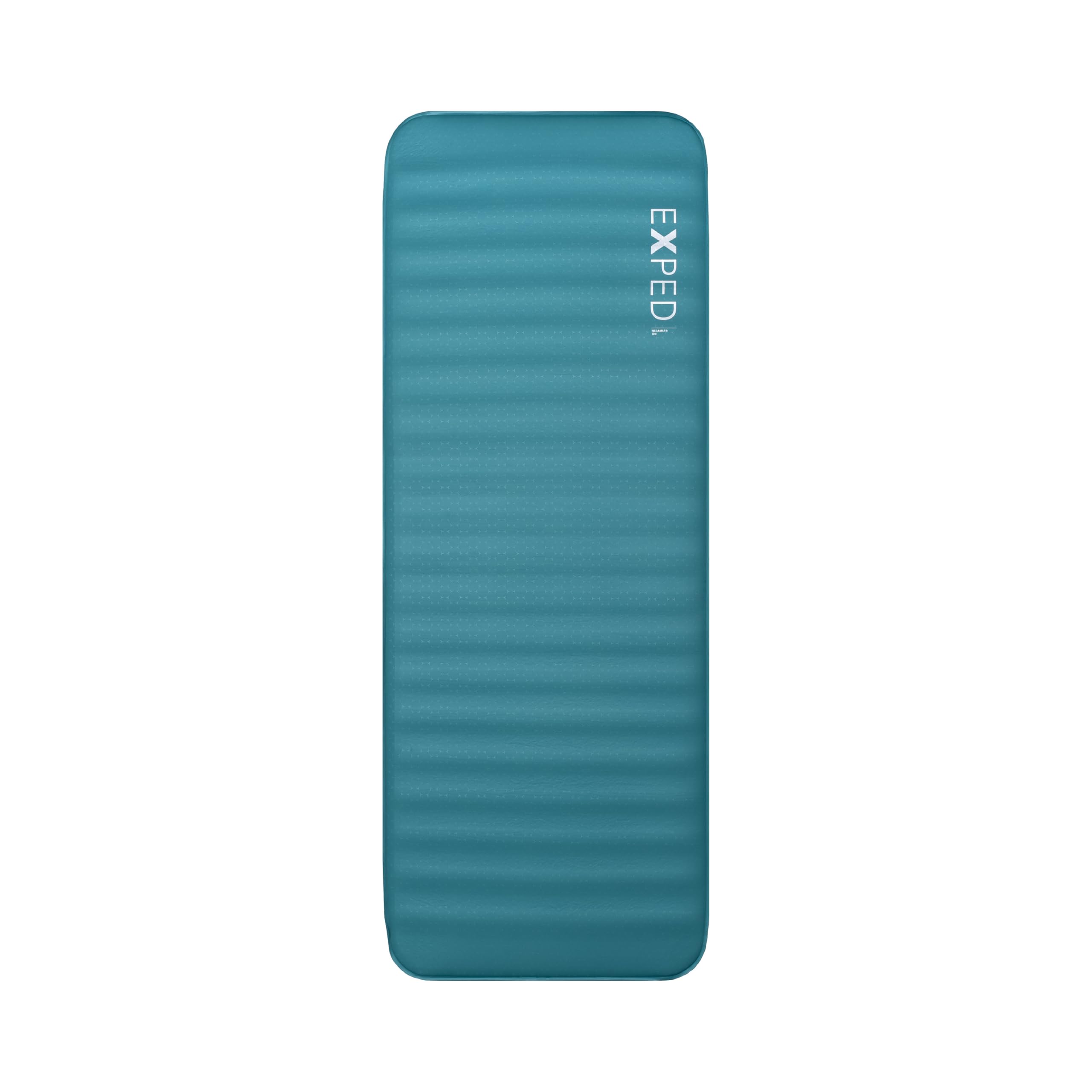
The gold standard of sleeping pads, built for those who refuse to compromise in the wild.
The Exped MegaMat is the pad that other pads aspire to be. It combines 4 inches of open-cell foam with air-core-channeled insulation and 3D vertical sidewalls that prevent that dreaded “bottoming out” when you sit or roll. The design targets both tent and car camping — it works beautifully as a mattress inside an SUV or on the ground under a tent. With an R-value of 8.1, it insulates superbly across all seasons.
The 100% recycled 4-way stretch tricot polyester surface feels soft and cradling against your skin, and customers note waking up genuinely well-rested while camping, comparing the sleep to their home mattress. The included Top-Up Pump lets you adjust from ultra-plush to firm, and the welded side handle makes transport easy. A 300 lb user plus family members have used it without issue, and it survives comfortably on top of cots.
This is the premium investment on this list. Buyers are split on value — many call it the best sleep they’ve ever had camping, while a smaller group feel it is overpriced. First inflation is slower than the instructions suggest, so give it time or use the pump. It is purposefully bulky, so plan for a vehicle or generous storage space, not a backpack.
The Premium Payoff
- 4-inch open-cell foam with R-value 8.1 provides class-leading warmth and cushioning
- 3D vertical sidewalls prevent bottoming out for all sleeping positions
- Owners consistently compare the sleep quality to a home mattress
What The Price Buys You
- First inflation is slow — plan time or use the included Top-Up Pump
- Packed size is large, requiring a vehicle for transport
Invest in this if: you want the definitive premium sleeping pad for SUV camping or a permanent guest bed that folds away.
Reconsider if: you are budget-conscious or need a pad that packs small for travel — lighter, more affordable options exist.
Understanding the Specs
R-Value Insulation Rating
R-value measures how well the pad blocks heat transfer to the cold ground. A higher R-value means a warmer sleep in cold conditions. A rating of 4.2 to 4.3 suits 3-season camping, while a 9.5 rating is built for genuine winter use. If you mostly camp in mild weather, a lower R-value pad saves you weight and money.
Foam Thickness & Comfort
Thickness dictates pressure relief. A 1.5-inch pad keeps you barely off the ground — fine for stomach sleepers and weight-conscious backpackers. A 3 to 4.3-inch pad provides the cushioning side sleepers need to avoid hip and shoulder pain. Thicker pads weigh and pack larger, so match thickness to your sleep style and how far you’ll carry it.
FAQ
How long does a self-inflating mattress take to fully inflate on its own?
Can I use a self-inflating mattress for backpacking?
What R-value do I need for cold weather camping?
Is a thicker pad always more comfortable?
Will a self-inflating mattress fit inside my tent?
How do electric pump models compare to manual self-inflating pads?
Can two self-inflating pads be connected to make a double bed?
Why did my new pad arrive flat and take a long time to expand?
How much weight can a self-inflating sleeping pad support?
What is the difference between a self-inflating pad and a regular air mattress?
Final Thoughts: The Verdict
For most people, the self inflating air mattress winner is the Sea to Summit Camp Plus Regular because it nails the hardest balance — genuine insulation and comfort at a pack-friendly 2.4 pounds. If you want plush electric-powered setup for car camping, the Hikenture is the one to reach for. And for the ultimate night of sleep in an SUV or on a cot, the Exped MegaMat has no equal.
How We Picked
We do not accept paid placement. Every pick is matched to a real buyer and a real use-case; we do not hands-on test units.
Sources & Methodology
Specifications: manufacturer listings and product documentation. Review insights: verified customer reviews, as of September 2026. Pricing: not shown on this page (it changes often); check the current price via the retailer link.
As an Amazon Associate, Gadgets Feed earns from qualifying purchases. This does not affect which products we feature.