
Our readers keep the lights on and my morning glass full of iced black tea. As an Amazon Associate, I earn from qualifying purchases.
Specs are compiled from manufacturer listings and verified buyer reviews and can change over time — please confirm the key details on the product page before buying.
Buying ski bindings is about safety first, then performance — and getting it wrong means either a binding that releases too early on a hard carve or one that stays locked when you need it to pop. The good news is that the right pair for your skill level and boot sole type is out there, and this guide breaks down exactly which DIN range and brake width you need.
I’m Min — the founder and writer behind Gadgets Feed. This guide is built by comparing the manufacturers’ published specifications and the patterns across verified customer reviews, so you get each pick’s real strengths and trade-offs instead of marketing spin.
Every binding here gets judged on its DIN range, boot sole compatibility, and real owner experience, so you can confidently zero in on the best ski bindings for your boots, your skis, and the way you actually ride.
Our Picks at a Glance
How To Choose The Best Ski Bindings
Bindings are the safety-critical link between your boot and your ski — they must hold you firmly through a turn, yet release cleanly in a fall. The three numbers that matter most are your DIN setting, the brake width, and the boot sole type your boots use.
DIN range: the release-adjustment scale
The DIN range is the binding’s release-tension adjustability, measured on a standardized scale. A binding with a wider range (say, 4.0–13.0) suits a broader span of skier weights and skill levels, while a narrower range is often lighter and cheaper. Always pick a binding whose range comfortably includes your recommended DIN setting, which a shop technician calculates from your weight, boot sole length, age, and skiing style.
Boot sole compatibility: the fit wall
Not every binding fits every boot. Traditional Alpine soles (ISO 5355) are flat, while GripWalk soles (ISO 23223) have a slight rocker that grips better when walking. Many modern bindings are GripWalk-ready, but some Touring soles need dedicated setups. Confirm your boot sole type before you buy, or you may be stuck with bindings that don’t click in.
Brake width: a simple but critical match
The brake arms must be about as wide as your ski’s waist (the narrowest part underfoot). If the brake is too narrow, it won’t fully engage to stop a runaway ski; too wide and it drags on hard snow. Measure your ski waist width and match it to the binding’s brake size — most listings state this clearly, like 100mm.
Quick Comparison
| Model | Best For | DIN Range | Boot Sole Type | Skill Level | Amazon |
|---|---|---|---|---|---|
| Marker Griffon 13★ Best Overall | Freeride & Freestyle Power | 4.0 – 13.0 | Alpine, GripWalk, Touring | Advanced to Expert | Amazon |
| Marker Squire 11Best Value | Intermediate All-Mountain | 3.0 – 11.0 | Alpine (ISO 5355), GripWalk (ISO 23223) | Intermediate, Advanced | Amazon |
| System Pro Freeride | Advanced Rear-Entry Riders | — | Standard Snowboard Boots | Advanced | Amazon |
| Burton Mission Re:Flex | All-Day Comfort | — | Standard Snowboard Boots | All | Amazon |
| System Ultra Step In | Budget Rear-Entry | — | Standard Snowboard Boots | All | Amazon |
In‑Depth Reviews
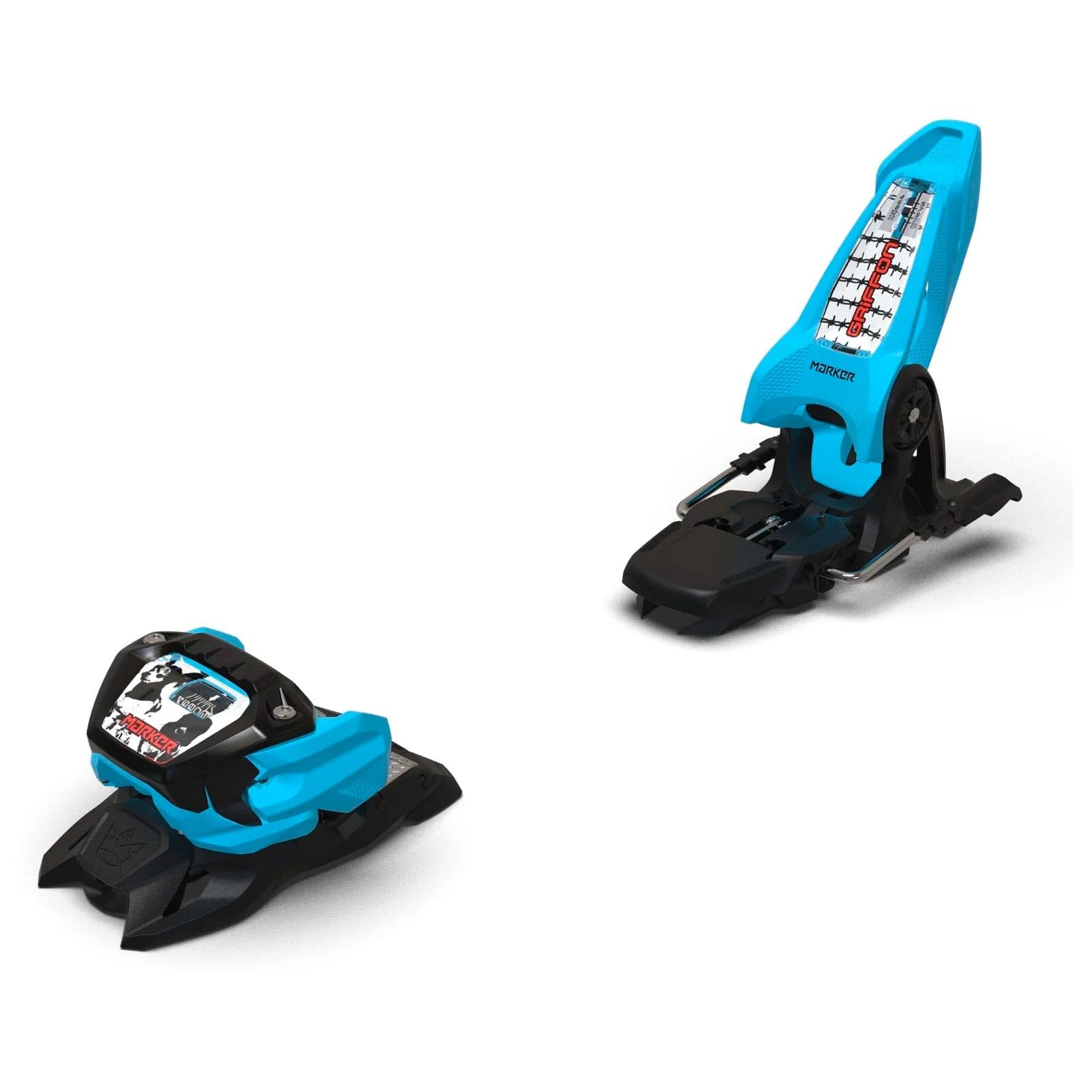
1. Marker Griffon 13 Ski Bindings 2024
Our pick — over 4.5★ from 100+ verified ratings; the strongest balance of quality and price.
The freeride workhorse with the widest DIN reach on this list, built for advanced skiers who charge hard.
If you’re an advanced-to-expert skier who spends time in the park, pipe, and off-piste, this is the binding that gives you the biggest safety and performance envelope. Its DIN range spans 4.0 to 13.0, which is a 33% wider gap than the Squire 11’s 3.0–11.0, meaning it can be set for much more aggressive release settings when you’re pushing at high speeds and big air. The Triple Pivot Elite 3 Toe delivers massive power transmission and superior retention, with a large support surface that absorbs energy and reduces early release.
You get easier, more reliable step-ins with the Inter Pivot 3 Freeride Heel, which adds vertical elasticity (a spring-like give that absorbs shocks) so your boot stays locked in but releases less often by accident. The Anti Ice Rail lets you scrape snow and ice off your soles quickly for clean step-ins every run, and the stainless steel Gliding AFD (the plate under the boot toe that ensures a precise release) works unhindered by dirt or ice.
The smartest long-term feature is Multinorm (SOLE.ID) compatibility, meaning it adapts to Alpine, GripWalk, and Touring boot soles. That future-proofs you if you switch boot brands, and owners confirm it works with regular ski boots as well as GripWalk soles. As buyers report: “Most popular binding ever made and for good reason.”
Why It Leads the Pack
- Massive 4.0–13.0 DIN range covers advanced and expert release settings
- Universal Alpine, GripWalk, and Touring sole compatibility
- Reinforced screws and lightweight freeride build for durable all-mountain power
Who Should Think Twice
- Overkill for lighter or beginner skiers who need a lower DIN setting
- 100mm brake size is set — verify it matches your ski waist width
Reach for it if: you’re advanced or expert, ski freeride or freestyle, and want one binding that covers every boot sole type and a wide DIN range.
Look elsewhere if: you’re a lighter intermediate — the broader DIN range costs more than you’d actually use.
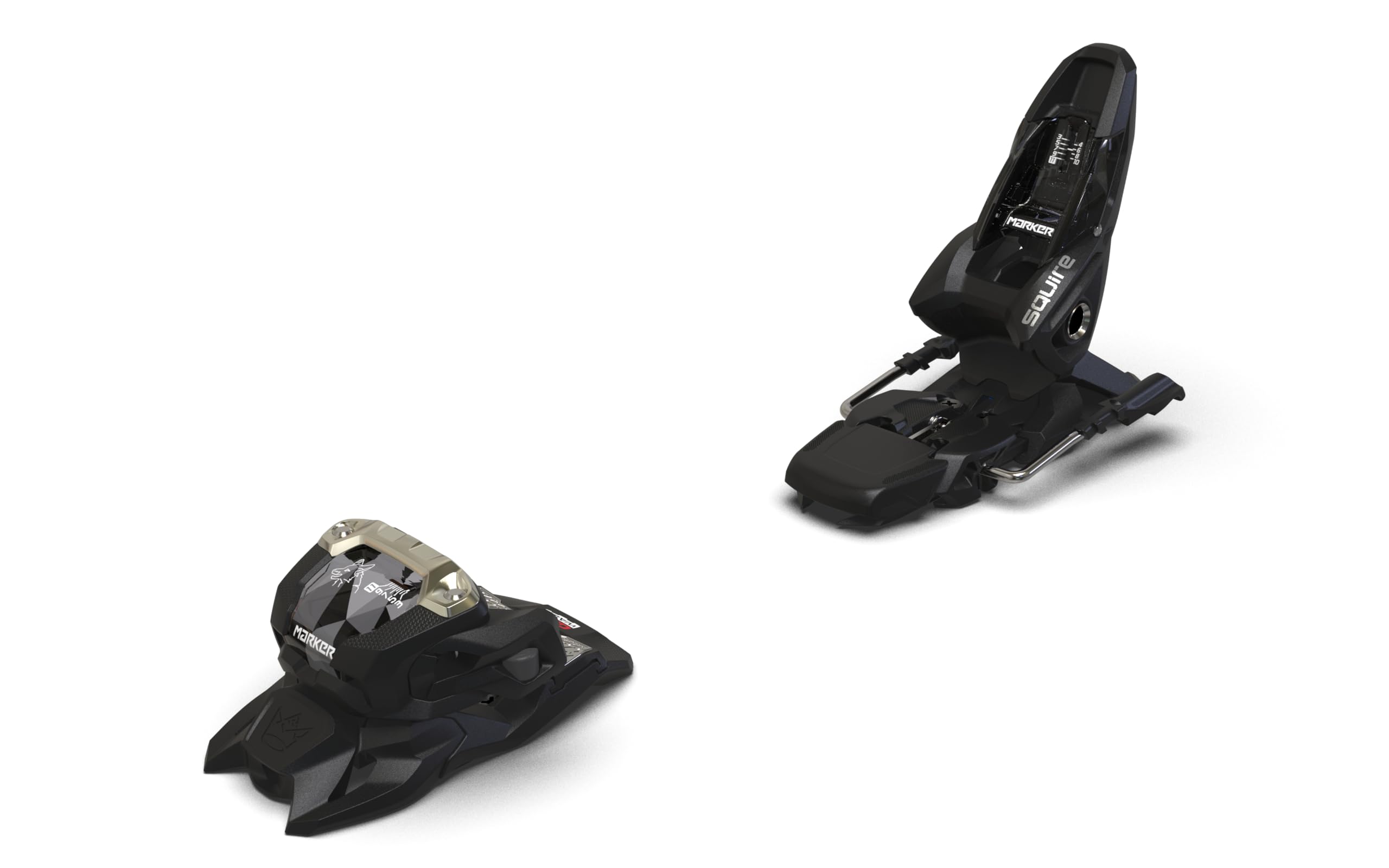
2. Marker Squire 11 All-Mountain Ski Bindings
The smart-buy all-mountain binding with the easiest step-in force of the Marker lineup.
If you’re an intermediate or advanced skier who wants Marker quality without the expert-tier DIN range, this binding fits. The DIN scale (the setting that controls how easily your boot releases in a fall) runs 3.0 to 11.0, covering most recreational and advancing skiers. The latest Hollow Linkage 2 heel cuts step-in force by 30%, so clicking in takes noticeably less effort — especially with GripWalk soles (a type of rockered boot sole that’s easier to walk in).
That ease extends to the toe. The Triple Pivot Light 2 design is GripWalk-ready, fitting both conventional Alpine boots (ISO 5355) and modern GripWalk soles (ISO 23223). A practical Anti Ice Rail lets you scrape snow from your sole before stepping in, and the stainless steel AFD Plate keeps release values consistent and friction low for long-lasting performance.
At 820 g, it’s a lightweight pick that rides smoothly across all-mountain terrain, and skiers confirm it holds up in all types of terrain. Owners stress one thing: have them installed by a professional ski fitter and tuned to your skill level, so the release is set safely for your boots. Owners mention these are “better” than what they replaced mid-season.
The Everyday Strengths
- 30% easier step-in force with the Hollow Linkage 2 heel
- Alpine and GripWalk compatible for broad boot fit
- Lightweight 820g build and stainless steel AFD for consistent release
The Honest Trade-offs
- Lower max DIN (11.0) than the Griffon — not for extreme expert settings
- Maximum recommended weight is 110 kg
Grab these if: you’re an intermediate-to-advanced all-mountain skier who wants Marker reliability, easy step-in, and a DIN range that fits most riders.
Pass if: you’re a heavy, high-speed expert who needs the wider 13.0 max DIN.
3. System Pro Freeride Rear Entry Snowboard Bindings

The sturdiest rear-entry build here, with an aluminum frame that snaps in fast and rides stiff.
Switch to an advanced snowboard binding and you get the PRO Freeride hi-back, which the maker describes as the sturdiest and most responsive they offer. The full aluminum frame delivers a firm, instant response in intense situations, and riders confirm it feels noticeably sturdier than plastic models — one owner even handed down the plastic version after upgrading to this metal frame.
The rear-entry system is the real time-saver. A “lift-relax” feature lets you loosen and re-tighten without unstrapping fully, which is a genuine convenience on the slope. Riders call it “way sturdier than I expected” and praise the adjustability, including micro-adjustments for different riding conditions. Sizing runs Large 9-11 and XL 11-14, with a 3-year warranty backing the build.
There’s a fit caveat worth knowing. A size Large worked perfectly with size 10 Salomon boots but needed a brief adjustment for size 11 K2 Maysis boots, and the XL fits size 13 boots well. Measure your boot size against the chart and expect a short setup session to dial in the heel cup clearance.
Stiff, fast, aluminum: the full aluminum frame gives a bomb-proof, responsive feel that plastic rear-entries can’t match, and the 3-year warranty adds confidence.
The setup catch: boot fit needs attention — most riders report a quick adjustment fix, but an occasional toe strap issue has been noted, so check straps during setup.
Choose this for: advanced riders who want rear-entry speed and a stiff, responsive aluminum platform set to their boot size.
Think twice if: you’re between boot sizes — double-check the L/XL fit ranges before ordering.
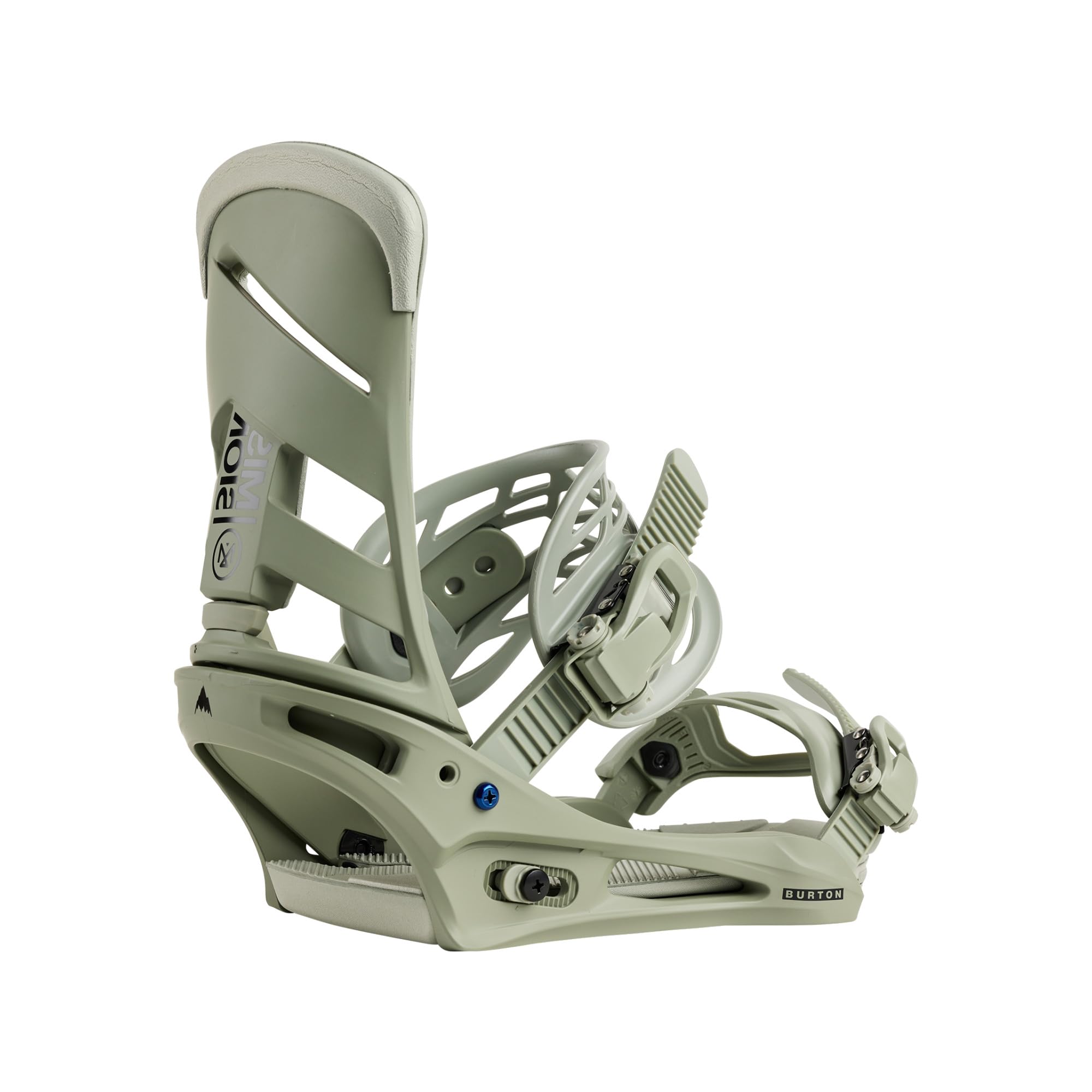
4. Burton Mission Re:Flex Snowboard Bindings
The all-day comfort specialist with a full underfoot cushion that keeps legs fresh run after run.
If your snowboard days run long, the Mission’s defining feature is the Re:Flex FullBED cushioning system, which offers full underfoot support to boost comfort and minimize fatigue. A trap-door design gives you quick access to the mounting hardware, so adjustments on the hill are fast. The single-component baseplate uses one material throughout for reliable response on any terrain.
Customization is deep here. The DialFLAD system lets you fine-tune forward lean easily, and the zero forward lean hi-back is vertical for a relaxed, upright ride. Hinge hi-back technology enables independent adjustment and reduces weight, so you can personalize the fit to your stance and riding style.
Riders consistently report it holds tightness even after long days — one owner noted the bindings kept their tightness after 7 hours of riding. The Medium Disc boosts board flex and reduces dead zones for smooth control, and the nylon build keeps the whole unit at 5.7 pounds. Fit is adjustable and snug, so check the size chart before ordering.
Built for Long Days
- Re:Flex FullBED cushioning boost comfort and minimizes fatigue
- Tool-free adjustments between runs with DialFLAD and hinge hi-back
- Sturdy nylon build that held tightness after 7 hours of riding
Know Before You Go
- Zipper closure type listed on the spec sheet — verify it matches your preferred closure
- Size Large — confirm against Burton’s chart for your boot size
Reach for this if: you want plush, fatigue-resistant cushioning and easy on-hill adjustability for all-day resort riding.
Look elsewhere if: you’re after a stiff freeride platform — the Mission leans toward comfort and a relaxed ride angle.
5. System Ultra Rear Entry Step In Snowboard Bindings

The entry-friendly rear-entry binding that clicks in fast and rides with far more cushion than its price suggests.
For a budget-friendly ticket into rear-entry convenience, this System Ultra is the crowd favorite. When you step into the binding, a fast 2-click entry locks you in with no stomp pad needed, which makes getting off the lift noticeably smoother. Riders note it works as a cheaper alternative to Flow bindings, with just one extra click compared to the pricier name brand.
The ride comfort comes from increased full EVA padding across both the footbed and hi-back (EVA is the soft, shock-absorbing foam used in athletic soles). This dampens the ride and eliminates chatter in harsh conditions. The injection molded straps give instant response with no stretching and no loss of power, and they’re far more durable than traditional padded straps.
Fit flexibility is solid, with Medium suiting size 6-9, Large fitting 9-11, and XL covering 11-14. The multidisc base plate mounts to standard four-hole boards and Burton Channel EST boards, so compatibility is broad. Build quality and function earn the most praise, with riders finding the bindings solid, secure to the board, and comfortable for intermediates.
The Value Case
- Fast 2-click rear entry — no stomp pad required
- Full EVA padding dampens chatter and boosts comfort
- Mounts to standard four-hole and Burton Channel EST boards
The Practical Notes
- Takes a short adjustment period to dial in the fit to your liking
- One more click to enter than Flow bindings
Best for: intermediates and budget-conscious riders who want rear-entry speed and cushioned comfort without the premium price.
skip it if: you demand a stiff, ultra-responsive freeride feel — this leans toward value and comfort.
Understanding the Specs
DIN Range
DIN is the standardized release-tension scale for ski bindings. A wider range (like 4.0–13.0) adjusts across more skier weights and skill levels, while a narrower range (like 3.0–11.0) suits a smaller set of riders. Your correct setting is calculated from your weight, boot sole length, age, and skiing style — always have a shop tech set it for you.
Boot Sole Compatibility
Alpine soles (ISO 5355) are flat and traditional, while GripWalk soles (ISO 23223) have a slight rocker for easier walking. A GripWalk-ready binding fits both, but dedicated Touring soles often require special setups. Matching your boot sole type to the binding is the first compatibility gate — get this wrong and your boot won’t click in.
FAQ
What DIN setting do I need for my ski bindings?
Will GripWalk boots fit any ski binding?
What brake width do I need for my skis?
Can I mount ski bindings myself at home?
What’s the difference between Alpine and GripWalk boot soles?
Are rear-entry snowboard bindings worth it?
How do I know if a snowboard binding fits my boot size?
What is a hi-back on a snowboard binding?
Final Thoughts: The Verdict
For most skiers, the standout pick is the Marker Griffon 13 because its wide 4.0–13.0 DIN range and universal boot sole compatibility future-proof your setup across skill levels and boot changes. If you want a lighter, easier step-in at a friendlier price, grab the Marker Squire 11. And if you ride a snowboard instead, the System Pro Freeride is the one to reach for when you want a stiff aluminum rear-entry that snaps in fast.
How We Picked
We do not accept paid placement. Every pick is matched to a real buyer and a real use-case; we do not hands-on test units.
Sources & Methodology
Specifications: manufacturer listings and product documentation. Review insights: verified customer reviews, as of August 2026. Pricing: not shown on this page (it changes often); check the current price via the retailer link.
As an Amazon Associate, Gadgets Feed earns from qualifying purchases. This does not affect which products we feature.