
A slow leak from the tire bead — that tiny gap between the rubber and the rim — can turn a reliable daily driver or workshop machine into a constant headache. You’ve aired it up twice this week, and the tire shop can’t seem to find the puncture. The culprit is almost never the tread; it’s a corroded alloy rim, a slightly bent steel wheel, or an aged rubber bead that won’t conform anymore. Fixing this specific problem requires a product designed for this exact interface, not a squirt of dish soap that dries out in an hour.
I’m Min — the co-founder and writer behind Gadgets Feed. I’ve spent countless hours analyzing the chemical formulations, application methods, and real-world customer feedback on tire bead sealers to break down which thick liquid or paste actually stops that persistent air loss without ruining your tire or wheel.
After sorting through gallons of brush-on liquids, paste compounds, and high-pressure seating tools, I’ve narrowed the field to the seven most reliable ways to solve bead leaks. This guide covers the best tire bead sealer for everything from a rusty farm tractor rim to a stubborn alloy wheel on a performance car.
How To Choose The Best Tire Bead Sealer
Not every leak is the same, and not every sealer works on every rim. You need to match the product’s viscosity, application method, and chemical base to your specific wheel type and tire size. Brush-on liquids are ideal for sealing gaps on already-mounted tires, while pastes and gels work best during a fresh mount. For completely broken beads on large tires, an air-blast seater is the only tool that gets them back in place without a shop visit.
Viscosity and Application Method
A thin, watery sealer will run off the bead before it dries, leaving you with a sticky mess and no seal. Look for a thick, honey-like liquid or a paste that stays put on vertical surfaces. Brush-on caps are the most convenient for precise application on the bead edge, while paste jars require a separate brush or gloved finger. For large-volume shops, a gallon jug with a pour spout makes sense; for a home garage, a pint or quart is plenty.
Chemical Compatibility
Petroleum-based solvents can degrade natural rubber over time, causing the bead to crack or swell. Water-based formulas are safer for all tire compounds and easier to clean up. If you have aluminum or alloy rims, you need a sealer with a rust inhibitor to prevent galvanic corrosion. Avoid anything with silicone if you plan to paint or powder-coat the wheel later.
Dry Time and Residue
A sealer that dries in under a minute is great for quick shop turnover but can be unforgiving if you need to adjust the tire position. Slower-drying formulas (3–5 minutes) give you time to work the bead into place. After drying, the residue should be tacky enough to stay flexible and maintain the seal, but not so sticky that it traps dirt and debris. A clean, non-tacky finish indicates a good-quality, modern formulation.
Quick Comparison
On smaller screens, swipe sideways to see the full table.
| Model | Category | Best For | Key Spec | Amazon |
|---|---|---|---|---|
| Ru-Glyde by AGS | Brush-On Liquid | General mounting & bead seating | 1 Gallon, No-Mix | Amazon |
| BeadBuster Paste | Concentrated Paste | Travel & occasional use | 16 oz, Dilutable 4:1 | Amazon |
| TECH Tire Bead Sealer | Brush-On Sealer | Sealing leaks on mounted tires | 1 Quart, Brush Cap | Amazon |
| TireJect 2-in-1 Kit | Sealant & Sealer | Puncture + bead leak repair | Up to 1/4″ punctures | Amazon |
| X-tra Seal (2-Pack) | Brush-On Sealer | Heavy-duty rusted rims | 32 oz, Black w/ Brush | Amazon |
| VEVOR Bead Seater | Air Blast Tool | Seating beads on large tires | 5 Gal, 145 PSI Max | Amazon |
| TOOLUXE Bead Seater | Air Blast Tool | Farm, truck & RV tires | 5 Gal, All-Steel | Amazon |
In‑Depth Reviews
1. Ru-Glyde Tire Mounting Lubricant by AGS

This is the gold standard in a gallon jug. Ru-Glyde uses a thick, water-based formula that stays put on the bead and rim surface, preventing the tire from slipping during the initial inflation. Multiple users report seating beads at around 20 PSI with no rework — a direct result of its high viscosity compared to soapy water. It also functions as a rubber conditioner, reviving dried-out sidewalls and weather stripping without leaving a greasy residue.
Professional tire shops rely on this for passenger, light truck, and agricultural tires because it dries completely after mounting, leaving zero slippery film that could cause the bead to creep later. The 1-gallon size is overkill for a single DIY tire change, but if you work on multiple vehicles or help friends, it pays for itself quickly. The included cap is a simple pour spout, so you’ll want a small brush or squirt bottle for precise application.
On steel rims, the thin protective layer it leaves behind actively resists rust, which means the bead won’t fuse to the rim over years of service. When you finally break that bead loose, it will separate cleanly without tearing. For a dual-purpose product that performs as both a mounting lube and a long-term bead seal, Ru-Glyde is the most versatile option in this lineup.
Why it’s great
- Thick, no-drip consistency stays on vertical beads
- Dries to a non-slip film preventing bead creep
- Works as a rubber rejuvenator for seals and gaskets
Good to know
- Gallon size is bulky for small garages
- No integrated brush cap for precise application
2. BeadBuster Tire Mounting Lubricant Paste

This pint-sized paste is the most portable solution for DIYers who change tires a few times a year. The key feature is its 4:1 dilution ratio — you can apply it straight from the tub as a thick grease for stubborn beads, or mix it with water in a spray bottle for a slick, easy-to-apply liquid. Customers report seating beads consistently at 20 PSI with the diluted mixture, proving it has excellent lubricity even when thinned out.
Because it’s vegetable-based and biodegradable, it won’t harm grass or gravel if you’re working outside, and it rinses off rims easily with soap and water. The 16-ounce jar seems small, but a single user noted it could last over 10 years for occasional motorcycle and dirtbike tire changes. The paste is slightly tacky when thick, but it leaves no sticky residue once dry, making it safe for TPMS sensors and alloy wheels.
The trade-off is that it’s not designed as a permanent bead sealer — it’s a mounting lubricant first. For sealing existing leaks on already-mounted tires, a brush-on liquid like the TECH Sealer is a better choice. However, for preventing bead damage during installation and ensuring a perfect first-time seat, this paste outperforms any dish soap solution at a fraction of the cost per use.
Why it’s great
- Dilutable for spray or brush application
- Biodegradable, non-toxic, and TPMS-safe
- Pint jar lasts years for occasional use
Good to know
- Not a dedicated sealer for existing bead leaks
- Paste can be slightly messy if applied straight
3. TECH Tire Bead Sealer, 1 Quart
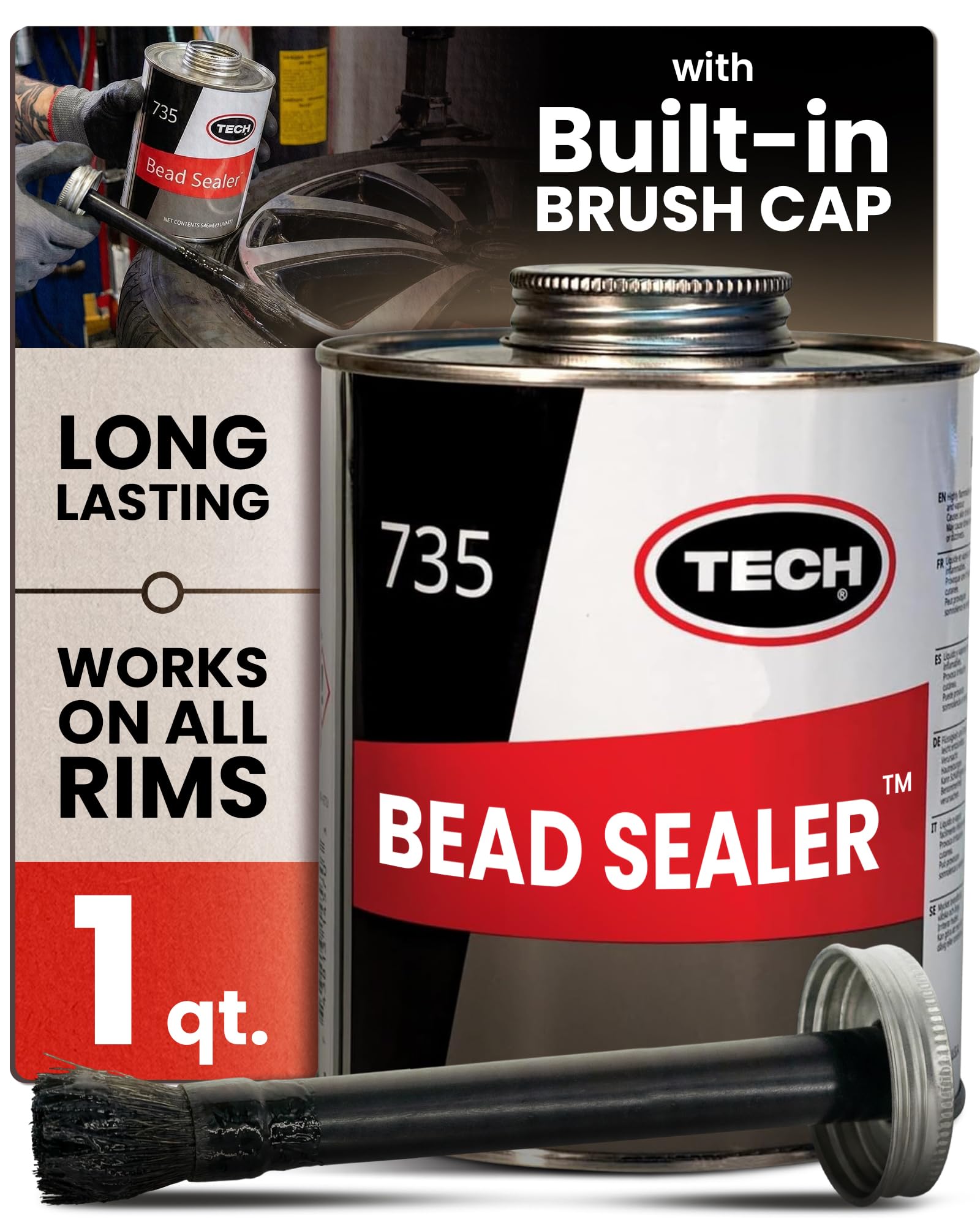
TECH Tire Bead Sealer is the specific product you reach for when a tire is already mounted but leaking from the bead due to a rusty rim or a minor dent. Its thick, honey-like consistency — often described as “snotty” by users — is designed to cling to the vertical bead surface without running off. The built-in brush cap makes application straightforward: you brush a thin layer around the entire bead area, inflate the tire, and the sealer fills the gaps as the bead seats.
Customer reviews consistently highlight its effectiveness on corroded rims that defied other methods. The formula is a natural rubber compound that stays flexible after drying, so it absorbs road vibrations without cracking. It dries relatively fast (within a couple of minutes), which is excellent for production work but less forgiving if you need to reposition the tire.
A quart is enough for multiple repairs, and the bottle seals tightly to prevent the sealer from drying out between uses. Cleanup is easy with a rag while the sealer is still wet, and once dry, it forms a tack-free seal that won’t trap dirt. If your specific problem is a rim-corrosion leak on a mounted tire, this is the most efficient solution available.
Why it’s great
- Thick formula stays on vertical bead surfaces
- Brush cap allows mess-free, precise application
- Cures into a flexible, crack-resistant seal
Good to know
- Dries quickly — limited adjustment time
- Sticky texture can stick to fingers during application
4. TireJect Automotive Compact Car 2-in-1 Tire Sealant & Bead Sealer Kit

TireJect combines a liquid bead sealer with a fiber-reinforced puncture sealant in one bottle, making it the only product here that addresses both rim leaks and tread punctures up to 1/4 inch. The injection kit includes a dispensing cap, a metal valve-core remover, and a hose that screws directly onto the tire’s valve stem. You inject the liquid rubber, spin the tire to distribute it, and the Tufsyn fibers weave together to plug the hole while the liquid seals the bead.
On bead leaks specifically, users have reported sealing corroded alloy wheels that were losing 1 PSI per day — after 11 months, the tire still held pressure with zero top-ups. The 2-in-1 nature is a double-edged sword: it works brilliantly on slow leaks and small punctures, but it can struggle with larger holes or sidewall damage. Some users found the valve tool broke under heavy torque, and the nozzle can leak if not fully tightened. For a compact car or SUV with a mystery leak you can’t locate, this kit saves a trip to the shop.
The formula is water-soluble and TPMS-safe, meaning it won’t gum up your tire pressure sensors like old-school green slime. The kit is sized for tires up to P215/50R17, so it’s not ideal for massive truck tires. But for daily drivers, it’s the most complete leak-repair package you can keep in the trunk.
Why it’s great
- Seals both bead leaks and tread punctures
- Complete injection kit with valve tool included
- TPMS-safe and water-soluble formula
Good to know
- Included valve tool may break under stress
- Limited to tire sizes up to P215/50R17
5. X-tra Seal Tire Bead Sealer Black (2-Pack, 32 oz)
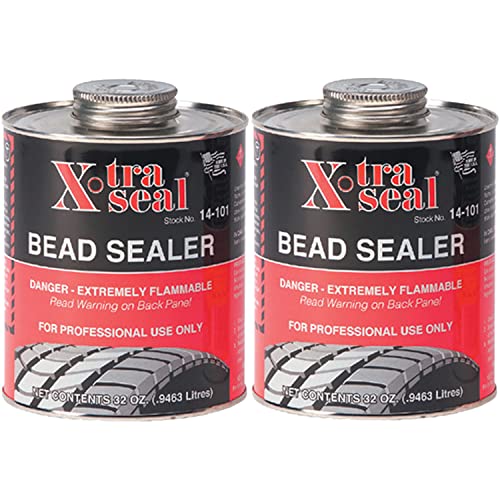
This two-pack from X-tra Seal is the workhorse choice for shops or enthusiasts who deal with heavily rusted, pitted, or damaged rims. The black liquid is thicker than most brush-on sealers, and the included brush cap spreads it evenly. Customers who have used it for decades note it outperforms other brands on aged aluminum wheels that have corrosively pitted. The 32-ounce can is enough for multiple large tires, and the pack gives you a backup for the inevitable moment you run out mid-job.
Real-world results include 12-year-old flat hand-cart tires holding air for two weeks after two coats of this sealer. The key advantage is its quick-dry formulation — it skins over in under a minute, so you can mount the tire immediately without waiting. However, that same quick-dry nature means you have to work fast; if you misalign the bead, scraping off the dried sealer and reapplying is a hassle.
The sealer applies as a liquid that turns into a semi-solid, rubbery gasket once cured. It is compatible with both metal and rubber surfaces, and cleanup is straightforward with a rag before it dries. On a 1995 F-150 with original aluminum wheels, three out of four beads leaked until X-tra Seal was applied — after breaking the bead, cleaning, applying the sealer, and reseating, all four wheels held air permanently. This is the product for the worst-case rim scenario.
Why it’s great
- Extremely thick formula works on pitted rims
- Quick-dry allows immediate tire mounting
- Two-pack provides excellent value per ounce
Good to know
- Dries too quickly for beginners to adjust
- Bottle size is tall and can be unstable
6. VEVOR Tire Bead Seater, 5 Gal/19L

When a tire bead has completely rolled off the rim — common on tractors, ATVs, and large trucks — no liquid sealer alone will push that rubber back into place. You need a massive blast of air, and the VEVOR 5-gallon bead seater delivers exactly that. The 2.8 mm thick aluminum alloy tank holds 145 PSI max, and the long duck-bill barrel directs the air between the tire and rim without scattering it. Users have successfully seated tractor tires that had rolled off the rim without needing to remove the wheel and haul it to a shop.
The operating pressure range of 85-116 PSI is adjustable based on tire size, and the built-in safety valve automatically relieves pressure above 135-145 PSI. The shock-proof glycerin-filled gauge keeps readings accurate despite the violent blast of air. One user noted the unit leaked from the trigger switch due to a plastic shaving, which they fixed by cleaning and greasing — a minor QC issue that is easy to resolve. The ergonomic handle and push-button trigger make one-person operation feasible, even on large 24.5-inch tires.
For versatility, the threaded outlet on the barrel can accept a PVC adapter to convert it for non-tire uses like a bait launcher or large debris blower. Weighing 19 pounds, it’s portable but not light — you’ll want to store it near your compressor. If you maintain farm equipment, a fleet of ATVs, or heavy trucks, this tool pays for itself in saved tire shop trips within the first few uses.
Why it’s great
- 145 PSI seats tires up to 24.5 inches
- Aluminum alloy tank resists rust and corrosion
- Duck-bill barrel prevents air scatter
Good to know
- Trigger assembly may need minor QC adjustment
- Pressure gauge placement is awkward to read
7. TOOLUXE 30007L Air Tire Bead Sealer, 5 Gallon

The TOOLUXE 30007L is the most rugged air-blast bead seater in this lineup, built from heavy-duty CE-approved all-steel with a powder-coated yellow finish. It’s designed for continuous use in demanding environments like farm shops, truck fleets, and RV maintenance bays. The recommended operating pressure is 87-116 PSI, and the automatic safety valve pops off above that range, giving you a clear audible warning before any risk of over-pressurization.
Real-world tests include seating two 22.5-inch steer tires with new, stiff sidewalls using a chain and binder for initial compression. The long metal barrel with a specially designed lip delivers the air blast at the perfect angle between the tire and rim. One user noted the threads on the black discharge tube were off by 40 degrees, requiring a quick angle-grinder fix to align correctly — a notable QC miss for a premium-priced tool. However, once corrected, the unit performed flawlessly.
Weighing 22 pounds, it’s the heaviest option but also the most durable. The tank holds 5 gallons, which provides multiple blasts before needing a compressor recharge. The pressure relief valve leaks slightly at 120 PSI according to some reports, but this is a safety feature rather than a defect. For professional shops or serious homesteaders who need a bead seater that can take abuse and keep working for years, the TOOLUXE justifies its premium price with all-steel construction and reliable performance.
Why it’s great
- All-steel construction is extremely durable
- Designed for tires up to 24.5 inches
- Automatic safety valve provides overflow protection
Good to know
- Thread alignment on barrel may need adjustment
- No instructions included in the box
FAQ
Can I use dish soap as a permanent tire bead sealer?
Will a brush-on bead sealer damage my TPMS sensors?
How do I apply bead sealer to a rusty rim?
What is the difference between a bead sealer and a bead seater?
Can I use a tire bead sealer on a tire with a sidewall puncture?
Final Thoughts: The Verdict
For most users, the best tire bead sealer winner is the Ru-Glyde by AGS because it combines a thick, no-mix mounting lubricant with long-term bead sealing and rubber rejuvenation properties in one gallon. If you need a dedicated sealer for an already-mounted tire with a corroded rim, grab the TECH Tire Bead Sealer with its convenient brush cap. And for seating beads on large farm or truck tires that have completely rolled off, nothing beats the VEVOR Tire Bead Seater for fast, one-person operation.