
Our readers keep the lights on and my morning glass full of iced black tea. As an Amazon Associate, I earn from qualifying purchases.
Specs are compiled from manufacturer listings and verified buyer reviews and can change over time — please confirm the key details on the product page before buying.
A trekking backpack only earns its keep when it makes a 30-pound load feel like a 15-pound one. The real secret is the frame and hip belt working together to shift weight off your shoulders and onto your hips, where your legs can handle it. This guide breaks down the models that do that job best, using manufacturer specs and the patterns in thousands of owner experiences so you can pick with confidence.
I’m Min — the founder and writer behind Gadgets Feed. This guide is built by comparing the manufacturers’ published specifications and the patterns across verified customer reviews, so you get each pick’s real strengths and trade-offs instead of marketing spin.
You will find the standout Trekking Backpack options for multi-day hikes, weekend trips, and long-distance travel, all ranked by real-world comfort and durability.
Our Picks at a Glance

How To Choose The Best Trekking Backpack
The right trekking backpack balances weight transfer to your hips, volume for your trip length, and torso fit. Skipping any of these leads to a sore back or a bag that won’t close.
Match the volume to your trip length
Capacity, measured in liters, is the first filter most buyers check. A 40-50L pack suits a weekend or overnight trips, while a 55-65L pack handles multi-day excursions with a tent and sleeping bag. For extended travel where you might also carry a laptop, think about how much you truly need.
Frame and suspension are the comfort core
The internal frame is what turns a heavy bag into a bearable one. A good frame transfers the load to a padded hip belt that sits on your hips, not your shoulders. Look for an adjustable torso fit and a hip belt that wraps your iliac crest, as this is where the magic of weight distribution happens.
Quick Comparison
| Model | Best For | Capacity | Frame Type | Key Feature | Amazon |
|---|---|---|---|---|---|
| Teton 55L Scout★ Best Overall | Budget-friendly first pack | 55L | Internal Frame | Sleeping bag compartment | Amazon |
| Ubon 60LBest Value | Multi-day hikes on a budget | 60L | Internal Frame | Hydration pouch | Amazon |
| Mardingtop 50LTactical Pick | Tactical rucking and hunting | 50L | Internal Frame | MOLLE webbing | Amazon |
| Mardingtop 60L Military | Heavy-duty budget hauling | 60L | Internal Frame | MOLLE webbing | Amazon |
| Kelty Coyote 65L | Thru-hiking with a tailored fit | 65L | Internal Frame | Fit Pro torso adjustment | Amazon |
| Osprey Rook 50L | Weekend trips with airflow | 50L | Internal Frame | AirSpeed suspension | Amazon |
| Deuter Aircontact Lite 40+10L | Lightweight long-distance hiking | 40+10L | Internal Frame | Aircontact back system | Amazon |
| Thule Landmark 60L | Travel and anti-theft security | 60L | Internal Frame | Removable 20L daypack | Amazon |
| Osprey Atmos AG 65L | Heavy loads with premium comfort | 65L | Internal Frame | Anti-Gravity suspension | Amazon |
In-Depth Reviews
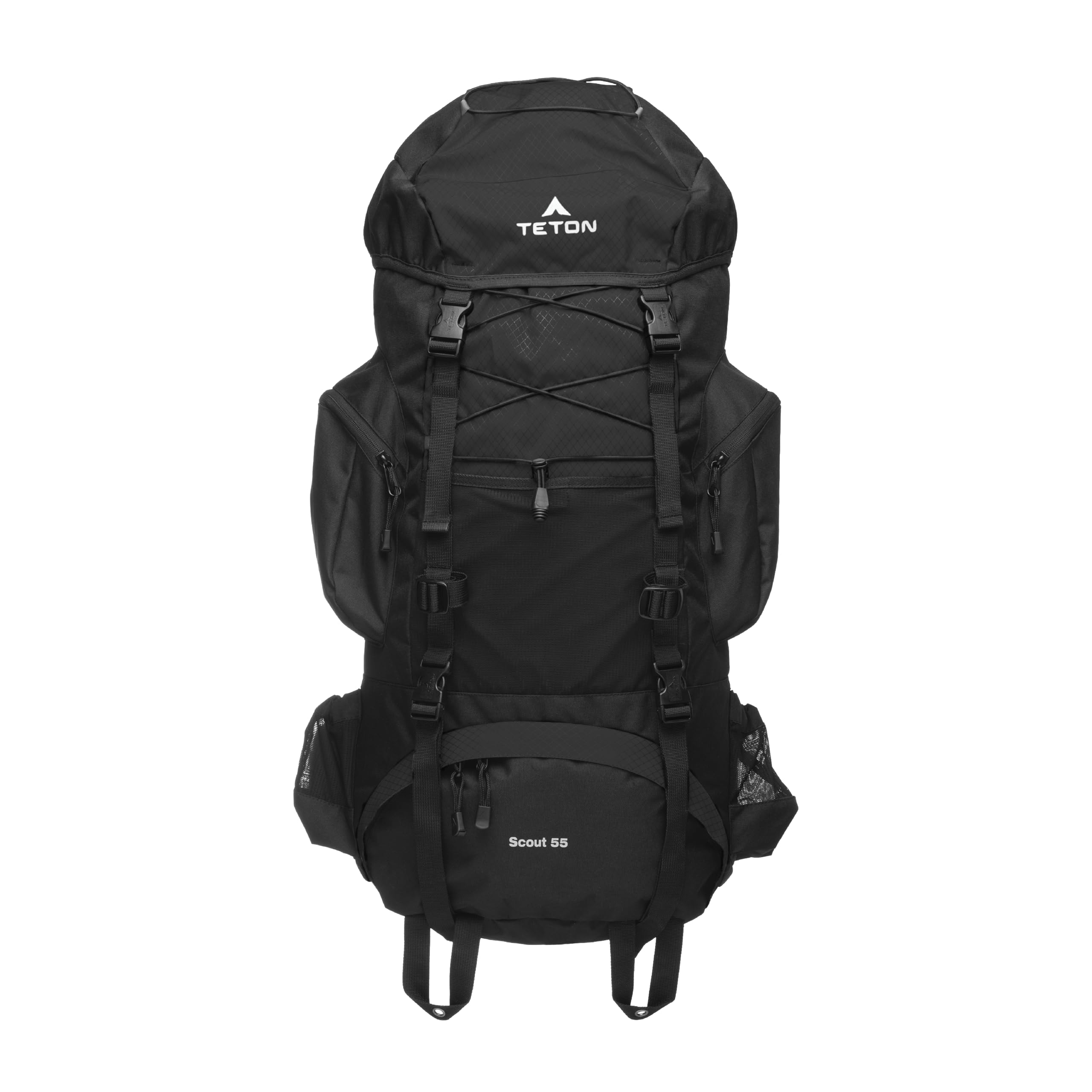
1. Teton 55L Scout Internal Frame Backpack
Our pick — over 4.5★ from 7,500+ verified ratings; the strongest balance of quality and price.
The 55L do-everything pack that proves comfort doesn’t require a premium budget.
The Teton Scout earns its top spot by nailing the fundamentals at a price that undercuts most rivals. It is a framed backpack with a dedicated sleeping bag compartment and multi-directional compression straps, so you can cinch down a load for a rugged trail or loosen it for a casual camp. The drawstring closure and shoulder harness keep things simple and functional.
Buyers report a 3-day/28-mile first hike with room to spare for water, food, and clothes. The value is the headline here — it is the most-praised trait, far ahead of durability and pockets in owner feedback. It fits particularly well for petite women and those with shorter torsos, which is a standout for a category that often ignores smaller frames.
The honest trade-off is the shoulder padding, which some find thin on heavier carries, and the chest strap can slide. It is a framed pack built for the price, not a featherweight ultralight — treat it as a brilliant entry point, not a luxury shell. The aluminum slats in the frame also lack clear adjustment instructions, so experiment with the fit before a long trip.
What wins people over
- Exceptional value for money with sturdy zippers and material
- Spacious with a dedicated sleeping bag compartment and multiple zippered pockets
- Great fit for smaller torsos and petite women
Who should think twice
- Shoulder padding is on the thin side for heavy loads near 45 lbs
- Chest strap tends to slide and can be noisy
Reach for this if: you want a trustworthy first trekking backpack that handles 3-day trips while staying affordable.
Look elsewhere if: you are over 6 feet with a long torso, as the frame may dig into your lower back.
2. Ubon 60L Internal Frame Hiking Backpack
A 60L workhorse that handles a 4-night Appalachian Trail stretch without complaint.
The Ubon 60L brings a genuine internal frame and adjustable shoulder straps to the budget tier, and owners mention it handles serious miles. One account details a 4-night AT hike with 28/25 lb loads, reporting no back or shoulder pain—proof the frame and padding work. The adjustable frame and padded straps are the stars here.
Capacity is the most-praised aspect, with pocket capacity close behind, so organizing a 3-5 day trip is straightforward. The included rainfly kept gear dry through rain and rock, and the hydration pouch is a welcome addition. At 2.65 pounds, it is not an ultralight, but it is light enough for most hikers to manage.
The durability picture is mixed — some customers note pieces breaking after a week of hard use, so it is not built for years of abuse. It also runs smaller than its 60L label suggests, closer to 35L in practice, and the single aluminum stay can pull backward on your shoulders with heavier loads. This is a starter pack for 3-day trips, not a long-haul expedition bag.
Best for the price: It delivers Osprey-like features at a fraction of the cost, making it a superb first framed pack.
The catch: Durability is inconsistent, and it measures smaller than its 60L claim.
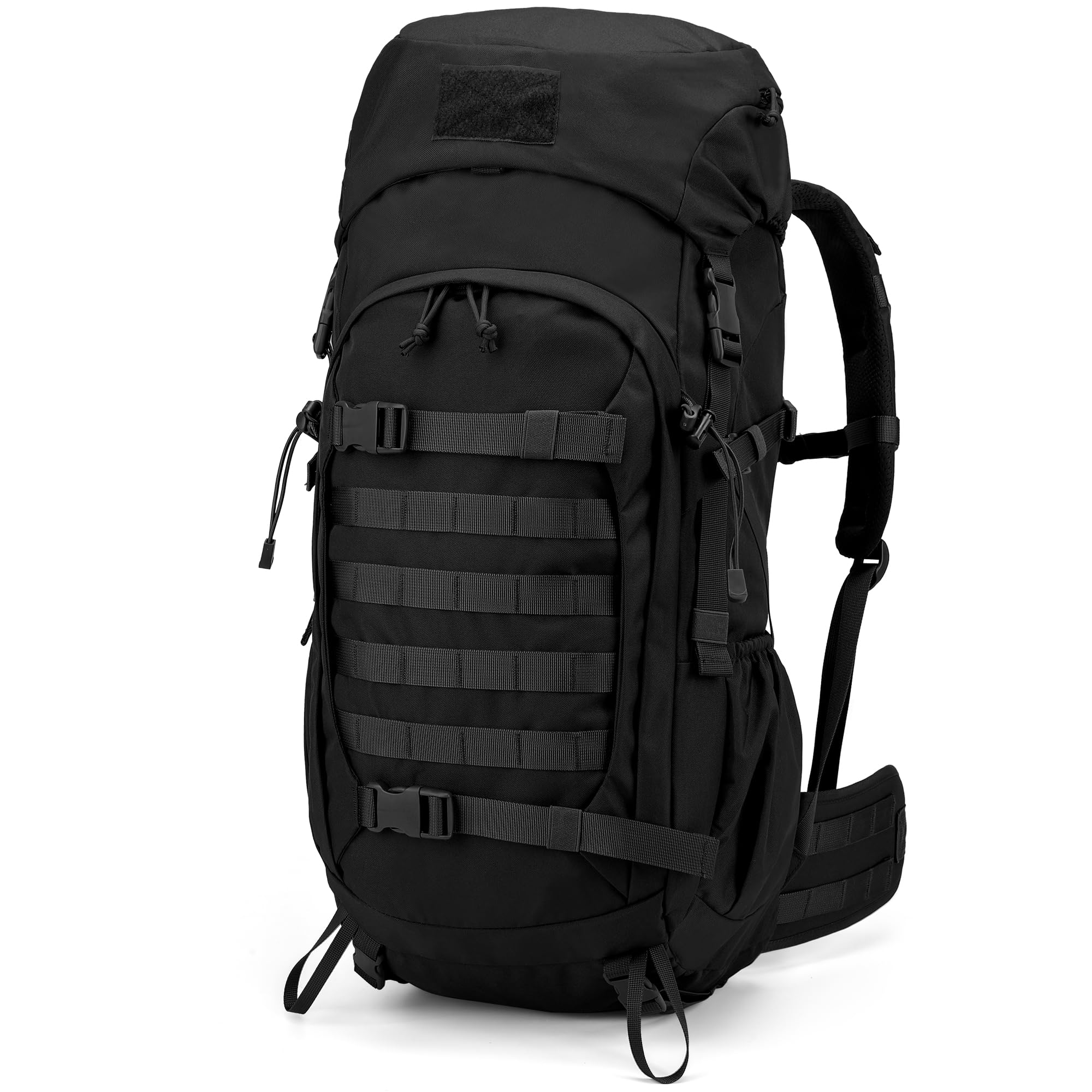
3. Mardingtop 50L Hiking Backpack
A 50L tactical rucking pack with 600D polyester that survives 150 miles with no stitching issues.
Reviewers point out 150 miles of testing with no stitching issues, a strong durability vote at this price. It is built from 600D Polyester with YKK zippers and buckles, and the MOLLE webbing lets you attach tactical pouches, a hatchet, or extra gear. The internal frame and hydration compartment round out a genuinely versatile design.
The front zipper opens the main compartment like a suitcase, making access quick, and it holds a 5-liter hydration bladder or a 15.6-inch laptop. It is noticeably more compact than the 60L Mardingtop — at 9.1″D x 11.4″W x 28.3″H versus the larger model’s footprint, it is 76% slimmer in one dimension, making it easier to manage in tight brush. Quality is the most-praised aspect by far, followed by size.
The main gripe is the buckles, which slip frequently and may need replacing with aftermarket parts. The back padding also gets hot quickly despite claims of breathability, so consider a cooling layer for summer hikes. It is a durable, affordable rucking or hunting pack, not an ultralight, and the minimal compartment layout suits those who prefer simplicity.
Built for the bush
- Durable 600D polyester resists branches and trail abuse
- MOLLE webbing for attaching tactical gear and pouches
- Holds a 15.6-inch laptop or a 5L water bladder
Keep in mind
- Buckles slip and may need aftermarket replacements
- Back padding runs hot despite the breathable mesh design
This one beats: the budget field on pure toughness and modular attachment, ideal for hunters and woodsman hikers.
Not for: anyone wanting a cool, ventilated back on hot summer trails or a pack with many small pockets.
4. Mardingtop 60L Military Internal Frame Backpack
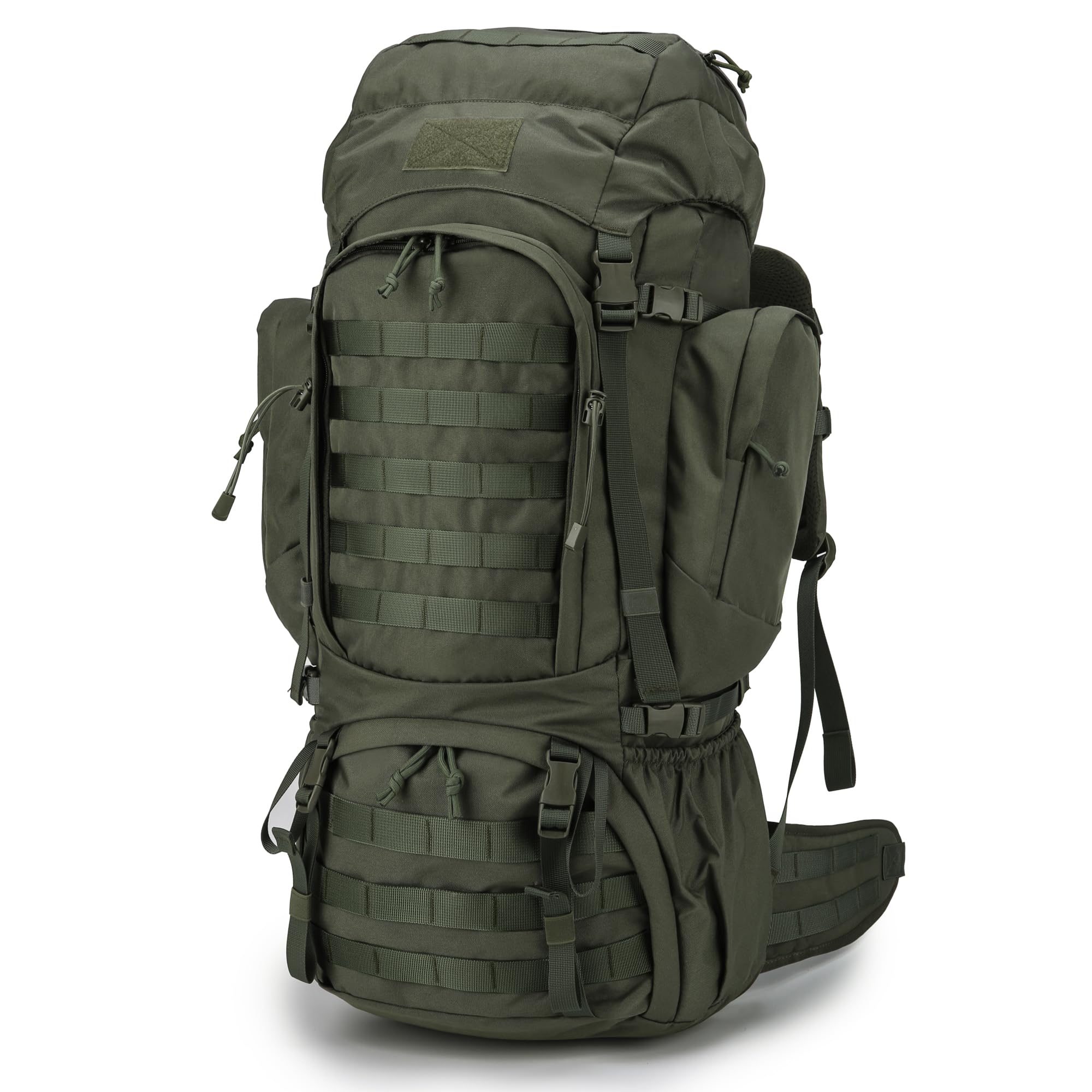
A 60L military-style pack that survives years of truck abuse and still carries 25-30 lbs comfortably.
This is the bigger sibling in the Mardingtop lineup, and it shares the tactical DNA with MOLLE webbing all around the pack. You can hang a sleeping bag, tent, or hammock on the outside, and the hiking pole attachment holds poles or an ice ax. The elastic compartment fits a 15.6-inch laptop or a 2.5-liter hydration bladder.
Quality is the most-praised aspect, with owners noting sturdy seams and strong straps that hold three changes of clothes plus supplies. It is compatible with a hydration system, and the balanced weight distribution earns consistent praise. One owner ran 90lb rucks for a year with no seam stress, proving the stitching holds under extreme loads.
The hip belt is the weak point — it is thin and can chafe on long carries, and the cinches loosen under load. It is rated by owners as excellent for loads under 50 lbs over 10-20 miles, but not for heavy long-distance hauls. The YKK zippers and durable material make it a superb budget hunting or rucking pack that outlasts its price tag.
Why it holds up
- Sturdy YKK zippers and strong seams survive rough terrain
- MOLLE webbing expands capacity for a tent or sleeping bag
- Excellent weight distribution for 25-30 lb loads
Where it falls short
- Thin hip belt chafes during long, heavy carries
- Cinches loosen under load and need re-tightening
Grab it for: week-long backcountry hunts or rucking where you need a bombproof shell without the premium price.
skip it if: you plan regular 50+ lb loads over long distances — the hip belt will become the weak link.
5. Kelty Coyote 65L Internal Frame Backpack

A thru-hiker’s favorite with Fit Pro torso adjustment that dials in on the fly.
You can adjust the Kelty Coyote’s torso fit in seconds, even while shedding layers or handing the pack to a friend—a real plus for shared gear. Its Fit Pro system (a tool-free torso adjustment) lets you dial in the length without tools. The advanced perimeter frame (a rigid external support structure) keeps the load stable on uneven trail, so you stay balanced on rocky descents.
At 4lb 10oz empty with an optimal carry weight of 30-55 pounds, it handles a 45 lb load easily, as shoppers say shaving time off their routes. The Amp Flow ventilated back panel keeps your back from soaking through, and the aluminum stay keeps the load secure and balanced. Owners used it for two hunting seasons in Montana, Wyoming, and Colorado, packing 50-60 lbs of meat without a broken buckle or zipper.
The trade-off is the straps — some find them hard and causing red collarbones, requiring extra padding. The side pouches sit low and only fit small bottles, and there is no pole strap. It is a durable, comfortable pack for thru-hikes, but the comfort shine comes from the frame and fit, not the shoulder straps.
Fit-first design: Fit Pro torso adjustment makes this the easiest pack to tailor to your body on the trail.
Honest caveat: Shoulder straps are stiff for some, and side pockets are awkwardly low for larger bottles.
6. Osprey Rook 50L Men’s Backpacking Backpack

A lightweight 50L with AirSpeed suspension that keeps your back cool and your load off your shoulders.
The Osprey Rook 50L is the brand’s straightforward, lightweight answer for weekend warriors. The AirSpeed suspension uses a tensioned backpanel that adjusts for torso length and creates airflow, so you sweat less on long climbs. The LightWire frame transfers the load to the hip belt, taking pressure off your shoulders — the core job of any good trekking pack.
It comes with an integrated, removable raincover that stows in its own pocket, so a sudden downpour won’t soak your gear. At 3.6lb, it is genuinely light, and the zippered sleeping bag compartment with a floating divider keeps your sleep system organized. Owners note it is ideal for 2-3 day trips and weekend camping, with plenty of space to strap extra gear on the outside.
The pack feels heavy at around 25kg when fully loaded with a week of clothes, which makes it better for hiking than general travel. The straps are stiff at first but break in well, and the design is simpler than premium models — no fancy bells, just solid Osprey quality. For a clean, reliable 50L that ventilates, this is a top pick.
Cool and capable
- AirSpeed suspension provides excellent back ventilation
- Integrated raincover stows away when the sun returns
- Lightweight at 3.6lb with a comfortable hip-riding fit
Consider this
- Feels heavy at ~25kg when packed with a week of clothes
- Stiff straps need a break-in period
Choose this for: weekend overnighters and 2-3 day hikes where you want Osprey’s famous comfort and ventilation without the top-tier price.
Think twice if: you are a minimalist traveler who wants a bag that doubles as a suitcase for non-hiking trips.
7. Deuter Aircontact Lite 40 + 10 L
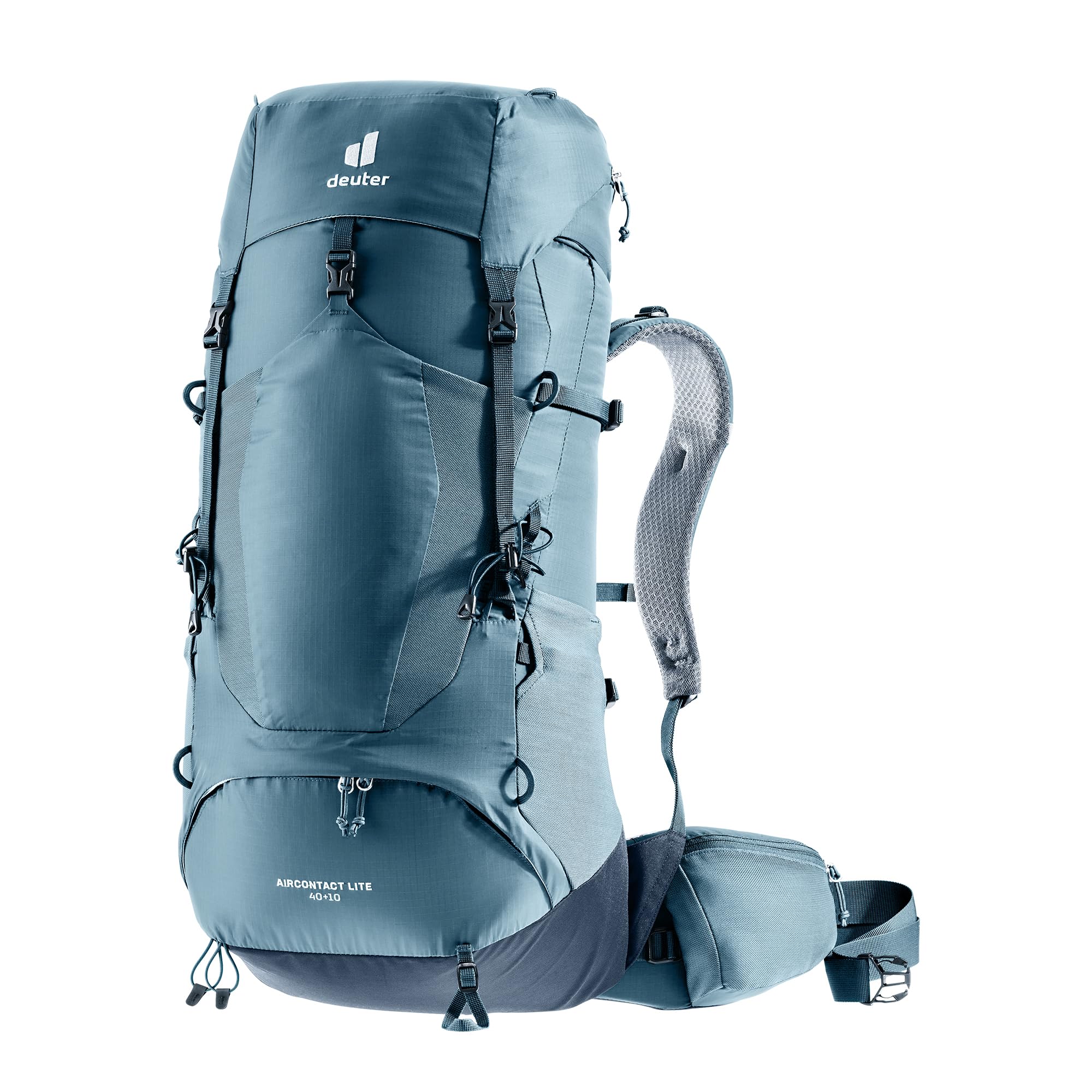
A featherweight 40+10L with the Aircontact system for ambitious long-distance hikers.
The Deuter Aircontact Lite 40 + 10 L is built for hikers who want to move fast and light without sacrificing comfort. The Aircontact back system uses hollow chamber foam that creates a pump effect with every step, improving ventilation and reducing perspiration. The load is brought close to your center of gravity, giving you complete pack control.
At just 3.5 lb with dimensions of 28 x 12 x 10 inches, it fits as a carry-on on most airlines, making it a brilliant travel companion for world travelers. The Vari Quick adjustable back length and ergonomically padded hip fins deliver a secure, balanced fit. It is compatible with a 3-liter drinking system, and the height-adjustable, detachable lid expands the volume when you need extra space.
Buyers report it fits children from around 11-13 years old, making it a versatile family pack. The materials are 140D PA RIPSTOP HT FD and 600D PES REC BS, with over 50% recycled content for strength and sustainability. It is best for day hikes and a few overnight trips rather than week-long expeditions, and the 40+10L volume is modest for bulky winter gear.
Fast and light: The 3.5 lb weight and carry-on compatibility make it a standout for long-distance hiking and travel.
The limit: 40+10L is tight for week-long trips or bulky winter gear, so size up if you carry a lot.
8. Thule Landmark Backpack 60L
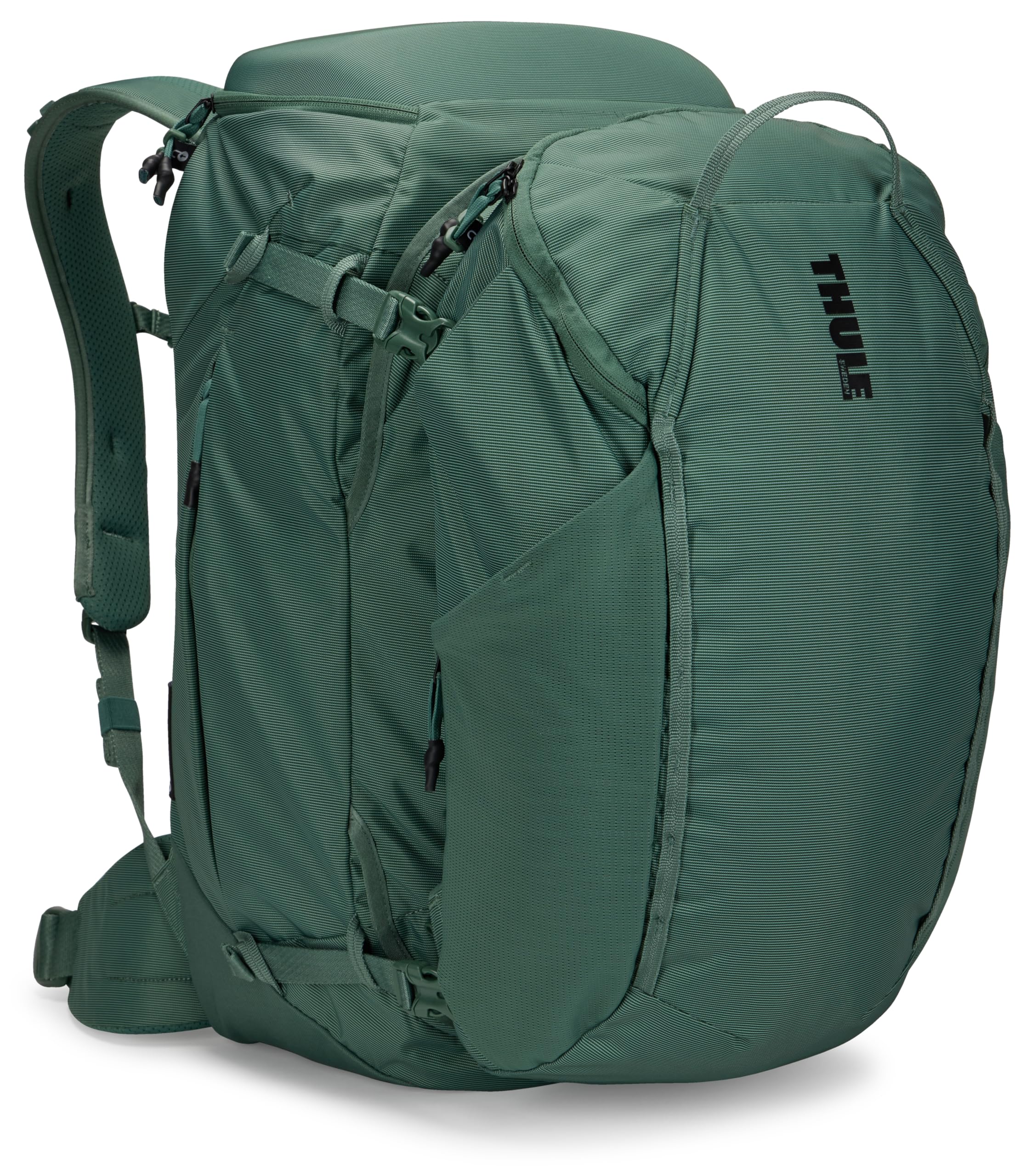
A 2-in-1 travel system with a hidden CashStash pocket for months abroad.
The Thule Landmark 60L is an adventure travel pack designed for extended trips, and its defining feature is security. A covert CashStash compartment hides under the SafeZone, keeping a passport and money safe from pickpockets. The innovative LoopLocks secure zipper pulls to the bag, deterring theft in crowded markets or train stations.
It includes a removable 20L add-on daypack with 15-inch Macbook storage and its own CashStash pocket, giving you a carry-on and personal item in one system. Owners mention 20-day Europe trips with everything fitting while the daypack stays ready for daily excursions.
The main compartment offers solid space, but owners wish for a small external zipper pocket for quick access. The 20L daypack material wears out faster than the main pack and is not waterproof, and the bottle holders fail first. It is slightly large for carry-on on some airlines, but the separable compartments let you split it into overhead and under-seat bags.
Secure and versatile
- Hidden CashStash pocket protects passport and money
- Removable 20L daypack with laptop storage for daily use
- LoopLocks secure zippers to deter theft
Watch out for
- No small external zipper pocket for quick access
- Daypack material is less durable and not waterproof
This is for: nomadic travelers and digital nomads who prioritize security and want one system that splits into carry-on plus personal item.
Not ideal for: pure trail backpackers who need a ventilated back panel and don’t care about anti-theft features.
9. Osprey Atmos AG 65L Men’s Backpacking Backpack
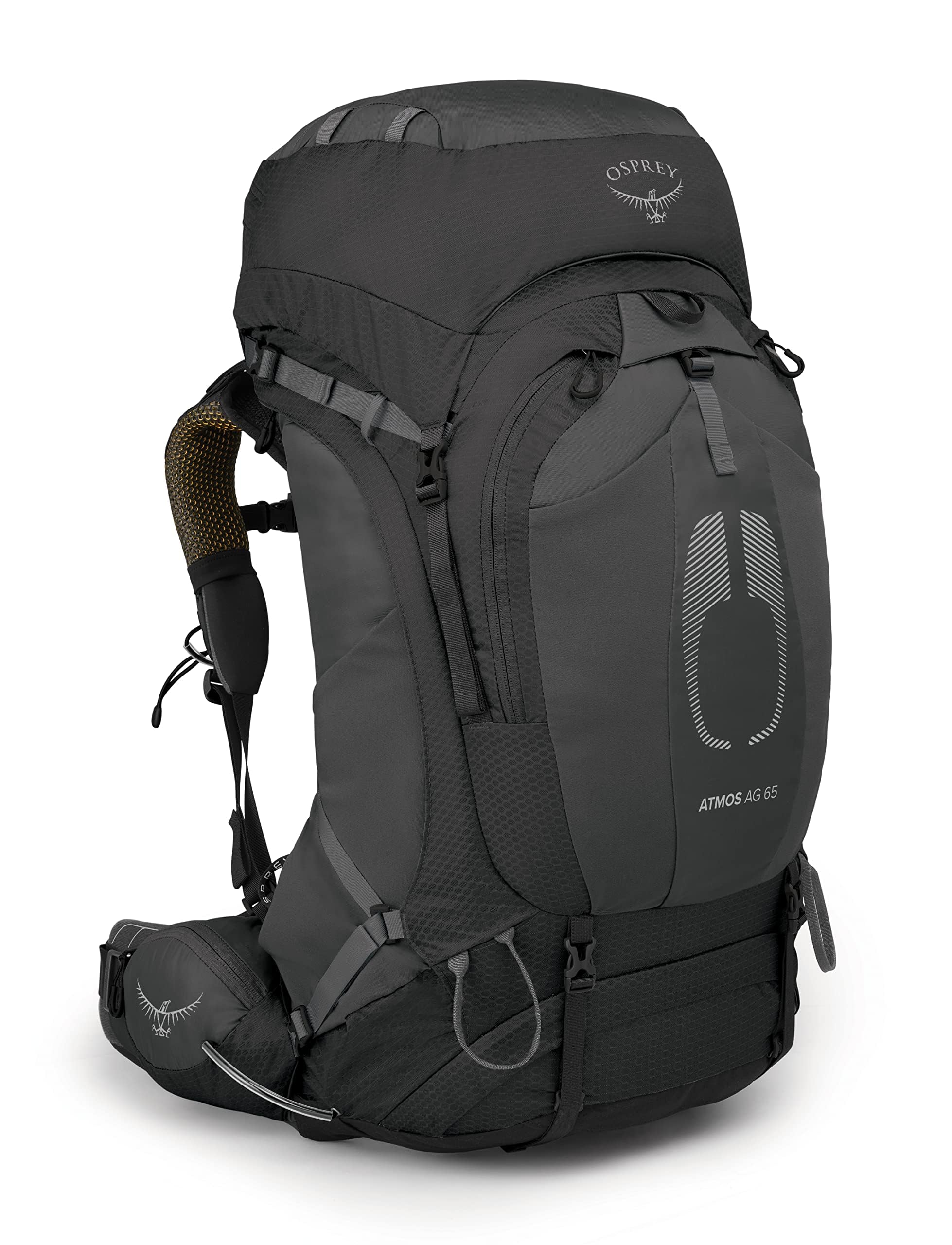
The Anti-Gravity suspension that makes 55 lbs feel light over 19 miles.
The Osprey Atmos AG 65L is the premium benchmark for heavy-load comfort, and the Anti-Gravity suspension is the reason. It wraps the hip belt and backpanel into one continuous mesh that conforms to your body, making the load feel significantly lighter than it is. Customers note carrying 55 lbs over 19 miles with comfort as the standout feature.
The included raincover is made with PFAS-free DWR and bluesign approved materials, so you stay prepared without the toxic forever chemicals. The curved zip access on one side of the panel and the floating top lid with lash points make loading and strapping gear intuitive. The zippered sleeping bag compartment with a removable divider and removable sleeping pad straps keep your sleep system secure and organized.
It handles loads up to 37-41 lbs with ease, and the hip belt padding is far better than the Rook 65L, which some found caused chafing. The side access pockets fit bike bottles, and an internal hydration sleeve plus two external bottle pockets handle up to 5L of water. The downsides are minor: the waistband zippers need two hands, the pack cannot stand upright on its own, and the price is the highest here.
The comfort king
- Anti-Gravity suspension makes heavy loads feel lighter
- PFAS-free DWR and bluesign approved raincover included
- Excellent weight distribution with superior hip belt padding
Premium trade-offs
- Waistband zippers require two hands to operate
- Cannot stand upright on its own when packed
This is the one for: serious backpackers hauling 35-55 lbs who want the best weight distribution money can buy.
Think twice if: you are on a budget or prefer a pack that stands upright for easy packing and unpacking.
Understanding the Specs
Internal Frame vs Frameless
An internal frame uses metal stays or a rigid backpanel to transfer the pack’s weight to your hips. This is the key to carrying heavy loads comfortably. A frameless pack relies on your gear for structure, which only works for lightweight loads under 15-20 lbs.
Hip Belt and Torso Fit
The hip belt is where most of the weight should rest, not your shoulders. A properly fitted belt wraps around your hip bones and transfers load. Torso length matters more than height — measure from your C7 vertebra to your iliac crest and match it to the pack’s adjustable range.
FAQ
What size trekking backpack do I need for a weekend trip?
How do I know if a trekking backpack fits my torso?
Is an internal frame backpack better than an external frame?
What is a hydration bladder and does every pack support one?
How much weight should a trekking backpack carry comfortably?
Can I use a trekking backpack as a carry-on for flights?
What is MOLLE webbing and why would I want it?
Why does a rain cover matter for a trekking backpack?
Final Thoughts: The Verdict
If you want one dependable pick, the trekking backpack winner is the Teton 55L Scout because it nails comfort, durability, and value in one package. If you want the best weight distribution for heavy loads, grab the Osprey Atmos AG 65L. And for a lightweight, carry-on-friendly option, the Deuter Aircontact Lite is the one to reach for.
How We Picked
We do not accept paid placement. Every pick is matched to a real buyer and a real use-case; we do not hands-on test units.
Sources & Methodology
Specifications: manufacturer listings and product documentation. Review insights: verified customer reviews, as of August 2026. Pricing: not shown on this page (it changes often); check the current price via the retailer link.
As an Amazon Associate, Gadgets Feed earns from qualifying purchases. This does not affect which products we feature.