
Our readers keep the lights on and my morning glass full of iced black tea. As an Amazon Associate, I earn from qualifying purchases.
Specs are compiled from manufacturer listings and verified buyer reviews and can change over time — please confirm the key details on the product page before buying.
I’m Min — the founder and writer behind Gadgets Feed. This guide is built by comparing the manufacturers’ published specifications and the patterns across verified customer reviews, so you get each pick’s real strengths and trade-offs instead of marketing spin.
If you want the short version: match the drop to your player’s size first, then pick the barrel and feel you like. The best USA bats under $200 usually aren’t the flashiest ones — they’re the ones sized right for the kid swinging them.
Our Picks at a Glance


How To Choose The Best USA Bats Under $200
Buying a USA bat gets simple once you know the three numbers printed on every box: length, drop, and barrel diameter. Get those right and the brand becomes a matter of feel and budget.
Start with length, then the drop
Length is measured in inches and should roughly match your player’s height and age. A 27-inch bat suits most 6- to 8-year-olds, while 30 and 31 inches fit bigger kids moving into player-pitch ball. The drop then sets the weight: a 31-inch bat at -10 weighs 21 ounces, and the same length at -12 drops to 19 ounces. Lighter bats swing faster for smaller players, but too light can cost you the mass that drives the ball off the barrel.
Barrel diameter and balance
Barrel diameter is the width of the hitting surface. Almost every bat here uses a 2 5/8-inch barrel, which is the widest allowed in USA play — that extra width means a bigger balance and more room for error on off-center contact. A few use a smaller 2 1/4-inch barrel, which is lighter and easy for the youngest hitters to control, at the cost of forgiveness.
One-piece vs two-piece feel
A one-piece bat is built from a single tube of alloy, so it feels stiff and direct on contact. A two-piece bat joins a barrel and a handle with a connector that absorbs some of the sting on mishits. Neither is better; one-piece tends to reward strong hitters with feedback, while two-piece softens the vibration for kids who catch the ball off the end.
Quick Comparison
| Model | Best For | Drop | Barrel | Weight | Amazon |
|---|---|---|---|---|---|
| Rawlings 5150 Youth USA★ Best Overall | Everyday youth league play | -11 / -10 / -5 | 2 5/8″ | 5 oz | Amazon |
| Marucci CATX2 Senior LeagueVibration Fighter | Vibration-free contact | -5 / -8 / -11 | 2 5/8″ | 0.75 kg | Amazon |
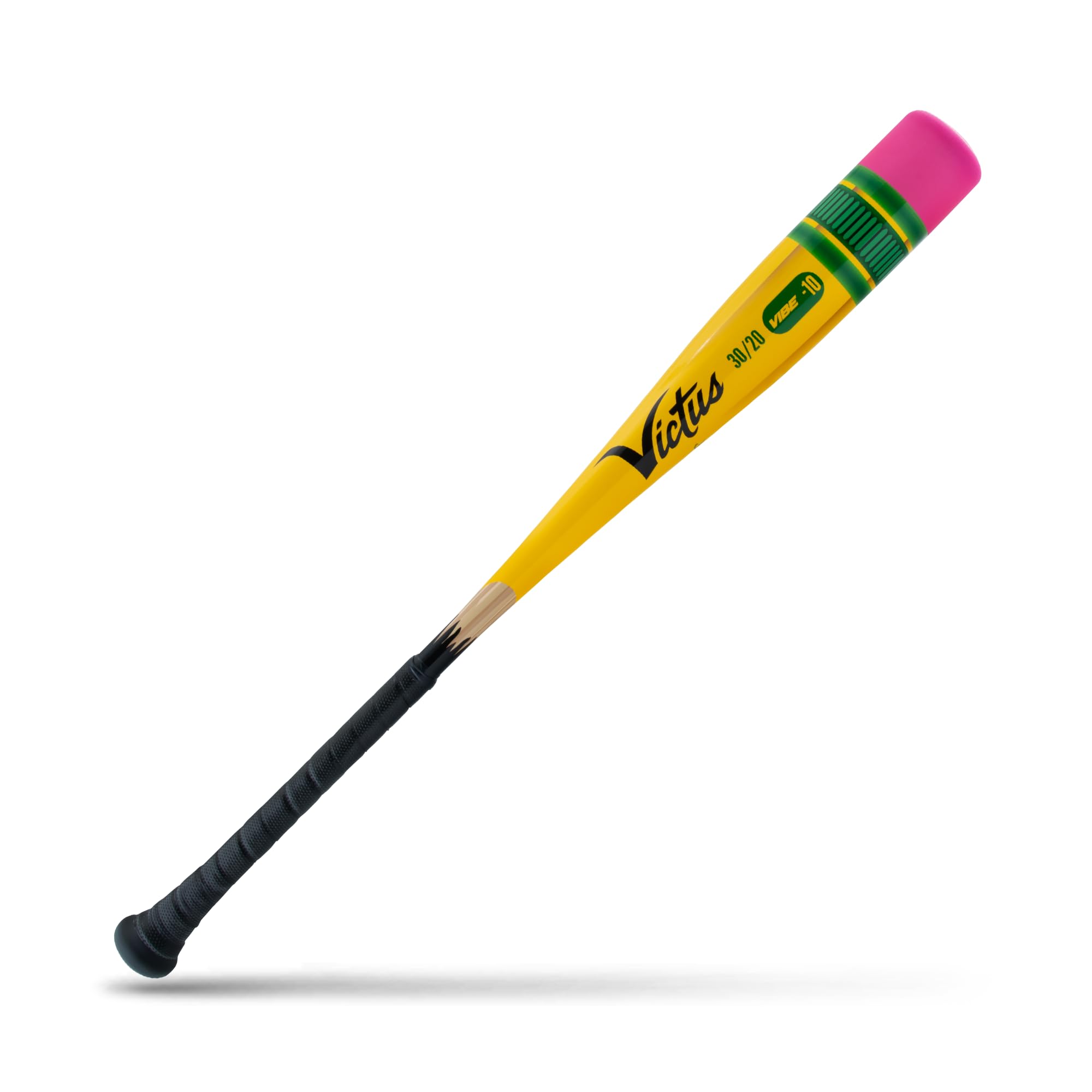
| Victus Vibe PencilStyle Standout | Developing hitters who want style | -10 | 2 5/8″ | 1.8 lb | Amazon |
| Marucci F5 SL | Clean, traditional swing feel | -10 | 2 5/8″ | 1.3 lb | Amazon |
| Mizuno PWR ALLOY | Forgiving wide balance | -10 | 2 5/8″ | 1.7 lb | Amazon |
| Louisville Slugger Select PWR | Two-piece comfort and pop | -10 / -8 / -5 | 2 5/8″ | 0.79 kg | Amazon |
| Easton 2026 MAV1 Flash | Swing speed and bold looks | -11 / -8 | 2 5/8″ | 0.5 kg | Amazon |
| Easton Moxie | Youngest and smallest hitters | -12 | 2 1/4″ | 16 oz | Amazon |
| Rawlings Raptor Youth USA | Entry-level first bat | -10 | 2 1/4″ | 1.2 lb | Amazon |
In‑Depth Reviews
1. Rawlings 5150 Youth Baseball Bat USA -11/-10/-5 Drop
Our pick — over 4.5★ from 700+ verified ratings; the strongest balance of quality and price.
The all-rounder that keeps showing up in dugout after dugout — a 4.7-star favorite across 700+ owners.
The 2 5/8″ barrel is the spec that decides games here. That wider hitting surface means a bigger balance, so a slightly off-center swing still sends the ball hard rather than dying off the end. The aerospace-grade alloy is built to respond, and at just 5 ounces of bat weight in this build, young hitters get the bat around fast.
Where the 5150 separates itself is the sizing range. It’s offered across -11, -10, and -5 drops in a 30-inch length, which means one model line can carry a player from first coach-pitch games up through travel ball. Compare that flexibility to a fixed-drop option and the value is obvious.
The honest catch is the one you’d expect from a youth bat: how it feels in the hands splits opinions. Some parents find it feather-light for their player, others say it swings heavier than the number suggests. Sized right, though, it’s the bat most families end up buying twice — once for the starter, once for the size up.
What earns its keep
- 2 5/8″ barrel gives a forgiving, wide balance
- Three drop options (-11, -10, -5) grow with one player
- Ultra-light build for faster swing speeds
- One-piece alloy delivers a stiff, confident feel on contact
Before you commit
- Perceived weight is divisive — some find it heavier than the drop implies
- A few buyers report denting after heavy use, so sizing matters
Reach for this if: you want one bat that covers a first-year player through travel ball without rebuying a new model line each season.
Look elsewhere if: your player is tiny at the plate and needs the absolute lightest option in the smallest length.
2. Marucci CATX2 Senior League Bat USA, 2 5/8″ Barrel
Built to kill the sting — the bat that turns a jammed-hands mishit into a smooth, solid thump.
Marucci’s not-so-secret weapon is the Liquid-Gel System in the knob and endcap. Which means a soft pad of gel sits inside the bat where vibration travels, absorbing the shock that normally rattles a kid’s hands on an off-center swing. Any parent whose player has shaken out sore palms after a bloop knows why that matters. The 2 5/8″ barrel fills out the picture with an expanded balance, and the multi-variable wall design keeps performance consistent along the whole barrel instead of just the middle.
On feel, this is a balanced, one-piece alloy bat, so the swing is clean and traditional with no flex and no wobble. You get quick bat speed and a lower moment of inertia — the yardstick for how easy a bat is to rotate through the zone — which adds up to more control at the plate. The CATX2 also comes in a wide spread of sizes across the 26 through 31 range, so it fits a lot of players.
Where it sits relative to the Rawlings 5150 above: same 2 5/8″ barrel, but the Marucci trades that model’s wider drop spread for the gel dampening system. The one number worth weighing honestly is the listed weight — at 0.75 kg the CATX2 carries a bit more mass than the featherweight bats on this list, which some younger players will feel over a long game. For hitters strong enough to swing it, the payoff is a bigger-strike-zone feel and a bat that responds when they get the barrel to the ball.
What the gel actually does: The Liquid-Gel knob and endcap absorb vibration so hard contact feels solid rather than jarring — the top reason players come back to this build.
The sizing note: Available in 26/15 through 31/20, which covers most ages but asks the buyer to know their length before ordering. Get the length right and the balanced weight does the rest.
Choose this one if your player is moving up to bigger pitching and wants a calm, controlled swing with less hand sting.
Pass if you need the very lightest bat in the smallest length for a first-year player.
3. Victus Vibe Pencil Baseball Bat, 2 5/8″ Barrel, -10 Drop
The one that looks like a giant pencil and hits like a serious bat — and the kids on the team all want a turn.
There’s no ignoring the look. The Vibe Pencil is finished to resemble a school pencil, right down to the tip, and that gimmick is doing real work in the review pages — appearance shows up as among the most-praised aspects, and owners repeatedly mention how much their players like showing it off. Underneath the paint, though, this is a one-piece VXP alloy bat with a 2 5/8″ barrel and a -10 drop, sized for developing hitters who are still grooving their swing.
The mechanical story is control. Victus gave the Vibe a mid-balanced swing weight with a medium M.O.I., so it rotates through the zone without feeling either end-heavy or feather-light. There’s also a vibration-reducing knob built to cut the sting on mishits — a real plus for younger hitters learning to catch the ball out front rather than off the handle. It’s available across a spread of sizes from 26/16 up to 31/21, all at -10.
The lead sound and long-term durability are the parts to keep an eye on. It doesn’t have the barrel heat of the top-tier two-piece models for a strong, older hitter. But for the 8- to 12-year-old developing their game — and packing a bat their teammates always want to borrow — this is among the most fun-to-own options here. What makes it click is bat quality: owners rate the build itself highest, and the pencil look is just the bonus.
The bottom line: A mid-balanced, vibration-damped -10 built for young hitters who want a bat that turns heads and still performs.
4. Marucci F5 SL -10 USA 2 5/8″ Barrel Baseball Bat

A balanced, one-piece alloy bat that trades gimmicks for a clean, honest swing.
Marucci’s F5 SL leans on a multi-variable wall design — different thickness zones built along the barrel to spread the balance wider and keep it durable season after season. The ring-free barrel technology is the other half of the story: no internal rings means no dead spots and more consistent response wherever you make contact. That combination is what keeps the F5 from going flat in the hands of a hitter who uses the whole barrel.
It’s a balanced one-piece alloy build, so the swing comes through smooth and traditional. The custom micro-perforated soft-touch grip is a nice touch for hand feel, and the listing puts this bat at 1.3 pounds — light enough to swing freely without being so featherlight that a bigger hitter loses oomph. Because it’s a straight -10, it best serves the player who’s outgrown the entry-level setup and wants one bat to lock in their swing.
Owners consistently pair “balanced weight” with “nice ding,” and that’s the F5 in a sentence: it feels right in the hands and rewards clean contact. The one thing to know honestly is that this isn’t a two-piece vibration-managed design — a pure mishit still transmits some feedback to the hands. For a hitter who wants to feel the barrel rather than insulate it, that’s a feature. For a young player who tends to catch the ball off the handle, the cushioned-grip two-piece options above are a friendlier first bat.
The feel-first pick: One-piece stiffness, a wide ring-free balance, and a balanced -10 make this a great choice for a player who wants direct, honest feedback on every swing.
Best for the developing hitter ready for a true balanced bat with a serious balance and a clean swing feel.
Wrong fit if your player needs heavy vibration damping — in that case look to a cushioned-grip two-piece model.
5. Mizuno PWR ALLOY -10 USA Youth Baseball Bat, 2 5/8″ Barrel

The big-barrel forgiving bat for young hitters still learning where the balance lives.
Mizuno’s multiband barrel is the feature that earns this bat its place. Instead of one uniform wall, the barrel is built with multiple thickness levels, which widens the balance and gives mishits a better chance of still jumping. For a 7- to 10-year-old who catches the ball off the end as often as dead center, that forgiveness is worth more than any single flashy spec.
The build is a one-piece aluminum construction with a cushioned synthetic grip, so it feels comfortable in the hands and keeps the feel consistent. At 1.7 pounds and 31 inches with a 2 5/8″ barrel, the Mizuno runs longer and heavier in hand than the lightest bats on this list — that’s a deliberate trade. More mass in the bat means more force behind the ball when a slightly older, stronger kid gets it around. Size it for the player and it delivers.
That’s also where the honest sizing note comes in. Because the Mizuno carries more weight than the entry-level options, a very young or slight player will find it harder to swing — think of it as a bat that rewards a growing kid rather than a first-year starter. Quality is what owners appreciate most here; the build feels solid and stands up to a season of practices. Get the length right and the wide, forgiving barrel tends to stick with a family through more than one age group.
What it brings to the plate
- Multiband barrel widens the balance for more forgiveness
- 2 5/8″ barrel adds hitting surface
- 30-inch length with a cushioned grip for comfort
- Sturdy one-piece construction built to last a season
The trade-offs
- Heavier in hand than featherweight bats — not ideal for the smallest players
- Some find the pop is good-but-not-elite compared to premium models
Your bat if: you want a bigger, forgiving barrel for a player who’s strong enough to swing a slightly heavier build.
Keep looking if: you need the lightest possible bat for a first-year, smaller hitter.
6. Louisville Slugger 2025 Select PWR USA Baseball Bat, -10/-8/-5 Drop

The two-piece powerhouse with the highest rating on this list — a 4.9-star bat with real pop.
Louisville Slugger built the Select PWR around its VCX2 Vibration Control Connection System — a patented elastomeric connector that lets the barrel and handle move independently, soaking up vibration for a soft, controlled feel on contact. It’s a two-piece hybrid: the alloy barrel delivers the performance and the composite handle delivers the comfort. The EXD premium alloy barrel opens up a large, responsive balance, and the SPD-Gen2 end cap uses lightweight composite material to keep barrel performance high without adding swing weight.
What stands out in owner feedback is the difference in hard contact — the ball comes off noticeably hotter than beginner bats, and the balanced swing keeps the barrel coming through fast. Weigh it fairly: this is a premium bat and a bigger financial step than the entry-level picks. The one honest note is that the composite-handle two-piece build asks a bit more from a light hitter in terms of feel, but for a player ready to notice the pop, it earns its spot at the top of the price curve.
The pop people notice: Owners describe the jump in solid contact as obvious once they’ve made the switch — the EXD alloy barrel and composite end cap are the reasons why.
The one trade: Two-piece comfort doesn’t eliminate the size question — you still want the right length and drop for your player, since a heavier build asks more of a smaller hitter.
Lean this way if you want the highest-rated two-piece bat here and your player is ready to feel the extra pop on solid contact.
Stick with a one-piece if your hitter is young and still working on making consistent contact — the simpler alloy options suit that stage better.
7. Easton 2026 MAV1 Flash Baseball Bat USA -11/-8

A bold, one-piece alloy that’s game-ready from the first swing — hot out of the wrapper.
Easton’s Flashpoint alloy is the headline here, and the claim is that it’s built ready to perform without a break-in period. The WaveWall barrel technology is the other half — an all-new design meant to keep performance consistent across the whole barrel so there are no dead spots to avoid. It’s a one-piece balanced construction, so the bat speed and control come through free and responsive, and the 2 5/8″ barrel keeps the hitting surface wide.
It’s a USA Baseball certified bat, offered in -11 and -8 drops — the lighter -11 is the pick for smaller or younger players, including one owner’s 5-year-old playing coach pitch. That lighter drop is worth weighing carefully: a bigger drop makes the bat easier to swing but trades away some of the mass that drives the ball, so the -11 suits younger hitters and the -8 suits stronger kids chasing distance. The pink and yellow colorway is a real talking point in the reviews — this is not a bat that blends into the rack.
Set against the Mizuno above, the MAV1 leans lighter and more speed-focused, where the Mizuno trades lightness for a bigger forgiving barrel and heavier feel. One honest note: a couple of owners mention receiving a bat with cosmetic scuffs from the start — a minor arrival issue, not a performance flaw, and worth knowing so you inspect the packaging on delivery. Otherwise the MAV1’s big balance and swing speed make it a strong fit for a kid who wants to bring the barrel fast.
Why it works
- WaveWall barrel keeps performance consistent with no dead spots
- One-piece balanced build for easy speed and control
- Offered in -11 and -8 to fit different player sizes
- Bold pink/yellow finish that players love
Worth weighing
- Some units arrive with cosmetic scuffs, so check the box on delivery
- The light -11 drop trades some mass for swing speed
Pick this if your player wants a fast, one-piece alloy bat with bold styling and a wide, no-dead-spot barrel.
Skip this if your hitter needs a heavier build for maximum power at the plate.
8. Easton Moxie Baseball Bat USA -12 Drop, 2 1/4 Barrel

The lightest bat here — a -12 starter built for the smallest, newest hitters.
The Moxie’s defining number is its -12 drop, the lightest on this list and the reason it’s the easiest bat here to swing. It’s a 27-inch bat built from ALX100 military-grade alloy with a concave endcap, and that low weight is the entire point: a 7-year-old still learning to control the bat can get the barrel around on time. It carries a 2 1/4-inch barrel, which is narrower than the 2 5/8-inch bats above but also lighter and easier to handle for the youngest players.
At 16 ounces it is dramatically lighter than the Rawlings 5150 in the same length class, and its -12 drop puts it firmly in entry territory for very young ballplayers. The cushioned 2.2mm grip keeps the hands comfortable, and the enlarged balance is forgiving for a first-year kid making the leap from tee ball to coach pitch.
Where it lands depends entirely on the player. This is a starter bat, and it’s offered in a junior size that suits 6- to 8-year-olds rather than older, stronger hitters who’ve moved up to bigger pitching and a heavier drop. The one real caveat is sizing: order too long and the low weight feels awkward for a small kid, so measure the player before picking the length. Get that right and this is the most comfortable first bat on the list — the one that lets a little guy focus on making contact instead of muscling a too-heavy barrel.
The starter’s pick: A -12 drop and 16-ounce build make the Moxie the lightest, easiest-to-swing bat here — the right call for a first-year player moving up to player pitch.
Made for the smallest and youngest hitters who need the lightest bat available to build confidence at the plate.
Not for a bigger, stronger player who’s outgrown the -12 range and needs more mass behind the swing.
9. Rawlings Raptor Youth Baseball Bat USA -10, 2 1/4″ Barrel

An entry-level -10 that gets young players through their first season without a big spend.
The Raptor is Rawlings’ value play: a one-piece aerospace-grade alloy bat at a straight -10 drop with a 2 1/4-inch barrel. That narrower barrel is lighter and more manageable for a beginner than the wide 2 5/8-inch barrels, and the ultra-light speed cap at the end boosts swing speed through the hitting zone. At 1.2 pounds and 29 inches, it sits lighter in hand than the Midwest-inspired heavier builds on this list, which is exactly what an early-career player wants.
The honest story here comes from the durability side. A small share of customers note the bat bending or denting during youth play — a handful of reviews across the whole pool describe a bent barrel after moderate use, while the vast majority are happy with the price-to-quality ratio and how the bat performs for the ages it’s aimed at. That’s the reality of an entry-level bat: it’s tuned for the lightest wallets and the youngest swings, and it rewards players who aren’t overpowering the barrel yet.
Compare it to the Easton Moxie above and the picture clarifies. The Moxie is lighter at -12 and tuned for the smallest hitters; the Raptor is a step up in mass and hitting surface at -10, making it the better bridge bat for a kid moving into consistent player-pitch contact without graduating to a premium alloy. For a first bat with a modest budget, it does the job — just don’t ask it to survive a season of hard travel-ball swings.
Worth it for a beginner or a young player who wants a straightforward -10 starter at the lowest tier of the market.
Look higher if your player already swings hard in travel ball — a one-piece alloy built for bigger contact will hold up better.
Understanding the Specs
Drop weight (the minus number)
Drop is length minus weight, expressed as a minus figure. A 30-inch bat at -10 weighs 20 ounces, and at -12 the same length drops to 18 ounces. The bigger the drop, the lighter the bat feels for its size — so a -12 like the Easton Moxie swings fastest for the smallest kids, while a -8 or -5 suits a stronger player who wants more mass behind contact. Match the drop to your player’s strength first, because a too-heavy bat slows the swing and a too-light one can cost distance.
Barrel diameter
The barrel is the hitting surface at the end of the bat, and its width decides your margin for error. A 2 5/8-inch barrel is the widest allowed in USA play and shows up on most bats here, giving a bigger balance so off-center contact still travels. A narrower 2 1/4-inch barrel — used on the Easton Moxie and Rawlings Raptor — is lighter and easier for the youngest hitters to control, at the cost of a smaller hitting zone.
One-piece vs two-piece construction
A one-piece bat is a single piece of alloy, so it feels stiff and direct when you make contact — good feedback for a hitter who wants to know exactly where the ball met the barrel. A two-piece bat, like the Louisville Slugger Select PWR, joins barrel and handle with a connector that absorbs vibration, softening the sting on mishits. Neither is automatically better; one-piece suits strong hitters who like feel, and two-piece suits players who want a smoother, cushioned response.
USA certification
USA Baseball certification is the approval your league checks before a kid steps to the plate in most youth divisions. Every bat on this list carries that certification, which confirms the barrel meets the USA play standards used across sanctioned youth leagues. A bat stamped for a different rule set won’t be allowed in USA play regardless of how it looks or how it swings, so always confirm the USA stamp on the model you buy.
FAQ
What drop weight should I buy for my child’s first USA bat?
Will a 2 5/8″ barrel bat fit my player?
Is a one-piece or two-piece USA bat better for a young player?
How do I know a bat is legal for USA Baseball leagues?
What length USA bat should I get for my 7 or 8 year old?
Does a lighter bat hit the ball less far?
Can a youth USA bat be used for coach pitch and tee ball?
How long should a youth USA bat last?
Should I size up to a longer bat as my child grows?
Is a heavier drop or a lighter drop better for power?
Final Thoughts: The Verdict
For most families, the usa bats under $200 winner is the Rawlings 5150 Youth Baseball Bat because its 2 5/8″ barrel and three drop options cover a player from first-year rec ball through travel ball without rebuying a new model line. If you want the highest-rated bat here and a player ready to notice the pop, grab the Louisville Slugger 2025 Select PWR, whose two-piece VCX2 build cushions the sting. And for the lightest, easiest first bat, the Easton Moxie at -12 is the one to reach for. Whatever you pick, match the drop to your player’s size before anything else — that single number decides whether they swing on time or swing late.
How We Picked
We do not accept paid placement. Every pick is matched to a real buyer and a real use-case; we do not hands-on test units.
Sources & Methodology
Specifications: manufacturer listings and product documentation. Review insights: verified customer reviews, as of September 2026. Pricing: not shown on this page (it changes often); check the current price via the retailer link.
As an Amazon Associate, Gadgets Feed earns from qualifying purchases. This does not affect which products we feature.