
Our readers keep the lights on and my morning glass full of iced black tea. As an Amazon Associate, I earn from qualifying purchases.
Specs are compiled from manufacturer listings and verified buyer reviews and can change over time — please confirm the key details on the product page before buying.
Staring down a fence line swallowed by vines or a driveway crack sprouting crabgrass is a race against the season. The right concentrate kills weeds to the root, while the wrong one only singes the leaves and lets them regrow within weeks. This guide ranks the top non-selective herbicides by real-world results and ease of mixing and application.
I’m Min — the founder and writer behind Gadgets Feed. This guide is built by comparing the manufacturers’ published specifications and the patterns across verified customer reviews, so you get each pick’s real strengths and trade-offs instead of marketing spin.
Clearing a pasture or reclaiming a patio starts with picking the right vegetation killer—your choice depends on speed, staying power, or sheer volume.
Our Picks at a Glance

How To Choose The Best Vegetation Killer
Every concentrate here is non-selective (it kills any green plant it touches). So your real decision is simple: how fast you need results, how tough the weeds are, and how much ground you must cover.
Match the active ingredient to the weed
Glyphosate is the workhorse that moves through the plant and kills the root system, which is why it dominates this category. If you are fighting woody brush, vines, or stumps, look for a formula that adds triclopyr — that combination knocks down growth that plain glyphosate struggles with.
Understand coverage and concentration
A 32-fluid-ounce bottle can treat anywhere from roughly 300 square feet to over 4,000 square feet depending on how the label tells you to mix it. Check the square-footage claim before you buy, because a cheaper jug that needs a heavy mix rate can run out twice as fast as a pricier one that stretches.
Know your patience level
Fast-contact formulas show browning in hours but often miss the roots, while systemic killers take days to show full death but stop regrowth. If you want to replant soon after, check the label’s replant window — some allow new flowers the same weekend, others ask you to wait weeks.
Quick Comparison
| Model | Best For | Active Ingredient | Size | Coverage | Amazon |
|---|---|---|---|---|---|
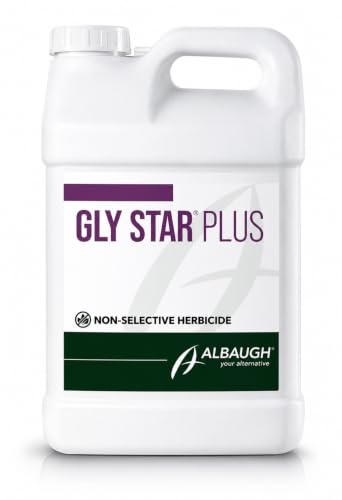
| Gly-Star Plus Herbicide★ Best Overall | Large-scale clearing | Glyphosate 41% | 2.5 gallons | Refer to label | Amazon |
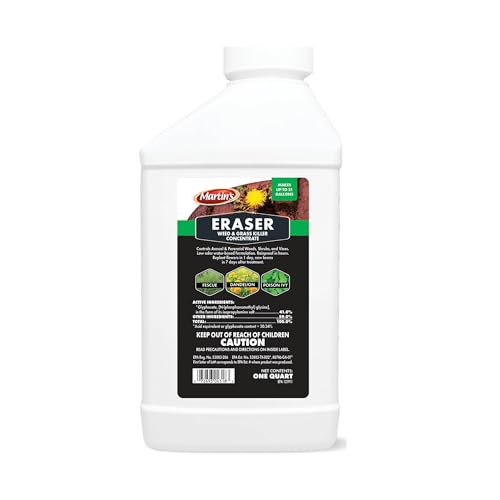
| Control Solutions EraserBest Value | Budget root kill | Glyphosate 41% | 32 fl oz | Annual | Amazon |
| Southern AG Brush KillerBest for Brush | Vines and stumps | Triclopyr | 32 fl oz | 512-1024 sq ft/gal | Amazon |
| Spectracide Concentrate | Same-day results | Diquat Dibromide | 32 fl oz | 1,350 sq ft | Amazon |
| Martin’s Eraser Max | Stubborn perennial weeds | Glyphosate 43.6% + Imazapyr | 32 fl oz | — | Amazon |
| Ortho GroundClear | Patios and walkways | 2,4-D/Dicamba | 32 fl oz | 1,120 sq ft | Amazon |
| Hi-Yield Killzall 365 | Bare-ground control | Glyphosate | 32 fl oz | Up to 4,300 sq ft | Amazon |
| Roundup Concentrate4 | Trusted brand coverage | Triclopyr + Diquat | 1 gallon | 300 sq ft/gal | Amazon |
In‑Depth Reviews
1. Gly-Star Plus Herbicide (2.5 Gallons)
Our pick — over 4.5★ from 450+ verified ratings; the strongest balance of quality and price.
A 2.5-gallon jug of 41% glyphosate that clears large areas in one trip.
This is the same active ingredient you get in Roundup Ultra, but in a 2.5-gallon jug that holds 320 fluid ounces — a full ten times the volume of a standard quart bottle. At 15 pounds, you feel the heft, but you also feel the freedom of not rationing the last few ounces mid-project.
The 41% glyphosate concentration is a systemic killer, so it moves from the foliage down into the root system instead of just scorching the leaves you can see. Most annual weeds show visible effects within 2-4 days, while tougher perennials take 7 or more days to fully die back. Buyers report the patience pays off: “Takes about 10 days to two weeks to see everything dead, but for the price it’s worth it.”
The built-in surfactant means it spreads and clings to leaves without you adding extra soap, and the label notes no residual activity stays in the soil after application. One catch: it is not sold to CA, MT, NV, OR, WA, or WY, so check your state before ordering.
Why the big jug wins
- Ten times the volume of a quart bottle at a fraction of the per-ounce cost
- Built-in surfactant means no extra mixing steps
- Safe to plant after — no soil residual activity
The patience tax
- Full kill takes 10 days to two weeks on hardy weeds
- Banned from sale in six western states
Reach for it if: you have acres of weeds, brush, or even lake lily pads to clear and want one jug to last the whole season.
Think twice if: you need same-day visible results — this works slowly but thoroughly.
2. Control Solutions Eraser & Grass Killer Concentrate
A 32-ounce quart of 41% glyphosate that matches big brands on active ingredient at a lower price.
At 2 pounds for a 32-fluid-ounce bottle, this is a fraction of the weight of the 2.5-gallon Gly-Star jug above — a 7.5x gap — yet it carries the exact same 41% glyphosate concentration. That makes it the easy entry point if you want to test a systemic killer without committing to a bulk purchase.
This water-based formula is low-odor and rainproof within hours, so a sudden shower won’t wash away your work. Owners mention a predictable timeline: “no effect 2 days, yellowing 4-7 days, death 7-14 days.” Tough roots like poison ivy may need a second application, but the systemic action (absorbed through leaves into roots) kills the root system, not just the top growth.
What wins people over here is the value — one quart mixes up to three 4-gallon tank loads, which stretches a long way for the price. It handles annual weeds, perennial weeds, trees, vines, and shrubs, making it a genuinely versatile single-bottle arsenal.
Slow and steady: This is the patience play. It works on everything it touches, but it asks for up to two weeks before you see full death — a fit for anyone who can wait for permanent results rather than instant browning.
3. Southern AG 01113 Brush Weed Killer
A triclopyr formula that wilts blackberry thickets and cherry saplings within a day.
While every other pick here leans on glyphosate, this one is built around triclopyr — the active ingredient that targets woody brush and vines that shrug off plain glyphosate. Customers note a morning application in full sun wilted blackberry and cherry leaves by day 1, with full death within a week. One even called it an effective crossbow substitute.
It also prevents sprouting on clean-cut stumps, which makes it the go-to after you’ve chainsawed a tree and want the stump to stop resprouting. The label directs it at non-crop areas like roadsides, rangeland, pastures, and fences, so this is not a flower-bed product.
The honest caveat is that results are mixed depending on what you spray. Bindweed vines died cleanly without harming nearby peonies, yet one owner found it “did nothing to the strangler fig” plaguing their tree. It is a specialist tool, not a universal cure-all.
Match it to the task: perfection for vines, stumps, and woody brush, but some tough species will laugh it off. Mix with glyphosate for the most stubborn vine control, as buyers suggest.
4. Spectracide Weed and Grass Killer Concentrate
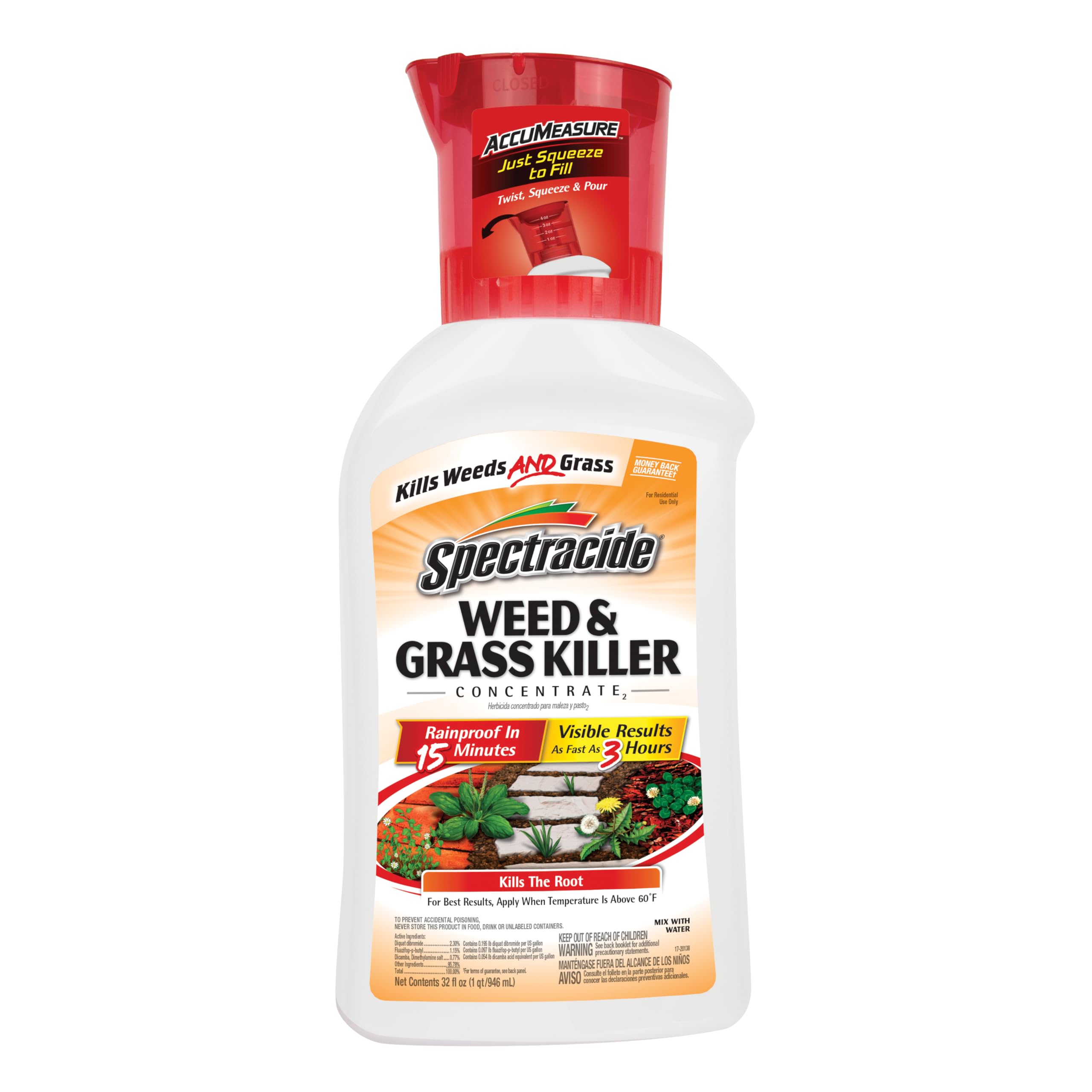
A diquat-based contact killer that shows visible results in 3 hours and allows same-weekend replanting.
This is the speed pick. Built on diquat dibromide, it delivers visible results in as fast as 3 hours, and it is rainfast just 15 minutes after application. That is a different game than the glyphosate products on this list, which measure their timelines in days. One buyer mixed it into a reusable 1-gallon sprayer and watched the weeds along the curb die within a day.
The 32-fluid-ounce concentrate covers 1,350 square feet, and the label says it kills the root so you can replant new flowers, trees, and shrubs the same weekend. Use it on driveways, walkways, fences, flower beds, and shrubs.
The catch comes in the packaging. The Accumeasure cap is meant to take the mess out of measuring — twist, squeeze, and pour — but buyers are split on it, with some calling it a gimmick and others reporting leakage from the bottle. The effectiveness itself draws consistent praise.
Perfect for: anyone who needs weeds gone by the weekend and wants to replant immediately after.
Watch out for: the measuring cap — some units leak, so store it upright and check the seal.
5. Martin’s Eraser Max Super Concentrate
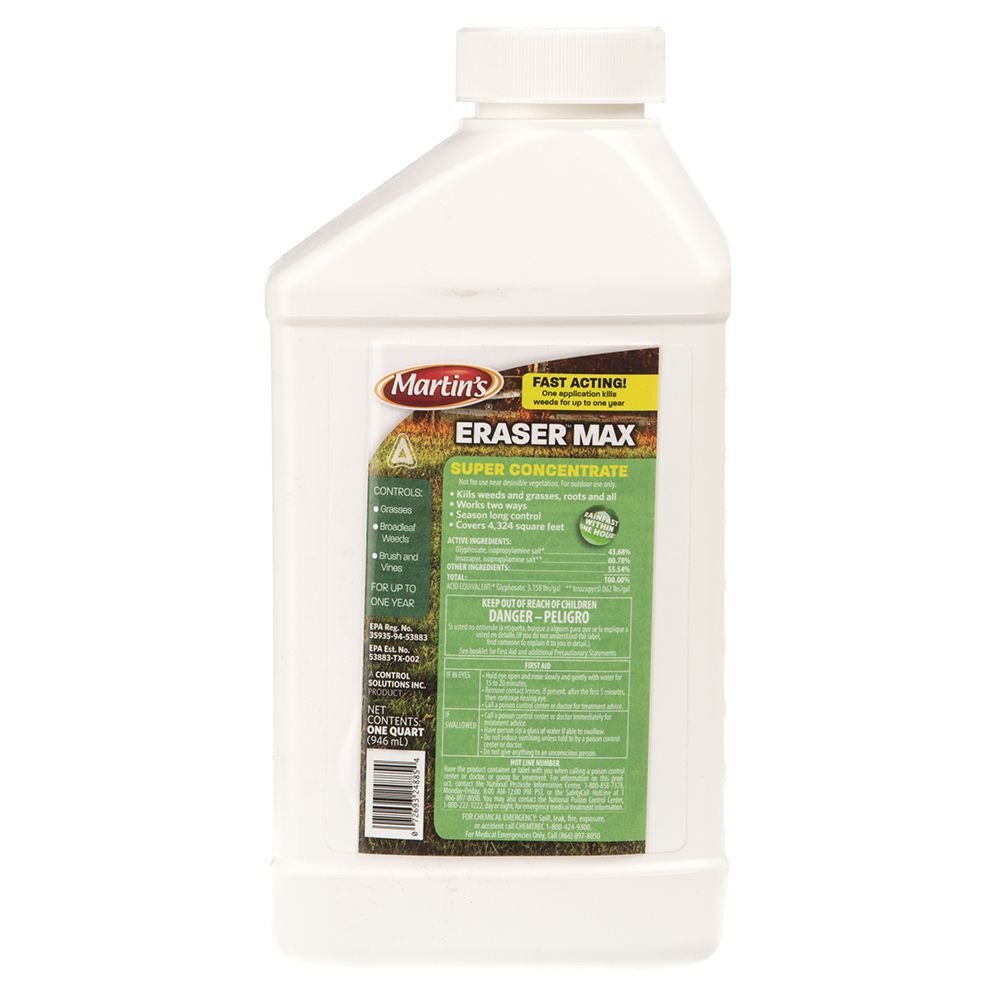
A 43.6% glyphosate plus imazapyr concentrate that kills bamboo and morning glory where standard mixes fail.
This one pushes past the standard 41% glyphosate formula to 43.6% glyphosate, then adds 0.78% imazapyr — a combination that gives it staying power on the toughest perennial weeds. Reviewers point out even bamboo withers and dies after 4-5 days, and morning glory along a fence line was fully dead in about two weeks.
It is rainproof within a few hours, so you can spray and not panic about an incoming shower. The concentrated formula means a little goes a long way, which is why buyers call it economical despite the higher concentration — one application cleared an entire ditch area.
The trade-off is the safety gear. This is a serious chemical that requires protective equipment, and buyers advise against spraying on windy days to avoid drift onto plants you want to keep. It is also an oil-based formula, so it mixes differently than the water-based options here.
Heavy hitter: Choose this when standard glyphosate has failed you on bamboo, morning glory, or ditch weeds. Budget for gloves, goggles, and a calm, windless day.
6. Ortho GroundClear Weed & Grass Killer Super Concentrate
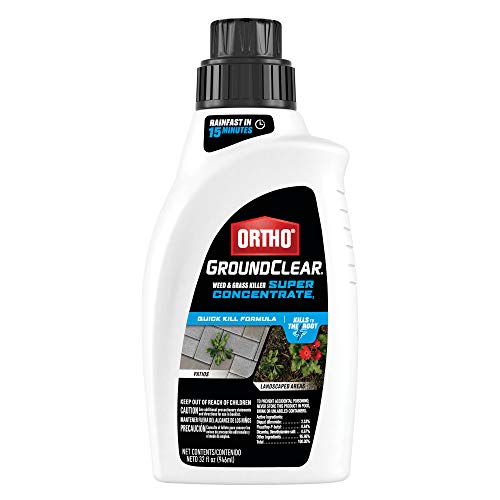
A 2,4-D and dicamba formula that kills clover, dandelion, and oxalis to the root on hardscapes.
This concentrate is formulated around 2,4-D and Dicamba, a pairing known for handling tough broadleaf weeds like clover, dandelion, oxalis, chickweed, and crabgrass. The 32-fluid-ounce bottle treats up to 1,120 square feet, and it starts working immediately while becoming rainfast in 15 minutes. On a fence line with foot-tall grass, visible results showed in about 3-4 days.
It is labeled for use around perennial landscape plants, trees, shrubs, fences, patios, paths, sidewalks, and driveways — the classic hardscape cleanup. Buyers found it effective on tough perennials like Silverleaf Nightshade, working through the root system rather than just burning the leaves.
The warning that shows up repeatedly is volatility. Above 80°F or in wind, the 2,4-D can vaporize and drift onto nearby plants — one buyer warned it can kill grapevines. Buyers also note that at the recommended concentration it may kill only about half the weeds, with a double-strength mix required for total kill.
Hardscape hero: Ideal for patios, walkways, and rock beds. Not the pick if you garden near sensitive plants — heat and wind make it risky.
7. Hi-Yield Killzall 365

The bare-ground specialist that stretches a single 32 oz bottle across 4,300 square feet.
No other concentrate on this list stretches as far. This 32-fluid-ounce bottle treats up to 4,300 square feet, which is more than triple the coverage of the Ortho or Spectracide bottles above. For spot control of brush, vines, and weeds, mix 6 ounces per gallon of water; for full bare-ground control, mix 7.4 ounces with 1 to 10 gallons.
It is labeled specifically for non-crop and no-vegetation areas, so do not use it on lawns. Buyers describe it as “no joke” on grass and weeds, with results appearing in two or three days. The value is the recurring theme — a little goes a long way, and the price per square foot of coverage is hard to match.
The honest limitation is that effectiveness gets mixed feedback. While it kills broadleaf weeds and brush well, some shoppers say it does not work on certain grasses or dandelions. It also carries the standard glyphosate warning: it will harm any desired plant, lawn, or waterway it drifts onto.
Coverage king: Buy this when you need to clear a large bare area — driveways, fence lines, gravel lots — and want maximum square footage per bottle.
8. Roundup Weed & Grass Killer4 Concentrate

The premium all-rounder that kills tough weeds to the root and is rainproof in 30 minutes.
This is the brand buyers default to when they want a name they trust, and the formula backs it up. It pairs triclopyr with diquat dibromide, targeting dandelion, large crabgrass, poison ivy, clover, spotted spurge, and other broadleaf weeds. The 1-gallon jug mixes each gallon of spray solution over 300 square feet.
The standout feature is the replant window: you can plant new growth 1 to 30 days after application, depending on what you are growing. It is rainproof in as fast as 30 minutes and produces visible results in hours. One buyer cut their weed-eating time from 45 minutes down to 10 by clearing a fence line with this, with no damage to nearby trees.
The honest downside is the price. Buyers call it effective but “a bit pricey,” and one noted it is less potent than a budget RM43 alternative. For large-scale clearing, the Gly-Star jug above gives you far more volume for the same money.
Reach for it if: you want the trusted Roundup name, fast results, and the ability to replant within days.
Look elsewhere if: you are clearing acres — the per-ounce cost adds up fast compared to bulk glyphosate.
Understanding the Specs
Glyphosate percentage
This is the number that tells you how concentrated the killing agent is. A 41% glyphosate concentrate is the industry standard, while Martin’s Eraser Max pushes to 43.6% for extra stubborn weeds. Higher percentages mean you mix less product per gallon of water, so the bottle stretches further.
Rainfast timing
This is how long you need dry weather after spraying before rain can wash the chemical off the leaves. The range on this list runs from 15 minutes for Spectracide and Ortho up to 30 minutes for Roundup. If you live somewhere with unpredictable afternoon showers, a shorter rainfast window gives you more confidence to spray.
Systemic vs. contact action
Systemic killers like glyphosate move from the sprayed leaf down into the root system, killing the whole plant so it does not regrow. Contact killers like diquat dibromide burn whatever they touch but can miss the roots, leading to regrowth. For permanent clearing, systemic is the way to go.
Replant window
This tells you how long to wait after spraying before you can plant new flowers, trees, or shrubs in the treated soil. Spectracide allows replanting the same weekend, while Roundup’s label lists a 1 to 30 day window depending on the plant. Check this before you spray a bed you want to refresh.
FAQ
How long does glyphosate take to kill weeds completely?
Can I plant new flowers in soil treated with a vegetation killer?
What is the difference between glyphosate and triclopyr?
Will rain wash away the weed killer before it works?
How much area does a 32 oz bottle of concentrate cover?
Will these products kill poison ivy?
What safety gear do I need when spraying herbicide concentrate?
Is a higher glyphosate percentage always better?
Can I use these concentrates on my lawn to kill weeds without killing the grass?
Final Thoughts: The Verdict
For most people, the vegetation killer winner is the Gly-Star Plus Herbicide because the 2.5-gallon jug of 41% glyphosate delivers the most clearing power per dollar. If you want same-day visible results and the ability to replant immediately, grab the Spectracide Concentrate. And for vine-tangled fences and tree stumps, the Southern AG Brush Killer is the one to reach for.
How We Picked
We do not accept paid placement. Every pick is matched to a real buyer and a real use-case; we do not hands-on test units.
Sources & Methodology
Specifications: manufacturer listings and product documentation. Review insights: verified customer reviews, as of August 2026. Pricing: not shown on this page (it changes often); check the current price via the retailer link.
As an Amazon Associate, Gadgets Feed earns from qualifying purchases. This does not affect which products we feature.