
Our readers keep the lights on and my morning glass full of iced black tea. As an Amazon Associate, I earn from qualifying purchases.
Specs are compiled from manufacturer listings and verified buyer reviews and can change over time — please confirm the key details on the product page before buying.
Picking a VR headset today feels like deciding which reality you want to hang out in, not just which gadget to buy. The problem isn’t finding one — it’s that the specs (display resolution, refresh rate, battery life, storage) and platform claims blur together fast. This guide cuts through that noise by comparing the actual numbers that matter against real owner experiences, so you land on the headset that fits your space, your PC (or lack of one), and your idea of fun — whether that is high-fidelity PC sims or untethered living-room gaming.
I’m Min — the founder and writer behind Gadgets Feed. This guide is built by comparing the manufacturers’ published specifications and the patterns across verified customer reviews, so you get each pick’s real strengths and trade-offs instead of marketing spin.
The crowd favorite — a 4.6-star consensus across over 770 owners — is the best vr headset for anyone who wants a crisp, cord-free experience that balances performance and value right from the start.
Our Picks at a Glance
How To Choose The Best VR Headset
Buying a VR headset is a decision between freedom and raw graphical power. Standalone headsets pack the computer inside the headset — you put it on and play anywhere. PC-tethered headsets rely on a gaming computer to render the graphics, which means better visuals and higher frame rates, but you are physically connected to the machine by a cable (or a wireless adapter). Your choice hinges on whether you value being untethered or want the highest fidelity that a capable PC can push.
Resolution and Refresh Rate — The Clarity and Comfort Combo
The display resolution (measured in pixels, like 2064×2208 per eye) determines how sharp the image looks. A higher resolution means you see less of the “screen-door effect” — that grid of fine lines between pixels. The refresh rate (measured in hertz, typically 90Hz or 120Hz) determines how many times the image updates per second. A higher refresh rate makes motion feel smoother and dramatically reduces motion sickness for most people, especially during fast-paced games.
Standalone vs. PC-Tethered — The Freedom Gamble
A standalone headset (like the Meta Quest 3S) runs everything on its own internal processor — no wires, no PC required. The trade-off is graphical fidelity, battery life, and the occasional processing limit. A PC-tethered headset (like the Valve Index) connects to a powerful gaming computer for superior graphics, consistent performance, and higher frame rates, but it anchors you to the machine or requires a separate wireless adapter. Your choice here defines your entire VR experience.
Quick Comparison
| Model | Best For | Display Resolution | Refresh Rate | Battery Life | Amazon |
|---|---|---|---|---|---|
| Meta Quest 3 512GB★ Best Overall | Best Overall | 4K+ | 120 Hz | 2.2 Hours | Amazon |
| Meta Quest 3S 128GBBest Value | Value Standalone | 2064×2208 | 90 Hz | 3 Hours | Amazon |
| Oculus Quest 2 128GB | Budget Entry | 3664×1920 | 90 Hz | — | Amazon |
| HTC Vive XR Elite | PC & Standalone Hybrid | 3840×1920 | 90 Hz | 2 Hours | Amazon |
| Oculus Rift S | PC VR Entry | 1440×1600 | 80 Hz | — | Amazon |
| HTC Vive Pro Eye | Professional/Gaze Tracking | — | — | — | Amazon |
| Valve Index VR Full Kit | PC Sim Racing/High-End | 1440×1600 | 144 Hz | — | Amazon |
In‑Depth Reviews
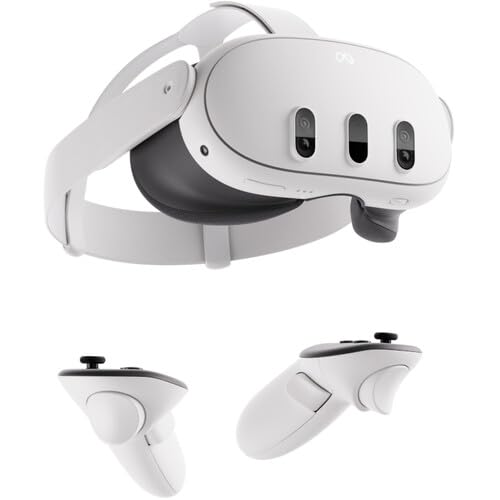
1. Meta Quest 3 512GB (Renewed Premium)
Our pick — over 4.5★ from 750+ verified ratings; the strongest balance of quality and price.
The standalone king that pushes graphical fidelity further than any wireless headset before it.
The defining upgrade here is the display — a near 30% leap in resolution over the last generation, wrapped in a 4K Infinite Display that makes text sharp and worlds crisp. It is driven by the Snapdragon XR2 Gen 2 processor (the chipset designed for VR and AR), delivering 2X the graphical processing power compared to earlier chips, which translates to faster load times and noticeably smoother scenes. That higher resolution is matched by a 120Hz refresh rate — a full 33% faster than the 90Hz standard on its more affordable sibling, meaning motion stays fluid and nausea-inducing judder all but disappears.
Unlike the Meta Quest 3S which lasts 3 hours on a charge, this model runs for 2.2 hours — real-world owners note it is “adequate” but often reach for an external battery pack for long sessions. The stock strap is a common early upgrade; the consensus is that the visuals and responsiveness are so impressive that a better strap and a battery pack turn this into a truly premium experience. The 512GB storage gives you plenty of room for a deep library without micromanaging space.
The Visual Leap
- Crisp 4K Infinite Display with near-30% sharper resolution than Quest 2
- 120Hz refresh rate keeps fast-paced games buttery smooth
- 2X graphical processing power from Snapdragon XR2 Gen 2
- Excellent color passthrough AR with dual RGB cameras
Minor Trade-Offs
- Stock strap is uncomfortable for long wear; aftermarket needed
- Battery runs 2.2 hours — you’ll want an external pack for movie-length sessions
- Headsets get humid after about an hour of active play
Your pick if: you want the sharpest, smoothest wireless VR experience and don’t mind adding a strap and external battery to make it perfect.
Think twice if: you want the longest out-of-box battery life or lower entry cost — the Quest 3S gives you a longer 3-hour run time at a more budget-friendly price point.
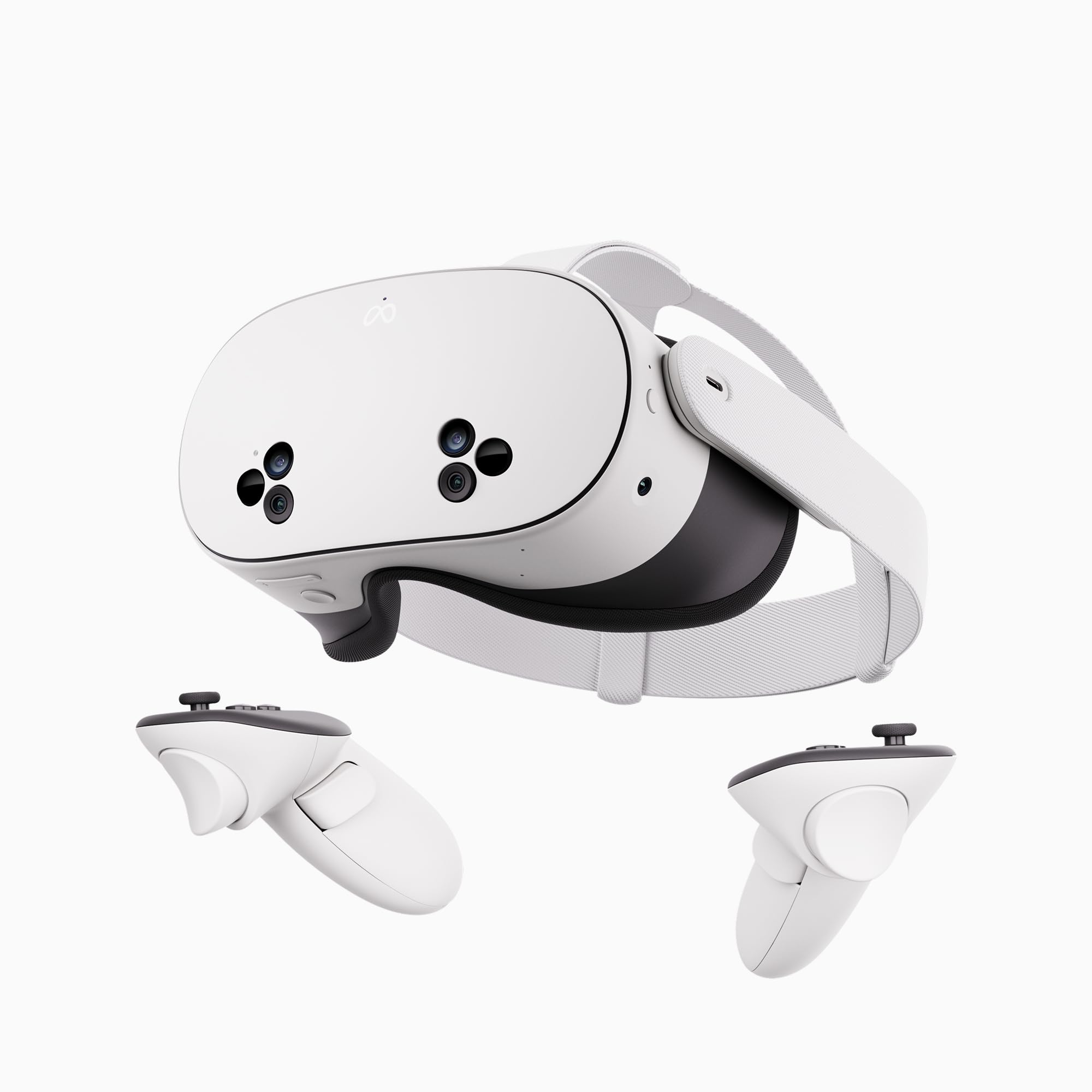
2. Meta Quest 3S 128GB (Renewed Premium)
The entry point that doesn’t cut the chipset — same processor, better battery life, lower price.
The Meta Quest 3S stuns owners by delivering “an impressive VR experience at a great price point.” It shares the same Snapdragon XR2 Gen 2 processor as the higher-tier Quest 3, giving it identical 2X graphical processing power and 8GB of RAM (the “33% more memory” over earlier generations). The real differentiator is the battery: at 3 hours of continuous power, it outlasts the Quest 3 by a full 36%, making it the standalone pick for longer play sessions without reaching for an external pack.
The trade-off is the display. The Quest 3S uses a 2064×2208 per-eye resolution at a 90Hz refresh rate — sharp enough for most games and all movies, but notably less crisp than the Quest 3’s 4K+ panel. The 90Hz refresh rate is 33% slower than the Quest 3’s 120Hz, so fast-paced shooters and racing sims won’t feel quite as fluid. What wins people over is the comfort — owners note the strap “doesn’t hurt like the Quest 2 did” — and the easy setup that has you exploring games within minutes.
Battery Champ
- 3-hour battery life — the longest of any standalone Quest option
- Same Snapdragon XR2 Gen 2 chip as the premium Quest 3
- Comfortable strap straight from the start
- Backward compatible with Oculus Quest 2 accessories
Display Downgrade
- 90Hz refresh rate vs 120Hz on Quest 3 — less fluid in fast games
- Lower per-eye resolution than the Quest 3’s 4K+ panel
Reach for this if: you want the longest VR session without an external battery and the latest chipset — the trade-off in display sharpness is minor for most everyday games and apps.
Look elsewhere if: razor-sharp text, 120Hz smoothness, and maximum storage headroom are non-negotiable — step up to the Quest 3 512GB.
3. Oculus Quest 2 128GB Set

The tried-and-true workhorse that remains a gateway to VR for whole families.
The Quest 2 earned its place as among the most popular VR headsets ever, and this 128GB set keeps proving why. It packs a 1832×1920 per-eye resolution at a 90Hz refresh rate, which still delivers a smooth, rich experience at a budget-friendly tier. The package is unusually generous: alongside the headset and two Touch Controllers, you get anti-slip silicone grip covers with textured bumps that stop sweaty hands from slipping, adjustable knuckle straps with a velcro fit, a silicone cover, a glasses spacer, and the charging cable and power adapter — everything a first-time owner needs.
The track record speaks for itself. Buyers report the headset runs without issue, with one 12-year-old using it daily for a full year with “no issues whatsoever” and surviving “several run in with objects close by.” A younger buyer received it as a birthday gift and “has no complaints” nine months in. The reliability is solid, but the data does flag some reports of component failure, like controller batteries that stopped charging after a month — a note to treat the bundled battery set as a starting point rather than a long-term solution.
Proven resilience: this is the headset that has logged hundreds of hours in real homes across years — a durable, well-priced entry that’s still kicking.
Your pick if: you want a proven, budget-friendly starter headset for the family that comes with all the essentials (covers, strap, spacer) from the start.
Think twice if: you need the latest chipset performance, color passthrough, or higher refresh rates — this is the previous generation’s tech.
4. HTC Vive XR Elite with Deluxe Pack

The sleek hybrid that straddles standalone freedom and high-fidelity PC VR without needing base stations.
This headset’s standout trick is its base-station-free design — four wide field-of-view tracking cameras handle positional tracking entirely on-board, so you get PC-grade VR without bolting tracking boxes to the walls. The combined 3840×1920 resolution (dual 1920×1920 panels at 90Hz) delivers 19 pixels per degree, which makes text readable in virtual workspaces and scenes look crisp. The Deluxe Pack sweetens the deal with a contoured face gasket, a deluxe strap, temple clips, and a dedicated MR gasket for mixed reality use.
The visual quality here is where opinions split. While the resolution is impressive, some owners find “the graphics bad and performance subpar” at this premium tier, especially compared to the Valve Index. The biggest practical win is the hot-swappable battery: when it dies after 2 hours, you slide in a fresh pack (included) and keep going — no downtime tethered to a wall outlet. The diopter adjustment dials let you fine-tune the lens for each eye up to about −5 prescription, eliminating the need for glasses for many users.
Flexible Design
- No base stations needed — 4 tracking cameras handle everything
- Hot-swappable battery for non-stop play
- Diopter adjustment for eyesight up to -5 (no glasses needed)
- Lightweight, compact form factor
Mixed Visual Reception
- Graphics quality is divisive at this price — some owners are impressed, others find it underwhelming
- Most glasses do not fit inside; contacts or prescription lens inserts recommended
- Fan noise reported during use
Reach for this if: you want a sleek, light headset that works as both a standalone and a PC VR hybrid without base stations, and you value the swappable battery.
Look elsewhere if: consistent top-tier graphics and a large software library matter most — the Meta ecosystem and Valve Index have broader support.
5. Oculus Rift S PC-Powered VR Gaming Headset

The discontinued but still available PC VR headset that offers an inexpensive entry into wired simulation gaming.
The Rift S is an older design and it shows in the numbers — its 1440×1600 per-eye resolution at an 80Hz refresh rate is noticeably lower than modern standards, meaning a visible screen-door effect and less fluid motion. What it lacks in cutting-edge specs, it partly offsets with its inside-out tracking (no external sensors needed) and a library that still runs most PC VR games well. Owners mention “better frame rates and compatibility than HTC Vive,” with one simulator fan replacing a worn-out unit without hesitation.
The catch list is longer. The 80Hz refresh rate is the lowest on this list, making it more prone to motion sickness for sensitive users. Your PC needs a dedicated USB 3.0 port — several owners note that a separate PCIe USB card is necessary to avoid “frequent disconnects due to insufficient USB power.” Controller batteries drain “in under a week” even when idle. And since this model is discontinued, replacements and parts are harder to find. It is a functional entry point if you find one at a very low price, but the Rift S is a legacy product at this point.
Functional relic: it works for budget PC VR fans but the 80Hz screen, USB power issues, and controller battery drain make it a harder recommendation against the much newer Quest options.
Your pick if: you have a very tight budget and a PC that can run it — and you accept the visual and tracking limitations of a discontinued entry model.
Think twice if: you want a modern, fluid experience — the Quest 3S costs less and runs wirelessly at 90Hz.
6. HTC Vive Pro Eye Virtual Reality System

The PC VR system built for precision eye tracking and commercial-grade user analytics.
The Vive Pro Eye’s defining feature is its integrated eye tracking, which enables foveated rendering — the system renders the area you are looking at in full detail and reduces detail in your peripheral vision, cutting down the graphical processing load on your GPU. This makes it a tool for simulations, training, and research where gaze analytics matter (heatmapping where a trainee looks during a procedure, for example). The display uses OLED panels, which deliver true blacks and richer contrast than typical LCD headsets, and the system includes a comfortable ergonomic design for extended sessions.
Reliability is the main concern here. While the consensus praises the “superior VR quality vs. Oculus/PSVR” with no motion sickness over 45-minute sessions, a significant share of customers note base stations and link boxes stopping working within months. Multiple reviews highlight poor warranty support from HTC — one owner’s link box died after six months with “no phone number, slow email responses, and no tracking after 3+ weeks.” The support experience varies, though one owner received replacements within two days. This is a niche, expensive professional tool best suited to commercial or institutional buyers with dedicated support budgets.
Precision Tool
- Integrated eye tracking for foveated rendering and user analytics
- OLED display for deep blacks and richer colors
- Well-balanced comfort for extended wear
Reliability Risks
- Common reports of base stations and link boxes failing
- HTC warranty support is criticized as slow and hard to reach
- Very high price for a system that shares the same visual core as earlier Vive Pro models
Your pick if: you need eye tracking for professional training, research, or foveated rendering and have a support infrastructure for potential hardware failures.
Think twice if: you want a reliable high-end VR headset for personal gaming — the Valve Index or Meta Quest 3 offer better visual fidelity and consumer support for less.
7. Valve Index VR Full Kit
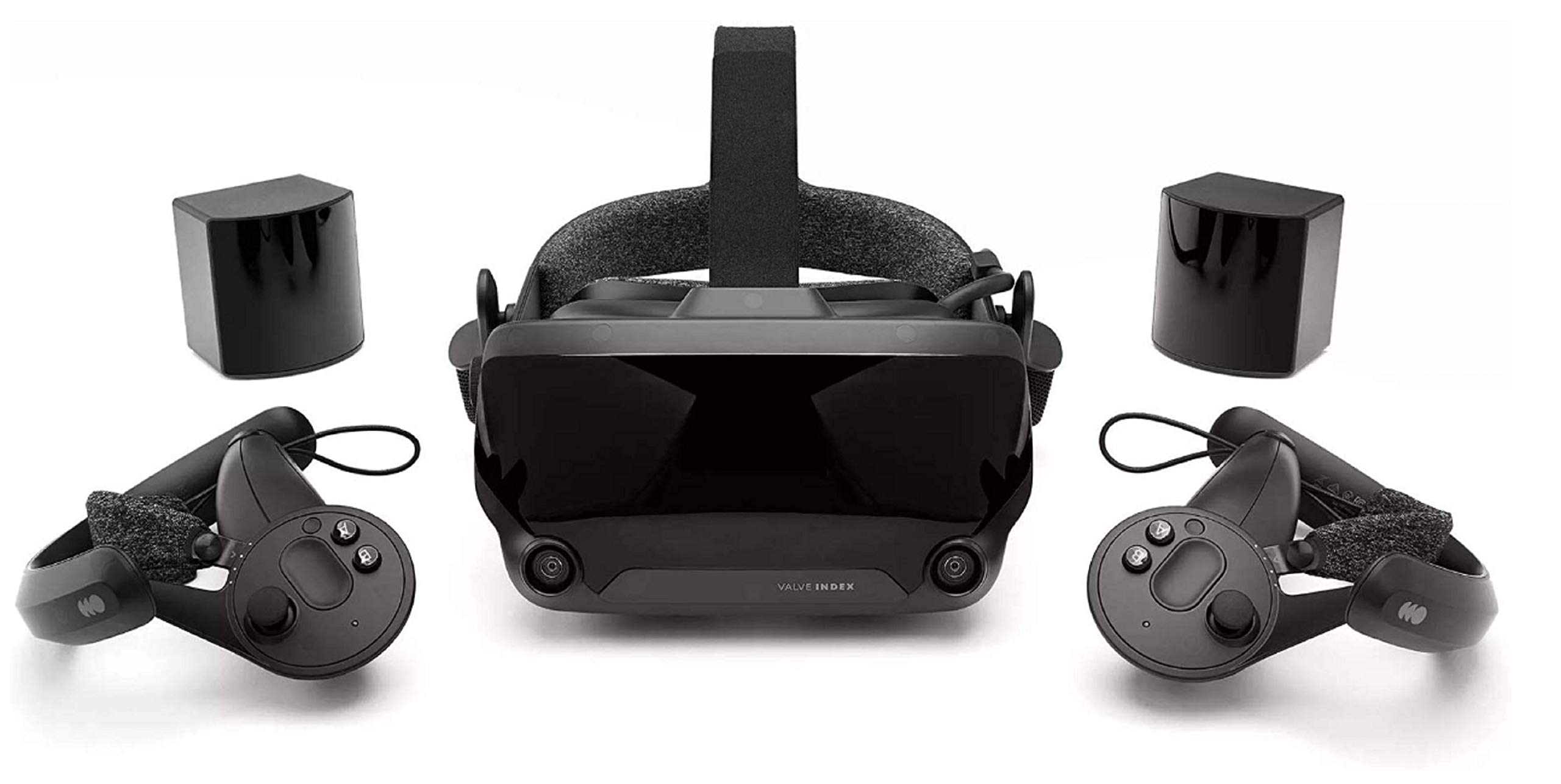
The PC VR experience enthusiasts chase for its class-leading 144Hz fluidity and 130-degree field of view.
The Valve Index is not about wireless freedom or standalone convenience — it is about raw performance for those with a high-end gaming PC. The dual 1440×1600 LCD displays reach an impressive 144Hz refresh rate (with an ultra-low persistence of 0.330ms at that speed), making motion appear silky smooth and reducing motion blur to near zero. The 130-degree field of view is the widest on this list, giving you more peripheral vision than any other headset here and pulling you deeper into simulations and racing games. Optical adjustments include head size, eye relief (which controls FOV), speaker position, and a physical IPD range (the distance between your pupils, adjustable from 58mm to 70mm) — a level of ergonomic tuning that sets a benchmark in the industry.
The durability concerns here are loud and documented. The most-discussed problem is reliability — reviewers point out the headset “stopped working and broke within three months of use.” One third-party seller experience involved a defective unit returned and charged a restocking fee (a consumer-protection nightmare, though a direct-from-Valve replacement worked perfectly). The base stations and controllers are praised for working with Oculus headsets, but the headset itself requires a powerful PC — several owners found it incompatible with their gaming laptops, so a compatibility check is mandatory before purchase. The graphics, when it runs, are “out of this world” and the comfort is “the best,” but the reliability risks make this a choice for knowledgeable enthusiasts who buy directly from Valve.
Peak PC VR
- 144Hz refresh rate — the highest on this list for buttery-smooth motion
- 130-degree FOV — wider than any other headset here
- Deep ergonomic adjustments (head size, IPD, speaker position, eye relief)
Fragility & Compatibility
- Common reliability complaints — some units fail within months
- Full kit is expensive and may be incompatible with many gaming laptops
- Third-party seller returns can be complicated; direct-from-Valve recommended
Your pick if: you have a VR-ready gaming PC, prioritize the highest possible refresh rate and widest FOV, and buy directly from Valve to avoid return issues.
Think twice if: you want a reliable, low-maintenance VR system or lack a powerful dedicated gaming PC — the wireless Quest 3 line delivers a more plug-and-play experience.
Understanding the Specs
Refresh Rate (Hz)
Measured in hertz, this tells you how many times the screen redraws the image every second. A 90Hz display updates 90 times per second, while a 120Hz or 144Hz display updates faster. A higher refresh rate makes motion appear smoother and drastically lowers the chance of motion sickness, especially in fast-paced games like racing sims or shooters. For most people, 90Hz is comfortable; for sensitive users or competitive players, 120Hz+ is a meaningful upgrade.
Display Resolution (Pixels)
The total number of pixels on the screen determines how sharp the image looks. A higher number (like 2064×2208 per eye) means less of the “screen-door effect” — that faint grid between pixels that can break the immersion. For reading text clearly (virtual monitors, browser) or noticing fine details in simulations, higher resolution headsets like the Quest 3’s 4K+ panel are the clear pick.
Standalone vs PC-Tethered
A standalone headset has the processor and battery built in — you wear it and play without any wires or a computer. The trade-off is performance: battery lasts 2-3 hours, and graphics are limited to mobile chipset power. A PC-tethered headset connects to a gaming computer via cable (or a wireless adapter), delivering higher graphics fidelity, stability, and longer sessions (as long as the PC is on). Mixing both, like the HTC Vive XR Elite, gives you flexibility but often at a premium.
Field of View (Degrees)
Measured in degrees, field of view (FOV) describes how much of your peripheral vision the headset covers. A wider FOV (like 130 degrees on the Valve Index) makes you feel more inside the world rather than looking through binoculars. A narrower FOV (95 degrees, like the Quest 2) can feel more constricted but tends to be less demanding on the GPU. Most modern headsets sit between 95 and 130 degrees.
FAQ
Do I need a PC to use a VR headset?
What causes motion sickness in VR headsets?
How long does the battery last on a standalone VR headset?
Can I watch movies and TV shows on a VR headset?
Can I wear glasses with a VR headset?
What is the difference between inside-out tracking and base station tracking?
How much storage do I need in a VR headset?
Can I use a VR headset while sitting down?
Does a higher refresh rate always mean a better VR experience?
Can I play PC VR games on a standalone Quest headset?
Final Thoughts: The Verdict
If you want one dependable pick, the best vr headset winner is the Meta Quest 3 512GB because it delivers the sharpest wireless display (4K+ at 120Hz) with the fastest processor, all without needing a PC or base stations. If you want the longest untethered sessions without extra accessories, grab the Meta Quest 3S 128GB — its 3-hour battery outlasts every other standalone and the same chipset keeps things snappy. And for high-end PC sim racing or the widest field of view in the game, the Valve Index VR Full Kit is the one to reach for — just buy directly from Valve and confirm your PC can handle the 144Hz beast.
How We Picked
We do not accept paid placement. Every pick is matched to a real buyer and a real use-case; we do not hands-on test units.
Sources & Methodology
Specifications: manufacturer listings and product documentation. Review insights: verified customer reviews, as of July 2026. Pricing: not shown on this page (it changes often); check the current price via the retailer link.
As an Amazon Associate, Gadgets Feed earns from qualifying purchases. This does not affect which products we feature.