
If the standard arm cuff makes you wince before it even finishes inflating, you are not alone. Many people with sensitive arms, limited mobility, or simply a low tolerance for that crushing squeeze find traditional upper-arm monitors to be more of an ordeal than a helpful health tool. A wrist-based device solves this by taking a reading from the radial artery, offering a far gentler experience that still delivers clinically relevant systolic and diastolic numbers.
I’m Min — the co-founder and writer behind Gadgets Feed. I’ve spent dozens of hours combing through technical specifications, user reports, and clinical validation data to separate the monitors that actually hold a tight calibration from those that produce erratic readings the moment you shift your elbow.
This guide cuts through the noise to pinpoint the best wrist bp monitor for your home, travel, or shared family use, matching accuracy with the comfort you deserve.
How To Choose The Best Wrist BP Monitor
Not every wrist monitor is built to the same clinical standard. To get readings you can trust when managing your health, focus on three non-negotiable pillars: positioning intelligence, data management, and sensor validation.
Positioning Intelligence
A wrist monitor is only as accurate as its user’s posture. Because the wrist sits below heart level when you’re standing or lounging, a model with a built-in positioning sensor or an explicit indicator light makes the difference between a usable reading and a falsely inflated one. Look for monitors that explicitly guide you to place the cuff at heart height.
Memory Capacity and User Profiles
Monitoring trends over weeks matters more than any single number. The best wrist BP monitors store at least 90 readings per user, with dual-user capability being a must if two people share the device. Some models also offer AM/PM averaging, which compiles morning and evening spikes into a meaningful weekly trend line.
App Integration and Irregular Heartbeat Detection
Bluetooth sync lets you offload data to a companion app for charting and sharing with your doctor. But the real spec to check is whether the monitor detects irregular heartbeats (IHB) during a routine measurement. This feature can flag atrial fibrillation risks and is a strong indicator of a monitor’s sensor sophistication.
Quick Comparison
On smaller screens, swipe sideways to see the full table.
| Model | Category | Best For | Key Spec | Amazon |
|---|---|---|---|---|
| OMRON Gold Wireless | Premium | Clinical accuracy & app tracking | 200 readings per user | Amazon |
| HoMedics Premium BPW-930BT | Premium | Wrist positioning guidance | 120 memories per user | Amazon |
| Beurer BC57 | Mid-Range | Irregular heartbeat detection | 60 readings per user | Amazon |
| Checkme TMB-2285-BT | Mid-Range | Large app-driven data storage | 199 records per user | Amazon |
| A&D Medical UB-525 | Mid-Range | Gentle inflation | 60 reading memory | Amazon |
| Wrist Monitor 2026 Upgrade | Budget-Friendly | Dual-user value with Type-C power | 99×2 sets memory | Amazon |
| Urion U80A | Budget-Friendly | Large 4.5-inch display for seniors | 199 readings per user | Amazon |
In‑Depth Reviews
1. OMRON Gold Wireless Wrist Blood Pressure Monitor
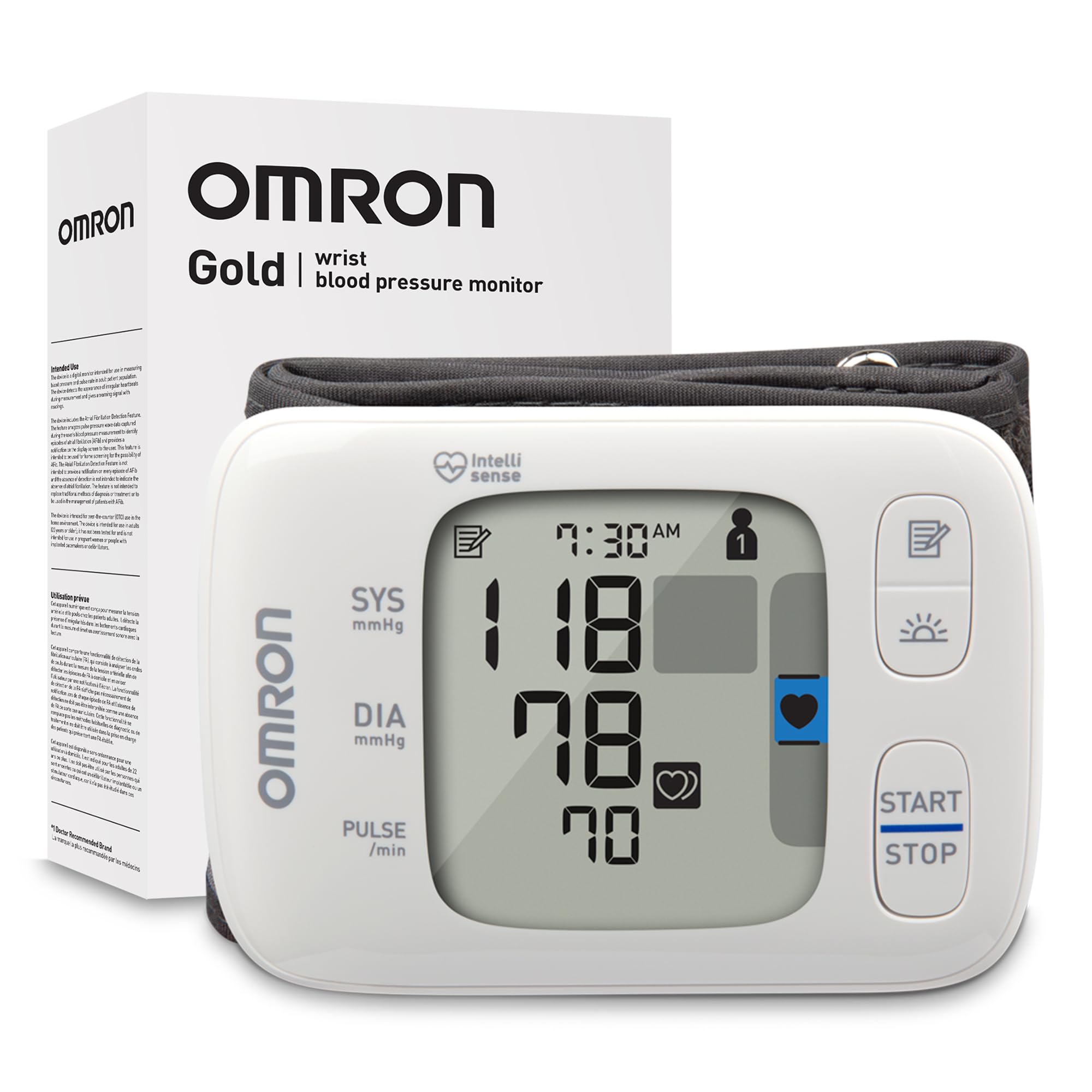
OMRON’s Gold wrist monitor is the only device on this list that carries the brand’s reputation as the #1 doctor and pharmacist recommended name in home blood pressure monitoring. The BP4350 model stores up to 200 readings for each of two users, which is sufficient for months of twice-daily tracking without needing to sync to the app. The cuff fits wrists from 5.3 to 8.5 inches, and the unit includes a hard storage case that protects the sensor during travel.
The real differentiator here is the High Morning Average Indicator, a feature that flags systolic spikes that commonly occur in the morning hours — a period linked to elevated cardiovascular risk. The OMRON Connect app (compatible with Apple Health and Google Fit) offers trend charting and PDF report generation you can share with your physician. The irregular heartbeat detection algorithm adds another layer of safety monitoring during each routine measurement.
Users consistently praise the gentle inflation cycle that avoids over-pressurizing the cuff, though a small number report an E4 error if the unit is used in a reclined position rather than seated upright. The slide switch for switching user profiles is placed on the side of the display and may be slightly awkward for those with reduced finger dexterity. Overall, it offers the most polished balance of clinical validation, data depth, and portable design.
Why it’s great
- High Morning Average Indicator flags dangerous early-day spikes
- Dual-user memory with 200 readings per user
- Doctor-recommended brand with strong clinical validation
Good to know
- Slide switch for user profiles is small and difficult to operate
- Some E4 error reports when used in reclined seating position
2. HoMedics Premium Wrist Blood Pressure Monitor BPW-930BT

HoMedics answers the single biggest failure point of wrist monitors — incorrect wrist height — with a dedicated wrist positioning sensor that tells you exactly when your wrist is at heart level. This feature alone dramatically reduces false high readings that result from holding the wrist below the heart. The BPW-930BT also packs Smart Measure inflation technology that personalizes the cuff pressure per measurement, so you never endure unnecessary squeezing.
The memory system holds 120 readings per user across two profiles, totaling 240 stored measurements. The AM/PM averaging feature automatically groups morning and evening readings into separate averages, which is clinically useful for spotting diurnal blood pressure patterns. The backlit LCD screen is large and easy to read in dim light, and the Bluetooth sync with the HoMedics Health App makes data export straightforward.
Build quality is solid for a device weighing only 7.62 ounces, and the included storage bag adds portability. A small number of users report unit failure within the first month, and Amazon’s return window may not cover failures beyond 30 days, so checking the 5-year warranty coverage is wise. The reliance on two AAA batteries instead of a rechargeable battery is a minor inconvenience for those who prefer USB charging.
Why it’s great
- Wrist positioning sensor is the best accuracy safeguard in this class
- AM/PM averaging helps detect morning hypertensive spikes
- Smart Measure inflation minimizes discomfort
Good to know
- Occasional unit failure within the first month reported
- Uses AAA batteries; no USB-C recharge option
3. Beurer BC57 Wrist Blood Pressure Monitor

Beurer’s BC57 targets users who want more than just a blood pressure number — it actively monitors for irregular heartbeats during every measurement cycle and sounds an alarm if it detects an arrhythmia. This feature, combined with the large color-coded risk indicator on the display, makes interpreting results almost instant. The LCD screen is large and the font is bold, so elderly users do not have to strain to see their systolic and diastolic values.
The monitor stores 60 readings for each of two users, totaling 120 memory slots. Bluetooth sync works with the HealthCoach app, which charts your data over time. The resting indicator illuminates when your body is in a genuinely calm state, preventing measurements taken during high-anxiety moments from corrupting your baseline data. The wrist cuff adjusts from 5.3 to 7.7 inches and comes with a hard plastic storage case.
Some users report that the device is very sensitive to exact positioning — you must sit upright with your forearm flat on a table for consistent readings. The date and time setup process is also criticized as unintuitive, and a small number of units have shown Bluetooth pairing failures. For those who prioritize arrhythmia screening over sheer memory capacity, the BC57 remains a compelling mid-range option.
Why it’s great
- Irregular heartbeat detection with audible alarm
- Resting indicator ensures measurements are taken in a calm state
- Color-coded risk indicator for instant interpretation
Good to know
- Bluetooth pairing can be finicky for some users
- Requires precise upright postural positioning for accuracy
4. Checkme Wrist Blood Pressure Monitor TMB-2285-BT
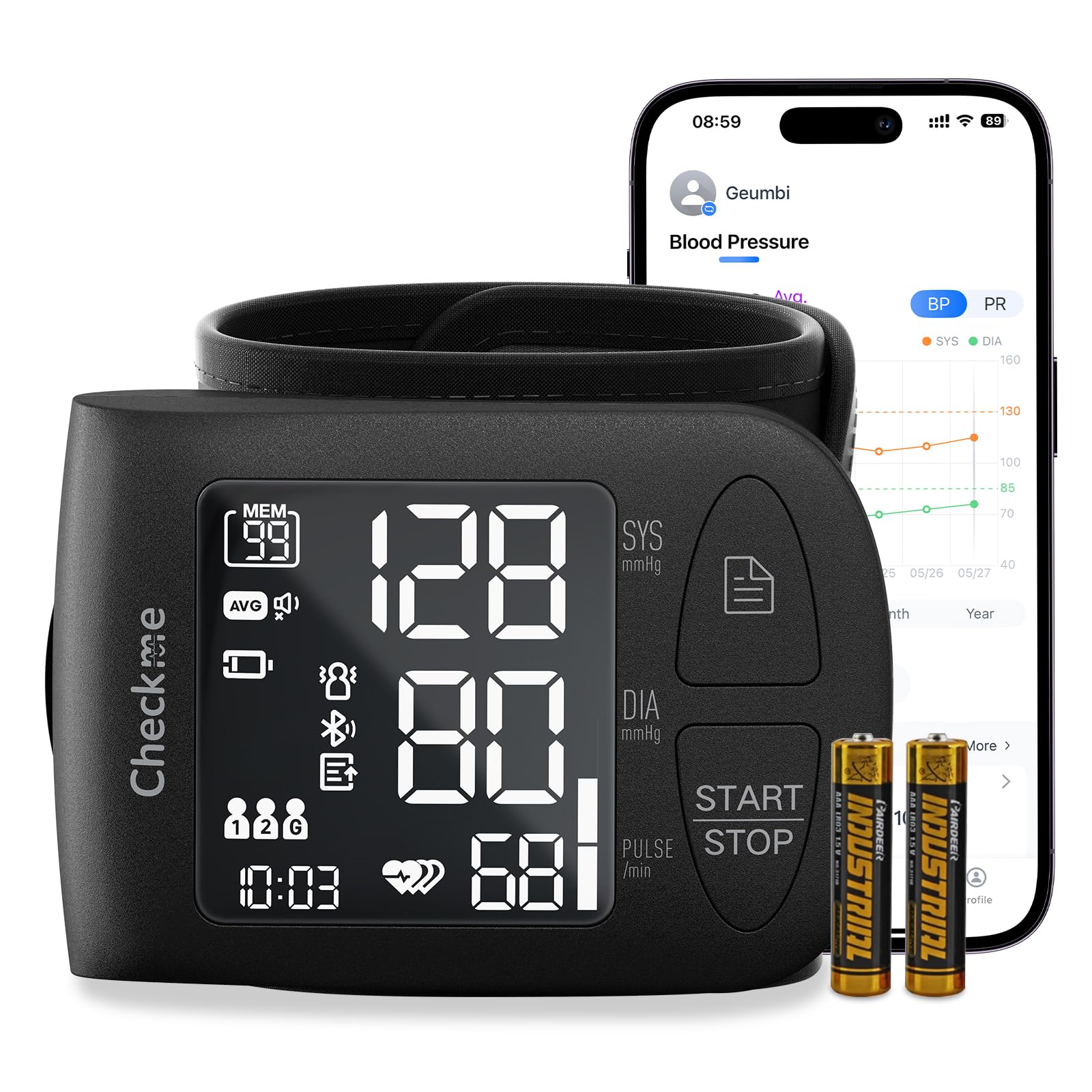
The Checkme TMB-2285-BT is a dark horse in this lineup, offering an enormous 199 readings per user across two profiles — totaling 398 stored measurements — without requiring an app. The large LCD backlit display is legible in any light, and the adjustable cuff fits wrists from 5.3 to 8.5 inches. The ViHealth companion app is available for iOS and Android and allows you to review historical trends, but the monitor works perfectly fine offline, which is a strong plus for non-smartphone users.
Clinical accuracy is backed by FDA clearance, which means the device meets the same ANSI/AAMI/ISO standards used for upper-arm monitors. Users consistently report that readings correlate closely with their doctor’s manual sphygmomanometer. The one-button operation is genuinely simple — wrap, press, and read in under 30 seconds. The quiet inflation motor is noticeably less intrusive than many competitors, making it suitable for use without waking a sleeping partner.
The main risk here is post-purchase support. Some users report that the manufacturer’s website did not list the TMB-2285-BT model number, making it difficult to get firmware or warranty help. Additionally, the battery compartment uses a tight spring mechanism that can dislodge batteries during travel. For users comfortable with self-service troubleshooting, the raw spec sheet is exceptional for the price tier.
Why it’s great
- Massive 199-reading memory per user without app dependency
- FDA-cleared with strong clinical accuracy reported
- Very quiet inflation motor for discreet use
Good to know
- Manufacturer website may not support this model number
- Battery spring compartment is tight; batteries can dislodge in transit
5. A&D Medical UB-525 Wrist Blood Pressure Monitor
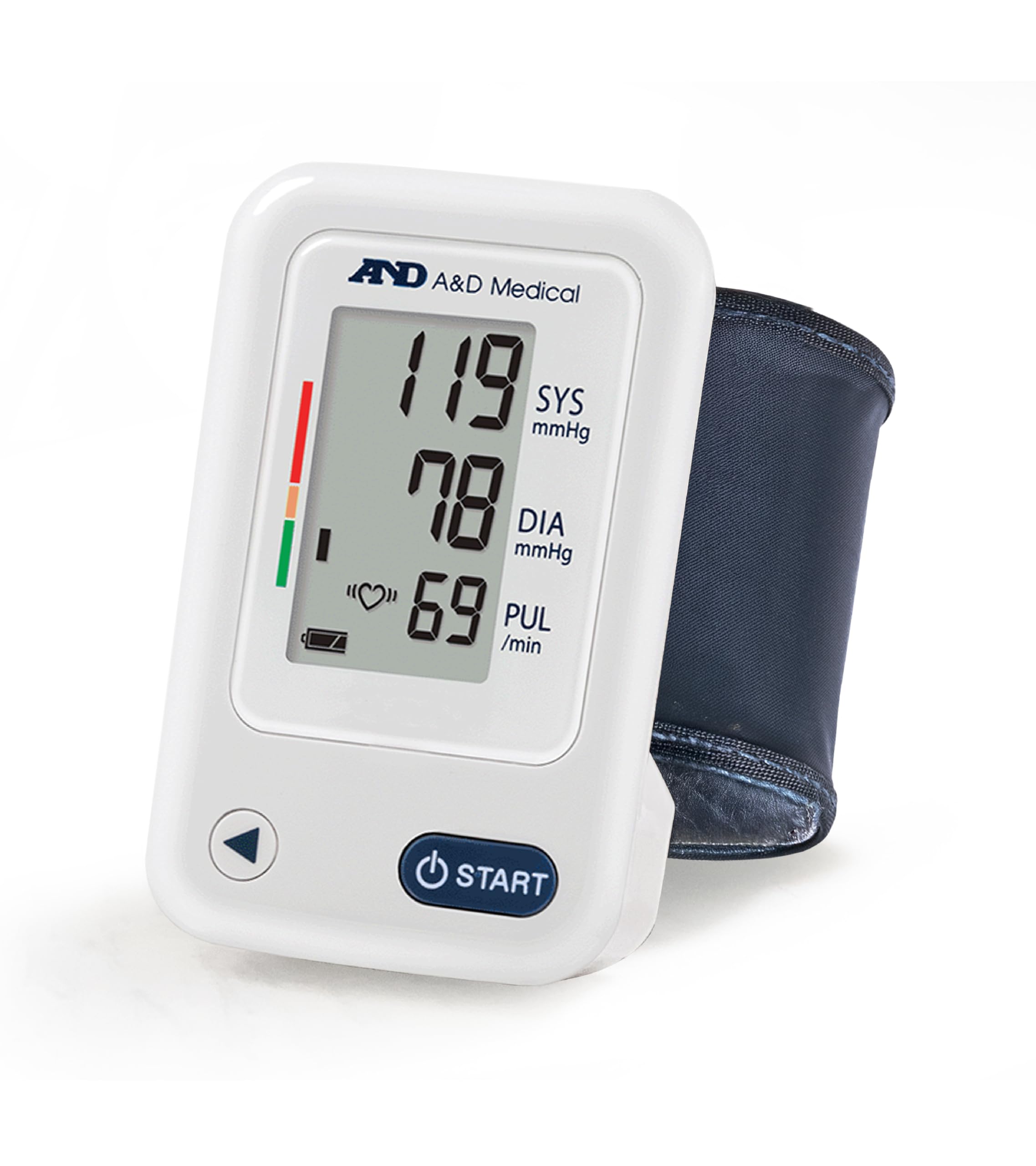
A&D Medical is a respected name in clinical blood pressure devices, and the UB-525 brings that engineering discipline to a compact wrist format. The adjustable cuff accommodates wrists from 5.3 to 8.5 inches, which is a wider range than most competitors. A&D specifically designed the inflation algorithm to be gentle — the cuff inflates slowly and stops as soon as it detects the systolic pulse, which dramatically reduces the painful squeeze sensation.
The one-button operation is straightforward: press start, keep your wrist at heart level, and the large digital LCD screen displays systolic, diastolic, and pulse rate in oversized readouts. The memory stores up to 60 readings, which is modest compared to newer models, but the free A&D Heart Track app allows unlimited manual logging. The app itself is rated highly and works on iOS 12.0+ and Android 5.0+. The unit weighs only 5.29 ounces, making it the lightest monitor in this comparison.
Some users find the battery compartment design frustrating — the AAA batteries snap in firmly but the cover is difficult to secure, leading to a small number of returns. There is also no Bluetooth auto-sync; you must manually log readings into the app. For someone who wants a featherlight, genuinely painless measurement experience and is comfortable with manual tracking, the UB-525 is hard to beat.
Why it’s great
- Gentle inflation that stops at systolic detection — very comfortable
- Wide cuff range (5.3-8.5 inches) fits larger wrists
- Lightest unit at 5.29 ounces; highly portable
Good to know
- Battery compartment cover is difficult to secure
- No Bluetooth auto-sync; requires manual app logging
6. Wrist Blood Pressure Monitor 2026 Upgrade (Generic)
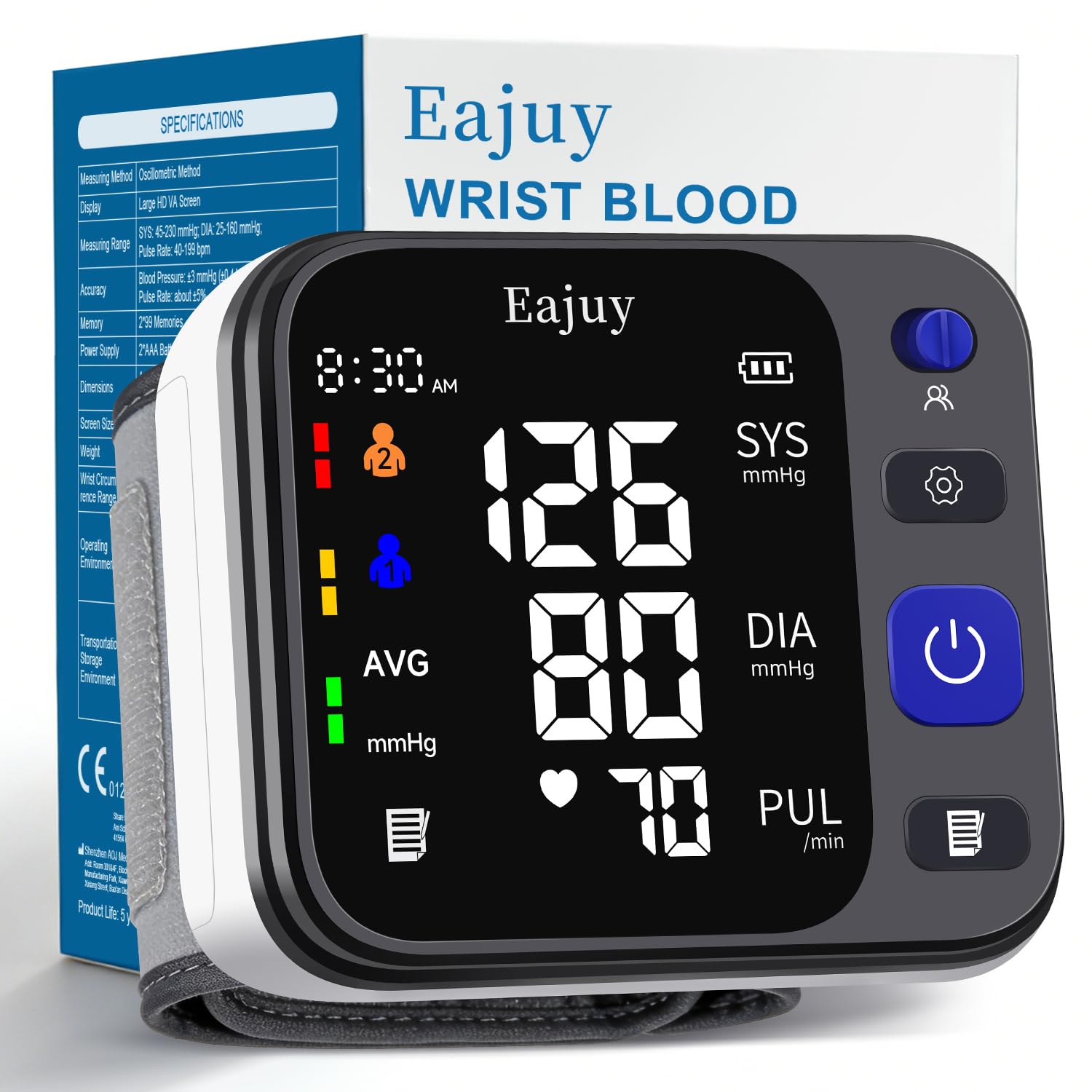
This budget-friendly wrist monitor from Shenzhen AOJ Medical offers an impressive 99 readings per user across two profiles, plus a Type-C USB charging port that makes it far more convenient than battery-only designs. The large LED screen includes a smart backlight that adjusts to ambient light and uses anti-glare technology. The three-color indicator (green, yellow, red) provides an instant visual of whether your blood pressure is normal, elevated, or hypertensive.
The adjustable wristband fits 5.3 to 7.7 inches, and the physical raised buttons reduce accidental presses — a thoughtful touch for users with larger fingers. The package includes a storage pouch, two AAA batteries, and a Type-C cable, so it is ready out of the box. Some users have confirmed with their doctors that readings are within acceptable accuracy range, and the 2026 chip upgrade does appear to improve processing speed slightly compared to older generics.
The main drawback is the inflation speed: several users report that the pump takes nearly a full minute to inflate, which can feel tedious during daily use. Additionally, there is no Bluetooth or app connectivity, so all tracking must be done manually from the device memory. For a couple or parent-child pair tracking blood pressure at home without caring about smartphone integration, the value proposition is strong.
Why it’s great
- Dual-user memory with 99 readings per user
- Type-C USB charging option reduces battery waste
- Three-color indicator for instant BP level interpretation
Good to know
- Inflation cycle takes nearly 60 seconds — slower than average
- No Bluetooth or app compatibility for data tracking
7. Urion U80A Blood Pressure Monitor
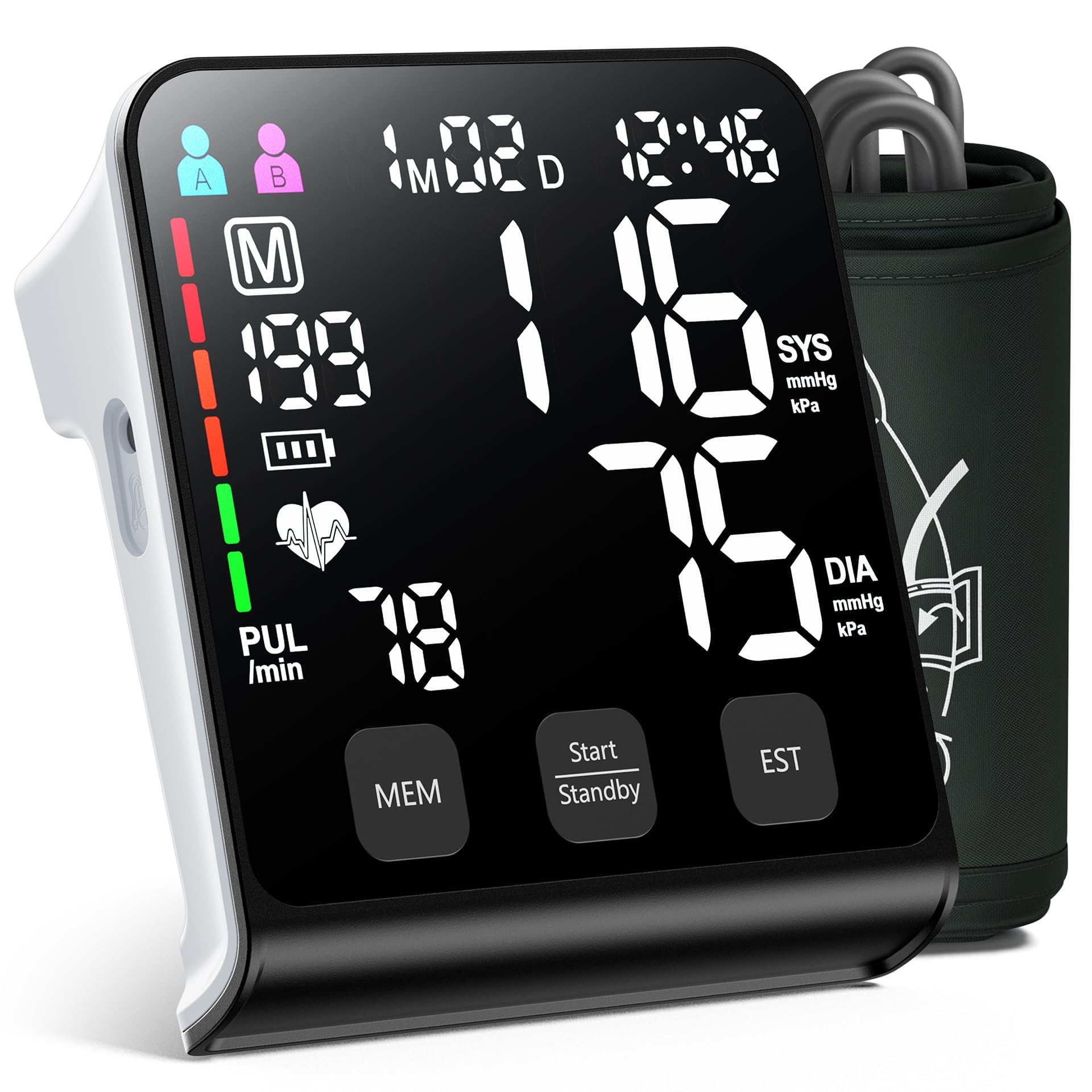
The Urion U80A prioritizes readability above all else, featuring a massive 4.5-inch LED display with oversized digits that are visible even in low light. The screen also shows a BP classification indicator so you know at a glance whether your reading falls into normal, elevated, or hypertensive ranges. The intelligent pressure algorithm targets a ≤±3mmHg error margin, which aligns with industry standards for home devices.
Memory capacity is strong at 199 readings per user across two profiles, and the one-button operation makes it about as simple as a cuff can be. It supports both AAA batteries and USB-C power, giving you flexibility whether you are at home or traveling. The build quality is robust with a scratch-resistant acrylic panel, and the unit weighs 1.28 pounds, making it the heaviest monitor on this list but also the most durable-feeling.
Users consistently praise the fast inflation and consistent readings. The irregular heartbeat alert adds peace of mind during daily use. However, this monitor is technically an upper-arm device despite being included in this wrist BP monitor category — some users may find the cuff more cumbersome than true wrist models. Its FSA/HSA eligibility is a bonus for those using tax-advantaged health accounts.
Why it’s great
- Extra-large 4.5-inch LED display ideal for visually impaired users
- Dual power source (AAA batteries + USB-C)
- FSA/HSA eligible for tax-advantaged purchase
Good to know
- Upper-arm cuff design — bulkier than true wrist monitors
- Heavier build at 1.28 pounds; less portable
FAQ
How do I ensure my wrist BP monitor gives accurate readings?
Can a wrist monitor replace an upper-arm monitor for diagnosis?
What does the High Morning Average Indicator do?
Final Thoughts: The Verdict
For most users, the best wrist bp monitor winner is the OMRON Gold Wireless because it combines the highest memory capacity with a doctor-trusted brand, morning spike detection, and reliable Bluetooth sync in a lightweight, portable form. If you want a dedicated wrist positioning sensor for maximum accuracy, grab the HoMedics Premium BPW-930BT. And for shared family use on a budget, nothing beats the Wrist Monitor 2026 Upgrade with its Type-C charging and dual-user memory.