
Our readers keep the lights on and my morning glass full of iced black tea. As an Amazon Associate, I earn from qualifying purchases.
Specs are compiled from manufacturer listings and verified buyer reviews and can change over time — please confirm the key details on the product page before buying.
A yoga mat that slides during downward dog or bunches up in sun salutation turns a good practice into a frustrating one. You do not need a degree in materials science to find a mat that stays put — you just need the right combination of grip, cushioning, and size for your body and your style of practice. This guide cuts through the TPE, cork, and rubber options to show you which non-slip mats actually earn their grip claim.
I’m Min — the founder and writer behind Gadgets Feed. This guide is built by comparing the manufacturers’ published specifications and the patterns across verified customer reviews, so you get each pick’s real strengths and trade-offs instead of marketing spin.
Whether you are a hot yoga regular who needs traction when sweat pools or a beginner looking for knee-friendly cushioning you can roll up and take to a park, this breakdown of the best yoga mat non slip options will help you find a stable, durable surface for your practice.
Quick Picks
- Plyopic Ultra Grip Pro Yoga Mat — Top Performer
- Body By Yoga Luxury Cork Yoga Mat — Best for Tall
- Liforme Travel Yoga Mat — Premium Pick
- Gogokiwi Extra Wide Yoga Mat — Extra Wide
- Gruper Yoga Mat Non Slip TPE Extra Wide with Alignment Marks — Best Overall
- Amazon Basics 1/4 Inch Thick TPE Exercise Yoga Mat — Best Value
- YOTTOY Extra Thick Yoga Mat (1/2 inch) — Budget Champ
How To Choose The Best Yoga Mat Non Slip
A non-slip mat is not just about a sticky top layer — it is a system built from the surface texture, the base material, and the thickness. Here is what to check before you click buy.
Match the Material to Your Sweat Level
TPE (thermoplastic elastomer, a recyclable foam material) mats are lightweight and reasonably grippy when dry but can get slicker as you sweat. Natural rubber combined with an open-cell polyurethane top — what you see on the Plyopic and Liforme mats — actually gets more grippy with moisture, making it the go-to for hot yoga. Cork mats use a different trick: the cork surface becomes tackier when damp, so your hands and feet stick better instead of sliding.
Thickness Is a Trade-Off Between Support and Stability
A thicker mat (around 0.5 inches) feels great on your knees and wrists during kneeling poses, but it can feel unstable in standing balances where you need a firm connection to the floor. Thinner mats (0.17 to 0.25 inches) give you better ground feel and stability, but you may want a folded blanket under your knees. Pick the thickness that matches your practice style, not just your comfort preference.
Size Matters for Body and Space
Standard mats are about 24 inches wide and 72 inches long. If you are over 6 feet tall or have a broad frame, that extra six or twelve inches of width (like the 36-inch Gogokiwi) means your hands and feet stay on the mat during wide-legged poses. Extra length, like the 80-inch cork mat, also helps taller practitioners avoid gripping the floor during savasana.
Quick Comparison
| Model | Best For | Thickness | Width | Weight | Amazon |
|---|---|---|---|---|---|
| Plyopic Ultra Grip Pro | Hot Yoga / Sweaty Practice | 0.17″ | 26″ | 5.3 lbs | $79.99Amazon |
| Body By Yoga Luxury Cork | Eco-Conscious / Tall Practitioners | 0.26″ | 26″ | 10 lbs | $89.99Amazon |
| Liforme Travel Mat | Studio Commuters / Alignment Focus | 0.08″ | 26″ | 3.5 lbs | $134.95Amazon |
| Gogokiwi Extra Wide | Tall / Broad-Shouldered Practitioners | 0.25″ | 36″ | 2.7 lbs | $45.99$49.99PrimeAmazon |
| Gruper TPE with Alignment | Alignment Guidance / Budget-Conscious | 0.32″ | 32″ | 3.2 lbs | from $37.39Amazon |
| Amazon Basics TPE | Budget / Multi-Family Use | 0.24″ | 24″ | 2 lbs | $26.36Amazon |
| YOTTOY Extra Thick TPE | Joint-Sensitive / Knee Cushioning | 0.5″ | 24″ | 4 lbs | $26.59$27.99Amazon |
In‑Depth Reviews
1. Plyopic Ultra Grip Pro Yoga Mat
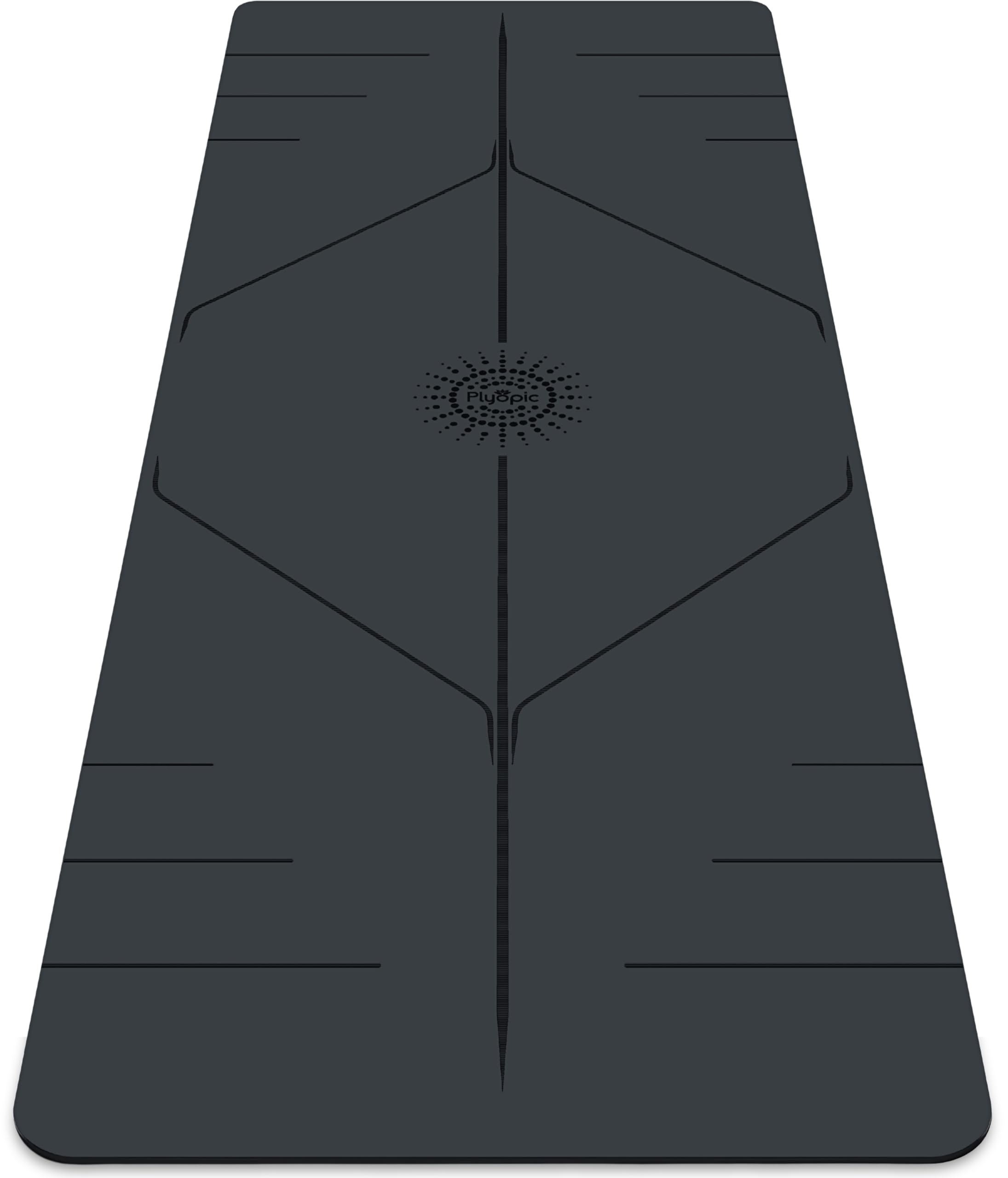
The mat that actually grips harder when you start sweating in a hot class.
This is the mat for anyone who has ever felt their hands inch forward in downward dog during a sweaty flow. The Plyopic uses a natural tree rubber base topped with an Eco PU (polyurethane, a plastic surface that becomes tacky with moisture) that gets tackier with moisture — exactly the opposite of what standard TPE mats do. At 0.17 inches thick, it is on the thinner side, which gives you a very stable, grounded feel in balancing poses like tree or warrior III. Buyers report the texture is smooth and “velvet-like” rather than abrasive, so there is no friction burn during fast transitions like mountain climbers, though a few noted that high-rep movements can still cause a little heat on the skin.
It measures 72 inches long and 26 inches wide, giving you six extra inches of width over a standard mat without feeling oversized. The embossed center alignment line runs the length of the mat to help you square your hips and shoulders. Owners mention a strong rubber smell for the first week or so — one owner mentioned it faded after about 10 days — and the mat is noticeably heavier (5.3 lbs) than TPE alternatives, so you will want a decent bag to carry it. But the trade-off is clear: it is one of the few mats that delivers “extreme non-slip” for hot yoga without requiring a towel on top.
Grip When It Counts
- Surface gets more grippy as you sweat; ideal for hot yoga and Bikram
- Firm, non-spongy support improves stability in balancing poses
- Embossed alignment line helps with body positioning
Real Trade-Offs
- Strong rubber odor from the start; takes up to 10 days to fade
- Heavier than TPE mats; requires a sturdy carrying bag
- Thin cushioning may not be enough for sensitive knees without padding
Best for sweaty practices: Hot yoga regulars and anyone who needs maximum slip-resistance during intense flow classes will love this mat. The closed-loop PU surface also resists odor buildup, so it stays fresh longer than open-cell rubber mats.
Think twice if: You have very sensitive knees or need deep cushioning for prone poses — the 0.17-inch thickness does not offer much padding, so you may need a folded towel under your knees during tabletop or kneeling lunges.
2. Body By Yoga Luxury Cork Yoga Mat
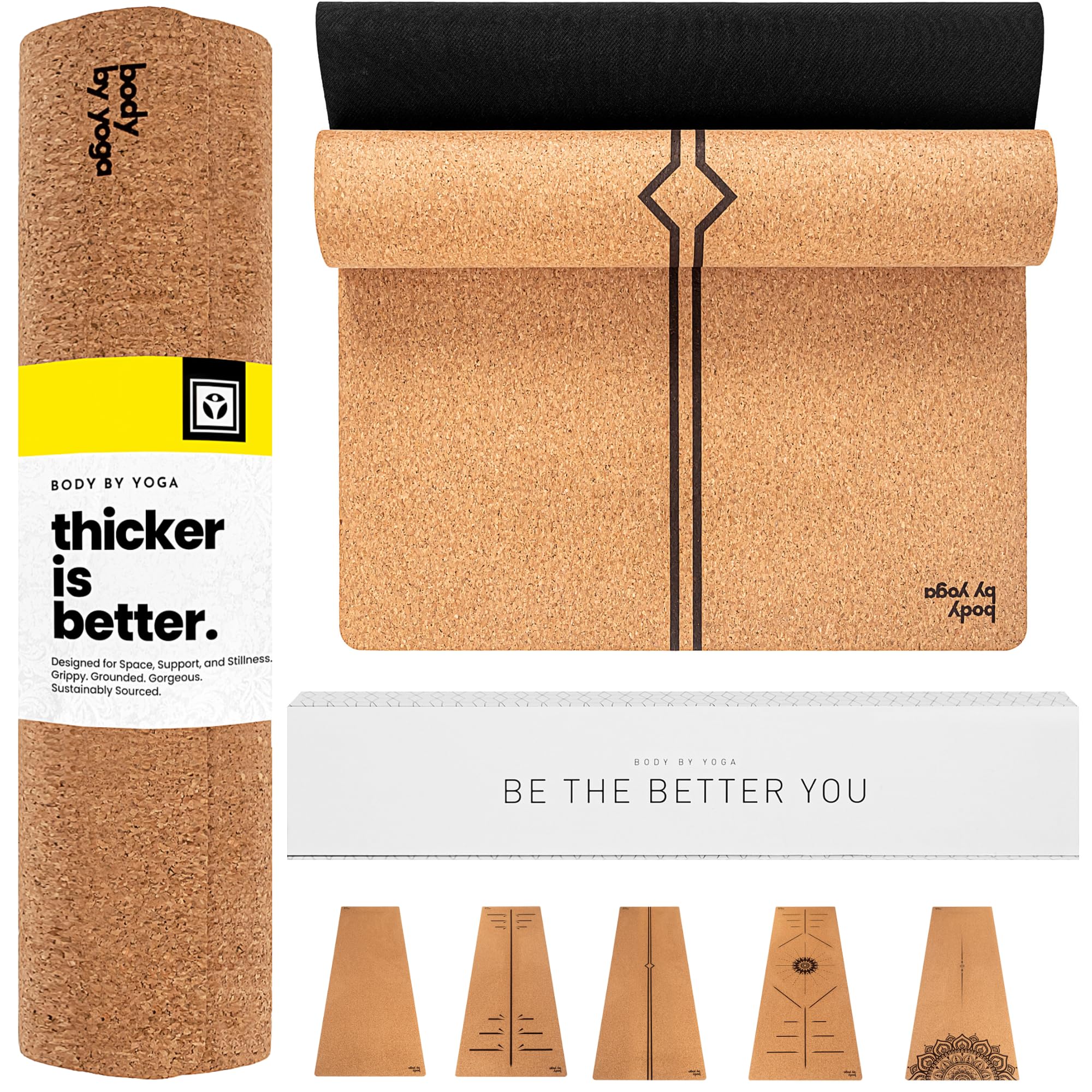
80 inches of cork that give taller practitioners room to stretch without hanging off the edge.
If you are over 6 feet tall, you know the frustration of your feet gripping the studio floor during savasana or your toes creeping off the mat in standing forward fold. This cork mat solves that with an 80-inch length and 26-inch width, compared with standard mats at about 72 inches long and 24 inches wide. The cork surface works differently than rubber or TPE: it becomes more grippy as you sweat, so your hands stay planted in hot yoga, and it resists absorbing moisture, which means it wipes clean with just water rather than soaking up bacteria over time.
The mat is heavy — it weighs about 10 pounds — which is both a feature and a drawback. The natural rubber base adds weight that keeps the mat locked on the floor with zero curling at the corners, and the thicker cork layer (the brand says most cork mats have a layer as thin as sandpaper, while this one is deliberately thicker) provides a stable, non-spongy platform for standing poses. Buyers mention the edges can chip if you drop the mat on rough surfaces, and there is no included carrying strap — you will want to buy one separately. But for the combination of extra length, natural grip, and eco-friendly materials, it is a standout for tall yogis.
Why It Works
- 80-inch length fits taller practitioners without feet hanging off
- Cork surface gets grippier with moisture; ideal for hot yoga
- Wipes clean with water; resists absorbing sweat and odors
Honest Downsides
- Heavy at 10 lbs; cumbersome to carry to and from class
- Cork edges can chip if handled roughly or dropped
- No carrying strap or bag included despite the premium price
Reach for this if: You are 6 feet or taller and want a mat your whole body fits on, or you prefer natural, renewable materials (cork and rubber are harvested without cutting down trees).
Consider another option if: You commute to a studio by foot or bike — the 10-pound weight makes this a stationary home mat rather than a portable one, and the lack of a strap means you will need to buy a separate carrying solution.
3. Liforme Travel Yoga Mat

The studio-standard grip in a travel-sized package that actually fits in a tote bag.
Liforme is a well-known name in yoga studios, and this Travel version (0.08 inches thick) is designed to be a topper for studio mats or a standalone mat for on-the-go practice. The grip comes from Liforme’s proprietary “GripForMe” material — an eco-polyurethane (eco-PU) surface bonded to a natural rubber base — which, like the Plyopic, gets more secure as you sweat. Reviewers who use it for hot yoga say it dries in about an hour after class, so you can roll it up without trapping moisture against the rubber, which helps prevent that musty smell over time.
At 72 x 26 inches, it is the same length as a standard mat but wider, and it includes Liforme’s “AlignForMe” alignment system — a set of engraved lines and curves that help you position your hands and feet consistently. The trade-off is minimal cushioning: at just 0.08 inches, it is closer to a yoga towel than a traditional mat. Customers note it needs a slight break-in period before the grip hits its peak, and one reviewer noted that sweat can pool on the PU surface (it does not absorb moisture like open-cell rubber), so you may need to wipe it down before rolling up. It comes with a free carrying bag, weighs only 3.5 pounds, and rolls up compactly, making it the easiest mat on this list to carry to and from class.
Standout Features
- Excellent grip in sweaty conditions; dries quickly (about 1 hour)
- Patented alignment system helps with hand and foot placement
- Ultra-lightweight at 3.5 lbs; includes a free carrying bag
Key Gaps
- Very thin at 0.08″; not enough padding for floor poses or sensitive knees without a second mat
- PU surface pools sweat; needs wiping before rolling up to prevent moisture buildup
- Premium price for a travel mat; feels expensive vs. full-thickness options
Who this fits: Studio regulars who carry a mat to and from class every day and want reliable non-slip grip without the bulk. The alignment lines are especially useful if you practice without an instructor’s direct guidance.
Who should pass: Anyone who primarily practices on hardwood floors at home and needs cushioning for their knees and wrists — the 0.08-inch thickness is designed as a top layer, not a standalone padded mat.
4. Gogokiwi Extra Wide Yoga Mat
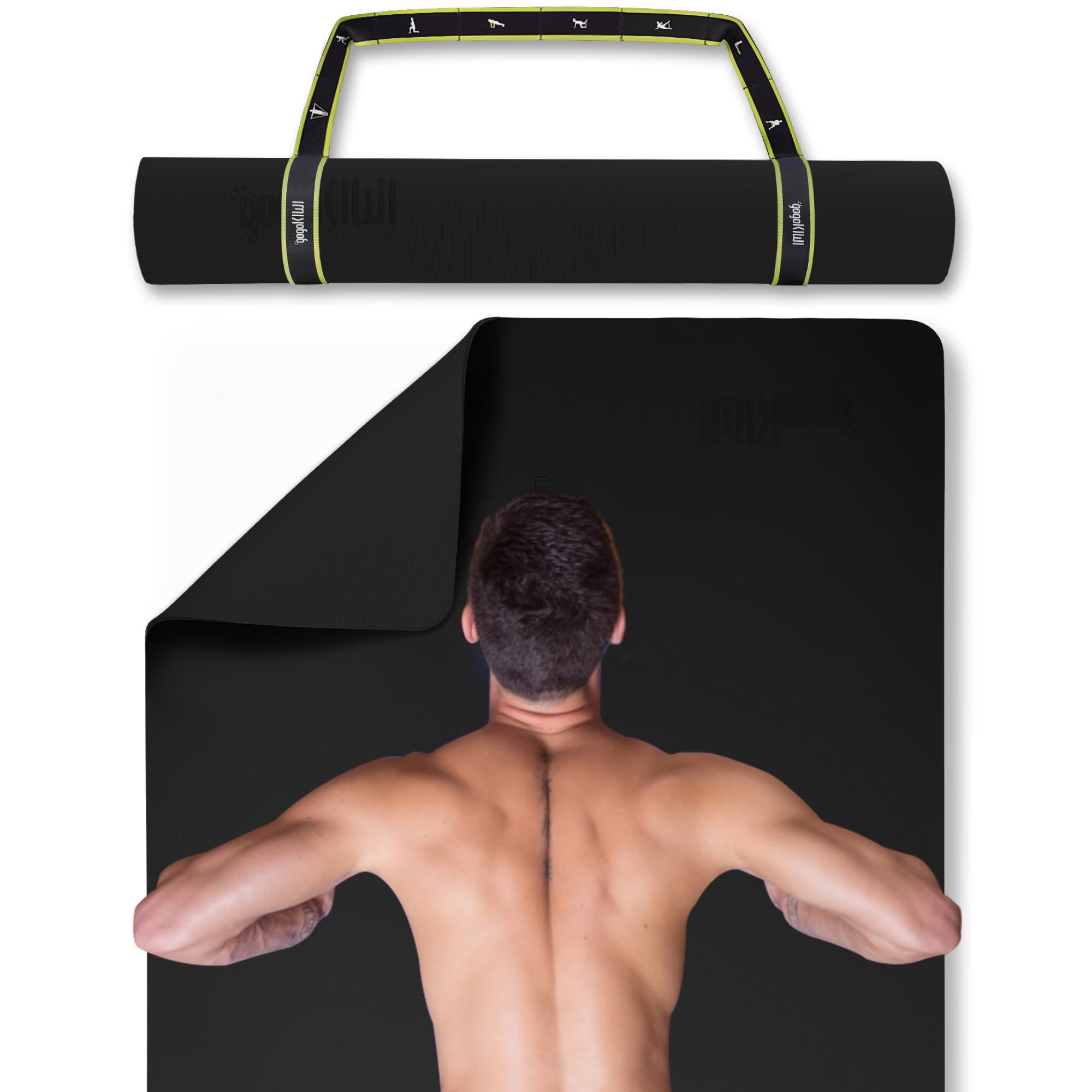
36 inches wide so a 6-foot-3 practitioner’s hands and feet stay on the mat during pushups.
Most yoga mats stop at 24 inches wide, which feels cramped if you have broad shoulders or a taller frame. The Gogokiwi is 36 inches wide, compared with standard mats at 24 inches, and reviewers point out that even at 6 feet 3 inches and 220 pounds, they can perform pushups and wide-legged poses without their hands slipping off the edge. The mat is made from 100% recyclable RecFoam (a recycled foam material) and features a dual-sided non-slip design with two different patterns, so you can flip it depending on your preference or mood.
It measures 72 inches long and 0.25 inches thick, giving a balance of cushioning and stability that most reviewers describe as “perfect padding” — enough to protect against a concrete floor but not so spongy that standing poses feel unstable. The mat weighs only 2.7 pounds and rolls up compactly, and it comes with a yoga strap that can also double as a stretch band. Shoppers say that the mat can show permanent marks from zippers or dropped weights, and the light color shows sweat more visibly, but the wear resistance is excellent: one owner reported no crumbling or indentations after years of use. It is a clear pick for large-body and tall practitioners who need floor space.
The Big Advantage
- 36-inch width gives ample room for broad shoulders and wide-legged poses
- Lightweight at 2.7 lbs; easy to roll and carry with the included strap
- Durable RecFoam stands up to weights and daily use without crumbling
Small Frustrations
- Light surface shows sweat marks; can get permanent impressions from zippers
- Moves slightly on smooth floors during vigorous flows
- Center alignment line is a single stripe; less guidance than multi-line systems
Reach for this if: You are tall, broad, or plus-size and need a wide surface for floor workouts, pushups, and vinyasa flows. The extra width also makes it a good choice for partner stretching or cooldown sessions.
Pick a different mat if: You practice hot yoga and need maximum grip in sweaty hands — the RecFoam surface is not as tacky when wet as the PU or cork options above, and some users report slight sliding during sweaty sessions.
5. Gruper Yoga Mat Non Slip TPE Extra Wide with Alignment Marks

A wide, cushioned TPE mat with printed alignment marks that help you build consistent form at home.
The Gruper mat hits a balance between width, cushioning, and price. At 32 inches wide, compared with standard mats at 24 inches and the Amazon Basics at 24 inches, it gives you generous room to spread out without feeling as oversized as the 36-inch Gogokiwi. The TPE material (thermoplastic elastomer, a recyclable foam material) comes in two thickness options: 6mm (0.24 inches) and 8mm (0.32 inches). The thicker 0.32-inch version provides noticeably softer landings for your knees and spine during prone poses, while the dual-layer construction with a textured surface on both sides aims to resist tearing and deformation over time.
What sets this mat apart from other TPE options is the printed alignment system — a grid of lines and angle guides that help you place your hands and feet accurately when practicing alone. Buyers report the alignment marks are genuinely helpful for building muscle memory, and the mat includes both a carry strap and a carry bag for portability. However, the grip is more of a mixed story: while many reviewers praise the “excellent grip,” a notable minority report that hands slide during downward dog, especially as the surface gets warm. One reviewer explicitly stated: “No grip; hands slide in downward dog.” This suggests the Gruper works best for floor-based pilates, stretching, and slower yoga flows rather than power vinyasa or hot sessions. It also requires barefoot use — shoes or pet paws can tear the TPE material.
What Works Well
- 32-inch width provides ample space at a mid-range price; the Amazon Basics is 24 inches wide
- Alignment grid helps with form during solo practice
- Comes with both a carry strap and a carry bag for easy transport
Real Limitations
- Grip is inconsistent; some users report hand slip in downward dog, especially when warm
- TPE can tear if used with shoes or exposed to pet paws
- Heavier than some TPE options at 3.2 lbs for the 0.32-inch version
Who it serves best: Beginners and intermediate practitioners who practice at home and want a wide, cushioned surface with alignment guidance for slower flows, stretching, and pilates. The alignment marks are a real training aid for building safe form without an instructor.
Not the right pick for: Hot yoga or fast-paced vinyasa where reliable grip is non-negotiable — the inconsistent surface traction is a real risk in sweaty, high-speed transitions, and the YOTTOY or Plyopic alternatives offer more predictable slip resistance.
6. Amazon Basics 1/4 Inch Thick TPE Exercise Yoga Mat
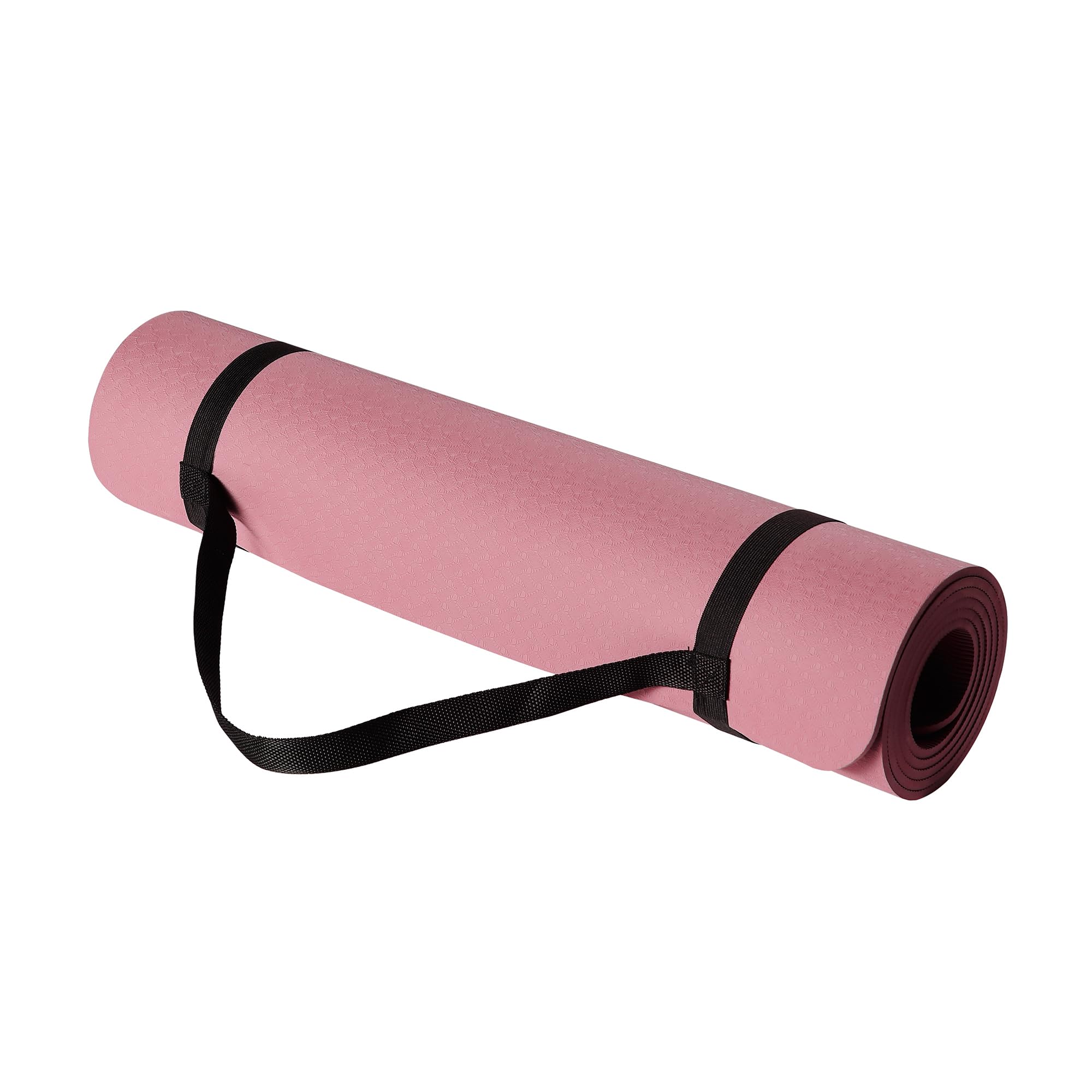
A ridiculously affordable TPE mat that punches above its weight for casual practice and family use.
The Amazon Basics mat is the cheapest option on this list, but it does not feel cheap. Made from TPE (plastic foamed thermoplastic elastomer), it measures 73.6 inches long, while the YOTTOY mat is 72 inches long, by 24 inches wide by 0.24 inches thick, giving you a standard-size platform with decent cushioning for home workouts. The non-slip surface holds up well for most dry-condition practices like pilates, stretching, and gentle yoga, and the included carrying strap makes it easy to toss in a bag for outdoor sessions or trips to the gym. One buyer mentioned: “It’s not overly thick so even my 8 yr old loves using it” — a hint that this mat works across ages and body types.
The weight is a standout: at just 2 pounds versus the YOTTOY mat at 4 pounds, it is one of the easiest mats on the list to carry. However, that thin construction (0.24 inches) means it does not offer the same joint protection as thicker mats — buyers who exercise on hard flooring may want a folded blanket under their knees. The material is TPE rather than natural rubber or cork, so the grip can become less reliable as you sweat, and the surface is not designed for intense hot yoga. But for the price, you get a functional, non-slip mat that rolls up neatly and does not take over your storage space.
Why It Earns Its Spot
- Excellent value with reliable non-slip surface for dry practice
- Lightest TPE mat at 2 lbs; very portable with the included strap
- 73.6-inch length versus the YOTTOY mat at 72 inches, at a lower price point
The Catch
- Thin at 0.24″; limited cushioning for hard floors and sensitive joints
- TPE grip degrades with moisture; not suitable for hot yoga or sweaty sessions
- Standard 24-inch width may feel narrow for broader practitioners
Pick this if: You want a budget-friendly mat for occasional home practice, stretching, or pilates and do not need thick cushioning. It is also a great spare mat for guests or kids.
Skip it for: Regular yoga practice on concrete or hardwood floors without extra padding, or any sweaty hot yoga flow where TPE loses its grip.
7. YOTTOY Extra Thick Yoga Mat (1/2 inch)

Half an inch of TPE foam that saves your knees while staying affordable.
If your biggest concern is comfortable cushioning — whether you have bad knees, sensitive wrists, or you practice on a thin carpet over concrete — the YOTTOY mat delivers the thickest pad on this list at a full 0.5 inches. Compared with the Amazon Basics mat at 0.24 inches, you can kneel, sit, and lie down with more cushioning between you and the floor. The TPE foam uses a closed-cell structure that resists water and sweat absorption, so you can wipe it down after each session, and it is SGS and TUV certified to be free from heavy metals and 10 harmful phthalates — a solid safety benchmark for a budget-friendly mat. One happy buyer confirmed: “It’s thick enough to protect my knees and doesn’t slide around on the floor.”
The non-slip mechanism comes from two things: granular protrusions on the top surface that increase friction and absorb sweat, and a water ripple texture on the bottom that grips the floor. In practice, owners mention it stays put during stretching, pilates, and gentle flows, but the TPE material does not get tackier with moisture the way natural rubber does — so sweaty power yoga may still cause some hand slippage. At 4 pounds, it is heavier than the Amazon Basics mat but still manageable with the included strap. The 72-inch length is standard, but the 24-inch width may feel narrow if you have broad shoulders. It is a focused trade-off: maximum thickness and joint protection at a killer price, with the usual TPE moisture limitations.
The Comfort Edge
- Thickest mat here at 0.5″; excellent cushioning for knees, hips, and wrists
- SGS/TUV certified for no heavy metals or harmful phthalates
- Waterproof and sweat-proof surface; easy to wipe clean
Know Before You Buy
- TPE grip can fade in sweaty conditions; not ideal for hot yoga
- Heavier than standard TPE mats at 4 pounds
- Standard 24-inch width feels narrow compared to the wider options above
Reach for this if: Your practice involves lots of kneeling, seated, and prone poses where joint protection matters more than lightning-fast transitions. Perfect for restorative yoga, yin yoga, and pilates on hard floors.
Consider a different pick if: You practice hot yoga or power vinyasa where sweat is inevitable — the TPE material does not grip like natural rubber when wet, so you may find your hands sliding in downward dog toward the end of a sweaty session.
Understanding the Specs
TPE vs Natural Rubber vs Cork
The surface material determines how your mat behaves with moisture. TPE (thermoplastic elastomer) mats are lightweight, recyclable, and reasonably grippy when dry, but they become less tacky as you sweat. Natural rubber combined with a polyurethane (PU) top layer — like the Plyopic and Liforme mats — gets more grippy with moisture, making it the automatic choice for hot yoga. Cork mats use yet another mechanism: the natural cork grain becomes tackier when damp, so you get a secure grip without the rubber smell. Cork is also antimicrobial and wipes clean easily, but it is heavier (around 10 lbs) and can chip if dropped.
Thickness and Density
Thickness is measured in inches or millimeters, and it directly affects how stable you feel in standing poses. Thinner mats (0.08 to 0.25 inches) give you a firmer connection to the floor, which helps in balancing postures like tree or handstand — you feel the ground instead of sinking into foam. Thicker mats (0.3 to 0.5 inches) are more comfortable for kneeling, lying, and seated poses, but they can feel unstable in standing balances because your weight compresses the foam unevenly. A good compromise for most practices is the 0.25 to 0.32-inch range, which offers cushioning without sacrificing too much stability.
FAQ
Does a thicker yoga mat automatically mean better grip?
Will a TPE mat work for hot yoga?
How do I clean and maintain a non-slip yoga mat?
How wide should a yoga mat be for a tall or larger practitioner?
How long does a TPE yoga mat last compared to a natural rubber mat?
Are cork yoga mats better for the environment than rubber or TPE?
Do yoga mats with alignment lines actually help beginners?
Can I use a non-slip yoga mat for other floor exercises?
How do I get rid of the rubber smell from a new natural rubber mat?
Final Thoughts: The Verdict
Across the board, the yoga mat non slip winner is the Plyopic Ultra Grip Pro because it combines reliable natural rubber grip with a balanced 0.17-inch thickness and a reasonable weight for studio commuting. If you want the extra length and natural grip for a taller body, grab the Body By Yoga Luxury Cork Mat. And for a budget-friendly option with serious knee protection, the standout is the YOTTOY Extra Thick Yoga Mat at half an inch of cushioned support.
How We Picked
We do not accept paid placement. Every pick is matched to a real buyer and a real use-case; we do not hands-on test units.
Sources & Methodology
Specifications: manufacturer listings and product documentation. Review insights: verified customer reviews, as of July 2026. Pricing: not shown on this page (it changes often); check the current price via the retailer link.
As an Amazon Associate, Gadgets Feed earns from qualifying purchases. This does not affect which products we feature.
Product prices and availability are accurate as of the date/time indicated and are subject to change. Any price and availability information displayed on Amazon at the time of purchase will apply to the purchase of this product. As an Amazon Associate I earn from qualifying purchases.
CERTAIN CONTENT THAT APPEARS ON THIS SITE COMES FROM AMAZON. THIS CONTENT IS PROVIDED "AS IS" AND IS SUBJECT TO CHANGE OR REMOVAL AT ANY TIME.
Amazon and the Amazon logo are trademarks of Amazon.com, Inc. or its affiliates.