
Youth baseball batting gloves can feel like a gamble — you want a pair that actually protects your kid’s hands, survives a full season, and doesn’t blow a hole in the fingers after two weeks of practice. The real challenge is that different kids need different things: some need the softest leather to avoid blisters, others chew through synthetic palms in a month, and a few simply want the flashiest colors on the field. This guide breaks down six top contenders by what they actually deliver in games and practices, so you can match the glove to your young player without second-guessing.
I’m Min — the co-founder and writer behind Gadgets Feed. This guide is built by comparing the manufacturers’ published specifications and the patterns across verified customer reviews, so you get each pick’s real strengths and trade-offs instead of marketing spin.
Each glove here was chosen because it solves one specific problem — durability, grip, comfort, or value — for a young baseball or softball player. Whether your kid is swinging in the backyard or grinding through travel ball tournaments, this guide to youth baseball batting gloves will help you zero in on the right pair the first time.
How To Choose The Best Youth Baseball Batting Gloves
The best batting glove for your kid depends on three things: how often they play, what material feels good on their hands, and whether they need extra wrist support. Most beginners grab the cheapest pair, but a glove that tears after a month costs more in the long run than a mid-tier leather option. Here is what to look for.
Material: Leather vs. Synthetic
Full-grain leather — like the Cabretta leather used in premium gloves — molds to a child’s hand over time, stays soft, and resists tears far longer than synthetic materials. Synthetic palms (like the ones on budget-friendly gloves) are lighter and cheaper, but they tend to get hard and brittle after repeated sweat and dirt exposure. If your kid plays two or three times a week, leather is worth the extra cost. For a few casual games a season, a well-made synthetic glove will do the job.
Fit and Sizing
Kids’ hands grow fast, but a glove that is too big will slide around and cause blisters. Most manufacturers provide a sizing chart based on hand length in inches or centimeters — measure from the tip of the middle finger to the base of the palm. The common advice from buyers is to order one size up if your child is between sizes, because batting gloves tend to break in and stretch slightly with use. A snug fit where the fingertips press just against the end of the glove is ideal.
Cuff Length and Wrist Support
Standard short cuffs stop at the wrist and give maximum freedom of movement. Long cuffs — like the 50mm strap on the Franklin Powerstrap — wrap around the wrist and provide extra stability, which helps young players who feel bat vibration through their hands or struggle with a loose grip. Long cuffs can feel restrictive at first, so have your kid try the motion of swinging a bat before you commit.
Durability Features
Look for double-layer reinforcement in the palm and fingertips — those are the areas that blow out first. Some gloves add extra stitching or a reinforced thumb patch to delay the inevitable wear. The catch is that more reinforcement often means less breathability, so gloves with perforations or a mesh backhand help keep hands cool on hot summer days.
Quick Comparison
On smaller screens, swipe sideways to see the full table.
| Model | Category | Best For | Key Spec | Amazon |
|---|---|---|---|---|
| Easton Walk-Off Ethos | Leather | Heavy practice / game use | Full-grain leather, 0.16 lb weight | Amazon |
| Rawlings Workhorse | Leather | Growing kids / long-term wear | Full-grain leather, 4 oz weight | Amazon |
| Franklin Powerstrap Infinite | Leather | Wrist support / vibration dampening | Leather palm, 50mm long cuff | Amazon |
| BRUCE BOLT Original | Premium Leather | Elite performance / durability | 0.9mm Cabretta leather, double reinforced palm | Amazon |
| Mizuno MVP | Faux Leather | Budget-friendly / casual play | Faux leather, FlexMesh back | Amazon |
| Louisville Slugger Genuine V2 | Synthetic | Young beginners / small hands | Synthetic palm, neoprene cuff | Amazon |
In‑Depth Reviews
1. Easton Walk-Off Ethos Baseball Batting Gloves
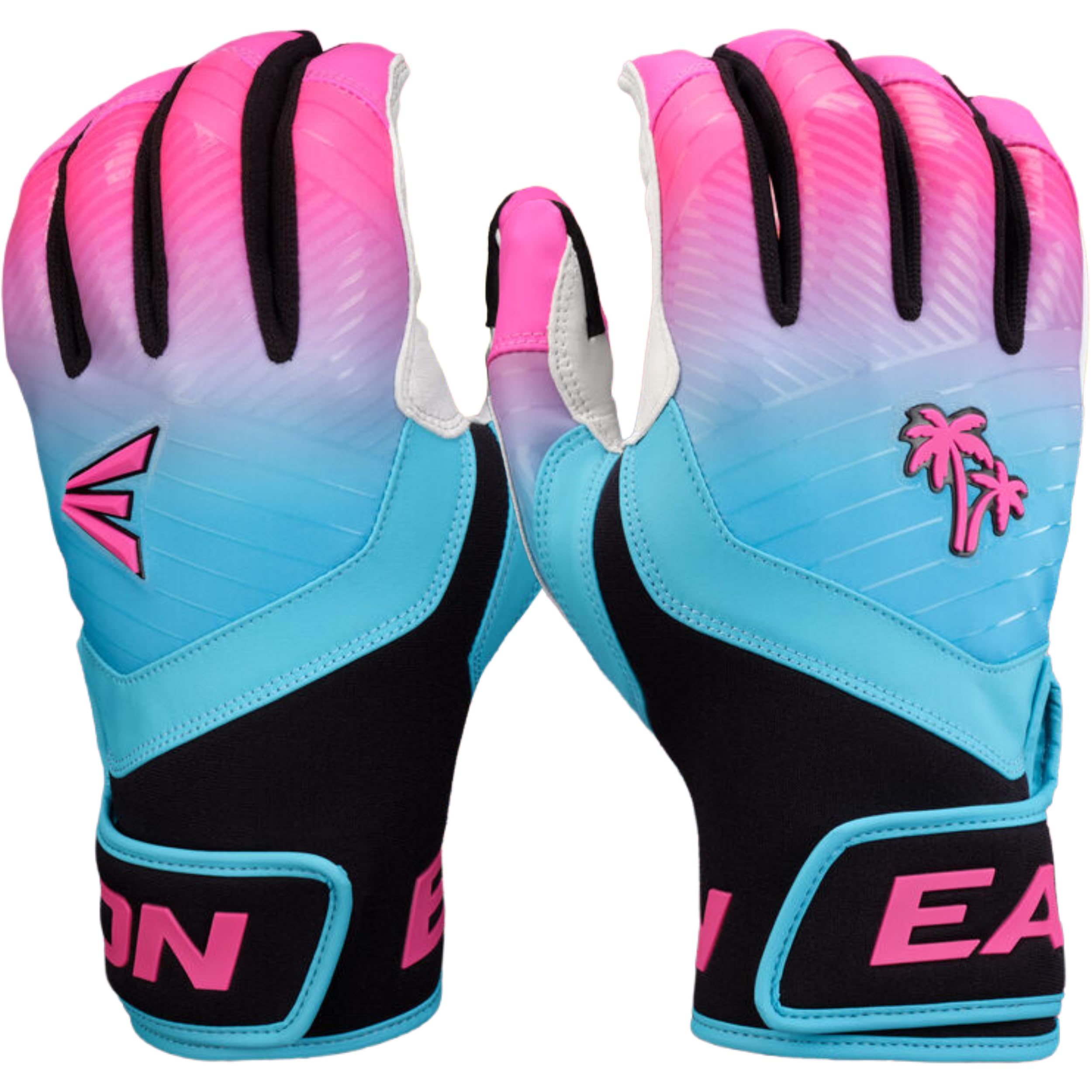
At just 0.16 pounds with a one-piece tackified full-grain leather palm, the Easton Walk-Off Ethos is the top pick for the young player who takes batting practice seriously, hits the cages multiple times a week, and needs a pair that won’t develop holes by midsummer.
Buyers report these gloves survived “8 games and two rainstorms over 1 month” with no signs of wear — a direct durability advantage over the Rawlings Workhorse, which uses a single layer of full-grain leather versus Easton’s double-layer palm. The ergonomic one-piece neoprene cuff and wraparound strap keep the glove locked in place during the swing, and the touchscreen-compatible thumb means your kid can pull out a phone between innings without taking the glove off.
The South Beach blue and hot pink color scheme is loud and fun, but the real story is the double-layer leather palm that simply outlasts the competition in this price range. For the young player who grinds through practices and games, this is the pair to buy.
Why it’s great
- Double-layer full-grain leather palm for extreme durability
- Touchscreen-compatible thumb keeps you connected
- One-piece neoprene cuff for a locked-in fit
Good to know
- South Beach colorway may not match all team uniforms
- Pull-on closure may feel less adjustable than hook-and-loop straps
2. Rawlings Workhorse Baseball Batting Gloves
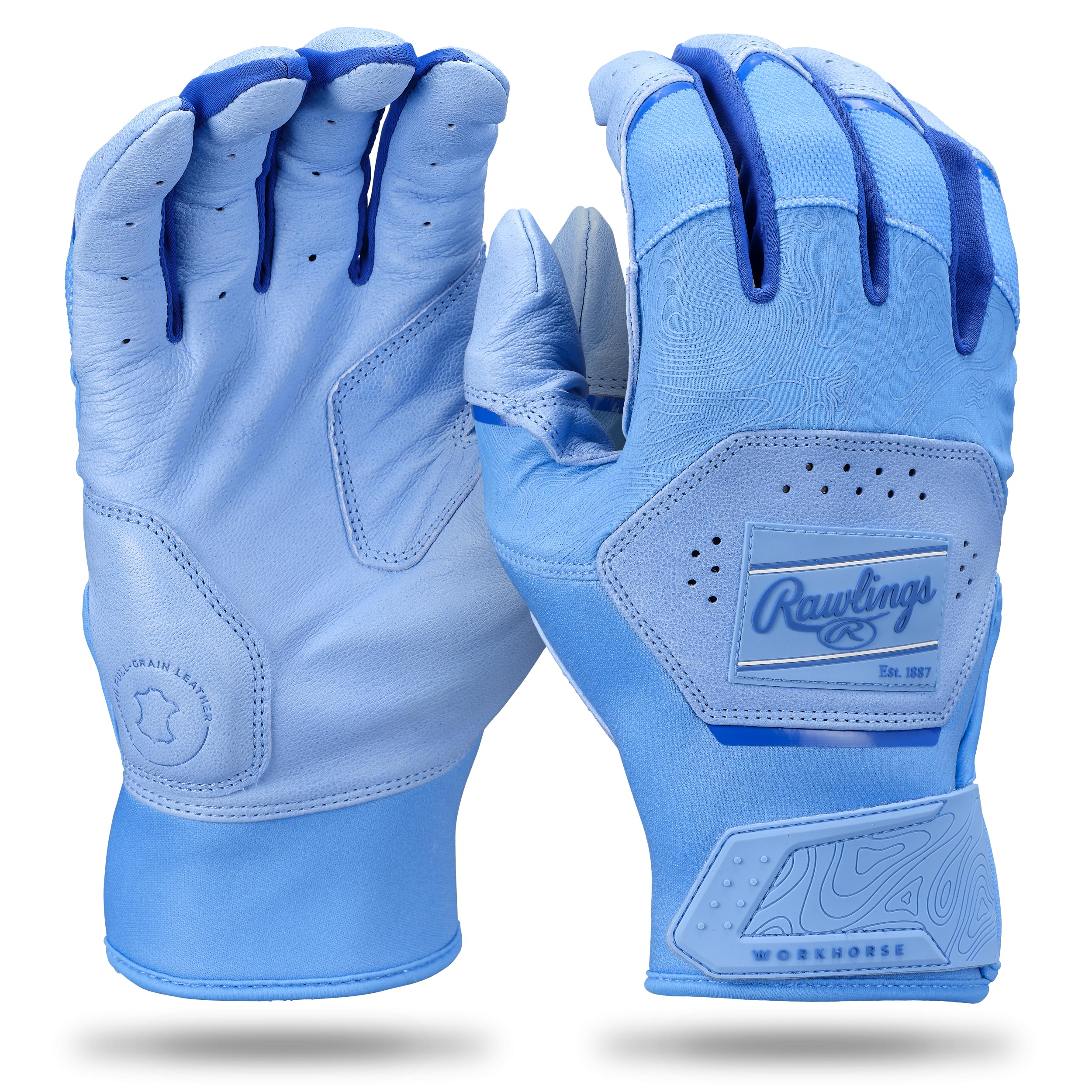
The Rawlings Workhorse falls just short of the Easton on pure durability because it uses a single layer of full-grain leather in the palm rather than a double layer, but it beats the Easton on comfort right out of the box — buyers consistently say the ultra-soft leather requires almost no break-in time. For a kid who wants that premium leather feel without the stiffness of a brand-new glove, this is the smoother start.
One reviewer directly compared these to a more expensive pair of BRUCE BOLT gloves, writing: “My son had a pair of Bruce Bolts that didn’t make it 8 months before he wore a hole in the fingertips. I replaced them with this pair and they have lasted longer and my son claims they are more comfortable.” That real-world durability beef is backed by Rawlings’ double stitching and rolled edges, which give the gloves a professional finish that holds up to regular swings.
Choose the Rawlings Workhorse over the Easton if your kid has sensitive hands that blister easily from stiff leather — the ultra-soft grain here needs almost no break-in, and the reinforced second layer in high-wear areas still gives you solid longevity.
Where it shines
- Ultra-soft full-grain leather needs minimal break-in
- Double stitching and rolled edges for a pro finish
- Reinforced second layer in wear areas
Worth noting
- Runs a little large — size down for a snug fit
- Single-layer palm is less durable than Easton’s double layer
3. Franklin Sports MLB Powerstrap Infinite Batting Gloves
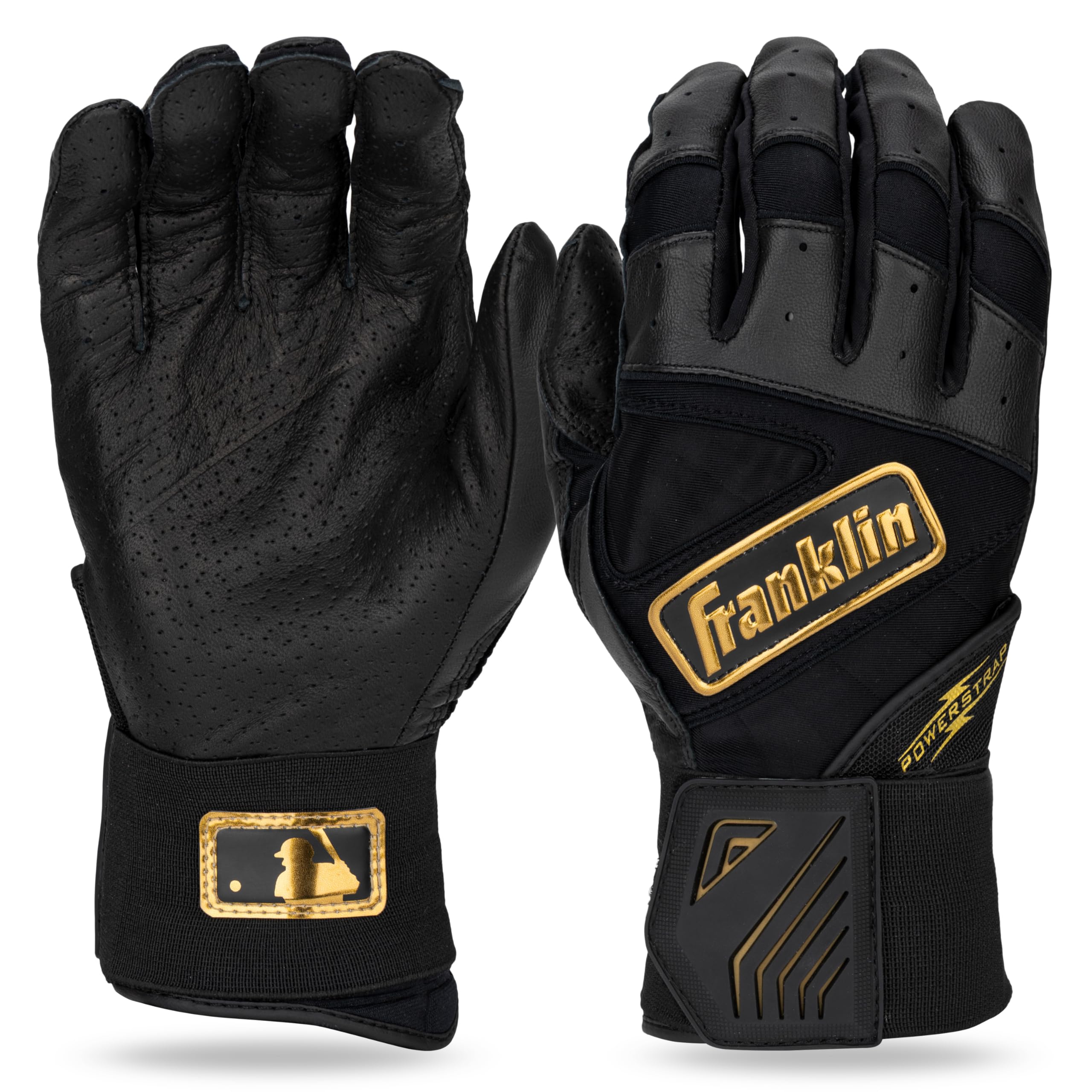
The Franklin Powerstrap is the right glove for a young player who complains about bat sting or wrist fatigue after practice — the 50mm long cuff wraps around the wrist and provides reinforced support that no other glove in this lineup matches. That extra stability is the reason one reviewer’s son, who is sensitive to bat vibration, found these gloves comfortable enough to keep swinging through an entire season.
The thick premium leather palm holds up to daily cage work, and the micro-perforations in the palm keep hands from swimming in sweat during summer games. Owners mention these gloves lasted “months of daily use” before showing wear, though they warn that machine drying ruins them — line drying is essential. The long cuff also prevents the glove from riding up during the swing, a problem some kids have with short-cuff models.
The downside is that the long cuff can feel restrictive for kids who prefer maximum wrist freedom, and the fingers run a touch long for some hand shapes. For the young player who needs wrist support and bat control, this is the glove that delivers that stability best.
What stands out
- 50mm long cuff provides excellent wrist support and reduces bat sting
- Micro-perforated leather palm keeps hands cool and dry
- Wraparound wrist strap prevents glove from riding up
The trade-offs
- Fingers may run slightly long for some hand shapes
- Must be line dried — dryer will ruin them
4. BRUCE BOLT Original Series Long Cuff Batting Gloves

The single number that matters most in this category is the leather thickness: 0.9mm Cabretta leather — the softest, most durable leather used in batting gloves — and the BRUCE BOLT Original Series scores a perfect 10 on material quality. That 0.9mm Cabretta, paired with a double reinforced palm and a patent-pending double inverse cuff design for wrist support, makes this the ultimate luxury choice for the elite youth player who wants what the pros wear.
The trade-off you accept here is cost versus value for a growing kid. Reviewers consistently say these gloves look and feel incredible, with one noting they “fit true to size” and come with a cool carrying case. But another parent directly compared them to the Rawlings Workhorse and found the Rawlings lasted longer for less than half the price. At roughly double the cost of the Easton, the BRUCE BOLT is a serious investment for a glove your child may outgrow in one season.
Pound for pound in material quality, nothing else here matches the 0.9mm Cabretta leather feel. If your budget is open and your kid is old enough that their hands have stopped growing, this is the pair that will last for years rather than months — a price-to-value read that depends entirely on whether your child can wear them long enough to justify the premium.
The upsides
- 0.9mm Cabretta leather is the softest and most durable available
- Double reinforced palm prevents tears at wear points
- Double inverse long cuff offers unmatched wrist support
Keep in mind
- Significantly more expensive than comparable options
- Some parents found cheaper gloves lasted just as long
5. Mizuno MVP Adult Baseball Batting Gloves

At a price point well below the leather options, the Mizuno MVP gives you a quality faux leather palm that still delivers a solid grip and decent durability for casual play. The FlexMesh back panel adds breathability that the all-leather gloves lack, making these a good choice for hot and humid game days when sweaty hands are a real problem.
What you give up compared to the Easton or Rawlings is longevity — the faux leather won’t hold up to heavy cage work the way full-grain does, and the QuikAdjust strap is less secure than a full wraparound cuff. One reviewer noted the color is more of a “white/cream” than pure white, and that youth sizing runs small, so careful measurement is needed. For a 6- or 7-year-old playing rec ball a couple times a week, this is more than enough glove.
The Mizuno MVP is exactly right for the parent who wants a reliable glove for a young beginner without spending leather money on something that will be outgrown in a year. It is the budget-friendly champion of this list.
Why we’d pick it
- FlexMesh back keeps hands cool in hot weather
- Great grip with the nonslip palm at a low cost
- QuikAdjust strap makes getting the fit right easy
A few caveats
- Faux leather won’t last as long as full-grain options
- Youth sizing runs small — check measurements
6. Louisville Slugger Youth Genuine V2 Batting Gloves
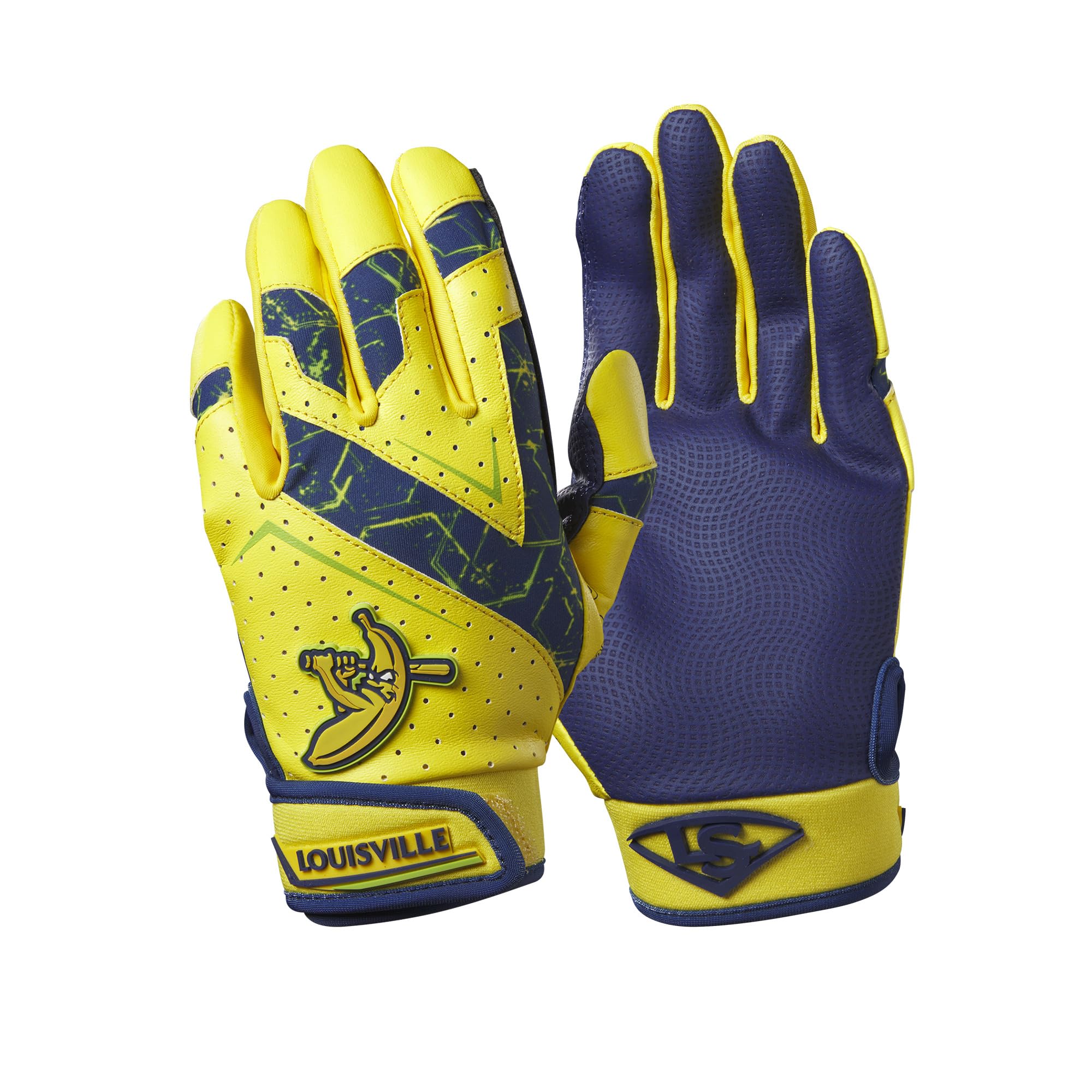
The Louisville Slugger Genuine V2 is the most affordable glove in this lineup, and for that price you get a flexible synthetic palm that grips well straight out of the package along with a perforated backhand that breathes better than any leather glove here. This is the entry-level option for the youngest players — think T-ball and machine-pitch leagues where hands are small and seasons are short.
What you give up compared to every other glove on this list is long-term durability. The synthetic palm won’t survive a full season of daily batting practice the way the Easton or Rawlings will, but for a 5- or 6-year-old playing one or two games a week, that is not the point. One buyer mentioned that the gloves “fit small” but were “perfect for my 6yo” — they run snug, so ordering a size up is a smart move. The adjustable neoprene cuff is easy for little hands to manage on their own.
The Louisville Slugger Genuine V2 is perfect for the parent who wants a solid, comfortable glove for a brand-new player without over-investing in something they may outgrow in months. Just keep in mind that the synthetic palm won’t survive a full season of daily batting practice the way the Easton or Rawlings will.
Strong points
- Very affordable — the lowest price in this guide
- Perforated backhand keeps small hands cool and dry
- Adjustable neoprene cuff is easy for kids to use solo
Before you buy
- Synthetic palm is less durable than leather options
- Runs small — order one size up for the best fit
Understanding the Specs
Leather Types: Full-Grain vs. Cabretta vs. Synthetic
Full-grain leather is the standard for durable batting gloves — it is the whole hide with nothing sanded off, so it resists tearing and molds to the hand over time. Cabretta leather is a specific type of full-grain leather from a hair sheep breed; it is softer and more flexible than standard cowhide, which is why premium gloves like the BRUCE BOLT use 0.9mm Cabretta. Synthetic leather (like faux leather or the flexible synthetic palm on the Louisville Slugger) costs less but gets hard and brittle faster, especially when wet with sweat or rain.
Cuff Length and Wrist Support
A short cuff stops at the wrist bone and gives your wrist full freedom of motion — most youth gloves use this design. A long cuff extends an inch or two up the forearm and wraps around the wrist with a strap, providing additional stability that helps dampen the sting from a mis-hit ball. The Franklin Powerstrap uses a 50mm long cuff for extra support. Long cuffs can feel warm and restrictive, so they work best for players who specifically need that extra wrist control or who are sensitive to bat vibration.
FAQ
Should I buy batting gloves one size up for my child?
How long should a pair of youth batting gloves last?
What is the difference between a long cuff and a short cuff batting glove?
Can you wash youth baseball batting gloves?
Final Thoughts: The Verdict
For most families, the youth baseball batting gloves winner is the Easton Walk-Off Ethos because its double-layer leather palm gives you the best durability-to-price ratio for a kid who practices regularly. If you want the softest leather feel with almost zero break-in time, grab the Rawlings Workhorse. And for a young player who needs wrist support and bat sting protection, the standout is the Franklin Powerstrap Infinite.