
A 20-gallon container isn’t just a bigger pot—it’s a completely different growing environment. At this volume, the soil buffer is large enough to retain consistent moisture through a hot afternoon, yet the mass is small enough that a single person can still drag it across a patio. The real challenge with a 20-gallon plant pot isn’t finding one that holds soil; it’s picking a design that prevents roots from spiraling, drains fast enough to avoid rot, and survives full-sun UV exposure without turning brittle by mid-season.
I’m Min — the co-founder and writer behind Gadgets Feed. After analyzing dozens of product sheets, customer durability reports, and material breakdowns across fabric, resin, and polypropylene categories, I’ve zeroed in on the models that actually hold up to the demands of deep-rooted vegetables, patio trees, and heavy perennial planting.
Whether you need fabric breathability for potatoes, a self-watering reservoir for tomatoes, or a decorative resin barrel for your front porch, this guide isolates the critical specs that separate a long-term workhorse from a disposable bag. My goal is to help you confidently select the right 20 gallon plant pot for your specific setup without wasting money on thin walls or undersized drainage.
How To Choose The Best 20 Gallon Plant Pot
Picking the right 20-gallon container requires matching material properties to the plant’s root system, the climate in your growing zone, and how often you plan to move the pot. The wrong choice leads to waterlogged soil, cracked plastic after a single freeze cycle, or handles that rip out the first time you lift a fully saturated bag.
Fabric vs. Rigid: The Root-Health Tradeoff
Non-woven fabric bags, like polypropylene grow bags, excel at air pruning. When a root tip hits the porous wall, it dries out and stops, forcing the plant to branch laterally inside the container. This prevents the circling root mass that strangles plants in smooth plastic pots. Rigid pots (resin, polypropylene plastic, or stone-composite) retain moisture longer—a benefit in arid climates but a risk of root rot if the drainage is inadequate. For heavy feeders like tomatoes or potatoes, fabric is almost always the better biological choice.
Handle Construction and Portability
A 20-gallon pot filled with damp potting soil weighs roughly 150 to 180 pounds. The handle stitching and material anchor points are the single most common failure point on fabric grow bags. Look for double-stitched, reinforced handles that are sewn into the side seam, not glued or single-stitched. On rigid plastic planters, integrated molded handles are stronger than add-on clips. If you move pots seasonally—chasing sun or sheltering from frost—handle strength dictates longevity.
Drainage and Water Management
Excess water must escape or the root zone becomes anaerobic. Fabric bags provide passive drainage through the entire surface area. Rigid pots rely on bottom holes—ideally multiple 1/2-inch to 1-inch openings, not a single small drain. Self-watering designs (like the Mayne Fairfield) use a reservoir that wicks moisture upward, ideal for consistent feeding but requiring careful management in rainy seasons to avoid drowning the root crown.
Quick Comparison
On smaller screens, swipe sideways to see the full table.
| Model | Category | Best For | Key Spec | Amazon |
|---|---|---|---|---|
| Classic Home & Garden Whiskey Barrel | Resin Planter | Decorative patio display | 20.5″ x 12.5″ resin with UV coating | Amazon |
| Mayne Fairfield Square Planter | Self-Watering | Low-maintenance watering | 20″ x 20″ double-wall polyethylene | Amazon |
| Worth Garden Tall Planter | Stone-Finish | Tall trees on porch | 14″ dia. x 20.5″ H, stone-powder composite | Amazon |
| Garden4Ever 5-Pack Grow Bags | Fabric | Heavy root vegetables | 21.7″ x 12.6″ thick nonwoven fabric | Amazon |
| Land Guard 10-Pack Grow Bags | Fabric | High-volume vegetable gardens | 15.7″ x 19.7″ biodegradable nonwoven | Amazon |
| SORANGEUN 4-Pack Grow Bags | Fabric with Windows | Harvesting root crops easily | Double-layer nonwoven, Velcro flip windows | Amazon |
| Veradek Block Cube Planter | Modern Plastic | Contemporary indoor/outdoor decor | 17″ x 18″ polypropylene, UV stable | Amazon |
In‑Depth Reviews
1. Classic Home and Garden Whiskey Barrel Planter
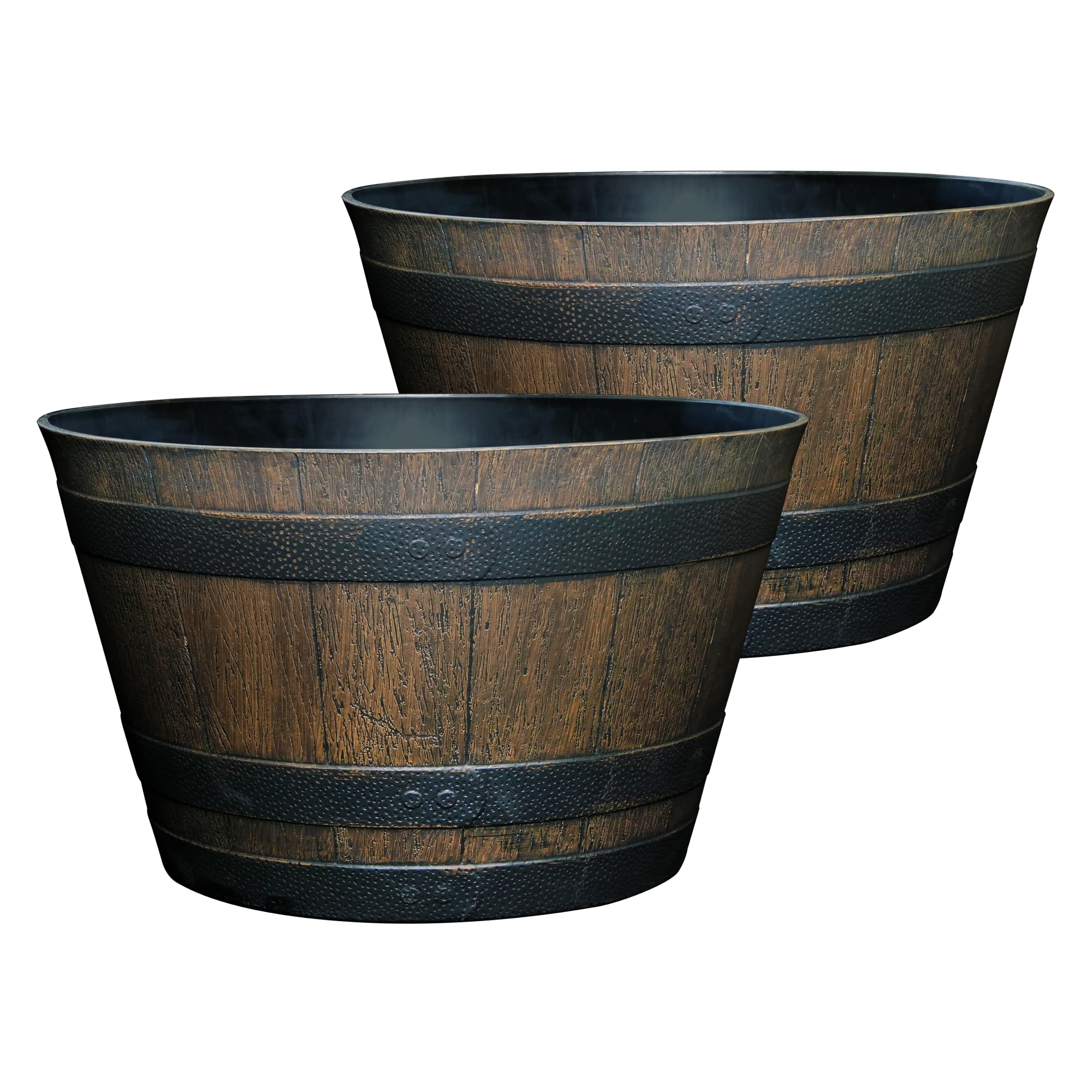
The set of two walnut-brown resin barrels offers authentic whiskey-barrel texture at roughly one-tenth the weight of real wood. Each pot measures 20.5 inches in diameter and 12.5 inches tall, and the high-density resin resists cracking during freeze-thaw cycles better than terra cotta or thin plastic. Pre-drilled drainage holes let excess water escape immediately, and the included saucers protect deck surfaces from runoff.
Customers consistently praise the visual impact of these planters on porches and entryways. The UV-coated finish retains its color after multiple seasons of direct sun, unlike painted plastic that flakes. At roughly 1.5 pounds each when empty, you can position these without a dolly—a practical advantage over concrete or ceramic alternatives that require two people to lift.
If you are growing deep-rooted tomatoes or potatoes that need the full vertical soil column, the shorter 12.5-inch height limits root depth compared to a fabric grow bag. For ornamental flowers, shrubs, or dwarf trees, the aesthetics and durability make this the top decorative choice.
Why it’s great
- Authentic wood-barrel look with lightweight resin—no rot or splinters
- UV coating prevents fading; pre-drilled drainage works well
- Set of two with saucers included; ready to plant immediately
Good to know
- 12.5-inch height limits root depth for tall vegetables
- Interior volume is slightly under 20 gallons due to shape
2. Mayne Fairfield 20-Inch Square Planter

The 20-inch cube design (actual interior depth accommodates roughly 8.75 gallons of soil) uses a double-wall polyethylene construction that insulates roots from extreme temperature swings. The built-in self-watering reservoir holds several gallons below the root zone, wicking moisture upward through the soil column—a system that keeps tomatoes and peppers consistently hydrated through 95°F summers without daily watering.
Owners in high-wind areas report that the reservoir adds enough mass to anchor the planter without tipping. The UV fade-resistant matte finish stays rich after multiple years of exposure, and the overflow drainage port prevents overwatering even during heavy rain. The 15-year limited residential warranty is the strongest guarantee in this category, reflecting confidence in the rotomolded polyethylene shell.
Several users note that the false bottom and reservoir system reduce usable soil volume, so root crops like potatoes or carrots will struggle for depth. The planter is best suited for fruiting vegetables, shrubs, dwarf trees, or flowering annuals where consistent moisture outweighs the need for deep vertical root run. At 13 pounds empty, it is lighter than concrete but heavier than thin resin—a nice middle ground for stability.
Why it’s great
- Self-watering reservoir cuts watering frequency dramatically
- Double-wall insulation protects roots from temperature extremes
- 15-year warranty; UV-stable color lasts for seasons
Good to know
- Soil capacity is closer to 8.75 gallons—not true 20-gallon volume
- Reservoir requires careful monitoring in rainy climates
3. Worth Garden 2-Pack Tall Planters
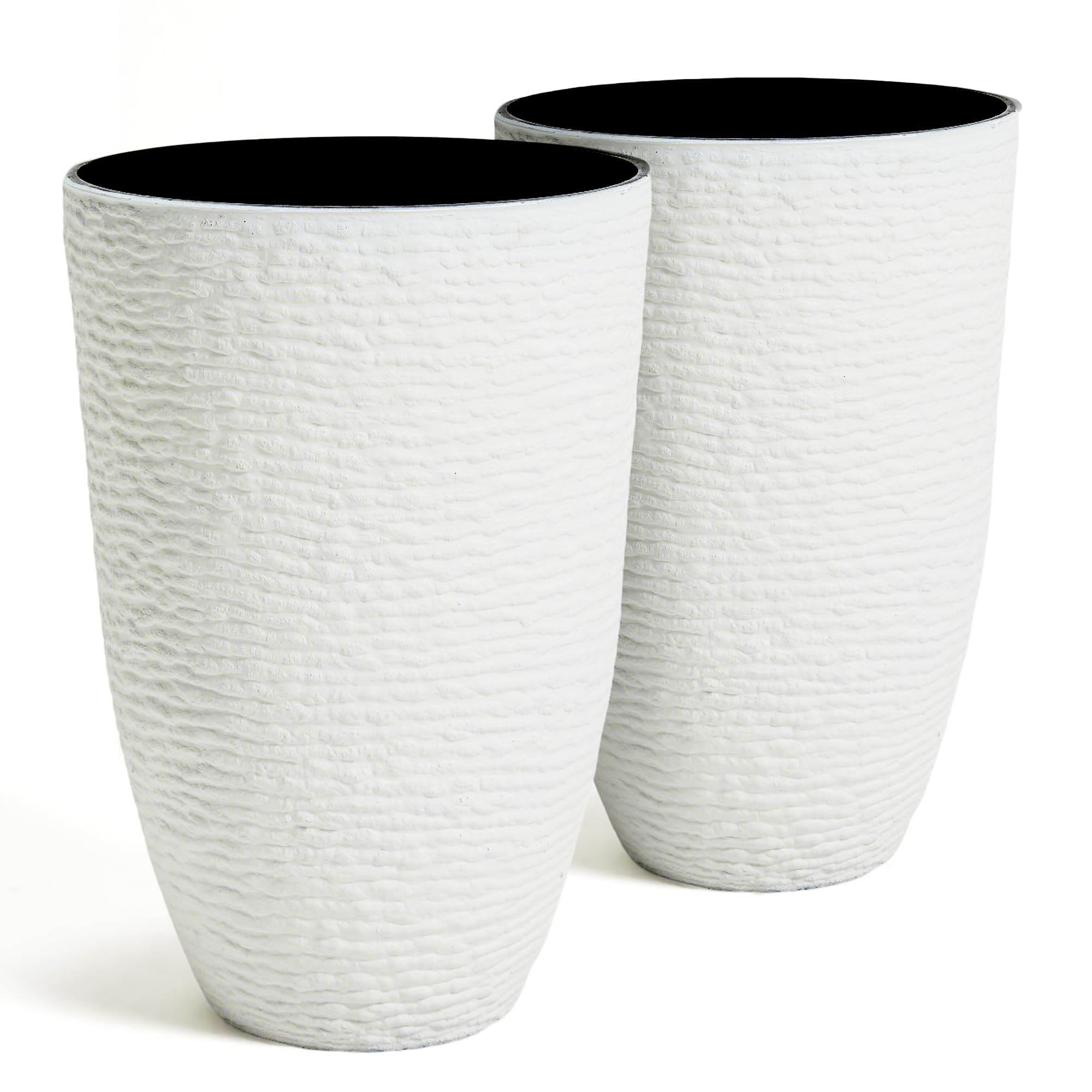
The 14-inch-diameter, 20.5-inch-tall pair mimics the texture of cast stone or concrete but weighs only 6.8 pounds each—roughly 30 percent of a ceramic pot of the same size. The material blend of 85 percent recycled polypropylene and 15 percent stone powder gives a matte, grain-textured surface that does not absorb water or freeze-crack like natural clay. A single pre-drilled drainage hole at the bottom prevents water pooling, though the tall, narrow profile means the internal volume is approximately 9 gallons rather than 20.
Reviewers consistently describe the appearance as “high-end” and note the slight weight is enough to withstand moderate wind when filled with soil and a medium shrub. The white and gray color options stay clean-looking across multiple seasons, and the smooth interior surface makes root ball removal simple at transplant time. These planters are a strong match for fiddle-leaf figs, dwarf citrus, or topiary spirals where a narrow base and vertical height create visual proportion.
The primary tradeoff is the lack of an internal false bottom or shelf. Users report needing 4 to 6 inches of filler material (packing peanuts or inverted nursery pots) to raise smaller plants to display height. Without that filler, the 20.5-inch depth buries the crown of a typical 1-gallon nursery plant. For columnar evergreens or established 5-gallon trees, the depth is perfect.
Why it’s great
- Stone-texture finish looks premium without the heavy weight
- Tall, narrow profile is ideal for entryway trees and tall shrubs
- Weather and UV resistant; holds color well in full sun
Good to know
- Internal capacity is 9 gallons, not 20 gallons
- No false bottom; requires filler to raise smaller plants
4. Garden4Ever 5-Pack Grow Bags 20 Gallon
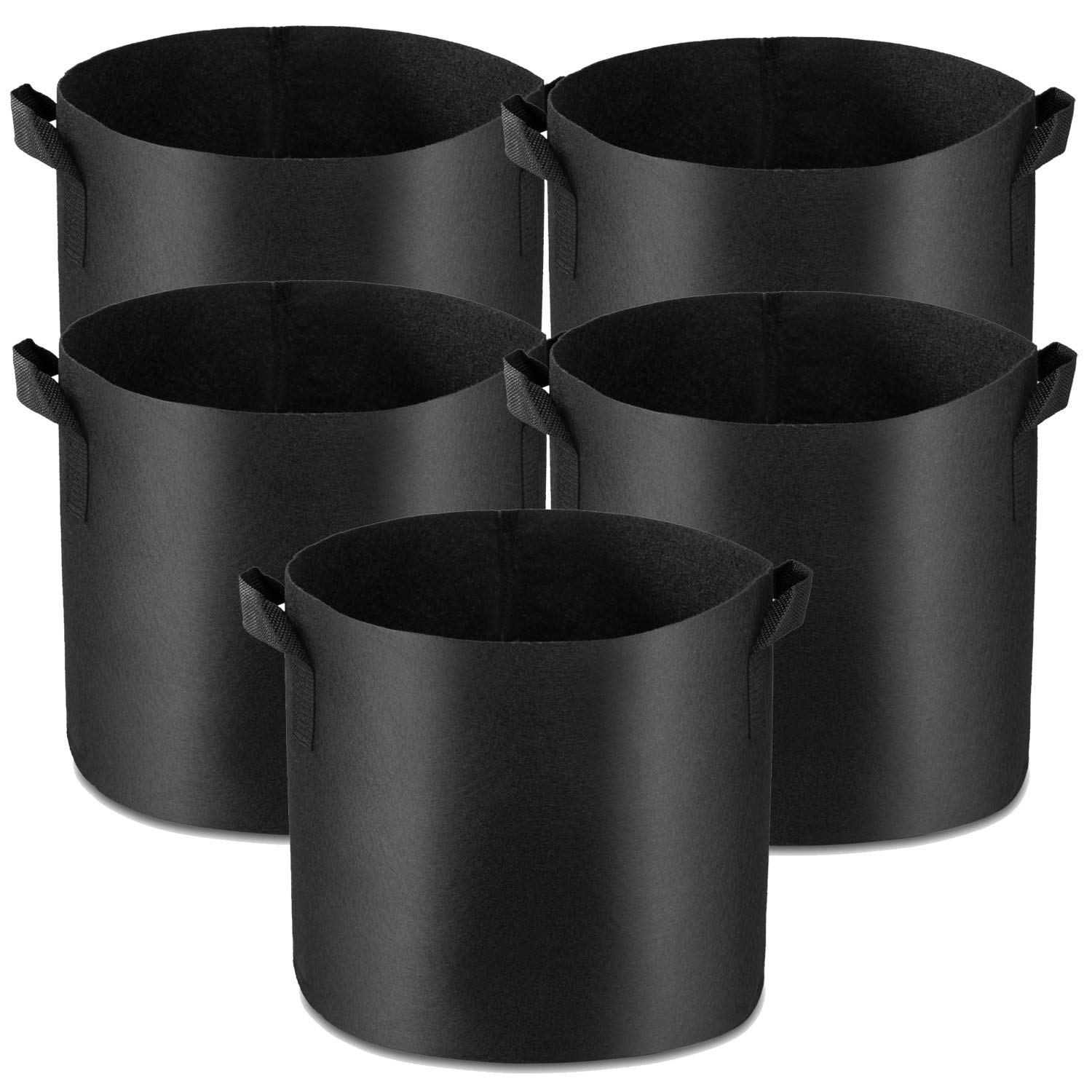
This five-pack of 20-gallon nonwoven fabric bags hits the sweet spot for growers who need volume without breaking the bank. Each bag measures approximately 21.7 inches in diameter and 12.6 inches tall, providing enough vertical soil depth for potato towers, indeterminate tomatoes, and sprawling squash. The fabric is noticeably thicker than budget grow bags—owners report it holds its shape even when wet, reducing the “slump and fold” issue that traps water against the root ball.
Double-stitched, reinforced handles are sewn into the side panels with heavy thread that survives dozens of drag maneuvers across concrete and gravel. The breathable walls air-prune roots aggressively, preventing the circling root mass that stunts growth in smooth-sided containers. Several gardeners note that carrots and tomatoes produced larger yields compared to the same plants in rigid 15-gallon nursery pots, and the bags store flat when not in use.
A few users observed that the black fabric absorbs heat on sunny days, raising soil temperature by 5-8°F—a benefit for warm-season crops but a potential stressor for cool-weather greens in hot climates. The bags do not include a built-in watering system, so drip irrigation or daily hand watering is needed during peak summer. If the 5-pack exceeds your space, the individual cost per bag is competitive even against thinner single-pack alternatives.
Why it’s great
- Thick fabric resists slumping; holds shape when wet
- Reinforced handles survive moving heavy, wet soil loads
- Air-pruning walls produce healthier, more branched root systems
Good to know
- Black fabric heats soil—best for warm-season crops only
- No built-in water reservoir; needs frequent watering in heat
5. Land Guard 10-Pack Fabric Grow Bags 20 Gallon
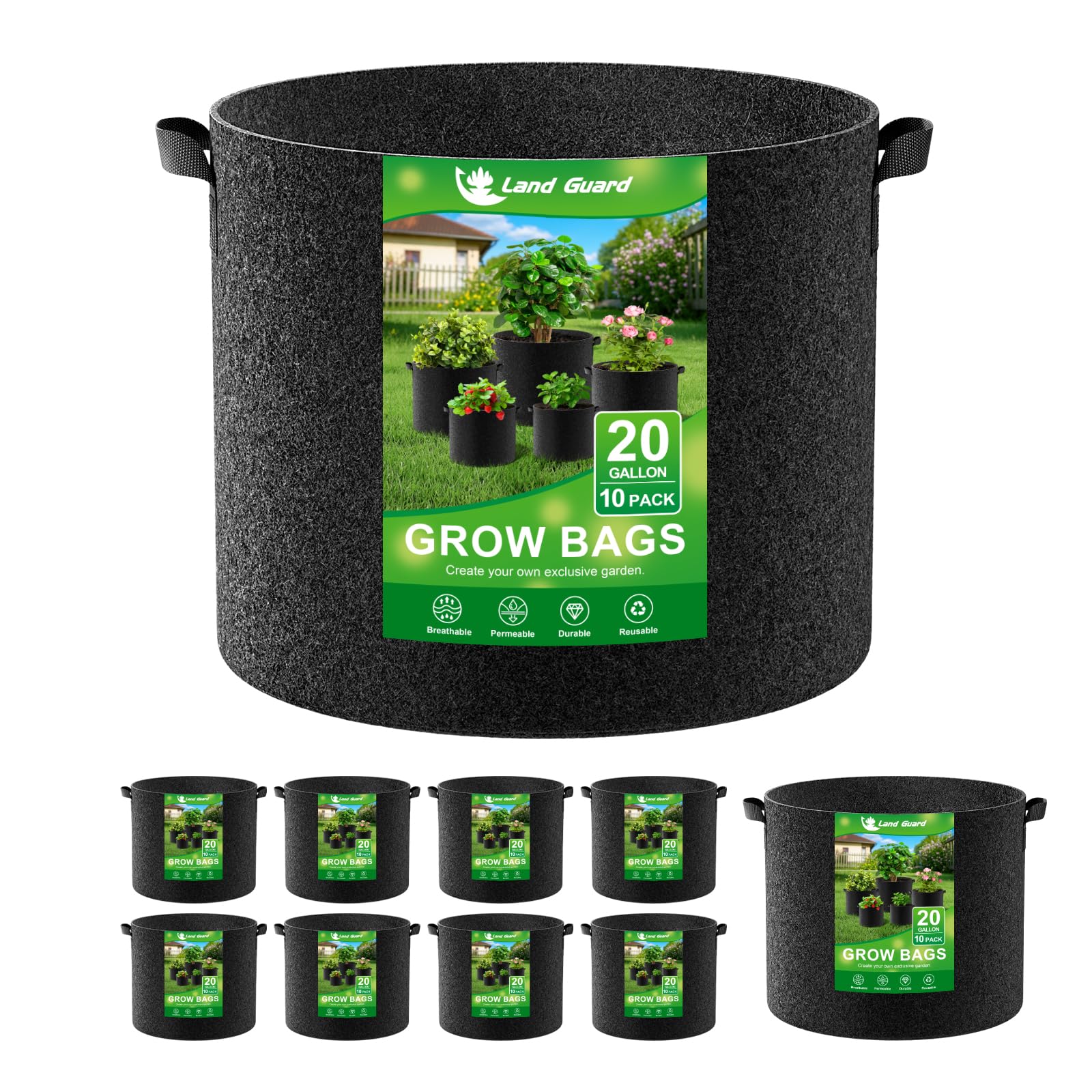
The Land Guard 10-pack delivers the lowest per-bag cost in this comparison, making it the logical choice for community garden plots or high-density vegetable production. Each bag measures 15.7 inches in diameter and 19.7 inches tall—a deeper, narrower profile than the Garden4Ever model, which suits taproot crops like carrots and parsnips. The high-strength nonwoven fabric is lightweight yet capable of bearing the weight of saturated soil without tearing at the seams.
Gardeners in greenhouses and covered raised beds report that these bags retain moisture slightly better than thinner fabric alternatives, reducing watering frequency by roughly a day between sessions. The reinforced top hem and cross-stitched handles hold up through at least two growing seasons of heavy use, though users on rough paver surfaces note that the bottom edge can fray after constant dragging. The biodegradable material composition means the bags will eventually break down if left in direct ground contact for years, but indoors or on a deck they last multiple seasons.
The main drawback is the single-ply fabric thickness—it does not hold its upright shape as firmly as the Garden4Ever or SORANGEUN options. When filled, the walls bulge outward, and the bag may need to be placed inside a rigid support ring to prevent tipping in windy conditions. For stationary placement against a wall or inside a raised bed frame, this is not a practical concern.
Why it’s great
- Lowest per-bag cost; ideal for large-scale plantings
- Tall, narrow shape works well for carrots and deep-root crops
- Biodegradable fabric reduces plastic waste over time
Good to know
- Single-ply fabric bulges when filled; needs support in wind
- Bottom edge may fray if dragged repeatedly on rough surfaces
6. SORANGEUN 4-Pack 20 Gallon Grow Bags with Windows

The defining feature of this four-pack is the Velcro-secured flip windows on two sides of each bag. Opening a window reveals the soil profile at root level, allowing you to check moisture depth, inspect for pests, or harvest potatoes and carrots without dumping the entire container. The windows are lined with heavy-duty fabric flaps that seal tightly when closed, preventing soil loss during irrigation.
The double-layer nonwoven fabric is noticeably denser than basic single-ply grow bags—thick enough to block most sunlight from reaching the outer root zone, which discourages algae growth on the bag surface. Handles are stitched with multiple passes of heavy thread at each connection point, and the 0.39-inch-flat item dimension (a measurement artifact of the packaging) belies the fact that each bag expands to a generous 20-gallon cylinder when filled. Customers growing sweet potatoes and tomatoes report that the windows make mid-season soil amendment and side-dressing far less disruptive to the root system.
The tradeoff is cost per bag—the 4-pack sits above single-ply alternatives per unit. Additionally, the Velcro flaps can catch on debris or adjacent bags during tight spacing; some users reinforce the flap seam with an extra stitch after a season of use. For dedicated root-crop gardeners who value the ability to peek below the soil line, the incremental cost is justified.
Why it’s great
- Flip windows allow soil inspection and harvest without dumping
- Double-layer fabric blocks light; reduces surface algae
- Reinforced handles and heavy stitching hold up to frequent moving
Good to know
- Velcro flaps may snag on nearby pots or debris
- Higher per-bag cost compared to single-layer alternatives
7. Veradek Block Series Cube Plastic Planter
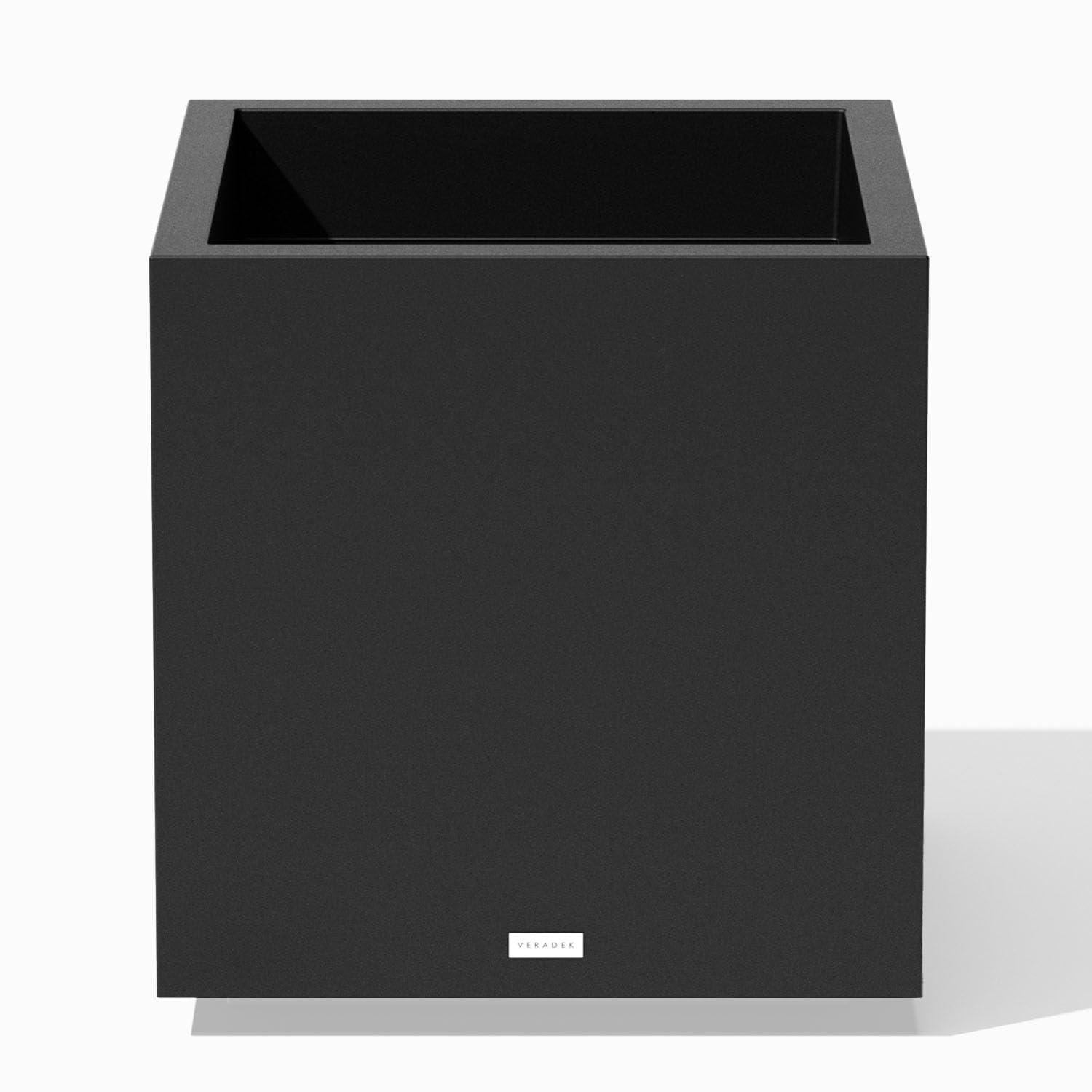
The Veradek Block Series is a 17-inch cube made from high-grade polypropylene plastic that feels noticeably denser than standard nursery pots—closer to a brushed composite than thin injection-molded plastic. The flat sides and sharp 90-degree corners create a minimalist silhouette that blends into modern architectural settings, and the 14-pound empty weight gives it a planted stability that lightweight resin pots cannot match. Pre-drilled drainage holes with removable plugs let you control water retention based on the plant species.
The internal capacity measures 35.8 liters (approximately 9.5 gallons), not the full 20 gallons of a fabric grow bag. This makes the Veradek a better fit for compact shrubs, ornamental grasses, or single-stem trees where the square footprint optimizes patio and balcony space. Owners praise the UV stability: the black color shows minimal fading after multiple seasons of direct western exposure, and the thick walls do not warp or bow even when the planter is under full soil pressure.
One consideration is the false bottom—a raised internal platform that reduces soil volume but creates a drainage reservoir underneath. This design prevents the soggy bottom layer that rots roots in standard pots, but it also means the top 14 inches of soil depth is all that is available for root penetration. For plants requiring deep taproots, this is a limiting factor. For succulents, citrus, or architectural foliage, the clean lines and durable construction justify the positioning in the premium tier.
Why it’s great
- High-density polypropylene feels premium; resists UV fading
- False bottom and plug system prevent waterlogged roots
- Modern cube shape fits contemporary patios and indoor spaces
Good to know
- Internal capacity is ~9.5 gallons, not 20 gallons
- False bottom limits usable root depth to roughly 14 inches
FAQ
How much soil does a true 20-gallon pot actually hold?
Can I leave fabric grow bags out in winter?
Final Thoughts: The Verdict
For most users, the 20 gallon plant pot winner is the Classic Home and Garden Whiskey Barrel Planter because it balances authentic decorative appeal with lightweight resin durability for ornamental use. If you want maximum root health and yield from vegetables, grab the Garden4Ever 5-Pack Grow Bags. And for low-maintenance watering of patio trees or flowering shrubs, nothing beats the Mayne Fairfield Square Planter.