
Your trolling motor cutting out mid-lake or your RV’s fridge going dark before sunset isn’t a mystery—it’s the moment your battery’s internal resistance and cycle count reveal the truth. The difference between a full day on the water and a frustrated tow back to the dock is often the chemistry inside a single 12-volt deep cycle battery, a component too many buyers consider interchangeable until it fails. Understanding the measurable metrics that separate an AGM workhorse from a LiFePO4 powerhouse is the only way to make a choice you won’t second-guess in a year.
I’m Min — the co-founder and writer behind Gadgets Feed. This guide is the result of dissecting dozens of technical spec sheets, cross-referencing verified customer endurance tests under real loads, and mapping the price-to-performance ratio across lead-acid and lithium chemistries so you don’t have to decode cryptic Ah ratings on your own.
The goal here is to cut through the marketing noise and hand you a clear-eyed, spec-driven breakdown of the absolute best options so you can confidently choose a 12 volt deep cycle battery that actually delivers the runtime and cycle life you paid for.
How To Choose The Best 12 Volt Deep Cycle Battery
Choosing a deep cycle battery requires letting go of the starter battery mindset. CCA ratings don’t matter here—you need to focus on amp-hours, cycle life, and recharge tolerance. The wrong choice means replacing your battery far sooner than you expected.
Capacity: The Real Usable Amp-Hours
Not all 100Ah batteries deliver 100 ampere-hours of usable energy. Lead-acid batteries, including AGM, should only be discharged to 50% depth of discharge (DoD) to avoid permanent damage, effectively giving you 50Ah. Lithium iron phosphate (LiFePO4) batteries routinely offer 80 to 100% DoD, meaning a 100Ah lithium battery actually provides 100 usable amp-hours. When comparing, multiply the advertised Ah by the recommended DoD to find the true capacity.
Chemistry: AGM vs. LiFePO4
AGM (Absorbent Glass Mat) batteries are maintenance-free, spill-proof, and significantly cheaper upfront. They weigh more, deliver fewer cycles (300–500 at 50% DoD), and self-discharge around 3–5% per month. LiFePO4 batteries cost more initially but deliver 4,000 to 15,000 cycles at 80% DoD, weigh roughly 50% less, and self-discharge at 2–3% per month. The break-even point for most users is around two years of regular use—after that, lithium pays for itself.
Built-in BMS and Protection Features
A Battery Management System (BMS) in LiFePO4 batteries prevents overcharge, over-discharge, short circuits, and extreme temperatures. Low-temperature charging cutoff is critical if your battery will face freezing conditions; charging a LiFePO4 below 32°F causes irreversible damage. Some BMS units also offer Bluetooth connectivity for real-time voltage, current, and state-of-charge monitoring via a smartphone app.
Physical Fit and Terminal Type
Group size (like Group 24, Group 27, or Group 31) determines the battery’s physical dimensions. Always confirm that the replacement battery fits your designated tray or box. Terminal type (marine posts, M8 bolts, or dual-purpose) must match your existing cable lugs. Lithium batteries are often smaller and lighter than equivalent lead-acid, leaving extra space that may require a spacer or a smaller battery box.
Quick Comparison
On smaller screens, swipe sideways to see the full table.
| Model | Category | Best For | Key Spec | Amazon |
|---|---|---|---|---|
| Power Queen 12V 100Ah | Premium Lithium | Marine & RV all-day use | 100Ah, 24 lbs, 15000 cycles | Amazon |
| Litime 12V 100Ah TM | Premium Lithium | Trolling motor & marine | 100Ah, 22.16 lbs, ABYC E-13 | Amazon |
| ECO-WORTHY 12V 100Ah Bluetooth | Premium Lithium | Monitoring & tech users | 100Ah, Bluetooth, 25.12 lbs | Amazon |
| GRNOE 2-Pack 12V 100Ah | Premium Lithium | Multi-battery setups | 100Ah each, 22.4 lbs, IP65 | Amazon |
| HRBEENERGY 12.8V 100Ah | Mid-Range Lithium | Off-grid solar & backup | 100Ah, 19.4 lbs, IP67 | Amazon |
| DUMFUME 12V 150Ah | Mid-Range Lithium | High capacity in Group 31 | 150Ah, 22.05 lbs, 1920Wh | Amazon |
| HQST 12V 100Ah LiFePO4 | Mid-Range Lithium | Best value lithium upgrade | 100Ah, 22 lbs, LED display | Amazon |
| WEIZE 12V 100Ah AGM | AGM | Budget stationary backup | 100Ah, 63 lbs, 1150A peak | Amazon |
| Newport 12V50Ah AGM | Entry-Level AGM | Small boat & kayak | 50Ah, 32 lbs, AGM sealed | Amazon |
In‑Depth Reviews
1. Power Queen 12V 100Ah LiFePO4 Battery
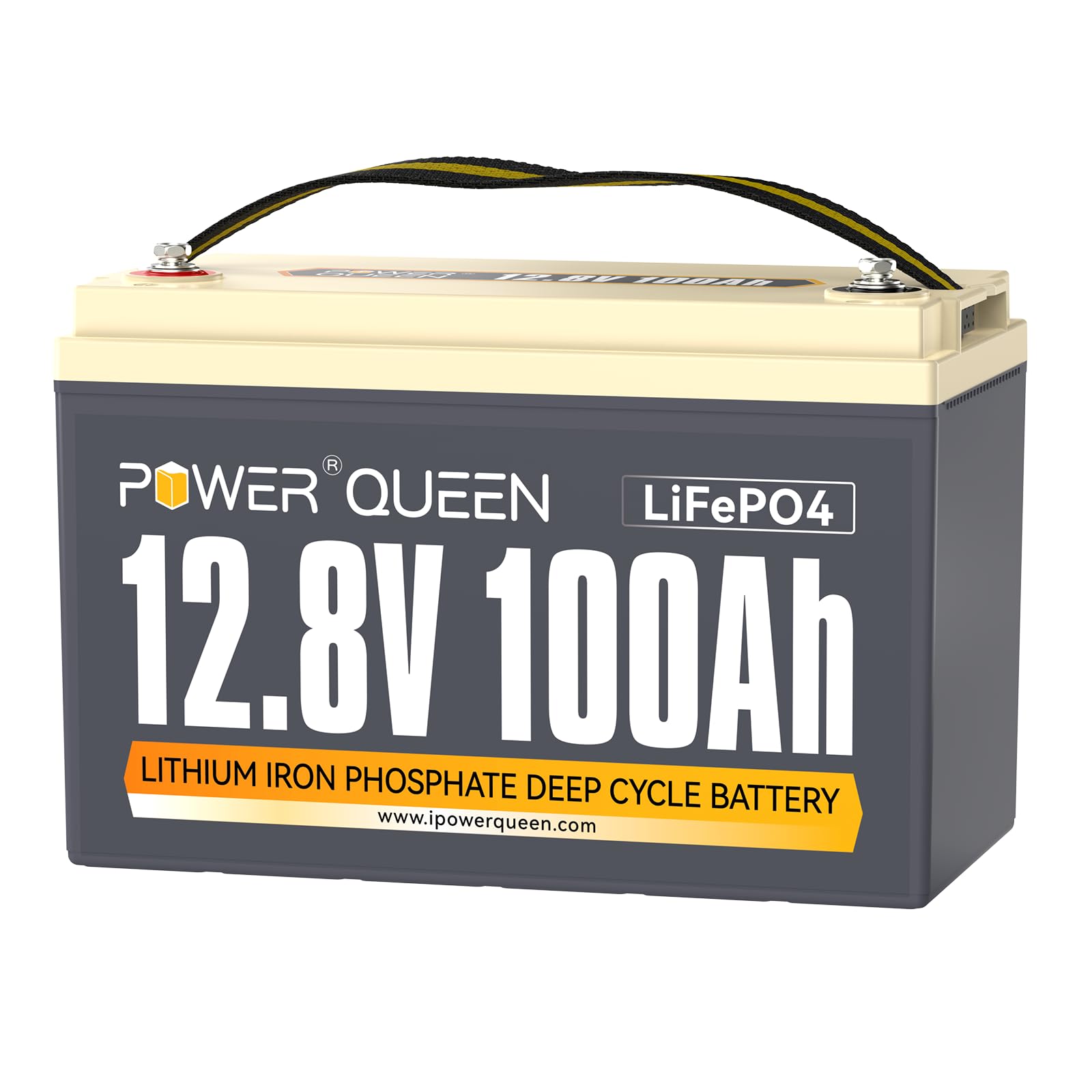
The Power Queen 12V 100Ah LiFePO4 is a strong contender for those who want a proven lithium upgrade in a Group 31 form factor. It packs 1,280Wh of usable energy at roughly one-third the weight of an equivalent lead-acid battery, which translates directly into easier handling and better fuel economy on a boat. Verified real-world testing shows it reliably powers a trolling motor for 6+ miles on a lake, and at 10 kilograms, it’s manageable for a single person to carry.
It uses Grade-A LiFePO4 cells and a 100A BMS that covers overcharge, over-discharge, short circuit, and overheat protection. The spec sheet claims up to 15,000 cycles, which is on the high end for this form factor, though real-world longevity will depend on depth of discharge and charging practices. It supports series and parallel configurations up to 4S4P, making it flexible for building a 48V 400Ah battery bank for a solar setup or a 36V trolling motor array.
Reports from a sailboat owner with three units in parallel confirm solid build quality and tested capacity of 102Ah. The terminals use non-corroding posts with caps and multiple placement options, which simplifies wiring. The only minor concern is that the 6mm terminal bolts can be easy to cross-thread when torquing down multiple lugs, so careful assembly is recommended.
Why it’s great
- Proven 100+ Ah real-world capacity
- Weighs 24 lbs, easy to install
- Flexible 4S4P expansion up to 20.48kWh
Good to know
- Terminal bolts are delicate and may cross-thread
- Higher price point than mid-range options
2. Litime 12V 100Ah Trolling Motor LiFePO4 Battery

The Litime 12V 100Ah TM battery is specifically engineered for trolling motor use and it shows in the details. It meets the ABYC E-13 marine electrical standard, with extra BMS protection against dust, water, and salt spray. The TVS (transient voltage suppression) circuitry shields your trolling motor from voltage spikes that can occur in rough water, a feature that directly protects expensive electronics like a Minnkota or MotorGuide.
At 22.16 pounds, it’s 64% lighter than a comparable lead-acid battery. One verified owner reported that the weight reduction improved his boat’s hole shot and added 4 mph to his top speed. In use, a 16-foot jonboat with three large adults pushing into an 8 mph headwind for four hours barely discharged the battery at all. The smart low-temperature protection stops charging below 32°F and discharging below -4°F, which is critical for anyone storing the battery in an unheated garage or using it in early spring or late fall.
The BMS has been noted to lack active cell balancing, which can be addressed with a multi-bank charger, but this requires a bit more user attention. Some units arrive asleep and need a lithium-activation charger to wake them. However, Litime’s customer support is proactive and responsive, and the battery remains one of the best-value premium marine options available.
Why it’s great
- ABYC E-13 marine standard certified
- Built-in TVS protects trolling motor from spikes
- Extremely light for a Group 31
Good to know
- BMS lacks active balancing
- May require a lithium-activation charger on arrival
3. ECO-WORTHY 12V 100AH LiFePO4 with Bluetooth & SOC Display
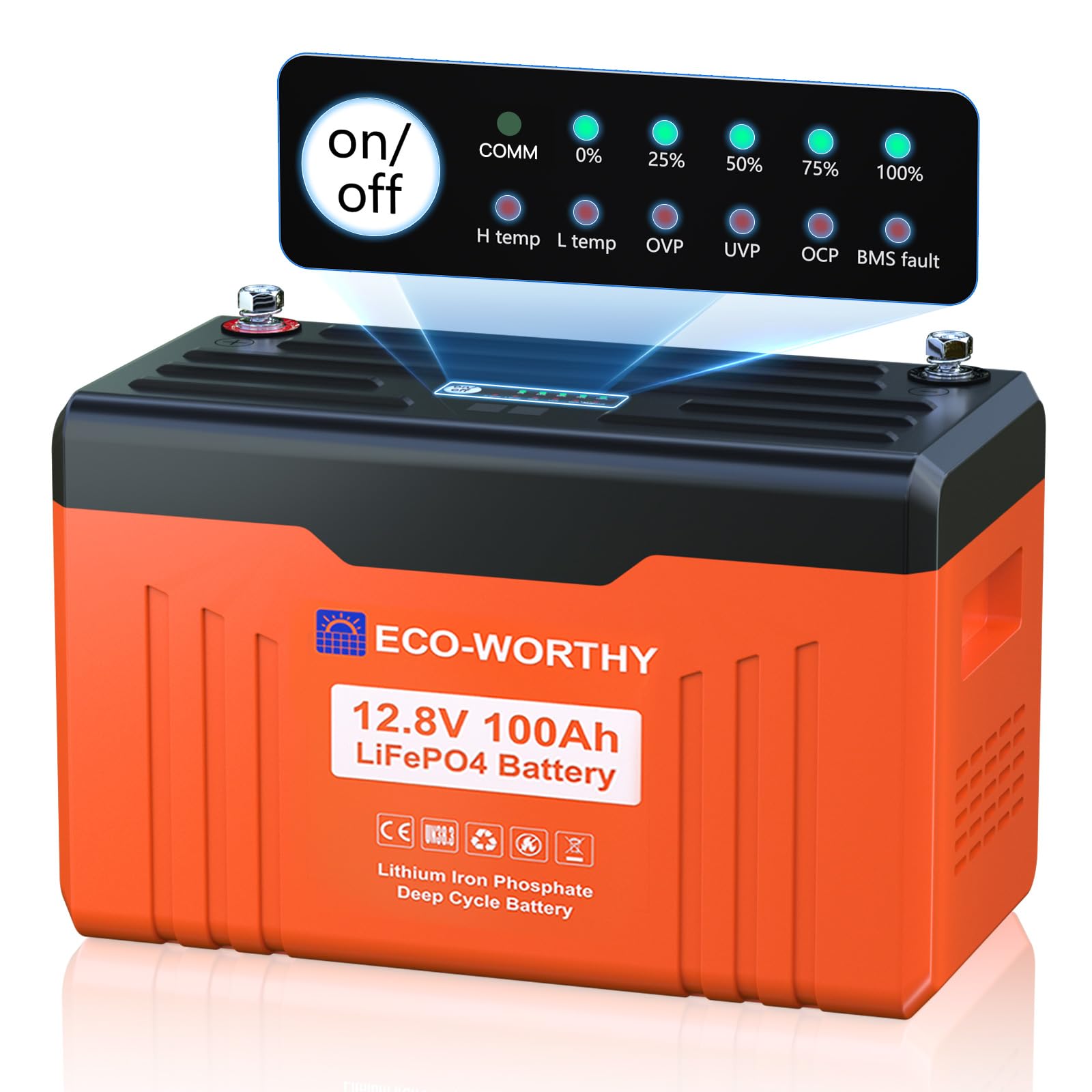
The ECO-WORTHY 12V 100Ah Bluetooth battery is built for the user who wants granular visibility into their battery’s state of charge. The built-in Bluetooth allows monitoring via the ECO-WORTHY app from up to 98 feet away, giving real-time data on voltage, current, capacity, SOC, runtime, and even individual cell voltages. The LED panel on the battery itself offers an at-a-glance SOC display without needing the app, which is convenient.
The physical construction uses a unique metal fixture to secure the cells, which prevents expansion and short circuits, effectively extending the battery’s lifespan. It passed 15 strict factory tests and includes a built-in buzzer that alerts you to BMS faults instantly. In real-world use, one owner reported trolling for six days on a small boat only to reach 60% discharge, indicating high usable capacity and efficient power delivery.
One important nuance: the Bluetooth app relies on coulomb counting, which can drift in accuracy under very low loads (under 1A) or during storage. Some users have seen the app show 90% SOC when the actual voltage suggested closer to 10%. For critical applications, cross-referencing with a high-quality external voltmeter or a shunt-based monitor is recommended. The battery also requires a Group 27 box, not Group 24, which is an important fitment note.
Why it’s great
- Full smartphone monitoring with Bluetooth
- Metal cell fixture prevents swelling
- Durable and passed 15+ quality tests
Good to know
- Bluetooth SOC can drift under low loads
- Needs Group 27 battery box, not Group 24
4. GRNOE 2-Pack 12V 100Ah LiFePO4 Lithium Battery
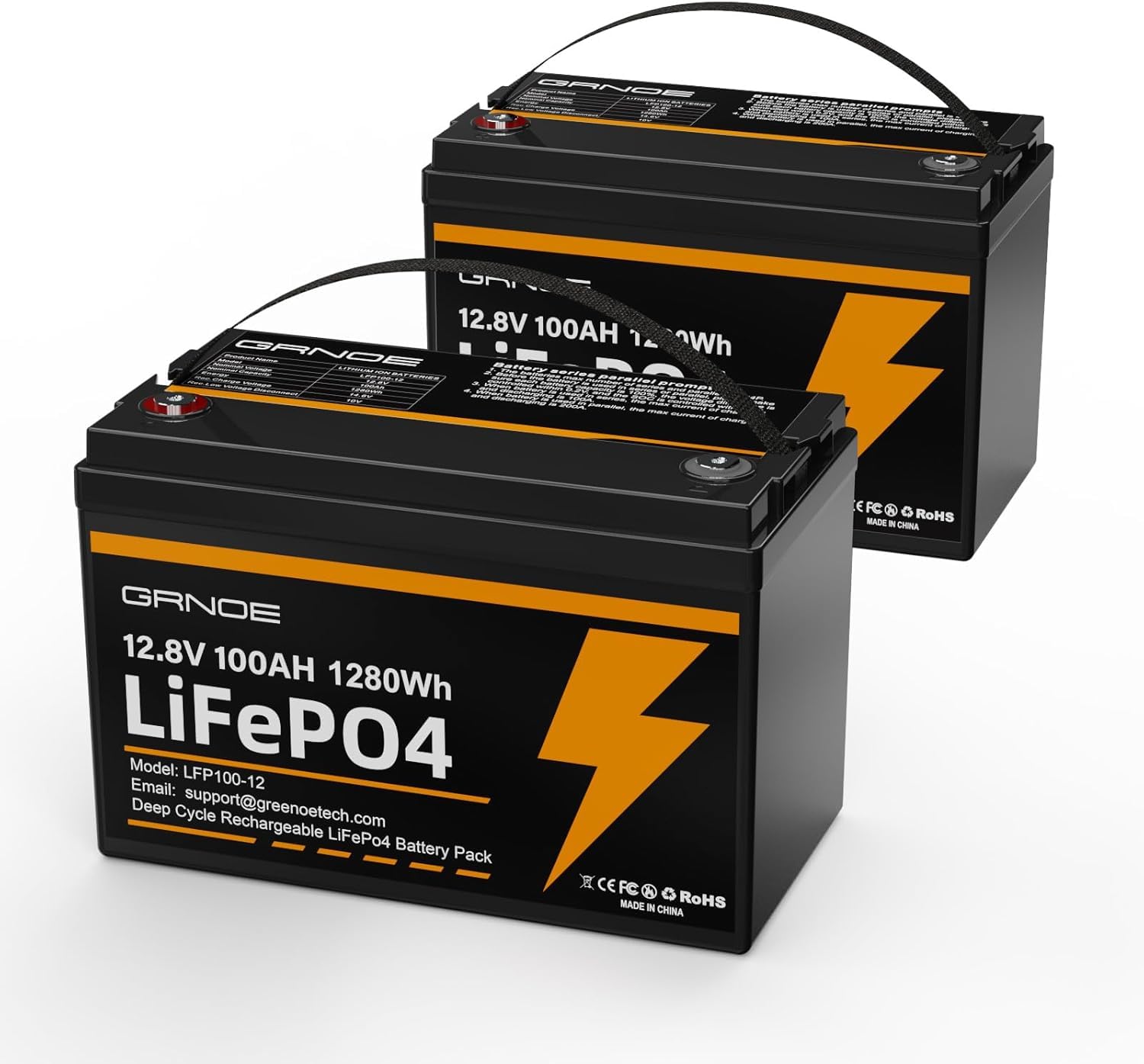
The GRNOE 2-Pack 12V 100Ah LiFePO4 is a compelling option for anyone building a battery bank because it delivers two high-capacity units at a competitive per-battery price point. Each battery weighs 22.4 pounds, measures 12.9 x 6.7 x 8.6 inches, and fits Group 31 form factors. The pack is particularly suited for installing dual batteries in a Pelican Bass Raider or a similar small fishing boat where weight distribution matters.
The built-in 100A BMS includes smart low-temperature cut-off, stopping charging below 32°F and discharging at -4°F. The batteries use A+ grade LiFePO4 cells and are UL and UN38.3 certified. They support a 300A max surge current for 3 seconds, which is adequate for a 36-55 lb trolling motor. The IP65 waterproof rating means they can handle splashes and rain, though full submersion should be avoided.
A key consideration: the batteries ship in separate boxes and may not arrive at the same time, so plan for that. They also require a 14.6V lithium-activation charger to wake them from sleep — a standard 12V charger won’t fully charge these units. Some owners use them for solar PV and report stable output with no voltage drops, while others have successfully paired them for 36V or 48V trolling motor systems.
Why it’s great
- Excellent value for dual-battery setups
- IP65 rating adds weather protection
- 300A peak discharge for motor surges
Good to know
- Requires 14.6V lithium charger initially
- Batteries shipped separately, may arrive on different days
5. HRBEENERGY 12.8V 100Ah LiFePO4 Deep Cycle Battery

The HRBEENERGY 12.8V 100Ah LiFePO4 battery makes a strong case for anyone operating in wet environments, with its IP67-rated waterproof case that directly replaces Group 24 lead-acid batteries without modification. At just 19.4 pounds, it’s 40% lighter than the lead-acid equivalent, a difference that matters when you’re installing it in a marine bilge or a kayak hatch. The 1,280Wh capacity supports over 100 hours on a 12W lamp, making it a solid choice for extended off-grid use.
The built-in 100A smart BMS provides comprehensive protection: overcharge, over-discharge, current, short circuit, low-temperature, and high-temperature cutoff. It uses Grade-A cells, and the manufacturer backs it with a 10-year warranty. Real-world tests show it holds 100Ah+ capacity when new, with users reporting a 36V golf cart running for 10 hours and an RV lasting 3-4 days off-grid on a single charge.
It supports expansion up to 16 batteries in parallel, which unlocks a massive 20,480Wh (20.48kWh) system for larger solar or home backup installations. Some users have noted that the low voltage cutoff triggers around 9.5V, which is lower than the typical 10V cutoff on many LiFePO4 units. This can cause the BMS to cycle on and off under heavy load, so pairing it with a properly configured charge controller or inverter is essential.
Why it’s great
- IP67 waterproof for marine/bilge use
- Only 19.4 lb, significantly lighter than AGM
- 10-year manufacturer warranty
Good to know
- Low voltage cutoff at ~9.5V may cause BMS cycling
- Premium price compared to some mid-range lithium options
6. DUMFUME 12V 150Ah LiFePO4 Deep Cycle Battery
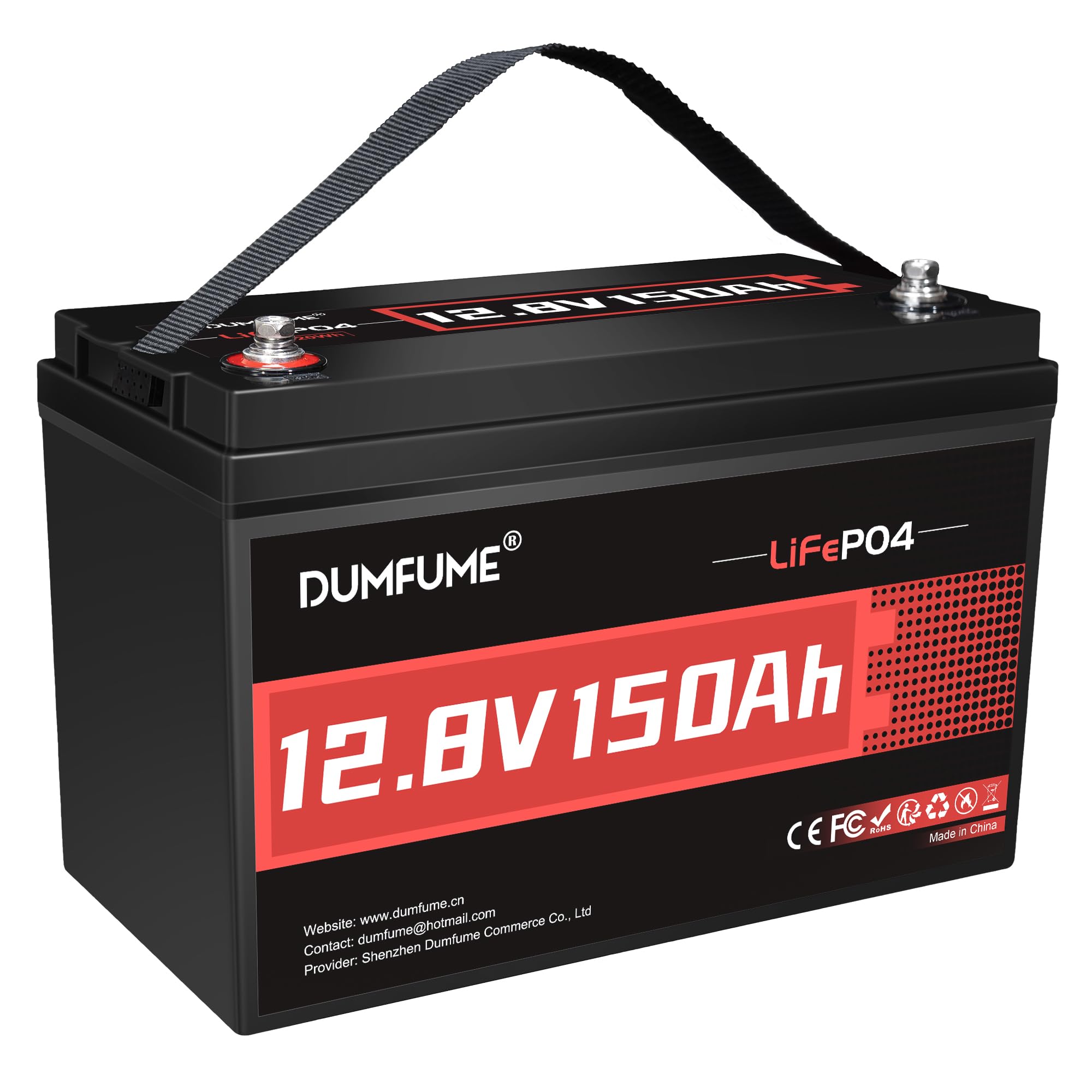
The DUMFUME 12V 150Ah LiFePO4 battery brings a hefty 1,920Wh of usable energy in a package that weighs 22.05 pounds — roughly the same weight as many 100Ah lithium batteries. This makes it an excellent choice for applications where space is limited but you need endurance. It fits a Group 31 footprint (13.05 x 6.78 x 8.66 inches) and delivers over 4,000 cycles at 80% DoD, with the spec sheets suggesting up to 8,000 cycles to 60% capacity.
The built-in 100A BMS covers all the standard protections and includes low-temperature charging cutoff. It supports series and parallel connections up to 4S4P, allowing voltage and capacity expansion. Independent user tests showed multiple 150Ah units testing at 157Ah out of the box, indicating the cells are properly sorted. One owner reported using four of these in an EZGO golf cart and a Cushman Hauler, noting the BMS initially cut out due to current spikes under heavy load but woke up after a charger was applied.
A few important caveats: there have been reports of batteries arriving that appeared to have used cells, and one unit failed after a year, entering a low-voltage cutoff state it couldn’t exit. The 5-year warranty only applies to direct purchases from the manufacturer, not to Amazon purchases — a significant distinction that affects long-term peace of mind. Despite this, for buyers who get a functional unit, the capacity-to-weight ratio is among the best in this group.
Why it’s great
- 150Ah capacity in a Group 31 footprint
- ~1920Wh usable energy, excellent for solar
- Supports 4S4P for large battery banks
Good to know
- Warranty only valid for direct manufacturer purchases
- Inconsistent quality control in some units
7. HQST 12V 100Ah LiFePO4 Battery with LED Display

The HQST 12V 100Ah LiFePO4 is a direct hit against brand-name competitors that charge significantly more. It includes a built-in LED display that shows real-time power capacity, voltage, and charging/discharging current — a feature usually reserved for batteries to higher. The screen saves you from needing to buy a separate battery monitor for basic capacity checks, though it’s not a replacement for a high-accuracy shunt monitor.
It uses UL-tested cells and packs a 20+ layer BMS with low and high-temperature cut-offs. In a real-world test, one owner reported running a Humminbird Explore 12 with Mega Live 2 for 12 hours and losing less than 0.5V. Another user powers a 36V 87-inch trolling motor all day without issue. The battery supports expansion up to 16 units in series and parallel for a system as large as 20.48kWh.
At 22 pounds, it’s roughly 44 pounds lighter than the lead-acid battery it replaces, and the physical size fits standard Group 31 trays. One note: the LED screen can be vulnerable to water ingress in heavy rain or boat splashing; some users seal it with silicone to prevent damage, and the company’s customer service has reportedly honored warranty claims for this issue on a case-by-case basis. Overall, it’s a fantastic entry point into lithium for budget-conscious buyers.
Why it’s great
- Built-in LED display gives real-time voltage and current
- Weighs only 22 lbs, 44 lbs less than lead-acid
- 10-year warranty and responsive customer support
Good to know
- LED screen vulnerable to water; may need silicone sealing
- Some units have reported premature failure
8. WEIZE 12V 100Ah Deep Cycle Battery, Group 31

The WEIZE 12V 100Ah AGM battery is the go-to choice for buyers who need deep cycle performance without the upfront premium of lithium, especially for stationary applications. It’s a sealed lead-acid AGM with a maintenance-free, spill-proof design, measuring 12.99 x 6.73 x 8.34 inches and weighing 63 pounds. The weight is the obvious trade-off, but the 1150A max discharge current makes it capable of handling high surge loads from inverters or trolling motors.
Real-world use cases are varied: one owner powers a 2000W inverter with four of these batteries in parallel as a 4.8kWh home backup solution. Another runs an off-grid RV with two WEIZE batteries and 300W of solar. The 3% self-discharge rate means it can sit in storage for months without needing a top-up charge. It directly replaces UB121000 and Renogy 100Ah batteries, making it a drop-in option for existing setups.
The AGM chemistry only allows about 50% usable capacity (roughly 50Ah), which means you get half the runtime of a comparable lithium battery. The weight is also a real installation challenge — at 60 pounds, it’s difficult to move around without help. Still, for emergency backup, UPS systems, or any application where the battery sits in one spot and cycles are shallow, the WEIZE delivers reliable performance at a very manageable cost.
Why it’s great
- Reliable AGM with no maintenance required
- Excellent 3% self-discharge rate for storage
- Direct drop-in replacement for many 100Ah lead-acid setups
Good to know
- 63 lbs, very heavy for transport
- Only 50-70% usable capacity vs lithium
9. Newport 12V50Ah Deep Cycle Heavy-Duty Marine Battery
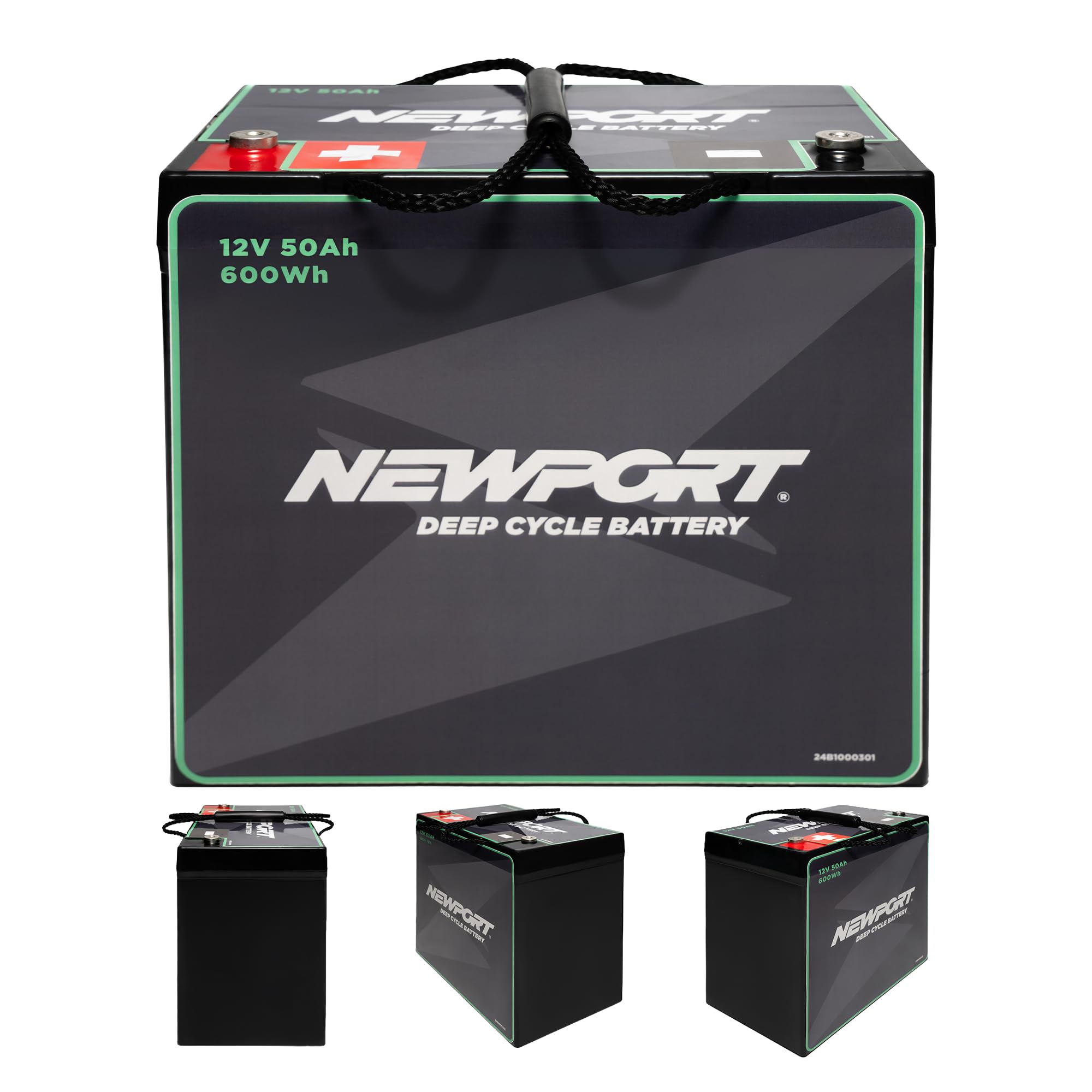
The Newport 12V50Ah AGM battery is purpose-built for lightweight applications like kayaks, canoes, or small jonboats where every pound counts. At 32 pounds and 50Ah capacity, it’s specifically designed to mate with trolling motors in the 25-40 lb thrust range. Verified users report a full day of fishing from a two-person kayak without issues, and one owner ran a 55 lb thrust trolling motor at moderate speeds for over 4 hours on a single charge.
The sealed AGM construction is leak-proof and maintenance-free, with the marine terminal design providing solid cable connections in a boat environment. It survived a 20 mph tumble from a truck bed onto asphalt with only cosmetic damage and no electrical issues, which speaks to its build quality. It’s also being used by some customers as a sump pump backup battery — a testament to its versatility beyond marine use.
The 50Ah capacity is the main limitation here; a 100Ah lithium battery of similar weight offers four times the usable capacity. At full power on a 25 lb trolling motor, one user got only about 7 hours of runtime, which is less than some expected. There’s no built-in charge indicator, so you’ll need a separate multimeter or battery monitor to track state of charge. It’s a solid entry-level or secondary battery, not a primary power source for demanding setups.
Why it’s great
- 32 lbs, easy to carry and install
- Very durable; survived a 20 mph truck bed fall
- Perfect for kayaks and small boats
Good to know
- Only 50Ah capacity, limited runtime
- No built-in charge indicator
FAQ
Can I replace a 100Ah AGM battery with a 100Ah LiFePO4 battery?
How many amp-hours do I actually need for a trolling motor?
What does low-temperature protection mean in a LiFePO4 battery?
Can I connect a deep cycle battery directly to an alternator to charge it?
Final Thoughts: The Verdict
For most users, the 12 volt deep cycle battery winner is the Power Queen 12V 100Ah LiFePO4 because it delivers proven 100Ah+ real-world performance, weighs 24 lbs, and offers the best balance of build quality, cycle life claims, and price among the lithium options. If you want integrated smart monitoring via Bluetooth, grab the ECO-WORTHY 12V 100Ah with SOC Display. And for a budget-friendly AGM upgrade that still works well for stationary backup power, nothing beats the WEIZE 12V 100Ah AGM.