
Finding a 26.5 ski boot that delivers both comfort and control is the single biggest challenge in alpine gear. The wrong boot turns a perfect powder day into a painful battle with pressure points and cold toes. The right boot disappears from your awareness entirely, letting you focus on the fall line and the next turn.
I’m Min — the co-founder and writer behind Gadgets Feed. I’ve spent countless hours combing through technical specs, flex ratings, last widths, and liner materials to sort the truly great 26.5 ski boots from the ones that only look good on a shelf.
After weeks of research, I’ve narrowed the options to the nine most compelling models on the market. This guide covers everything you need to make a confident choice when shopping for 26.5 ski boots that actually fit your foot and your style of riding.
How To Choose The Best 26.5 Ski Boots
A 26.5 Mondo ski boot is a specific shell size that typically fits a foot measuring roughly 26.5 centimeters. But size alone is never enough — you also need to match flex, width, and liner features to your skill level and foot shape. Ignoring these variables is the fastest route to cold, cramped days on the mountain.
Flex Rating — Matching Stiffness to Your Ability
Flex ratings typically run from 60 (soft) to 130 (stiff). Beginner and intermediate skiers at ease on groomed blues should target an 80 flex, which offers enough support for carving without punishing your shins. Advanced skiers charging through crud and chunder need 100 or higher to maintain precise edge control. A flex that’s too stiff makes every bump feel like a pothole; too soft and the boot feels sloppy at speed.
Last Width — The True Fit Metric
Last width, measured in millimeters across the forefoot, determines how snug the boot wraps your foot. Narrow lasts (97–99mm) suit lean feet looking for maximum responsiveness. Medium lasts (100–102mm) accommodate most average-width feet. Wide lasts (103–106mm) give high-volume feet the room they need to avoid numbness and hotspots. A boot with the wrong last will never feel right, regardless of buckles or liners.
Liner Technology and Walkability
Heat-moldable liners conform to your foot’s unique contours, eliminating break-in pain and reducing slippage inside the shell. GRIPWALK soles add rubber tread and a rockered profile, making the walk from the parking lot to the lift much safer and more comfortable. For skiers who frequently hike short sections or navigate icy lodge stairs, a boot with GRIPWALK compatibility is a real quality-of-life upgrade.
Quick Comparison
On smaller screens, swipe sideways to see the full table.
| Model | Category | Best For | Key Spec | Amazon |
|---|---|---|---|---|
| Head Edge LYT 80 HV | All-Mountain | Lightweight responsiveness | Flex 80 · 26.5 shell | Amazon |
| Nordica HF 110 | Rear-Entry | Premium comfort and walkability | Flex 110 · 102mm last | Amazon |
| Fischer RC One 8.5 HV | Advanced All-Mountain | Precision and high-volume fit | Flex 85 · 26.5 Mondo | Amazon |
| Rossignol Evo 70 HV+ | Relaxed Fit | All-day comfort with GRIPWALK | Flex 70 · 104mm last | Amazon |
| Atomic Hawx Magna 75 W | Womens All-Mountain | Wide 102mm last with Energy Link | Flex 75 · 102mm last | Amazon |
| K2 BFC 80 | Wide Fit | Cushioned fit with Hands Free Entry | Flex 80 · heat-moldable shell | Amazon |
| Nordica Cruise (Men’s) | Beginner/Intermediate | High-volume comfort 104mm last | Flex 60 · 104mm last | Amazon |
| Nordica Cruise S W (Women’s) | Womens Beginner | Soft shell for easy progression | Flex 60 · 104mm last | Amazon |
| Burton Photon BOA | Snowboard Boot | Dual-zone BOA precision fit | Flex 7 · Vibram outsole | Amazon |
In‑Depth Reviews
1. Head Edge LYT 80 HV

The Head Edge LYT 80 HV hits the sweet spot where weight, flex, and price converge. The “LYT” in the name signals a deliberate lightweight construction that sheds grams without sacrificing the lateral stiffness needed for carving on black runs. At a flex rating of 80, it offers enough backbone for an aggressive intermediate or a lightweight advanced skier who wants a boot that doesn’t fight back in bumps.
With a 26.5 Mondo shell and a high-volume last, this boot accommodates wider feet and higher insteps that often get pinched in narrow European fits. The micro-adjustable aluminum buckles allow fine tuning on the fly, so you can dial in the exact clamping pressure for each run. Reviewers consistently praise how little this boot weighs compared to traditional 80-flex models.
The black and yellow colorway stands out on the rack, but the real appeal is the balance of performance and all-day wearability. This is a one-quiver boot for skiers who spend most of their time on-piste but occasionally venture into softer snow. It’s not a race boot, but it doesn’t need to be — it just works.
Why it’s great
- Noticeably lighter than comparable 80-flex boots
- HV fit provides generous room for high-volume feet
Good to know
- Stock liner may need heat molding for a truly locked-in heel
- Not compatible with GRIPWALK soles out of the box
2. Nordica HF 110
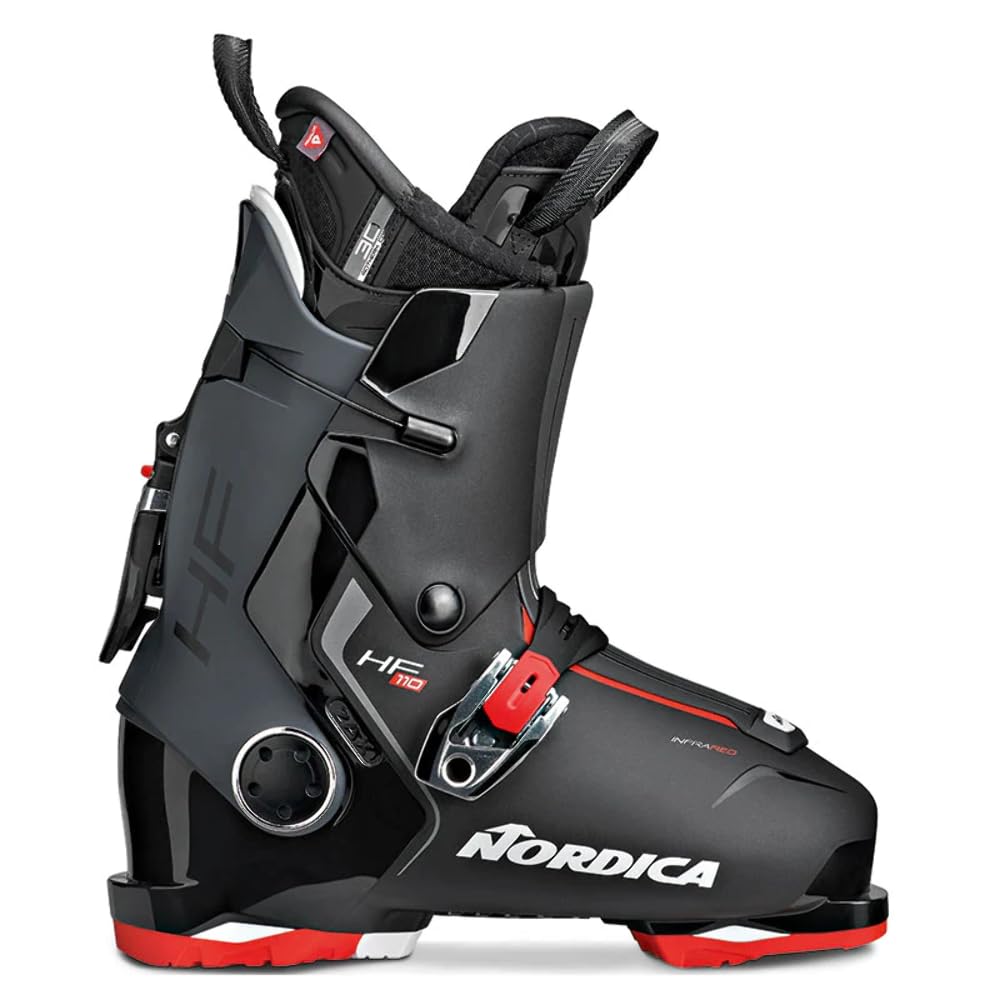
The Nordica HF 110 is a rear-entry boot that redefines convenience for the advanced skier. Instead of the traditional four-buckle overlap, this boot uses a hinged rear cuff and a single strap over the instep. The result is a dramatically easier entry and exit that makes a real difference for anyone with ankle injuries, limited mobility, or simply a low tolerance for wrestling stiff plastic.
Despite the rear-entry design, the HF 110 does not compromise on performance. The flex rating of 110 handles aggressive carving and high-speed arcs with authority. The 102mm medium-wide last offers a precision fit that holds the heel securely while giving the forefoot just enough room to avoid cramping. The PrimaLoft TF liner with 3D Cork Fit adds insulation and custom conformity without adding bulk.
GRIPWALK soles are included in the box, so the walk to the lift feels natural and stable. This boot commands a premium price, but the build quality and thoughtful engineering justify every bit of it. For skiers who prioritize all-day comfort without sacrificing control, this is the benchmark.
Why it’s great
- Rear-entry design makes on/off effortless
- Premium liner uses 3D Cork Fit and PrimaLoft insulation
Good to know
- Runs slightly large; consider a half-size down in 26.5
- Heel hold depends heavily on the single instep strap tension
3. Fischer RC One 8.5 HV
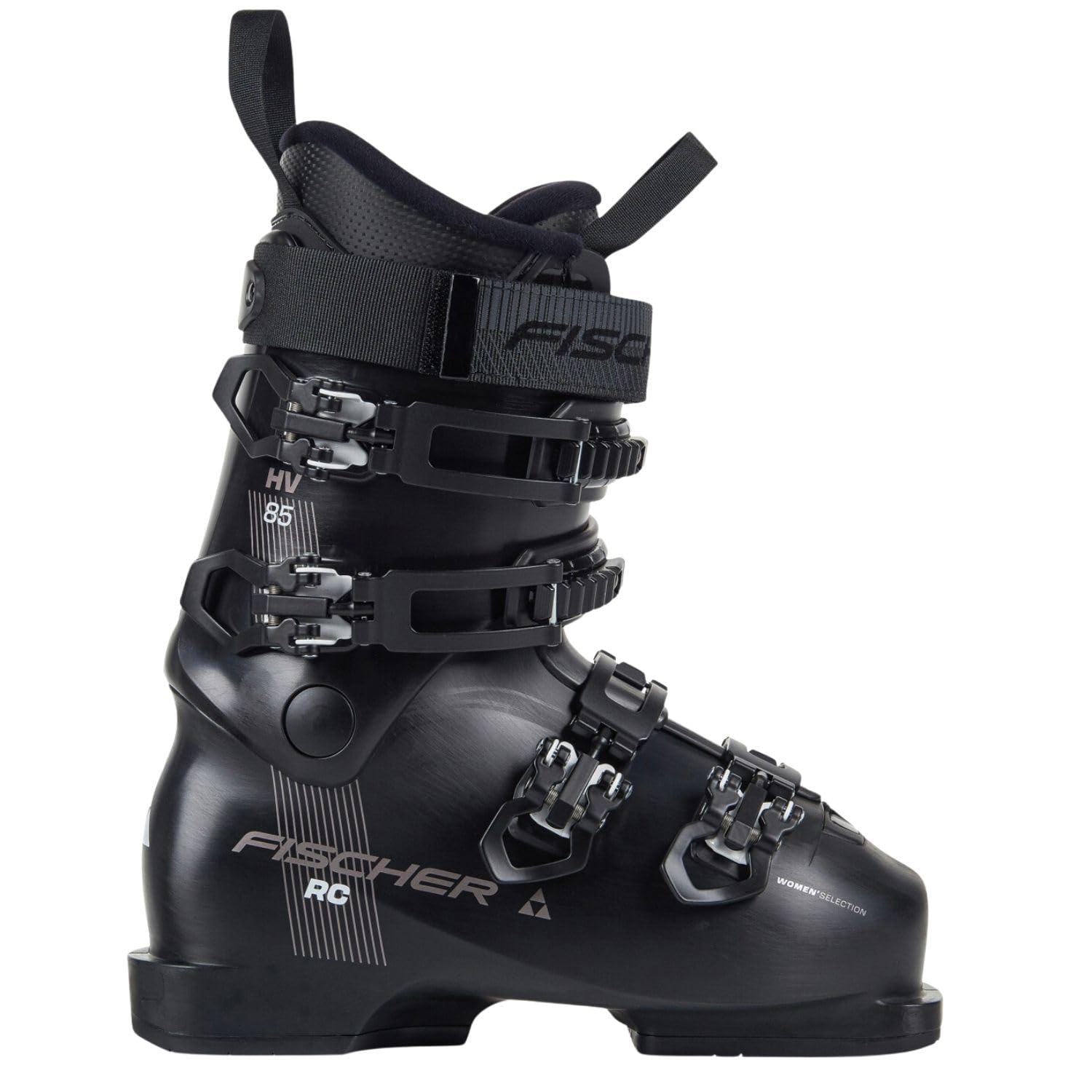
The Fischer RC One 8.5 HV is built for skiers who want a precise, responsive boot but have feet that disagree with narrow lasts. The high-volume fit here is genuine — generous through the forefoot and instep while still wrapping the heel firmly. The 85 flex is firmer than entry-level boots but remains manageable for a full day of mixed terrain without exhausting your legs.
Fischer uses a Polyurethane shell that balances dampness and energy return. This means the boot absorbs chatter on hardpack yet translates your input directly to the ski edge without lag. The customizable liner can be heat-molded at a shop to match the unique contours of your foot, eliminating the typical break-in period.
Long-time Fischer fans will recognize the brand’s commitment to fit consistency — every pair of RC One boots shares the same last geometry, so if this boot fits your foot, future Fischer boots likely will too. It’s a serious tool for serious skiers who refuse to compromise on comfort.
Why it’s great
- High-volume last fits wider feet without sacrificing heel hold
- Heat-moldable liner shortens break-in dramatically
Good to know
- Initial fit feels tight before molding — trust the process
- GRIPWALK soles sold separately
4. Rossignol Evo 70 HV+
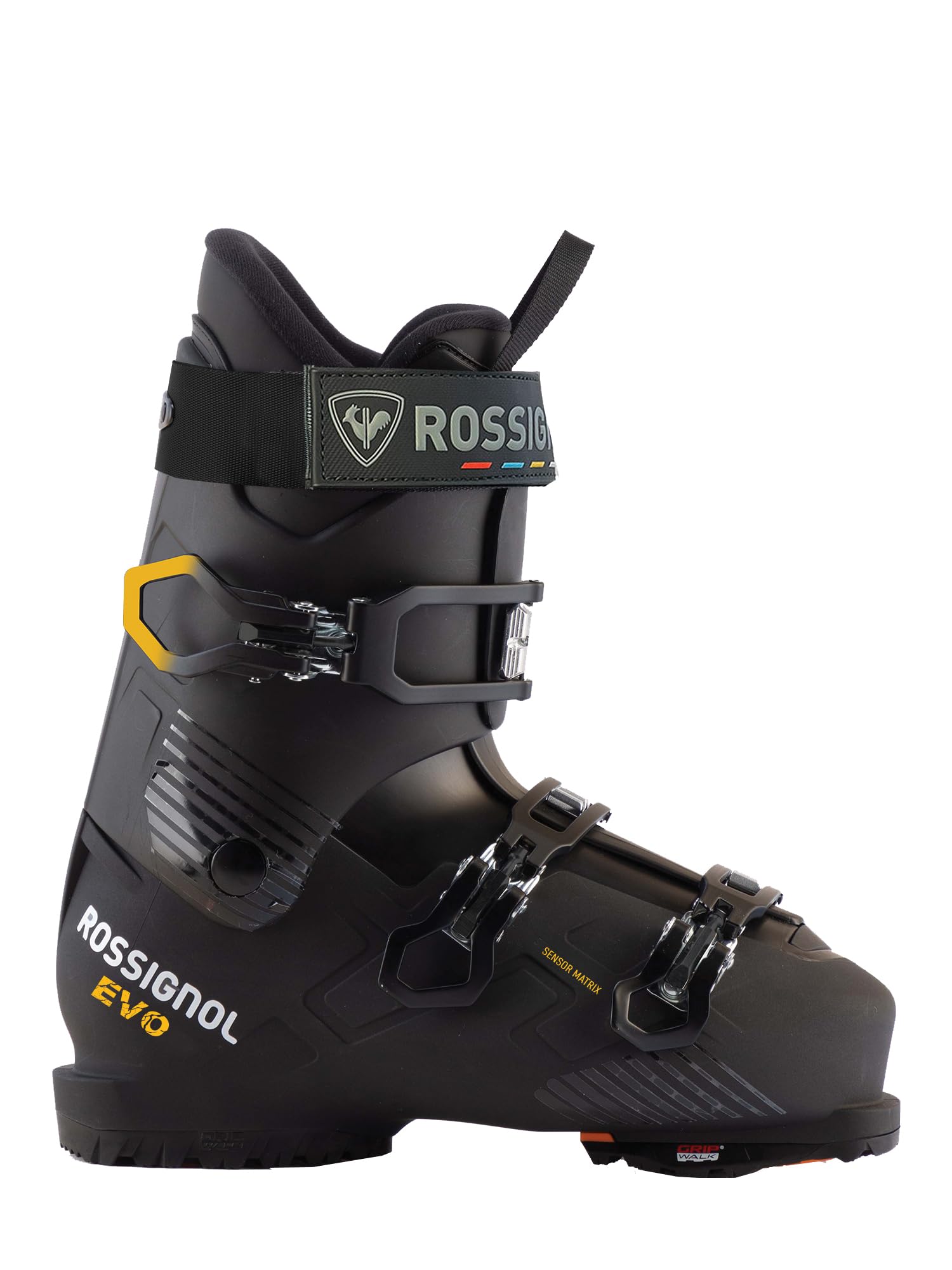
The Rossignol Evo 70 HV+ delivers a relaxed 104mm last that feels almost like a slipper compared to race-bred boots. The “HV+” designation signals extra volume, making this a top choice for skiers with wide forefeet, thick socks, or simply a preference for a non-restrictive fit. The 70 flex is forgiving enough for beginners but still provides enough support for intermediate skiers linking parallel turns on groomed blues.
Rossignol’s Sensor Matrix shell design reduces overall weight while maintaining the structural integrity needed for efficient energy transfer. The custom fit liner features adjustable zones with softer padding through the ankle and instep, which prevents the shin bang that plagues cheaper boots. The boot overlap opens wide for smooth entry and exit — a small detail that saves frustration at the start of every run.
GRIPWALK sole compatibility is built in, allowing you to swap for rubber soles if you want better traction on icy lodge floors. Reviewers consistently note that this boot offers premium-level comfort at a mid-range price, making it an easy recommendation for value-conscious skiers.
Why it’s great
- 104mm last provides exceptional room for wide feet
- GRIPWALK compatible out of the box
Good to know
- 70 flex is too soft for advanced carving or high speeds
- Stock liner benefits from heat molding for best heel hold
5. Atomic Hawx Magna 75 W

The Atomic Hawx Magna 75 W is the women’s-specific answer to the common problem of boots that squeeze the forefoot too tightly. With a 102mm last, it’s wider than most women’s ski boots, which typically hover around 98–100mm. This extra width makes the Magna a serious contender for women with wider feet or high-volume insteps who have felt shut out of the Atomic lineup in the past.
The flex rating of 75 is medium-soft, perfect for intermediate skiers who spend their days on groomers and want a boot that forgives small mistakes. Atomic’s Energy Link connects the cuff and shell to create a more unified flex pattern, so the boot responds as a single unit rather than folding at the ankle. The heat-moldable Mimic Gold liner adapts to the foot’s shape within minutes in an oven.
Reviewers praise the out-of-the-box comfort and the secure heel pocket that prevents lift. The black and gold colorway looks sharp, and the 26/26.5 size range offers the exact 26.5 fit many women need. If you’ve struggled with boots that pinch your pinky toe, this is the model to try.
Why it’s great
- 102mm last offers genuine wide fit for women’s boots
- Energy Link improves heel hold and flex consistency
Good to know
- Some buyers report sizing inconsistencies between 26 and 26.5 shells
- Mimic Gold liner needs professional heat molding for best results
6. K2 BFC 80
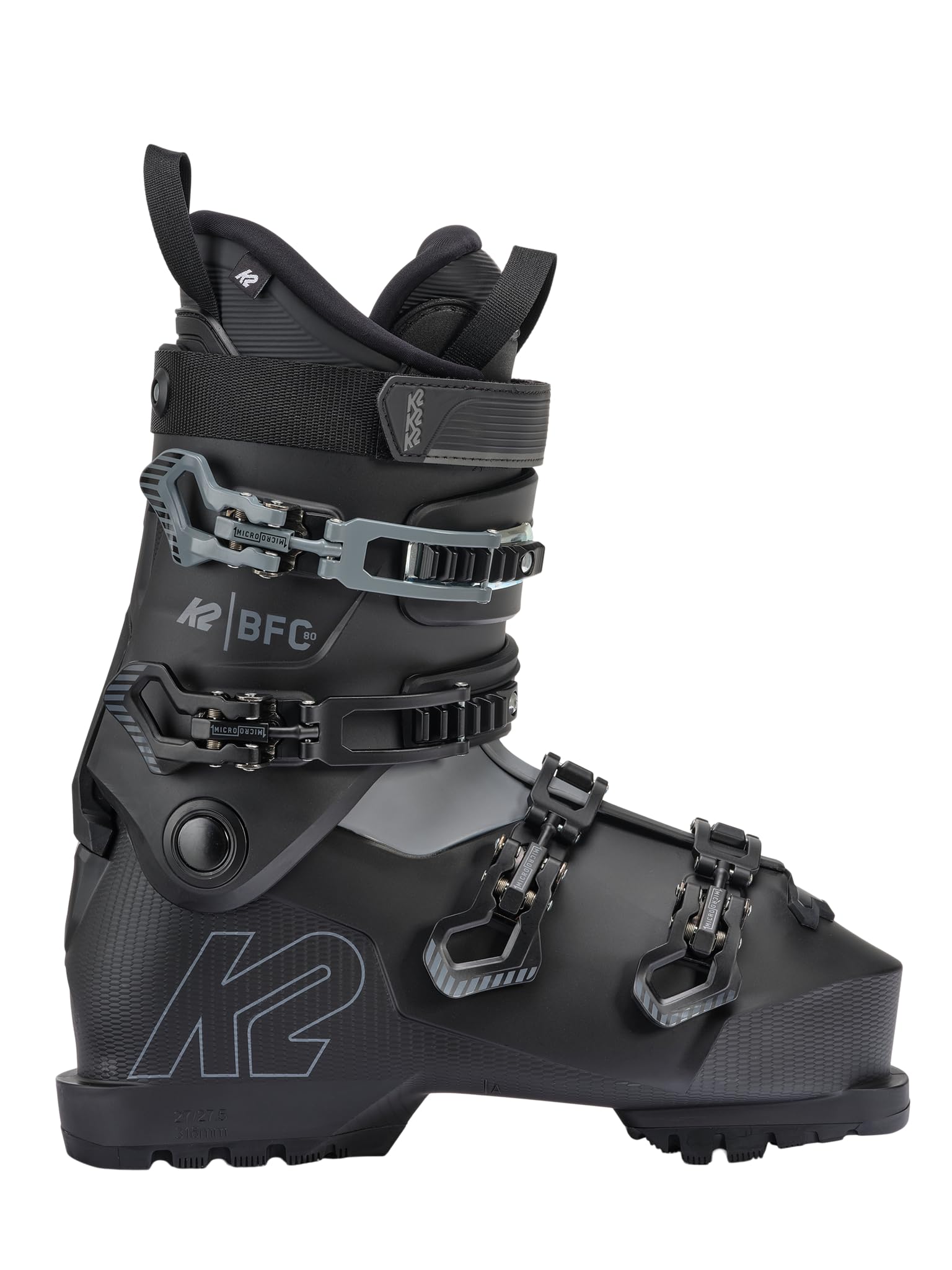
The K2 BFC 80 stands for “Big Fit Comfort,” and it lives up to that name. The shell and cuff are both fully heat-moldable, meaning a boot fitter can expand the boot in specific areas to match your foot’s unique bone structure. This is a rare feature in the sub-premium price tier and gives the BFC 80 an edge over fixed-geometry competitors.
The Hands Free Entry design uses a dual-material overlap that opens the boot’s throat without requiring you to pull the tongue forward. Simply step in and buckle. The CushFit liner adds extra foam in key zones for a plush feel right out of the box. Even without heat molding, the BFC 80 is among the most forgiving boots for wide feet.
GripWalk soles come standard, so walking across icy parking lots is significantly safer. The 80 flex is ideal for intermediate skiers progressing onto steeper terrain. One note: the boot runs slightly large, so some users in the 26.5 range may need to size down or use a thicker sock to achieve a snug fit.
Why it’s great
- Fully heat-moldable shell and cuff for custom fit
- Hands Free Entry simplifies getting in and out
Good to know
- Runs large; may require downsizing for a 26.5 fit
- Some color variations from the product images
7. Nordica Cruise (Men’s)

The Nordica Cruise is exactly what its name suggests — a no-stress ski boot designed for beginner and intermediate skiers who prioritize comfort over competition. The 104mm last is among the widest available in this price range, offering ample room for high-volume feet without requiring a painful break-in period. The dual soft flap instep opens wide, making it one of the easiest boots to slide into.
Micro-adjustable aluminum buckles are a surprising inclusion at this price point. They allow precise tension adjustments that plastic buckles simply cannot match. The infrared customization technology lets boot fitters soften the shell at pressure points, further enhancing comfort. The 60 flex is soft, which is appropriate for slow-speed learning and forgiving of form mistakes.
For skiers who only hit the slopes a few times a season, the Cruise delivers everything needed at a budget-friendly price. It’s not built for aggressive carving or demanding terrain, but it excels at what it sets out to do: keep new skiers comfortable and confident all day long.
Why it’s great
- 104mm last is ideal for wide feet and high insteps
- Infrared customizable shell for pressure point relief
Good to know
- 60 flex is too soft for advanced or heavy skiers
- Not compatible with GRIPWALK soles
8. Nordica Cruise S W (Women’s)

The women’s version of the Nordica Cruise shares the same generous 104mm last and forgiving 60 flex as the men’s model, but with a shell and liner shaped for women’s calves and lower leg profiles. The softer shell construction makes this an exceptionally forgiving boot for beginners and intermediate skiers who want to progress without fighting stiff plastic.
The Dual Soft Flap Instep opens the boot’s throat wide, and the heat-moldable liner allows for customization at a local shop. The buckles are micro-adjustable aluminum, matching the quality of the men’s version. The black, light blue, and white colorway is clean and modern — a welcome departure from the loud neon graphics often found on entry-level boots.
Buyers consistently report warm feet and zero pressure points after full days on the mountain. The boot is not designed for high-speed carving or expert terrain, but for the vast majority of recreational skiers, it provides everything needed at a price that leaves room in the budget for a good helmet and goggles.
Why it’s great
- Women’s-specific shell and liner shape for better calf fit
- Heat-moldable liner reduces break-in time
Good to know
- Buckle quality may feel less robust than premium models
- Lacks rubber toe and heel protectors for durability
9. Burton Photon BOA
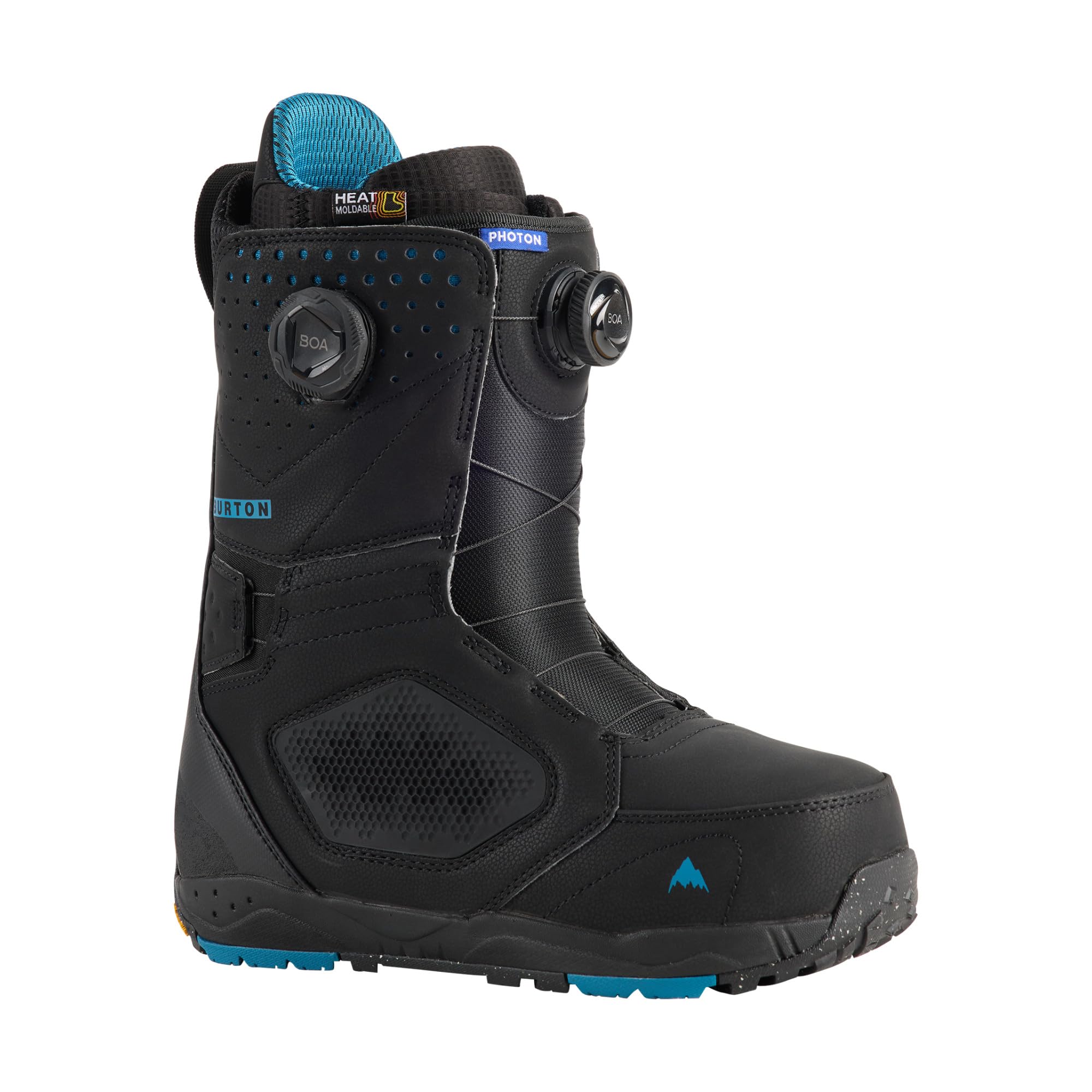
The Burton Photon BOA is a snowboard boot, not an alpine ski boot, but it earns a spot on this list because many riders who wear 26.5 Mondo ski boots also board and want a single trusted reference for boot sizing. The Photon features a Dual-Zone BOA Fit System with Coiler and Lockdown technology, allowing independent adjustment of the upper and lower zones for a truly dialed-in fit.
The Imprint 3 heat-moldable liner conforms to the foot and ankle, while the Focus cuff improves heel hold. The B3 Gel cushioning provides excellent impact absorption in cold temperatures, and the sleeping bag reflective foil underfoot keeps toes warmer during long lift rides. The Vibram Traction Lug outsole uses 30% recycled rubber and offers multiple contact points for grip on icy surfaces.
Burton’s Total Comfort Construction gives an instantly broken-in feel, so there is virtually no break-in period. Riders with wider feet may want to size up by a half or full size, as the Photon runs slightly snug. For skiers who also snowboard, this boot offers the same attention to fit and detail that makes a good alpine boot great.
Why it’s great
- Dual-zone BOA allows independent tightness for upper and lower boot
- Vibram outsole provides excellent traction in icy conditions
Good to know
- Runs small; most riders need to size up at least half a size
- Not for alpine bindings — snowboard specific boot
FAQ
Should I buy a 26.5 ski boot if I normally wear a US size 9 shoe?
What flex rating should a 170-pound intermediate skier choose in a 26.5 boot?
Can I heat-mold a ski boot liner at home?
Final Thoughts: The Verdict
For most skiers, the 26.5 ski boots winner is the Head Edge LYT 80 HV because it balances lightweight construction, a supportive 80 flex, and a high-volume fit at a fair price. If you want the ultimate in walkability and comfort, grab the Nordica HF 110. And for advanced skiers with wide feet seeking precision, nothing beats the Fischer RC One 8.5 HV.