
Our readers keep the lights on and my morning glass full of iced black tea. As an Amazon Associate, I earn from qualifying purchases.
Specs are compiled from manufacturer listings and verified buyer reviews and can change over time — please confirm the key details on the product page before buying.
A misdrilled hole leaves a handle crooked on a new cabinet door. A cabinet hardware jig locks your drill bit into a precise, repeatable position for accurate first-time holes.
I’m Min — the founder and writer behind Gadgets Feed. This guide is built by comparing the manufacturers’ published specifications and the patterns across verified customer reviews, so you get each pick’s real strengths and trade-offs instead of marketing spin.
We break down the best cabinet hardware jigs for handles, hinges, and shelf pins, from budget templates to pro-grade aluminum guides.
Our Picks at a Glance

How To Choose The Best Cabinet Hardware Jig
A jig is only as useful as the holes it drills—it must handle your hardware’s spacing. Before buying, consider what you’re installing: drawer pulls, concealed hinges, or adjustable shelves.
Match the jig to your hardware type
The most common mistake is buying a handle template when you need a hinge jig, or vice versa. Handle jigs drill the two small screw holes for pulls and knobs at standard center distances. Hinge jigs are built around the 35mm bore hole that concealed hinges sink into, often with a matching hole saw included.
Check the hole spacing range
Pulls come in many spreads, so choose a guide that covers the distances your hardware uses. Multi-stop templates give you preset positions, while fully adjustable sliders let you dial in any measurement you need.
Weigh build quality against portability
An all-aluminum body resists flexing under drill pressure, which keeps your holes straight and true. Heavier metal jigs tend to be more accurate but less convenient to carry around a jobsite. If you only drill occasionally, a lighter template with steel bushings may be all you need.
Quick Comparison
| Model | Best For | Primary Job | Build Material | Hole Size | Amazon |
|---|---|---|---|---|---|
| GOINGMAKE Shelf Pin Jig★ Best Overall | Adjustable shelving | 7 shelf pin holes | Aluminum Alloy | 1/4 Inch | Amazon |
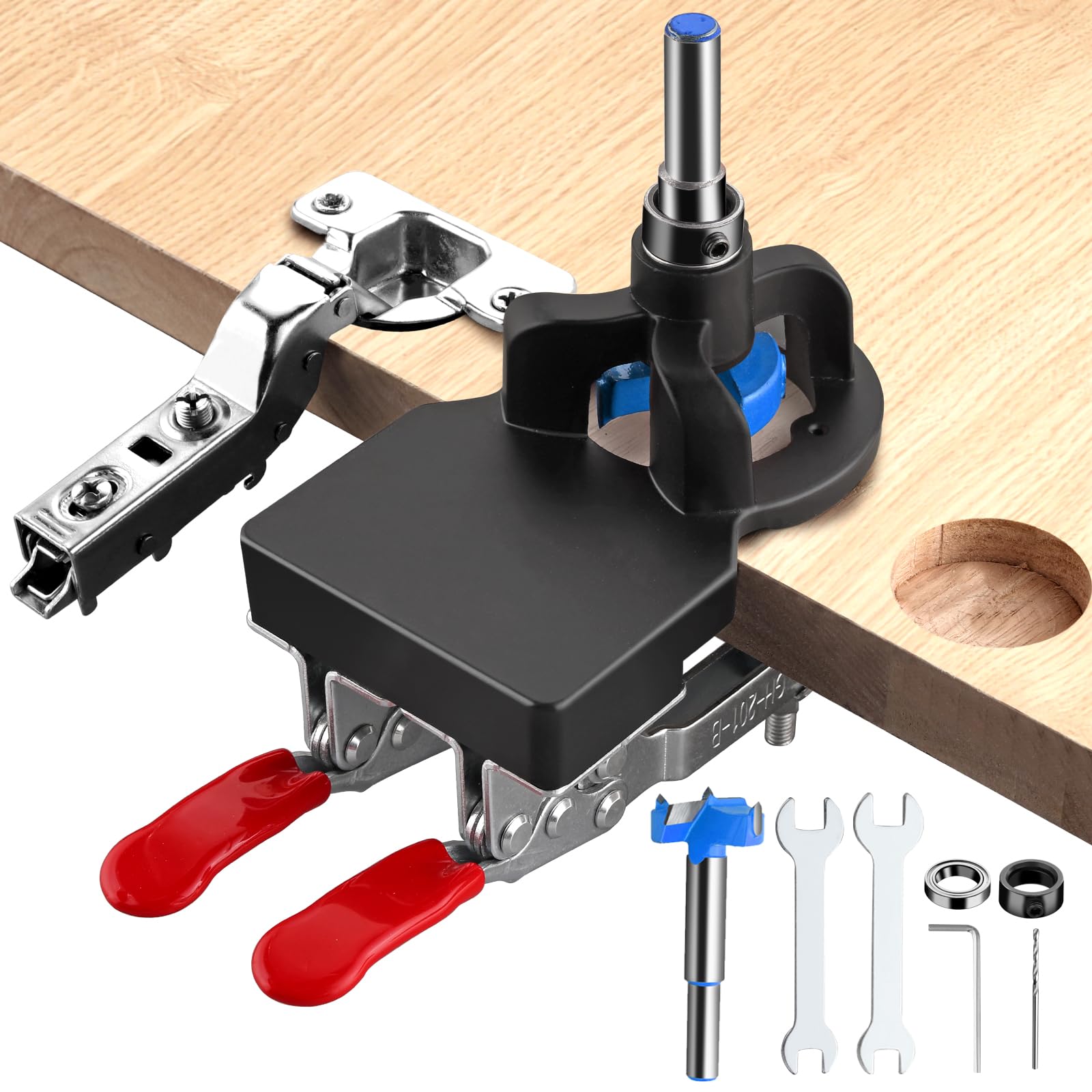
| XUNTOP Hinge JigBest Value | Concealed hinges | 35mm hinge bore | Aluminum Alloy | 35mm / 2mm | Amazon |
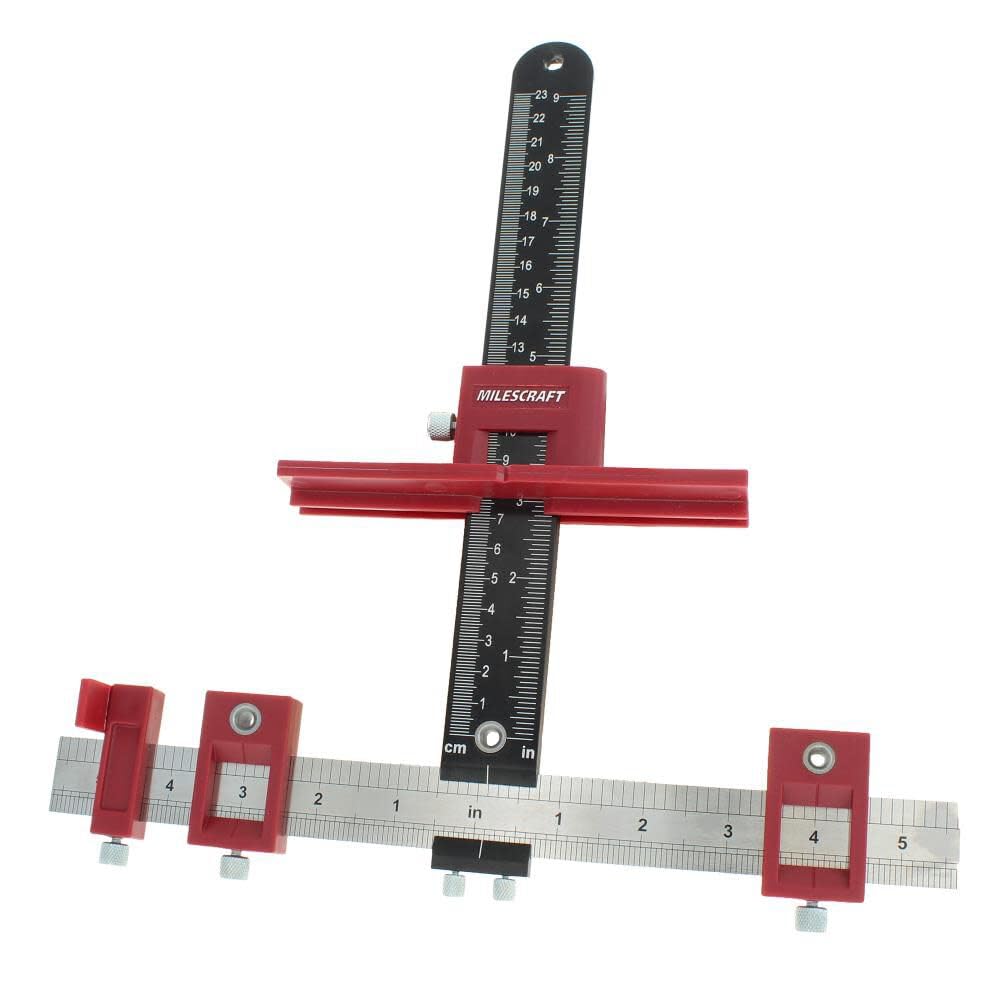
| Milescraft 1340Most Versatile | Handles & pulls | Spaced screw holes | Metal | 5mm | Amazon |
| Saker Doweling Jig | Varied pull spreads | Spaced screw holes | Aluminum Alloy | 4mm | Amazon |
| MinliGUY Handle Jig | Full face-frame runs | Spaced screw holes | Steel & Aluminum | 5mm / 4.2mm | Amazon |
| vicrays Handle Jig | Quick door flipping | Spaced screw holes | Aircraft Aluminum | Bushing guided | Amazon |
| RUITOOL 2-in-1 Jig | Shelves & hinges | Pins + 35mm hinge | Aluminum Alloy | 1/4″ & 5mm | Amazon |
| SUNCONY Cabinet Jig | Pro precision work | Spaced screw holes | Forged Aluminum | Bushing guided | Amazon |
| King&Charles Jig | Beginner-friendly | Spaced screw holes | Aluminum Alloy | Bushing guided | Amazon |
In-Depth Reviews
1. GOINGMAKE Shelf Pin Jig
Our pick — over 4.5★ from 250+ verified ratings; the strongest balance of quality and price.
Seven straight holes in one pass—this aluminum jig turns shelf building into a single, repeatable motion.
If your project involves adjustable shelving, this is the tool that pays for itself in one afternoon. The GOINGMAKE jig drills 7 holes at 1/4 Inch diameter simultaneously, spaced at a 1-1/4 Inch distance that matches standard shelf pin layouts. That means you align it once, drill once, and get a perfectly even column of holes instead of measuring each one individually.
The all-aluminum body carries 7 hardened drill guides, and owners consistently describe the plate as thick and sturdy with solid fence pins that keep it from creeping mid-drill. The stop collar fits the bit snugly, so you can set a consistent depth and avoid punching through the back of your workpiece—a huge relief when you’re working on finished MDF or veneered panels.
It ships with 2 drill bits, a locating pin, and a hex wrench, and you can combine two or more jigs to span wider panels. The edge distances adjust to 37/50/64mm, giving you flexibility for different shelf depths. What wins people over here is the overall quality—the build feels substantial, and the kit arrives ready to work rather than needing upgrades.
Straight-Shooter Build: Solid aluminum and steel guides earn the praise here—owners call it accurate, durable, and free of useless extras.
One Real Caveat: The stop collar can slip if you don’t tighten it firmly, so check it periodically to avoid drilling too deep.
Reach for this if: you’re building or repairing cabinets with adjustable shelves, or you want a clean, repeatable way to drill multiple pin holes fast.
Look elsewhere if: your main task is installing handles or hinges—this jig specializes in shelf pins only.
2. XUNTOP 35mm Concealed Hinge Jig
A dual-clamp hinge jig that locks tight, so a 35mm bore stays put even on 47-year-old oak doors.
Installing concealed hinges is all about controlling the 35mm cup bore—get that hole slightly crooked and the door sags. The XUNTOP jig solves this with a double-clamp design that grips the door edge firmly, and buyers report it held perfect placement even while refurbishing vintage oak cabinets from the 1970s.
The guide is adjustable for different board thicknesses, and the drilling sleeve uses a bearing to prevent the bit from sticking mid-cut—a common frustration with cheaper hinge templates. The kit includes the 35mm hole saw with a stop ring, a 2mm pilot drill, wrenches, and an Allen key, so you have everything needed to drill and mount in one box.
Set the drilling depth to 10-15mm, lock the quick clamp, and you’re ready for consistent hinge seating across a full run of doors. The recurring note from buyers is that the included saw works well for the price point, though if you’re drilling dozens of holes into dense hardwood, swapping in a sharper bit is a smart upgrade. The double arm is what everyone raves about—it holds the jig in place perfectly, giving you precise, repeatable placement without extra hands.
Why Cabinets Love It
- Double fixed clamps keep the jig rock-steady during drilling
- Adjustable depth (10-15mm) suits common concealed hinge cups
- Complete kit includes hole saw, pilot drill, and wrenches
Know Before You Buy
- The stock hole saw is decent but not the sharpest—hardwood users may want a better bit
- Adding lubricating oil to the bearing reduces wear and rust over time
Strong pick for: anyone refacing cabinets or installing euro-style concealed hinges on a budget.
Not ideal if: you need a multi-purpose handle template—this is a dedicated hinge tool, and that’s its superpower.
3. Milescraft 1340 Hardware Jig
Flip it, don’t re-measure—this reversible guide keeps handle spacing locked when you move from left doors to right.
Handles and pulls have one job: to look perfectly aligned across every door and drawer. The Milescraft 1340 makes that repeatable by letting you set the spacing once and slide the stops into place, then drilling the same pattern over and over without recalibrating.
Its reversible design is the standout trick—when you finish a left door, you flip the jig over and the hardware position stays locked in for the right door. The sliding stops lock down firmly, and three steel 5mm (3/16″) bushings guide the bit for clean, straight holes designed to last. Centering notches line the template up with your center marks, which is exactly what you need for drawer knobs.
Owners have used it for wide pulls and found the set screws hold well once tightened, with no movement during drilling. The honest trade-off is that the body isn’t 100% metal—a few owners mention plastic components—and it’s a bit awkward to store given its shape. But those who installed a full set of new cabinet handles call it exactly what they needed to keep everything even and well placed.
Placement Perfector: The centering notches and steel bushings earn consistent praise for making even, professional-looking installations easy.
The Fit Note: It can slip slightly without a firm grip or clamp, so hold it steady or secure it for the cleanest results.
Best for: DIYers installing cabinet or drawer handles who want repeatable spacing across many pieces.
Skip if: you need an all-metal tool for heavy daily pro use—this leans toward the home workshop.
4. Saker Cabinet Hardware Doweling Jig

A pocket-sized aluminum guide that folds down, yet still locks onto five common pull spacings from 2-1/2 to 5 inches.
Most handle jigs are bulky rectangles you have to store flat. The Saker jig folds together using the middle nut, shrinking to a compact size that slips into a drawer or tool bag—yet it still handles the spacing range most kitchen pulls need, from 2-1/2″ up to 5″ in half-inch increments.
Weighing just 9.2 ounces, it’s the lightest option here, and the aluminum alloy construction resists rust. Build quality is what owners praise most, with the tool feeling solid in hand. The positive stops for standard widths mean you don’t have to fiddle with measurements each time—you set the edge distance and hole spread, then drill.
The honest catch shows up in the adjustability. A few owners note the slide doesn’t always lock perfectly when fully tightened, and on cabinet doors it’s trickier than on flat drawer fronts—drawers are where this tool really shines. There are also reports that the screw-in spacer legs can be fussy to thread initially. But for its size, reach, and price, it makes drawer hardware installation dramatically easier, which is exactly what most buyers want.
Small but Mighty: Owners find it simple to set up and accurate for standard pull widths, calling it a must-have for drawer hardware.
Consider This: The slide mechanism gets mixed feedback on full-tight locking, and doors are harder than drawers with this style.
Choose this if: you want an ultra-portable jig for kitchen drawer pulls and you value fold-up storage.
Think twice if: you need rock-solid locking across many cabinet doors—a heavier template may suit you better.
5. MinliGUY Cabinet Handle Jig
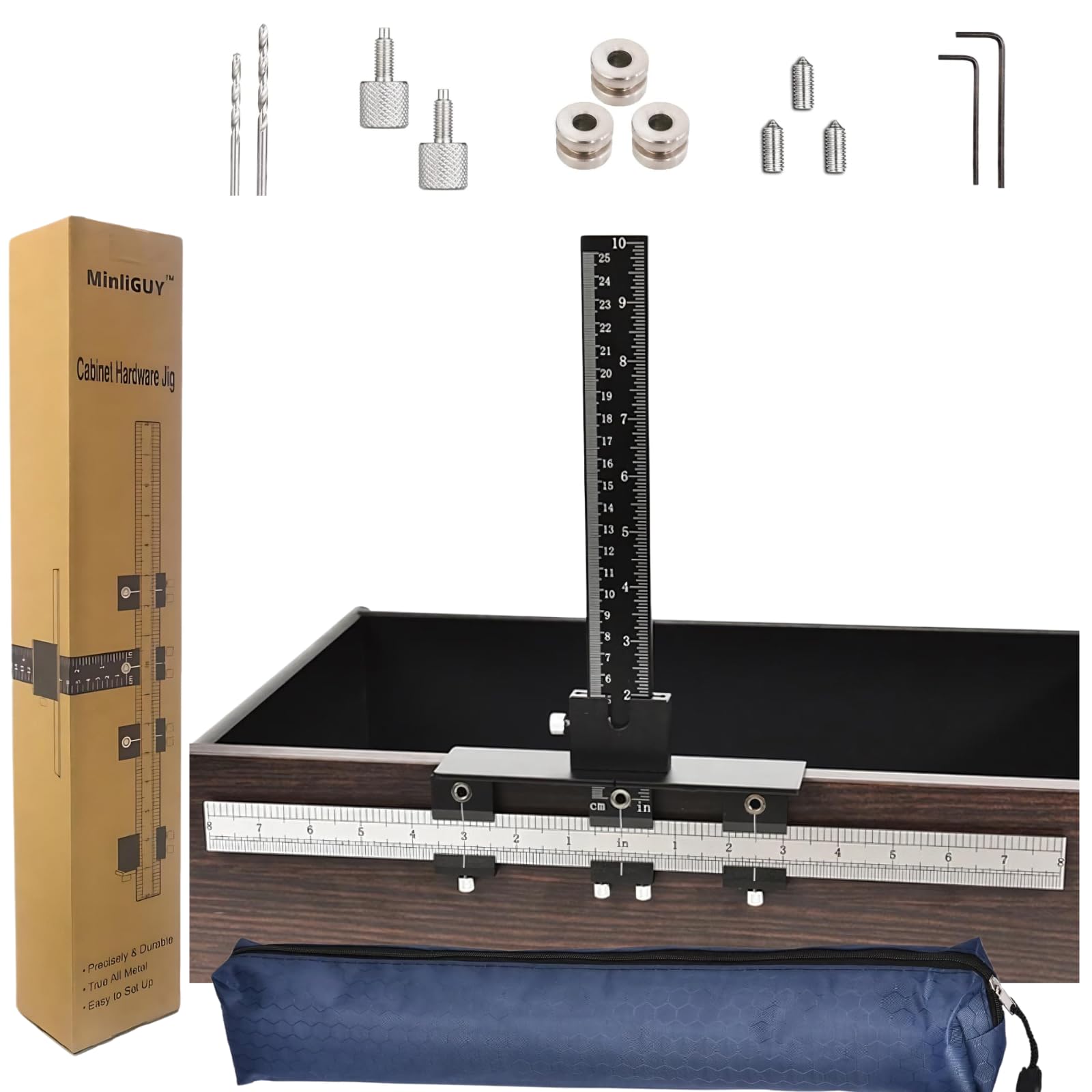
A full-width metal template that spans 16 inches, letting you line up every door and drawer in one sitting.
When you have an entire kitchen of doors to fit, a small jig means constant repositioning. The MinliGUY template covers 10 inches high by 16 inches wide, a span that lets you set the vertical and horizontal position once and work across a large surface. One owner completed 9 cabinets in 20 minutes—the kind of speed that only comes when a tool is truly aligned for the job.
The level bar is hardened stainless steel, while the vertical bar and other parts are aluminum alloy—a fully metal build that buyers specifically wanted over plastic alternatives. It comes with two size options: a default 5mm guide hole and a second set of three 4.2mm holes. Twin metal rulers (inch and metric) mount perpendicular to each other for accurate placement, and the kit ships with two drill bits plus an extra set of fittings and a zippered storage bag.
Owners were nervous about drilling into expensive new cabinets, then found the tool near self-explanatory and accurate within roughly 1mm. The build quality is the most-discussed strength here, with buyers calling it solid, well-made, and a clear upgrade over flimsier plastic kits. One detail to note: checking it with a square shows it’s not 100% true, but it’s adjustable and nothing that can’t be corrected during setup.
Made For Big Jobs
- Hardened stainless steel level bar resists flex across wide spans
- Two guide hole sizes (5mm and 4.2mm) fit most pull screws
- Extra fittings and a storage bag extend its lifespan
Worth Knowing
- Not perfectly square from the start—minor adjustment needed for absolute accuracy
- Practice on scrap wood first to build confidence before touching finished doors
Reach for it when: you’re outfitting an entire kitchen or bath and want one template to cover many doors without constant re-measuring.
Not ideal for: tiny quick jobs where a pocket-sized jig would be more convenient to handle.
6. vicrays Cabinet Hardware Handle Jig

CNC-machined aluminum with bushings rated beyond 10,000 holes—built to outlast your entire kitchen remodel.
If you plan to install hardware once and never think about it again, precision matters more than portability. The vicrays jig is engineered with CNC machine tools from forged aircraft-grade aluminum, and the case-hardened steel bushings are rated to outlast 10,000 holes—plenty for a full kitchen plus years of future projects.
What owners notice immediately is the tight, smooth slides with zero wobble, which translates to accurate placement for both vertical and horizontal pulls. The time-saving efficiency comes from the reversible setup: you drill one door, flip the jig over, and the next door matches without any recalibration. Assembly just requires setting the holes, drilling, flipping, and drilling again.
The thing everyone raves about here is ease of use—it’s intuitive even for a first-timer, and durable enough that pros report using it across 29 drawers and cabinets without issue. It ships with spare bushings and thumbscrews plus a foam-lined case, though owners note the included instructions are minimal and the case requires full disassembly to store the tool. Treat it as the precision instrument it is, avoid dropping it, and it will keep your handles dead level.
Pro-Grade Feel: All-metal build with tight slides and replaceable hardened bushings earns consistent praise for repeatable accuracy.
Handle With Care: It’s precise but not indestructible—a drop can knock it out of square, so store it in its case between jobs.
Choose this for: serious DIYers or working pros who want CNC-grade precision and don’t mind a short learning curve.
Pass if: you need clear printed instructions—this one assumes some familiarity and has minimal documentation.
7. RUITOOL 7-Hole Shelf Pin Jig
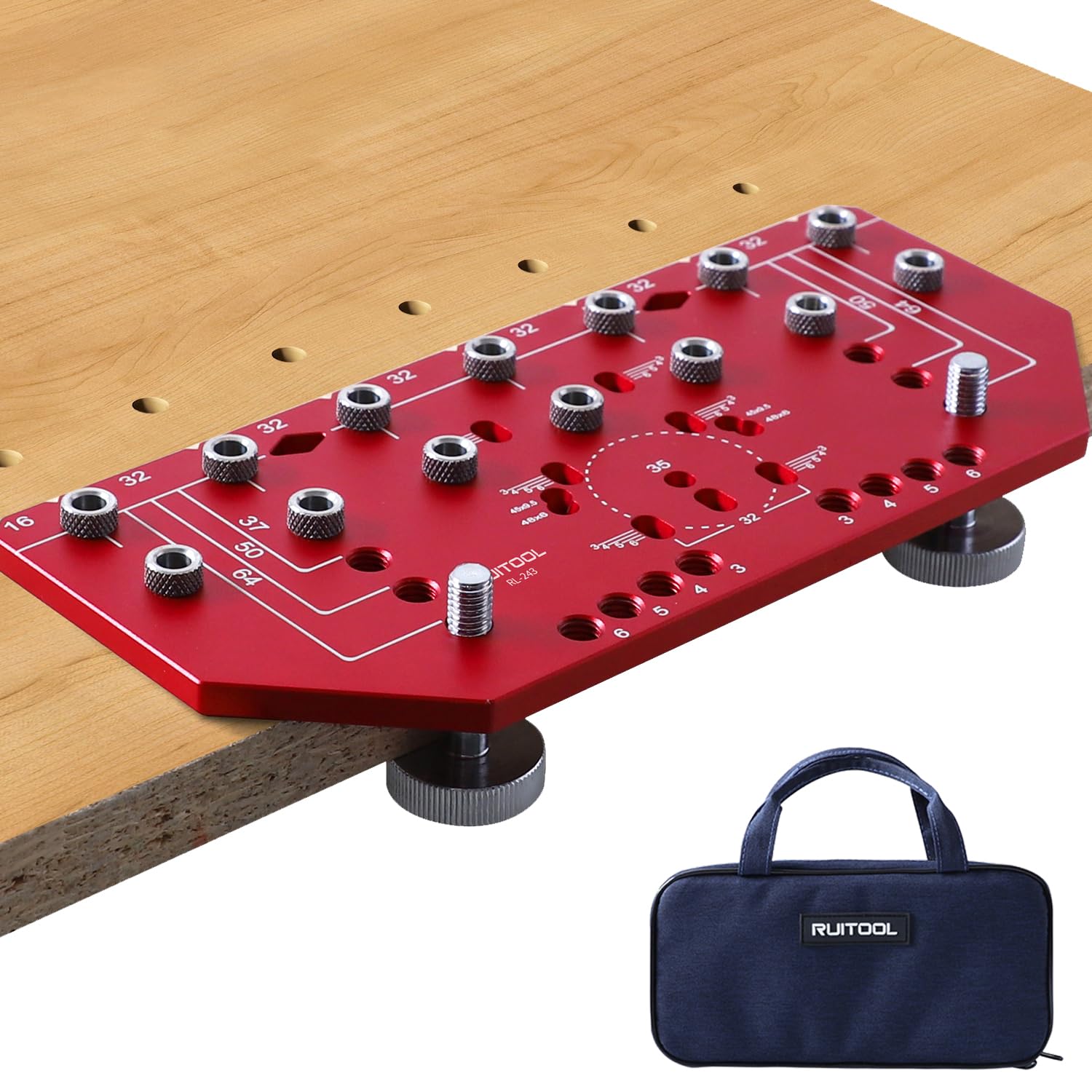
One all-metal body that drills shelf pin columns and cuts 35mm hinge bores—two jobs, zero extra tools.
For a full cabinet build, you don’t want to buy a separate shelf pin guide and a separate hinge jig. The RUITOOL combines both functions in a single aluminum alloy tool, so you can drill the adjustable shelf holes and then switch over to bore the 35mm concealed hinge pockets without changing tools.
The hinge side works with the most common concealed hinges, with the distance from the 35mm hole to the panel edge adjustable from 3-6mm. It includes hinge screws in 48×6 and 45×9.5mm sizes, plus both 1/4-inch and 5mm bits for the shelf pin side. A built-in clamp on the all-metal body holds it steady—customers note it clamps securely with no shifting during drilling.
Reviewers highlight that the holes come out straight and snug, aligned perfectly even when drilling from both sides of an assembled cabinet. The quality and accuracy are the top praises here. The most common caveat is that the included drill bits are mediocre—they can cause tear-out on plywood or veneer, so consider swapping in your own brad-point bits for cleaner results, especially on finished panels.
Two Tools, One Body: Solid, accurate, and repeatable for both shelf pins and hinges, with adjustable spacing that owners love.
Upgrade This: The stock bits cause tear-out on plywood—use better bits and tighten the collar to prevent slip-through.
Best for: DIY furniture builders who want one tool to handle both shelves and concealed hinges on a single project.
Keep looking if: you’re installing handles rather than hinges—this excels at pins and bores, not pull spacing.
8. SUNCONY Cabinet Hardware Jig Tool

Precision machined to a tolerance of plus or minus 0.0002 inches—this is the jig for flawless, repeatable hardware rows.
Some tools are accurate enough; the SUNCONY jig is machined to a tolerance of ±0.0002″ by CNC machines and calibrated to 0.0001″ square. For a contractor installing handles on high-end cabinetry, that level of precision means every pull sits exactly where it should, with no visible drift across a long run of doors.
Every part is forged aircraft-grade aluminum—no plastic anywhere—and the case-hardened steel bushings are engineered to last more than 10,000 holes. The bushings are replaceable and the tool ships with two spares, extending its service life dramatically. Reviewers point out the tool completed an entire kitchen and two baths with no issues, and one described installing handles on 20+ doors in hours instead of days. Those are the speed gains you get when the guesswork is engineered out.
The build quality is the most-discussed strength, and the accuracy takes the guesswork out of measuring. The main learning curve is practice—owners advise drilling a few test holes in scrap plywood first. One legitimate gripe is that the stock thumb screws are a bit short and can bottom out before clamping securely; a few buyers swapped in longer ones. The laser-engraved rulers won’t fade, keeping the tool readable for years.
Built For Flawless Runs
- CNC precision plus replaceable bushings rated for 10,000+ holes
- Fully aluminum body—no plastic parts to flex or break
- Flip-over design lets you switch doors without re-measuring
Fine Print
- Thumb screws can bottom out before clamping tight—longer ones are a common swap
- The included center punch is too small to be effective; use the bushings or a better punch
The pro choice for: tradespeople or exacting DIYers who want laboratory-grade precision and a tool that will outlive many remodels.
Overkill if: you’re installing a handful of handles—a simpler template will do the job for far less.
9. King&Charles Aluminum Cabinet Jig & Auto Center Punch

The included auto center punch marks your spot before you drill, so the bit never wanders on shaker doors.
For a beginner, the scariest part of hardware installation is the moment the drill bit touches an expensive door—if it skates even slightly, you’ve marred the surface. The King&Charles jig solves this with a clever trick: you position the guide, then use the included automatic center punch to make a small dimple before ever switching on the drill. That dimple keeps the bit locked in place, preventing the jig from shaking and the hole from drifting.
Built from forged aircraft-grade aluminum with no plastic, the jig is designed to be detached into smaller parts for easy carrying using the included storage bag. It carries both metric and imperial ruler markings, and it sets up once to be reused repeatedly without further measurements. Owners have installed over 100 pulls without any problem, praising its consistent accuracy and how it cuts install time roughly in half.
The quality and ease of use are the top praises here, with buyers calling it beginner-friendly and well worth the money. The one recurring complaint is the center punch itself—the internal spring can be cheap, sometimes requiring a firm tap upside-down to get it working properly. The jig body is excellent; the punch is the weak link. Since the punch is separate from the drilling function, this is a minor issue rather than a dealbreaker.
Beginner’s Best Friend: The dimple-first approach and clear setup routine earn praise for making flawless first attempts feel achievable.
The Weak Link: The auto punch’s spring can be temperamental—the jig itself is durable, but the punch may need a few firm taps to cooperate.
Ideal for: first-time DIYers who are nervous about drilling into finished cabinets and want an extra safety step against bit wander.
Look past it if: you already own a good center punch—the jig alone is still solid, but you might not need the bundled one.
Understanding the Specs
Hole Spacing & Edge Distance
These two numbers decide if a jig works for your hardware. Hole spacing is the center-to-center distance between the two screw holes—common pull spreads are 3″, 3-1/2″, 4″, and 5″. Edge distance is how far the hole sits from the cabinet edge. A good jig lets you adjust both, so you can match your exact pulls and keep every handle uniformly inset.
Guide Bushings vs. Bare Holes
A bushing is a hardened steel collar that the drill bit passes through. It keeps the bit perfectly perpendicular and prevents it from wallowing out the hole over time. Jigs with replaceable bushings last far longer than templates where you drill directly through the aluminum—expect 10,000+ holes from quality case-hardened bushings, versus wear that eventually makes bare holes oversized.
Dedicated vs. Multi-Purpose Jigs
A shelf pin jig drills a full column of 1/4-inch holes at once for adjustable shelving. A hinge jig guides a 35mm hole saw for concealed hinge cups. A handle jig spaces the small screw holes for pulls and knobs. Some tools combine two functions, but none do all three perfectly—so choose the one that matches your primary project.
Build Material & Sturdiness
All-aluminum bodies resist flexing under drill pressure, which keeps the bit traveling straight. Steel components, like level bars or bushings, add rigidity where it counts. Lighter jigs are easier to move around a job, but heavier metal templates hold their alignment better over repeated use. Look for clamp features—whether built-in or via thumb screws—to hold the jig firmly against the workpiece.
FAQ
Will a cabinet hardware jig work for both handles and knobs?
What is the difference between a shelf pin jig and a hinge jig?
How do I know if a jig will match my pull’s hole spacing?
Can I use a cabinet hardware jig on assembled cabinets?
Are the included drill bits worth using?
How deep should I drill for a 35mm concealed hinge?
Is an aluminum jig really better than a plastic one?
Why does the drill bit sometimes wander even with a jig?
Final Thoughts: The Verdict
For most cabinet-building projects, the cabinet hardware jig winner is the GOINGMAKE Shelf Pin Jig because it drills seven clean, evenly spaced 1/4-inch holes in a single pass—the purest form of time-saving precision. If you’re installing concealed hinges, grab the XUNTOP Hinge Jig for its rock-steady double clamp. And for outfitting an entire kitchen with handles, the MinliGUY Handle Jig is the one to reach for—its wide metal template keeps every pull aligned across the full run.
How We Picked
We do not accept paid placement. Every pick is matched to a real buyer and a real use-case; we do not hands-on test units.
Sources & Methodology
Specifications: manufacturer listings and product documentation. Review insights: verified customer reviews, as of September 2026. Pricing: not shown on this page (it changes often); check the current price via the retailer link.
As an Amazon Associate, Gadgets Feed earns from qualifying purchases. This does not affect which products we feature.