
A bicycle camera is no longer just a toy for recording scenic downhills—it’s become a critical piece of safety equipment for anyone commuting, training, or riding on shared roads. The difference between a usable clip and a blurry, shaky mess comes down to stabilization, sensor quality, and how the camera integrates into your ride without becoming a burden.
I’m Min — the co-founder and writer behind Gadgets Feed. I’ve spent hundreds of hours analyzing the technical specifications, mounting designs, and real-world battery performance of bicycle cameras to find which models actually deliver reliable footage when you need it most.
Whether you need to capture close calls with aggressive drivers, record a scenic tour, or simply add an extra eye behind you, this guide breaks down the specs and trade-offs to help you find the best bicycle camera for your specific riding style and budget.
How To Choose The Best Bicycle Camera
A bicycle camera must survive vibrations, weather, and long rides while delivering usable footage. The right choice depends on your primary goal: recording forward-facing POV rides, monitoring traffic approaching from behind, or both. Here are the key factors to weigh before buying.
Image Stabilization Is Non-Negotiable
Handlebars and helmet mounts transmit every road vibration directly into the camera. Without electronic image stabilization (EIS) or a mechanical gimbal, your footage will be unwatchable. Look for cameras with EIS rated for high-amplitude vibrations—brands like DJI and Insta360 have leading stabilization algorithms. The AKEEYO AKY-710S notably lacks stabilization, which is a dealbreaker for many cyclists based on user reports of shaky 4K footage.
Recording Purpose: Forward POV vs. Rear Radar Monitoring
Forward-facing cameras (like the DJI Osmo Action 6 or AKASO Brave 4) capture your ride and close calls ahead. Rear-facing or dedicated units like the Garmin Varia RCT715 combine a radar sensor, tail light, and camera in one unit to alert you of approaching vehicles and automatically save footage of incidents. The PARKVISION system provides a live 1080p rear view on a handlebar-mounted monitor, functioning more like a rearview mirror than a recording dash cam.
Battery Life and Storage Capacity
A camera that dies mid-ride is worthless. Action cameras like the DJI Osmo Action 6 offer 4 hours of continuous recording with a 1950mAh battery, while the PARKVISION rear-view system packs an 8000mAh battery for 10 hours of live display. For cameras with loop recording, ensure the included or supported SD card is large enough to hold critical clips before being overwritten—64GB is a solid starting point. Models like the Insta360 GO Ultra and Garmin Varia offer built-in storage, reducing the risk of a forgotten or damaged card.
Quick Comparison
On smaller screens, swipe sideways to see the full table.
| Model | Category | Best For | Key Spec | Amazon |
|---|---|---|---|---|
| DJI Osmo Action 6 Essential Combo | Premium Action Cam | Ultra-smooth forward POV & low light | RockSteady 3.0 + 1/1.1″ sensor | Amazon |
| Garmin Varia™ RCT715 | Radar & Tail Light Combo | Rear vehicle detection & incident recording | 153-yard radar + 1080p/30fps camera | Amazon |
| Insta360 GO Ultra Creator Bundle | Ultra-Compact Wearable | Ultra-light POV & magnetic mounting | 53g, 4K60, FlowState Stabilization | Amazon |
| DJI Osmo Action 6 Enhanced Combo | Premium Action Cam | All-day filming with hot-swap batteries | 2x 1950mAh batteries + battery case | Amazon |
| PARKVISION Bicycle Rear View Camera | Rear-View Monitor System | Live rear view without twisting your neck | 4.3″ monitor + 8000mAh battery | Amazon |
| AKASO Brave 4 Action Camera Bundle | Budget Action Cam | Entry-level 4K with accessory kit | 4K30 + 170° FOV + EIS | Amazon |
| AKEEYO AKY-710S Bike Camera | Dedicated Bike Dash Cam | Budget dash cam with 64GB card | 4K28fps, IP67, 1800mAh battery | Amazon |
In‑Depth Reviews
1. DJI Osmo Action 6 Essential Combo
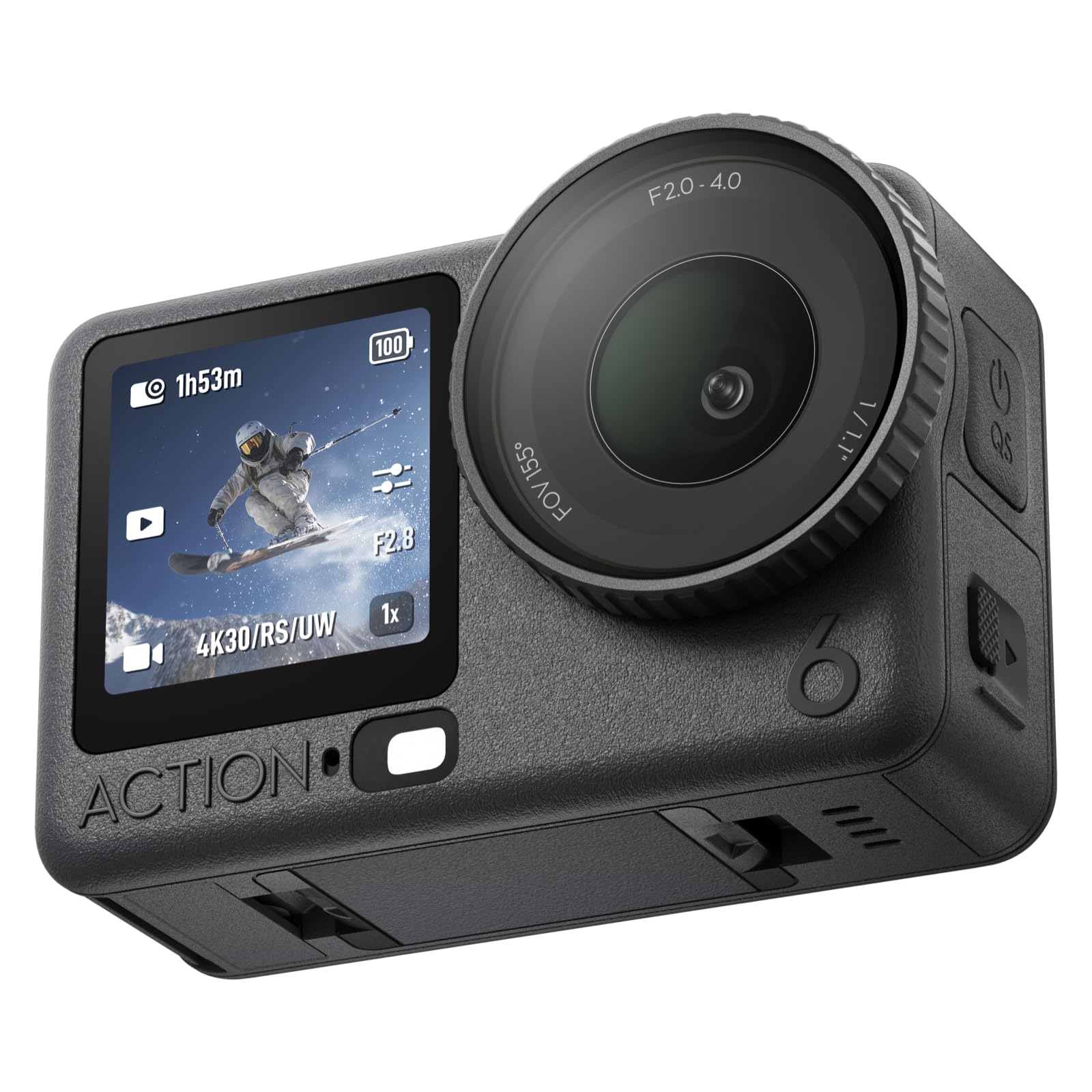
The DJI Osmo Action 6 sets a new benchmark for bicycle cameras with its variable aperture f/2.0–f/4.0 lens, allowing it to adapt instantly to changing light conditions. Whether you’re riding through a shaded forest trail or onto a sun-baked asphalt road, the 1/1.1-inch square sensor captures clean 8K footage with minimal noise. The RockSteady 3.0 stabilization is the best in class for handlebar-mounted footage, easily cancelling out high-frequency road chatter and handlebar wobble.
For cyclists who ride in cold climates or long distances, the Osmo Action 6 is built with a cold-resistant battery that delivers up to 4 hours of continuous recording. The Essential Combo includes the camera, a single Extreme Battery Plus (1950 mAh), a quick-release adapter mount, and a USB-C cable. The 50GB of built-in storage acts as a safety net if you forget your microSD card, and the wireless cloud upload feature lets you back up footage automatically after every ride.
The dual-screen design and gesture control make it easy to start recording without fiddling with buttons while wearing gloves. The lack of built-in GPS or accelerometer is a minor trade-off for cyclists who prioritize video quality above all else. For riders who want the absolute best forward-facing footage available, this is the camera to beat.
Why it’s great
- Variable aperture lens adapts to changing light in real time
- RockSteady 3.0 delivers the smoothest handlebar footage we’ve tested
- 50GB built-in storage with wireless cloud backup
Good to know
- No GPS or accelerometer for incident detection
- Premium price compared to dedicated dash-cams
2. Garmin Varia™ RCT715

The Garmin Varia RCT715 is the only bicycle camera on this list that combines rear-facing radar, a high-visibility tail light, and a continuous recording camera in a single weather-sealed unit. Its radar detects vehicles approaching from up to 153 yards (140 meters) behind you and displays their speed and relative position on compatible Garmin Edge computers, wearable devices, or the Varia mobile app. This gives you real-time situational awareness without craning your neck.
When an incident is detected—such as a sudden deceleration or impact—the camera automatically saves the footage from before, during, and after the event. The 1080p resolution at 30fps is adequate for capturing license plates of close-passing vehicles, though it doesn’t approach the crispness of 4K action cameras. The included 16GB SD card is sufficient for typical rides, but upgrading to a larger card is recommended for longer recording sessions.
Battery life varies by mode: up to 4 hours with radar and solid tail light plus continuous 1080p recording, extending to 6 hours on day flash mode. For road cyclists who want the ultimate safety system, this unit pays for itself the first time it captures a dangerous driver behavior or prevents a potential collision. The premium investment is justified by the integrated radar and automatic evidence preservation.
Why it’s great
- Radar detects cars, trucks, motorcycles, and even other cyclists from 153 yards
- Auto-saves footage before, during, and after an incident
- Bright, customizable tail light improves rear visibility
Good to know
- Battery life varies with light mode and radar usage
- Requires Garmin ecosystem for full radar data visualization
3. Insta360 GO Ultra Creator Bundle
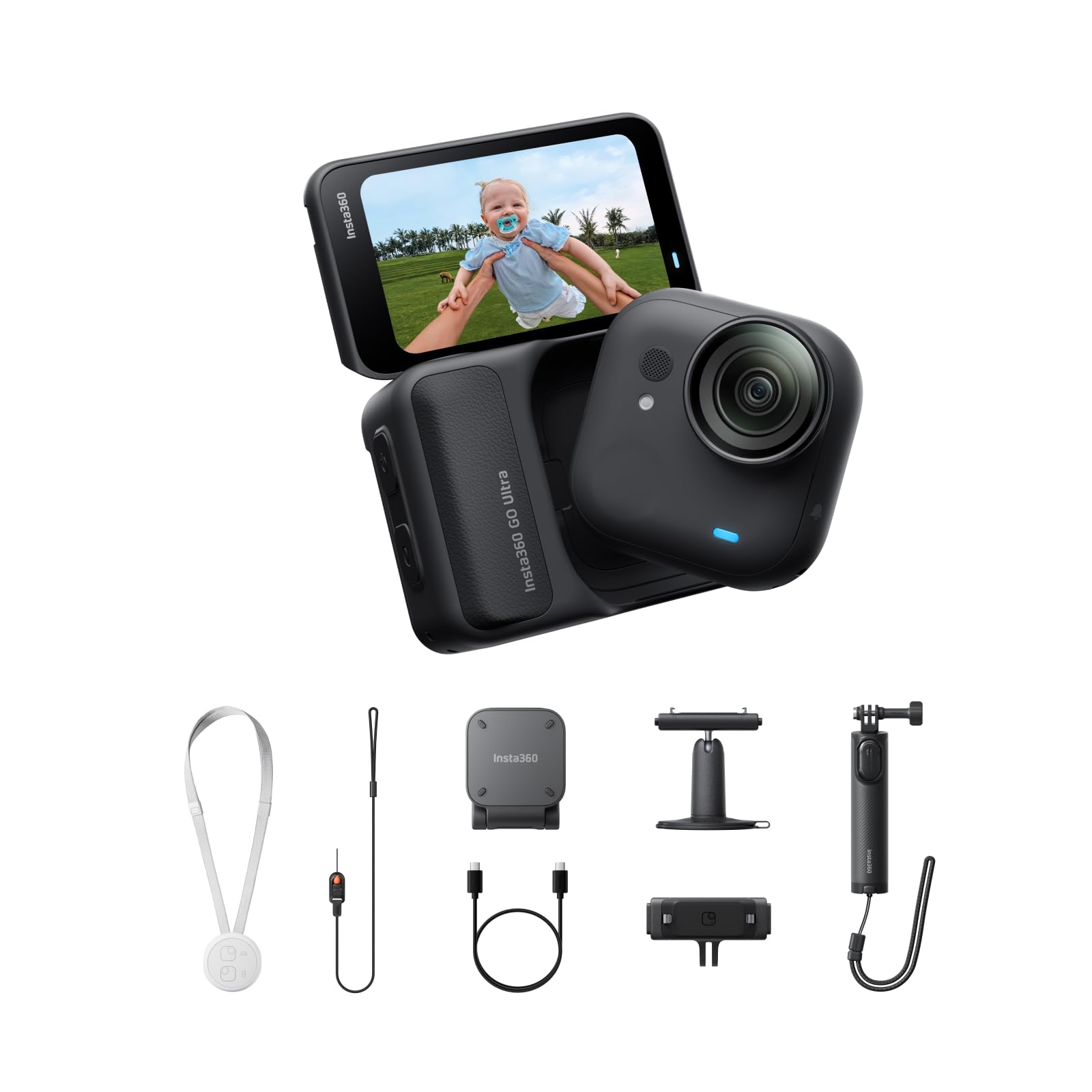
The Insta360 GO Ultra weighs only 53 grams—lighter than a standard cycling computer—making it the least intrusive option for cyclists who want a pure first-person perspective without mounting a brick-sized camera to their handlebars. Its magnetic mounting ecosystem lets you clip it to a helmet visor, attach it to a jersey pocket via the Magnet Pendant, or use the included Quick Release Mount to attach it to virtually any bike component. The 4K60fps video with FlowState Stabilization ensures smooth footage even on rough gravel or cobblestone sections.
The 1/1.28-inch sensor with PureVideo Mode handles low-light scenarios better than any other camera in this size class. The Creative Bundle includes the Action Pod housing, which extends recording time to 200 minutes and adds a small screen for framing shots. The standalone camera is IPX8 waterproof to 33 feet without any additional housing, so rain rides or accidental submersion won’t ruin your footage. The 12-minute fast charge from 0–80% ensures you’re never stuck waiting for a recharge before a quick lunch ride.
The trade-off for this extreme portability is a smaller sensor compared to the DJI or AKASO options, meaning 8K resolution isn’t an option. The AI auto-editing feature generates shareable clips quickly, but serious videographers may prefer manual control. For cyclists prioritizing minimal weight and creative mounting angles over raw resolution, this is a category-defining choice.
Why it’s great
- Incredibly lightweight (53g) with versatile magnetic mounting
- IPX8 waterproof standalone camera to 33 feet
- Fast charging: 0–80% in 12 minutes
Good to know
- Limited to 4K max resolution, no 8K option
- Requires Action Pod for extended battery life and screen
4. DJI Osmo Action 6 Enhanced Combo
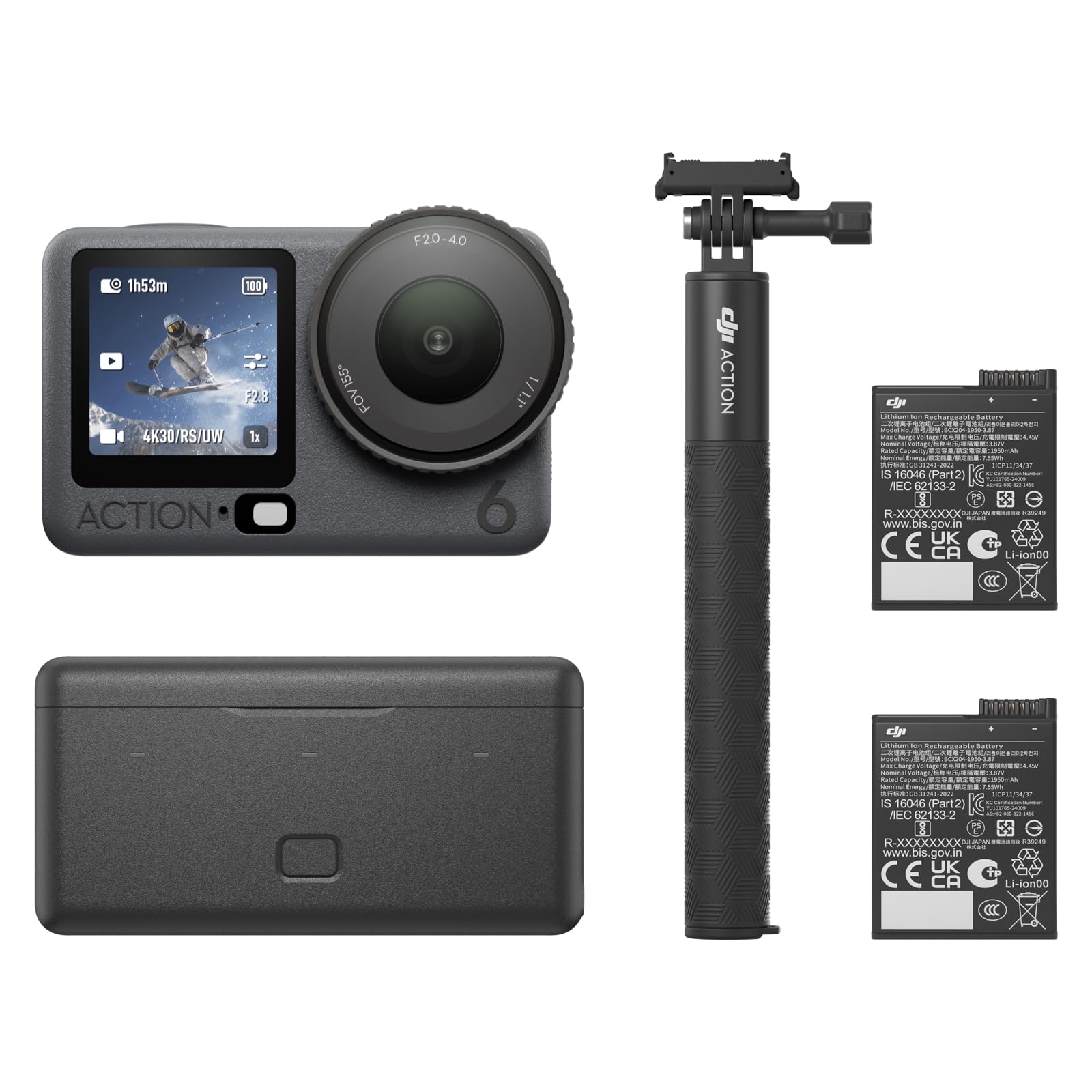
The Enhanced Combo takes everything great about the DJI Osmo Action 6 and adds the hardware needed for all-day rides. It includes two Extreme Battery Plus units (1950 mAh each), a multifunctional battery case that can charge three batteries simultaneously, and a 1.5-meter extension rod for unique POV angles. For cyclists who ride 50+ miles regularly, this combo means zero downtime: swap a dead battery for a fresh one mid-ride while the case recharges the depleted cell via USB-C PD.
The core camera specs are identical to the Essential Combo—8K30fps or 4K60fps video with the f/2.0–f/4.0 variable aperture lens and RockSteady 3.0 stabilization. The HorizonSteady feature locks the horizontal plane even when the camera is rotated 360 degrees, which is invaluable for helmet-mounted footage where you might tilt your head. The 50GB built-in storage and wireless cloud upload remain, giving you a complete workflow from capture to backup without ever touching a computer.
The Enhanced Combo is heavier and bulkier to carry than the Essential Combo, but the trade-off is undeniable endurance. If you’re a vlogger covering solo bikepacking trips or a commute that doesn’t have reliable charging, this is the most capable setup available. The price premium over the Essential Combo reflects the extras, but for power users, it’s a smart investment.
Why it’s great
- Hot-swappable batteries for unlimited recording on long rides
- Multifunctional case charges three batteries simultaneously
- 1.5m extension rod enables creative rear-view or low-angle shots
Good to know
- Bulkier to carry than the Essential Combo
- Microphone audio is adequate but external mic recommended for critical sound
5. PARKVISION Bicycle Rear View Camera

The PARKVISION system takes a different approach from typical bicycle cameras—it’s a wired rear-view camera paired with a 4.3-inch handlebar-mounted monitor that provides a live 1080p feed of what’s behind you. With a massive 8000mAh battery, this system offers up to 10 hours of continuous viewing per charge, making it suitable for all-day touring, ebike commutes, or riders who simply want a constant rear view without the battery anxiety of action cameras.
The rear camera uses a 110-degree viewing angle with 0.01 Lux starlight night vision technology, delivering clear images even in near-dark conditions. The monitor features auto-dimming that adjusts brightness based on ambient light, preventing blinding glare during night rides. Installation is tool-free and takes about three minutes, with the camera clamping to seatposts from 17–38mm and the monitor fitting handlebars from 18–38mm. The detachable monitor clamp allows you to remove the screen when parking the bike.
It’s important to note that this system is designed for live viewing, not recording—it has no built-in storage or loop recording functionality. If evidence capture is your priority, the manufacturer recommends a separate recording model (ASIN: B0DWN3SHT3). The wired connection requires routing a cable from the seatpost to the handlebars, which some users found challenging with rack-mounted setups. For riders who prioritize constant awareness over recorded footage, this is a unique and effective tool.
Why it’s great
- 10-hour battery life eliminates mid-ride charging worries
- Starlight night vision delivers clear images in very low light
- Tool-free installation with detachable monitor for security
Good to know
- Wired installation requires routing a cable from seatpost to handlebars
- No recording function—live view only
6. AKASO Brave 4 Action Camera Bundle
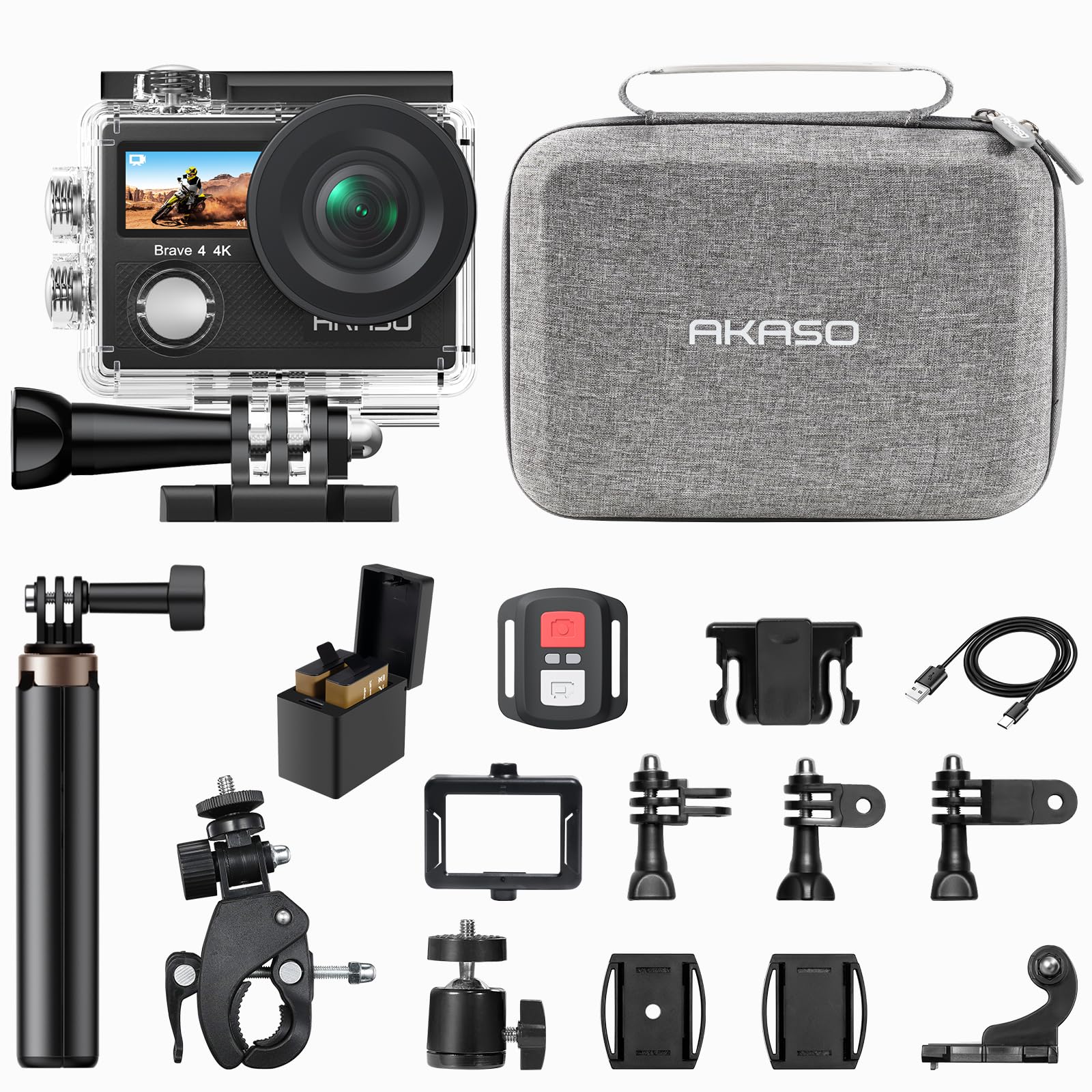
The AKASO Brave 4 is the best entry-level option for cyclists who want a solid 4K action camera without investing in premium hardware. It records at 4K30fps with gyroscope-based electronic image stabilization that smoothes out moderate vibrations—sufficient for paved roads and light gravel, though it won’t match the RockSteady of the DJI models. The 170-degree adjustable view angle lets you choose between a wide POV and a more focused field of view to reduce distortion.
The included bundle is comprehensive: the camera itself, a waterproof case rated to 131 feet, two rechargeable 1050mAh batteries (good for about 90 minutes each), a selfie stick, tripod, carrying case, helmet mounts, and bicycle accessory kit. This is essentially a plug-and-play setup for new cyclists who want both helmet and handlebar mounting options. The Wi-Fi connectivity with the free AKASO app allows real-time preview, playback, and sharing of clips directly from your phone.
The battery life is the main limitation for longer rides. Two batteries give you a combined 3 hours of recording, but swapping them mid-ride requires stopping and handling small components. The lack of a high-quality EIS algorithm means downhill footage over rough terrain will show visible wobble. For riders on a budget who want a dependable camera for moderate use, this bundle delivers impressive value with all necessary accessories included.
Why it’s great
- Comprehensive bundle includes all mounting accessories
- Waterproof to 131 feet with included case
- Four adjustable FOV settings (70° to 170°)
Good to know
- Battery life limited to ~90 minutes per cell
- EIS struggles with high-frequency handlebar vibration on rough terrain
7. AKEEYO AKY-710S Bike Camera

The AKEEYO AKY-710S is designed as a dedicated bicycle dash cam with a Starvis IMX335 sensor capable of 2K55fps or 4K28fps recording. Its IP67 rating provides complete dust and waterproofing, and the 1800mAh battery delivers over 4.5 hours of 1080P recording—enough for most long rides. The custom bike mount with a quick-release mechanism allows you to detach the camera in seconds when you park your bike, reducing theft risk.
One of the standout features is the included 64GB high-performance SD card, so you don’t need to buy extra storage before your first ride. The loop recording with G-sensor automatically locks footage when an impact is detected, preserving evidence of any incident. OTA firmware updates via Wi-Fi (2.4GHz) keep the camera current without needing a computer. The parking monitoring feature activates when motion is detected near the parked bike, though the camera must be left on for this to work.
The critical drawback is the lack of image stabilization. Multiple user reviews report that 4K footage is unusable due to severe vibration artifacts—the camera simply cannot compensate for handlebar movement. The plastic bracket screws are also prone to stripping, and the camera may fail in heavy rain despite its IP67 rating. If you have a smooth road commute and can tolerate some shakiness, the included storage and parking sensor make it a budget-friendly option. For anything beyond smooth pavement, invest in a stabilized model.
Why it’s great
- Includes 64GB SD card—no additional purchase needed
- IP67 dust and waterproof rating for all-weather use
- Parking monitoring with G-sensor impact detection
Good to know
- No image stabilization makes 4K footage shaky on rough roads
- Plastic bracket screws can strip; use thread locker during installation
FAQ
Can I use any action camera as a bicycle camera?
What file format should I use for cycling footage?
How do I mount a bicycle camera without it shaking?
Is loop recording important for a bicycle camera?
What is a parking monitor on a bicycle camera?
Final Thoughts: The Verdict
For most cyclists, the best bicycle camera overall is the DJI Osmo Action 6 Essential Combo because its variable aperture lens and RockSteady 3.0 stabilization produce pristine, smooth footage in any lighting condition. If you prioritize rearward situational awareness and automatic evidence saving, go with the Garmin Varia RCT715 for its integrated radar and incident detection. For riders who want an ultra-light wearable POV camera, nothing beats the Insta360 GO Ultra Creator Bundle at 53 grams with magnetic mounting.