
Deciding which synthetic oil to pour into your engine isn’t just about picking a brand off the shelf. The viscosity grade, the additive package, and the certification level (like API SP or ILSAC GF-7A) directly determine how quickly oil flows during a freezing start and how well it resists breakdown under extreme heat. Choose wrong, and you risk sludge buildup, increased friction, and premature wear on critical components like timing chains and turbochargers.
I’m Min — the co-founder and writer behind Gadgets Feed. I’ve logged countless hours analyzing technical data sheets, comparing base oil formulations, and cross-referencing OEM approvals to help you find the right lubricant for your specific driving conditions and engine type. This guide focuses on the measurable specs that separate a good oil from a great one.
After filtering through dozens of options, I’ve narrowed the field to the seven best contenders that deliver verified protection, real fuel economy gains, and extended drain intervals. These are the best 5 quarts synthetic oil packages for keeping your engine running clean and quiet for the long haul.
How To Choose The Best 5 Quarts Synthetic Oil
Picking the right synthetic oil starts with your vehicle’s owner’s manual, not the shelf at the auto parts store. The recommended SAE viscosity grade is the single most critical spec to match. Using the wrong weight, even a premium synthetic, can reduce fuel economy and fail to protect your engine during cold starts or high-temperature operation. Once you lock in the correct grade, shift your focus to the certification badge — API SP and ILSAC GF-7A are the current gold standards for preventing low-speed pre-ignition (LSPI) in turbocharged engines and providing superior sludge control.
Viscosity Grade: 5W-30 or 0W-20
The numbers before the “W” indicate the oil’s flow at low temperature — 0W flows better at -30°C than 5W. The numbers after the dash (30 or 20) represent the viscosity at 100°C. Thicker oils (5W-30) generally offer a stronger oil film for older or higher-mileage engines, while thinner oils (0W-20) reduce friction and improve fuel economy in modern engines. Never guess your grade — check the oil filler cap or manual.
Certification Level: API SP and ILSAC GF-7A
API SP became the standard in 2020 and adds protections against LSPI, timing chain wear, and sludge formation. ILSAC GF-7A is the latest resource-conserving standard that also mandates improved fuel economy performance. Oils with these certifications have passed rigorous industry tests (like Sequence IIIH for piston cleanliness and Sequence VIII for wear). If your car is a 2020 model or newer, these are non-negotiable.
Base Oil Quality: Group III vs. Group IV
Full synthetic oils typically use Group III (hydrocracked mineral oil) or Group IV (Polyalphaolefin, or PAO) base stocks. PAO-based oils offer superior thermal stability and viscosity retention at high temperatures, but they also cost more. Many premium brands now use a blend of Group III+ and Group IV, which delivers excellent performance for extended drain intervals without the full PAO price tag.
Quick Comparison
On smaller screens, swipe sideways to see the full table.
| Model | Category | Best For | Key Spec | Amazon |
|---|---|---|---|---|
| Castrol EDGE 0W-20 | Premium Full Syn | Extended drain intervals | Titanium FST, 25K mile rating | Amazon |
| Pennzoil Platinum 5W-30 | Natural Gas Syn | Cold-start flow & piston cleaning | PurePlus, 15K mile protection | Amazon |
| Royal Purple HMX 10W-30 | High Mileage Syn | Seal conditioning & wear reduction | Zinc/phosphorus additive, 75K+ miles | Amazon |
| Valvoline MaxLife 5W-30 | High Mileage Syn | Leak prevention & sludge defense | Dual Defense, seal conditioners | Amazon |
| Royal Purple 0W-20 | High Performance | Catalytic converter & fuel efficiency | API-licensed, ethanol compatible | Amazon |
| Idemitsu IFG3 0W-20 | Asian OEM Syn | Subaru, Honda, Toyota engines | SP/GF-7A, LSPI protection | Amazon |
| K&N 0W-20 Syn | Premium Full Syn | Contaminant & sludge minimization | Synthamax Technology, 9.23 lb weight | Amazon |
In‑Depth Reviews
1. Castrol EDGE Extended Performance 0W-20 Synthetic Motor Oil

The Castrol EDGE Extended Performance 0W-20 is built around Titanium FST technology, which chemically bonds to engine surfaces to reduce friction and resist viscosity breakdown at high temperatures. Castrol claims it delivers 3X stronger film strength versus leading full synthetics, and the 25,000-mile or one-year drain interval backing makes this a serious contender for drivers who want maximum time between changes.
Certified with API SP, ILSAC GF-7, and ACEA C5, this oil also meets GM dexos1 Gen 3 and Ford WSS-M2C947-B1 specifications. The 0W-20 weight is ideal for modern gasoline and hybrid powertrains, where fast cold-flow and fuel economy are priorities. Several customer reviews note it works well even in turbocharged engines, maintaining stable oil pressure under sustained highway loads.
The only real trade-off is the viscosity grade — 0W-20 is too thin for older engines designed for 5W-30 or 10W-30. If your vehicle calls for a thicker oil, skip this one. For newer cars with light-duty diesel or gasoline engines that specify 0W-20, this is the most future-proof 5-quart jug on the list.
Why it’s great
- 3X stronger film strength in Kurt Orbahn testing
- 25,000-mile drain interval reduces maintenance hassle
- Full OEM approvals from Ford, GM, and Mercedes
Good to know
- 0W-20 grade not suitable for engines requiring 5W-30
- Premium price per quart vs. mid-range synthetics
2. Pennzoil Platinum Full Synthetic 5W-30 Motor Oil
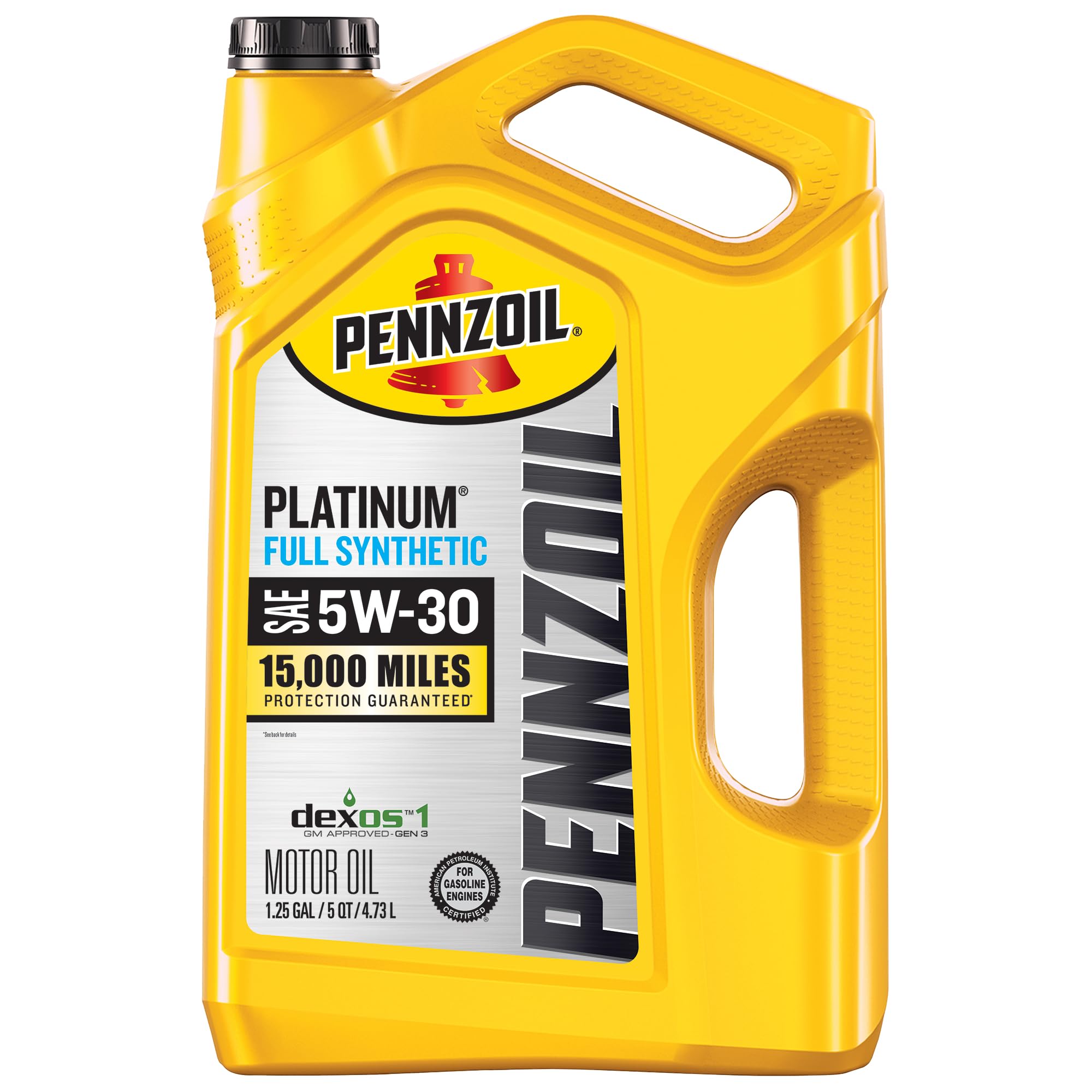
Pennzoil Platinum is made from natural gas using the PurePlus process, which creates a crystal-clear base oil with fewer impurities than traditional crude-derived synthetics. The result is an oil that delivers faster low-temperature flow and keeps pistons cleaner than the Sequence IIIH industry standard requires. It is backed by a 15,000-mile protection guarantee for normal driving conditions.
This 5W-30 oil meets API SQ (the newest resource-conserving standard) and ILSAC GF-7A, as well as OEM specs like GM dexos1 Gen 3 and Ford WSS-M2C971-A1. Multiple customer reports describe it silencing piston slap on warm-up and reducing lifter tick in older engines — a clear sign the additive package is effective at coating metal surfaces on start-up.
It does not carry the extreme 25K-mile rating of the Castrol EDGE, so if you prefer extended intervals, you will change it more often. Also, the 5W-30 grade is common, but double-check your manual because some modern engines require 0W-20 for warranty compliance.
Why it’s great
- Natural gas base delivers exceptionally clean burn
- 15,000-mile protection for typical driving
- Excellent cold-start flow for winter climates
Good to know
- Drain interval shorter than competitive premium options
- Not ideal for high-mileage engines needing seal conditioners
3. Royal Purple HMX SAE 10W-30 High-Mileage Synthetic Motor Oil

Royal Purple HMX is specifically engineered for engines that have crossed the 75,000-mile mark. It uses robust zinc and phosphorus anti-wear compounds plus proprietary additive technology that chemically softens and revitalizes hardened seals. That seal conditioning directly addresses oil consumption and minor external leaks, which are common complaints in higher-mileage vehicles.
The 10W-30 viscosity provides a thicker oil film at operating temperature compared to 5W-30, which helps reduce blow-by on worn rings. Customer feedback on this oil is unusually strong — owners report it eliminated sticky lifter noise on cold starts in engines with over 160,000 miles, delivering a noticeably smoother idle and quieter valve train operation.
The obvious drawback is the vehicle-specific fit. If your engine calls for 0W-20 or 5W-20, 10W-30 is too thick and can reduce fuel economy. Royal Purple also recommends a standard drain interval of around 5,000 miles, so it is not designed for the extended-change crowd. But for the high-mileage V8 owner chasing quieter cold starts and lower oil consumption, this is the specialist pick.
Why it’s great
- Revitalizes dried seals to reduce oil leaks
- Smoother idle and quieter lifters in high-mileage engines
- Ionic-attraction film protects at start-up
Good to know
- 10W-30 viscosity limits compatibility with newer engines
- Standard drain interval, not for extended OCI
4. Valvoline MaxLife Extended Protection High Mileage 5W-30
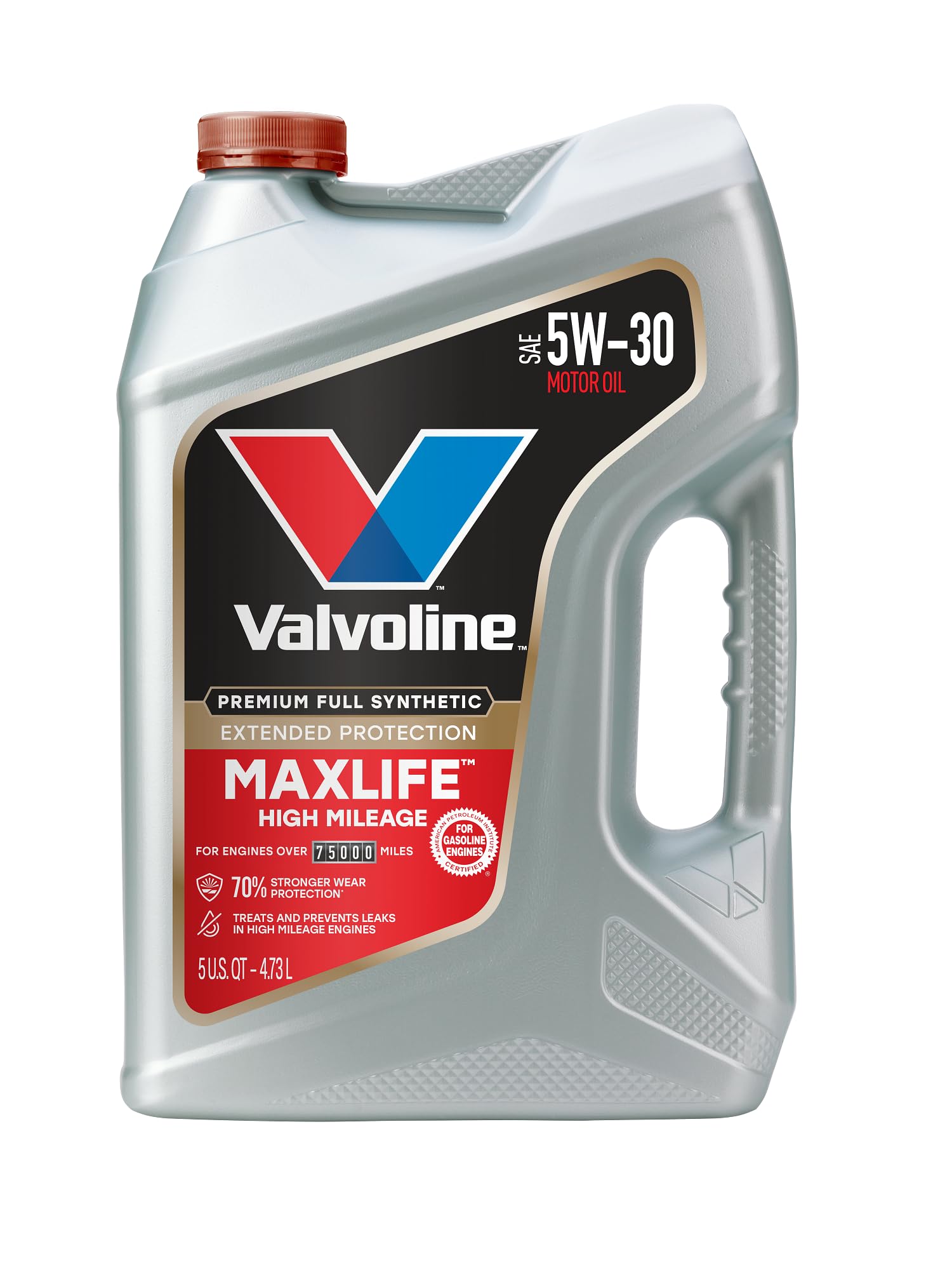
Valvoline MaxLife is the affordable specialist for cars and trucks that have accumulated over 75,000 miles but still need the latest API SP protection. Its Dual Defense Additive Technology combines corrosion and sludge-fighting detergents with premium seal conditioners that treat existing leaks and prevent new ones. The advertised 20X better heat protection than industry standards adds confidence for towing or stop-and-go traffic.
In testing, MaxLife delivers 70% stronger wear protection than the API SP minimum requirement, which means it exceeds the basic certification by a healthy margin. It also meets ILSAC GF-7A and Ford WSS-M2C961-A1 specs. Real-world users confirm it stops tapping noises when switching from budget synthetics, and several mention noticeable fuel economy improvements after the first oil change.
The 5W-30 viscosity is common, but Valvoline does not offer this formulation in 0W-20, so owners of late-model Hondas or Toyotas that require the thinner grade will need to look elsewhere. Also, the max drain interval is around 5,000-7,500 miles depending on driving, so it is not an extended-life oil. For the price, however, it is a high-mileage workhorse that punches above its tier.
Why it’s great
- 70% stronger wear protection vs. API SP minimum
- Premium seal conditioners reduce oil consumption
- 20X better heat protection for heavy-duty driving
Good to know
- No 0W-20 option for newer engines
- Standard drain interval, not for extended OCI
5. Royal Purple High Performance 0W-20 Synthetic Motor Oil

This API-licensed 0W-20 from Royal Purple is built for drivers who prioritize fuel economy and catalytic converter protection. It is formulated with improved compatibility for ethanol-blended fuels and delivers superior corrosion protection, which is critical for engines that sit idle for extended periods or operate in humid environments. The additive package also helps prevent low-speed pre-ignition in turbocharged engines.
Owners consistently praise the oil for maintaining full viscosity even when it is dirty, a testament to the base oil’s shear stability. Over 130,000 miles on a single engine with no sludge or leaks is a common report among long-term users. The 0W-20 grade makes it a strong choice for late-model sedans and crossovers from Honda, Toyota, and Hyundai.
The main downside is the cost per quart — it runs higher than the Valvoline or Pennzoil options. Additionally, it does not carry the extended-drain-interval certification that Castrol EDGE offers. If you are comfortable with standard 5,000-mile changes and want maximum protection for your catalytic system, this is a premium choice that delivers measurable results.
Why it’s great
- Protects expensive catalytic emission systems
- Maintains viscosity under high heat and contamination
- Ethanol-compatible for flex-fuel vehicles
Good to know
- Higher cost per quart compared to mid-range options
- Not certified for extended 20K+ mile intervals
6. Idemitsu IFG3 0W-20 Full Synthetic Motor Oil
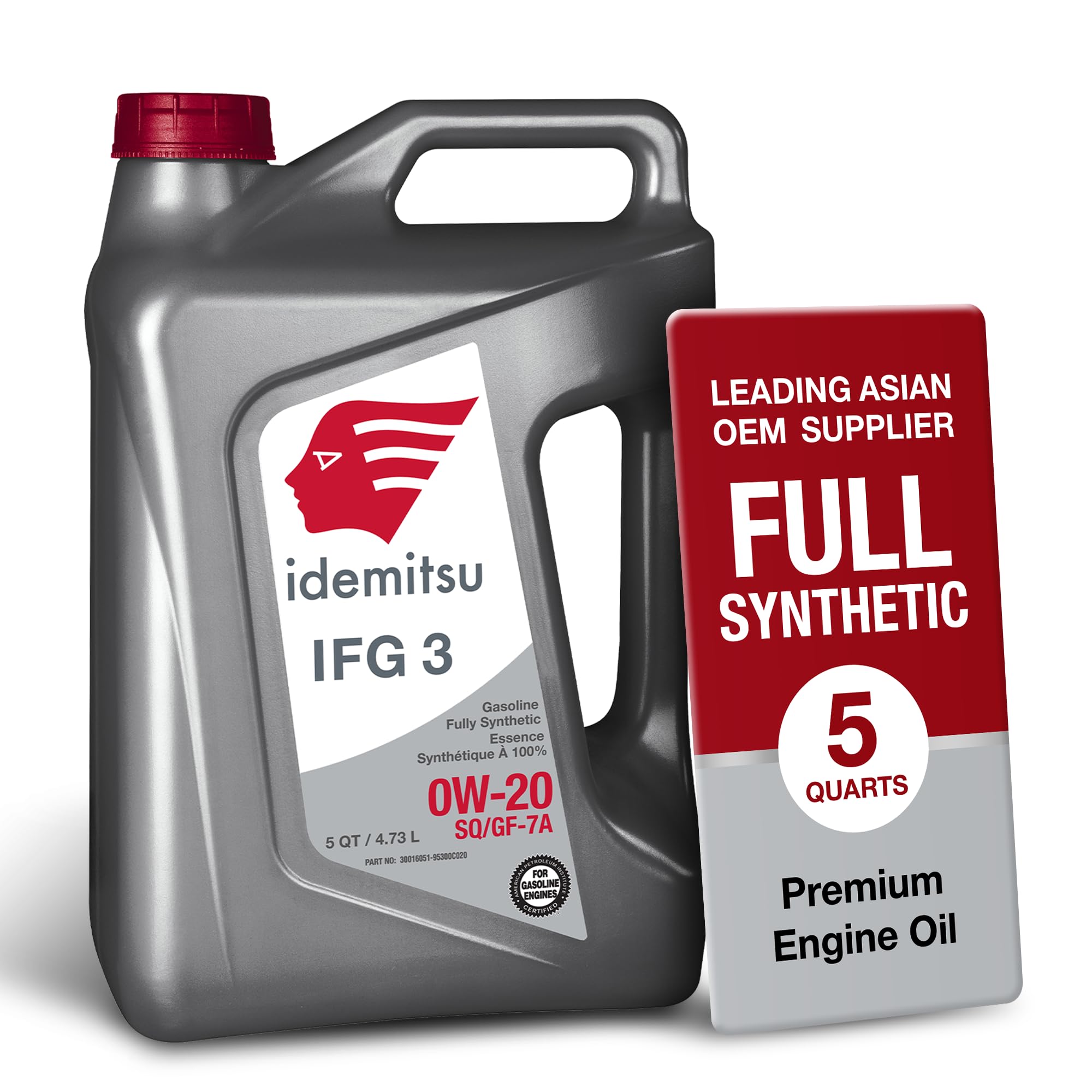
Idemitsu IFG3 0W-20 is the factory-fill choice for Subaru, and it is equally well-suited for Toyota and Honda engines. It is certified to the newest ILSAC GF-7A standard, which mandates improved fuel-efficiency and protection against low-speed pre-ignition. The advanced additive technology reduces deposits in turbocharged direct-injection (TGDI) engines, a common pain point for modern Asian powertrains.
The oil is manufactured in ISO and IATF-certified facilities, so quality control is consistent. Subaru technicians report it is identical to the bulk oil used in dealership service bays, just sold in consumer-friendly 5-quart jugs. Owners of Lexus and Subaru Outbacks have noted significantly smoother idle and reduced engine noise after switching from generic synthetics.
The limitation is clear: this oil is optimized for Asian OEM engines. While it will not damage a Ford or Chevy, it lacks the specific Ford and GM approvals that North American brands require for warranty protection. It also comes in a metal can rather than a plastic jug, which can be slightly harder to pour from without a funnel. For Subaru, Honda, and Toyota owners, this is the closest you can get to genuine factory oil without a dealership visit.
Why it’s great
- Identical to Subaru factory-fill oil
- GF-7A certified for latest turbo protection
- ISO/IATF certified for consistent quality
Good to know
- Lacks Ford and GM specific OEM approvals
- Metal can design requires a funnel for clean pouring
7. K&N 0W-20 Synthetic Engine Oil

K&N is best known for air filters, but their synthetic motor oil uses Synthamax Technology, a Group III+ base oil blended with proprietary additives that minimize harmful contaminants and sludge buildup. The advanced formula is designed to reduce wear and tear in both cold and hot temperature conditions, making it a solid all-weather choice for daily drivers.
Weighing in at 9.23 pounds per jug, the 0W-20 viscosity provides excellent flow for modern engines, and the recommended drain interval falls in the standard 5,000-7,500 mile range. BMW X1 owners with high mileage (135,000+ miles) have reported that the engine internals remain visually clean and sludge-free after long-term use, which suggests the detergent package is effective at preventing deposits.
K&N oil is not as widely available at brick-and-mortar retailers as Castrol or Pennzoil, so you will likely need to order it online. It also lacks the formal extended-drain certification and OE approvals that competitive oils carry. For drivers who already trust the K&N brand for filtration and want a consistent synthetic with decent deposit control, it is a reliable but niche option.
Why it’s great
- Synthamax Technology minimizes sludge formation
- Full synthetic all-weather cold flow
- Proven clean engine internals at 135K+ miles
Good to know
- Limited retail availability outside online channels
- No extended-drain or high-mileage certifications
FAQ
Can I use 0W-20 instead of 5W-30 if both are synthetic?
Is more expensive synthetic oil always better for my engine?
How often should I change 5 quarts of synthetic oil?
Final Thoughts: The Verdict
For most users, the best 5 quarts synthetic oil winner is the Castrol EDGE Extended Performance 0W-20 because it combines a 25,000-mile drain interval with Titanium FST film strength and the latest API SP/ILSAC GF-7 certifications. If you drive an older vehicle with over 75,000 miles and need to quiet sticky lifters and reduce leaks, grab the Royal Purple HMX 10W-30. And for Subaru, Honda, or Toyota owners who want the exact factory-spec oil without the dealer markup, nothing beats the Idemitsu IFG3 0W-20.