
Stepping up to a true 2K projector means leaving the compromises of standard 1080p behind and entering a space where every pixel on a 2048×1080 panel is tasked with delivering sharper text, more defined edges, and a wider cinematic canvas. This isn’t about upscaling or pixel shifting; it is about native resolution that matches the Digital Cinema Initiatives (DCI) standard, giving you the precise aspect ratio and clarity that commercial theaters use. The challenge is navigating the market where advertised resolutions often blur the line between real native panels and interpolated images, making it critical to identify projectors built around the exact 2048×1080 chipset.
I’m Min — the co-founder and writer behind Gadgets Feed. My approach to analyzing these projectors involves cross-referencing manufacturer datasheets, verifying native resolution claims against DLP and 3LCD chip specifications, and studying real-world user feedback on image sharpness and pixel structure.
Choosing the right model requires understanding how brightness, contrast, and color accuracy interact with a native 2K panel to produce a theater-quality image. This guide breaks down the core specs and top contenders to help you find the best 2k projector 2048×1080 for your setup.
How To Choose The Best 2K Projector 2048×1080
Selecting a true 2K projector means filtering through marketing noise. The native 2048×1080 resolution is the anchor, but several other specifications will determine whether the final image feels cinematic or compromised. Focus on these factors to make an informed decision.
Native 2048×1080 vs. Upscaled 1080p
The most critical distinction is whether the projector uses a native DCI 2K DMD chip (0.69-inch or similar) or merely accepts a 2048×1080 signal and downscales it to a 1920×1080 panel. A native 2K chip renders every pixel individually, providing sharper text, finer detail in film grain, and a wider 1.85:1 or 2.39:1 aspect ratio without black bars. Cheaper models may advertise “2K support” but only deliver a pixel-shifted or upscaled image that introduces softness. Verify the native display resolution in the technical specifications, not just the input compatibility.
Brightness and Light Output
For a 2K projector to shine, it needs enough lumen output to fill a 100-inch or larger screen without washing out details. In a dedicated light-controlled room, 2000 to 2500 lumens is sufficient for rich blacks and vibrant colors. For rooms with ambient light or for larger screens (120 inches and above), target 3000 lumens or more. However, higher brightness can lower native contrast ratios, so balance is key. Look for ANSI lumens (a standardized measurement) rather than “LED lumens” or “ISO lumens” which can be less consistent across brands.
Contrast Ratio and Black Levels
Native contrast ratio is the projector’s ability to display true blacks alongside bright whites. A high contrast ratio (20,000:1 or more) is essential for a 2K image to have depth and prevent blacks from looking grey. Projectors with dynamic iris or dynamic laser dimming can further enhance the perceived contrast, but a high native ratio is always preferable. For 3LCD projectors, look for a high dynamic contrast ratio specification, while DLP projectors often rely on a high native contrast from the DMD chip.
Lens Quality and Shift Capabilities
A 2K projector’s lens must resolve the finer pixel grid without chromatic aberration or edge softness. High-quality glass lenses with multi-element designs ensure sharpness across the entire projection. Motorized lens shift, zoom, and focus are invaluable for precise installation without moving the projector body or using digital keystone correction, which degrades image quality. For a dedicated home theater setup, vertical and horizontal lens shift of at least 100% provides the flexibility to position the projector perfectly.
Quick Comparison
On smaller screens, swipe sideways to see the full table.
| Model | Category | Best For | Key Spec | Amazon |
|---|---|---|---|---|
| Epson LS11000 | Premium LCD Laser | Home Theater & Gaming | 2500 Lumens / 120Hz / 1.2M:1 Contrast | Amazon |
| Hisense PX3-PRO | Premium UST Laser | Ultra Short Throw Living Room | 3000 Lumens / 3000:1 Contrast / Triple Laser | Amazon |
| AWOL Aetherion Pro | Premium UST Laser | High Contrast & Color Accuracy | 2600 ISO Lumens / 6000:1 Native / PixelLock | Amazon |
| Nebula X1 | Premium Portable Laser | Portable Outdoor Cinema | 3500 ANSI Lumens / 56000:1 Dynamic Contrast | Amazon |
| NexiGo Aurora Pro | Premium UST Laser | UST with Dolby Vision & 3D | 2400 Lumens / 3000:1 Native / ALPD 4.0 | Amazon |
| XGIMI Horizon 20 | Mid-Range Laser | All-in-One Lifestyle Projector | 3200 ISO Lumens / 100000:1 Contrast / 240Hz | Amazon |
| XGIMI Horizon S Max | Mid-Range Laser | Smart Home Entertainment | 3100 ISO Lumens / 110% BT.2020 / Dolby Vision | Amazon |
| Epson Pro EX11000 | Mid-Range 3LCD Laser | Well-Lit Rooms & Presentations | 4600 Lumens / 1080p Laser / 3LCD | Amazon |
| ViewSonic PX701-4K | Mid-Range DLP | High Refresh Rate Gaming | 3200 Lumens / 240Hz / 4.2ms Input Lag | Amazon |
| Optoma HD28HDR | Budget-Entry DLP | Budget Gaming & Movies | 3600 Lumens / 50000:1 Contrast / 120Hz | Amazon |
| ViewSonic PA503HD | Budget-Entry DLP | Bright Room Presentations | 4000 Lumens / 22000:1 Contrast / 120Hz | Amazon |
In‑Depth Reviews
1. Epson Home Cinema LS11000

The Epson LS11000 is the quintessential projector for cinephiles and gamers who demand the highest image fidelity from a native 4K PRO-UHD system. Its 3-chip 3LCD laser engine delivers 2500 lumens of both color and white brightness, ensuring that the 2048×1080 (and upscaled 4K) image maintains stunning color saturation without the rainbow artifacts common to single-chip DLP projectors. The 1,200,000:1 dynamic contrast ratio, powered by a laser array light source, produces incredibly deep blacks and bright highlights, making it ideal for a dedicated light-controlled room.
The motorized 2.1x zoom, focus, and vertical/horizontal lens shift provide immense installation flexibility, allowing precise alignment even with an off-center placement. For gamers, the 120Hz refresh rate and low input lag make fast-paced titles feel responsive and fluid on a massive screen. The Epson Picture Processor handles real-time HDR tone mapping, supporting HDR10, HDR10+, and HLG, giving you fine-grained control to dial in the perfect picture.
It is a large unit, measuring 20.5 inches wide, and lacks built-in 3D support, which may disappoint some enthusiasts. The four-way lens shift is a standout feature that few competitors offer at this level, allowing you to place the projector on a shelf in the back of the room without digital keystone correction. For a native 2K cinema experience with the flexibility to handle upscaled 4K content, the LS11000 is the reference standard.
Why it’s great
- True 3-chip 3LCD eliminates rainbowing
- Motorized 2.1x zoom and 4-way lens shift
- 120Hz refresh rate with low input lag for gaming
- Excellent dynamic contrast with deep blacks
Good to know
- Premium price point
- Large and heavy chassis
- No native 3D support
- Requires a light-controlled room for best contrast
2. Hisense PX3-PRO

Hisense’s PX3-PRO is a powerhouse ultra-short throw (UST) projector that uses a pure triple laser light source (LPU Technology) to achieve a 110% BT.2020 color gamut and a ΔE≈0.9 color accuracy. With 3000 lumens of brightness and a 3000:1 native contrast ratio, it can project a sharp, vibrant 150-inch image from just inches away from the wall. The native 4K resolution (via DLP micromirrors) ensures that 2048×1080 content is rendered with excellent pixel density, and the 4K AI Upscaler helps lower-resolution sources look near-native.
The inclusion of Dolby Vision, IMAX Enhanced, and Dolby Atmos support makes it a true entertainment hub. The built-in Harman Kardon speakers deliver robust sound, and the ultra-short throw design means no ceiling mount or long cable runs. For gamers, the 240Hz refresh rate and auto low latency mode (ALLM) keep the experience smooth, though the native panel’s 60Hz input limit may cap some high-refresh-rate benefits for 4K gaming.
Its biggest limitation is the fixed ultra-short throw ratio; you must pair it with a specific screen size (80-150 inches) and an Ambient Light Rejecting (ALR) screen for best results. The automatic keystone correction is reported to be less intuitive, requiring a photo upload to a device website. For a living-room-centric setup where you want the look of a massive TV without a traditional projector footprint, the PX3-PRO is a top-tier contender.
Why it’s great
- Triple laser with wide BT.2020 color gamut
- Ultra-short throw for minimal space requirements
- Dolby Vision, IMAX Enhanced, and Dolby Atmos
- Harmon Kardon built-in speakers
Good to know
- UST requires a dedicated ALR screen
- Automatic keystone correction is cumbersome
- Native 4K panel, not a native 2K DCI chip
- Premium price point
3. AWOL Aetherion Pro
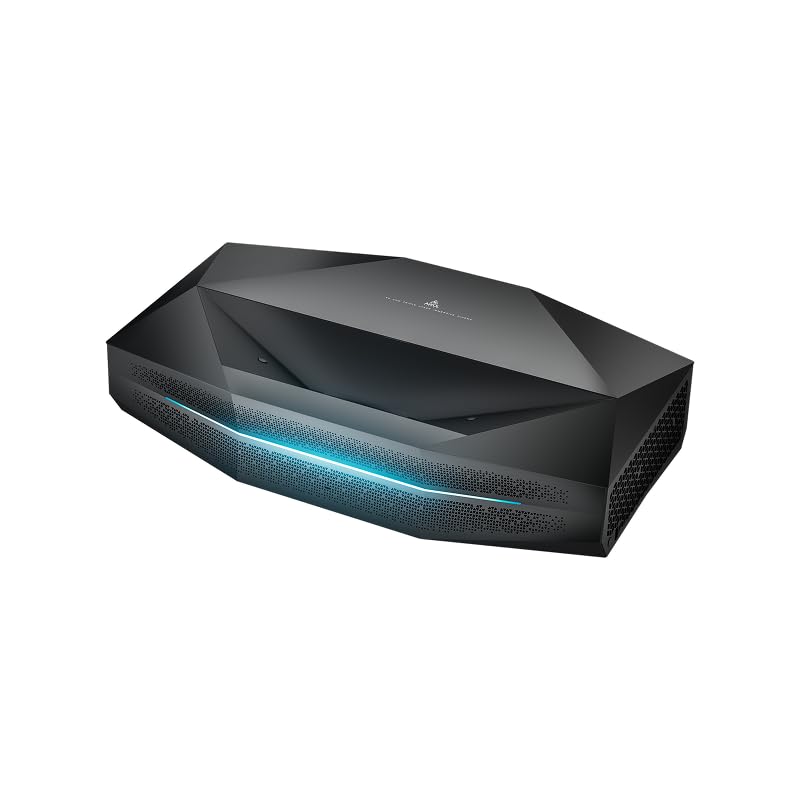
The AWOL Aetherion Pro is engineered for the videophile who prioritizes native contrast and color precision above all else. Its 6000:1 native contrast ratio (the highest among the UST projectors on this list) ensures blacks are genuinely deep without the need for dynamic dimming, preserving shadow detail in dark scenes. The Triple Laser light source produces 2600 ISO Lumens and covers 110% of the Rec.2020 color space, delivering lifelike skin tones and rich, saturated colors that maintain accuracy even in moderately lit rooms.
The PixelLock technology and advanced lens architecture ensure edge-to-edge sharpness on up to a 200-inch screen, while the professional CMS and ISF certification allow for precise calibration. For gamers, the 1ms ultra-low latency and support for VRR, ALLM, and Dolby Vision Gaming make it a formidable choice for competitive play on a massive canvas. The Anti-RBE technology also minimizes the rainbow effect that can bother some viewers with single-chip DLP projectors.
As a UST, it requires careful placement on a low cabinet and is best paired with a quality ALR screen to maximize contrast in ambient light. The onboard speakers are surprisingly good and may suffice for casual viewing, but an external sound system is recommended for a full cinematic experience. For purists wanting a native 2K-like sharpness with excellent black levels, the Aetherion Pro is a standout.
Why it’s great
- Best-in-class native 6000:1 contrast ratio
- ISF certified and professional CMS
- 1ms response time with VRR and ALLM
- 110% Rec.2020 color gamut
Good to know
- UST design requires dedicated installation
- Best performance in light-controlled environment
- Premium price point
- Built-in audio adequate but not exceptional
4. Nebula X1 4K Projector by Anker

Anker’s Nebula X1 breaks the mold by packing a triple laser light source and 3500 ANSI lumens into a portable, auto-aligning gimbal design. It is built for users who want the flexibility to take their cinema from the living room to the backyard or camping. The native 4K resolution (with a 0.47-inch DMD) provides excellent pixel density for 2K content, and the 6-blade iris delivers a native contrast ratio of 5000:1, which can be dynamically enhanced to 56,000:1 for deep blacks and punchy HDR.
The auto-alignment gimbal and Spatial Recall feature make setup incredibly simple; you can point it at any wall and it will auto-focus, auto-keystone, and auto-obstacle-avoid within seconds. The ISF-certified color accuracy ensures that the Dolby Vision and HDR10 content is reproduced faithfully. The built-in speakers are robust enough for outdoor use, and the TÜV Rheinland certification for visual comfort means you can watch for hours without eye strain.
The downside is the 60Hz input limit, which prevents it from taking full advantage of high-refresh-rate gaming sources. The remote control is basic and lacks a dedicated input selection button or motion backlight. For a versatile, go-anywhere projector that delivers a premium 2K-like image without needing a permanent installation, the Nebula X1 is the best choice.
Why it’s great
- Ultra-portable with built-in auto-aligning gimbal
- 3500 ANSI lumens for outdoor use
- Dolby Vision and HDR10+ support
- 56,000:1 dynamic contrast for deep blacks
Good to know
- Limited to 60Hz input
- Basic remote control
- Rainbow effect noticeable in bright scenes
- Requires Wi-Fi for smart features
5. NexiGo Aurora Pro

The NexiGo Aurora Pro is a rare breed of UST projector that supports active 3D playback, a feature increasingly difficult to find in the laser projector market. Using ALPD 4.0 RGB+ technology, it achieves a native contrast ratio of 3000:1, and its proprietary dynamic laser dimming technology reduces black levels by over 60% for impressive perceived contrast. With 2400 lumens of brightness, it is best suited for a light-controlled room, where its Dolby Vision and HDR10+ support can fully shine.
The 60W built-in speaker system (two 15W woofers and two 15W tweeters) provides robust, room-filling sound that can eliminate the need for a separate soundbar in smaller spaces. The Aurora Pro also boasts one of the lowest input lags among UST projectors, at just 8ms, making it viable for responsive gaming. The inclusion of dynamic laser dimming also contributes to over 30% energy savings, an eco-friendly bonus in the high-performance projector space.
It is a large unit designed for permanent placement on a dedicated stand, and its fan noise can be noticeable in quiet scenes, especially in high brightness mode. The bundled remote is sensitive and has a narrow IR angle, which can be frustrating. For cinephiles who still cherish their 3D Blu-ray collection and want a premium 4K UST projector, the Aurora Pro delivers where few others do.
Why it’s great
- Supports active 3D playback
- 60W built-in speaker system with Dolby Atmos
- 8ms input lag for UST gaming
- Dynamic laser dimming for better blacks
Good to know
- Fan noise can be audible
- Fragile remote control with narrow IR range
- 2400 lumens best for dark rooms
- Large chassis demands dedicated furniture
6. XGIMI Horizon 20
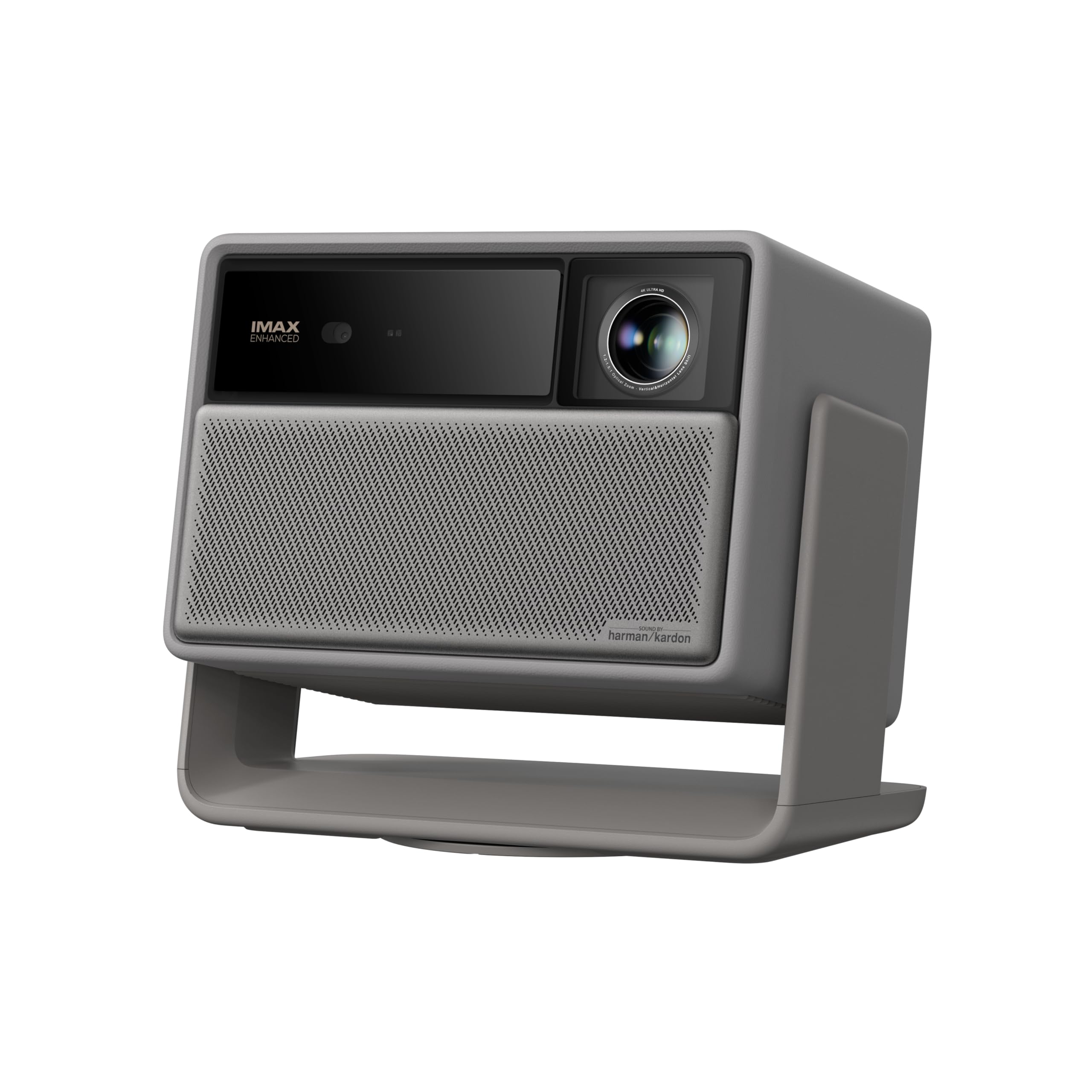
The XGIMI Horizon 20 is the definitive all-in-one lifestyle projector, combining a powerful RGB triple laser engine with advanced gaming features and a comprehensive smart platform. Its 3200 ISO lumens of brightness and 100,000:1 contrast ratio deliver a punchy, vivid image that performs admirably even with some ambient light present. The flexible optical zoom and lens shift provide significant installation freedom, allowing you to place the projector on a table or shelf and still achieve a perfectly framed 200-inch image.
For gamers, it is a beast: supporting 240Hz refresh rate, a 1ms response time, VRR, and ALLM. This combination makes it one of the most responsive projectors available, capable of handling competitive esports with fluid motion and virtually no input lag. The dual Harman Kardon speakers produce a surprisingly rich and loud sound profile, and the built-in Google TV interface gives immediate access to Netflix, Prime Video, and other streaming services.
The auto-keystone feature can be finicky in complex environments, and its price places it in the high mid-range segment. The integrated gimbal stand, while convenient, requires a stable surface. For most buyers seeking a single projector that excels at movies, sports, and gaming without requiring a dedicated theater build, the Horizon 20 is the undisputed best-in-class.
Why it’s great
- 240Hz refresh rate with 1ms response time
- RGB triple laser with 100,000:1 contrast
- Integrated Google TV and Harman Kardon audio
- Flexible optical zoom and lens shift
Good to know
- Auto-keystone can be inconsistent
- High price for a lifestyle projector
- Integrated stand needs stable surface
- No native 2K DCI chip (0.65-inch DMD)
7. XGIMI Horizon S Max

The XGIMI Horizon S Max is a well-rounded performer that brings IMAX Enhanced and Dolby Vision certification to a portable, gimbal-equipped platform. Its 3100 ISO lumens of brightness and 10000:1 contrast ratio deliver a punchy and vibrant image that large enough for up to 300 inches. The built-in flexible stand allows for instant angle adjustment upward and downward, including ceiling projection, making it uniquely versatile for odd room layouts.
ISA 5.0 is a standout feature; its advanced spatial perception algorithms enable wall color adaptation and ultra-wide screen mode, automatically adjusting the image to fit the projection surface without manual calibration. The SGS Low Blue Light certification adds to its appeal for families and long viewing sessions. The Harman Kardon 2 x 12W speakers provide a solid audio foundation, suitable for most living room setups.
It sports only a single HDMI port, which may require a splitter for users with multiple sources. The internal fan can become loud in high brightness mode, and its portable design means you are sacrificing the absolute maximum brightness of a dedicated UST. For a flexible, smart, and user-friendly 2K projector that can adapt to any space, the Horizon S Max is a fantastic choice.
Why it’s great
- IMAX Enhanced and Dolby Vision certified
- Built-in flexible stand for any angle
- ISA 5.0 with wall color adaptation
- SGS Low Blue Light certified
Good to know
- Single HDMI port only
- Fan noise noticeable in bright mode
- Portable design doesn’t give max brightness
- Internal gimbal is a bit touchy
8. Epson Pro EX11000
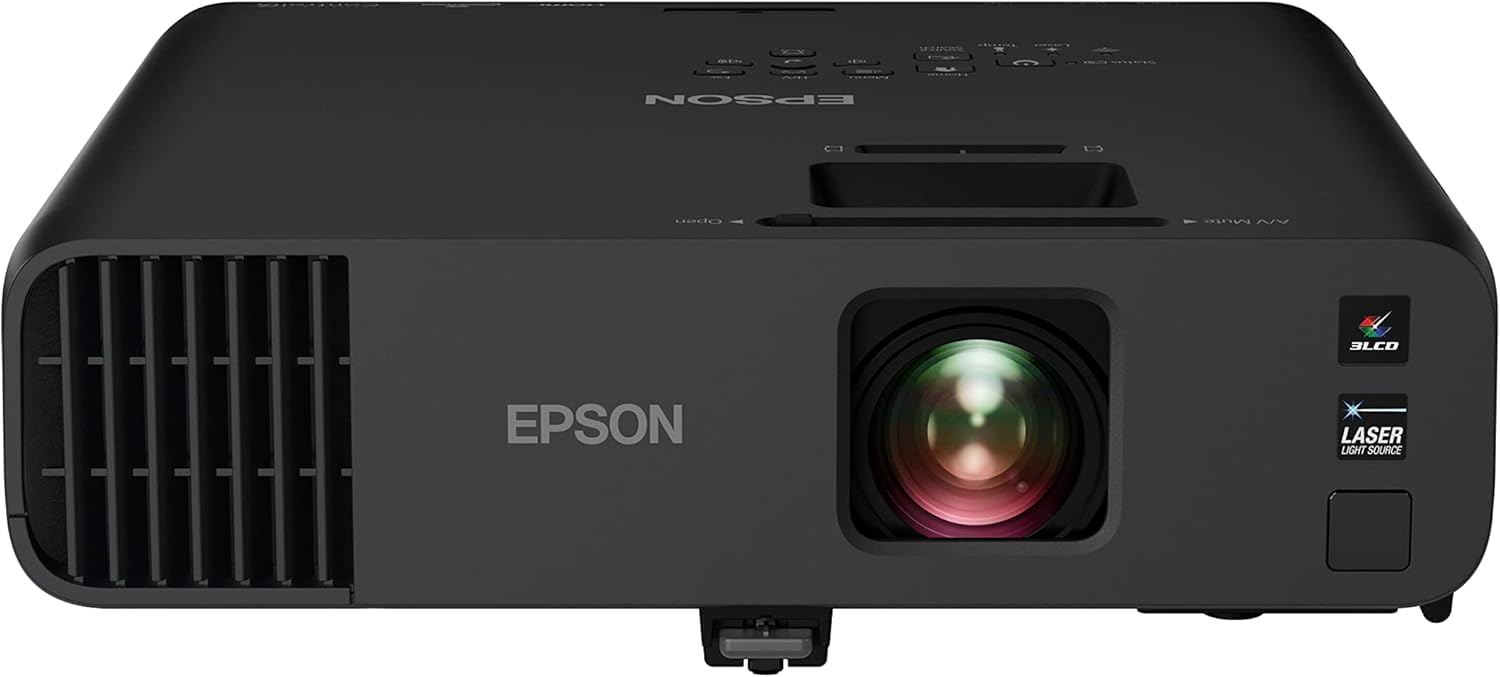
The Epson Pro EX11000 is the unrivaled champion for high-ambient-light environments, pumping out a massive 4600 lumens of color and white brightness from its true 3-chip 3LCD laser engine. This projector is designed to overcome bright living rooms, conference rooms, or daylight viewing without turning off the lights. The laser light source offers 20,000 hours of virtually maintenance-free operation, eliminating bulb replacements and providing consistent brightness over its lifespan.
Its full HD (1920×1080) native resolution is perfectly paired with the 2048×1080 signal input; while it is not a native DCI 2K panel, it renders 2K content with impressive sharpness and color accuracy, free from the “rainbowing” effect of single-chip DLP projectors. The built-in Miracast screen mirroring and dual HDMI ports make it a versatile hub for both business presentations and casual home entertainment. The 100,000:1 dynamic contrast ratio helps maintain some depth in dark scenes despite the high brightness.
It is large and heavy, designed for permanent installation or a sturdy cart. The built-in 16W speaker is weak and tinny, making an external audio system a must. Black levels are merely average, especially in a dark room, due to its brightness-first design. For the buyer whose primary need is a usable image in a room with windows, the Pro EX11000 is the most effective tool available.
Why it’s great
- Ultra-high 4600 lumens for bright rooms
- 20,000-hour laser light source
- 3LCD technology eliminates rainbow effect
- Miracast for wireless streaming
Good to know
- Large and heavy chassis
- Poor built-in speaker quality
- Mediocre black levels in dark rooms
- Not a native 2K DCI panel
9. ViewSonic PX701-4K

The ViewSonic PX701-4K is a dedicated gaming projector that prioritizes motion fluidity above all else, offering a 240Hz refresh rate at 1080p and an incredible 4.2ms input lag. This makes it a fantastic choice for competitive gamers who want the immersion of a 150-inch screen without sacrificing responsiveness. Its native 3840×2160 resolution (via XPR pixel shifting) renders 2K content with high sharpness, and the 3200 ANSI lumens of brightness ensure daytime gaming is still viable.
SuperColor technology and HDR10/HLG support provide vibrant, well-saturated colors that make games and movies pop. The 1.1x optical zoom and vertical keystone correction offer a degree of setup flexibility, though more limited than premium models. The dual HDMI inputs make connecting a PC and a console a breeze. The high brightness also makes it a capable multi-purpose projector for casual movie nights.
Its native contrast ratio of 12,000:1 is lower than mid-range competitors, meaning blacks appear grey in dark scenes. The fan noise can be audible during quiet passages, and the pixel-shifting system can introduce slight fuzziness at native 4K resolution, making 1080p 240Hz the preferred mode for sharpness. For a budget-friendly entry into high-refresh-rate 2K gaming, the PX701-4K is the sleeper hit.
Why it’s great
- 240Hz refresh rate with 4.2ms input lag
- 3200 ANSI lumens for bright room use
- Excellent for competitive gaming
- HDR10 and HLG support
Good to know
- Only 12,000:1 contrast ratio
- Pixel-shifting can cause softness at 4K
- Fan noise is noticeable
- Basic lens shift and zoom
10. Optoma HD28HDR

The Optoma HD28HDR is a classic DLP projector that punches well above its weight in the value segment. With 3600 lumens of brightness and a 50,000:1 contrast ratio, it delivers a bright, punchy, high-contrast image that is ideal for both movies and gaming. It supports 4K input downscaled to its native 1080p, meaning you can connect a 4K Blu-ray player or game console and the projector will render a sharp, detailed image without the pixel-shifting artifacts of cheaper 4K projectors.
The Enhanced Gaming Mode provides a 16ms response time at 120Hz, making it a capable performer for casual and competitive gaming. The Dynamic Black technology further enhances contrast by smoothing lamp output, bright scenes remain clear while dark scenes retain detail. The backlit remote is a pleasant touch for dark room use. For its price, the HD28HDR offers one of the best brightness-to-contrast ratios on the market.
Its DLP engine can produce a visible rainbow effect for sensitive viewers, especially in high-contrast scenes. The lens shift is limited to a single vertical adjustment, and the built-in speaker is adequate but best replaced by external audio. The lack of a dust filter can lead to dust spots on the DMD over time, requiring occasional maintenance. For a budget-conscious buyer wanting a bright, high-contrast 2K-compatible projector, the HD28HDR is a reliable workhorse.
Why it’s great
- Excellent brightness-to-contrast ratio for the price
- 120Hz mode for responsive gaming
- Supports 4K input downscaling
- Backlit remote included
Good to know
- Rainbow effect visible to sensitive viewers
- Limited lens shift
- No dust filter
- Speaker is weak
11. ViewSonic PA503HD
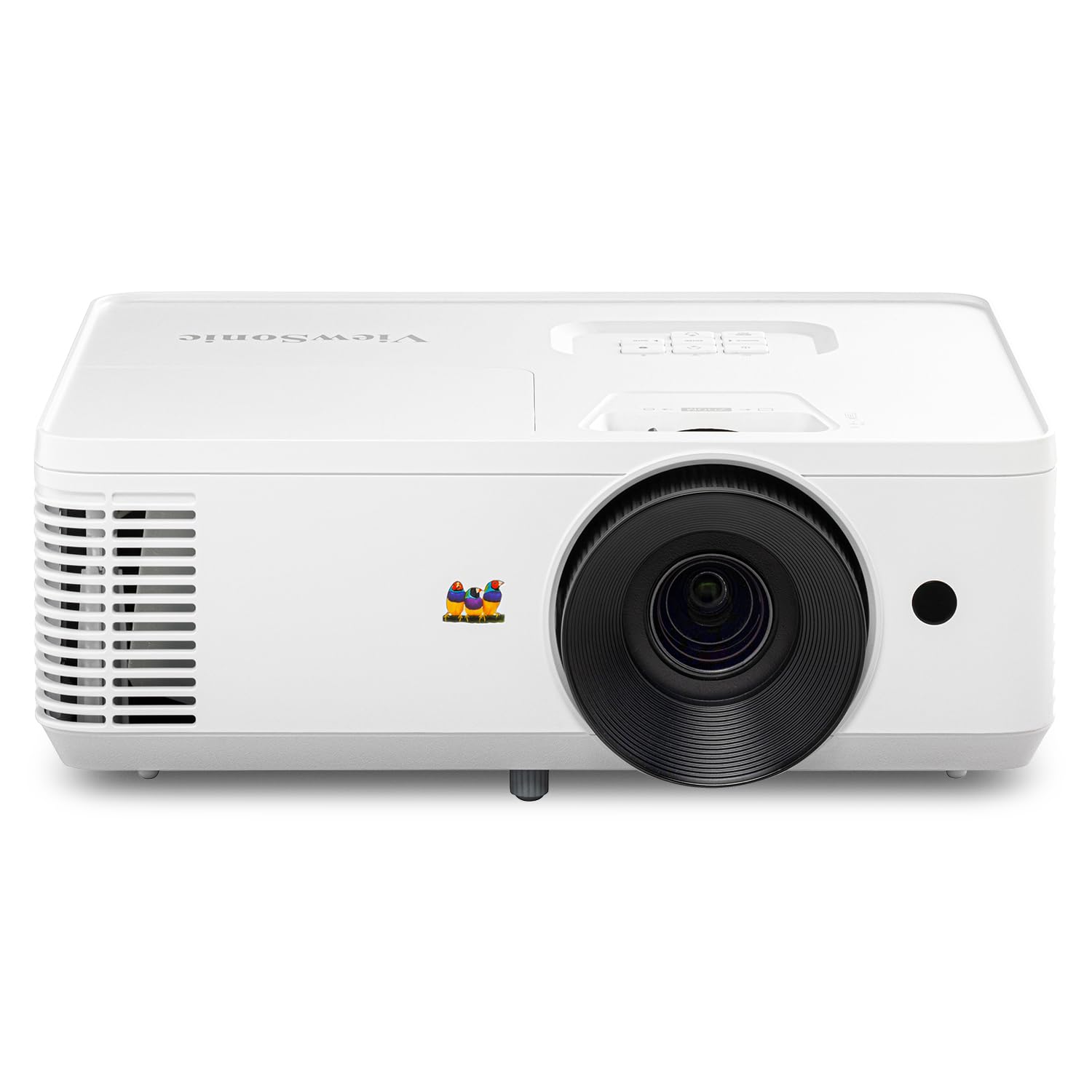
The ViewSonic PA503HD is a no-frills, high-brightness DLP projector that serves as an excellent entry point for anyone wanting an affordable 2K-compatible experience. Its 4000 ANSI lumens of brightness are among the highest at entry-level prices, making it very effective in rooms with significant ambient light. The 22,000:1 dynamic contrast ratio provides enough depth for a satisfying image in a well-lit environment, and the 16ms input lag with a 120Hz refresh rate makes it a solid choice for casual gaming.
The 1.1x optical zoom and auto keystone simplify setup, and the dual HDMI inputs provide basic connectivity. SuperColor technology ensures accurate color reproduction for presentations and movies. The 0.65-inch DLP chip provides a sharp, clear image. Its compact and lightweight design makes it easy to move between rooms or take to an event.
The manual screw-type leveling feet are fiddly and prone to getting out of alignment. The fan noise can become noticeable over time as dust accumulates, and the built-in speaker is only suitable for basic audio. The remote is functional but not backlit. For a large-screen 2K signal at a very accessible price point, the PA503HD is a strong foundational option.
Why it’s great
- High 4000 lumens for bright rooms
- 120Hz refresh rate for smooth motion
- Very affordable entry price
- Auto keystone and 1.1x optical zoom
Good to know
- Flimsy manual leveling feet
- Fan noise may increase over time
- Weak built-in speaker
- Resolution is 1080p native, 2K signal only
FAQ
Can a 1080p projector accept a 2048×1080 signal?
What is the difference between 2K and 4K for projectors?
What is the ideal throw ratio for a 2K projector?
Final Thoughts: The Verdict
For most users, the best 2k projector 2048×1080 winner is the Epson Home Cinema LS11000 because it offers the ultimate combination of 3-chip 3LCD color accuracy, powerful laser light engine, and motorized lens shift for a true theater-grade setup. If you want the flexibility of an ultra-short throw design with exceptional color, grab the Hisense PX3-PRO. And for a portable powerhouse that delivers cinematic quality anywhere, nothing beats the Nebula X1 by Anker.