
Every backpacker knows the drill: you find the perfect alpine vista for a lunch break, drop your pack, and lower yourself onto a granite slab that instantly siphons warmth from your body and jabs a sharp edge into your sit bones. After eight miles, a numb rear end isn’t just uncomfortable—it saps morale. A dedicated sit pad solves this with an ounce-weight layer that separates you from cold, wet, and abrasive ground without adding meaningful bulk to your pack.
I’m Min — the co-founder and writer behind Gadgets Feed. I’ve parsed thousands of customer reviews, cross-referenced ASTM foam density data, and measured packed volumes side-by-side to cut through the marketing and identify which pads actually deliver on warmth, durability, and trail-worthiness for serious backpackers.
Whether you need ultralight insurance against a surprise snowfield or a plush cushion for extended campsite hangs, this guide dissects the seven best options to land on the right backpacking sit pad for your specific loadout and terrain.
How To Choose The Best Backpacking Sit Pad
Selecting a sit pad for backpacking requires balancing three conflicting demands: weight, insulation, and packed size. The wrong choice means either hauling unnecessary grams or suffering a cold, wet seat at camp. Focus on the following factors to match the pad to your trip length and climate.
Foam Type: Closed-Cell vs. Self-Inflating vs. Inflatable
Closed-cell foam pads (like the Therm-a-Rest Z Seat) are puncture-proof, weigh the least, and provide reliable insulation even when wet. They do not compress into a tiny roll, but they fold flat and strap to the outside of a pack easily. Self-inflating pads use an open-cell foam core inside an airtight shell—they are thicker and more comfortable but add a few ounces and risk punctures on sharp ground. Fully inflatable air pads pack smallest but offer the least durability for direct ground contact without a protective sleeve.
R-Value and Insulation Performance
R-value measures thermal resistance. For three-season backpacking on grass or dirt, an R-value of 1.5 to 2.0 is adequate. For snow, frozen ground, or alpine granite, look for an R-rating of 2.5 or higher. Reflective foil layers, like the aluminum film used in the REDCAMP pad, can boost warmth by reflecting body heat back while blocking ground moisture. Do not assume thickness equals warmth—closed-cell foam achieves higher R-values per millimeter than open-cell foam.
Packed Weight and Attachment System
Every gram counts on a multi-day traverse. A sit pad should weigh between 0.1 and 0.5 pounds. Equally important is how it attaches to your pack. Pads with built-in bungee cords, daisy chains, or carabiner loops can be lashed to the outside without wasting internal volume. Accordion-fold pads (Z-style) collapse quickly into a flat rectangle that slides into a side pocket, while roll-up inflatable pads require a dry stuff sack and more fumbling at rest stops.
Surface Area and Thickness
A pad that is too narrow (under 11 inches wide) forces your sit bones to hang off the edges, causing pressure points. Look for a width of at least 13 inches and a length of 15 inches if you plan to lean back on your hands. Thickness matters less for insulation than for comfort on rocky terrain—0.5 to 0.75 inches of closed-cell foam provides enough give on most surfaces, whereas a 2-inch inflatable pad can bottom out if fully compressed over a sharp root.
Quick Comparison
On smaller screens, swipe sideways to see the full table.
| Model | Category | Best For | Key Spec | Amazon |
|---|---|---|---|---|
| Therm-a-Rest Z Seat | Closed-Cell Foam | Ultralight alpine trips | R-Value 2.6, 2 oz weight | Amazon |
| GDREAMT Inflatable | Self-Inflating Memory Foam | Long plane/concert sits | 26D memory foam, 2″ thick | Amazon |
| ONETIGRIS Inflatable | Self-Inflating Foam | Wet grass and rocky ground | 30D TPU fabric, 5.3 oz | Amazon |
| REDCAMP Ultralight Foam | IXPE Closed-Cell Foam | Four-season versatility | 0.1 lb, 20% better heat retention | Amazon |
| ATEPA Inflatable | Self-Inflating Foam | Packable travel carry | 0.35 lb, 30D TPU top fabric | Amazon |
| Sanmatin Self-Inflating | Self-Inflating Foam | Stadium bleachers / basecamp comfort | 18″x14.5″x2.4″, 0.55 lb | Amazon |
| Sportneer Folding Pad | Pearl Cotton / Aluminum Foil | Ultralight day hikes | 0.13 lb, 15.75″ square | Amazon |
In‑Depth Reviews
1. Therm-a-Rest Z Seat Cushion Insulated Sitting Pad

The Therm-a-Rest Z Seat is the gold standard for ultralight backpacking—weighing just 2 ounces and folding into a compact 12 x 2.5 x 2.75-inch rectangle that straps easily to the outside of any pack. Its closed-cell foam construction is puncture-proof, so you can set it directly on sharp granite, scree fields, or even a bear canister without worrying about a leak. The reflective silver layer boosts the R-value to 2.6, providing meaningful insulation when you stop for lunch on snow or cold alpine grass.
Hikers on long-distance trails like the PCT consistently praise its durability over hundreds of miles. The accordion-fold design (identical to the larger Therm-a-Rest sleeping pads) lets it deploy in under a second and refold just as quickly. At 16 x 13 inches, it offers enough surface area for a full seated position while remaining small enough to slip inside a pack lid pocket. The built-in bungee cord keeps the folded pad secure during transport and doubles as a hang loop at camp.
Where the Z Seat truly excels is in environments where reliability matters more than plush comfort. You are not buying a memory-foam throne—you are buying a virtually indestructible platform that keeps you warm, dry, and comfortable on any surface. For thru-hikers, peak baggers, and winter campers who need absolute gram discipline, this pad belongs on every trip list.
Why it’s great
- Puncture-proof closed-cell foam with an R-Value of 2.6 for reliable insulation on snow.
- Weighs only 2 ounces and folds flat to strap externally without wasting pack volume.
- Built-in bungee cord for secure attachment and quick deployment on the trail.
Good to know
- Thinner cushioning (0.75 inches) than inflatable rivals; less forgiving on sharp roots.
- Premium price per square inch compared to budget closed-cell options.
2. GDREAMT Self-Inflating Memory Foam Seat Cushion

When comfort takes priority over absolute minimum weight, the GDREAMT inflatable cushion delivers a thick 2-inch layer of 26D memory foam that self-inflates in about five seconds once the valve is opened. At 16.9 x 13 inches, it covers the full sitting area and provides noticeable pressure relief for tailbones and hips during extended sits on stadium bleachers, airplane seats, or rocky campsites. The 8-ounce weight is higher than foam-only pads but still packable.
Users on long-haul flights report it transforms a 13-hour coach seat into a tolerable experience, and hikers appreciate that adding two or three breaths lets them fine-tune firmness. The elastic fabric with a TPU coating resists tears, and the non-slip bottom keeps the pad planted on wet grass. When deflated, the cushion rolls to about the size of a water bottle, though some users note it can be tricky to compress back into the original carry bag without careful rolling technique.
For multi-day backpackers who value a better campsite sit more than shaving the last two ounces, this pad offers an excellent balance of portability and plushness. The included repair patch provides peace of mind for rocky terrain, and the built-in strap keeps the rolled pad tidy. It is not the best choice for gram counters, but it is the most comfortable mid-range option for those who sit hard at the end of the day.
Why it’s great
- 26D memory foam core provides superior pressure relief for hips and tailbone on hard surfaces.
- Self-inflates within seconds; adjustable firmness with a few extra breaths.
- Durable TPU-coated fabric and non-slip base perform well on wet grass and rock.
Good to know
- Difficult to compress back into the carry bag; requires careful roll technique.
- Heavier than closed-cell pads at 8 ounces—less ideal for ultralight setups.
3. ONETIGRIS Inflatable Seat Cushion
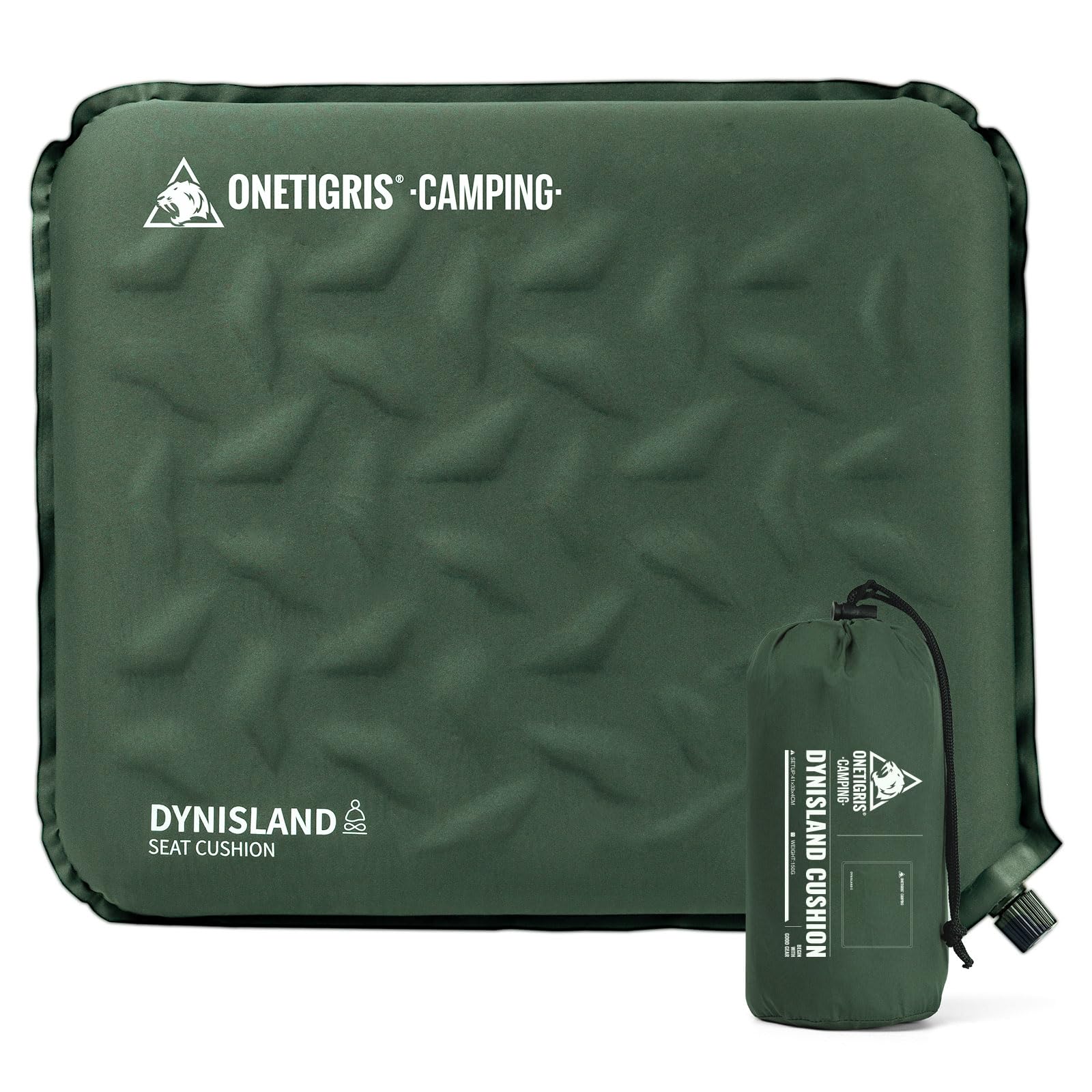
The ONETIGRIS Dynisland cushion bridges the gap between a pure foam pad and a bulky inflatable chair. It weighs only 5.3 ounces and packs down small enough to fit in a jacket pocket, yet self-inflates to about 70 percent within 30 seconds of opening the valve. The 30D stretch fabric with TPU coating feels soft against clothing while providing a waterproof, leak-resistant barrier against damp ground. Once fully inflated, the 16 x 12.9 x 1.5-inch footprint supports longer sitting sessions without the wobbliness associated with thin air-only pads.
Backpackers who took this on multi-day treks in Alaska and Africa report it held up well on metal bleachers, rocky overlooks, and wet sand. The leak-proof valve holds air reliably over repeated uses, and the included repair kit offers simple field fixes if a puncture occurs. Users with sciatica note that the pad’s high-rebound foam core reduces pressure points better than a simple closed-cell square, making it a solid choice for those who need more than just insulation from the ground.
For hikers who bounce between camping, air travel, and stadium events, this pad covers all three scenarios without compromise. It is slightly heavier than a pure foam pad but drastically more comfortable, and the self-inflating mechanism eliminates the hassle of blowing up a full air seat. If you carry one pad for a variety of activities, the ONETIGRIS is an easy recommendation.
Why it’s great
- Self-inflates to 70% in 30 seconds; adjustable firmness with a couple of breaths.
- 30D TPU fabric is soft, quiet, and waterproof with a leak-resistant valve.
- High-rebound foam core provides real sciatica relief on hard surfaces.
Good to know
- Requires a storage pouch for protection; less durable than closed-cell when used directly on sharp rock.
- Firmness adjustment takes a few minutes of trial to get right the first time.
4. REDCAMP Ultralight Foam Backpacking Sit Pad
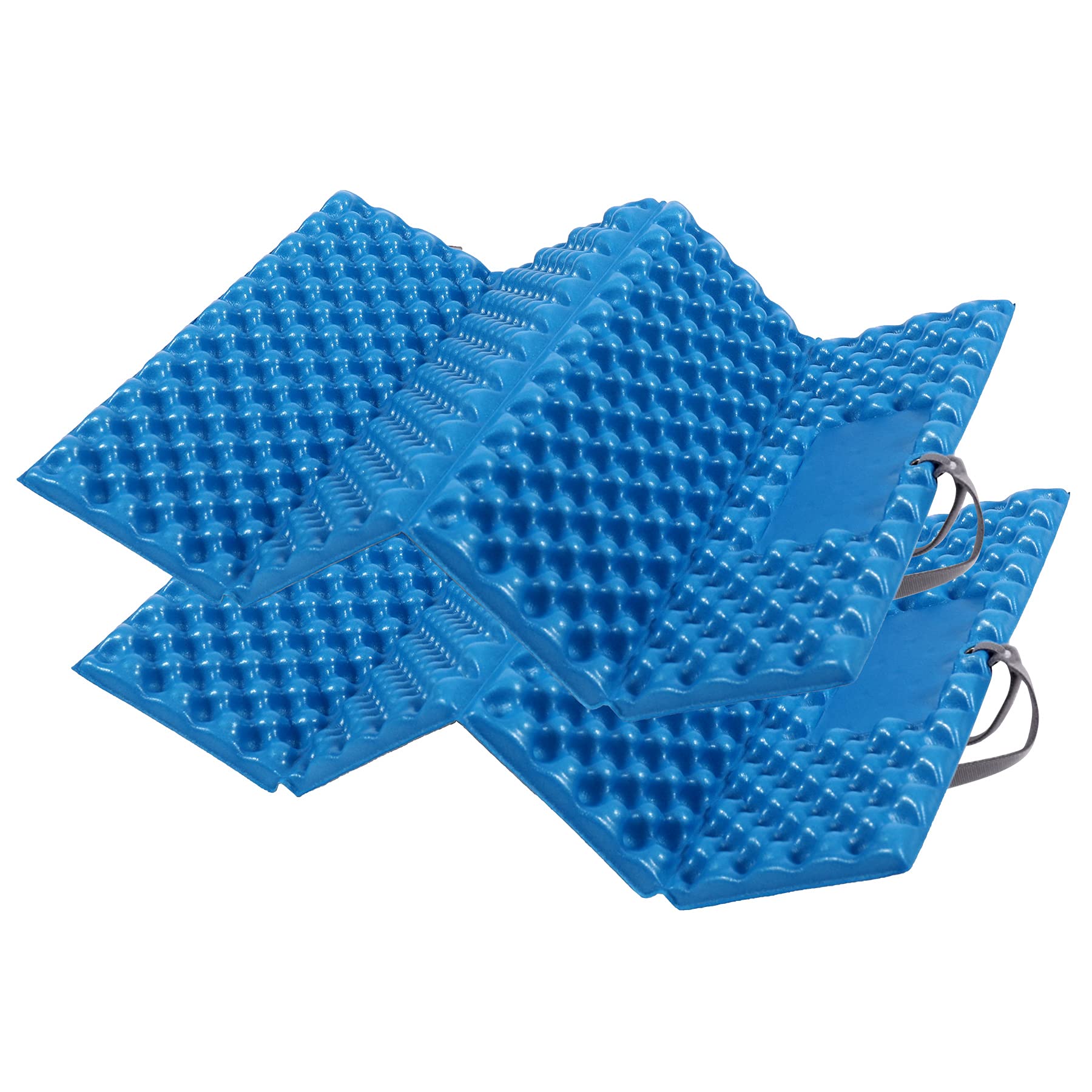
The REDCAMP Ultralight Foam pad delivers a rare combination of near-zero weight (0.1 pounds per pad) and effective thermal insulation thanks to its IXPE foam core bonded with an aluminum foil layer. The egg-crate pattern of peaks and valleys provides a surprising amount of cushion considering the 0.5-inch thickness, and the foil surface boosts heat retention by roughly 20 percent compared to standard foam pads. At 16.4 x 11.2 inches, it is slightly narrower than some competitors but still adequate for most adults.
Hikers on the PCT report using this pad for multi-day stretches, noting it handles sharp sticks and rocky ground without tearing. The accordion fold collapses to 11.2 x 4.1 x 1.6 inches, making it easy to slide into a side pocket or lash to a pack’s daisy chain. A clever four-season trick: place the aluminum film down in summer to reflect ground heat, or flip it up in winter to maximize warmth retention. Users feed feral cats off it; others kneel on it for camp chores—it is rugged enough for daily abuse.
For budget-conscious backpackers who refuse to sacrifice insulation, this pad offers the best warmth-to-weight ratio in the sub-premium tier. The closed-cell construction means no inflation, no punctures, and no maintenance. It will not rival the plushness of a memory foam cushion, but as a lightweight thermal barrier that costs a fraction of premium brands, it is hard to beat.
Why it’s great
- Weighs only 0.1 pounds with an aluminum foil layer for 20% better heat retention.
- Egg-crate foam pattern offers surprising cushion on rocky terrain at 0.5-inch thickness.
- Durable IXPE closed-cell foam resists punctures and requires zero inflation or maintenance.
Good to know
- Narrower than premium pads at 11.2 inches wide—sit bones of larger adults may hang off.
- Less cushioning than 2-inch inflatable pads; not ideal for very rocky or root-filled ground.
5. ATEPA Inflatable Seat Cushion
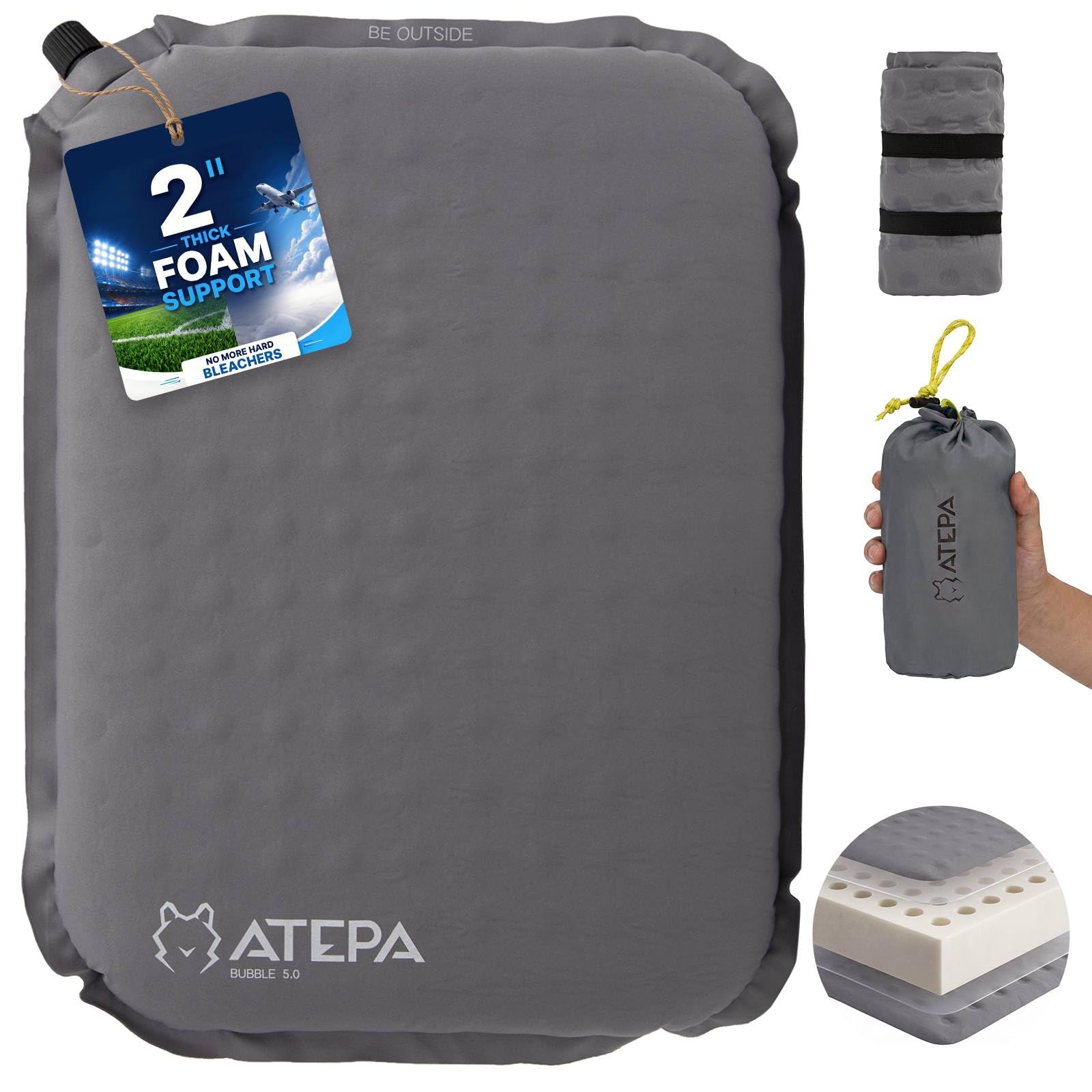
The ATEPA cushion uses a self-inflating foam core inside a 30D elastic TPU top and 190T polyester TPU bottom, targeting hikers who need a comfortable, compact pad that stows down to 5.9 x 3.5 inches. At 15 x 11 inches and 2 inches thick when fully inflated, it supports the core sitting area of most adults without the bulk of a full-length pad. The foam core partial self-inflation, combined with one or two breaths to dial in firmness, provides a stable platform that does not feel like sitting on a wobbly balloon.
Frequent travelers appreciate that the ATEPA includes two elastic carry straps and two repair patches in the pouch, making it ready for airport gate changes or rocky campsite rests. The soft 30D fabric feels gentle against skin, while the 190T bottom resists abrasion when placed directly on concrete or gravel. Some users note that the pad requires a few minutes to fully expand after unboxing due to compression from shipping, and that deflating and rolling it up takes more effort than a simple foam fold.
For backpackers who split time between trail use and airplane seats, the ATEPA strikes a solid value balance. It is not the lightest nor the most comfortable on this list, but its sub-half-pound weight, included accessories, and compact roll make it a versatile middle-ground option that fits easily into a carry-on without raising eyebrows.
Why it’s great
- Self-inflating foam core with 30D TPU top fabric for comfortable, wobbly-free support.
- Packs down to 5.9 x 3.5 inches—small enough for a backpack or carry-on luggage.
- Includes two elastic carry straps and two repair patches, ready for field use.
Good to know
- Not fully self-inflating out of the package; one to two breaths needed for optimal firmness.
- Deflating and rolling back into the pouch is fiddly compared to folding foam pads.
6. Sanmatin Self-Inflating Seat Cushion
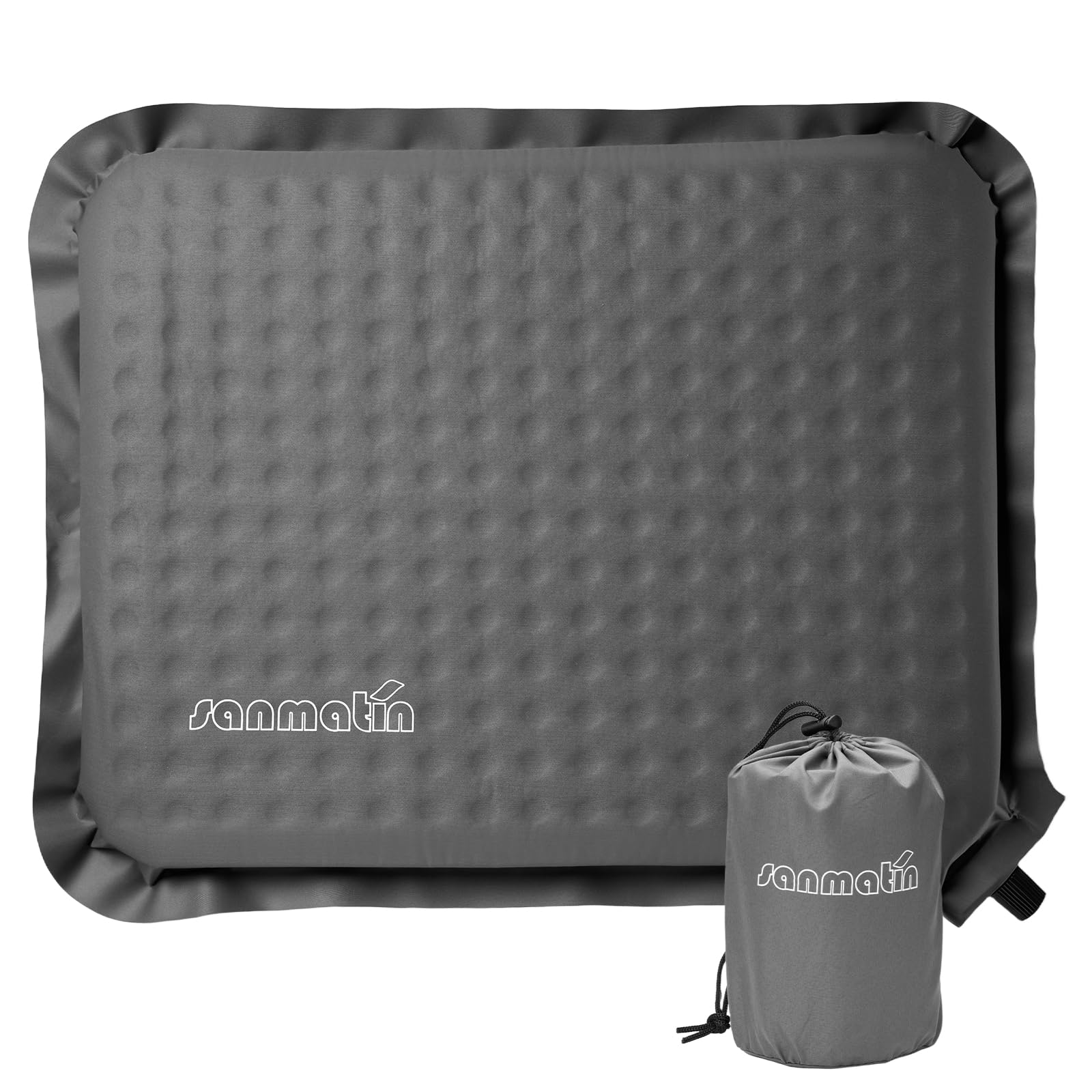
The Sanmatin cushion takes a different approach from ultralight foam pads—it prioritizes generous coverage (18 x 14.5 inches) and thick cushioning (2.4 inches) for users who want a substantial seated area. The high-density foam core provides firm, stable support that does not bottom out, making it suitable for heavy stadium bleachers, camping chairs, or rocky ground where a thin pad would fail. The bottom layer uses waterproof nylon to block moisture and cold, while the top fabric is a soft polyester that feels good against bare legs.
Hikers using this at basecamp report that it self-inflates quickly and can be adjusted for firmness with extra breaths from the user. The pad rolls up to about the size of a small can of ground coffee (4 x 4 x 7 inches), fitting easily into a daypack. Users with hemorrhoids or sciatica specifically note relief from the thick foam core, and reviews highlight that it stays comfortable for several hours of continuous sitting. The included storage bag keeps the pad clean when packed away.
Given its heavier weight (0.55 pounds), this pad is less suited for fast-and-light backpacking but excels for car camping, basecamp lounging, and stadium use. If your definition of backpacking involves a mellow hike to a established camp where comfort counts, the Sanmatin’s large surface area and thick foam will keep you happy through a long evening around the fire.
Why it’s great
- Generous 18 x 14.5-inch surface area and 2.4 inches of thick high-density foam for all-day comfort.
- Waterproof nylon bottom insulates against cold and damp ground effectively.
- Self-inflates quickly and rolls compactly to the size of a small can.
Good to know
- Heavier than closed-cell foam pads at 0.55 pounds—less ideal for ultralight multi-day trips.
- Bulkiest packed volume on this list; takes up more pack space than foldable foam.
7. Sportneer Sitting Pad

The Sportneer pad is the lightest and most packable entry-level option in this guide, weighing just 0.13 pounds and folding down to palm size. Its layered construction combines pearl cotton (a lightweight closed-cell foam) with an Oxford cloth exterior and an insulating aluminum foil bottom that reflects body heat and blocks moisture. At 15.75 inches square, it offers the largest pure surface area in the budget tier, making it a versatile option for both sitting and kneeling during camp chores.
Day hikers and ultralight enthusiasts appreciate the included carabiner, which lets them clip the folded pad to the outside of a pack without taking up any internal volume. The aluminum foil bottom is effective at keeping moisture out during damp picnics or after-rain log sits, and the pad wipes clean easily. Reviews note it is thinner than expected (0.4 inches), so it works better as a ground barrier against cold and dirt than as a deep cushion for rocky surfaces.
For hikers who want the absolute minimum weight and cost for a sit barrier, the Sportneer delivers exactly that. It is not meant to replace a 2-inch inflatable pad for hours of camp lounging—rather, it is the insurance policy you clip to your pack for impromptu lunch stops without hesitation. If your priority is dropping grams and not dollars, this pad earns its place in the bottom of any daypack.
Why it’s great
- Ultralight at 0.13 pounds with a large 15.75-inch square surface area for coverage.
- Aluminum foil bottom blocks moisture and reflects heat away from cold ground.
- Includes a carabiner for easy external attachment—zero internal pack space required.
Good to know
- Thin 0.4-inch foam provides minimal cushioning on sharp or rocky terrain.
- Pearl cotton construction is less durable than dense closed-cell IXPE or EVA foam pads.
FAQ
Can I use a sleeping pad as a backpacking sit pad instead of buying a dedicated one?
How do I clean a closed-cell foam sit pad after a muddy hike?
Why does my self-inflating sit pad seem to lose firmness during a long sit?
Final Thoughts: The Verdict
For most users, the backpacking sit pad winner is the Therm-a-Rest Z Seat because it offers an unbeatable combination of 2-ounce weight, puncture-proof closed-cell foam, and a real R-Value of 2.6 for reliable insulation on any surface. If you want cushioned comfort for long sits at basecamp, grab the GDREAMT self-inflating memory foam pad. And for the most warmth per gram on a budget, nothing beats the REDCAMP Ultralight Foam pad with its reflective aluminum layer and sub-2-ounce weight.