
Digging post holes by hand with a clamshell digger is a punishing, time-wasting ritual that turns a weekend fence project into a multi-day ordeal. A motored auger transforms that same job into a ten-minute task, but the wrong choice—underpowered engine, flimsy bits, poor gearbox—leaves you stranded mid-project with a seized motor or a bent shaft.
I’m Min — the co-founder and writer behind Gadgets Feed. I’ve spent hundreds of hours analyzing auger engine displacements, gearbox designs, bit materials, and real-world soil performance data so you don’t end up with a tool that chokes on the first clay root ball.
With so many engine sizes, bit combos, and build qualities on the market, finding the best post hole auger means weighing displacement against durability and measuring torque claims against actual digging conditions.
How To Choose The Best Post Hole Auger
Selecting a post hole auger comes down to matching engine displacement and bit design to your specific soil type and hole volume. Overbuying displacement for sandy soil wastes money, while underpowering in heavy clay guarantees frustration.
Engine Displacement: The Real Power Metric
Engine size, measured in cubic centimeters (cc), is the single most important spec. A 52cc unit handles light topsoil and occasional fence posts, but 72cc engines deliver the torque needed to chew through packed clay, gravel, and dense root systems without bogging down. For rocky ground, anything below 54cc often stalls or shears pins.
Gearbox Configuration: Straight-Through vs. Side-Mounted
A straight-through gearbox aligns the engine and auger shaft on the same axis, distributing torque evenly and reducing gear shear. Side-mounted designs concentrate stress on one gear point, making them more prone to failure under heavy load. For long-term durability, prioritize straight-through gearboxes with alloy gears and ball-bearing shafts.
Bit Quality and Sizing
Auger bits are typically fluted steel with a fishtail pilot point. Double-fluted designs clear dirt faster than single-flute, and replaceable blades extend bit life significantly. Standard included sizes range from 4 to 12 inches in diameter. For 4×4 fence posts, an 8-inch bit is ideal. Tree planting often demands 10- to 12-inch bits. Extension rods—typically 12 to 24 inches—allow deeper holes without bending over, but excessive length without engine power causes binding.
Quick Comparison
On smaller screens, swipe sideways to see the full table.
| Model | Category | Best For | Key Spec | Amazon |
|---|---|---|---|---|
| 72CC Auger Post Hole Digger | Gas 2-Stroke | Heavy clay & rocky soil | 72cc engine, 6″ & 8″ bits | Amazon |
| Earthquake E43 | Gas 2-Stroke | One-person operation | 43cc Viper, 8″ auger | Amazon |
| PROYAMA 54cc | Gas 2-Stroke | Versatile multi-bit work | 54cc, 4 bits 4″-12″ | Amazon |
| NEO-TEC 72CC | Gas 2-Stroke | Ice & earth dual use | 72cc, 6″ & 10″ bits | Amazon |
| 72CC Newly Upgraded Prowoo | Gas 2-Stroke | High-volume fence installation | 72cc, 6″ & 8″ bits | Amazon |
| DYRABREST 52cc | Gas 2-Stroke | Budget-friendly multi-bit kit | 52cc, 4″,6″,8″ bits | Amazon |
| VEVOR 52cc | Gas 2-Stroke | Large fuel tank endurance | 52cc, 6″ & 10″ bits | Amazon |
| Seymour AUA2 | Manual | No-gas precision digging | Adjustable 4″-8″ steel | Amazon |
| THUNDERBAY 185cc | Gas 4-Stroke | Heavy-duty two-man digging | 185cc, 12″-24″ bits | Amazon |
In‑Depth Reviews
1. 72CC Auger Post Hole Digger
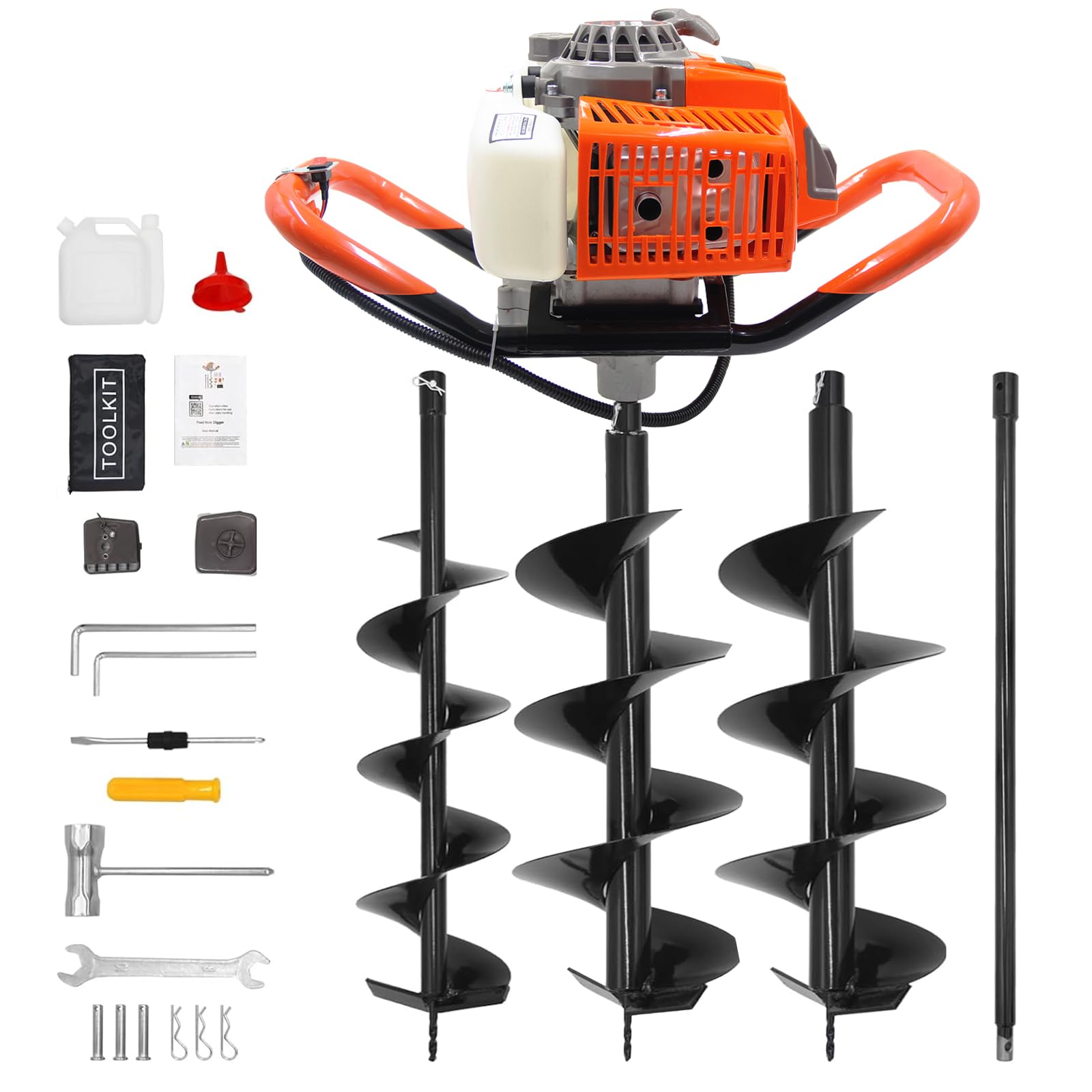
This 72cc two-stroke powerhead delivers the displacement needed to chew through heavy clay and rocky soil without bogging, yet remains light enough for one-person operation. Users report digging down 24 inches in under two minutes per hole, with the included 6- and 8-inch double-fluted bits clearing dirt efficiently. The straight-through gearbox with alloy gears distributes torque evenly, reducing the risk of shearing under load.
A manual recoil start system fires on the second or third pull on a fresh prime, and the large fuel tank supports prolonged operation without mid-job refueling. The finger-throttle control on the ergonomic handlebar gives good modulation, while the anti-vibration grip helps manage fatigue during longer sessions. Some users note that bottom tines can bend in extremely hard soil, but the overall build holds up well for hundreds of holes.
Included in the package are a fuel mixing bottle and a basic tool kit for assembly. At this displacement and bit complement, it sits squarely in the sweet spot for homeowners and small contractors who need reliable, repeatable performance day after day.
Why it’s great
- 72cc engine powers through clay and rocky soil without stalling
- Straight-through gearbox reduces gear shear risk
- Easy 2-3 pull start with manual recoil system
Good to know
- Bottom tines may bend in extremely hard ground
- Throttle cable can stick if not lubricated before first use
2. Earthquake E43 1-Person Earth Auger

The Earthquake E43 is purpose-built for one-person operation, with a 43cc Viper two-cycle engine and a 30:1 transmission ratio that optimizes torque for vertical digging. The steel-welded handlebar design is noticeably rigid, and the anti-vibration foam grips reduce hand fatigue over dozens of holes. Its industrial air filtration system is a standout feature—it keeps dust out of the carburetor far better than the foam filters on budget powerheads.
The included 36-inch, 8-inch auger bit is longer than most, allowing the operator to stand fully upright while starting the hole or drilling deeper on larger projects. The hard surfacing on the fishtail pilot point holds up well against small rocks and packed clay. Users consistently report reliable starting and smooth idle, though the plastic throttle lever feels lighter than the rest of the build.
Backed by a 5-year limited warranty, this unit represents a strong mid-range investment. It won’t handle 12-inch bits in heavy clay—the 43cc displacement tops out around 8 inches in tough soil—but for fence posts and tree planting in normal-to-dense ground, it strikes an excellent balance of power and weight.
Why it’s great
- Industrial air filtration keeps engine running clean in dusty soil
- 36-inch auger bit allows upright posture while drilling
- 5-year limited warranty provides long-term peace of mind
Good to know
- Plastic throttle lever feels less durable than metal counterparts
- Struggles with 12-inch bits in heavy packed clay
3. PROYAMA 54cc Post Hole Digger
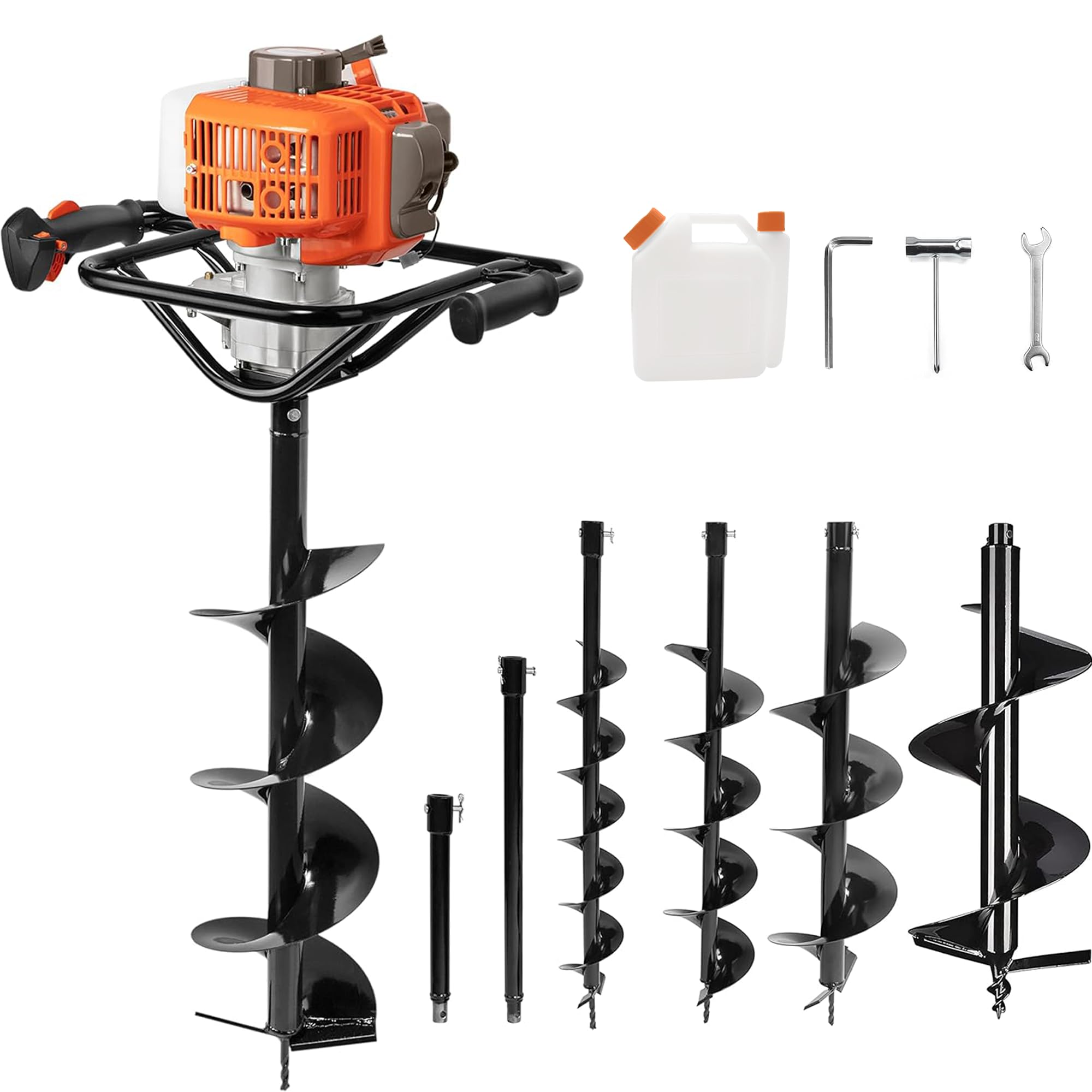
The PROYAMA 54cc comes with an unmatched four-bit set covering 4, 6, 8, and 12 inches, plus a 12-inch extension rod and a 20-inch extension, making it the most complete kit in this roundup. The 2.4 HP (1300W) two-cycle engine runs on a 50:1 fuel mix and starts reliably when using 93 octane with quality two-stroke oil. The anti-vibration grip handle is appreciated during longer digging sessions.
One notable element is the 5-year warranty on the gearbox—a strong indicator of confidence in the drivetrain. The straight-through design helps prevent gear shear, although the 54cc displacement means the 12-inch bit can torque abruptly if it catches a root, especially in two-person mode. Users report that the machine is powerful enough to require attentiveness; it will rip free from a single operator’s hands if a bit snags on a rock.
The double-boxed packaging protects the unit well during shipping, and assembly is limited to attaching the bit and handle. For those who need to switch between small-diameter planting holes and larger fence post bores, this is the most adaptable single powerhead available at this price tier.
Why it’s great
- Includes four bits from 4 to 12 inches plus two extension rods
- 5-year gearbox warranty indicates durable drivetrain design
- Anti-vibration foam grips improve handling comfort
Good to know
- 54cc engine can struggle with 12-inch bit in very hard clay
- Extension rod can bend under heavy side load; re-welding may be needed
4. NEO-TEC 72CC Post Hole Digger
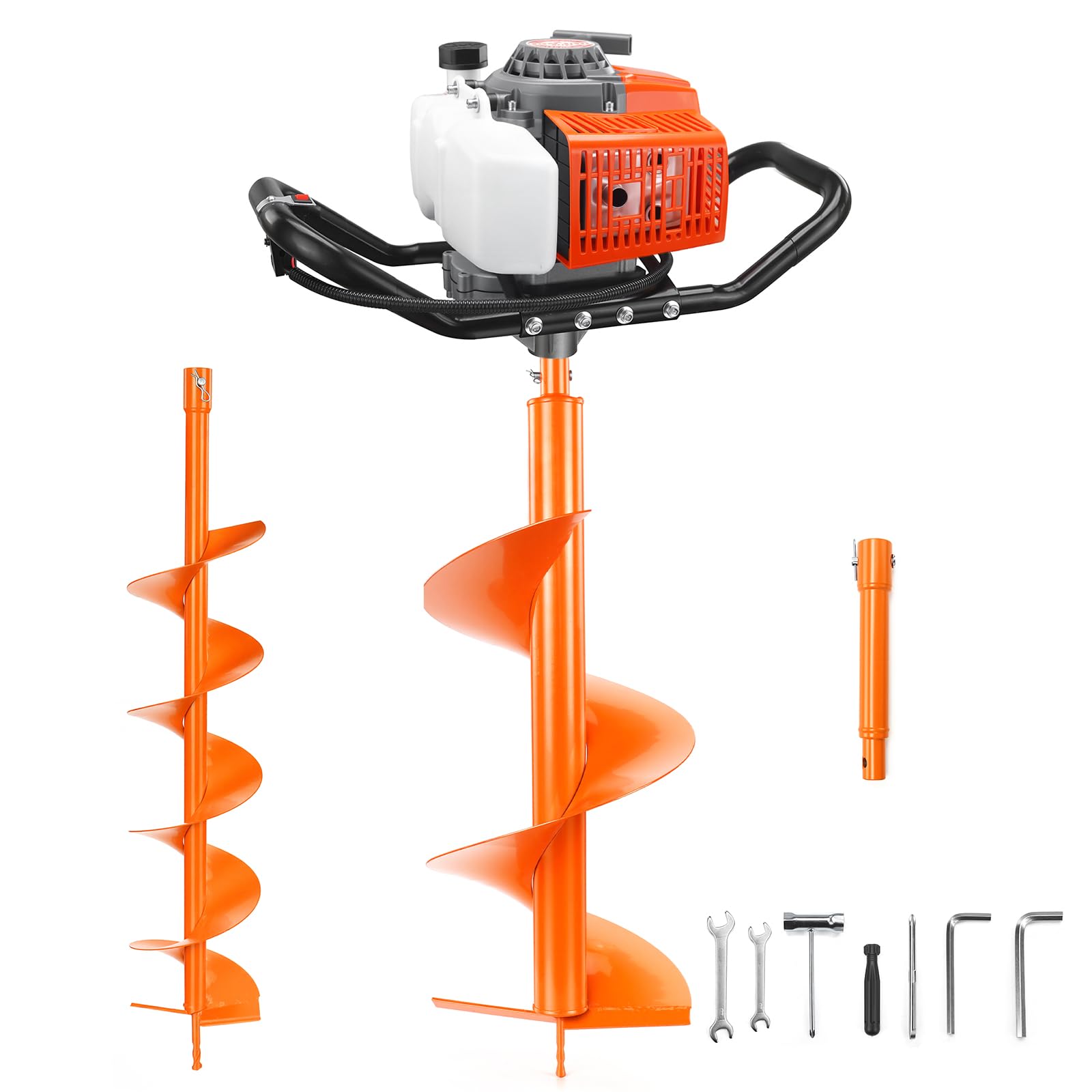
At 72cc with 6- and 10-inch hardened steel bits plus an 8-inch extension rod, the NEO-TEC is engineered for dual-season use—ice fishing in winter and ground digging the rest of the year. The powerhead weighs 17.64 pounds, which is competitive for this displacement, and the anti-vibration handles are well-positioned to reduce fatigue during extended operation. Users report it powers through rocky soil for holes up to 48 inches deep when using the extension.
The quick-start manual recoil system works well with the proper 25:1 fuel mix as labeled. A critical post-purchase step is verifying the gearbox grease level via the zerk fitting—some units ship with insufficient lubrication. The metal pins securing the auger bit and extension rod are a known weak point; several users recommend replacing them with stronger aftermarket pins for heavy-duty use.
The dual-mode design is legitimate—the same engine and bit interface work for ice augering without modification. The throttle trigger is mounted on the right handlebar grip, giving good control. For users who want one powerhead that works year-round, this is the most versatile configuration on the list.
Why it’s great
- 72cc engine powers through rocky soil and deep holes
- Dual-purpose design works for ice fishing and earth digging
- Lightweight powerhead at 17.64 lbs for this displacement class
Good to know
- Gearbox often ships under-greased; needs manual fill via zerk
- Metal pins for auger bit are weak—consider replacing with stronger ones
5. 72CC Newly Upgraded Post Hole Digger (Prowoo)
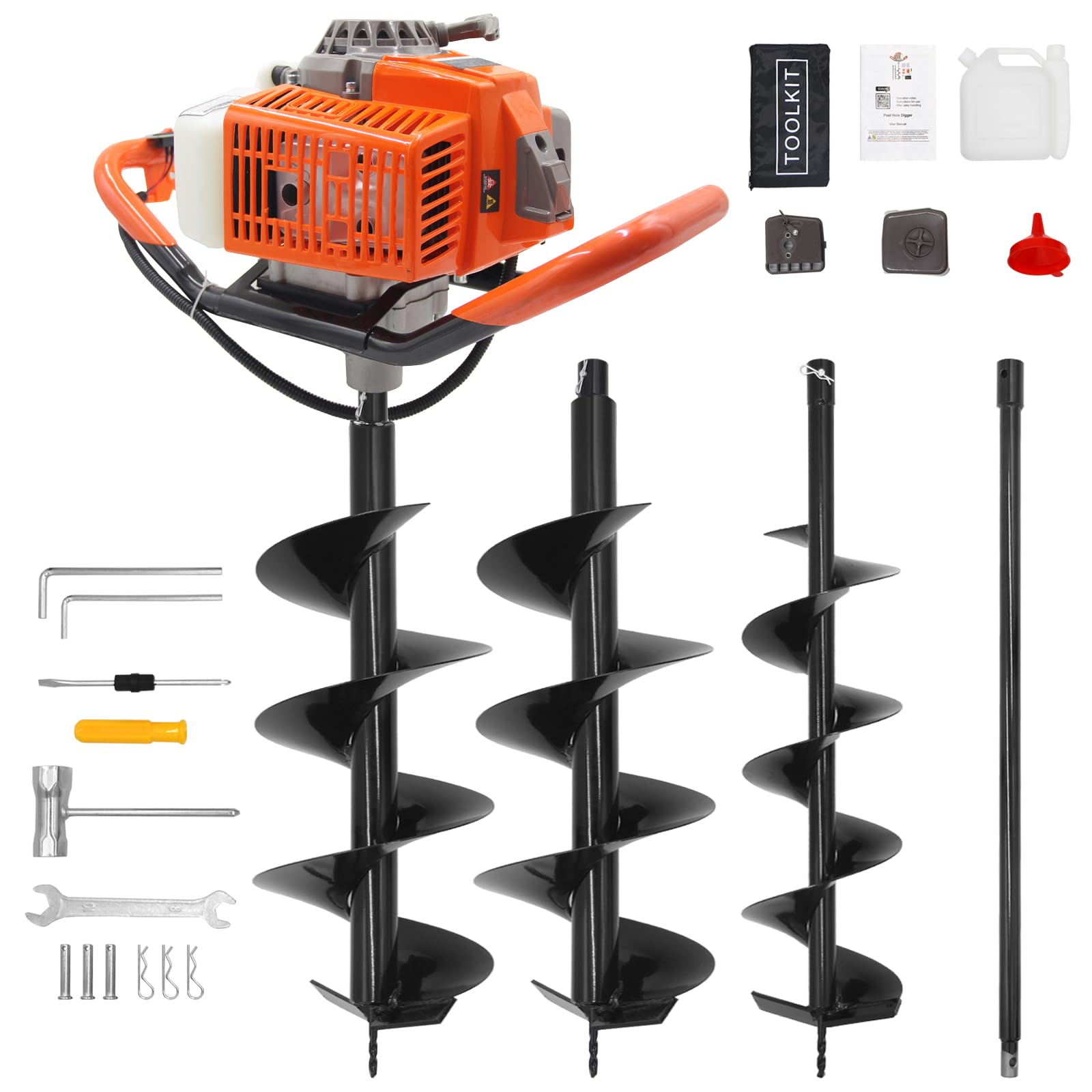
The Prowoo 72CC upgrade brings a full 72cc gasoline engine to a price point typically reserved for 52cc units. This displacement advantage becomes immediately apparent in heavy Texas clay, where users report drilling 24 holes in a few hours without the engine bogging. The included 6- and 8-inch double-sheet drill bits pair with a 60cm (approx. 24-inch) extension rod, enabling holes up to 40 inches deep.
The ergonomic finger-throttle control on the handlebar gives precise speed modulation, and the manual recoil start typically fires within two pulls. The build uses a mix of metal and plastic components; the plastic trigger mechanism feels light-duty compared to the metal handlebar frame. Users who bent the largest bit on a rock note that it can be straightened with basic tools—the metal is forgiving rather than brittle.
This unit is best suited for high-volume fence installation where the 72cc displacement saves significant time over lower-powered alternatives. The included fuel mixing bottle and tool kit add convenience. Those who already own auger bits will appreciate that the powerhead is compatible with standard auger bit interfaces.
Why it’s great
- 72cc engine at a budget-friendly price point outperforms most 52cc units
- 24-inch extension rod enables deep hole drilling
- Quick two-pull start system with easy fuel delivery
Good to know
- Plastic trigger and throttle mechanism feel less durable than metal
- Largest bit can bend on rocks but is repairable
6. DYRABREST 52cc Gas Powered Earth Auger

The DYRABREST 52cc comes with a three-bit set—4, 6, and 8 inches—plus a 12-inch extension bar, making it the most complete budget kit available. The straight-through gearbox is a genuine advantage at this price level; most competing 52cc units use side-mounted designs prone to gear shear. Users report the unit cutting through 30 years of packed gravel with surprising ease, completing holes in about two minutes each.
Long-term reliability is mixed. Some units have run for over two years on premixed fuel with no issues, while others seized after one season or suffered broken exhaust guards during shipping. The chrome-plated steel bits hold up well in normal soil but can chip on larger stones. The 19.2 kg (42.3 lbs) total weight makes it a two-person lift for transport, though single-person operation during drilling is manageable.
For occasional home use—fence installation, mailbox posts, small garden projects—this kit offers exceptional value. The included extension rod adds reach that many budget units omit. Professional landscapers may want to step up to 72cc for daily reliability, but for project-based DIY users, this allocates dollars to bits and extension rather than sheer displacement.
Why it’s great
- Includes 4-inch, 6-inch, and 8-inch bits plus 12-inch extension
- Straight-through gearbox is robust for a budget-priced auger
- Drills through packed gravel in about two minutes per hole
Good to know
- Mixed reliability—some units seize after one season
- Shipping damage to exhaust guard reported in some deliveries
7. VEVOR Post Hole Digger 52cc

The VEVOR 52cc distinguishes itself with a 1.2-liter fuel tank that allows continuous digging of dozens of holes without refueling—a real advantage for large property projects. The 1450W engine spins up to 9350 RPM, and the ball-bearing gearbox shaft with alloy gears provides smooth torque transfer. Included are 6- and 10-inch double-sheet drill bits plus three extension poles, giving substantial reach for deep planting holes.
Users report drilling 50 holes (18-24 inches deep) in clay-loam mix at 1 to 1.5 minutes each, with the unit starting easily and running smoothly throughout. The 1.2-meter thickened pull cord is longer than standard, making the recoil start easier for seated or bent-over operators. The emergency stop switch on the handlebar allows quick shutdown, which is useful when the auger catches on subsurface rocks.
Customer service responsiveness is a mixed point—some users received prompt replacement parts, while others struggled with missing bolts and broken exhaust guards from shipping. The 42.5-pound weight is significant, and the 10-inch bit requires careful handling as it can create kickback torque in heavy soil. For those prioritizing runtime over absolute power, the large tank is a genuine productivity win.
Why it’s great
- 1.2L fuel tank enables extended operation without refueling
- Three extension poles provide deep drilling reach
- Ball-bearing gearbox with alloy gears handles varied soil
Good to know
- Weight of 42.5 lbs makes transport a two-person job
- Shipping damage (broken guards, missing bolts) reported occasionally
8. Seymour AUA2 Adjustable Auger with Wood Handle

The Seymour AUA2 is the only manual auger on this list, and it earns its place through pure mechanical reliability—no fuel, no carburetor, no pull cords. Its riveted steel blades attach to a malleable iron yoke and adjust from 4 to 8 inches in diameter, covering the most common post-hole sizes. The wooden T-handle and steel shaft transfer full body weight into the dig, pulling clean 6×8-inch dirt cylinders from heavy clay without stalling.
In dense clay, users report digging uniform holes to 4 feet in about 15 minutes—comparable to a powered unit in the same soil. The tool excels in conditions where powered augers struggle most: wet clay that clogs flutes and rocks that bind rotating bits. When it hits a root or stone, the manual design simply stops rather than wrenching the operator. The adjustable collar allows precise diameter control, and the steel blades can be sharpened with a file as they wear.
The main trade-off is physical effort. This auger delivers no mechanical advantage—each turn requires full hand-over-hand force, and deeper holes demand a clamshell digger to clear loose dirt. The adjustment bolt can loosen during use; replacing it with a nylon-lock nut is a common owner modification. For gas-free zones, remote fence lines, or operators who prefer control over speed, this remains the definitive manual post hole digger.
Why it’s great
- No fuel, no engine, no maintenance—indefinite shelf life
- Adjustable 4- to 8-inch diameter covers most post sizes
- Pulls clean 6-inch cylinders from heavy clay without clogging
Good to know
- Requires significant physical effort—not for large hole volumes
- Adjustment bolt can loosen; nylon-lock nut upgrade recommended
9. THUNDERBAY 2-Man Earth Auger 185cc
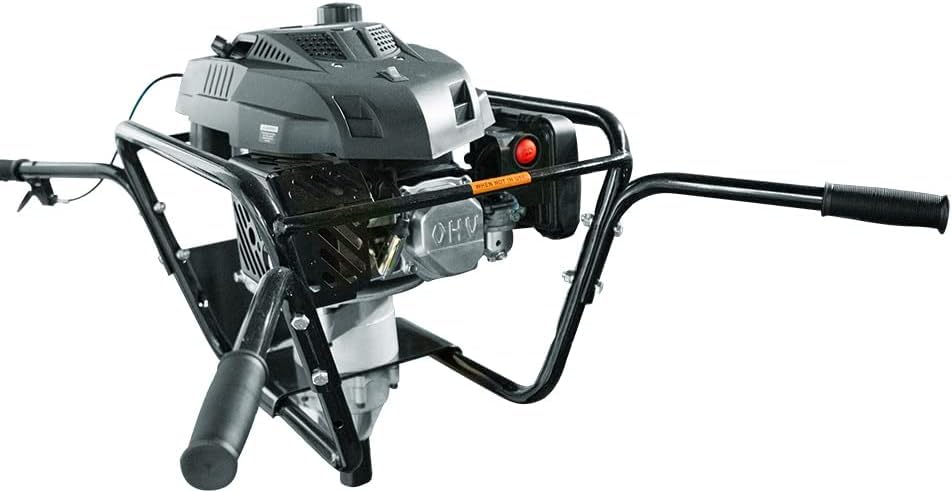
The THUNDERBAY 185cc is a dedicated two-man powerhead running a 4-cycle engine, which eliminates the need to mix oil and gas. This displacement class supports auger bits from 12 to 24 inches—far beyond what any two-stroke on this list can manage. The easy-pull recoil start system reduces starting effort compared to high-compression two-strokes, and the anti-vibration foam handles minimize fatigue during the extended sessions that large-diameter digging requires.
In real-world use, the unit excels in normal soil conditions with 8-inch bits, digging 25 holes on the first day at elevation without struggle. It handles shale and small rocks, though 4-inch-plus river rocks will stop it. The less kickback claim holds true compared to high-torque two-strokes; the 4-cycle engine delivers smoother torque application, reducing the risk of the auger catching and twisting.
Some users report reliability concerns—units that ran only on 85% choke after 50-75 holes, then failed completely. The vendor’s post-sale support has been responsive in many cases, sending replacement powerheads and spare carbs under warranty. Fuel system issues (grommets breaking, carburetor clogging) appear in a minority of units. For large-scale agricultural planting or deep foundation holes where only a 185cc class machine will do, this is a capable choice backed by a 2-year warranty.
Why it’s great
- 185cc 4-stroke engine eliminates fuel mixing and reduces kickback
- Supports auger bits from 12 to 24 inches for large-diameter holes
- Easy-pull recoil start and anti-vibration grips for two-person operation
Good to know
- Fuel system issues (carb clogging, grommet failure) reported in some units
- Warranty support is reactive; some users received replacement units
FAQ
What cc engine do I need for digging in heavy clay soil?
Can a post hole auger handle rocky ground?
What fuel mix ratio do most two-stroke augers use?
Is a two-person auger better than a one-person model?
Final Thoughts: The Verdict
For most users, the best post hole auger winner is the 72CC Auger Post Hole Digger because its 72cc displacement, straight-through gearbox, and reliable start system handle heavy clay and rocky soil better than anything in its price tier. If you want maximum bit versatility and a 5-year gearbox warranty, grab the PROYAMA 54cc. And for one-person operation with premium air filtration and a longer auger bit, nothing beats the Earthquake E43.