
Standard goggles give you a window down the mountain. True AR ski goggles lay a heads-up display over that view—showing speed, altitude, navigation prompts, and even buddy tracking without forcing you to stop and pull out a phone. The gap between a passive lens and an active display that actually works in freezing, blowing snow is wider than most skiers realize, and picking the wrong unit means fighting glare, fumbling with controls in gloves, or draining battery halfway down a backcountry line.
I’m Min — the co-founder and writer behind Gadgets Feed. I’ve spent countless hours dissecting the technical architecture, lens optics, and connectivity specs behind this emerging category to separate genuine utility from heavy, underpowered prototypes that look good on paper but fail on the chairlift.
Whether you’re carving groomers or chasing untracked steeper terrain, the right headset merges safety data with peripheral awareness. This guide breaks down the top contenders for the best ar ski goggles based on optical clarity, mounting solutions, and real-world cold-weather stamina.
How To Choose The Best AR Ski Goggles
The AR ski goggle market is still young, which means you can either pay a premium for integrated heads-up displays or buy a top-tier passive optical frame that provides the best foundation for future aftermarket smart overlays. The non-negotiables remain optical clarity and fog resistance—if the lens fogs, the augmented display is useless. Prioritize lens quality and ventilation before looking at processor specs.
Lens Interchange and VLT Flexibility
An AR overlay is only as legible as the physical lens it projects through. A goggle with a quick-swap magnetic system lets you match VLT (Visible Light Transmission) to the day’s conditions—crisp 15% VLT for bluebird days, 50% to 70% VLT for stormy flat light. Without this flexibility, your HUD data washes out against snow glare or disappears entirely in deep overcast. Look for Zeiss- or ChromaPop-equivalent lens partnerships that filter blue light without distorting the overlay colors.
Battery Management and Cold-Weather Runtime
Active displays and Wi-Fi cameras draw power, and lithium-ion packs lose voltage in sub-freezing air. A goggle with a replaceable or external battery pack that can sit inside a jacket pocket (rather than fixed to the strap) gives you the option to run a hand-warmer-powered backup. Check for units that advertise tested operation down to 0°F and include a low-battery warning that projects into your line of sight—not a phone notification you’ll miss under gloves.
Magnetic Mounting and OTG Compatibility
Almost every serious skier over age 30 wears prescription lenses, and cramming them under a cramped frame destroys the AR focal distance. Over-the-Glass (OTG) compatibility with a wide eye cup depth is non-negotiable if you need vision correction. Additionally, magnetic lens retention and magnetic face-mask integration (MFI) keep the goggle sealed against wind, which prevents fogging and keeps the HUD optics clear.
Quick Comparison
On smaller screens, swipe sideways to see the full table.
| Model | Category | Best For | Key Spec | Amazon |
|---|---|---|---|---|
| Giro Axis Asian Fit | Mid-Range | OTG / Asian Fit | VIVID Zeiss + 2 lenses | Amazon |
| Oakley Flight Path L | Mid-Range | Wide FOV | Prizm Snow lens | Amazon |
| Oakley Flight Deck M/L | Mid-Range | Versatile fit | Prizm lens tech | Amazon |
| SMITH Squad MAG | Mid-Range | Magnetic lens swap | ChromaPop + 2 lenses | Amazon |
| Giro Contact | Mid-Range | SnapShot magnetic | VIVID Zeiss + 2 lenses | Amazon |
| Anon M4 Toric | Premium | MFI face mask | Magna-Tech + bonus lens | Amazon |
| 509 Sinister X7 Ignite | Premium | Heated anti-fog | Ignite S1 heater | Amazon |
| SMITH 4D MAG | Premium | BirdsEye peripheral | ChromaPop + 2 lenses | Amazon |
| OhO 4K Smart Goggles | Premium | Built-in camera | 4K Wi-Fi recorder | Amazon |
In‑Depth Reviews
1. Giro Axis Asian Fit Snow Goggle
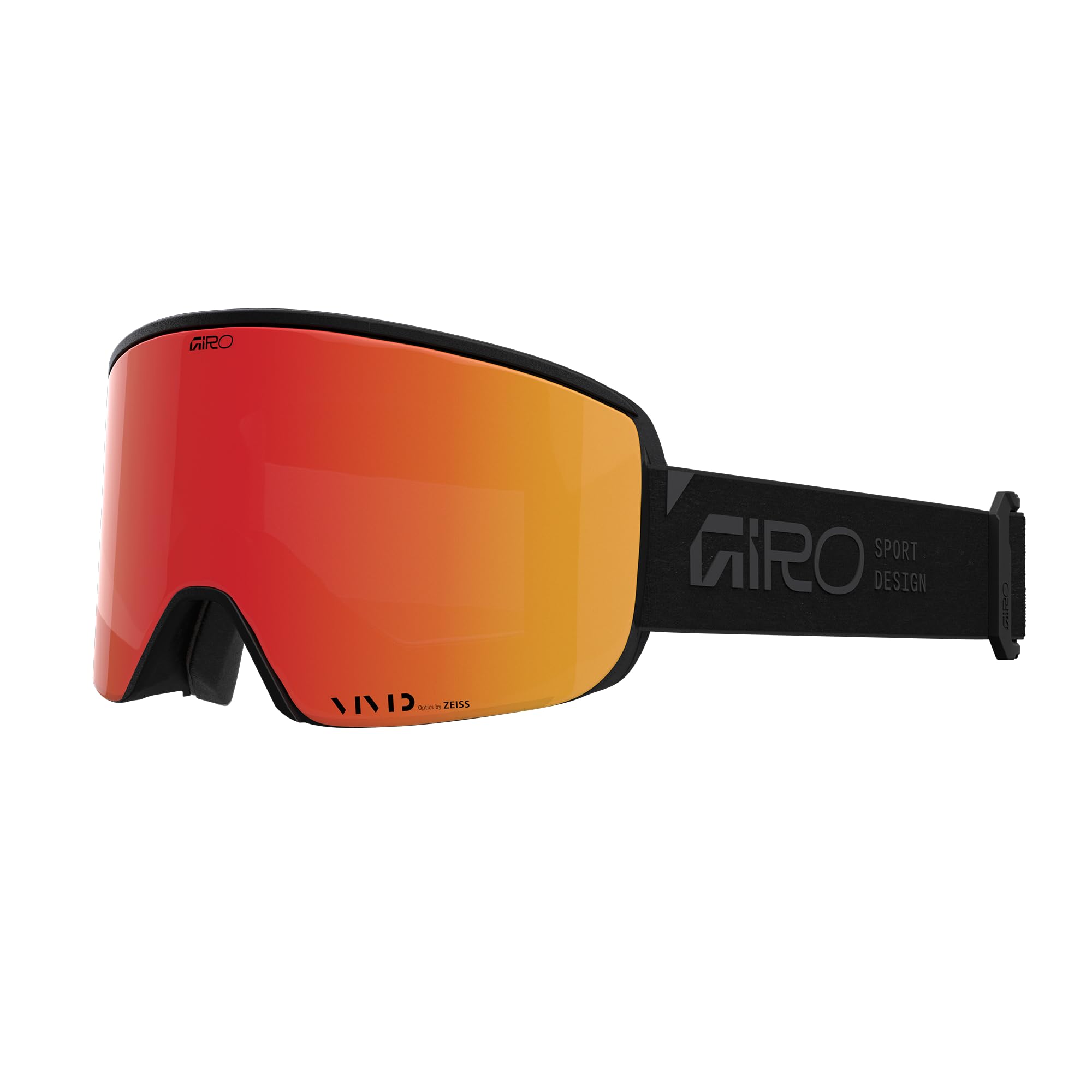
The Giro Axis strikes an exceptional balance for skiers who wear glasses or have a lower-bridge face. The Quick Change Magnetic-Assist system lets you swap from the included VIVID Ember (full sun, ~19% VLT) to the VIVID Infrared (overcast, ~50% VLT) in seconds using self-locating magnets and four locking snap pins—no fumbling with cold fingers. The injection-molded cylindrical lens from Zeiss enhances blue-light contrast while filtering out UV haze, which matters when you’re trying to read terrain features through an AR overlay at speed.
EVAK Vent Technology uses a non-absorbent foam that releases moisture while blocking wind, keeping the OTG-friendly frame fog-free even during heavy exertion. The triple-layer face foam with microfleece facing provides a comfortable seal against helmets, and the silicone inner strap prevents slippage. Multiple verified buyers report a perfect Asian fit that eliminates pressure on the cheekbones, making this the most comfortable base platform for adding a smart display module later.
Compared to pricier models, the Axis gives you two premium Zeiss-tuned lenses at a mid-range price point without sacrificing build quality. The only compromises are a cylindrical rather than toric lens profile, which slightly reduces peripheral distortion correction, and the lack of a powered HUD built in. For a pure optical platform ready for aftermarket AR, this is the benchmark.
Why it’s great
- Asian Fit geometry eliminates bridge pressure for long days
- Two Zeiss VIVID lenses provide full-range VLT coverage
- EVAK venting handles moisture without absorbing sweat
Good to know
- Cylindrical lens lacks toric distortion correction
- No built-in AR display or heads-up projection
2. Oakley Flight Path L Snow Goggle
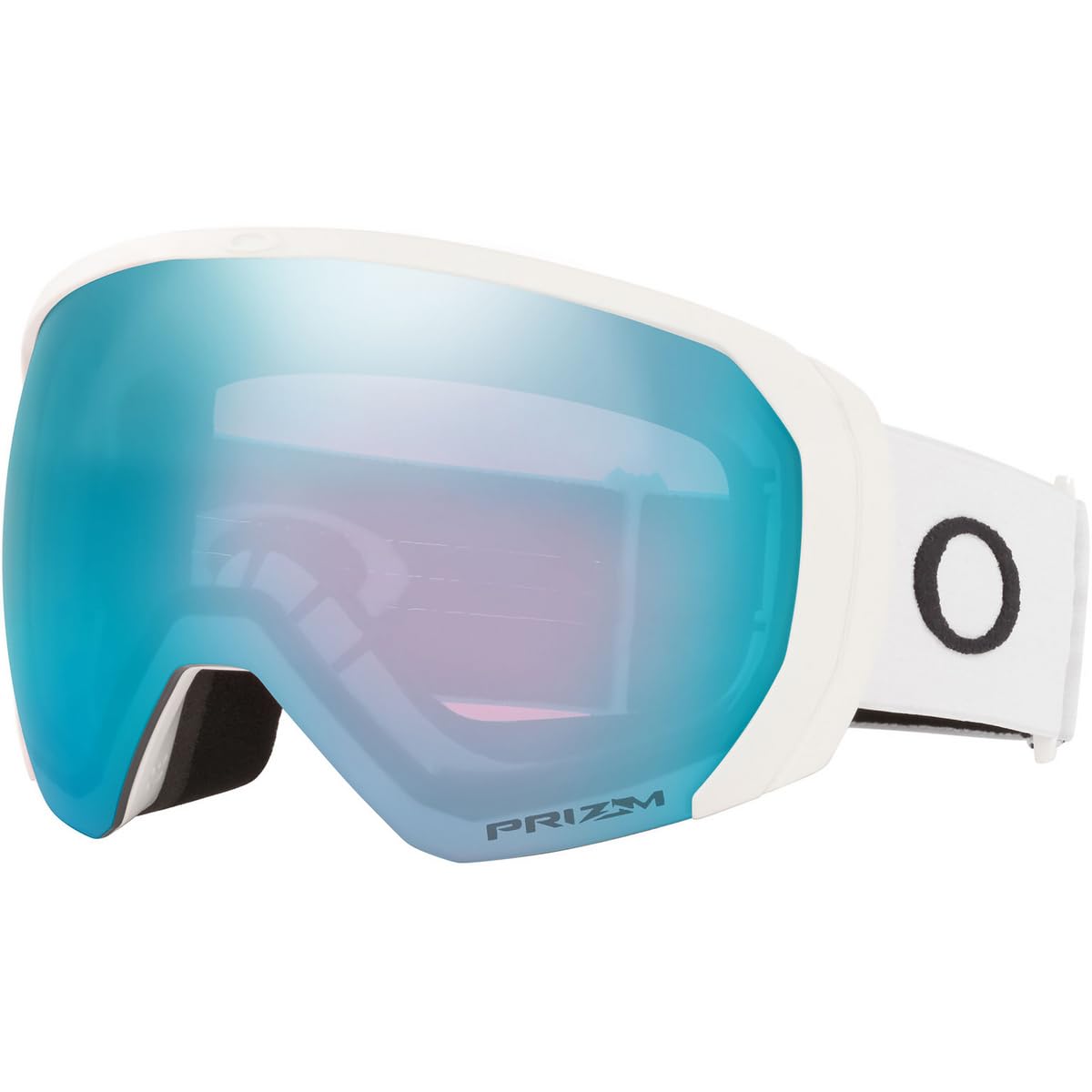
The Oakley Flight Path L uses a large-format toric lens that wraps around your peripheral vision more aggressively than a standard cylindrical goggle. This makes it a strong candidate for augmented-reality overlays because the projected data can sit farther in your natural peripheral without requiring head movement. The Prizm Snow Clear lens offers roughly 75% VLT with a subtle pink tint that enhances snow contour definition in flat light—exactly when an AR navigation cue is most helpful.
Riders with smaller faces report the L/XL frame still fits well, and the strap adjusts securely even with a 52cm head circumference. The included rigid case and microfiber pouch protect the lens when transporting a smart module. However, the Prizm Snow Clear tint is more pink than the product images suggest, which could clash visually with certain HUD color schemes that rely on white or green text projections.
One buyer noted that while the optics and fit are excellent, receiving the wrong lens color led to a frustrating return loop between Amazon and Oakley—a stock-availability risk to consider if you’re ordering close to ski season. The Flight Path L’s strength is its unobstructed sightline; add a clip-on AR display and you get a premium wide window without buying a whole new integrated goggle.
Why it’s great
- Toric lens provides exceptional peripheral vision
- Prizm Snow Clear enhances contrast in flat light
- Fits small faces despite L/XL designation
Good to know
- Prizm Snow Clear lens is pinker than promotional images show
- Customer support for color swaps can be inconsistent
3. Oakley Flight Deck M/L Ski Goggles
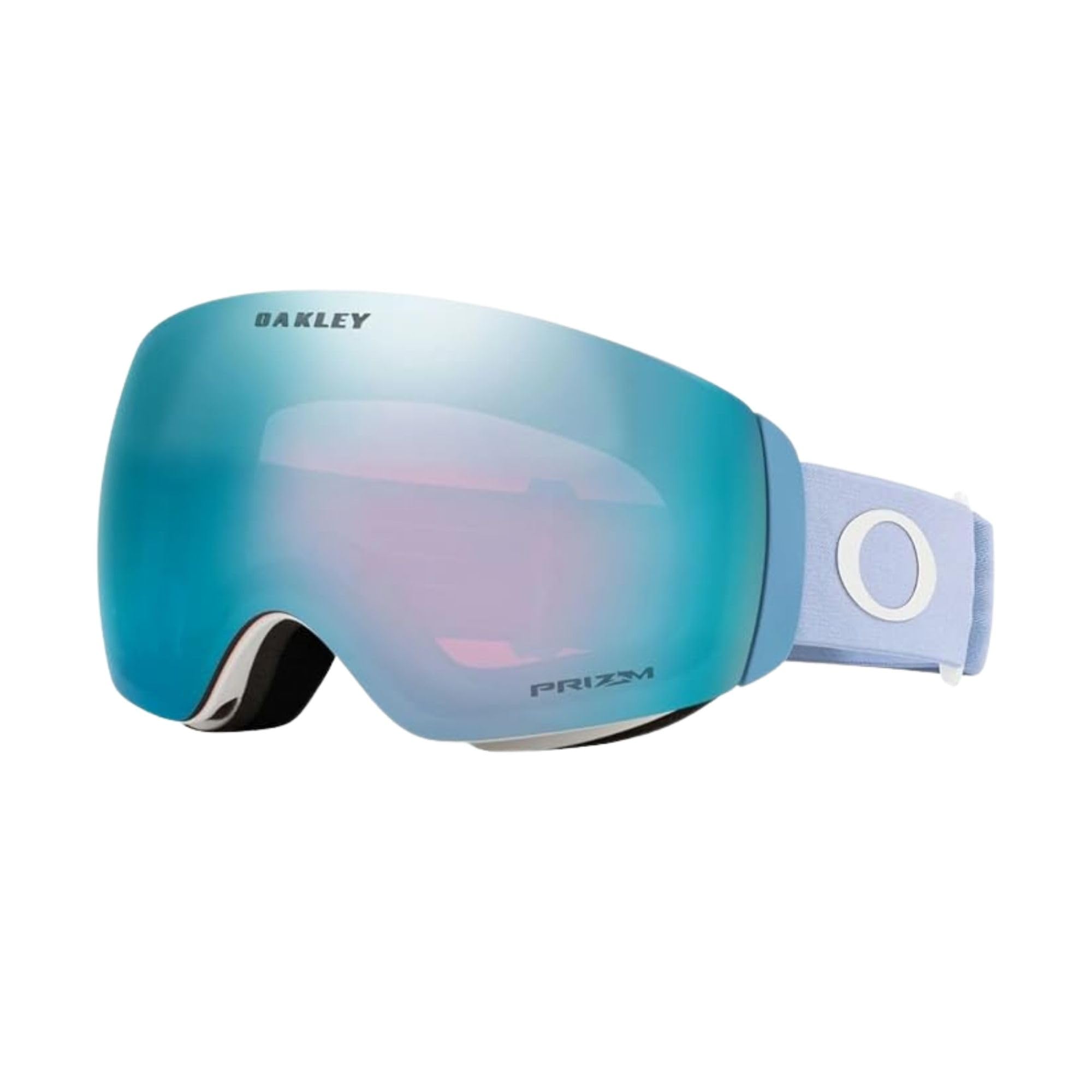
The Flight Deck M/L has been a staple in Oakley’s lineup for years, and for good reason—the medium-large frame bridges the gap between youth-sized and oversized goggles, accommodating a wide range of helmet brims and face shapes. The Prizm lens technology selectively targets specific light wavelengths to enhance contrast between snow textures and shadows, which directly improves the readability of any heads-up information projected onto the lens. Multiple buyers noted sharp visibility in both cloudy and bright sun without any fogging artifacts.
This model is particularly friendly to Asian face shapes, with a pad geometry that doesn’t create pressure at the temple or cheekbone. One verified owner who switched from cheaper goggles after two seasons reported a dramatic improvement in safety perception—clearer vision reduces hesitation at speed. The lens is also compatible with Oakley’s replacement program, so you can swap to a Prizm Snow Torch (higher VLT) or a Prizm Deep Water for variable conditions.
The main downside is that it doesn’t include a secondary low-light lens out of the box—you get one lens only, unlike the Giro Axis or SMITH Squad MAG which bundle two. For AR use, you’ll likely want to pick up an additional lens to cover the full VLT range. Fog resistance is excellent for a non-heated goggle, but heavy sweaters in humid snow should still carry a lens cloth.
Why it’s great
- Prizm lens enhances shadow definition for AR legibility
- Medium-large frame fits the widest range of face shapes
- Proven fog-free design across multiple seasons
Good to know
- Only one lens included—no spare for low light
- Lacks magnetic lens-swap convenience
4. SMITH Squad MAG Goggles with ChromaPop Lens
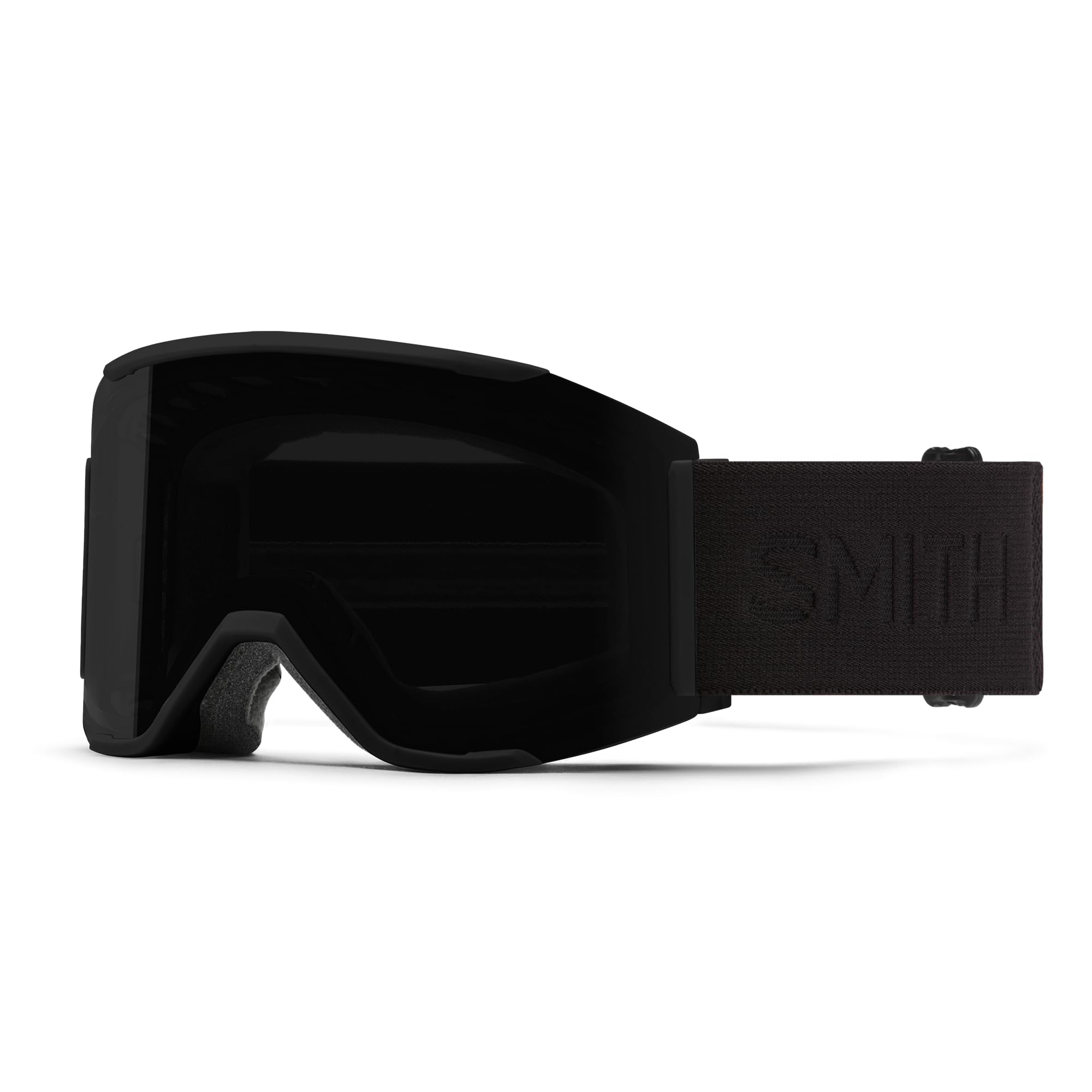
Smith’s Squad MAG leverages a sophisticated magnetic retention system that makes lens changes almost trivial—line up the magnetized edges, and the lens clicks into place with zero pressure points. The cylindrical lens offers a wide field of view, and the included ChromaPop Sun Black lens (roughly 15% VLT for bright days) pairs with a ChromaPop low-light spare to cover the full VLT spectrum. This is critical for AR goggles because the overlay’s contrast depends on minimizing glare from the physical lens surface.
The ChromaPop technology boosts contrast by filtering specific wavelengths—Smith claims it’s engineered to make details “pop,” and in practice that means snow texture, tree shadows, and mogul transitions become more distinct even in hazy conditions. The smudge- and moisture-resistant coatings keep the lens clean between runs, reducing the need to wipe the projected surface of a future smart module. Silicone frame construction provides a secure fit against the face, and the goggle integrates seamlessly with Smith helmets for a contiguous vent channel.
However, a few buyers reported a manufacturing defect where the silicone inside the strap degraded into a sticky residue—this appears to be a bad batch issue, but it’s worth inspecting upon delivery. The Squad MAG is cylindrical rather than toric, so you lose a small amount of peripheral accuracy compared to the more expensive 4D MAG or a spherical lens. For the price point, the two-lens bundle and magnetic convenience make it a strong mid-range pick.
Why it’s great
- Magnetic lens change tool-free and reliable
- Two ChromaPop lenses cover high and low light
- Smudge-resistant coating protects HUD surfaces
Good to know
- Some batches had silicone strap degradation
- Cylindrical lens lacks toric distortion correction
5. Giro Contact Snowboard Ski Goggles

The Giro Contact uses an EXV (Expanded View) frameless design that eliminates the plastic border around the lens, pushing the optical surface closer to your face for a nearly 180-degree unobstructed sightline. This is the ideal foundation for a heads-up AR overlay because the projected data can extend to the edges of the lens without being cut off by a thick frame. The Snapshot Magnetic Lens System uses rare-earth magnets and a push-button shutter release—depress the button, lift the lens, and the spare clicks into place.
The included VIVID Royal lens (19% VLT) and VIVID Infrared lens (50% VLT) are engineered by Zeiss to manipulate blue-light wavelengths selectively, filtering out haze while enhancing contrast-enhancing blue light. This makes the goggles particularly effective in mixed lighting where AR data needs to remain legible against a changing sky. The EVAK vent foam releases moisture without absorbing it, and the frameless design improves airflow across the lens surface to prevent fog.
One limitation: the frameless build means the lens is more exposed to scratches when dropped, and replacement lenses for the EXV system run slightly higher than standard cylindrical frames. Additionally, no face mask integration is included, so you’d need to pair it with a separate balaclava for cold days. For skiers who want the widest possible canvas for a future AR clip-on, the Contact is the best frameless option at this price tier.
Why it’s great
- Frameless EXV design maximizes field of view for AR
- SnapShot magnetic system is fast and secure
- Two Zeiss VIVID lenses with wide VLT range
Good to know
- Frameless lens more prone to edge scratches
- No built-in face mask feature
6. Anon M4 Toric Snow Goggles + Bonus Lens + MFI Face Mask
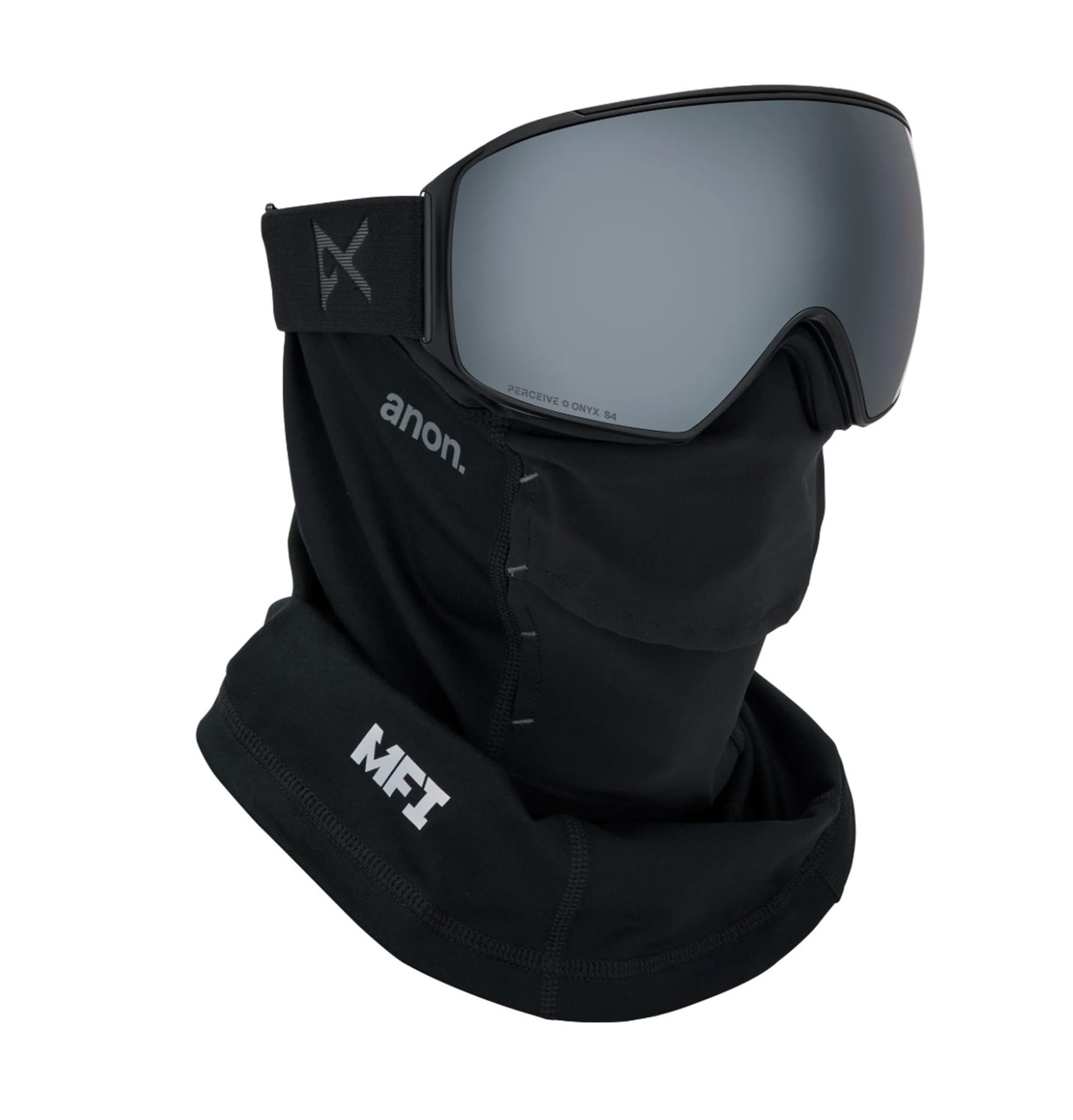
The Anon M4 is the gold standard for integrated goggle-plus-mask systems, and its Magna-Tech lens retention uses neodymium magnets that create a tight seal between the toric lens and the frame—no clips, no flexing. The toric curvature mimics the natural shape of the eye, reducing distortion at the edges and maximizing peripheral clarity. This is the best optical platform on this list for overlaying AR data because the projection won’t warp as it moves toward the lens periphery.
The included PERCEIVE Variable Violet spare lens delivers high-contrast definition across changing light, and the MFI (Magnetic Face Mask Integration) uses magnets built into the goggle frame to seal your face to the mask, preventing warm breath from rising into the lens. This dramatically reduces fogging compared to any non-MFI goggle—critical when your HUD electronics are fighting condensation. Reviewers consistently report zero fogging even with a balaclava and heavy exertion, and the triple-layer face foam provides a plush seal.
One common note: the difference between the light and dark lenses is subtle—both sit in the medium-VLT range—so if you need extreme low-light or extreme bright-light coverage, you may want to buy an additional lens separately. The price is steep, but you get a bonus lens, compression case, goggle bag, and the MFI balaclava. For snowboarders and skiers who want an AR-ready goggle with the best anti-fog solution available, the M4 sets the premium benchmark.
Why it’s great
- Toric lens eliminates edge distortion for AR projection
- MFI face mask creates a breath-proof fog seal
- Magna-Tech magnets provide secure lens retention
Good to know
- Light and dark lens VLT range is narrow
- Premium cost with no heated element
7. 509 Sinister X7 Ignite S1 Snow Goggle
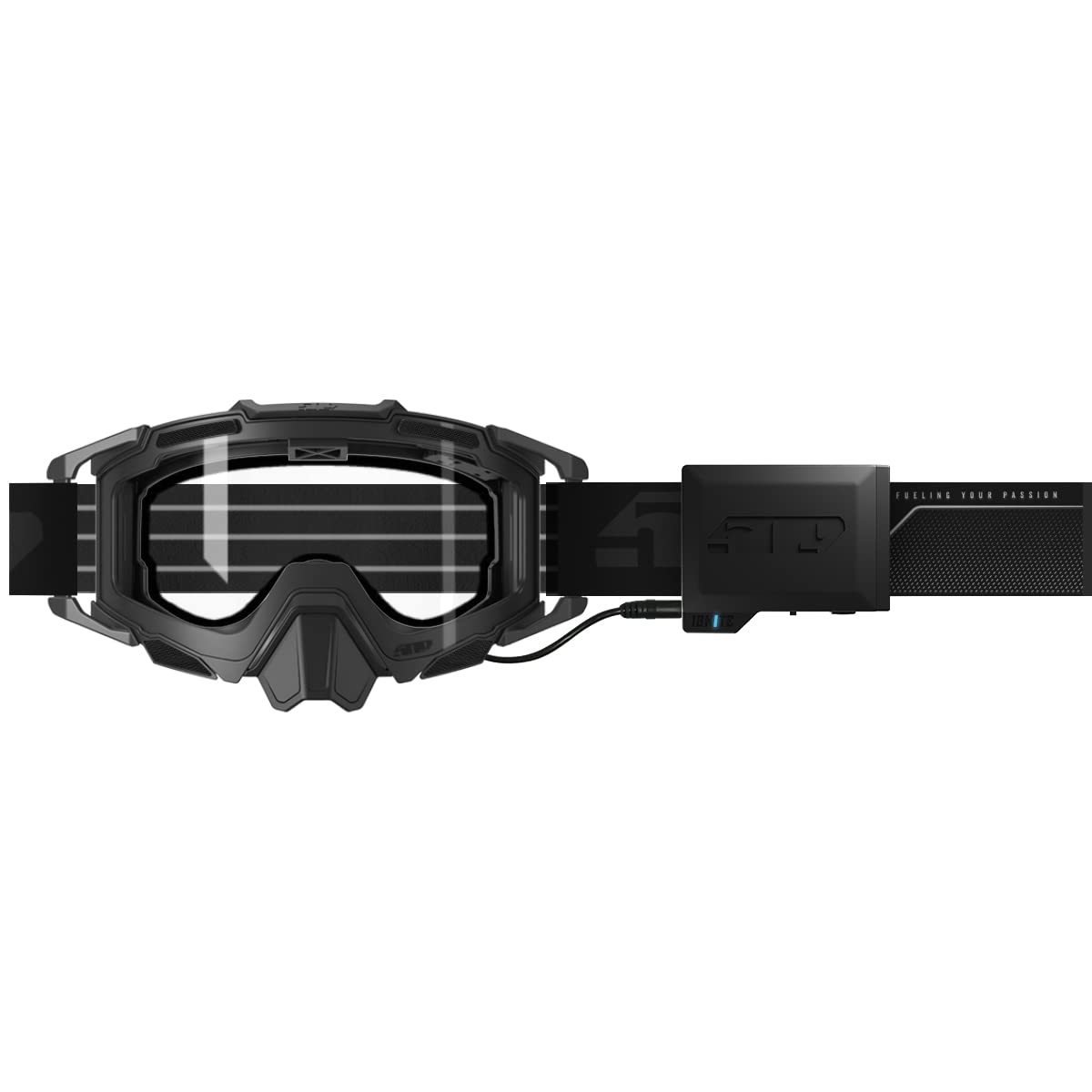
The 509 Sinister X7 Ignite S1 is the only goggle on this list with an active heating element embedded in the lens, designed specifically for snowmobilers and downhill skiers who battle extreme condensation in sub-zero temperatures. The S1 Ignite system runs off a rechargeable battery pack connected to the strap, clearing frost and fog from the lens surface without requiring you to stop and wipe it. In heavy snow or wet maritime conditions, this thermal approach is more reliable than any passive venting system at keeping the lens clear for AR data overlay.
Buyers who tested it in Alaska at -7°F to -9°F reported solid fog-free performance for about three hours before the cold drained the battery, and the unit accepts a spare battery pack for longer days. The lens itself is a large toric shape with decent peripheral coverage. However, the battery box is conspicuously large—several users described it as a “10-pound box hanging from your ear”—and finding a comfortable place for it under a helmet strap takes some adjustment.
A few documented quality issues exist: some units arrived with defective lens coatings after only one ride, and the replacement process has been hit-or-miss. For backcountry touring or extended lift-assisted skiing where fog is a persistent problem, the active heating is a genuine advantage that no passive goggle can match. Just budget for a battery holder that positions the pack inside your jacket rather than on the strap.
Why it’s great
- Active lens heating prevents fog in extreme cold
- Spare battery compatibility extends runtime
- Toric lens offers wide peripheral field
Good to know
- Large battery box creates strap weight imbalance
- Some units had premature lens coating failure
8. SMITH 4D MAG Snow Goggles – BirdsEye Vision
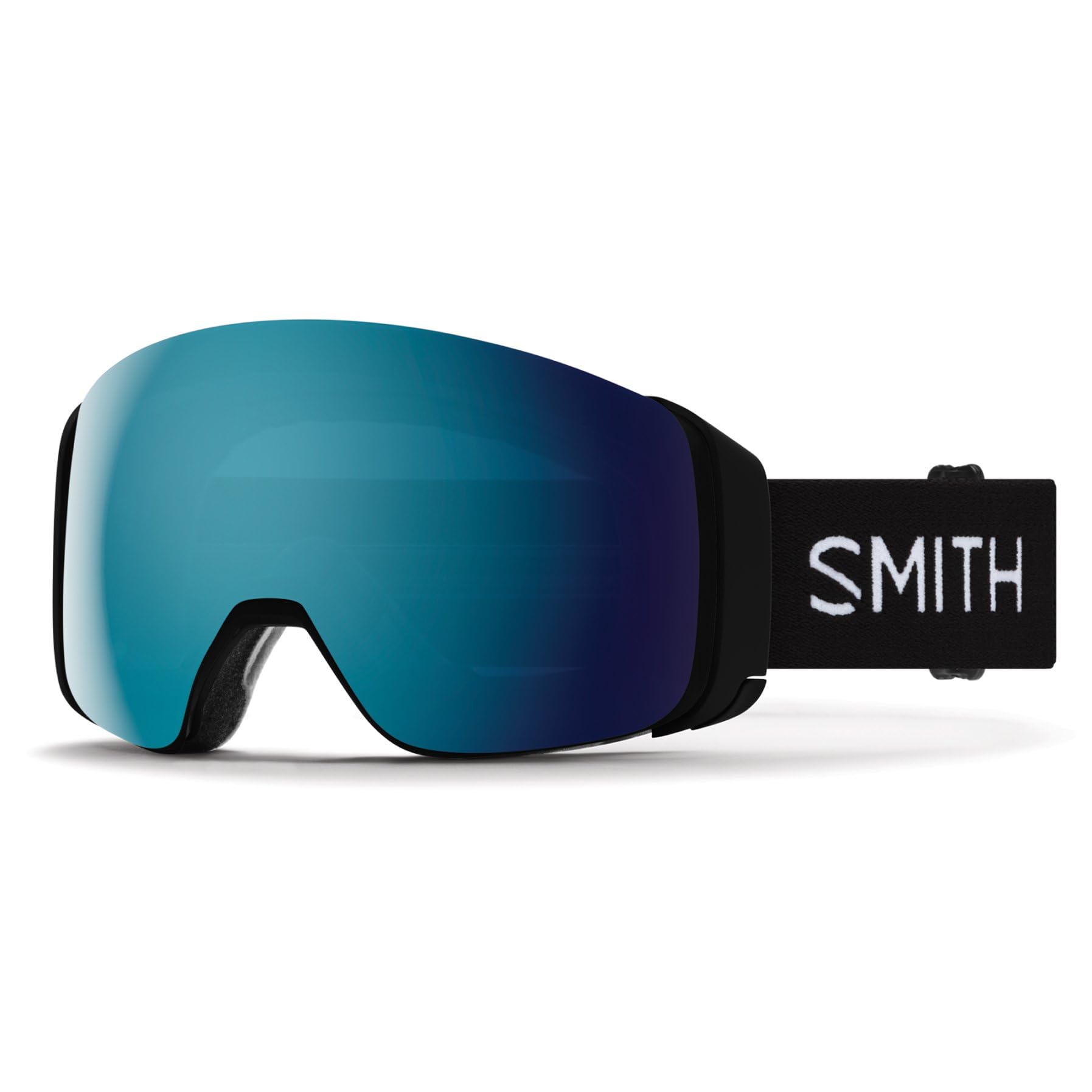
Smith’s 4D MAG is the absolute top tier of passive optical design, featuring an oversized spherical lens that Smith calls “BirdsEye Vision”—it provides roughly 10 times the field of view of a standard goggle, with near-zero blind spots at the top and sides. The spherical curvature tracks the natural rotational arc of the eyeball, so AR data projected onto the lens surface stays at a consistent focal distance across the whole field. Two ChromaPop lenses (a gold/black high-light lens and a blue low-light lens) are included, covering both bright sun and overcast storm conditions.
The MAG magnetic lens-change system is identical to the Squad MAG but with a larger, more robust lens footprint. Verified buyers who returned three other goggle pairs before settling on the 4D MAG cite the absence of fog and the massive POV as the deciding factors. It works over prescription glasses, and the frame integrates with Smith helmets for a sealed vent channel that minimizes incoming cold air—key for preventing the lens from chilling to the point where internal condensation forms.
Downsides: the strap is very long—one buyer reported it is essentially unusable without a helmet because the excess strap bunches up on a bare head. Another buyer noted that the foam vents felt mediocre for the price point, suggesting that Smith used a lower-grade mesh than similarly priced Giro Contour goggles. If you have a smaller head or prefer helmetless spring skiing, the 4D MAG may need strap shortening. For max-luxury passive optics that future-proof the AR side-channel, this is the one.
Why it’s great
- BirdsEye Vision provides the widest POV on the market
- Spherical lens eliminates focal shift for AR overlays
- Two ChromaPop lenses with full VLT coverage
Good to know
- Strap is too long for helmetless use
- Foam quality doesn’t match price expectations
9. OhO 4K Smart Ski Goggles

The OhO 4K Smart Goggles are the only entry on this list with a fully integrated digital recording system. A wide-angle 4K camera is built into the top frame, controlled via two large buttons operable with gloves—press the photo button to snap an image, hold it to trigger recording while an LED confirms the status. The recorded footage is transferred to your phone via Wi-Fi using the Vizen Cam app, which means you can review and share clips right from the base lodge without carrying a separate action camera.
After two full seasons of use, one verified reviewer reported reliable operation through rain, sub-zero wind, and warm weather without battery or function failures. However, the video quality has drawn mixed reactions: some describe it as serviceable but “fish-eye and dark,” comparable to an older smartphone camera rather than a premium action cam. The app compatibility is another sticking point—a few users found the Wi-Fi pairing process confusing or unsupported on certain phone models, requiring direct contact with customer support to locate the correct app workflow.
For skiers who want to capture POV footage without a chest mount or helmet rig, the OhO’s integration is genuinely convenient—no extra straps, no separate battery changes. But if raw video fidelity is your priority, a set of standard goggles plus a GoPro on a helmet mount will deliver better dynamic range. The UV protection and anti-fog coating are decent but not on par with premium optical engineered frames like Zeiss or ChromaPop, so consider this a camera-first product with goggles attached—not the reverse.
Why it’s great
- Integrated 4K camera eliminates separate GoPro rig
- Wi-Fi transfer to phone for instant sharing
- Glove-friendly buttons with recording status LED
Good to know
- Video quality falls short of dedicated action cameras
- App pairing process can be inconsistent across phones
FAQ
Can I wear AR ski goggles with my prescription glasses underneath?
How long do battery-powered ski goggles last in freezing temperatures?
What VLT percentage is best for seeing AR overlay text clearly?
Do AR ski goggles work with all helmet brands?
What is the main trade-off between integrated AR and clip-on modules?
Final Thoughts: The Verdict
For most skiers, the best ar ski goggles winner is the Giro Axis Asian Fit because it delivers a premium Zeiss optical foundation, two fully usable lenses, and the best OTG compatibility at a price that leaves room to add an aftermarket HUD module. If you want integrated magnetic face-mask anti-fog and toric distortion-free optics, the Anon M4 is the premium choice that flat-out refuses to fog. And for those who ski in extreme cold where passive vents aren’t enough, the 509 Sinister X7 Ignite S1 heated goggle keeps the lens—and any future AR projection—perfectly clear in sub-zero conditions.