
Bringing a preemie home means trading the NICU’s constant monitoring for your own instincts — and that transition can feel impossibly quiet. Every breath your baby takes becomes a question mark, and standard nursery monitors offer no answers about the vital signs that matter most for a fragile newborn. A dedicated monitoring system bridges that gap, delivering continuous data on oxygen saturation and heart rate so you can rest between check-ins.
I’m Min — the co-founder and writer behind Gadgets Feed. I’ve spent countless hours dissecting pulse oximetry sensor types, battery endurance specs, and app reliability across dozens of models to build a category-specific guide that spares you the research burden during an already demanding time.
For parents who need precision tailored to the smallest patients, this evaluation of the baby sock monitor for preemies market identifies which devices actually deliver medical-grade confidence in a home setting.
How To Choose The Best Baby Sock Monitor For Preemies
Selecting a monitor for a preemie demands scrutiny beyond standard baby gear. The sensor must securely capture data from a foot that may weigh only a few pounds, the alarm response must account for irregular respiratory patterns common in premature infants, and the battery life must sustain overnight sessions without interruption. Prioritize these factors over flashy app features.
Sensor Type and Fit
Preemie feet are proportionally tiny, so a sock-style monitor with a transmissive PPG (photoplethysmography) sensor generally delivers more reliable readings than reflective optical sensors, which struggle with thin, low-perfusion tissue. The fabric must cinch snugly without compressing circulation — look for adjustable wraps or multiple sock sizes that accommodate a 1.5-pound foot.
Alert System Responsiveness
Premature babies experience periodic breathing where pauses of 5 to 10 seconds are normal, but your monitor must distinguish benign pauses from apnea. Devices with customizable SpO₂ and heart rate thresholds let you set boundaries appropriate for your preemie’s baseline, while a vibration pre-alert (before the full alarm) can reduce false starts from minor positional changes.
Data Logging and Trend Review
Pediatricians often ask for overnight saturation trends during follow-up appointments. A monitor that stores multiple sessions with time-stamped data — ideally exportable via app to PDF or CSV — transforms raw numbers into actionable insights. Built-in memory of at least 10 hours per session ensures no gaps when Bluetooth connection drops momentarily.
Quick Comparison
On smaller screens, swipe sideways to see the full table.
| Model | Category | Best For | Key Spec | Amazon |
|---|---|---|---|---|
| Owlet Dream Duo (Gen 3) | Premium Bundle | Comprehensive health + video | FDA-cleared, 2K HD camera, 256-bit encryption | Amazon |
| Sense-U Smart Sock Shoe 2 | Mid-Range Sock | Transmissive PPG accuracy | Shoe-style fit, on-device alerts, 1–12 months | Amazon |
| Sense-U Pro Baby Monitor | Clip-On Sensor | Breathing movement + position alerts | BLE 4.0, 7+ day battery, vibration arousal | Amazon |
| Snuza Pico 2 | Clip-On Sensor | Movement + temp + fever detection | 15-sec pre-alert vibration, 22 g weight | Amazon |
| Wellue Checkme O2 Max | Finger Ring Oximeter | 72-hour continuous SpO₂ tracking | Patented silicone ring, PC software support | Amazon |
| Wellue Checkme O2 Ultra | Wrist Oximeter | Extended battery endurance | 100-hour battery, magnetic charging | Amazon |
| Nonin TruO2 3250 | FDA-Cleared Fingertip | Medical-grade OTC home use | FDA-cleared, PureSAT, Made in USA | Amazon |
| MedChirrup Handheld Oximeter | Handheld + Foot Wrap | Versatile family monitoring | 500-read storage, 8-hour battery, OLED display | Amazon |
| MugaTree 50F Oximeter | Handheld + Foot Wrap | Multi-user data management | 10-user mode, 300 records per user | Amazon |
In‑Depth Reviews
1. Owlet Dream Duo (Gen 3)

The Owlet Dream Duo bundles the latest Dream Sock — FDA-cleared for pulse rate and oxygen tracking up to 18 months — with a sharp 2K HD camera that covers nursery video, temperature, humidity, and sound. This is the only system on the market that unites medical-grade pulse oximetry with a full smart camera in one app, eliminating the need for two separate devices.
The sock uses medical-grade pulse oximetry with a soft fabric design that accommodates babies from 6 to 30 pounds. Real-time alerts fire if readings leave preset zones, and the Predictive Sleep Technology helps parents identify optimal wake windows. Data encryption at 256-bit with an SGS Cybersecurity Mark for the camera sets a security bar no competitor matches.
At a premium tier, the Dream Duo justifies its cost through integration and certification. Some users note that the base station range limits how far you can roam before losing connection, and the sock’s snug fit may feel warm in hot climates. For parents who want the closest approximation to NICU-level oversight at home, this remains the benchmark.
Why it’s great
- FDA-cleared SpO₂ and heart rate tracking for preemies
- Bundled 2K camera with panoramic view and cry detection
- Cybersecurity certified with 256-bit encryption
Good to know
- Base station range limits mobility within the home
- Premium cost may feel steep if only the sock is needed
2. Sense-U Smart Sock Shoe 2
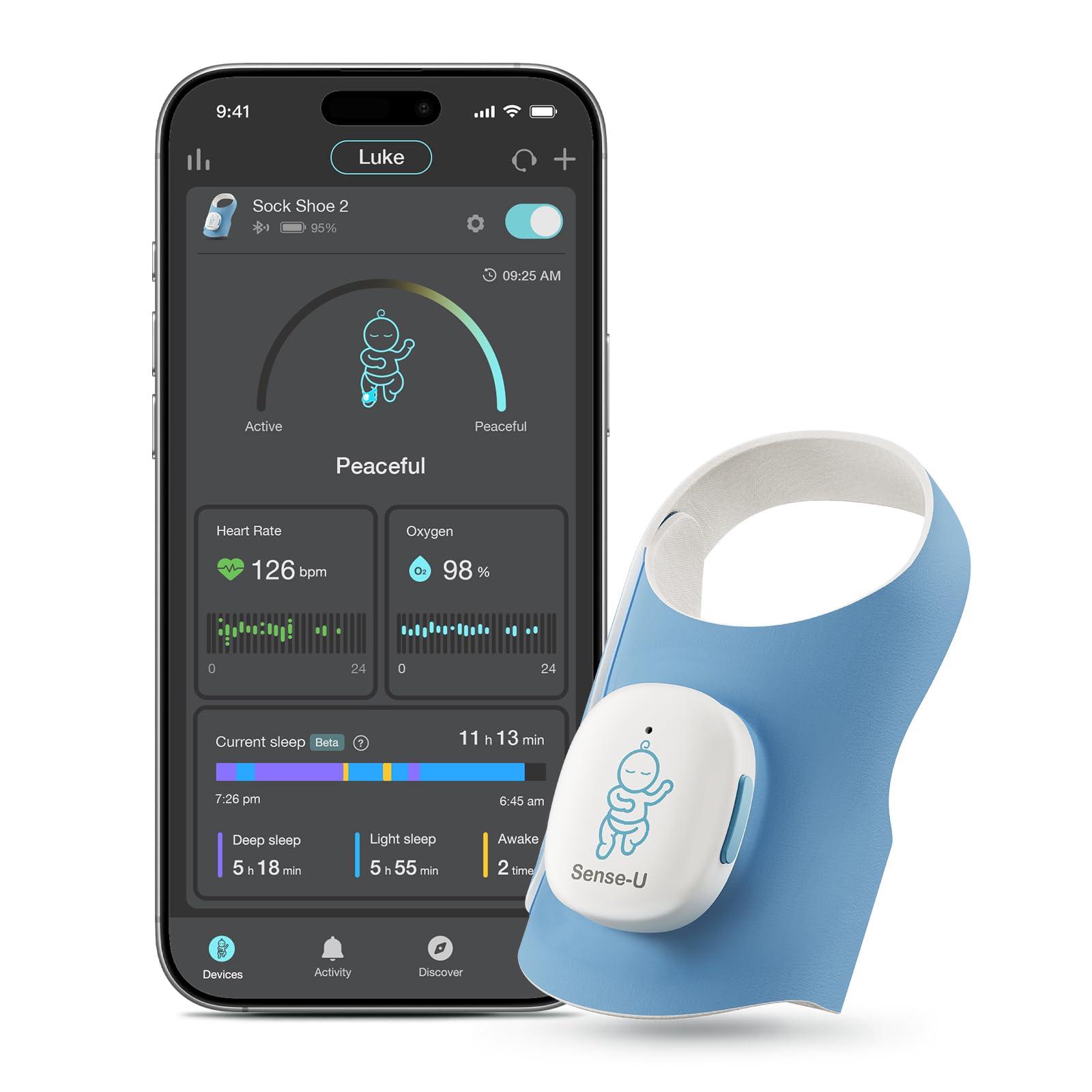
The Sense-U Smart Sock Shoe 2 is the only dedicated sock-style monitor in the mid-range that employs transmissive PPG technology — the same principle used in hospital pulse oximeters — rather than reflective optical sensors. This distinction matters for preemies because transmissive light passes through tissue and measures blood volume changes directly, yielding more consistent readings on tiny, low-perfusion feet.
The shoe-style construction uses soft, breathable fabric with two sizing options covering 1 to 12 months, and the integrated on-device LED indicators provide instant awareness without pulling out your phone. Audible alerts sound automatically if heart rate or sleep patterns deviate, and the app adds deeper analytics like deep/light sleep stages and nap efficiency.
Parents of preemie twins specifically praise the setup ease and accuracy relative to pricier alternatives. The bootie sizing can be tricky for very chunky feet, and the app occasionally fails to save nightly sleep trend data. At its price point, the Sense-U delivers targeted preemie-readiness that general foot wraps cannot match.
Why it’s great
- Transmissive PPG sensor for accurate readings on small feet
- Shoe-style design stays secure during active sleep
- On-device alerts independent of smartphone
Good to know
- Bootie sizing may feel snug on chunky preemie feet
- Sleep trend tracking in app can be inconsistent
3. Sense-U Pro Baby Monitor
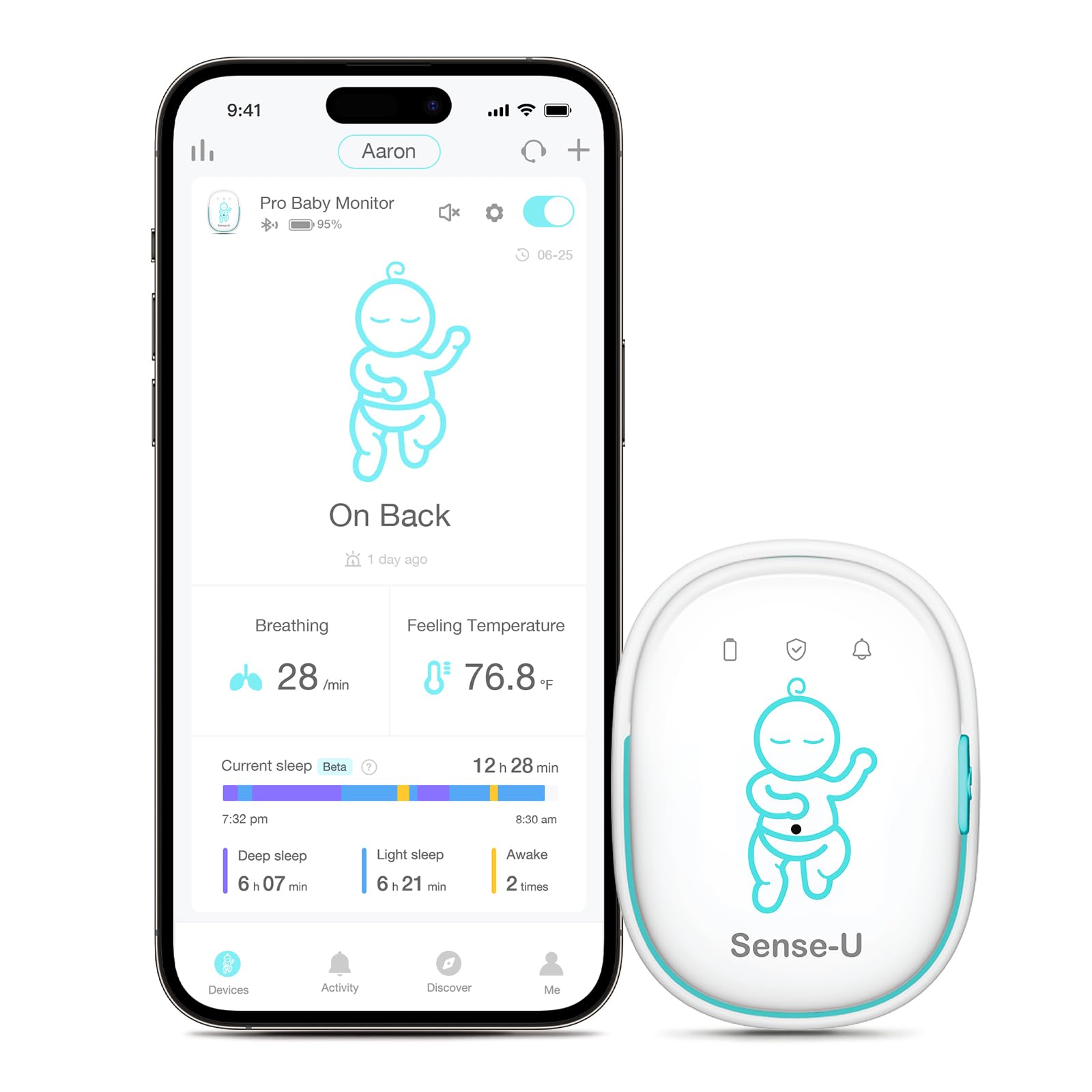
The Sense-U Pro takes a fundamentally different approach from sock monitors: it clips onto the diaper’s waistband and tracks abdominal movement, rollover, and skin temperature rather than heart rate or SpO₂. For preemies transitioning home after NICU stays focused on respiratory support, detecting slowed or absent breathing movements can be more directly relevant than pulse data.
If no abdominal movement is sensed for 15 seconds, the device vibrates gently to stimulate the baby back to normal breathing — a feature specifically useful for preemies prone to periodic breathing pauses. After an additional interval with no movement, an audible alarm triggers. The battery lasts over seven days per charge, and the Bluetooth range covers about 50 feet in open space.
NICU parents and home health nurses report that the clip-on design is less intrusive than a sock and works well for car seats and swings. The device is not a medical monitor and is recommended for healthy children up to 12 months, so consult your pediatrician before relying on it for a preemie with known respiratory issues.
Why it’s great
- Detects breathing movement directly, not just heart rate
- Arousal vibration may stimulate breathing during apnea pauses
- Exceptional battery life and portable clip design
Good to know
- Not FDA-cleared; intended for healthy babies under 12 months
- Requires diaper waistband for secure placement
4. Snuza Pico 2
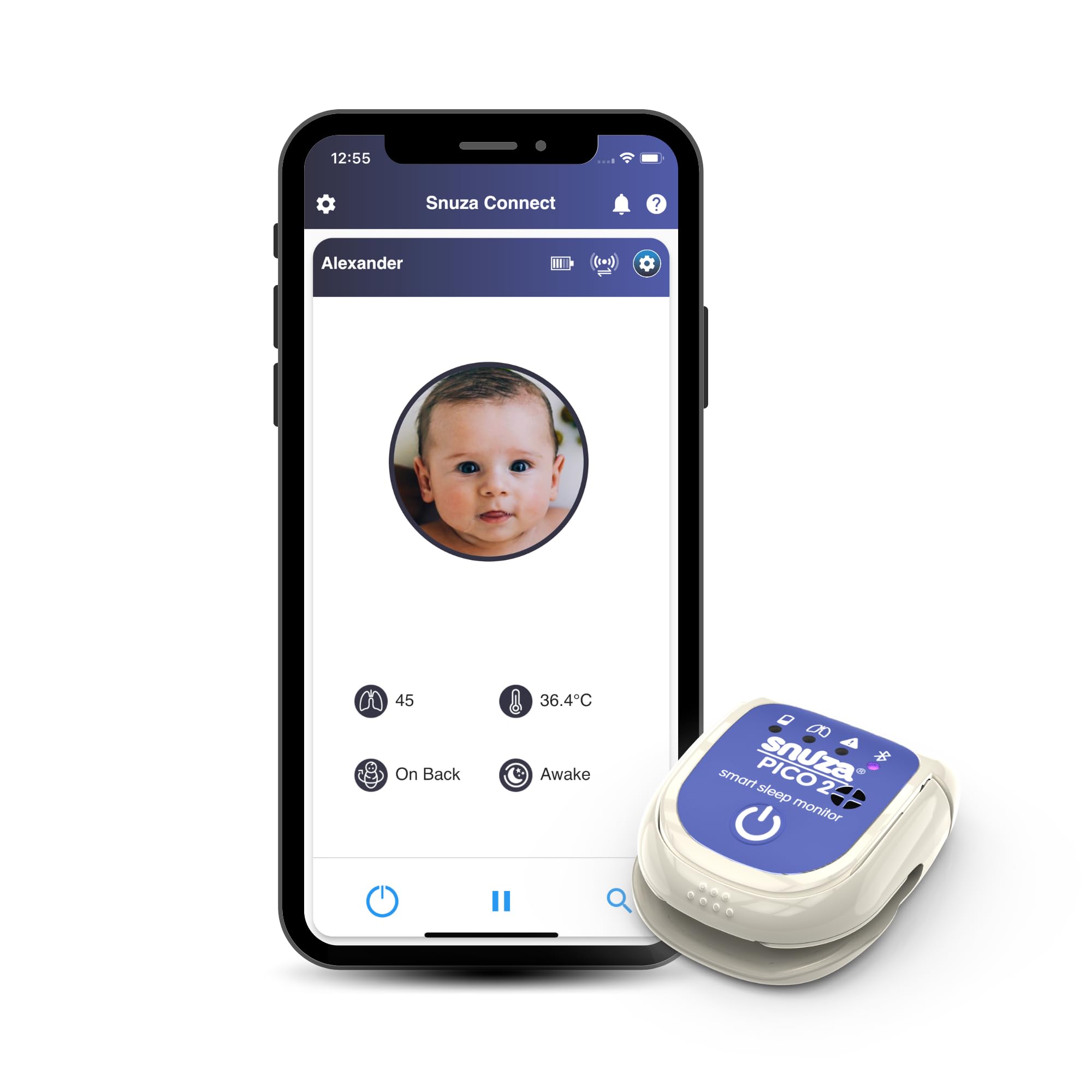
The Snuza Pico 2 is the lightest clip-on option at just 22 grams, which minimizes pulling on the diaper of a preemie. It monitors movement, body position, and skin temperature, offering an early alert after 15 seconds of no movement and a full alarm at 20 seconds. The device can function standalone without a smartphone, reducing technical complexity during critical nighttime use.
The accompanying Snuza Connect app logs movement patterns, temperature trends, and sleep quality over time. Parents have reported that the device successfully alerted them to fevers and stomach-sleeping positions, and multiple reviewers credit it with alerting during genuine respiratory pauses. The charging base doubles as a carry case for travel.
Some users find the clip can detach during active sleep, especially if the diaper shifts, leading to false alarms. The app interface feels basic compared to competitors, with limited data export options and no dashboard for multi-day trend analysis. For families who prioritize simplicity and ultra-lightweight wear over app sophistication, the Pico 2 delivers reliably.
Why it’s great
- Only 22 grams — minimal pull on preemie diaper
- Standalone operation without phone required
- Temperature sensor detects fever during sleep
Good to know
- Clip can detach from diaper causing false alarms
- App interface is basic with limited data analytics
5. Wellue Checkme O2 Max

The Wellue Checkme O2 Max is a finger-ring-style pulse oximeter with a patented soft silicone sensor that eliminates finger numbness during extended wear. It stores up to four 10-hour sessions and syncs via Bluetooth to the Vihealth app and O2 Insight Pro software for PC. This device is designed for continuous all-day monitoring rather than infant-specific sock wear.
With up to 72 hours of battery life per charge, the O2 Max is ideal for overnight sleep studies or for tracking a preemie’s oxygen levels during supervised awake time. The smart vibration and audio reminder activates when SpO₂ drops below a user-defined threshold, and the intensity of each alert can be adjusted. The device has been noted to match readings from hospital ICU monitors when used on adults.
For preemie use, the ring form factor limits its application to older infants or toddlers rather than newborns. The proprietary charging cable can be frustrating to replace, and the sensor may require replacement after several months. It is explicitly labeled for sports and aviation, not medical use, so consult a specialist before relying on it for a preemie.
Why it’s great
- 72-hour continuous battery life for extended monitoring
- Silicone ring sensor stays comfortable during sleep
- Stores up to 40 hours of data across four sessions
Good to know
- Ring form not suitable for newborn preemie feet
- Proprietary charging cable and replaceable sensor add cost
6. Wellue Checkme O2 Ultra
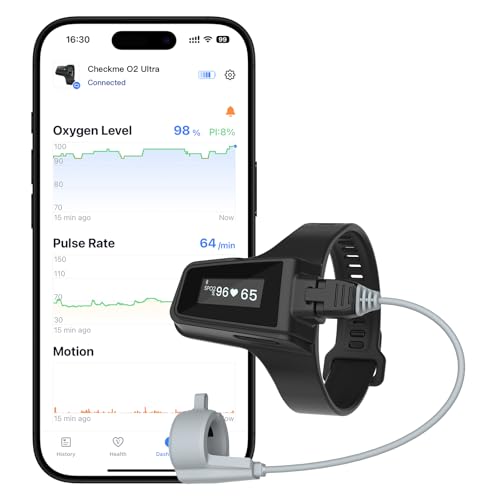
The Wellue Checkme O2 Ultra pushes battery endurance to 100 hours on a single two-hour charge, making it the longest-lasting continuous pulse oximeter reviewed here. It combines a wrist-worn base with a finger sensor, tracking SpO₂ and pulse rate with advanced sensing technology. The device stores four 12-hour data sets and syncs via Bluetooth to the Vihealth app.
The magnetic charging cable simplifies daily top-ups, and the audible or vibrating reminder activates when readings fall below adjustable thresholds. The O2 Ultra is well-suited for overnight studies where uninterrupted data collection is critical. Users undergoing sleep studies have reported it tracks O₂ dips accurately and provides nightly scores with PDF/CSV export for clinicians.
Like the O2 Max, this is not a medical device and is labeled for sports and aviation. The rubber strap can catch on clothing and fall off, and the Bluetooth connection occasionally requires daily re-pairing within inches of the phone. For families needing marathon-length monitoring sessions, the Ultra’s battery advantage is unmatched, but it is not a dedicated preemie sock solution.
Why it’s great
- 100-hour battery endurance for multi-night studies
- Magnetic charging cable simplifies recharging
- Exportable PDF/CSV data for pediatrician review
Good to know
- Strap detachment and Bluetooth pairing issues reported
- Not a dedicated infant sock design for tiny feet
7. Nonin TruO2 3250

The Nonin TruO2 3250 is the only fingertip pulse oximeter on this list that is FDA-cleared for over-the-counter home use, built with the same PureSAT technology used by hospitals and the military. It delivers accurate SpO₂ readings across all skin tones and in low-perfusion conditions — a critical specification for preemies with compromised circulation or cold extremities.
The device features Nonin CorrectCheck, which alerts you if your finger isn’t positioned correctly, eliminating a common source of reading errors. Battery life reaches 2,200 spot checks on two AAA batteries, and wireless Bluetooth connectivity allows data sharing with the NoninConnect app and Apple Health. Manufactured in the USA with a two-year warranty.
The fingertip form factor limits its use to older children and adults rather than newborn preemies. Several users report the plastic clip feels flimsy and the battery cover breaks easily over time. For families who need medical-grade certification for a preemie, this device belongs in a home health kit but will not wrap around a tiny foot.
Why it’s great
- FDA-cleared for OTC home use with hospital-grade accuracy
- PureSAT technology accurate across skin tones
- Made in USA with two-year warranty
Good to know
- Fingertip form not suitable for preemie feet
- Plastic build quality reported as fragile over time
8. MedChirrup Handheld Pulse Oximeter
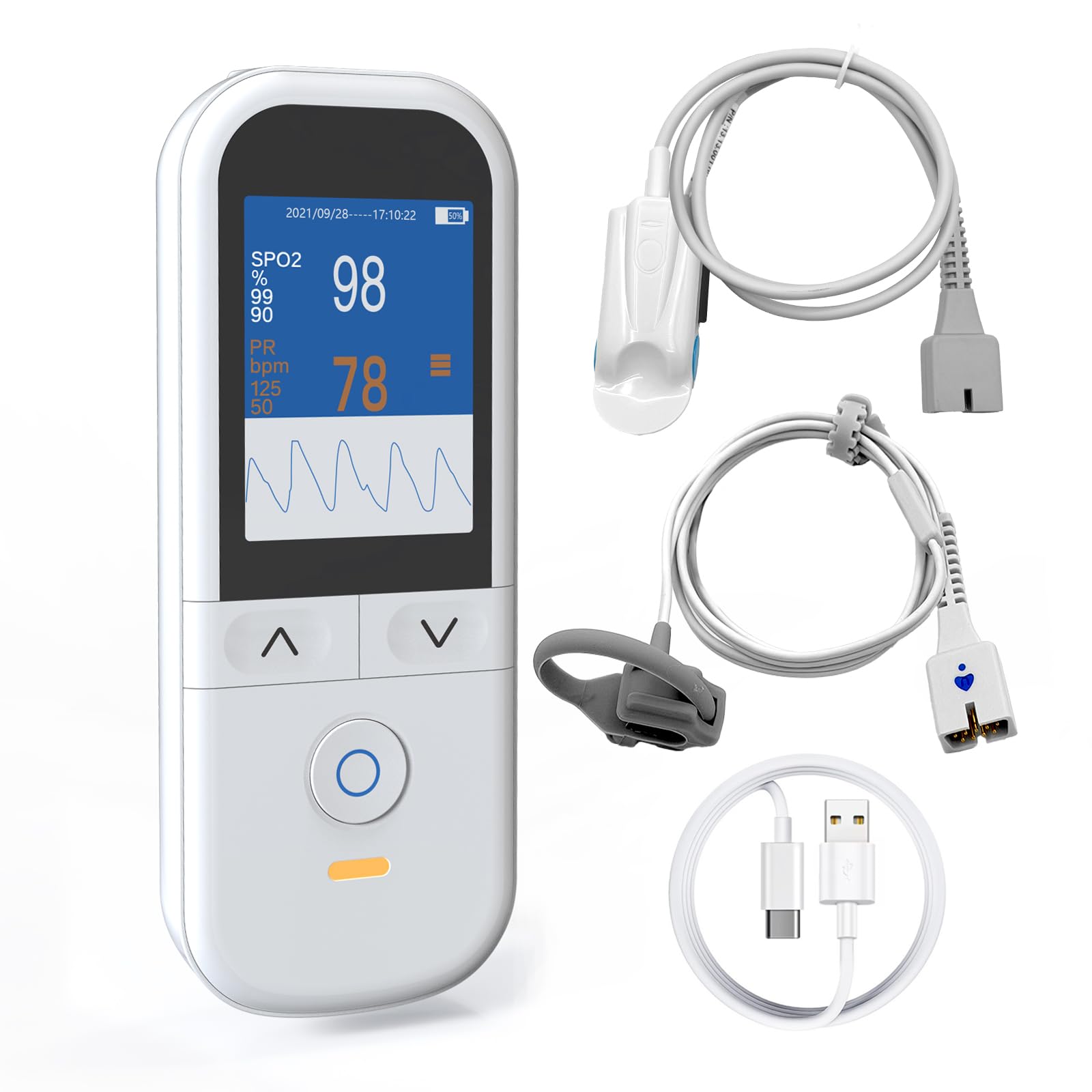
The MedChirrup Handheld Pulse Oximeter comes with both a fingertip probe and a wrap-around foot sensor, making it a versatile option for families who need to monitor multiple members — from preemie to grandparent. The foot wrap is designed for infants and toddlers, securing around the sole to measure SpO₂ and pulse rate without requiring pinching.
The device stores up to 500 readings with time stamps and supports multi-language menus (EN/ES/TR/PL). A bright OLED display shows real-time values, and the Type-C rechargeable battery lasts up to eight hours. Custom alerts sound when readings fall outside user-set SpO₂ or heart rate thresholds, and the app connectivity adds trend tracking over time.
Some units have been reported to fail after a few days, with replacements suffering similar issues. The foot wrap sensor may slide off during active sleep, requiring readjustment. For the price, the dual-probe approach covers both preemie foot monitoring and adult spot checks, but reliability concerns mean you should test the unit immediately on arrival.
Why it’s great
- Includes both fingertip and foot wrap sensors for whole-family use
- Stores up to 500 time-stamped readings
- Type-C rechargeable with clear OLED display
Good to know
- Reports of device failure after short use periods
- Foot wrap may slide off during overnight sleep sessions
9. MugaTree 50F Pulse Oximeter

The MugaTree 50F is a handheld pulse oximeter that supports up to 10 individual user profiles, each storing 300 sets of data with date and time stamps. It includes both an adult finger probe and a foot wrap sensor, so it can transition between monitoring a preemie’s foot and spot-checking other family members. The SpO₂ range covers 0 to 100 percent with ±1 percent accuracy.
The device connects to a companion app via Bluetooth for sharing measurements and tracking trends. Alarm thresholds can be customized, and the unit emits a beep when readings fall below your defined level. The foot wrap sensor is designed for infant use, though some users report it slides off easily and may not maintain contact consistently for continuous overnight monitoring.
The infrared sensor has been reported to struggle with very small fingers, and the infant sensor sometimes delivers incomplete readings (SpO₂ without perfusion index). This device is labeled for sports and aviation, not medical purposes. For families who need a multi-user data-tracking tool that can occasionally monitor a preemie’s foot, the 50F offers flexibility, but it is not a dedicated preemie sock solution.
Why it’s great
- 10-user mode stores 300 records per profile
- Includes foot wrap and finger probes in one package
- Customizable alarm thresholds for SpO₂ and heart rate
Good to know
- Infant foot sensor may slide off during night use
- Not FDA-cleared; reliability varies for preemie monitoring
FAQ
Can a baby sock monitor for preemies replace a hospital pulse oximeter?
What is the ideal SpO₂ range for a preemie using a home monitor?
How do I ensure a secure fit for a preemie foot in a sock monitor?
What does FDA clearance mean for a baby sock monitor?
Final Thoughts: The Verdict
For most parents, the baby sock monitor for preemies winner is the Owlet Dream Duo (Gen 3) because it combines FDA-cleared pulse oximetry with a full 2K HD video system, offering the closest approximation to NICU monitoring at home. If you want transmissive PPG accuracy in a dedicated sock format, grab the Sense-U Smart Sock Shoe 2. And for breathing movement detection in a clip-on form suited for NICU graduates, nothing beats the Sense-U Pro Baby Monitor.