
Battery-operated electric heaters are no longer a niche compromise — they are a serious solution for anyone who needs targeted warmth without being tethered to a wall outlet. Whether you are facing a freezing job site with no power, a long-haul truck cab, a drafty stadium seat, or a tent at 30°F, these portable devices deliver heat exactly where you need it, using integrated batteries that range from 7.4V to 12V and capacities from 9,000mAh to 20,000mAh. The key is matching the right form factor — blanket, shawl, lunch box, or wearable hoodie — to your specific scenario, because each design trades off heating area, battery life, and portability in distinct ways. Understanding those trade-offs in wattage, heating zone placement, and charge cycles is the difference between shivering through a long shift and staying comfortably warm.
I’m Min — the co-founder and writer behind Gadgets Feed. This guide is built on countless hours dissecting the technical specifications of battery-powered heating products, cross-referencing real-world user feedback on battery runtime, heat-up speed, and zone coverage to separate legitimate performers from marketing fluff.
After analyzing seven distinct models across wearable blankets, heated wraps, and self-heating food containers, this guide delivers the definitive breakdown of what to look for when searching for the best battery operated electric heater for your unique needs.
How To Choose The Best Battery Operated Electric Heater
Selecting the right battery-powered heater requires matching the device’s heating technology and battery capacity to your primary use case. The most common mistake buyers make is focusing on battery mAh alone without considering how the heat is generated, where it is directed, and how long it takes to recharge. We break down the three critical decision points below.
Heating Zone Coverage vs. Total Heat Output
Not all battery-powered heaters distribute warmth evenly across their surface. Many wearable blankets and shawls concentrate heating elements in specific panels — typically targeting the upper back, shoulders, and neck. The CYCYHEAT 20,000mAh blanket, for example, explicitly places heating elements only in the upper half, while the Kintiwe Pro hoodie provides a 25×18-inch heating zone focused on the back and neck. If you need full-body coverage, look for products that specify multiple heating zones or side-to-side coverage. A blanket that heats only a small patch will feel disappointing on a cold stadium bench, regardless of its battery runtime.
Voltage, Battery Capacity, and Heat Intensity
The operating voltage of the heating element directly affects how hot the device can get. Standard 5V USB-powered heating elements produce modest warmth, while 7.4V and 12V systems can reach significantly higher temperatures — the Kintiwe Pro hoodie operates at 12V and reaches up to 158°F, whereas many 7.4V blankets max out around 130°F. Battery capacity (measured in mAh) determines runtime, but it is the combination of voltage and mAh that determines total energy stored. A higher voltage system with a moderate battery can deliver more heat per minute than a lower voltage system with a larger battery, which is why the 12V hoodie with 15,000mAh can sustain high heat for 3 hours, while the 7.4V CYCYHEAT blanket with 20,000mAh stretches to 11 hours on low but at a cooler 115°F.
Form Factor: Blanket, Shawl, Hoodie, or Lunch Box
Each form factor in the battery heater category serves a distinct purpose. Wearable blankets and shawls (like the Moteoza and CYCYHEAT models) are best for stationary use — sitting at a desk, watching a game, or relaxing on the couch — because they drape over the body and can slip off if you move actively. Hooded ponchos (like the Kintiwe Pro) with snaps and zippers stay secured during walking, camping, or light outdoor activity. Heated lunch boxes (like the EDCREATY and Vabaso models) are not for personal warmth but for keeping food hot without a microwave, using 100W heating elements powered by detachable batteries. Choosing the wrong form factor for your activity level is the single fastest path to buyer’s remorse.
Quick Comparison
On smaller screens, swipe sideways to see the full table.
| Model | Category | Best For | Key Spec | Amazon |
|---|---|---|---|---|
| Kintiwe Pro Heated Hoodie | Wearable Blanket | Active outdoor warmth | 12V / 15,000mAh battery | Amazon |
| CYCYHEAT 20,000mAh Blanket | Throw Blanket | Long stationary sessions | 7.4V / 20,000mAh battery | Amazon |
| Monteka Cordless Lunch Box | Food Warmer | Hot meals without microwave | 9,000mAh / 5-side heating | Amazon |
| Vabaso App-Controlled Lunch Box | Smart Food Warmer | App-scheduled lunches | 9,000mAh / 48H timer | Amazon |
| EDCREATY Cordless Lunch Box | Large Food Warmer | Big meals on the go | 20,000mAh / 100W | Amazon |
| Moteoza Heated Shawl | Wearable Shawl | Indoor/office warmth | 7.4V / 16,000mAh | Amazon |
| Sealy 12-Volt Car Blanket | Car/Portable Blanket | Vehicle-powered camping | 12V / 50W draw | Amazon |
In‑Depth Reviews
1. Kintiwe Pro Heated Blanket Hoodie
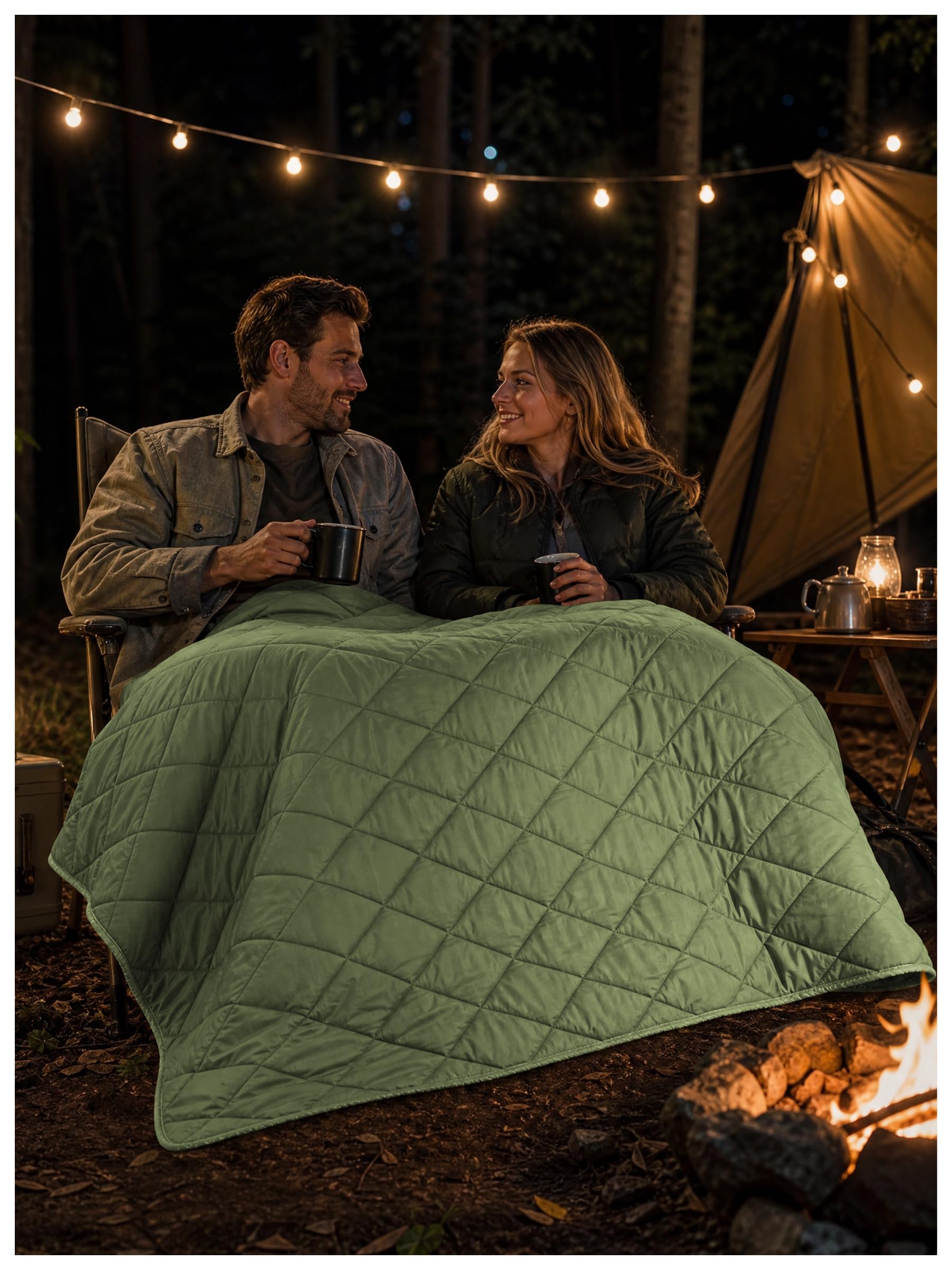
The Kintiwe Pro stands apart from every other battery-powered wearable in this roundup because it runs on a 12V system rather than the more common 7.4V platform. This higher voltage allows its carbon fiber heating elements to reach up to 158°F on the high setting, and the 25×18-inch heating zone provides substantial coverage across the neck, both shoulders, and the upper back. The detachable hood-scarf adds an extra layer of wind protection that makes a real difference when you are walking through a cold parking lot or sitting at an outdoor game.
The 15,000mAh rechargeable battery delivers about 3 hours on the highest heat level and extends to roughly 5 hours on low, which is reasonable for a device that gets this warm. The oversized fit with four snaps and a zip closure keeps the blanket firmly on your body during movement, solving the “slipping off” problem that plagues traditional heated shawls. Wind and water resistance on the exterior fabric means this is genuinely usable outdoors, not just on the couch.
The smart auto-temperature drop after 5 minutes of no button activity — dropping to 75% power — is a thoughtful safety feature that prevents overheating if you fall asleep or get distracted. The heating zone is concentrated on the back and does not wrap around to the front or arms, which some users may find limiting if they need hand warmth. Battery charging takes several hours, so planning ahead is required.
Why it’s great
- 12V system reaches 158°F, hottest in this guide
- Wind/water resistant fabric for true outdoor use
- Secure zip and snap closure stays put during activity
Good to know
- Heating zone limited to upper back and shoulders
- Battery takes a long time to fully recharge
2. CYCYHEAT 20,000mAh Large Heated Blanket
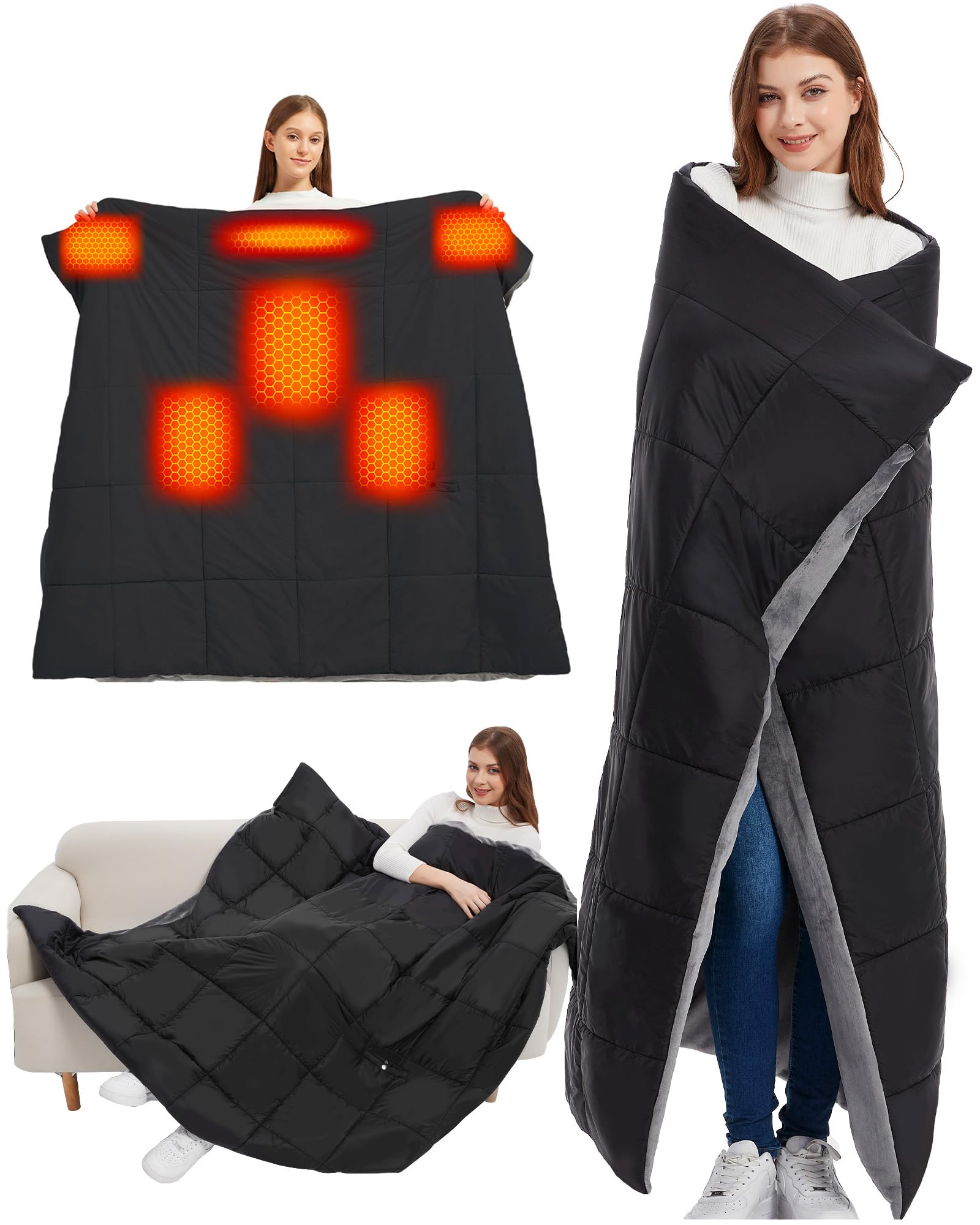
The CYCYHEAT blanket attacks the battery-run-time problem directly by packing a 20,000mAh 7.4V battery that can sustain the low heat setting (approximately 115°F) for up to 11 hours. This makes it the clear choice for anyone who needs overnight warmth while camping, long shifts in a cold warehouse, or extended stadium sessions without access to a power outlet. The blanket measures 63 by 55 inches, providing enough coverage for a single adult to wrap up entirely.
The carbon fiber heating elements warm up in under 30 seconds, and the three temperature levels (115°F, 120°F, 130°F) give you flexibility to conserve battery or maximize warmth. The battery pack itself features an LED power display and supports 20W fast charging, so a full charge takes about 5-6 hours. At just 0.74 pounds, the battery does not weigh the blanket down awkwardly.
The biggest caveat is that the heating elements are concentrated in the upper half of the blanket — the manufacturer is transparent about this in the product images, but it means your lower body will not receive direct heat. Some users find the blanket runs less warm than they expected on the medium and high settings, making it more suitable as a thermal layer than a standalone heater in extreme cold. The fleece fabric is soft and comfortable for stationary use.
Why it’s great
- Massive 20,000mAh battery for up to 11 hours on low
- 30-second heat-up with carbon fiber elements
- LED display and 20W fast charging
Good to know
- Heating elements only in upper half of blanket
- Lower body stays unheated; best as a wrap
3. Monteka Cordless Electric Lunch Box
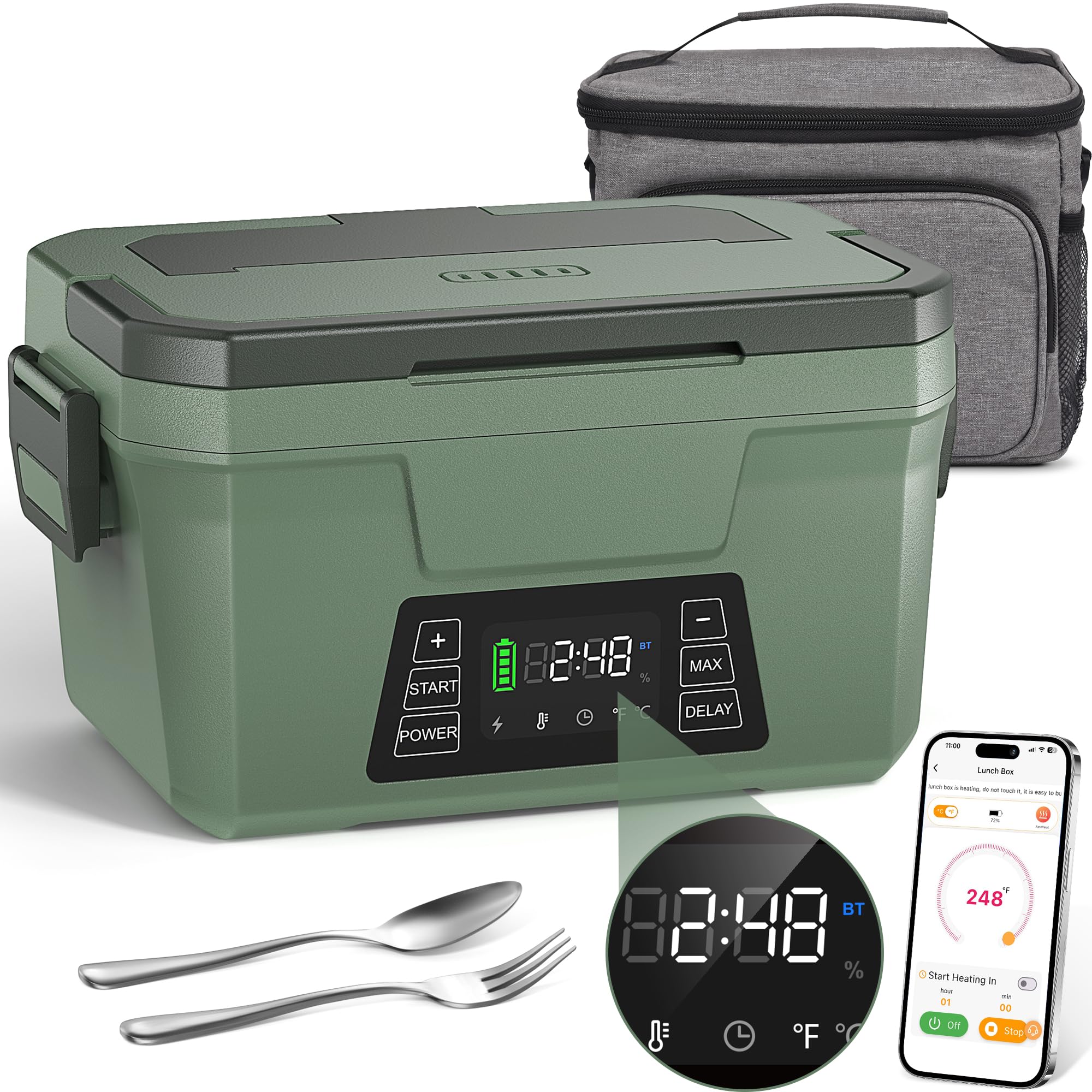
The Monteka transforms the concept of a battery heater into a food-warming device, using a 9,000mAh battery to power a 100W five-side heating system that reaches temperatures from 120°F up to 248°F. This is not a personal heating blanket — it is a self-heating lunch box designed for anyone who lacks microwave access at work, on a job site, or during road trips. The five-sided heating wraps warmth around the food rather than just heating from the bottom, which eliminates the cold-spot problem common with cheaper heated lunch boxes.
The smart app control lets you schedule heating remotely, so you can put cold food in the box in the morning, set a timer for 11:30 AM, and have a steaming hot meal ready without touching a button. The memory function remembers your last temperature and duration settings, eliminating daily reprogramming. The 1.2-liter capacity holds roughly 45% more food than a standard lunch box, making it suitable for adult-sized portions. The inner stainless steel container and lid are dishwasher-safe for easy cleaning.
The biggest practical limitation is battery charging time — a full charge takes approximately 8 hours, and the charger is proprietary rather than USB-C, which means less flexibility if you forget the cable. Some users report the plastic lid feels brittle compared to the rest of the build. The 100W heater drains the battery relatively fast during active heating, so you will want to charge it every night before use.
Why it’s great
- Five-sided heating ensures no cold spots in food
- Smart app scheduling with memory function
- Reaches up to 248°F for truly hot meals
Good to know
- Proprietary charger; no USB-C support
- 8-hour charge time requires overnight planning
4. Vabaso Cordless Electric Lunch Box
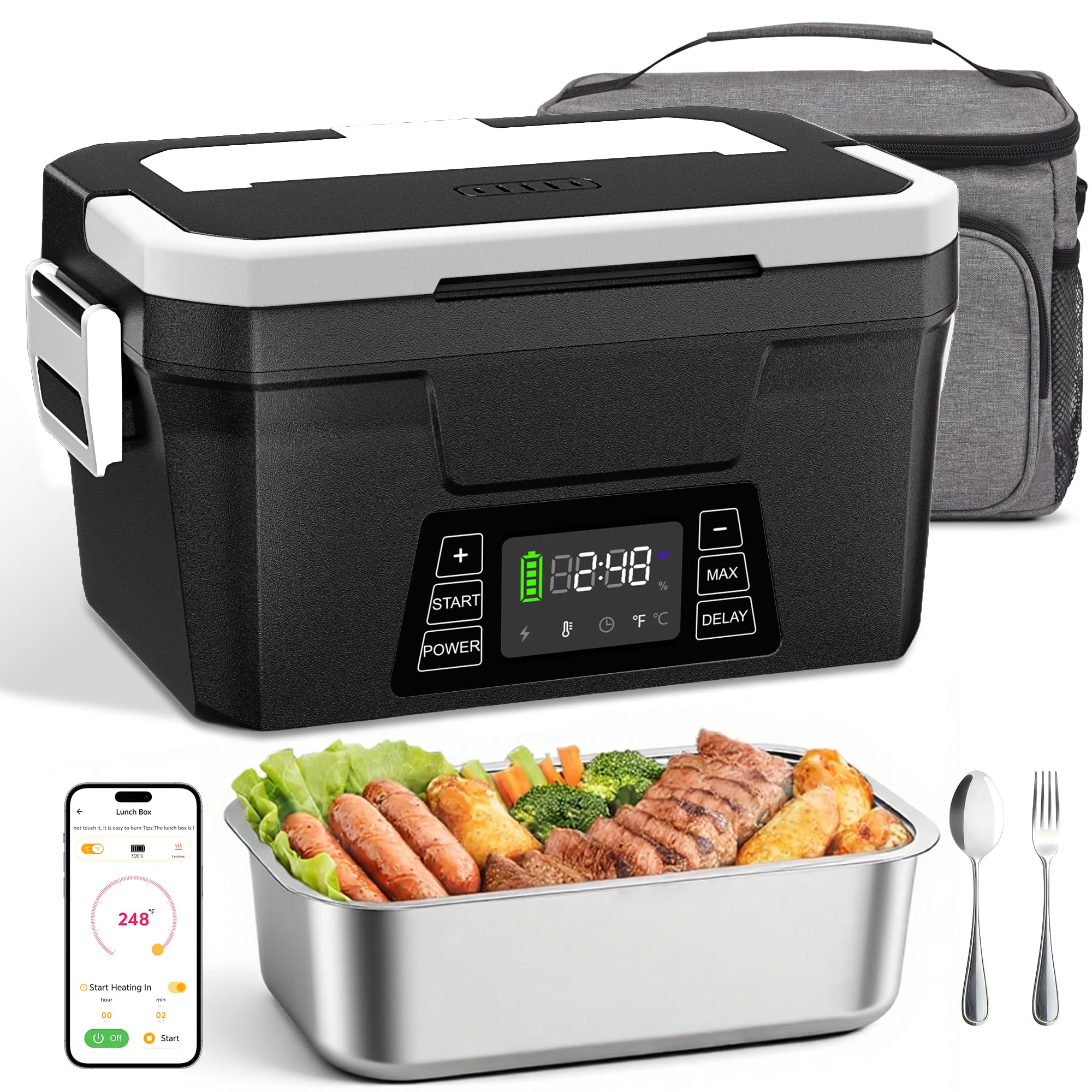
The Vabaso competes directly with the Monteka in the smart lunch box space, but it differentiates itself with an ultra-long 48-hour timer that gives you extreme flexibility in scheduling. You can load the box with cold food on Sunday evening, set it to start heating at noon on Tuesday, and return to a ready meal without any intermediate steps. The heating temperature range spans from 122°F to 248°F, and the device automatically switches to keep-warm mode once the food reaches the desired temperature.
The 9,000mAh battery is cordless by design — you can heat a full lunch without any cable attached, which is essential for construction workers, truck drivers, or anyone moving between locations. The 1.2-liter capacity with a leak-proof seal means soups and stews travel safely without spills. The included dedicated lunch bag adds insulation and carrying convenience. The interior is made from food-grade stainless steel that resists odors and staining over repeated use.
The trade-off here is the same proprietary-charger situation as the Monteka — charging takes roughly 8 hours and requires the specific cable, not USB-C. Some user feedback notes that the plastic lid is less durable than the stainless steel body, so careful handling is advised. The app functionality is convenient but requires initial setup and Bluetooth pairing, which adds a small learning curve for less tech-savvy users.
Why it’s great
- 48-hour timer allows multi-day meal scheduling
- Auto keep-warm switch maintains serving temperature
- Leak-proof seal and insulated bag for safe carrying
Good to know
- Proprietary charger; not USB-C
- Plastic lid is less durable than stainless interior
5. EDCREATY Cordless Electric Heated Lunch Box
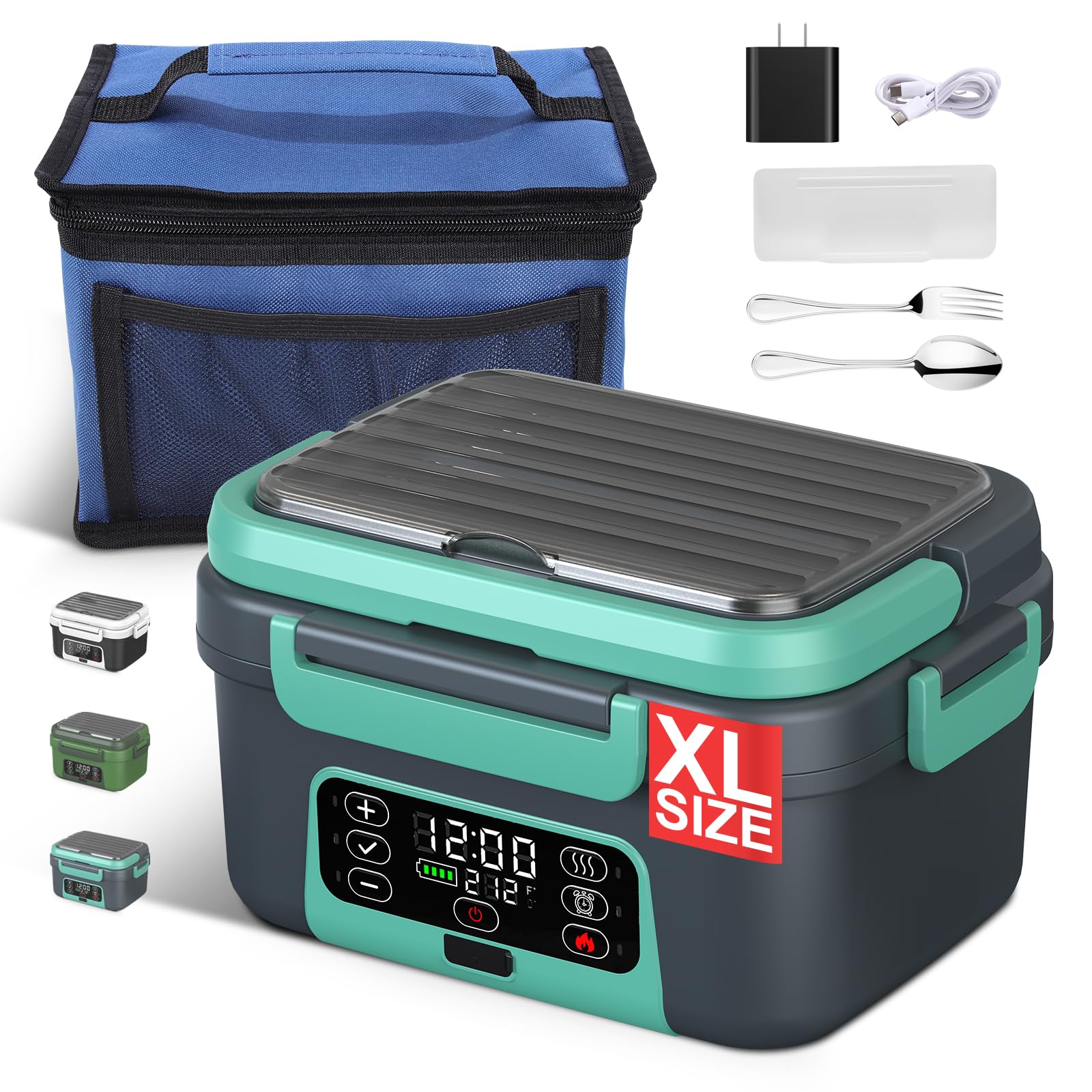
The EDCREATY sets the capacity benchmark for heated lunch boxes with its 1.5-liter (6.3 cups) interior, making it the best option for anyone who packs large lunches or wants to heat soups and stews in generous portions. It runs on a 20,000mAh 100W rechargeable battery that can handle multiple heating cycles on a single charge — real user reports indicate the battery can heat three separate lunches before needing a recharge. The 360-degree surround heating technology ensures food is warmed evenly rather than being hot on one side and cold on the other.
The adjustable temperature range spans from 167°F to 212°F in six increments, and you can set heating duration between 15 and 40 minutes based on the food type. The intelligent timer function lets you set a target dining time in the morning; the device calculates when to start heating so your meal is ready exactly when you want it. The removable 304 stainless steel inner pot is BPA-free and dishwasher-safe, while the detachable divider keeps different food items separated.
The main drawback is that the 100W heating system draws significant power, so while the battery is large, actively heating at maximum temperature will drain it faster than lower-wattage lunch boxes. The plastic exterior is not as rugged as some metal-bodied alternatives, so it requires careful packing in a work bag. The included utensils are functional but basic, and the proprietary DC charging cable is another cable to keep track of.
Why it’s great
- Largest 1.5L capacity for big meals
- 20,000mAh battery heats multiple lunches per charge
- Six temperature settings from 167°F to 212°F
Good to know
- 100W heater drains battery faster on high settings
- Plastic exterior less rugged than metal alternatives
6. Moteoza Heated Shawl with Battery
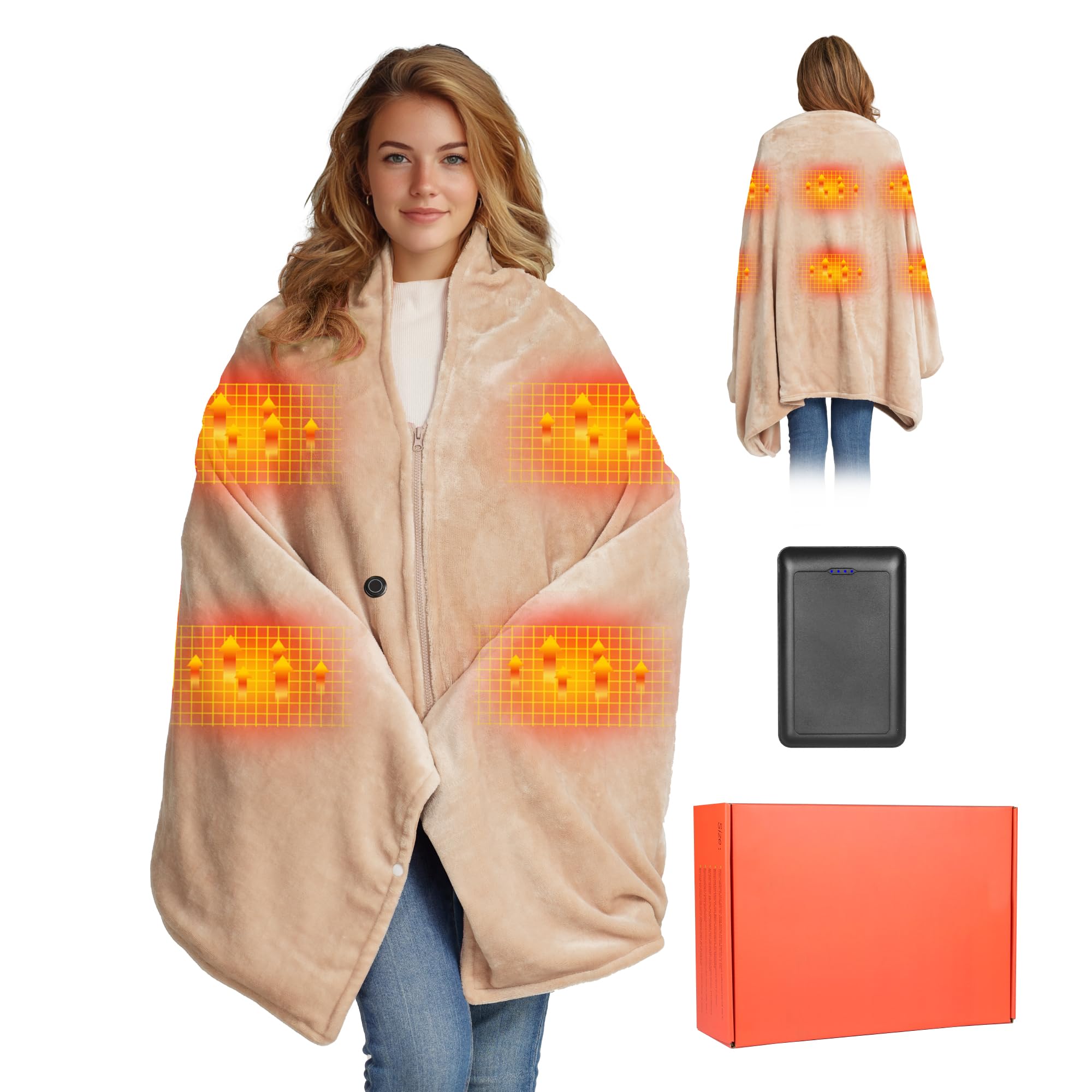
The Moteoza takes a different approach to battery-powered warmth by designing a wearable shawl that wraps around your shoulders and secures with a zipper and button system. The 7.4V 16,000mAh battery powers six discrete heating zones that target the back, neck, shoulders, and abdomen, providing more even coverage than single-panel designs. The flannel exterior and silver fox fleece interior create a soft, pill-resistant fabric that feels comfortable against the skin for hours of wear.
The three heat levels range from low (104-113°F) for indoor relaxation to high (140-149°F) for outdoor use, and the battery runtime spans roughly 4 to 9 hours depending on the selected heat level. The higher 7.4V operating voltage compared to typical 5V USB heating devices allows more efficient power delivery and faster heat generation. The generous 62×35-inch size means it fits most adults comfortably without feeling restrictive.
The heat-up time is slower than the carbon-fiber-based blankets in this roundup, taking several minutes to reach full temperature. Some users in cold outdoor environments found the highest setting insufficient for staying warm while stationary at outdoor events. The battery charging time of 6-8 hours is typical for this capacity and requires the included DC power connector, not a standard USB cable. The fleece interior, while soft, can attract lint and pet hair.
Why it’s great
- Six heating zones for even coverage across upper body
- Soft flannel and fleece construction resists pilling
- Zipper and button system keeps shawl in place
Good to know
- Slower heat-up time than carbon fiber alternatives
- Battery uses DC connector, not USB-C
7. Sealy 12-Volt Heated Car Blanket

The Sealy is the only product in this roundup that does not include its own battery — it draws power from a 12V cigarette lighter outlet, making it a dedicated vehicle or portable-power-station accessory rather than a truly cordless device. However, it earns a spot here because it is one of the most power-efficient ways to generate warmth in a truck, SUV, or RV. At roughly 50W draw, it uses significantly less energy than running the vehicle’s cabin heater, making it ideal for overnight truck camping with a Jackery or similar portable power station.
The blanket itself measures 59×43 inches, offering enough coverage for one adult as a lap blanket or thermal layer between sleeping pads. It provides three heating levels with a 4-hour auto-off safety feature, and the 85-inch power cord provides enough reach to position the blanket in any seating location. The polyester fabric is machine-washable after disconnecting the controller and power cable, and real users report it holding up well through multiple washing cycles without losing heat distribution.
The heat output is moderate — it works best as a supplemental layer rather than a primary heater in extreme cold. Users note that the temperature settings appear to control the heating cycle frequency rather than absolute temperature, meaning it cycles on and off to maintain warmth. This blanket will not work without a 12V power source, so it is not suitable for backpacking or situations where you only carry a battery.
Why it’s great
- Very low 50W draw saves vehicle battery
- 85-inch cord for flexible placement in vehicles
- Machine-washable and durable through multiple washes
Good to know
- Requires 12V power source; no built-in battery
- Moderate heat output best as supplemental layer
FAQ
Can I use a battery-operated heater overnight while sleeping?
How long does it take to charge a battery-powered heater fully?
Are battery-operated heaters safe for use in tents or RVs?
Final Thoughts: The Verdict
For most users, the best battery operated electric heater winner is the Kintiwe Pro Heated Hoodie because its 12V system delivers the highest heat output (up to 158°F) in a wearable, outdoor-ready form factor that stays secure during movement. If you want the longest runtime for stationary use, grab the CYCYHEAT 20,000mAh Blanket, which offers up to 11 hours on low. And for anyone needing hot meals without a microwave, the Monteka Cordless Lunch Box provides app-controlled scheduling and five-side heating that leaves no cold spots in your food.