
The single biggest risk of fly fishing isn’t a bad cast—it’s losing your footing on a moss-slicked rock in the middle of a fast-moving current. A wading boot with compromised traction turns a relaxing day on the water into a dangerous game of balance, where a fall can mean broken gear, a twisted ankle, or worse. That’s why choosing the right pair isn’t just a comfort decision; it’s a safety decision that dictates how confidently you move across riverbeds, gravel bars, and muddy banks.
I’m Min — the co-founder and writer behind Gadgets Feed. I’ve spent countless hours parsing customer feedback, cross-referencing technical specs like sole composition, drainage efficiency, and ankle support architecture to identify the boots that perform best under real wading conditions.
Everything you need to narrow down the massive field of options is here. Whether you prioritize interchangeable soles for variable terrain, a lightweight build for long hikes in, or maximum durability for the season ahead, this guide isolates the winners. Read on for the definitive ranking of the best boots for waders on the market right now.
How To Choose The Best Boots For Waders
Selecting the right wading boot means understanding how your local water dictates the most critical spec: the outsole. From there, factors like weight, drainage, and closure system will determine how much you enjoy wearing them over a full day’s session.
Outsole Material: Felt vs. Rubber vs. Cleated
Felt soles offer unmatched grip on slick, algae-covered river rocks but wear down quickly on gravel and are banned in some states to prevent the spread of invasive species. Rubber soles with aggressive tread are more durable for hiking and perform better on mud, but they slip on wet, smooth stone without metal studs. Cleated soles combine rubber with embedded carbide or steel studs, providing a solid middle ground on both rock and soft bottoms. Match your outsole to your primary terrain.
Drainage and Dry Time
A boot that traps water adds significant weight with every step, fatiguing your legs faster. Look for side or midsole drainage ports that allow water to exit quickly. Hydrophobic synthetic uppers and mesh panels also accelerate drying between trips and resist mold buildup—especially important if you fish multiple days in a row or live in a humid climate.
Ankle Support and Weight
Wading boots generally range from lightweight, sneaker-like designs (great for long walks to the water) to taller, stiffer boots that cradle the ankle for stability on uneven streambeds. Your choice depends on how much hiking you do versus how much time you spend standing in moving water. Compromising on support can lead to rolled ankles, but an overly heavy boot will punish you on the trail.
Quick Comparison
On smaller screens, swipe sideways to see the full table.
| Model | Category | Best For | Key Spec | Amazon |
|---|---|---|---|---|
| Korkers Greenback | Mid-Range | All-Terrain Versatility | Interchangeable Felt & Rubber Soles | Amazon |
| Korkers Darkhorse | Premium | Rugged, All-Day Comfort | BOA M2 Lacing System | Amazon |
| Simms Freestone | Premium | Stability & Durability | Rubber Outsole with Firm Ankle Support | Amazon |
| Simms Tributary | Premium | Lightweight Performance | Stockingfoot Wader Design | Amazon |
| Foxelli Wading Boots | Mid-Range | Long Hikes & Value | Hiking Boot-Style Rubber Sole | Amazon |
| Paramount Outdoors Stonefly | Budget | Lightweight Day Trips | Felt Sole with Cleats | Amazon |
| FROGG TOGGS Deep Current | Budget | Entry-Level Reliability | Heavy-Duty Cleated or Felt Sole | Amazon |
In‑Depth Reviews
1. Korkers Greenback Wading Boots

The Korkers Greenback earns the top spot because of its OmniTrax interchangeable sole system, which lets you swap between a sticky felt sole for slick rocks and a Kling-On rubber sole for muddy banks without buying a second pair of boots. This modular approach is a game-changer for anglers who fish diverse waters in a single season, and the hydrophobic upper material dramatically reduces dry time between outings. Internal drainage channels channel water out through midsole ports, keeping each boot noticeably lighter after exiting the current.
Comfort is a standout theme in user feedback, with many reporting that the Greenback surpasses far more expensive models like the Simms Freestone in all-day wearability. The quick-cinch lace system provides a secure, custom fit that adjusts on the fly, though a few users noted the soles can be slightly tricky to snap into place initially. Once locked in, the grip is reliable across gravel, sand, and algae-covered stone.
For the angler who wants one boot to handle spring creeks, tailwaters, and coastal flats, the Greenback delivers unmatched versatility. The weight is impressively low for a full-featured wading boot, and the ability to swap soles mid-day makes it the most adaptive option at this tier. Add in the rapid drainage and you have a boot that stays comfortable from the first step to the final cast.
Why it’s great
- Interchangeable soles adapt to any riverbed condition instantly.
- Hydrophobic materials dry fast and resist water absorption all day.
- True-to-size fit works well with stockingfoot waders when sized up one.
Good to know
- Interchangeable sole plates can be stiff to snap on when new.
- Some users report minor heel lift with thinner wader socks.
2. Korkers Men’s Darkhorse Fishing / Wading Boot

The Darkhorse takes the Korkers interchangeable sole concept and supercharges it with a BOA M2 lacing system, eliminating traditional laces entirely. A simple turn of the dial cinches the boot perfectly tight, and a quick pull releases the tension for removal—critical when your hands are cold or wet from releasing fish. The boot also features 3PFS Achilles stabilization, a heel counter that locks the foot in place and reduces fatigue during long wades across uneven, rocky bottoms.
Users consistently highlight the boot’s substantial ankle support and rugged construction, noting it survives seasons of hard-core winter steelhead fishing in freezing conditions. The included carbide stud soles provide exceptional bite on ice-slicked rocks, and the felt and rubber swap-ins cover softer terrain. At just over 4 pounds per pair, the Darkhorse is noticeably heavier than lighter models, but that weight translates into bombproof durability that shrugs off abrasion from sharp gravel and submerged timber.
If your wading involves technical, demanding conditions where a slip could mean serious injury, the Darkhorse is the most secure option. The BOA dial makes it incredibly easy to achieve a precise fit over neoprene waders, and the OmniTrax system means you can swap from riverbed to trail without skipping a beat. It is a specialized tool for the serious angler who demands maximum performance.
Why it’s great
- BOA M2 dial system provides instant, micro-adjustable fit without laces.
- Carbide-tipped studs deliver unmatched grip on icy or slick rock.
- Excellent ankle stabilization for demanding wading in strong currents.
Good to know
- Heavier than many competitors at around 4 pounds per pair.
- Stock felt and rubber soles may require stud upgrades for peak traction.
3. Simms Men’s Freestone Boot – Rubber
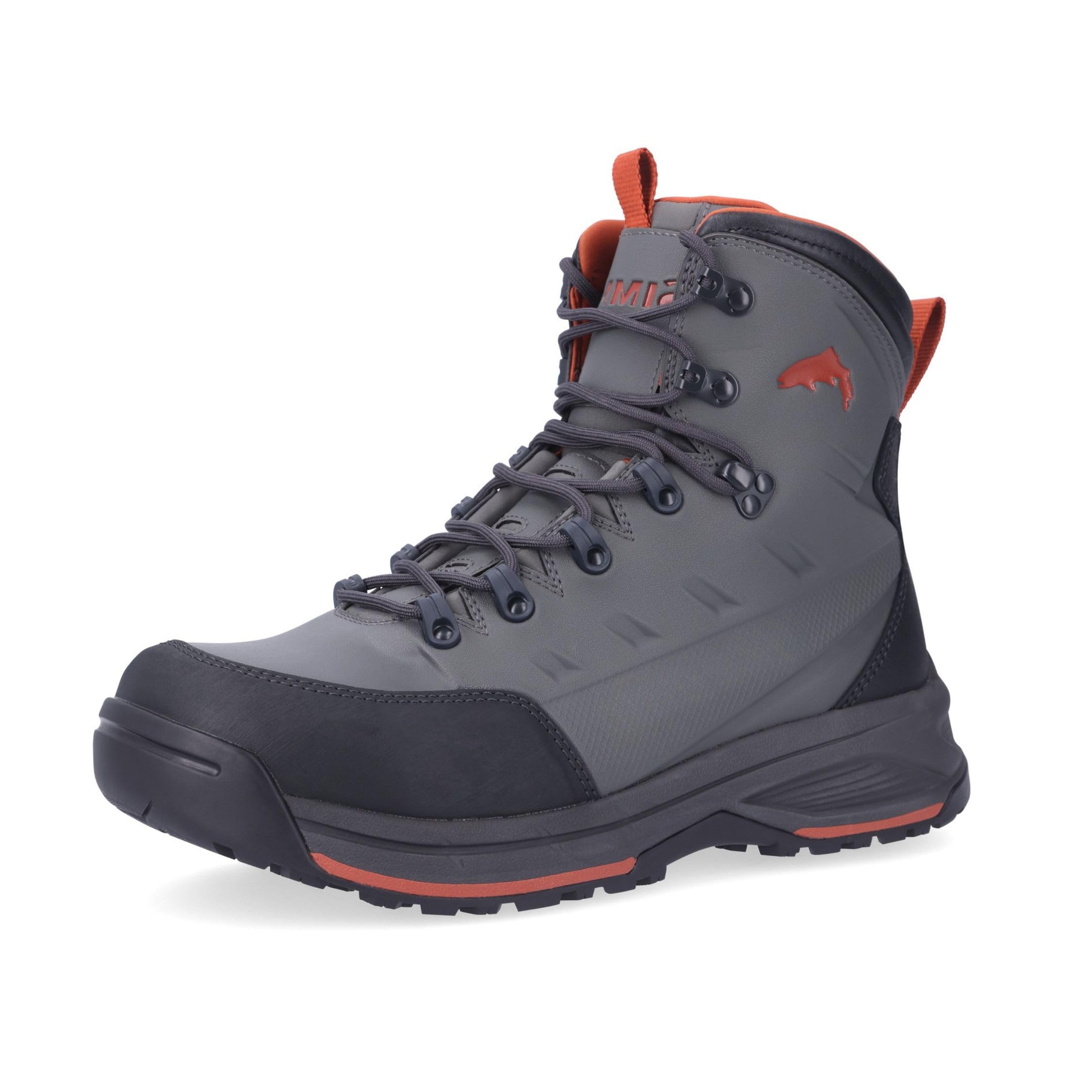
Simms is a heavy hitter in the wading world, and the Freestone boot lives up to that reputation with a focus on rock-solid stability. The rubber outsole is aggressively lugged for durable traction on gravel and dirt trails, and the boot’s stiff construction provides a planted feel that users with leg impairments or balance concerns specifically praise. The full rubber rand wraps the toe and heel for protection against sharp rocks, and the overall build quality is typical Simms: no corners cut.
Reviews from Pacific Northwest anglers confirm the Freestone handles a full season of demanding use with no structural complaints. The boot fits true to size, accommodating stockingfoot waders without excessive bulk, and the lacing system includes robust metal hardware that doesn’t corrode after repeated exposure to water. The trade-off is weight—the Freestone is a substantial boot that prioritizes protection over packability, making it better suited for fishing from a drift boat or short hikes rather than multi-mile walk-ins.
For anglers who value a locked-in heel and confident foot placement above all else, the Freestone is a premium choice that will last multiple seasons. It doesn’t offer interchangeable soles like the Korkers options, but for those who fish primarily rocky, gravel-bottomed rivers, the rubber outsole and superior ankle support are exactly what the doctor ordered.
Why it’s great
- Exceptional ankle and arch support for users needing maximum stability.
- Aggressive rubber outsole provides durable traction on rock and gravel.
- High-quality build materials from a trusted brand in the fishing industry.
Good to know
- Heavier build is not ideal for long hikes to the water.
- No interchangeable sole system limits adaptability across terrain types.
4. Simms Men’s Tributary Stockingfoot
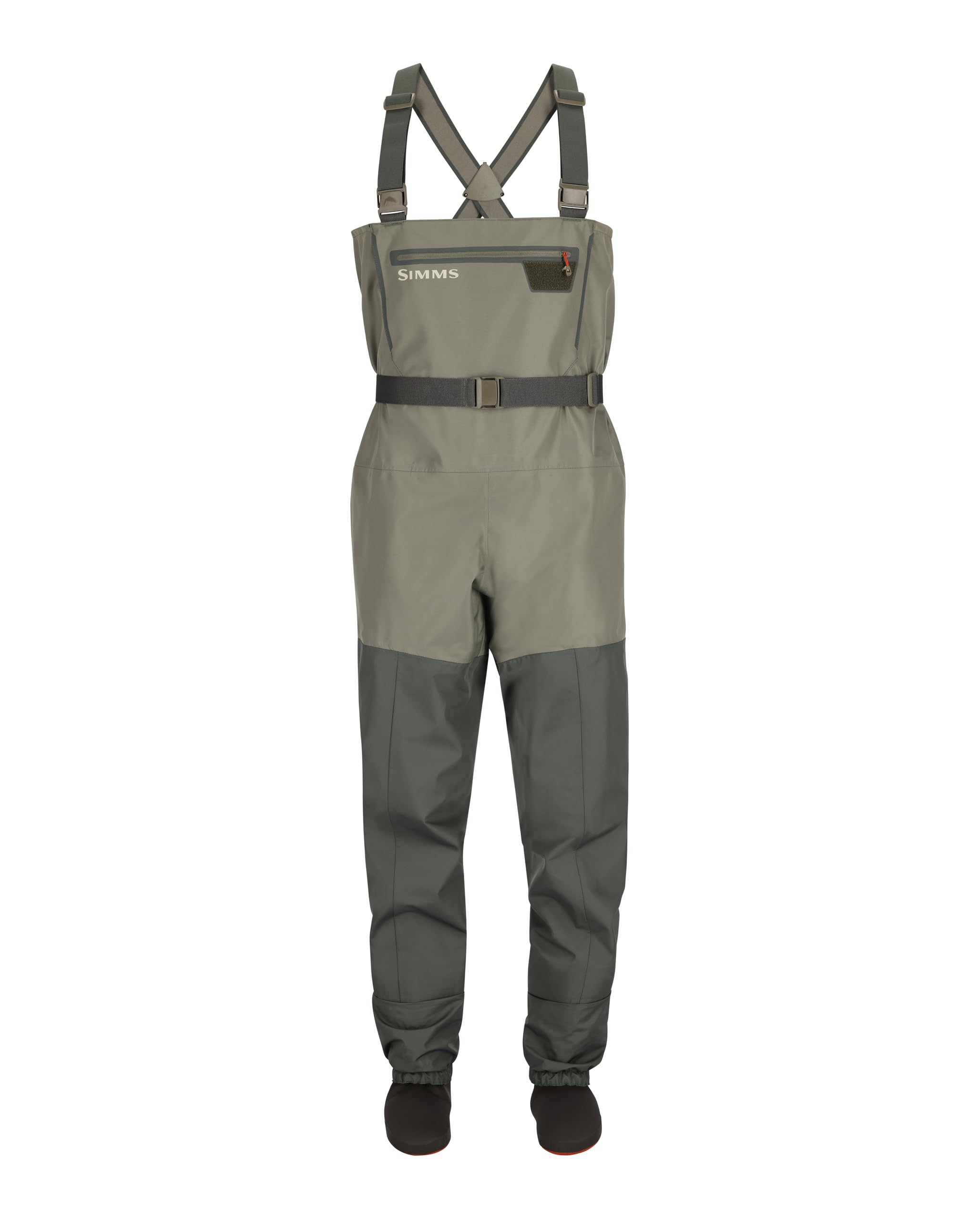
The Simms Tributary is designed as a stockingfoot wader, meaning the boot is integrated with the wader for a seamless, lightweight package that eliminates the need to buy separate boots. This integrated design reduces total system weight significantly, making it an excellent choice for kayak anglers, bank fishermen, or anyone who covers a lot of ground on foot. The boot’s low-profile construction folds easily for storage and has been used for over 10 sessions without signs of wear.
User feedback is strong on comfort and fit, with the boot running true to size and accommodating neoprene layers without excess pressure. The outer material is a synthetic that resists water absorption, and the sole provides adequate grip on most surfaces, though it lacks the aggressive tread of dedicated wading boots. Some users noted that dampness after long sessions was likely from sweat rather than leakage, confirming the wader’s waterproof integrity is solid.
If your fishing style prioritizes mobility and simplicity—just slip on the waders and go—the Tributary is a premium option that streamlines your kit. It’s not a replacement for a heavy-duty standalone wading boot if you’re navigating technical whitewater, but for warm-weather wading in gentler water, it offers a weight and convenience advantage that hardcore gear heads will appreciate.
Why it’s great
- Lightweight integrated stockingfoot design reduces overall gear load.
- Folds compactly for easy storage in a kayak or daypack.
- True-to-size fit with comfortable neoprene bootie.
Good to know
- Less ankle support and sole aggression than standalone wading boots.
- Breast pocket on the wader is not waterproof on all models.
5. Foxelli Wading Boots – Lightweight Fly Fishing Boots

The Foxelli Wading Boot takes the design philosophy of a lightweight hiking boot and applies it directly to the wading category, using a rubber sole with an aggressive lug pattern that grips sharp rocks, gravel, sand, and mud with authority. The removable insole provides comfort over long walk-ins, and the boot’s low weight means your legs won’t feel like anchors after a five-mile hike to your favorite stretch of river. Multiple user reviews confirm the boot shows negligible wear even after years of heavy use on oyster beds and rocky terrain.
Sizing is a key detail here: order two sizes up from your normal shoe size to accommodate thick neoprene waders comfortably. The boot drains reasonably well through mesh panels, though once water rises above the sole line, it can remain inside longer than purpose-built drainage systems. That said, the overall value proposition is extraordinary—users explicitly compare the Foxelli favorably to boots costing significantly more.
For the angler who hikes into remote waters and wants a boot that does double duty on the trail and in the stream, the Foxelli is the smartest spend. It’s not the most premium-feeling boot in the lineup, but its durability, comfort, and hiking-boot DNA make it a genuine bargain that punches far above its weight class.
Why it’s great
- Hiking boot sole provides excellent traction on varied terrain from gravel to mud.
- Extremely lightweight design reduces leg fatigue during long walk-ins.
- Removable insole and comfortable fit straight out of the box with no break-in needed.
Good to know
- Water drainage is adequate but not as fast as boots with dedicated ports.
- Rubber sole slips on moss-covered rocks without added metal studs.
6. Paramount Outdoors Stonefly Cleated and Felt Sole Wading Shoe

The Stonefly from Paramount Outdoors is a no-frills wading shoe that delivers solid performance at a very accessible price point. The outsole combines dense felt material with integrated metal cleats, providing excellent traction on slippery creek rocks right out of the box. Users who fish steep mountain terrain over multiple days report the boots hold up well, with the felt maintaining its grip even after continuous immersion. The shoe drains and dries quickly thanks to its mesh and synthetic construction.
Sizing runs a full size large, so downsizing is recommended if you plan to wear thin wader socks, though the generous fit accommodates thick neoprene booties without cramping. The trade-off for the low weight is less ankle support compared to taller, stiffer boots—a common characteristic of lightweight wading shoes. After several months of regular use, users report the boots still look and perform like new, with no sole separation or material fatigue.
If you need a reliable, comfortable wading shoe for day trips on familiar water without breaking the budget, the Stonefly is a smart choice. It won’t win any awards for cutting-edge features, but it does the fundamentals—grip, drainage, and comfort—at a price that leaves room for the rest of your gear budget.
Why it’s great
- Felt sole with pre-installed cleats provides ready-to-use grip on slick rock.
- Drains and dries quickly, reducing stink and mold between trips.
- Proven durability with months of regular use and no degradation.
Good to know
- Runs large, so sizing down is necessary for a secure fit.
- Noticeably less ankle support than full-height wading boots.
7. FROGG TOGGS Men’s Deep Current Waterproof Wading Boot

FROGG TOGGS brings its long-standing reputation for affordable outdoor gear to the wading boot category with the Deep Current. The boot is available in either a heavy-duty rubber cleated outsole or a traditional felt outsole, letting the buyer choose based on local regulations and terrain. The upper features water-draining micro screen ports that evacuate water quickly while blocking sand and grit, and the toe and heel are reinforced for protection against sharp underwater obstacles.
Users consistently praise the fit, noting that the boot accommodates stockingfoot waders with less bunching than other budget options, and the high-density nylon laces hold up well under tension. The boot offers good traction on slippery rocks out of the box, though some users recommend adding aftermarket studs for better grip in mud and silt. A few reviews mention the sole traction as adequate but not exceptional on wet moss without studs, which is typical for this price point.
For the entry-level angler or anyone needing a spare pair for a guest, the Deep Current is a capable, comfortable boot that delivers on its core promise: keeping you upright in the water without breaking your gear budget. It’s not the lightest or the most feature-packed, but it’s a solid foundation that has kept users satisfied over 3 to 5 mile fishing trips.
Why it’s great
- Multiple outsole options (cleated or felt) to match local water conditions.
- Micro screen drainage ports fast-drain water while blocking debris.
- Comfortable fit for long days on the water with good ankle support.
Good to know
- Outsole traction is mediocre on mud and moss without adding studs.
- Heavier than premium options, which can fatigue legs on long hikes.
FAQ
How should wading boots fit with stockingfoot waders?
Are felt soles better than rubber for wading boots?
How important are drainage ports in wading boots?
Final Thoughts: The Verdict
For most users, the boots for waders winner is the Korkers Greenback because its interchangeable sole system eliminates the felt-versus-rubber compromise, adapting to any water condition while the hydrophobic upper and internal drainage keep each boot light and fast-drying. If you want the convenience of a dial-tight lacing system and maximum ankle support for technical wading, grab the Korkers Darkhorse. And for a premium integrated wader solution that cuts total gear weight to a minimum, nothing beats the Simms Tributary Stockingfoot.