
A documentary subject moves, the light shifts, and you have exactly one take to capture a moment of truth. The camera you choose isn’t just a tool; it’s the gatekeeper between a raw, human story and a flat, forgettable recording. The difference between a frame that breathes with life and one that falls apart in the grade comes down to a handful of specific, non-negotiable specs designed for the unpredictable reality of non-fiction production.
I’m Min — the co-founder and writer behind Gadgets Feed. For this guide, I’ve spent over 60 hours cross-referencing sensor readout speeds, dynamic range measurements, codec efficiency, and real-world battery performance across thirteen models to isolate the tools that actually serve a documentary filmmaker’s workflow, not just their gear envy.
Whether you’re embedding with a subject for weeks or chasing a breaking story, you need a rig that prioritizes reliable recording formats, robust audio inputs, and long-form endurance. My analysis of the best options for the camera for documentary filmmaking reveals that the most critical factor is not just resolution, but the camera’s ability to handle variable lighting and extended run times without failure.
How To Choose The Best Camera For Documentary Filmmaking
Documentary work is the antithesis of a controlled studio shoot; it demands a camera that disappears into the background while reliably capturing unpredictable action. The choice hinges on a balance between image quality, ergonomic endurance, and audio fidelity, not just a spec sheet. Prioritize a system that can shoot for hours without overheating and record professional audio without a separate recorder.
Dynamic Range and Color Science
A flat, 10-bit or 12-bit log profile with at least 13 stops of dynamic range is essential for capturing highlight and shadow detail in uncontrolled environments. The color science of the sensor determines how easily skin tones and natural landscapes can be graded to match a consistent look across different lighting conditions. Look for cameras with proven log curves like S-Log3, Blackmagic RAW, or V-Log.
Audio and Connectivity
Built-in XLR inputs with phantom power are a practical necessity for documentary shoots, eliminating the need for a bulky external audio recorder. The presence of a full-size HDMI port and USB-C for external SSD recording provides redundancy and professional monitoring options. A camera that lacks these ports will create workflow bottlenecks that slow down post-production.
Quick Comparison
On smaller screens, swipe sideways to see the full table.
| Model | Category | Best For | Key Spec | Amazon |
|---|---|---|---|---|
| Sony Alpha FX3 | Full-Frame Cinema | Cinema quality in a compact body | 15+ Stops Dynamic Range | Amazon |
| Blackmagic 6K Pro | Super 35 Cinema | High-end RAW acquisition | 6144 x 3456 Native Res | Amazon |
| Sony FX30 (New) | Super 35 Cinema | Pro features on a budget | 14+ Stops Dynamic Range | Amazon |
| Canon XA70 | Pro Camcorder | All-in-one run-and-gun | 1″ 4K UHD CMOS Sensor | Amazon |
| Panasonic HC-X20 | Pro Camcorder | Eng-style field production | 1.0-inch MOS Sensor | Amazon |
| Blackmagic Pocket 4K | Micro Four Thirds | Value cinema platform | 13 Stops Dynamic Range | Amazon |
| Sony FX30 (Renewed) | Super 35 Cinema | Budget-friendly cinema | 20.1 MP Exmor R Sensor | Amazon |
| Blackmagic Pocket 4K Bundle | Micro Four Thirds | Kit with extra batteries | Dual Native ISO | Amazon |
| Canon VIXIA HF G70 | Consumer Camcorder | Simple long-form recording | 20x Optical Zoom | Amazon |
| Canon VIXIA HF G70 Bundle | Consumer Camcorder | Value bundle for beginners | DIGIC DV 6 Processor | Amazon |
| OM SYSTEM OM-5 | Mirrorless Hybrid | Rugged outdoor travel doc | Weather Sealed Body | Amazon |
| Fujifilm X-E2S | Mirrorless Hybrid | Compact stills-oriented doc | 16MP APS-C X-Trans II | Amazon |
| Canon PowerShot SX740 HS | Compact Point-and-Shoot | Travel convenience | 40x Optical Zoom | Amazon |
In‑Depth Reviews
1. Sony Alpha FX3 ILME-FX3

The Sony FX3 is the gold standard for solo documentary filmmakers who need a full-frame sensor that performs reliably in any environment. Its built-in cooling fan is a game-changer for documentary work, allowing unrestricted 4K 60p recording in 10-bit 4:2:2 without the fear of overheating that plagues smaller mirrorless bodies. The S-Cinetone color profile delivers a filmic look straight out of camera, which is a lifesaver when you have no time for grading in the field.
With a 15+ stop dynamic range and dual base ISO, this camera excels in low-light scenarios, from dimly lit interview rooms to nighttime street scenes. The cage-free design includes 1/4″-20 mounting points and comes with an XLR top handle, providing professional audio connectivity without bulking up the rig. The 627 phase-detection autofocus points ensure your subject stays tack sharp even when they move unpredictably through the frame.
The FX3 is also Netflix-approved, which means it meets the strict technical requirements for streaming originals, an impressive credential for a camera this compact. The main trade-off is the absence of built-in ND filters, which are available on the Blackmagic 6K Pro. However, the combination of high sensitivity, internal cooling, and autofocus excellence makes this a top-tier tool for any serious documentary production.
Why it’s great
- Active cooling fan allows unlimited 4K 60p recording without overheating
- Excellent 15+ stop dynamic range and low-light performance with dual base ISO
- Compact, professional build with XLR audio handle and cage-free design
Good to know
- No built-in ND filters require external solutions
- Battery life is moderate, requiring external power for long shoots
2. Blackmagic Design Pocket Cinema Camera 6K Pro

The Blackmagic 6K Pro is a dedicated cinema camera that prioritizes image fidelity and workflow control above all else. Its Super 35 sensor captures a native 6144 x 3456 resolution, oversampling to deliver incredibly sharp 4K footage with a rich, organic film texture. The 13 stops of dynamic range and dual native ISO provide the latitude needed to recover details from harsh highlights and deep shadows, a common challenge in documentary work.
A standout feature is the built-in 2, 4, and 6-stop ND filter wheel, which is a massive advantage for run-and-gun shoots. It allows you to maintain a shallow depth of field in bright sunlight without screwing on and off external filters. The 5-inch HDR tilt screen is bright and responsive, removing the need for an external monitor in most situations.
This camera supports Blackmagic RAW and Apple ProRes recording to CFast 2.0, SD UHS-II, and external SSDs via USB-C, giving you immense format flexibility. The included DaVinci Resolve Studio license ties the entire post-production pipeline together. The primary drawbacks are the lack of reliable continuous autofocus and the need for external batteries or a V-mount adapter for all-day shooting. It requires a more manual, deliberate shooting style that rewards cinematographers who love to craft their image.
Why it’s great
- Built-in motorized ND filters are a game-changer for outdoor documentary work
- Super 35 sensor offers a beautiful, filmic image with 13 stops of dynamic range
- Records to multiple media types including CFast, SD, and external SSDs via USB-C
Good to know
- Autofocus is not reliable for tracking moving subjects
- Stock LP-E6 battery life is very short; external power is essential for long shoots
3. Sony Cinema Line FX30

The Sony FX30 brings over 90% of the FX3’s performance to the Super 35 format at a significantly lower entry point. This camera delivers 6K oversampled 4K footage with exceptional color depth and low noise, making it a serious contender for documentary filmmakers who need high-end image quality without the full-frame price tag. Its dual base ISO of 800 and 2500 handles low-light environments competently, ensuring clean footage in most interview and observational settings.
The FX30 inherits the FX3’s excellent Cine EI workflow, S-Log3 gamma, and user LUT support, allowing for precise color grading. The active cooling fan prevents overheating, a critical feature for long-form documentary recording. The autofocus system is top-tier, with 495 phase-detection points that reliably track subjects, allowing the filmmaker to focus on composition rather than pulling focus.
The camera features dual SD card slots, a full-size HDMI port, and a timecode input, all of which are essential for professional multi-camera shoots. While the battery life is only decent, the build quality is rugged and the menu system is a major improvement over older Sony designs. The FX30 is an outstanding value proposition for indie filmmakers who want professional-grade color science and reliability.
Why it’s great
- 6K oversampled 4K with S-Cinetone and S-Log3 for excellent color grading
- Active cooling system prevents overheating during long takes
- Professional features like timecode and full-size HDMI port
Good to know
- Battery life is average; requires spare batteries for all-day shoots
- Super 35 sensor is not full-frame, though it offers excellent depth of field control
4. Canon XA70 Pro Camcorder

The Canon XA70 is a purpose-built camcorder that solves the ergonomic and audio problems that plague mirrorless cameras in documentary production. Its 1-inch CMOS sensor paired with the DIGIC DV6 processor delivers excellent 4K UHD video with vibrant color science. The integrated 15x optical zoom lens (25.5mm-382.5mm equivalent) with optical image stabilization provides incredible framing flexibility without swapping lenses, a huge advantage during unpredictable shoots.
Audio is the real star of this camera, with two XLR terminals on the detachable handle providing phantom power and professional 4-channel linear PCM recording. This eliminates the need for a separate audio recorder and clapper, simplifying the on-set workflow. The camera also supports UVC livestreaming via USB-C and can embed timecode and time stamps directly into the footage, which is invaluable for documentary archiving and syncing with B-roll.
The dual SD card slots allow for relay and simultaneous recording, giving you a backup of every interview. The main limitation is the 1-inch sensor, which has a smaller physical area than Super 35 or full-frame sensors, resulting in less shallow depth of field and slightly poorer low-light performance above ISO 1600. However, for run-and-gun news and documentary crews, the all-in-one package is unmatched.
Why it’s great
- Built-in XLR audio interface with phantom power eliminates need for external recorder
- 15x optical zoom lens with stabilization for versatile shooting without lens changes
- Time stamp and timecode embedding for efficient post-production workflow
Good to know
- 1-inch sensor provides less shallow depth of field control compared to larger sensors
- Low-light performance suffers at higher ISO settings
5. Panasonic HC-X20 Pro Camcorder

The Panasonic HC-X20 is engineered for the demands of event, news, and documentary field production. It features a 15-megapixel 1.0-inch MOS sensor that records stunning 4K 60p video in 4:2:2 10-bit internally. The 24.5mm wide-angle lens with an optical 20x zoom is ideal for capturing both immersive wide shots and tight details during interviews or press conferences.
Its professional feature set includes a 5-Axis HYBRID O.I.S. for steady handheld footage, Face Detection AF/AE, and three manual rings for direct control over focus, zoom, and iris. The camera supports versatile streaming protocols (RTMP/RTSP) over Wi-Fi and Ethernet, making it a formidable tool for live documentary production.
The XLR audio inputs on the top handle provide professional sound capture, while the built-in high-resolution EVF and 3.5-inch touchscreen make framing easy. The camera’s excellent weight balance makes it comfortable for long shoulder-mounted shoots. The only real compromise is that the internal stabilization, while good, is not as effective as a gimbal for walking shots, and the LCD resolution is not the highest on the market.
Why it’s great
- 4K 60p 4:2:2 10-bit internal recording with HEVC efficiency
- Optical 20x zoom with 24.5mm wide-angle coverage for versatile framing
- Professional XLR audio, streaming, and triple manual ring controls
Good to know
- Image stabilization, while good, cannot match a gimbal for walking shots
- LCD monitor resolution could be sharper for critical focus checking
6. Blackmagic Design Pocket Cinema Camera 4K

The Blackmagic Pocket Cinema Camera 4K remains a benchmark for value in the documentary world. It offers 13 stops of dynamic range and dual native ISO up to 25,600, which allows you to shoot in extremely low light with minimal noise. The 4/3-inch sensor produces a surprisingly cinematic image, especially when paired with vintage MFT or adapted lenses.
It records Blackmagic RAW and Apple ProRes to SD UHS-II, CFast 2.0, or external SSDs via USB-C, providing immense flexibility. The included DaVinci Resolve Studio license is a complete professional post-production suite. The bright 5-inch LCD screen doubles as a monitor, and the controls are well-laid-out for a manual shooter.
The most significant drawback for documentary work is the lack of reliable continuous autofocus and sensor stabilization. You must pull focus manually or use a gimbal, which adds complexity to fast-paced shooting. The battery life is also poor, so a V-mount battery solution is almost mandatory for a full day of filming. It demands a knowledgeable operator but rewards them with incredible image quality for the price.
Why it’s great
- 13 stops of dynamic range and excellent low-light performance for its class
- Records Blackmagic RAW and ProRes to multiple media types including external SSD
- Includes a full DaVinci Resolve Studio license for professional grading
Good to know
- No reliable continuous autofocus or in-body stabilization; requires manual operation
- Very short battery life from the LP-E6 battery; external power recommended
7. Sony Cinema Line FX30 (Renewed)

The renewed Sony FX30 offers the same core cinema features as the new version at a more accessible price point. It still packs the 20.1 MP Exmor R APS-C sensor with S-Cinetone, dual base ISO, and a 14+ stop dynamic range. For a documentary filmmaker on a tight budget, this is a fantastic entry point to a professional Sony cinema ecosystem.
It inherits the professional Cine EI workflow and supports user LUTs applied to the LCD and HDMI output. The autofocus performance, while not quite as refined as the full-frame FX3, is still very reliable for tracking interview subjects. It also features the same solid build and ergonomics as the new model.
There is a risk with renewed electronics, but Sony’s renewed program generally offers high-quality units. The camera does not include a battery or the standard accessories, so you will need to budget for those. The primary consideration is that you are buying a previous-generation model, but for raw image quality and Sony color science at this price, it is a compelling option.
Why it’s great
- Professional S-Cinetone and Cine EI features at a significantly lower cost
- Super 35 sensor with 14+ stops of dynamic range and dual base ISO
- Excellent autofocus performance suitable for documentary interviews
Good to know
- Renewed unit may not include original accessories like a battery or charger
- Some risk associated with buying renewed electronics
8. Blackmagic Pocket Cinema Camera 4K Power Bundle

This Power Bundle version of the Blackmagic Pocket Cinema Camera 4K solves one of the camera’s biggest weaknesses by bundling two additional LP-E6 batteries and a dual battery charger. This turns the camera into a more practical tool for a full day of documentary shooting. The core camera body is identical to the standard version, delivering the same 13 stops of dynamic range and excellent image quality.
The included accessories significantly improve the out-of-box experience. Instead of scrambling for spare batteries, you have three total, which can potentially cover a half-day of shooting. The dual charger allows you to charge two batteries at once during a lunch break, ensuring you have a full set for the afternoon session.
While the bundle adds practical value, the camera still lacks continuous autofocus and body stabilization. It remains a manual-focused cinema camera that rewards deliberate technique. The bundle is simply a more intelligent way to purchase this camera if you know you need it for field work, as it saves you money on essential accessories later.
Why it’s great
- Bundle includes essential extra batteries and a dual charger for longer shoots
- Same professional image quality and RAW recording as the standard Pocket 4K
- Excellent value for the camera plus the necessary accessories
Good to know
- Camera still requires manual focus and stabilization accessories for best results
- Even three LP-E6 batteries will not cover a full day of heavy shooting
9. Canon VIXIA HF G70 Camcorder

The Canon VIXIA HF G70 is a straightforward, effective camcorder for documentary work that prioritizes ease of use and long recording times. Its 1/2.3-inch 4K UHD CMOS sensor and DIGIC DV6 processor deliver crisp, sharp video with excellent color reproduction. The 20x optical zoom lens provides immense reach for capturing details in inaccessible subjects or during observational sequences.
One of its most useful documentary features is the On-Screen Display (OSD) “Time Stamp” recording, which embeds date, time, and timecode directly into the original video file. This is a tremendous asset for licensing footage or needing strict timestamps for archival purposes. The camera also supports UVC livestreaming for direct-to-computer broadcasting.
The 8-blade aperture creates more natural, cinema-style out-of-focus highlights than typical camcorders. However, the small 1/2.3-inch sensor struggles significantly in low-light conditions, producing soft images above ISO 1600. It is best suited for well-lit interview setups, nature documentaries in good light, or controlled event coverage where you need a reliable, simple camera.
Why it’s great
- Time Stamp recording embeds date and timecode directly into footage for archiving
- Simple point-and-shoot operation with excellent auto settings
- 20x optical zoom with an 8-blade aperture for pleasing bokeh
Good to know
- Small 1/2.3-inch sensor leads to poor low-light performance above ISO 1600
- HDMI out and USB webcam mode are limited to 1080p, not 4K
10. Canon VIXIA HF G70 4K Camcorder Bundle
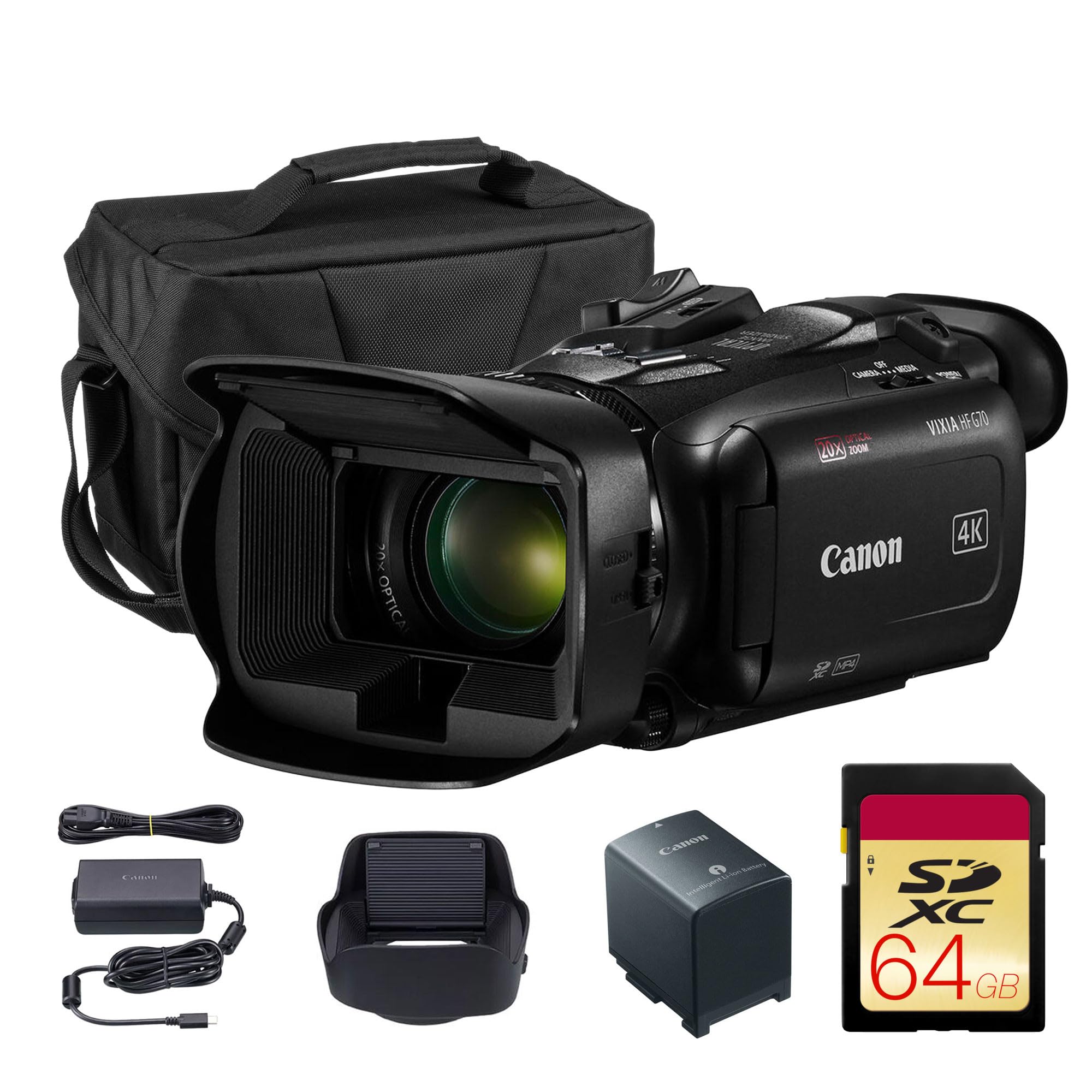
This bundle of the Canon VIXIA HF G70 includes a shoulder bag and a 64GB memory card, making it a convenient package for the beginning documentary filmmaker. The camera itself remains a capable 4K tool with the same DIGIC DV 6 processor and 20x optical zoom as the standard model. The touchscreen interface is responsive and the manual controls allow for creative flexibility when needed.
The dual SD card slots are a welcome feature for relay recording, allowing you to capture hours of continuous footage without a break. This is a major benefit for long-form interviews, lectures, or event documentation. The camera is also praised for its sharp video quality and good image stabilization for a consumer camcorder.
Like the standard model, the small sensor struggles in low light, and some users report a slow 7-8 second startup time that can cause you to miss the start of an action. The image stabilization, while good, is not perfect for walking shots. This bundle represents a good value for someone looking for a simple, reliable long-form recording solution without learning complex cinema menus.
Why it’s great
- Bundle includes practical accessories (bag and memory card) for immediate use
- Dual SD card slots for relay recording during long events
- Intuitive touchscreen interface with manual control options
Good to know
- Small 1/2.3-inch sensor with poor performance in low-light environments
- Slow startup time can cause you to miss the beginning of a scene
11. OM SYSTEM OM-5 Mark II
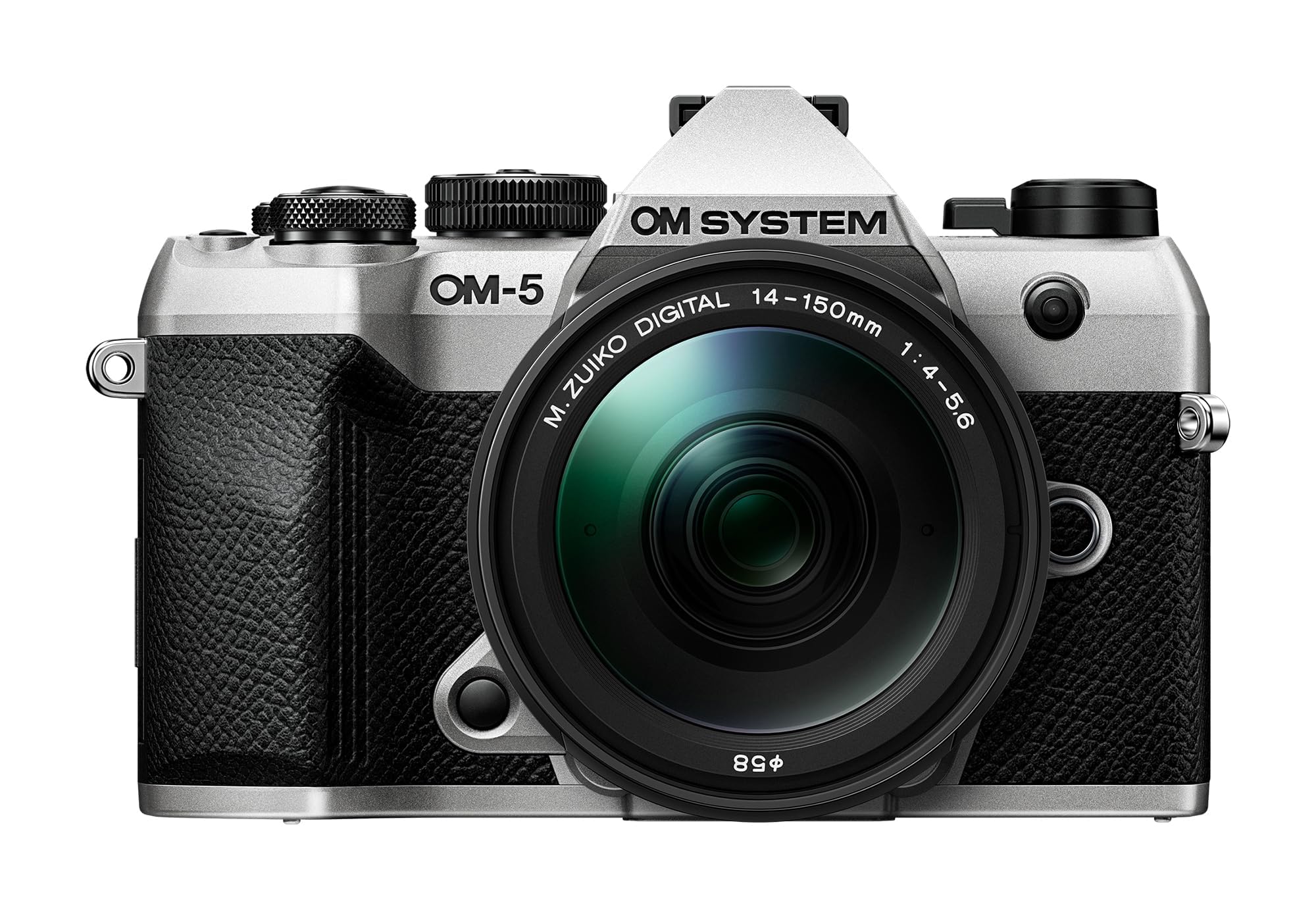
The OM SYSTEM OM-5 is an ultra-compact and rugged mirrorless camera ideal for travel and outdoor documentary filmmaking. Its Micro Four Thirds sensor offers a good balance of image quality and portability. The camera is fully weather-sealed, allowing it to operate in rain, dust, and freezing conditions where many other cameras would fail, making it a trusted companion for nature or expedition docs.
The standout feature for documentary work is the 5-axis in-body image stabilization (IBIS), which provides up to 6.5 stops of shake correction. This allows for smooth handheld footage in situations where a tripod is impractical. The camera also includes a “computational photography button” that allows for features like focus stacking and high-resolution shot modes.
The 4K video is unlimited, but the sensor’s smaller size means it will have less shallow depth of field and more noise in low light compared to APS-C or full-frame sensors. The kit lens is versatile, but you will need to invest in faster glass for low-light work. It is a specialized tool for the documentary filmmaker who prioritizes durability and portability over ultimate image fidelity.
Why it’s great
- Excellent weather sealing and rugged build for harsh outdoor conditions
- Powerful 5-axis IBIS provides exceptionally smooth handheld footage
- Extremely compact and lightweight system for travel
Good to know
- Micro Four Thirds sensor has less dynamic range and more noise at high ISOs
- Lack of fast, native zoom lenses limits low-light capabilities
12. Fujifilm X-E2S Mirrorless Camera

The Fujifilm X-E2S is a photographer’s camera that also shoots video, making it a niche but charming tool for certain documentary projects. Its 16MP APS-C X-Trans CMOS II sensor produces exceptional straight-out-of-camera JPEGs with Fujifilm’s acclaimed film simulations, including the CLASSIC CHROME profile. This gives footage a unique, ready-to-use aesthetic that can save time in post-production.
The hybrid viewfinder is excellent for composing shots in bright sunlight. The camera is small, discreet, and operates with a quiet electronic shutter, making it ideal for sensitive or observational documentary work where you want to minimize your presence. The 18-55mm f2.8-4 kit lens is surprisingly sharp and includes optical image stabilization.
However, the video capabilities are basic: it records at 1080p Full HD, not 4K, and has no external microphone input. The autofocus for video is also not reliable enough for tracking moving subjects. It is a camera for the documentary filmmaker whose primary output is stills or who wants a small, aesthetic second camera for B-roll, not a primary video production tool.
Why it’s great
- Exceptional image quality and film simulations for a unique, ready-to-use look
- Compact, discreet, and quiet for observational documentary work
- Sharp and stabilized kit lens for its class
Good to know
- Records only 1080p Full HD, not 4K video
- No external microphone input for professional audio
- Autofocus for video is unreliable for moving subjects
13. Canon PowerShot SX740 HS Digital Camera
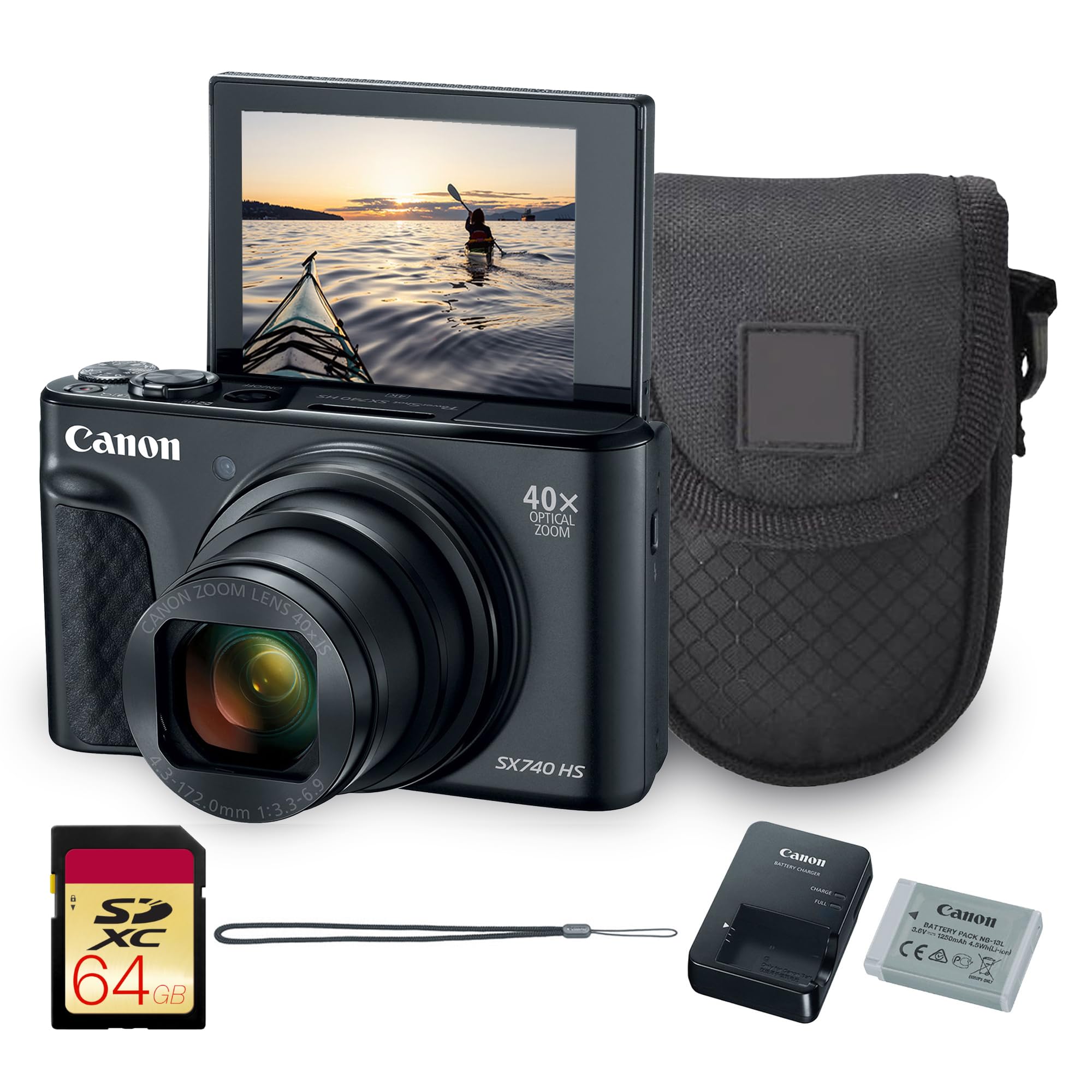
The Canon PowerShot SX740 HS is a pocketable point-and-shoot that is not a serious option for professional documentary production, but it has a place as a travel or B-camera for personal documentary projects. It offers an incredible 40x optical zoom (24-960mm equivalent) in a body that fits in a jacket pocket. The 20.3MP CMOS sensor with DIGIC 8 processing produces decent 4K UHD video for social media and quick edits.
Its strength is its reach; you can capture a facial expression from across a crowd or get a wide shot of a landscape without changing lenses. Built-in Wi-Fi and Bluetooth make it easy to transfer footage to a phone for quick social media posts, which is useful for filmmakers who need to provide daily updates from the field.
The image quality is limited by the small sensor, which produces noticeable noise in low light. It has no external mic input, so audio will come from the weak internal stereo microphone. The 4K recording also has a significant crop factor. It is a tool for convenience and reach, not for quality, and is best suited as a supplementary camera for a vlog or a quick travel diary.
Why it’s great
- Incredible 40x optical zoom in a genuinely pocketable body
- Decent 4K UHD video for social media and quick content
- Wi-Fi and Bluetooth for effortless file transfer to a smartphone
Good to know
- Small sensor struggles in low light with significant noise
- No external microphone input for professional audio quality
- Significant crop factor in 4K recording mode
FAQ
Is 4K resolution necessary for documentary filmmaking?
What is the importance of a built-in ND filter for documentary work?
Final Thoughts: The Verdict
For most documentary filmmakers, the camera for documentary filmmaking winner is the Sony Alpha FX3 because its active cooling, full-frame sensor, and professional audio support create the most reliable and versatile all-around production tool. If you value ultimate image quality and manual control over autofocus, grab the Blackmagic 6K Pro. And for a run-and-gun camcorder that simplifies audio and zoom without any rigging, nothing beats the Canon XA70.