
Whether you are recording vocals for a track, hosting a podcast, or streaming live gameplay, the microphone you choose directly determines how your audience hears you. A muddy or distant recording erodes credibility instantly, while a clear, present voice keeps listeners engaged through every word.
I’m Min — the co-founder and writer behind Gadgets Feed. I spend hours analyzing polar patterns, frequency response curves, and self-noise specs to separate real studio-grade performance from marketing hype in the crowded audio recording space.
This guide breaks down the top contenders across connectivity types and price tiers to help you find the best audio recording microphone that matches your specific recording environment and workflow needs.
How To Choose The Best Audio Recording Microphone
The ideal microphone depends on your source material and environment. A dynamic mic excels in untreated rooms and live settings, while a large-diaphragm condenser captures the nuance of studio vocals and acoustic instruments. Your interface choice — USB for simplicity or XLR for expandability — completes the picture.
Condenser vs. Dynamic: Matching the Mic to Your Space
Condenser microphones, like the LEWITT LCT440PURE, use an electrically charged capsule that delivers wide frequency response and high sensitivity. They capture every detail of a performance but also pick up room echo, computer fans, and ambient noise. Dynamic microphones, such as the sE Electronics V7, use a moving coil design that is less sensitive and more forgiving in noisy or untreated rooms. The trade-off is a narrower frequency range and a slightly less airy top end. If you record in a dedicated treated space, a condenser offers superior clarity. If you record in a living room or live on stage, a dynamic mic keeps your voice clean and focused.
XLR vs. USB: Simplicity vs. Upgrade Path
USB microphones like the Sennheiser Profile include a built-in analog-to-digital converter and preamp, allowing you to plug directly into a computer without extra gear. They are ideal for podcasters and streamers who need a fast setup. XLR microphones require an external audio interface (like the Focusrite Scarlett Solo) and an XLR cable, adding cost and complexity. The payoff is significantly better audio quality, lower noise floors, and the ability to swap mics, preamps, and converters later. Many serious creators start with a USB mic and eventually graduate to an XLR setup as their production demands grow.
Polar Pattern and Off-Axis Rejection
The polar pattern defines how the microphone picks up sound from different directions. A cardioid pattern (used by most of the mics on this list) captures sound from the front and rejects noise from the sides and rear, making it the standard choice for single-source recording. Supercardioid patterns, found on the sE Electronics V7, offer even narrower pickup and higher gain before feedback on loud stages. Omnidirectional patterns pick up sound equally from all directions and are rarely recommended for untreated rooms. For voice recording in a home studio, a cardioid or supercardioid pattern provides the best balance of isolation and natural tone.
Quick Comparison
On smaller screens, swipe sideways to see the full table.
| Model | Category | Best For | Key Spec | Amazon |
|---|---|---|---|---|
| Shure MV7+ | Dynamic | Podcast & Stream | USB-C / XLR hybrid | Amazon |
| LEWITT LCT440PURE | Condenser | Studio Vocals | 7 dB self-noise | Amazon |
| Focusrite Scarlett Solo Studio 4th Gen | Bundle | Complete Studio Start | 120 dB dynamic range | Amazon |
| Audio-Technica AT2020USB-X | Condenser | Home Studio USB | 24-bit / 96 kHz | Amazon |
| Sennheiser Profile | Condenser | Streaming & Meetings | USB-C plug-and-play | Amazon |
| sE Electronics V7 | Dynamic | Live Vocals | Supercardioid pattern | Amazon |
| sE Electronics X1 A | Condenser | Budget Studio Recording | 150 dB max SPL | Amazon |
In‑Depth Reviews
1. Shure MV7+

The Shure MV7+ is the most versatile microphone on this list, combining a professional-grade dynamic capsule with dual USB-C and XLR outputs. It is OBS-certified and includes Auto Level Mode, which dynamically adjusts gain based on your distance and volume — a lifesaver for solo podcasters who drift in and out of position. The built-in digital pop filter and real-time denoiser reduce plosives and ambient noise without requiring software plugins.
An adjustable full-color LED touch panel provides tap-to-mute and real-time level monitoring, plus integrated reverb modes (Plate, Hall, Studio) that add polish to voiceovers directly from the mic. The frequency range of 50 Hz to 16 kHz is narrower than some condensers, which helps reject low-end rumble and high-frequency room hiss. The all-metal housing feels robust, and the included foam windscreen and 3m USB-C cable get you started immediately.
For creators who need one microphone for streaming, podcasting, and video calls — and who want the flexibility to run it via USB for simplicity or XLR for a future interface upgrade — the MV7+ is the single best choice. The only catch is the premium cost, but the feature set justifies the investment for serious content creators.
Why it’s great
- Hybrid USB-C/XLR connectivity works with any setup
- Auto Level Mode eliminates gain adjustments
- Built-in reverb and denoiser for polished sound
Good to know
- Higher price than pure USB mics
- XLR cable not included
2. LEWITT LCT440PURE

The LEWITT LCT440PURE is a reference-grade large-diaphragm condenser microphone that prioritizes sonic transparency above all else. Its 1-inch true condenser capsule produces a remarkably flat and extended frequency response, with exceptionally low self-noise rated at only 7 dB — among the quietest on the market. This means you capture the natural resonance of a vocal or acoustic guitar without any electronic hiss or coloration.
The cardioid polar pattern provides effective rear rejection, and the included shock mount and magnetic pop filter reduce handling noise and plosives before they reach the capsule. The zinc die-cast housing is built to withstand years of studio use. The frequency response reaches 20 Hz to 20 kHz, covering the full audible spectrum with a gentle presence boost that helps voices sit forward in a mix without sounding harsh.
This is an XLR-only microphone, so you will need an audio interface with +48V phantom power. For vocalists, home studio engineers, and voice actors who want studio-grade capture without spending on boutique brands, the LCT440PURE offers a noise floor and detail retrieval that rivals mics costing double. Pair it with a clean preamp and you will hear exactly what your source sounds like.
Why it’s great
- Exceptionally low 7 dB self-noise
- Natural, uncolored frequency response
- Includes shock mount and magnetic pop filter
Good to know
- Requires XLR interface with phantom power
- Shock mount limits rotation angles
3. Focusrite Scarlett Solo Studio 4th Gen
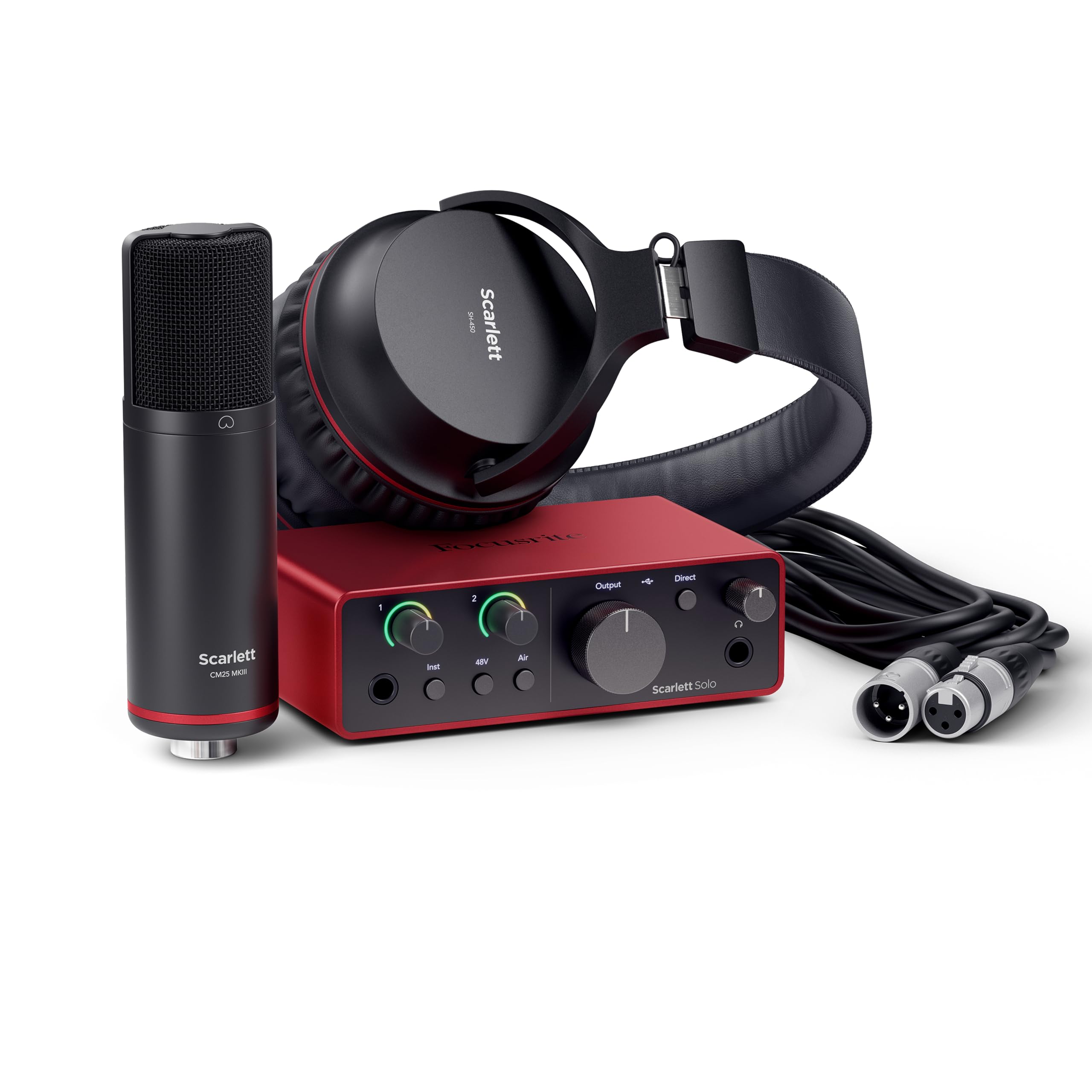
The Focusrite Scarlett Solo Studio 4th Gen bundle is the most complete turnkey solution for anyone starting serious recording. It includes the Scarlett Solo audio interface (120 dB dynamic range, 192 kHz sampling), the CM25 MkIII condenser microphone, a 3m XLR cable, and SH-450 headphones — everything you need to record vocals, guitar, or podcast audio straight to your computer.
The interface itself uses the same converters as Focusrite’s RedNet range, providing clean preamps and low-latency monitoring. The Air mode engages an analog EQ that adds presence to vocals and acoustic guitars, pushing them forward in the mix without digital processing. The bundle also includes Pro Tools Intro+, Ableton Live Lite, and the Hitmaker Expansion plugin suite, which gives you compressors, reverbs, and synths to shape your sound.
This is the best option for songwriters and guitarists who want a single purchase that covers interface, mic, and headphones. The CM25 MkIII mic is a solid condenser with a cardioid pattern, and while it does not match the LEWITT in self-noise, it performs well above its standalone price point. The bundle removes the guesswork of matching components and gets you recording from the first USB connection.
Why it’s great
- Complete starter kit with interface, mic, cable, and headphones
- 120 dB dynamic range for quiet and loud sources
- Includes full software suite for recording and mixing
Good to know
- CM25 MkIII mic is entry-level, upgrade later
- Interface has only one mic input
4. Audio-Technica AT2020USB-X

The Audio-Technica AT2020USB-X takes the classic AT2020 XLR design and adds a built-in USB interface with high-resolution 24-bit / 96 kHz conversion. The cardioid condenser capsule delivers the same smooth, extended frequency response that made the original a standard for home studios — clear highs, present mids, and controlled low end — now available without an external audio interface.
A built-in headphone jack allows zero-latency direct monitoring, and the soft-touch capacitive mute button on the body lets you mute audio silently without creating a click in the recording. The two-state LED ring glows blue when powered and red when muted, providing clear visual feedback at a glance. The included custom desk stand and USB-C to USB-A cable with adapter ensure compatibility with most computers and tablets.
The downside is sensitivity: this mic picks up everything in the room, including computer fans and HVAC noise. Users have reported needing noise suppression plugins like Krisp to clean up the signal in less-than-ideal spaces. For a treated room or close-mic setup, however, the AT2020USB-X delivers professional-grade USB audio that punches well above its price tier.
Why it’s great
- Proven AT2020 capsule with high-res USB conversion
- Zero-latency headphone monitoring
- Clear visual mute indication via LED ring
Good to know
- Very sensitive to background noise
- LED stays on after PC shutdown for some users
5. Sennheiser Profile

The Sennheiser Profile is a USB cardioid condenser microphone designed for streamers, gamers, and remote workers who want professional sound without dealing with audio interfaces or software. Its plug-and-play USB-C connection works transparently with Windows, macOS, and Linux — no drivers, no downloads, no configuration. The cardioid capsule delivers a natural, warm tonality that emphasizes the presence of the human voice without the thin, tinny character of budget USB mics.
Physical controls on the front of the mic include a gain dial, a headphone volume dial, a mix knob for blending your mic audio with computer audio, and a dedicated mute button. The metal housing and compact desk stand keep the footprint small, and the included 1.2m USB-C cable provides enough reach for most setups. Sennheiser claims a maximum SPL of 125 dB, which means you can record loud vocals or instruments without distortion.
The biggest limitation is the lack of XLR output — if you ever want to upgrade to a professional interface, you will need a new mic. For its intended audience of content creators who need one cable and zero fuss, the Profile delivers Sennheiser’s German-engineered quality at a price that undercuts many competitors. The sound is smooth, the build is solid, and the simplicity is the feature.
Why it’s great
- True plug-and-play with no software needed
- Warm, natural vocal tone typical of Sennheiser
- Physical mixing control for mic and PC audio
Good to know
- No XLR output for future upgrades
- Short desk stand may require a boom arm
6. sE Electronics V7 Dynamic Microphone
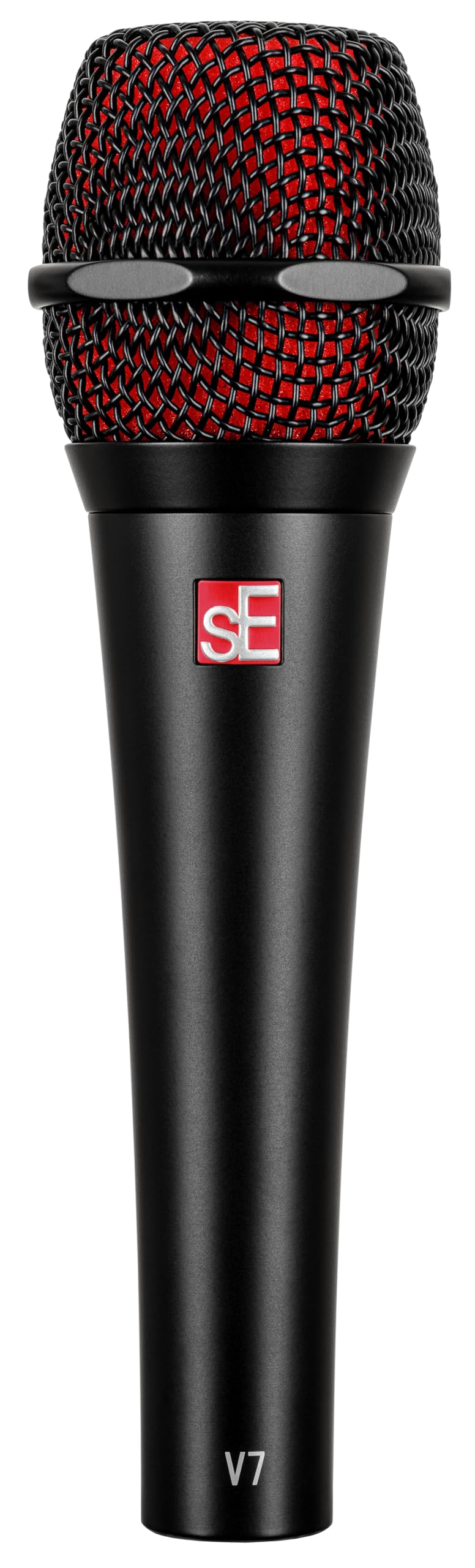
The sE Electronics V7 is a supercardioid dynamic microphone built for live performance and loud studio environments. Its custom aluminum voice coil delivers a crisp, open sound that cuts through a mix without the harshness of standard dynamic mics, and the supercardioid pattern provides exceptional off-axis rejection and massive gain before feedback — essential for monitoring on loud stages or recording in close proximity to other instruments.
The all-metal housing and beveled spring steel grille are built to survive drops, dents, and the wear of touring. A patented shockmount system eliminates handling noise and rumble, and the switchable internal windscreen reduces plosive pops without an external filter. The frequency response of 40 Hz to 19 kHz is wider than the typical vocal dynamic mic, with a low-end extension that gives vocals depth. Reviewers consistently compare the V7 favorably to the Shure Beta 58a and even the Beyerdynamic M88 at a fraction of the cost.
This is an XLR-only microphone, so an audio interface or mixer is required. For singers, public speakers, and musicians who need a mic that performs equally well on stage and in the studio, the V7 offers a clarity-to-price ratio that few competitors match. The included swivel clip, thread adapter, and carrying pouch make it ready for transit immediately.
Why it’s great
- Supercardioid pattern for excellent stage isolation
- Wide 40 Hz–19 kHz frequency response
- Rugged build with patented shockmount system
Good to know
- XLR only, requires interface or mixer
- Strong chemical smell reported on initial use
7. sE Electronics X1 A

The sE Electronics X1 A is a large-diaphragm condenser microphone that brings pro studio features to a budget-friendly price. Its newly developed capsule delivers a balanced frequency response from 20 Hz to 20 kHz with a natural voicing that works on vocals, acoustic guitar, and overhead drum recording. The standout spec is the 150 dB maximum SPL rating — this mic can handle loud guitar amps and powerful vocals without clipping or distortion.
Two built-in switches expand its versatility: a -20 dB pad for hot sources and a 100 Hz low-cut filter that removes rumble and HVAC hum. The integrated windscreen reduces plosives without needing a separate pop filter, and the all-metal housing with gold-plated XLR connector ensures reliable signal integrity over years of use. The X1 A sounds very similar to the Audio-Technica AT2020 but with a slightly less crisp top end, which some users actually prefer for a warmer vocal tone.
This is an XLR microphone requiring an interface with phantom power. For entry-level musicians, home producers, and podcasters on a tight budget who want a real large-diaphragm condenser rather than a toy, the X1 A delivers genuine professional performance at an entry price point. The included clip accommodates euro thread adapters, making it easy to mount on any standard stand.
Why it’s great
- 150 dB max SPL handles extremely loud sources
- Built-in pad and low-cut filter switches
- All-metal housing with integrated windscreen
Good to know
- XLR only, requires phantom power
- Slightly less crisp top end than AT2020
FAQ
Do I need phantom power for a condenser microphone?
What is the difference between a cardioid and supercardioid polar pattern?
Can I use a USB microphone with a smartphone or tablet?
Final Thoughts: The Verdict
For most users, the best audio recording microphone winner is the Shure MV7+ because it combines hybrid USB-C/XLR connectivity, automatic level management, and studio-grade dynamics in a single flexible package. If you want the purest sonic transparency for studio vocals and instruments, grab the LEWITT LCT440PURE. And for a complete turnkey recording solution with interface, mic, and headphones, nothing beats the Focusrite Scarlett Solo Studio 4th Gen.