
The fifth-generation 4Runner’s boxy rear pillars and high cargo floor create significant visual dead zones on both sides, making a lane change reliance on shoulder checks alone a genuine gamble. An aftermarket blind spot monitor transforms that uncertainty into a concrete, electronic safety net.
I’m Min — the co-founder and writer behind Gadgets Feed. I’ve spent countless hours analyzing aftermarket automotive safety electronics, specifically cross-referencing 24GHz radar sensor specs, camera CMOS sensors, and 4Runner-specific mounting constraints to build this guide.
Whether you prefer a simple convex mirror glass swap or a full radar-integrated system with cross-traffic alert, the right 4runner blind spot monitor depends entirely on your tolerance for installation complexity and your need for passive versus active warning alerts.
How To Choose The Best 4Runner Blind Spot Monitor
The aftermarket blind spot monitor market for the 4Runner splits into three distinct technology paths: active radar sensor kits that emit microwave pulses, passive camera display systems that stream a live video feed onto a screen, and simple convex mirror glass that expands your physical field of view. Each path serves a different 4Runner trim level and driver expectation.
Radar vs Camera vs Mirror: The Three Architectures
Radar-based systems like the Brandmotion RDBS-1600 embed 76-77GHz sensors behind the plastic rear bumper to detect moving objects at ranges up to 40 feet. These systems are the only type that can provide both blind spot and cross-traffic alerts automatically without requiring a display screen. Camera-based systems like the PDZGZ or the SLARY 4CH unit use CMOS sensors mounted under the side mirrors to feed a live image to a dedicated monitor, giving you a visual representation of the blind zone. The mirror glass conversion route (Genuine Toyota convex glass) requires no electronics at all, but it shifts your responsibility to actively glance at an already-familiar surface — it only solves the physical viewing angle, not the detection gap.
Installation Reality: Plastic Fascias and CAN-BUS
All radar blind spot sensors operating at 24GHz or 76-77GHz require a plastic bumper cover to function. The 4Runner’s rear bumper fascia is plastic, which makes radar installation feasible, but the sensors must be mounted at a precise angle (usually 20-35 degrees off vertical) behind the bumper on a flat surface — never on metal structural members. If you want a system that integrates with your turn signal for lane-change assist and uses the vehicle’s speed signal to suppress false alerts at low speeds, you need a unit like the Brandmotion RDBS-1600 that reads CAN-BUS data from the OBD-II port. Simpler radar kits like the EASYGUARD EBS001 and BlueDex kit do not access CAN-BUS, so they will beep when you brake at a stoplight or when a car parks next to you — a common frustration in real-world use.
LED Indicator Brightness and Placement
The physical brightness and placement of the LED warning indicators is a make-or-break detail for daily driving. Most aftermarket radar kits include small LED modules that mount on the A-pillar trim or the side mirror sail panel. If the LED is too dim for direct sunlight — a common issue in the 4Runner’s bright cabin — you will miss the visual alert entirely. Premium kits like the Brandmotion RDBS-1600 use a daylight-visible LED designed to be glued to the windshield trim, while budget kits often rely on generic LEDs that may wash out in the 4Runner’s high-contrast dashboard. The Rydeen CM-D700 bypasses the LED question entirely by sending a live camera feed to a monitor, guaranteeing you see the blind spot regardless of ambient light.
Quick Comparison
On smaller screens, swipe sideways to see the full table.
| Model | Category | Best For | Key Spec | Amazon |
|---|---|---|---|---|
| Brandmotion RDBS-1600 | Radar w/ Cross-Traffic | Factory-Like Integration | 76-77 GHz radar, 40ft range | Amazon |
| SLARY 4CH AHD 10.36″ | Camera System | Full 360° Video Coverage | 10.36″ touch screen, 4 cameras | Amazon |
| Rydeen CM-D700 | Side Camera | Ultra-Compact Side Camera | 170° FOV, <0.3 Lux low light | Amazon |
| PDZGZ 6.25″ Camera | Camera Monitor | Side Camera + Dash Cam | 170° FOV, touch screen display | Amazon |
| Genuine Toyota Convex Glass | Passive Mirror | Zero-Effort Visual Upgrade | Convex glass, plug-in install | Amazon |
| TRQ Power Heated Mirror | Replacement Assembly | OEM-Style Heated Mirror | Includes blind spot indicator | Amazon |
| EASYGUARD EBS001 | Budget Radar | Entry-Level Radar System | 24GHz radar, 12m detection range | Amazon |
| BlueDex BSD Kit | Budget Radar | Reliable Budget Option | 24GHz radar, 10m range, angle tool | Amazon |
| Escort Redline 360c + M2 Cam | Radar Detector Combo | Radar Detection + Dash Cam | Extreme range, 1080p video, GPS | Amazon |
In‑Depth Reviews
1. Brandmotion Radar Blind Spot System RDBS-1600

The Brandmotion RDBS-1600 is the closest you can get to a factory-installed blind spot monitor on a 4Runner without the OEM badge. It uses dual 76-77GHz radar sensors — a higher frequency than the typical 24GHz budget kits — giving it a 40-foot detection zone behind and beside the vehicle. The system integrates directly with the OBD-II port for CAN-BUS speed data, meaning the radar automatically suppresses alerts below 15 mph to eliminate false beeps at stoplights or in parking lots.
Cross-traffic alert is built in, not an afterthought. When you reverse out of a parking spot, the system warns you of approaching vehicles from the side — a genuine safety advantage that budget radar kits entirely lack. The daylight-visible LEDs mount on the A-pillar or windshield trim and are noticeably brighter than the generic bulbs supplied with entry-level units. Owners report reliable detection after professional installation, with no phantom alarms from parked cars or roadside objects.
Installation is not a weekend DIY project. The kit requires splicing into turn signal wires, mounting sensors behind the plastic bumper at precise distances, and programming the CAN-BUS module. Several users mention that the stand-off brackets are too short and need custom extensions, plus the instructions can be vague about turn signal voltage types. Expect a professional installation cost that matches the premium price of the kit itself.
Why it’s great
- Factory-level blind spot and cross-traffic alert in one radar module
- CAN-BUS integration eliminates low-speed nuisance alerts
- Daylight-bright LED indicators mounted for clear visibility
Good to know
- Professional installation is required and adds significant labor cost
- Brackets may need custom extension for proper bumper fitment
2. SLARY 4CH AHD 10.36″ Touch Screen System
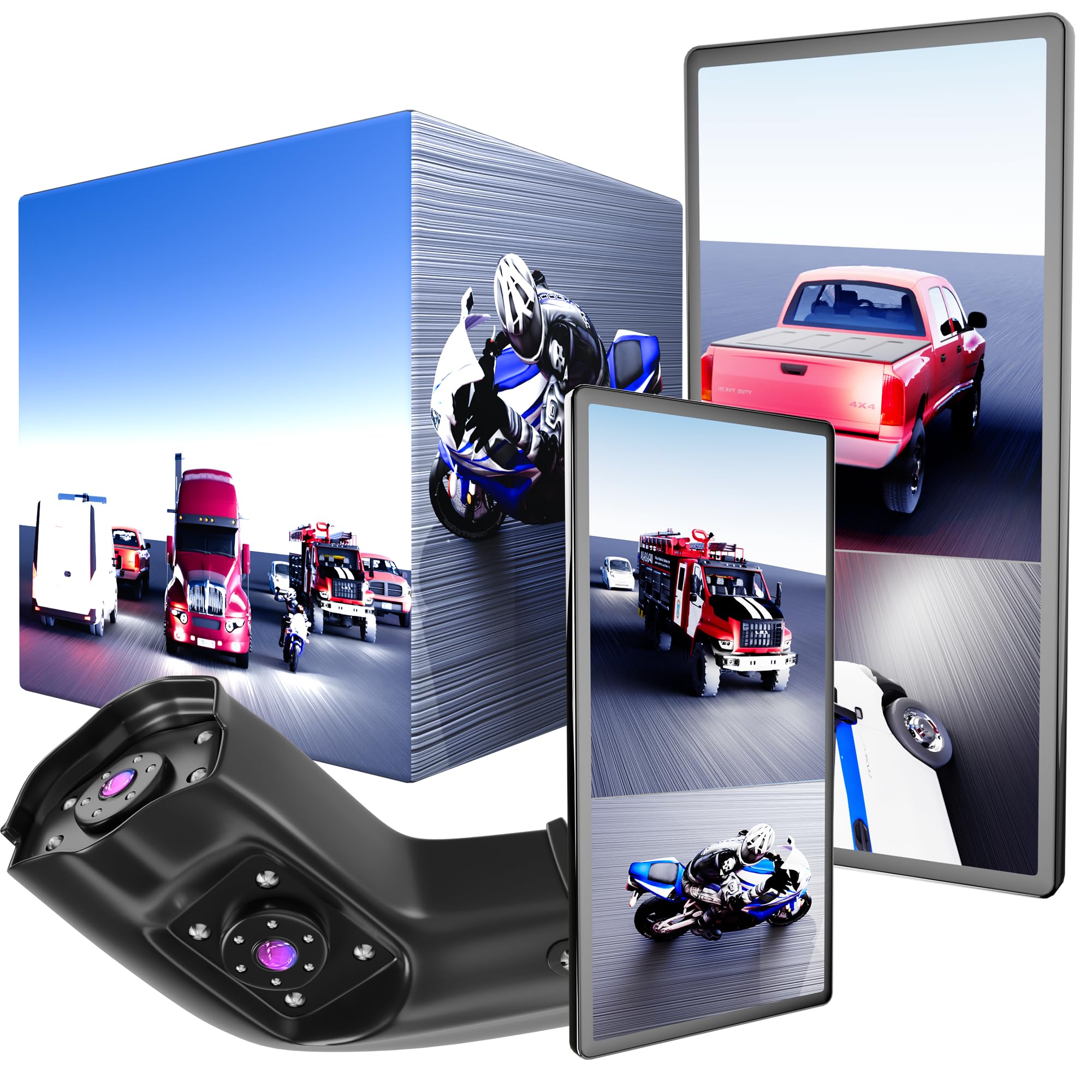
The SLARY 4CH AHD system completely reimagines the side mirror. Instead of radar sensors, it places two integrated dual-lens cameras — one on each side mirror housing — feeding two 10.36-inch IPS touch screens positioned inside the cabin. Each camera provides a forward-facing and downward-facing view, effectively mimicking the digital side mirror found on luxury SUVs like the Hyundai Palisade. The total field of view around the 4Runner’s rear quarters is unmatched by any single radar sensor.
The blind spot detection (BSD) function here is software-driven: you draw alert zones on the touch screen, and the system beeps when a vehicle enters that region of the camera feed. The DVR loop recording supports microSD cards up to 256GB, which means the same system serves as a 4-channel dash cam covering the front, rear, left, and right sides simultaneously. IR night vision ensures the side cameras remain usable in complete darkness.
The software interface is a weak point. The menus are clearly designed for a Chinese domestic market, with awkward English translations and non-intuitive navigation. The FM modulation for audio is weak, and the screen brightness lacks auto-adjustment, forcing you to manually toggle between daytime and nighttime levels. Installation is complex and requires routing four camera cables through the door grommets into the cabin — a job best left to experienced installers.
Why it’s great
- 360-degree video coverage eliminates all four blind zones simultaneously
- BSD voice alerts combined with live camera feed for maximum awareness
- Loop recording turns the system into a full 4-channel dash cam
Good to know
- Software interface is Chinese-centric and clunky to navigate
- Screen auto-brightness is missing, requiring manual adjustment
3. Rydeen CM-D700 Dual Side View Blindspot Cameras

The Rydeen CM-D700 is purpose-built for the driver who wants a visual confirmation of blind spot activity without a giant dash-mounted screen. The 170-degree wide-angle lens and HD CMOS IV sensor deliver a clear 480 TV line image to any aftermarket monitor or factory screen with an RCA input. The real highlight here is the 0.3 Lux minimum illumination rating: these cameras see in near-total darkness more effectively than many entry-level radar sensors can detect at night.
The included turn signal trigger module is a smart addition. When you activate the left or right turn signal, the corresponding camera feed automatically displays on your monitor, giving you a real-time view of the blind zone before you change lanes. This is the most direct translation of a blind spot monitoring system — you see the road, not just a warning icon. The IP67-IP68 waterproof rating means the cameras survive pressure washes, rain, and snow without fogging, and the operating range from -22°F to 149°F covers all climates a 4Runner might encounter.
The mounting ears on the cameras are too short to allow horizontal rotation without modification. Achieving the perfect angle requires additional washers or custom shims, which adds frustration to a product that otherwise nails the core camera performance. Also, the kit ships without a monitor, so you must supply your own display — a factor that increases the final cost if you do not already have an RCA-compatible screen.
Why it’s great
- Industry-leading low-light performance with <0.3 Lux sensitivity
- Turn signal trigger module shows blind spot feed automatically
- IP67-IP68 fully weatherproof for all-condition durability
Good to know
- Mounting ears prevent horizontal rotation without modification
- Does not include a monitor — requires compatible display
4. PDZGZ 6.25″ Blind Spot Camera Monitor System
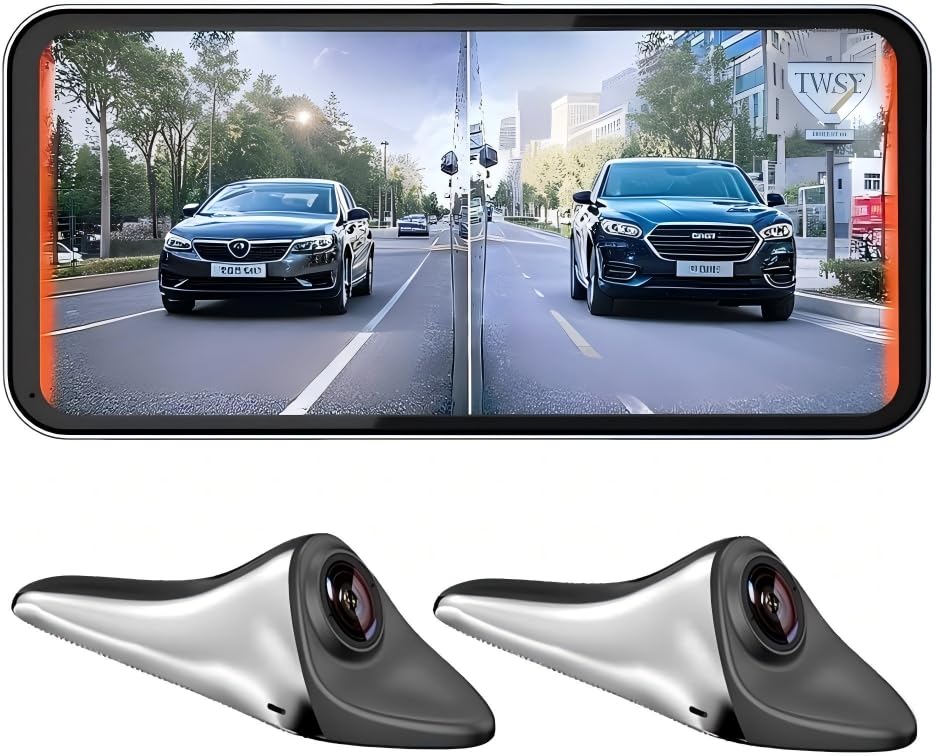
The PDZGZ system packs a 6.25-inch touch screen monitor, BSD software alerts, and a dual-camera setup into a single package aimed squarely at SUV and truck owners. The all-aluminum alloy body and magnetic suction mount give the monitor a solid, premium feel that fits the 4Runner’s interior aesthetic better than a generic plastic display. The BSD CPU processes camera input to generate visual and audible warnings when a vehicle or pedestrian enters the defined alert zone on the screen.
Night vision performance is a standout feature. Owners consistently report that the camera module captures clear, detailed images in complete darkness, exceeding the capability of many budget radar systems that rely solely on microwave reflections. The touch screen is responsive and allows you to adjust warning area settings, toggle the audible alert on and off, and switch between single-camera and dual-camera display modes. The 170-degree lens covers the full side blind zone on each side.
The fish-eye lens effect is significant — cars appear farther away than they actually are, which can lead you to misjudge closing speed during a lane change. The system also triggers false BSD alerts on stationary objects like guardrails and trees, forcing you to either mute the audible warning or constantly override it. The power cable uses a cigarette lighter plug that some users report stays energized even when the vehicle is off, posing a battery drain risk if left connected.
Why it’s great
- Excellent night vision that outshines many radar-based competitors
- Aluminum alloy monitor with magnetic mount feels substantial in the cabin
- Touch screen interface with customizable warning zones
Good to know
- Fish-eye distortion makes objects appear farther than they are
- False BSD alerts on stationary roadside objects are common
- Power port may stay live, risking battery drain
5. Genuine Toyota Convex Blind Spot Mirror Glass

This is not electronics — it is an optical upgrade. The Genuine Toyota convex replacement glass for the 2014-and-newer 5th-gen 4Runner (part numbers 87961-42D20 and 87931-42D50) simply pops in place of your existing flat mirror glass. The convex curvature expands your horizontal field of view by roughly 15 degrees per side, pulling the vehicle in the adjacent lane out of the traditional blind spot and into your visible range. It retains all factory features, including the heating element connection and power-adjust mechanism.
Installation genuinely takes under 10 minutes per side. You pry the old glass out using a plastic trim tool or suction cup, disconnect the heat element wire, snap the new convex glass into the same backing plate, and reconnect. There are no tools, no wiring, no bumper removal. For 4Runner SR5 and TRD Pro trims that lack any blind spot sensor from the factory, this is the single cheapest and fastest way to reduce the visual dead zone without any active electronics.
Because this is purely a visual aid, it does not create any alert — no LED, no beep, no audible warning. If you drive distracted or rely entirely on an audio cue to change lanes, this will not fill that gap. The convex glass also slightly reduces the apparent distance of objects, so you must mentally recalibrate following distance judgment for the first week of use.
Why it’s great
- True OEM parts made for the 4Runner — zero modification required
- 10-minute install per mirror with basic hand tools
- Preserves factory heating and power adjustment
Good to know
- No active alert — you must visually confirm the blind spot yourself
- Convex shape slightly compresses perceived distance
6. TRQ Passenger Power Heated Mirror with Blind Spot Indicator
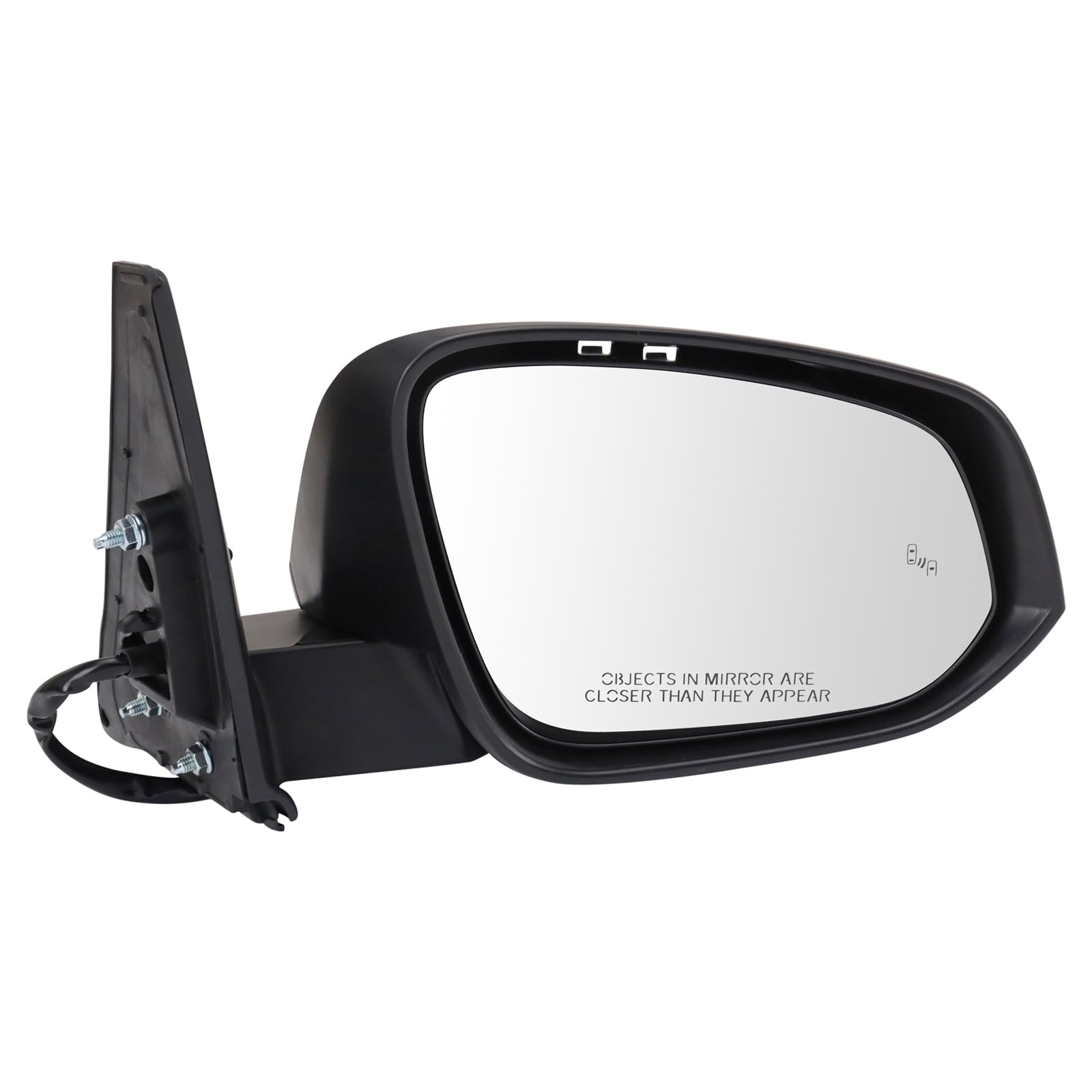
The TRQ MRA44212 is a direct-fit replacement mirror assembly for the 2022-2023 4Runner’s passenger side that includes an integrated blind spot indicator on the mirror glass surface. Unlike a universal radar kit, this unit is pre-assembled with the housing, glass, motor, heating element, and indicator LED ready to bolt on as a single piece. It is painted smooth black and matches the factory finish of the 4Runner’s side mirror housing.
TRQ’s 2-year warranty and detailed DIY installation videos are a genuine plus for 4Runner owners who prefer to handle their own maintenance. The blind spot indicator LED is built into the mirror glass and illuminates when the vehicle’s factory blind spot monitoring system (if your trim is equipped) detects an object. On 4Runner trims that lack factory BSM from Toyota, this mirror will not activate the indicator on its own — you need the mirror plus a compatible radar sensor system to power the light. Compatibility is confirmed through Amazon Garage, so check your specific trim year before ordering.
The mirror is only for the passenger side (right side). You will need a separate driver-side unit if you want both mirrors replaced. Weight at 4.4 pounds is higher than simple glass replacement, reflecting the full assembly construction, but installation is straightforward: remove the old assembly, plug in the wiring harness, and bolt the new one in place.
Why it’s great
- Complete mirror assembly — no disassembly of existing housing needed
- Integrated blind spot indicator for vehicles with factory BSM
- 2-year warranty and DIY video support from TRQ
Good to know
- Only available for passenger side; driver side sold separately
- Indicator requires a radar sensor system to function — not standalone
7. EASYGUARD EBS001 Blind Spot Monitor System

The EASYGUARD EBS001 is a no-frills 24GHz millimeter-wave radar system that delivers the core blind spot monitoring function — LED warning when a vehicle enters the 6-to-12-meter detection zone — without any CAN-BUS integration or cross-traffic features. It works on a simple always-on principle: the radar sensors constantly transmit, and the LED in the indicator module illuminates when it detects a moving object within range. When you activate the turn signal, the LED changes to a rapid flash and a buzzer sounds three beeps.
Installation requires bumper removal to mount the two 24GHz sensors at the correct angle. The instructions specify a 20-degree mounting angle, but real-world testing on 4Runner-style bumpers shows that 35 degrees significantly reduces false alarms from cars behind you. The system works reliably on the highway once the angle is optimized, and the buzzer volume is sufficient to be heard over road noise at 65 mph without being deafening. It supports most DC12V SUVs, including the 4Runner.
The critical limitation here is the requirement for a plastic bumper only — the radar signal cannot penetrate metal, so this system will not function if mounted behind the 4Runner’s rear quarter panels behind the metal structure. False alerts when driving near guardrails, concrete barriers, or backing up are a known complaint, and the LED brightness may not be adequate for bright midday sun. The system also lacks any speed-based suppression, so it will beep at a stoplight if a car pulls up next to you.
Why it’s great
- Entry-level price point for fully functional radar blind spot detection
- Highway detection up to 12 meters is effective with proper sensor angle
- Buzzer and flash combo provides multiple alert modalities
Good to know
- Does not suppress alerts at low speed — false beeps at stoplights are common
- Sensor angle adjustment is trial-and-error; instructions are inaccurate
- Not compatible with metal rear bumpers or structural panels
8. BlueDex BSD Blind Spot Monitoring System

The BlueDex BSD kit competes directly with the EASYGUARD EBS001 but adds a radar angle alignment tool to the package, a small but meaningful improvement that helps reduce the trial-and-error sensor positioning that plagues the EASYGUARD. The dual 24GHz millimeter-wave radar sensors claim a detection range of 0.3 to 10 meters (1 to 32.8 feet) and operate at a very low audible noise level of 9 decibels — effectively silent outside the cabin. The system delivers the same three-mode alert logic: steady LED when a vehicle is detected without turn signal, flashing LED and three buzzer beeps when the turn signal is on, and continuous flashing with buzzer when the hazard lights are active.
Owner feedback from automotive installers is positive, with shops reporting consistent, daily-reliable detection performance across multiple vehicle installs. The angled alignment tool makes it easier for a first-time installer to approximate the correct sensor tilt, but professional installation is still strongly recommended because the radar sensors cannot penetrate metal surfaces. The wiring harness includes a fuse tap option for clean power connection and clearly labeled turn signal and reverse wires.
The same metal-bumper limitation applies: do not mount these sensors behind the metal structure of the 4Runner’s rear quarter panels. Some users report interference on vehicles where the brake and blinker share a single wire (common in some GM platforms), causing false beeps when braking. The 4Runner separates these circuits, so this particular issue should not apply, but verify your specific wiring configuration before purchase.
Why it’s great
- Radar alignment tool included, reducing installation guesswork
- Consistent detection performance praised by professional installers
- Fuse-tap power connection and clearly labeled wires simplify hookup
Good to know
- Incompatible with metal bumpers — plastic fascia required
- Brake/blinker wire sharing in some vehicles causes false alerts
- No cross-traffic alert or low-speed suppression
9. Escort Redline 360c + M2 Smart Dash Cam Bundle

This Escort bundle is not strictly a blind spot monitor in the traditional sense — it is a radar detector and dash cam combination that provides long-range awareness of police radar and laser, plus a 1080p driving record. It belongs in this guide because many 4Runner owners looking for maximum driving safety pair a blind spot monitor with a radar detector for comprehensive situational awareness. The Redline 360c covers all radar bands (X, K, Ka) with extreme range — verified detections from 1.5 to 9 miles — and AI-assisted filtering through GPS AutoLearn and the Drive Smarter connected driver network.
The M2 Smart Dash Cam attaches magnetically to the Redline 360c mount and records full HD (1080p) video with a 140-degree wide-angle lens. The camera is optimized for both day and night, and the built-in GPS embeds speed and location data into the video footage. The parking mode (requires hardwire kit) automatically saves footage if your 4Runner is bumped while parked. Apple CarPlay and Android Auto compatibility allow you to view alerts and route information on your 4Runner’s factory display or aftermarket head unit.
This is not a vehicle detection system — it will not see a car in your blind spot and it does not provide cross-traffic alerts. It only detects radar and laser signals emitted by speed enforcement equipment. The suction cup mount is known to fail in high heat conditions inside a cabin, and the unit has a 1-year limited warranty. The bundle price is high, reflecting the flagship detector and dash cam pair, but for 4Runner owners who prioritize avoiding tickets while also maintaining a video record of their drive, this is the top-tier solution.
Why it’s great
- Extreme radar detection range up to 9 miles with AI false-alert filtering
- Integrated 1080p dash cam with GPS speed/location logs
- Apple CarPlay / Android Auto for alert display on vehicle screen
Good to know
- Does not detect vehicles in the blind spot — radar detection only
- Suction cup mount can fail in hot cabin temperatures
- 1-year warranty on a premium-priced electronic bundle
FAQ
Can I install a blind spot monitor on a 4Runner with a metal rear bumper?
How do I choose between a radar system and a camera system for my 4Runner?
What is the correct sensor mounting angle for a 4Runner blind spot radar system?
Will installing an aftermarket blind spot monitor void my 4Runner warranty?
Final Thoughts: The Verdict
For most users, the 4runner blind spot monitor winner is the Brandmotion RDBS-1600 because it delivers factory-grade radar detection with true cross-traffic alert, CAN-BUS integration, and daylight-visible indicators — the only system in this guide that fully replicates the OEM experience without requiring a screen. If you want complete visual coverage of all four corners, grab the SLARY 4CH AHD 10.36″ Touch Screen system for its 360-degree camera view and DVR recording. And for the simplest, zero-wire upgrade that immediately reduces blind spot risk, nothing beats the Genuine Toyota Convex Mirror Glass — a 10-minute fix that every 4Runner owner should consider before buying any electronics.