
A 100-inch monitor isn’t just a screen — it’s a statement. At this scale, the line between a standard home theater and a commercial cinema experience dissolves, demanding a level of brightness, local dimming precision, and refresh rate that consumer TVs at smaller sizes simply don’t require. The challenge is separating true flagship displays from oversized living room sets masquerading as monitors.
I’m Min — the co-founder and writer behind Gadgets Feed. I’ve spent countless hours analyzing the panel technologies, processor architectures, and HDMI 2.1 feature sets that define the best 100-inch displays on the market today, to bring you a guide built on hard specs, not marketing hype.
Whether you’re building a command center or the ultimate gaming wall, the best 100 inch monitor must deliver over 5000 nits peak brightness, a native 144Hz or higher refresh rate, and a mini-LED backlight system with thousands of discrete dimming zones to avoid blooming at this massive scale.
How To Choose The Best 100 Inch Monitor
Shopping at this size is a different game than picking a 55-inch TV. You’re making a long-term investment in a massive panel, and the wrong choice can mean washed-out HDR, motion blur during fast games, or a screen that overwhelms your room with glare. Focus on these three pillars to get it right.
Backlight Architecture and Dimming Zones
A 100-inch monitor’s contrast lives and dies by its local dimming system. Standard edge-lit panels produce a milky gray in dark scenes at this scale because the light from bright areas bleeds across the entire screen. Mini-LED backlights with hundreds or thousands of individual zones can turn off independently, preserving deep blacks next to bright highlights. Models with fewer than 500 zones will exhibit visible blooming on HDR content, so prioritize units with at least 1000 zones for a clean image.
Native Refresh Rate and VRR Support
Gamers and sports viewers need a 120Hz or faster native panel. While 60Hz is acceptable for office work, fast camera pans and 4K 120Hz console output require a 120Hz minimum. Premium monitors now push to 144Hz or 165Hz native. Equally important is VRR (Variable Refresh Rate) via HDMI 2.1 — without it, you’ll see screen tearing below the monitor’s refresh rate cap. AMD FreeSync Premium Pro and HDMI Forum VRR are the standards to look for.
Peak Brightness for HDR Impact
HDR on a 100-inch canvas demands extreme brightness to make specular highlights pop. A monitor that maxes out at 600 nits will look average in HDR because the human eye perceives brightness logarithmically — doubling the light output only looks modestly brighter. For genuine HDR impact, seek panels rated above 3000 nits peak. Total HDR formats like Dolby Vision IQ and HDR10+ Adaptive also rely on this brightness ceiling to render the full dynamic range of content.
Quick Comparison
On smaller screens, swipe sideways to see the full table.
| Model | Category | Best For | Key Spec | Amazon |
|---|---|---|---|---|
| Samsung 98″ DU9000 | Mid-Range | General home theater | 120Hz Motion Xcelerator | Amazon |
| TCL 98″ QM64L | Mid-Range | Value-oriented mini-LED | 144Hz, QD-Mini LED | Amazon |
| Hisense 85″ CanvasTV S7 | Mid-Range | Art gallery mode | 144Hz, Anti-Glare Hi-Matte | Amazon |
| Toshiba 100″ Z670 | Mid-Range | Gaming with Dolby Vision | 100″, 144Hz Native | Amazon |
| Hisense 100″ U8 Series | Premium | Ultra-bright HDR gaming | 165Hz, 5000 Nits, 5600 Zones | Amazon |
| Sony BRAVIA 3 II 100″ | Premium | PS5 and film precision | 120Hz, XR Processor | Amazon |
| TCL 98″ QM8L | Premium | High-end mini-LED cinema | 144Hz, 6000 Nits, 4000+ Zones | Amazon |
| Samsung 100″ QN80F Neo QLED | Premium | AI-upscaled 4K cinema | 144Hz, NQ4 AI Gen2 | Amazon |
| Canlarriz 100″ Signage | Budget | Commercial menu boards | 500 Nits, 24/7 Durability | Amazon |
In‑Depth Reviews
1. Toshiba 100″ Z670 Series Mini-LED 4K UHD Smart Fire TV

The Toshiba Z670 is the rare 100-inch monitor that balances professional-grade gaming features with cinema HDR processing in a single package. Its REGZA Engine ZRi Gen3 applies AI scene-by-scene optimization that competes with Sony’s XR processor, while the full-array mini-LED backlight with 144Hz native refresh rate makes it equally capable for competitive shooters and HDR movie marathons.
Dolby Vision IQ and HDR10+ Adaptive work with the built-in AI Light Sensor to adjust brightness and color temperature based on room lighting — a feature that prevents crushed blacks in bright rooms and preserves shadow detail in dark ones. The inclusion of AMD FreeSync Premium and VRR at 144Hz means you get tear-free gameplay without the premium upcharge of luxury brands.
Customer reviews consistently praise the clarity and motion handling, with multiple buyers noting that the sound from the integrated REGZA Power Audio Pro with woofer outperforms many soundbars at this price tier. For a 100-inch monitor that truly does it all without compromise, the Z670 is the top choice.
Why it’s great
- True 100-inch panel at a competitive price point
- Native 144Hz with FreeSync Premium and VRR
- REGZA Engine ZRi Gen3 AI processing rivals premium brands
- Dolby Vision IQ and HDR10+ Adaptive support
Good to know
- Bluetooth 5.0 instead of 5.3
- Fire TV interface may not suit all users
2. Hisense 100″ U8 Series ULED Mini-LED 4K UHD Smart Google TV
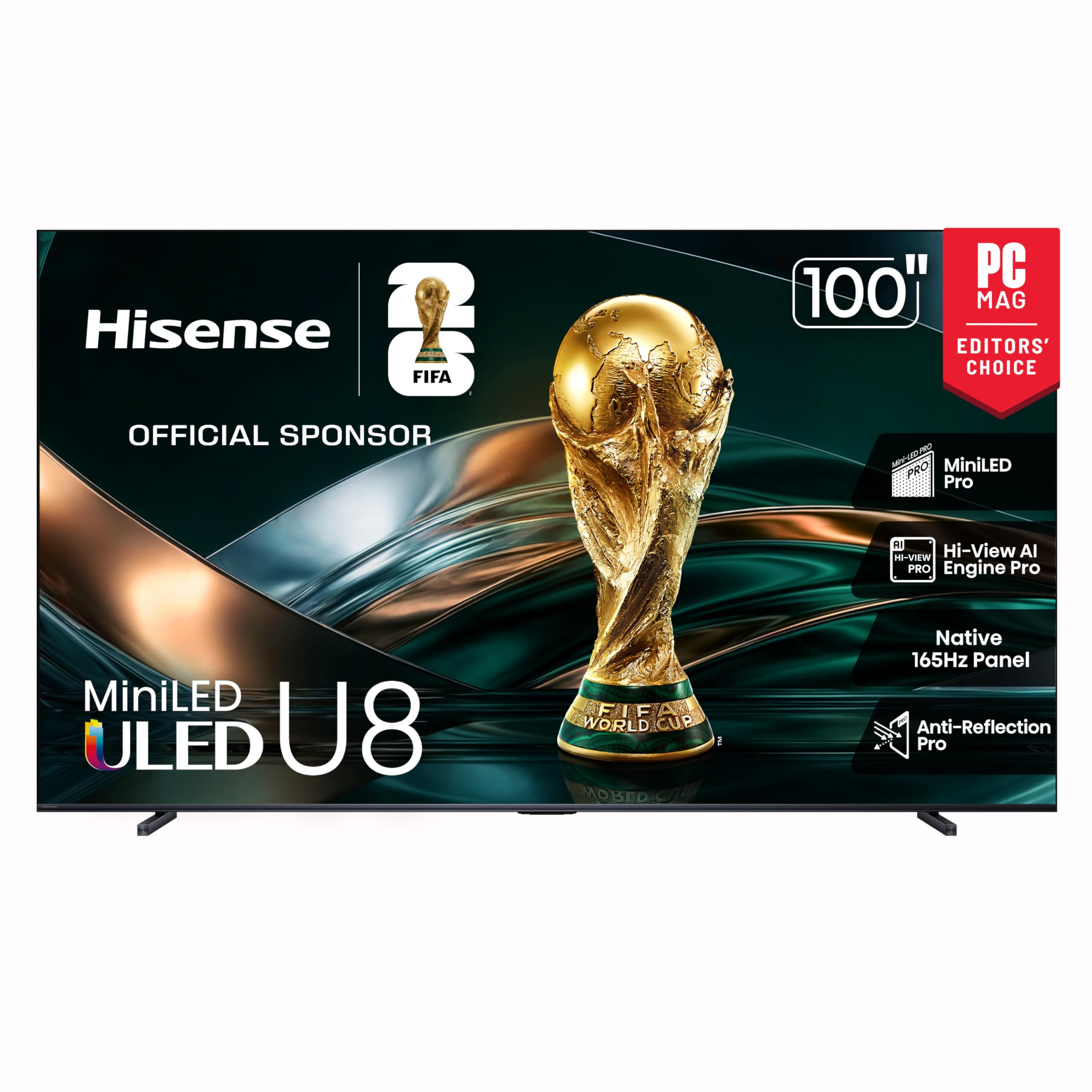
The Hisense U8 Series is a brute-force HDR machine built for those who want the brightest 100-inch monitor available. With a peak brightness of 5000 nits and up to 5600 local dimming zones, it delivers specular highlights that actually feel blinding — exactly what HDR content creators intended. The native 165Hz panel with VRR up to 288Hz is the fastest refresh rate on this list, making it the ultimate choice for high-framerate PC gaming.
The Hi-View AI Engine Pro chip handles real-time scene detection, while the 4.1.2 multi-channel audio with Dolby Atmos creates immersive sound without a separate system. Filmmaker Mode and IMAX Enhanced certification ensure that movies are displayed at the director’s intended color and frame rate.
Reviewers highlight the stunning color volume from the QLED quantum dot layer, which covers nearly the entire DCI-P3 color space. The only meaningful trade-off is that the built-in audio, while good for a TV, still benefits from an external soundbar for dedicated home theater setups.
Why it’s great
- 5000 nits peak brightness for reference-grade HDR
- 5600 local dimming zones minimize blooming
- 165Hz native panel with 288Hz VRR support
- Pantone-validated QLED color accuracy
Good to know
- Some users report software stability issues
- Requires professional calibration for best color
3. Sony BRAVIA 3 II 100 Inch 4K HDR LED Smart Google TV
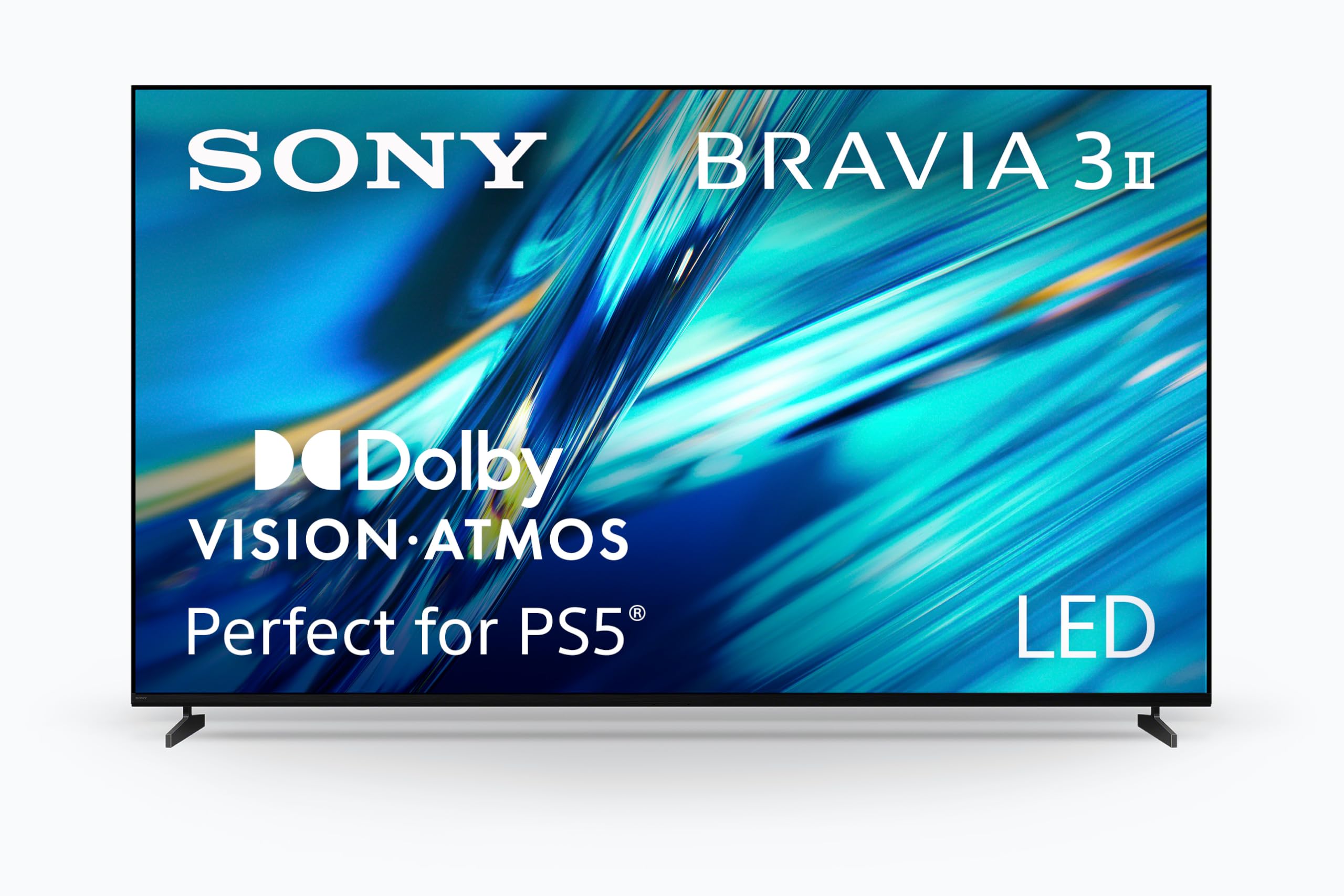
Sony’s BRAVIA 3 II is the reference monitor for film purists and PS5 owners. Its XR Processor uses AI scene recognition to optimize color, contrast, and clarity in real time, and the XR Triluminos Pro delivers over a billion colors with natural gradation that non-Sony panels struggle to match. The 120Hz native refresh rate with HDMI 2.1 features — 4K/120, VRR, and ALLM — is perfectly tuned for PlayStation 5’s Auto HDR Tone Mapping.
The inclusion of Sony Pictures CORE with 5 movie credits and a 12-month subscription adds real value for cinephiles who want to test the panel’s HDR capabilities immediately. The X-Balanced Speakers reduce distortion at high volumes, though serious users will still pair this with a dedicated audio system.
Customer reviews note that the Google TV with Gemini interface is responsive, and picture quality is consistently described as outstanding. Some users have reported software glitches and narrow viewing angles, but for a dedicated front-facing monitor, the Sony delivers reference-grade image processing.
Why it’s great
- Industry-leading XR AI processing for natural colors
- Perfect PS5 integration with Auto HDR Tone Mapping
- Dolby Vision and DTS:X audio support
- Sony Pictures CORE streaming included
Good to know
- Native 120Hz not 144Hz like competitors
- Some users report software/DRM issues
4. TCL 98 Inch Class QM8L Series SQD-Mini-LED QLED Smart TV
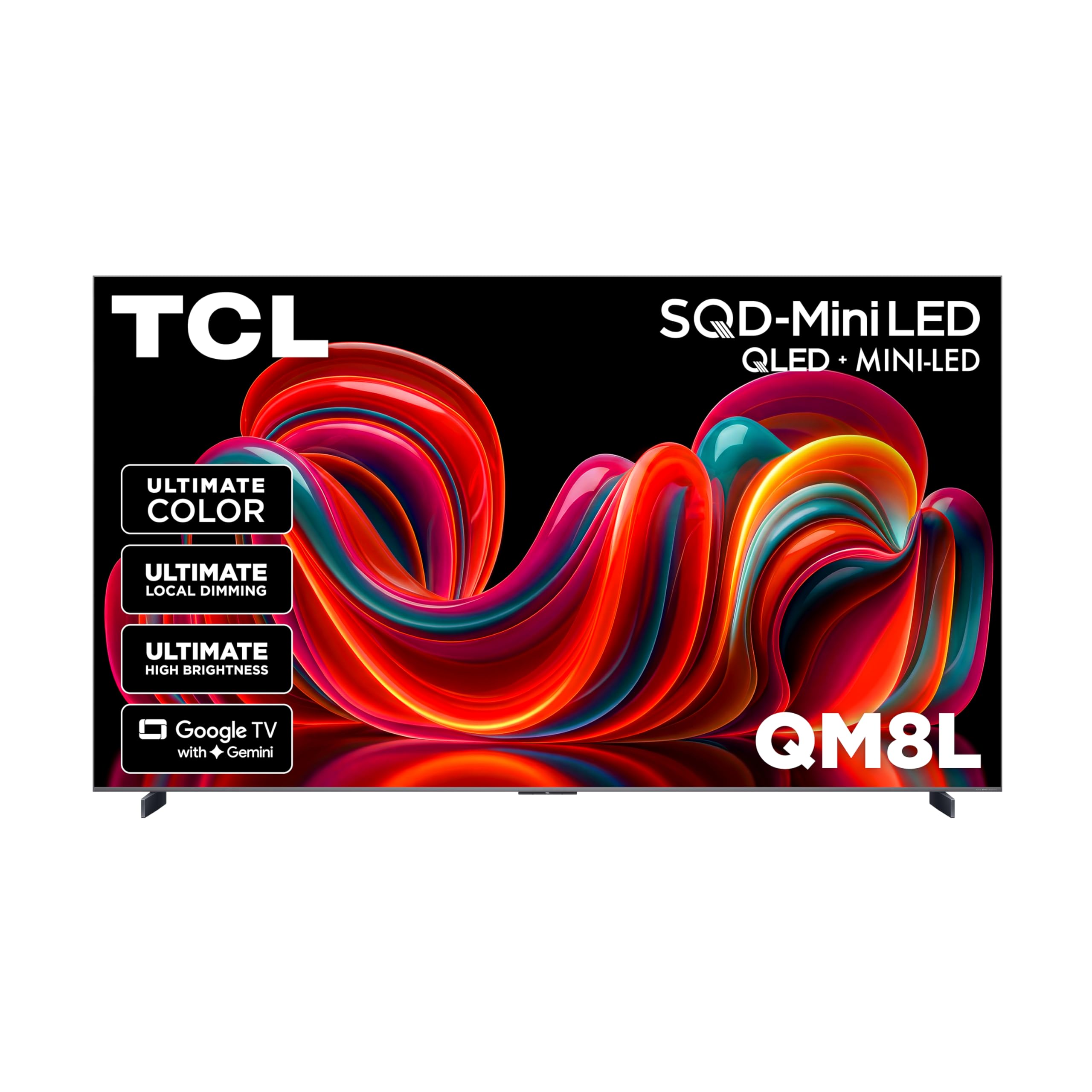
The TCL QM8L is the spec-sheet monster of the group, packing a 6000-nit peak brightness and over 4000 discrete dimming zones in a 98-inch frame. This is not a mid-range TV — it’s a high-end mini-LED monitor that challenges OLED-level contrast without the burn-in risk. The SQD-Mini LED architecture uses 5-nanometer quantum crystal particles for pinpoint color accuracy that exceeds standard QLED panels.
The 7000:1 static contrast ratio provides deep blacks even before local dimming kicks in, while the TCL Game Pack with 288Hz VRR and AMD FreeSync Premium Pro makes it ready for next-gen console and PC gaming. Audio by Bang & Olufsen delivers premium sound, and Google Gemini AI powers intuitive voice control.
Buyers rave about the “phenomenal” picture and sound, and the backlit remote is a welcome premium touch. The only minor complaint is occasional OS glitches, but Google TV updates quickly resolve these. For the combination of brightness, dimming zone count, and audio quality, the QM8L offers exceptional value.
Why it’s great
- 6000 nits peak brightness with 4000+ dimming zones
- 7000:1 static contrast ratio for deep blacks
- 144Hz native with 288Hz VRR gaming
- Audio by Bang & Olufsen built-in
Good to know
- 98-inch, not a true 100-inch panel
- Minor software glitches reported
5. Samsung 100-Inch Class Neo QLED QN80F 4K Mini LED Smart TV

Samsung’s QN80F Neo QLED uses the NQ4 AI Gen2 processor with 20 neural networks to upscale standard content to 4K — a critical feature at 100 inches where any source softness becomes painfully obvious. The Quantum Matrix Technology with precision-controlled Mini LEDs delivers high contrast and excellent brightness, while the 144Hz native refresh rate ensures smooth motion for sports and gaming.
Dolby Atmos and Object Tracking Sound Lite create a virtual 3D audio experience that tracks on-screen movement. The AI-enhanced upscaling is particularly effective for streaming content, making 1080p footage look nearly native 4K. The Titan Black design is minimalist, and the remote is sleek.
Customers praise the “crisp, vibrant picture” and easy setup, though some mention the menu system requires time to learn. The biggest concern from a few reviews is app compatibility — not all Android apps are available on Samsung’s Tizen platform. For those who prioritize AI upscaling and a 100-inch panel, the QN80F is a strong contender.
Why it’s great
- NQ4 AI Gen2 processor for superior upscaling
- 144Hz native with VRR for smooth gaming
- Dolby Atmos with Object Tracking Sound
- True 100-inch class panel
Good to know
- Tizen OS has limited app selection
- Delivery and warranty logistics can be challenging
6. TCL Amazon Exclusive 98 Inch Class QM64L Series Mini LED QLED
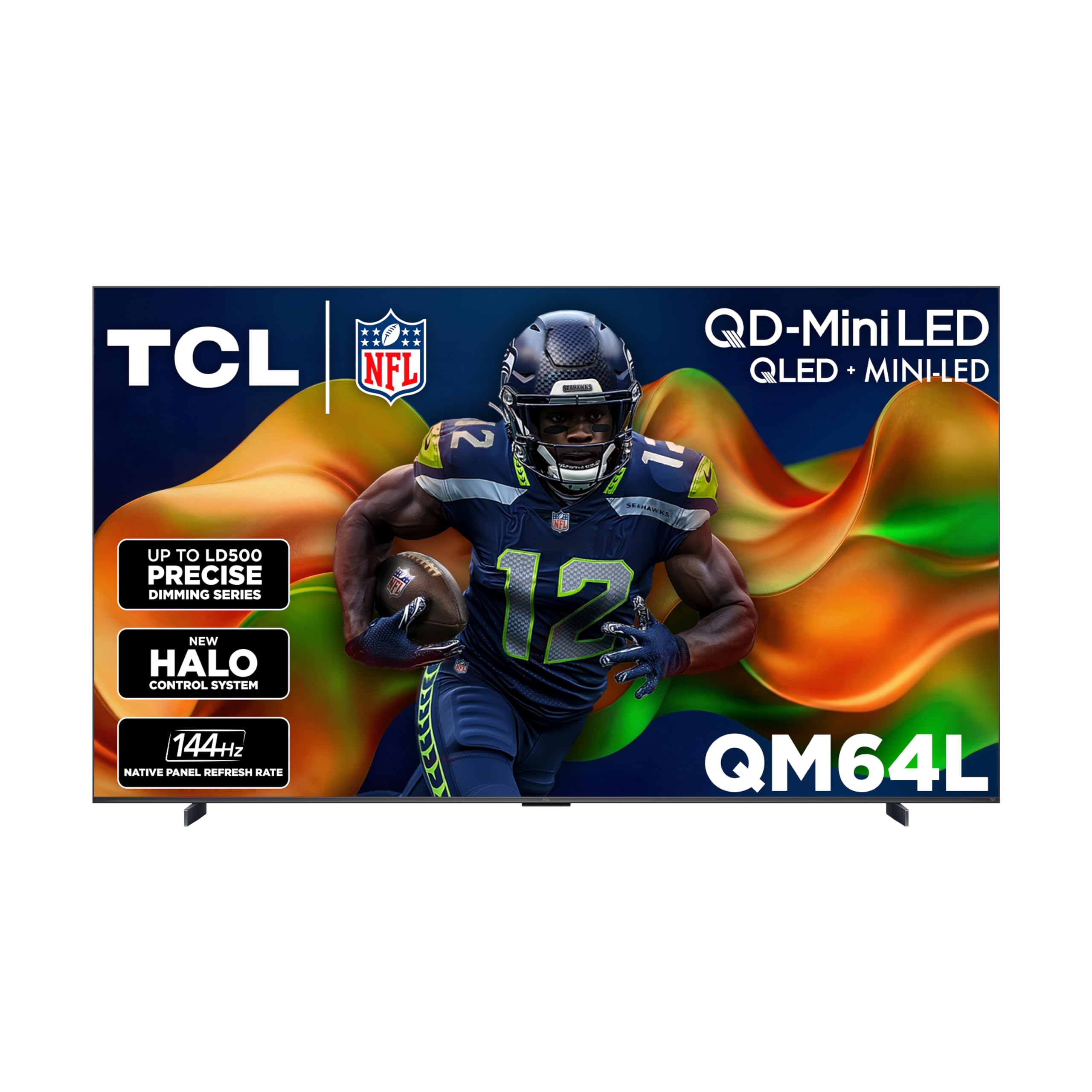
The TCL QM64L is the entry-level mini-LED option that still delivers a 144Hz native refresh rate and QD-Mini LED backlight technology. It’s the best choice for buyers who want the core advantages of mini-LED — deep blacks and high brightness — without the premium price tag of the QM8L. The TCL Halo Control System provides the same backlight algorithm as its higher-end sibling.
The High Brightness Pro panel performs well in lit rooms, and the Matte HVA Panel reduces reflections effectively. Fire TV integration is fast, and the Alexa+ voice remote makes content discovery effortless. For gaming, the 144Hz refresh rate with HDMI 2.1 provides smooth 4K/120 gameplay.
User reviews emphasize the “vibrant colors” and “excellent contrast,” with many calling it the best value in large-screen TV. The only notable drawback is the lack of native screen mirroring for non-Apple devices. For those seeking a budget-friendly mini-LED monitor, the QM64L is a savvy pick.
Why it’s great
- QD-Mini LED at an accessible price point
- 144Hz native with HDMI 2.1 features
- Matte HVA Panel reduces reflections
- Fast Fire TV with Alexa+ voice control
Good to know
- No native screen mirroring for Android
- 98-inch, not a full 100-inch panel
7. Hisense 85″ Hi-QLED 4K S7 CanvasTV Series Google Smart Art TV
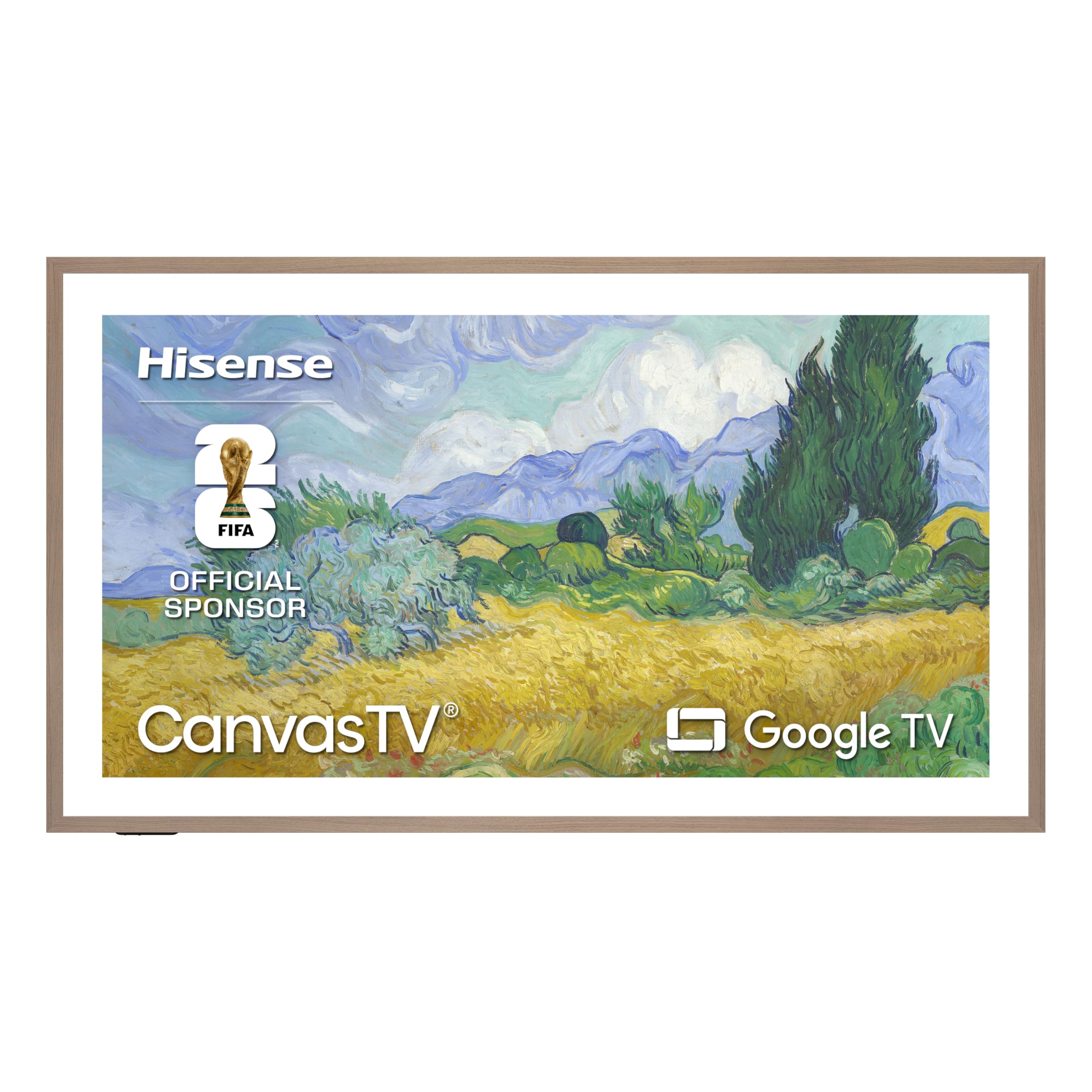
The Hisense CanvasTV is the only monitor on this list designed to disappear into your decor when not in active use. Its Hi-Matte anti-glare display eliminates reflections completely, and the Art Gallery mode cycles through over 1000 pieces of curated art, making it look like a framed canvas. The included Teak Frame and UltraSlim Wall Mount make installation flush against the wall.
Despite its aesthetic focus, the CanvasTV doesn’t skimp on performance. The native 144Hz panel with AI Smooth Motion handles fast action without blur, and the 2.0.2 multi-dimensional sound with DTS Virtual:X creates immersive audio. The AI Ambient Light Sensor and Motion Detector automatically adjust brightness and wake/sleep based on room presence.
Customers love the “stylish, modern design” and the fact that it doubles as both a TV and art display. Some users have reported backlight bleeding or quality control issues, but for those who prioritize form as much as function, the CanvasTV is a unique proposition.
Why it’s great
- Art Gallery mode with 1000+ artworks
- Hi-Matte anti-glare display
- 144Hz with AI Smooth Motion
- Flush wall mount and Teak Frame included
Good to know
- 85-inch, not a 100-inch panel
- Some units exhibit backlight bleed
8. Samsung 98-Inch Class 4K Crystal UHD DU9000 Series HDR Smart TV

The Samsung DU9000 is the no-frills workhorse of the group, offering a 98-inch screen with Crystal UHD resolution and Motion Xcelerator 120Hz at a surprisingly accessible price. It’s not a mini-LED panel, so don’t expect the same black levels as the Toshiba or Hisense, but for general content consumption — sports, streaming, casual gaming — it delivers solid performance.
The Supersize Picture Enhancer uses AI to reduce noise and sharpen edges on the large canvas, and PurColor provides a wider color spectrum than basic RGB panels. Q-Symphony allows seamless pairing with Samsung soundbars, and Samsung Tizen OS is responsive and familiar to Samsung users.
Buyers are overwhelmingly positive about the picture quality and value, with many noting the screen works well as a computer monitor with the right EDID setup. The main drawback is the edge-lit backlight, which causes visible blooming on dark content. For buyers on a tighter budget who want a massive screen, the DU9000 is a safe choice.
Why it’s great
- 98-inch screen at a budget-friendly price
- 120Hz Motion Xcelerator for smooth motion
- PurColor wider color spectrum
- Q-Symphony soundbar pairing
Good to know
- Edge-lit backlight causes blooming
- Not mini-LED or FALD
9. Digital Signage Display 100 inch Wall Mount Digital Menu Board

The Canlarriz 100-inch signage display is built for a completely different audience: commercial businesses that need a 24/7 operational screen for menu boards, directories, or advertising. Its 500-nit brightness is modest compared to consumer models, but the full metal body and smart cooling system allow continuous operation with a 30,000-hour lifespan — three times longer than a standard TV.
The Android 11 OS with 4GB RAM and 64GB storage provides smooth app switching, and the free CMS software enables remote scheduling of content across multiple units. The 0.68-inch bezel and 0-gap wall mount create a professional, seamless look in retail environments.
Customer feedback is mixed: some users report great build quality and brightness for outdoor use, while others note that the software can be unstable and the display quality doesn’t match consumer TV standards. This unit is strictly for commercial signage, not home theater.
Why it’s great
- True 24/7 operation with 30,000-hour lifespan
- Built-in CMS for remote scheduling
- 4GB RAM + 64GB storage for smooth playback
- Ultra-slim design with 0-gap wall mount
Good to know
- 500 nits is dim for HDR content
- Software can be unstable
FAQ
Can I use a 100-inch TV as a computer monitor?
Is 100 inches too big for gaming?
Will a standard wall mount support a 100-inch monitor?
Final Thoughts: The Verdict
For most users, the best 100 inch monitor winner is the Toshiba 100″ Z670 because it combines a true 100-inch mini-LED panel with native 144Hz gaming features and Dolby Vision IQ at a price that undercuts competitors. If you want maximum HDR brightness and the highest refresh rate, grab the Hisense 100″ U8 Series. And for uncompromising film processing and PS5 integration, nothing beats the Sony BRAVIA 3 II.