
The unique chemistry, the ritual of loading a fresh roll, the delayed gratification of seeing your shots days later — analog photography offers a tangible creative process that no digital sensor can replicate. But finding a reliable film camera today that delivers consistent results without breaking the bank requires cutting through decades of gear hype and spotting the real performers.
I’m Min — the co-founder and writer behind Gadgets Feed. I’ve spent countless hours cross-referencing technical specifications, customer experiences, and real-world image samples across every major film format and price tier to build this definitive guide.
Whether you are chasing that unmistakable grain or want a fully mechanical body that never relies on batteries, this guide to the best analog film camera cuts through the noise to match you with the right shooter for your style.
How To Choose The Best Analog Film Camera
The right film camera is defined by how much control you want over exposure and focus. SLR bodies with interchangeable lenses offer the most versatility, while fixed-lens point-and-shoots prioritize portability. Your choice should balance the shooting experience you want with the mechanical reliability you are willing to manage.
Exposure Control: Full Manual vs. Aperture Priority vs. Program Auto
Fully manual cameras like the Pentax K1000 force you to set both aperture and shutter speed yourself, drawing power from your own light meter reading. Aperture-priority bodies like the Canon AE-1 let you choose the f-stop while the camera sets the shutter speed — a good middle ground. Program-auto models such as the Canon Rebel 2000 handle everything and are ideal for beginners who want to focus on composition before learning the exposure triangle.
Lens Mount and System Compatibility
Canon FD mounts (AE-1) and Pentax K mounts (K1000) have large used-lens ecosystems with affordable glass. Canon EF mounts (Rebel 2000, Rebel G) let you adapt modern digital lenses, giving you access to stabilized optics. Fixed-lens point-and-shoots like the KODAK Snapic A1 cannot swap lenses, so the quality of the built-in glass is your only option — check for multi-element construction rather than cheap plastic singlets.
Condition Assessment for Used and Renewed Cameras
Renewed film bodies vary dramatically in quality. Check the seller’s return policy and look for reviews that specifically mention the light meter’s accuracy, the mirror condition, and the shutter’s even timing. Common failure points on older models include decaying light seals, corroded battery contacts, and sticky shutter blades. A unit that has been professionally serviced and tested will cost more upfront but deliver reliable results from roll one.
Quick Comparison
On smaller screens, swipe sideways to see the full table.
| Model | Category | Best For | Key Spec | Amazon |
|---|---|---|---|---|
| Canon AE-1 | SLR | Classic shutter-priority shooting | 1/1000 sec top shutter speed | Amazon |
| Pentax K1000 | SLR | Pure manual photography | Fully mechanical, no battery needed | Amazon |
| Pentax 17 | Half-Frame | 72 shots per roll | 25mm f/3.5 lens | Amazon |
| Canon Rebel 2000 | SLR | Affordable autofocus SLR | 7-point autofocus system | Amazon |
| Canon Rebel G (Kiss) | SLR | Budget autofocus with lens | EF lens mount compatibility | Amazon |
| Fujifilm Instax Wide Evo | Hybrid Instant | Digital + instant prints | 16MP sensor, 3.5″ LCD | Amazon |
| Halina Tegra AF290 | Point & Shoot | Retro-styled 35mm auto | 28mm wide-angle lens | Amazon |
| KODAK Snapic A1 | Point & Shoot | Entry-level creative shooting | 3-element glass lens | Amazon |
| Kodak Pixpro FZ45 | Digital | Budget digital alternative | 16MP CMOS sensor | Amazon |
In‑Depth Reviews
1. Pentax 17

The Pentax 17 is a modern reimagining of the half-frame format, capturing two 17mm x 24mm images on each standard 35mm frame — that is 72 shots from a single 36-exposure roll. Its 25mm f/3.5 lens (equivalent to 37mm in full-frame) features Pentax’s HD coating, which suppresses flare and boosts contrast better than most vintage point-and-shoot optics. The zone-focus system, divided into six clearly marked distances, replaces complex split-prism focusing with a simple dial that even street photographers will appreciate.
The magnesium alloy top and bottom covers give the body a solid, premium feel, while the manual film-advance lever recreates the tactile satisfaction of winding between frames. The ISO range stretches from 50 to 3200, covering most daylight and indoor consumer films. The semi-automatic exposure control handles the metering, leaving you to compose and focus — a smooth workflow for casual enthusiasts who want reliable results without fussing over every parameter.
Though the fixed lens and zone-focus system limit some creative control compared to an SLR, the half-frame advantage is real: you double your shooting capacity per roll, lowering the cost per frame. The quiet shutter mechanism also makes it an excellent choice for candid or street photography where discretion matters. The Pentax 17 is the best balance of modern reliability and analog character available today.
Why it’s great
- 72 shots per 36-exposure roll cuts film costs in half
- High-quality HD-coated 25mm lens delivers sharp, contrasty images
- Magnesium alloy construction feels premium and durable
Good to know
- Fixed lens and zone-focus limit interchangeable lens flexibility
- Premium price point compared to most used SLR kits
2. Canon AE-1

The Canon AE-1 is arguably the most iconic 35mm SLR ever made, and for good reason. Its shutter-priority auto-exposure mode lets you dial in the shutter speed while the camera’s TTL (through-the-lens) metering system sets the aperture automatically — a pioneering feature in 1976 that still works beautifully today. The chrome and black metal body feels substantial without being heavy, and the shutter speed range from 1/1000 second down to 2 seconds plus Bulb covers nearly every shooting scenario.
Compatibility with the Canon FD lens mount opens up a huge used-glass market — you can find fast 50mm f/1.4 primes, 28mm wide-angles, and 135mm portrait lenses for very reasonable prices. The AE-1 also has a fully manual mode, giving you complete control when you want to override the auto-exposure system. Renewed units that have had their light seals replaced and shutter calibration checked will deliver consistent, museum-quality image results.
Potential downsides include the reliance on a 4LR44 battery for the meter and shutter operation — if the battery dies, the camera is limited to a single 1/1000 sec mechanical shutter speed. Also, the AE-1’s metering system can be fooled by strongly backlit scenes, so learning to use the exposure lock feature is worthwhile. For the classic film experience with modern reliability, the AE-1 remains a benchmark.
Why it’s great
- Shutter-priority auto-exposure is intuitive and fast
- Huge FD lens ecosystem with affordable used options
- Classic metal build and iconic design
Good to know
- Battery failure limits you to a single mechanical shutter speed
- Metering can struggle in high-contrast backlighting
3. Pentax K1000

The Pentax K1000 is the purest expression of analog photography — a fully manual, battery-free (except for the light meter) SLR that forces you to learn every element of the exposure triangle. With no auto modes, no program settings, and no autofocus, every shot demands your deliberate choice of aperture, shutter speed, and focus. The included SMC Pentax 50mm f/2 prime lens is sharp, contrasty, and benefits from Pentax’s legendary multi-coating that reduces flare.
The Pentax K mount is one of the most widely compatible lens mounts in history — you can adapt thousands of K-mount lenses from third-party manufacturers and even use modern Pentax digital lenses. The built-in light meter is simple but effective: a needle in the viewfinder that you center by adjusting your settings. Users report LR44 batteries lasting over two years of regular use, and the all-mechanical shutter works down to 1/1000 second without any power.
Because the K1000 was used heavily in photography education, many units on the used market have significant wear. Check for a functional light meter (a common failure point) and ensure the mirror does not stick when firing. The camera lacks a built-in flash, so you will need an external hot-shoe flash for low-light work. For anyone serious about mastering film exposure from the ground up, this is the definitive tool.
Why it’s great
- Fully manual operation teaches fundamental exposure skills
- All-mechanical shutter works without batteries
- Massive Pentax K lens ecosystem
Good to know
- No built-in flash requires external strobe for low light
- Light meter is a common failure point on used units
4. Canon Rebel 2000
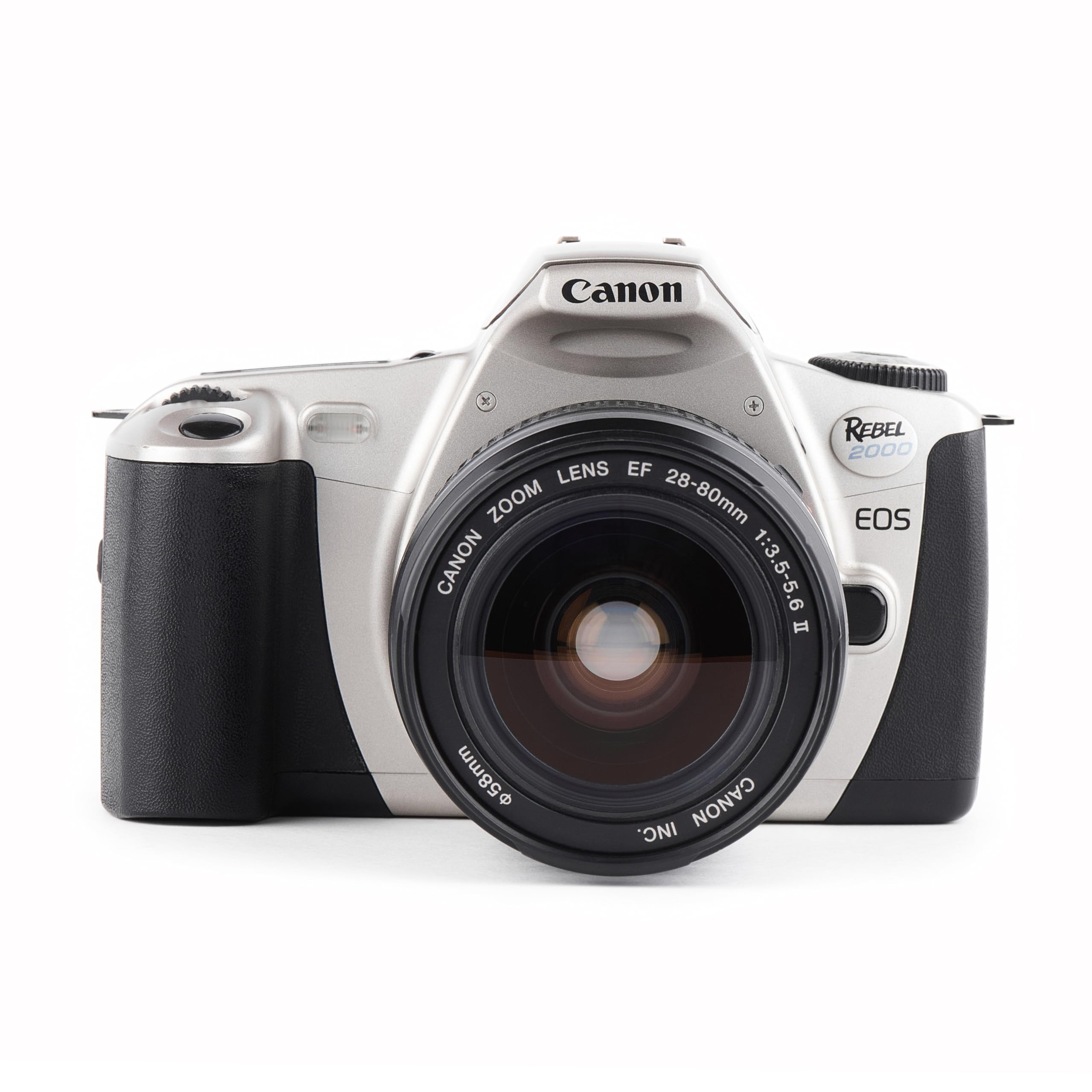
The Canon Rebel 2000 (EOS 300 in other markets) is a 35mm autofocus SLR that brings modern convenience to film photography. Its 7-point autofocus system locks onto subjects quickly, and the included 28-80mm EF zoom lens gives you a flexible range for landscapes, portraits, and everyday shooting. The camera offers Program AE, aperture priority, shutter priority, and full manual mode, so you can transition from point-and-shoot ease to creative control as you learn.
The EF lens mount is a major advantage — it is the same mount Canon uses on all its digital EOS cameras, meaning you can borrow or buy modern IS (image-stabilized) lenses and use them on this film body. The built-in flash is a pop-up unit that covers low-light situations reasonably well, and the automatic film loading, advance, and rewind make the shooting workflow effortless. The camera is lightweight and compact for an SLR, making it easy to carry as a daily shooter.
Some renewed units may arrive with cosmetic wear or minor function issues like sticky shutter buttons. The plastic body does not have the tactile prestige of metal-bodied classics, but the trade-off is a sub-premium price and full access to Canon’s modern lens system. For beginners who want reliable autofocus without spending premium money on a Leica or Contax, the Rebel 2000 is the smart entry point.
Why it’s great
- Fast 7-point autofocus makes shooting effortless
- EF lens mount works with modern Canon glass
- Multiple exposure modes from full auto to manual
Good to know
- Plastic build lacks the heft of metal-bodied cameras
- Renewed units can vary in cosmetic and mechanical condition
5. Canon Rebel G (Kiss)

The Canon Rebel G (sold as the New EOS Kiss in Japan) is essentially the same camera platform as the Rebel 2000 but from an earlier generation, offering the same EF lens mount compatibility at a lower entry cost. Its wide-area autofocus point covers a larger portion of the frame than older single-point systems, making it easier to focus on off-center subjects. The included 35-80mm EF zoom lens provides a slightly tighter wide end but still covers the standard focal range for everyday photography.
The intuitive controls and clear LCD display on the top plate make it easy to navigate shooting modes without diving into menus. Full auto, program, aperture priority, and shutter priority modes give you room to grow, and the built-in flash provides reliable fill-light capability. The camera weighs under 400 grams with the lens attached, making it an extremely portable option for carrying to events, travel, or casual street shooting.
Autofocus speed on the Rebel G is noticeably slower than modern digital bodies, especially in low light, and the plastic chassis feels less robust than higher-end EOS models. The 30-second maximum shutter speed is adequate for most scenarios but limits long-exposure night photography. For the price, however, getting a fully functional AF film camera with a compatible lens system is hard to beat among entry-level options.
Why it’s great
- EF mount gives access to Canon’s vast lens system
- Lightweight and portable for daily carry
- Multiple auto exposure modes for beginners
Good to know
- Autofocus is slow and struggles in dim lighting
- Plastic body feels less durable than premium SLRs
6. Fujifilm Instax Wide Evo
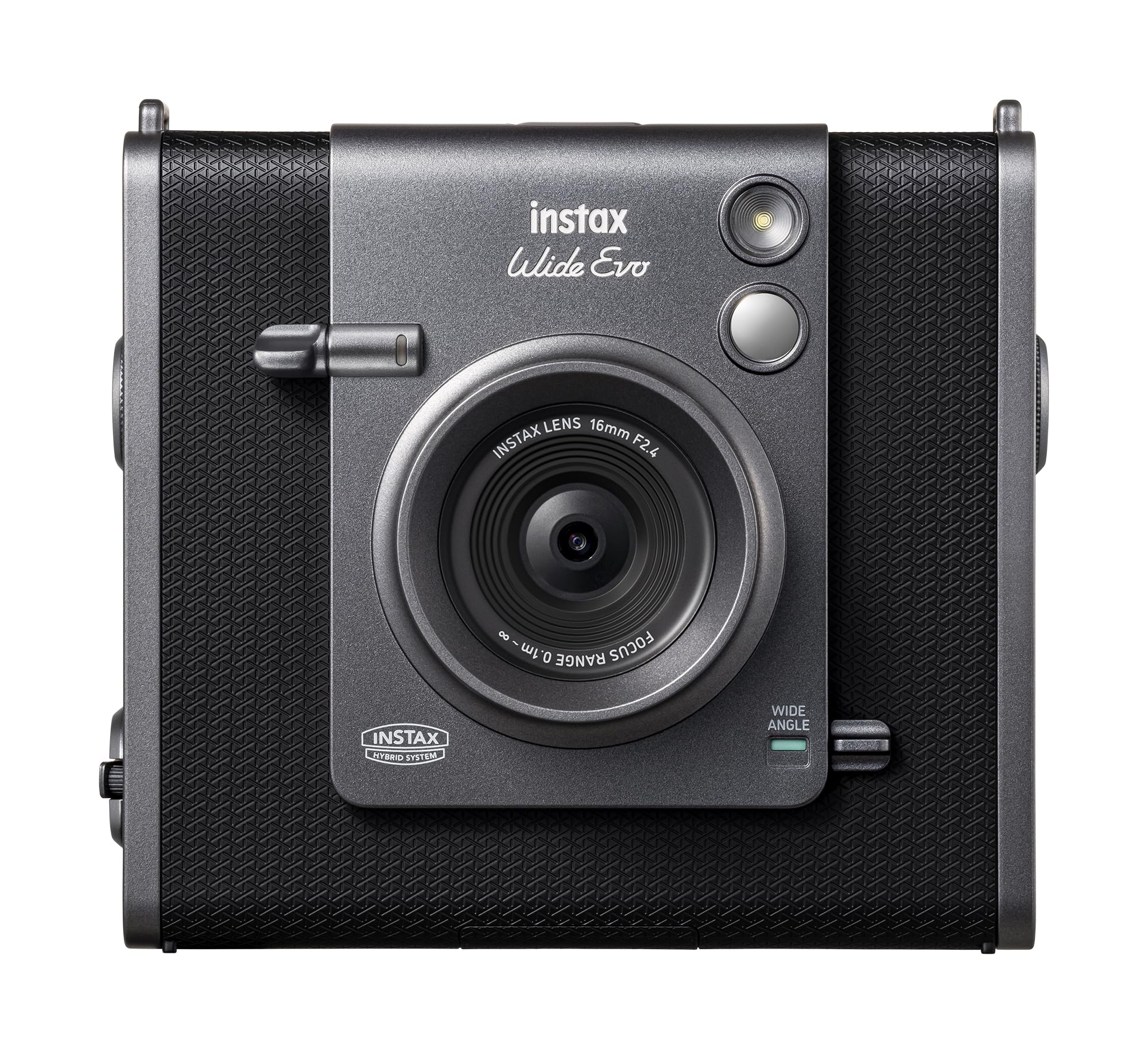
The Fujifilm Instax Wide Evo is a hybrid instant camera that blends a 16-megapixel digital sensor with the analog charm of Instax Wide prints. The large 3.5-inch LCD monitor lets you preview and edit your shots before committing to printing — a massive advantage over traditional instant cameras where every frame is final. It also offers 10 lens effect variations and 10 film effect options, plus five creative film styles, all adjustable via a degree control dial for fine-tuning the aesthetic.
The Instax Wide film format produces prints measuring 3 x 5 inches — roughly twice the area of Instax Mini prints — giving your photos a postcard-like presence. The camera captures images at 318 DPI, so prints retain good detail. A built-in USB-C port allows for charging and file transfer, and the accompanying app lets you print directly from your smartphone, adding convenience for hybrid shooters.
While the Instax Wide Evo is not a true analog film camera in the traditional sense (it uses a digital sensor and prints through exposure), it delivers the tangible instant-print experience that analog enthusiasts love. Quality control can be inconsistent — some units have been reported with LCD dead pixels or memory card errors. At its price point, the value proposition depends heavily on how much you prioritize instant prints versus pure 35mm shooting.
Why it’s great
- Preview and edit shots before printing saves wasted film
- Large 3 x 5 inch Instax Wide prints with strong visual impact
- Smartphone print integration via dedicated app
Good to know
- Digital sensor and printing mechanism reduce pure analog feel
- Reported quality control issues with LCD and memory card slot
7. Halina Tegra AF290

The Halina Tegra AF290 is a compact 35mm point-and-shoot camera with a 28mm wide-angle lens and autofocus, packaged in a retro-styled body that evokes 1990s film camera design. The 28mm focal length is noticeably wider than the standard 35-38mm found on most point-and-shoots, making it a strong choice for architecture, group shots, and environmental portraits. The built-in flash and motorized film advance round out the automatic features.
The camera is powered by two AA batteries, which are widely available and cheaper than the specialized lithium cells used by some other models. The included strap and manual make it a complete out-of-box experience for someone wanting to jump into film without learning exposure theory. The F2.8-F5.6 aperture range is decent for a consumer-grade compact, and the autofocus system uses contrast detection, which works best in well-lit environments.
Build quality reviews are mixed — some units arrive with jammed frame advance dials or sticky paint, and there are reports of the camera shredding film. The autofocus is basic and can struggle in low light, producing blurry results. The Halina Tegra AF290 is a fun, budget-friendly entry point for the retro aesthetic, but buyers should verify the unit’s functionality immediately upon delivery and be prepared to return a defective copy.
Why it’s great
- 28mm wide-angle lens is wider than typical point-and-shoots
- Powered by standard AA batteries for easy replacement
- Retro styling with autofocus convenience
Good to know
- Build quality inconsistency — some units arrive defective
- Autofocus performance degrades in low light
8. KODAK Snapic A1
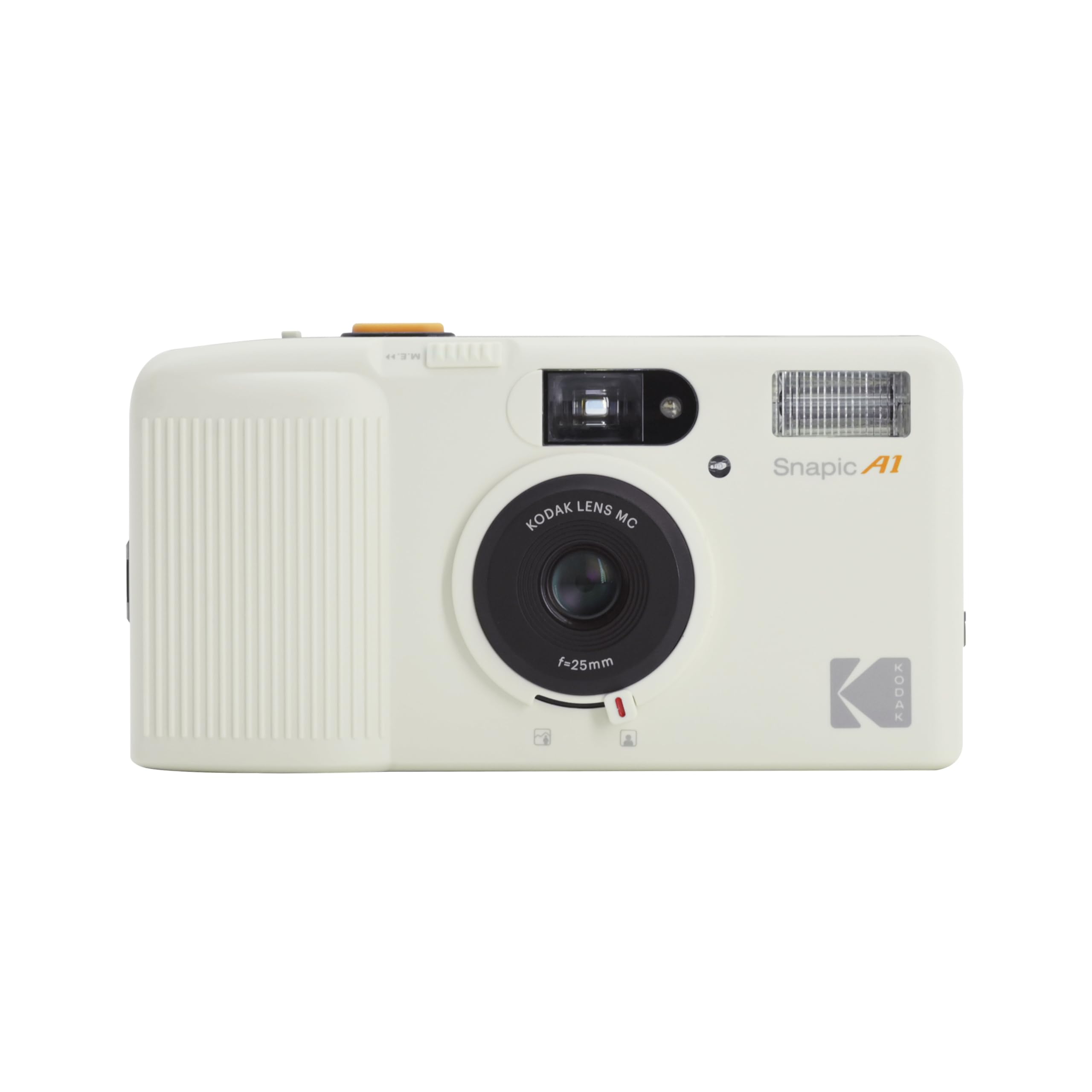
The KODAK Snapic A1 is a modern 35mm point-and-shoot designed as a step up from disposable cameras, featuring a 3-element glass lens that delivers noticeably sharper images than cheap plastic optics. The built-in auto flash includes red-eye reduction, and the camera supports multiple exposure mode, allowing you to double-expose frames for creative composite images. The lightweight body weighs just 117 grams, making it one of the most portable film cameras you can buy.
The camera offers auto wind and rewind, an on/off switch to preserve battery life for the flash, and a shot counter to track your remaining frames. The 2-zone focus system lets you toggle between near and far focus distances, covering most common shooting scenarios. Users report excellent results with ISO 200 film in daytime conditions, producing images with good sharpness and color rendition that far exceed disposable camera quality.
The plastic build feels inexpensive, and the flash button can be pressed accidentally. Rechargeable NiMH batteries are incompatible — the camera requires standard alkaline AA cells. The maximum shutter speed of 1/100 second limits action-stopping capability, and the camera performs best outdoors in good light. For beginners who want a reusable point-and-shoot with a genuine glass lens and creative double-exposure capability, the Snapic A1 is the smart entry-level pick.
Why it’s great
- 3-element glass lens produces sharper images than disposables
- Multiple exposure mode enables creative double-exposure shots
- Ultra-lightweight at 117 grams for easy pocket carry
Good to know
- Plastic build feels less durable than metal-bodied cameras
- 1/100 sec max shutter speed limits action photography
9. Kodak Pixpro FZ45

The Kodak Pixpro FZ45 is a 16-megapixel point-and-shoot digital camera that offers a cost-effective alternative for those who want the classic Kodak brand and easy operation without the ongoing cost of buying and developing film. Its 4x optical zoom (27mm wide angle) provides flexible framing, and the 2.7-inch LCD screen makes framing and reviewing shots straightforward. The camera records 1080p Full HD video, adding a secondary function for travel and family clips.
The FZ45 supports SD, SDHC, and SDXC cards up to 512GB, so storage capacity is virtually unlimited. It runs on two AA batteries, which are common but should be replaced with high-quality lithium or rechargeable cells immediately, as the included batteries have very short life — typically only a couple of hours. The 16MP CMOS sensor delivers clear, naturally colored images in good lighting, though image quality degrades noticeably in low light.
This is a digital camera, not an analog film camera. It belongs on this list only as a comparison point for budget-conscious buyers weighing the cost of film gear against a simpler digital solution. The digital zoom feature should be avoided as it heavily degrades resolution.
Why it’s great
- No recurring film or development costs
- 4x optical zoom and 27mm wide-angle lens offer framing flexibility
- 1080p video recording adds multi-functionality
Good to know
- Digital camera, not a true analog film experience
- Included AA batteries are very low quality and die quickly
FAQ
What lens mount is best for a beginner analog film camera?
Should I buy a fully manual or an autofocus film camera?
What does “half-frame” mean and why would I want it?
How can I verify the condition of a renewed analog film camera before buying?
Final Thoughts: The Verdict
For most users, the best analog film camera winner is the Pentax 17 because its half-frame design doubles your shooting capacity while the HD-coated lens and magnesium-alloy build deliver modern reliability with genuine analog character. If you want full manual control and a massive lens ecosystem, grab the Pentax K1000. And for quick autofocus convenience with interchangeable lenses, nothing beats the Canon Rebel 2000.